Body Contouring
Liposuction in Korea: What It Changes, Recovery and Days to Stay
The surgeon who performs body contouring at our Seoul clinic explains what liposuction can and cannot change, who it suits, the recovery timeline, how many days to stay and what sets the cost.
In this article
- 01What is liposuction — and what it is not
- 02Who it suits — and who it doesn't
- 03Abdomen, thighs and arms: how each area differs
- 04Surgery day and liposuction recovery
- 05Coming to Seoul for liposuction: days to stay and follow-up
- 06Liposuction cost: what decides it
- 07What I check first in consultation
- 08Risks, and how we reduce them
The short answer
Liposuction removes fat cells from areas that diet and training do not reach — most often the abdomen, thighs and arms. It changes your shape, not your weight, and the result looks smooth only when skin elasticity and the fat layer left behind are planned together. Expect around two weeks of recovery in a compression garment, and plan to stay in Korea at least 10 days.
- Liposuction reshapes local fat; it is not a weight-loss operation, and with severe obesity we advise losing weight first.
- Surgery takes 1–4 hours under sedation or general anesthesia, and stitches come out 7–10 days later.
- Recovery takes around 14 days in a compression garment; swelling peaks between days 7 and 14.
- Stay in Korea at least 10 days so stitch removal and a final check happen before you fly.
- International patients pay the same surgical fee as Korean patients, confirmed in one itemised written quote.
I am Im Young Min, chief director and board-certified plastic surgeon at VG Plastic Surgery in Seoul, and I perform the body contouring in our Body & Breast centre. I trained at Seoul St. Mary's Hospital, where I later taught plastic surgery as an adjunct professor. Patients abroad ask me about liposuction in almost the same words each time, so here is the answer I give in consultation.
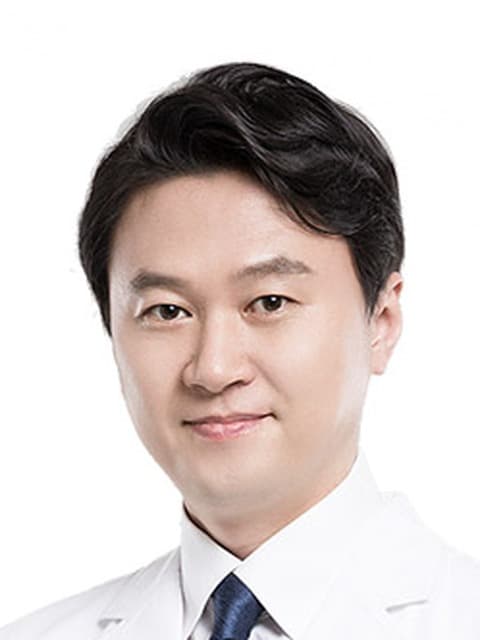
Profile
Im Young Min
Chief Director · Board-certified in Plastic Surgery
What is liposuction — and what it is not
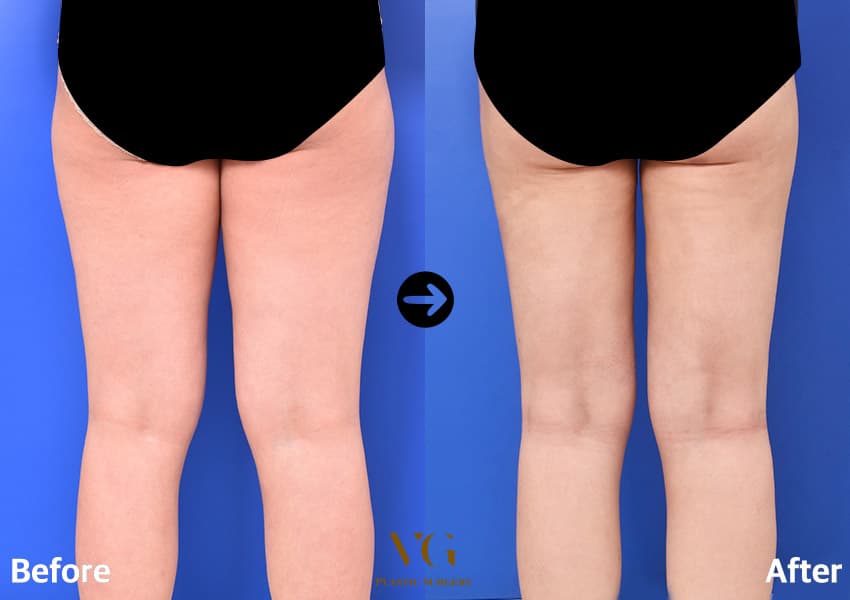
Liposuction reduces the number of fat cells in a specific area. It is for fat that stays put when your weight is already in a normal range: the lower belly, the inner or outer thigh, the back of the upper arm.
It is not a weight-loss operation. The number on the scale barely matters to the result; the outline in a mirror does. If the goal is to lose weight, I will say so, and suggest we talk again once you have.
The part people do not expect is what stays behind. A smooth result depends on the fat layer I leave under the skin, and on whether the skin can shrink back onto the new contour. So lipo is planned around your skin as much as your fat.
Who it suits — and who it doesn't
These are the situations where liposuction is usually a reasonable answer.
- Your weight is in a normal range but localised fat remains on the abdomen, thighs or arms
- Your abdominal line has not returned after pregnancy
- You want to even out contour irregularities or a difference between the left and right sides
- You can wear the compression garment and keep to a two-week recovery
And these are the situations where I advise waiting, or a different plan.
- Weight loss is the goal — with severe obesity we advise losing weight first, then consulting
- Skin elasticity is significantly reduced and suction alone would leave sagging — we discuss excision or a lift alongside
- You cannot keep to the compression garment and the two-week recovery
- An uncontrolled cardiovascular or clotting disorder
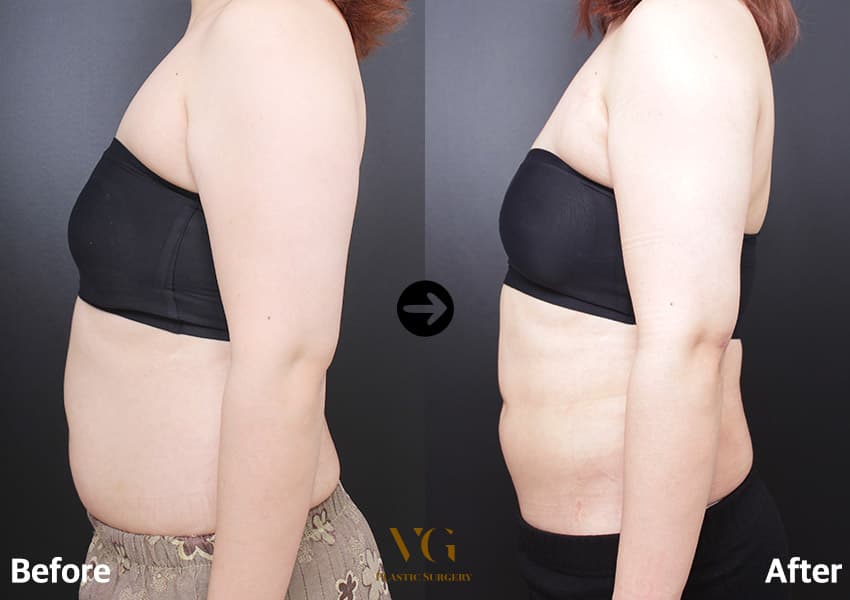
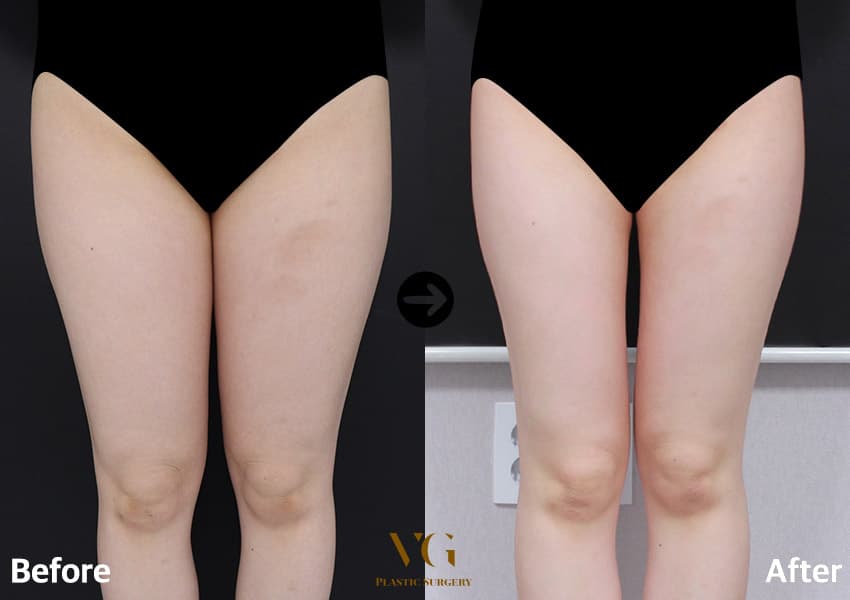
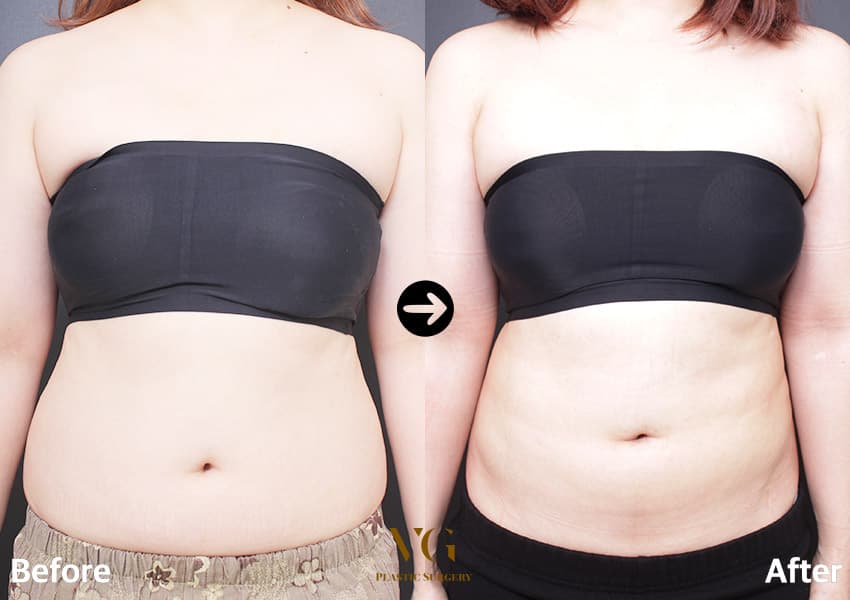
The first photo is the side view of the abdominal case at the top of this page; you can see this abdominal liposuction case in full, or browse every body contouring before-and-after photo by area.
Abdomen, thighs and arms: how each area differs
The same operation behaves differently in each part of the body. What changes is how much skin there is, how visible the edge of the treated area will be, and what you notice first as it heals.
| Area | Typical concern | What I check before planning |
|---|---|---|
| Abdomen | A lower belly that stays after training, or a line that has not returned after pregnancy | Skin elasticity above and below the navel, and whether loose skin needs excision rather than suction |
| Waist and flanks | Fat that sits over the waistband at the sides (love handles) | How the flank blends into the abdomen and back, so the waist does not look cut off from the side |
| Thighs | Inner or outer thigh fullness, or a left-right difference | Symmetry between the two legs and the fat layer left under thinner skin |
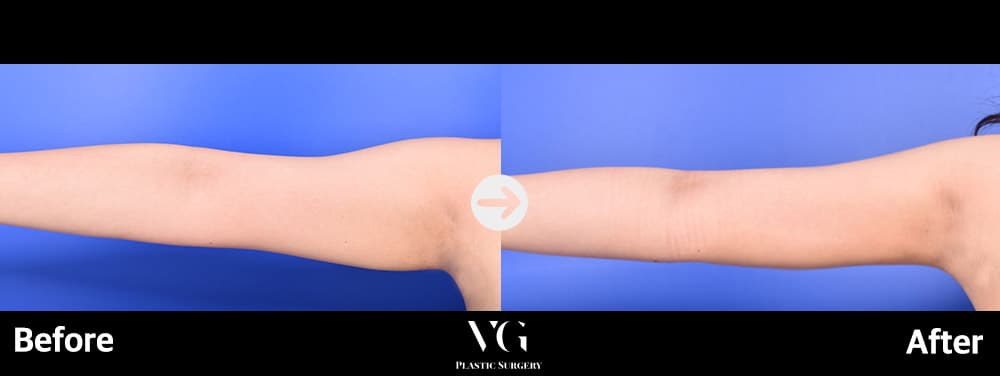
| Arms | Fullness at the back of the upper arm | Whether the skin is loose — suction does not tighten skin on its own |
Why I talk about skin before fat
Fat is the part I can remove. Skin is the part I cannot control once the fat is gone. When skin elasticity is good, it settles onto the new outline over the following months; when it is not, I would rather tell you now that excision or a lift belongs in the plan.
Surgery day and liposuction recovery
You arrive 90 minutes before your slot. I mark the areas on your body and go through the plan with you for 20–30 minutes, with an interpreter present, and nothing starts until you agree to what is drawn.
The operation takes 1–4 hours under sedation or general anesthesia, depending on how many areas are treated. Admission is 0–1 day: many people return to the hotel the same day after 1–2 hours in the recovery room, and the first check the next morning is not optional.
| Milestone | When |
|---|---|
| Showering | After 3–5 days |
| Stitches out | 7–10 days after surgery |
| Swelling at its peak | Days 7–14 |
| Back to everyday activity | About 2 weeks |
| Most people no longer notice | About 3 months |
| Final result assessed | 6 months |
The compression garment is the part of recovery that depends on you. It is worn for about two weeks, and people who cannot keep to it are the ones I ask to postpone. For most people what comes first is not pain but swelling, tightness and a few days of discomfort.
Send photos of the area from the front and side on WhatsApp — I'll tell you whether suction alone will do or your skin needs a different plan.
Coming to Seoul for liposuction: days to stay and follow-up
For liposuction in Korea, plan to stay at least 10 days. Our recovery data puts the stay at 10–14 days, which covers stitch removal at 7–10 days and a final check where I confirm you are ready to fly.
- Arrival day: pickup and the in-person consultation, or the next morning if you land late
- Surgery day, then the first check the following morning
- Recovery at a partner hotel within walking distance of the clinic, in the compression garment
- Stitches out 7–10 days after surgery
- Final check before flying, and a schedule for remote follow-up
The day-by-day stay planner lays this out against your own dates. After you fly home, follow-up continues for three months by photograph review with written replies, and you leave with your operation record and instructions in English.
Swelling is still at its peak for part of that stay, so the trip is recovery rather than sightseeing. One coordinator stays with you from first message to final check, and an interpreter sits in with you at every visit.
Liposuction cost: what decides it
People often ask how much liposuction is before they have sent a photo. I cannot give one honest number, because the fee follows the plan, and two people asking about the same area rarely need the same plan.
- Number of areas: abdomen alone is a different operation from abdomen, flanks and thighs together
- Time in theatre: more areas mean longer under anesthesia, within the 1–4 hour range
- Skin: if excision or a lift is needed alongside suction, that is part of the plan and the quote
- Revision: correcting surgery done elsewhere changes the operating time and sometimes the technique
What does not change the fee is your passport. International patients pay the same surgical fee as Korean patients, with no foreigner surcharge and no commission built in. Our pricing policy sets out what the written, itemised quote includes — anesthesia, interpretation and three months of remote follow-up among them.
What I check first in consultation
I operate across every field in the clinic, which is why I recommend only the operation you actually need and leave out the ones you do not. My training and memberships are on my profile page.
Risks, and how we reduce them
Every liposuction carries risk: swelling that lasts longer than expected, an uneven surface while tissue settles, loose skin where elasticity was low, and the general risks of surgery and anesthesia. Recovery and outcome differ from person to person, and I would rather you hear that from me before surgery than after.
- Saying no where it applies: severe obesity, poor skin elasticity or an uncontrolled clotting disorder change the plan or postpone it
- Anesthesia: a board-certified anesthesiologist stays with you for the whole operation, monitoring blood pressure, pulse, oxygen and breathing
- The compression garment: two weeks of it is part of the operation, not an extra
- One surgeon throughout: the doctor who consults with you operates and follows you up
- Transparency: a guardian travelling with you can be given access to the operating-room CCTV
Methods, cases by area and the minimum stay are gathered on our body contouring page.
Send photos of the area you want changed on WhatsApp, and I'll tell you what suction can achieve there and how long you would need in Seoul.
Body Contouring before & after — more cases
Real patients from our archive, all photographed 3 months after surgery. Tap a case to compare it full size.
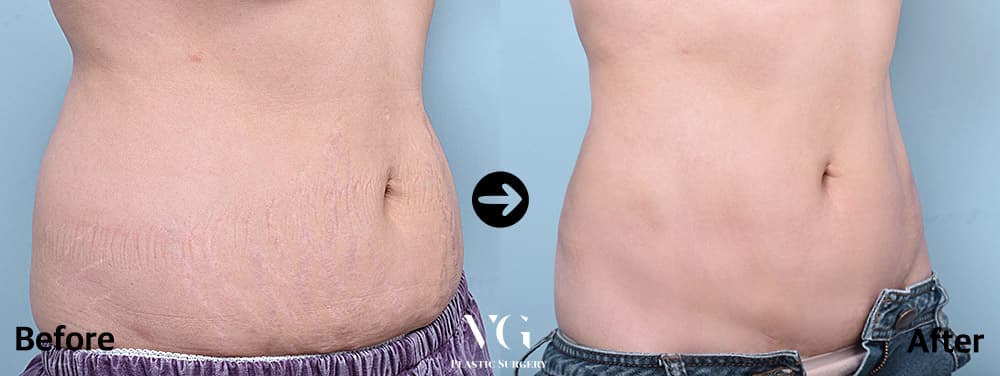
Abdominal Liposuction3 months after surgery
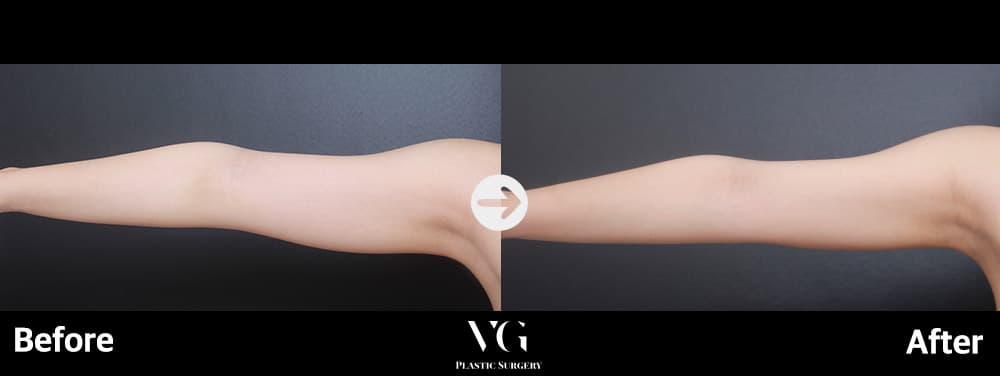
Arm Liposuction3 months after surgery
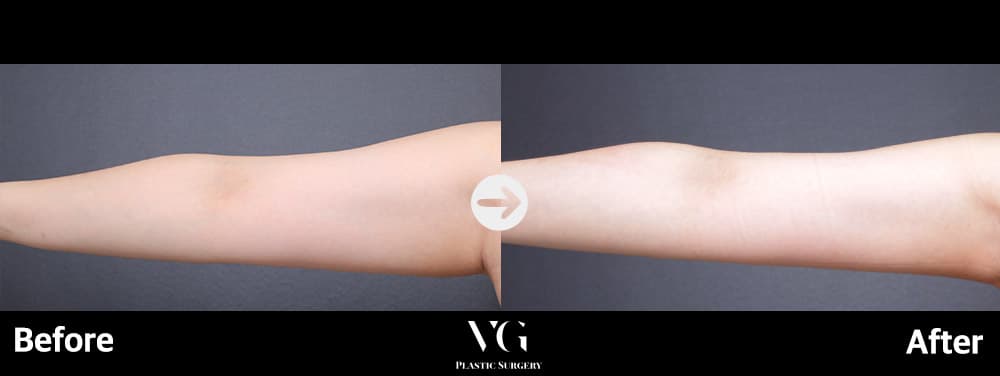
Arm Liposuction3 months after surgery
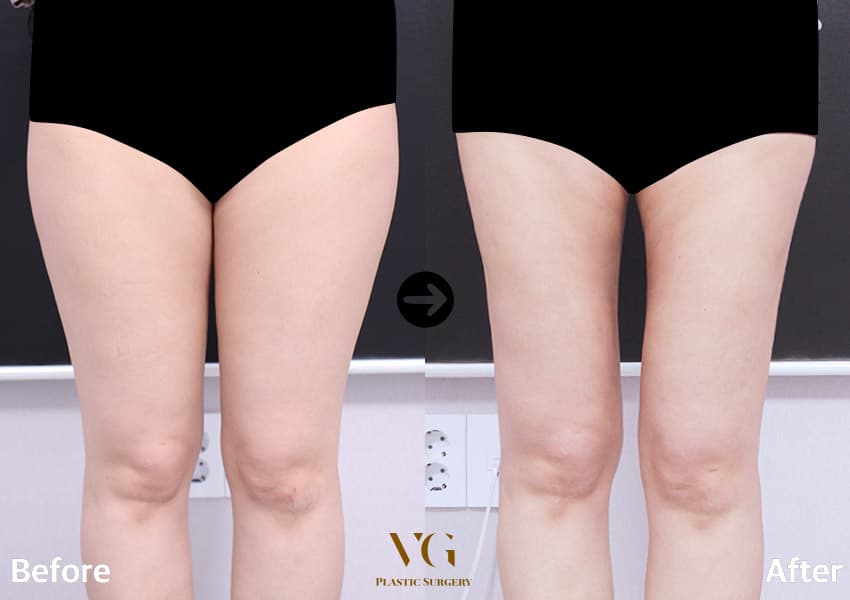
Thigh Liposuction3 months after surgery
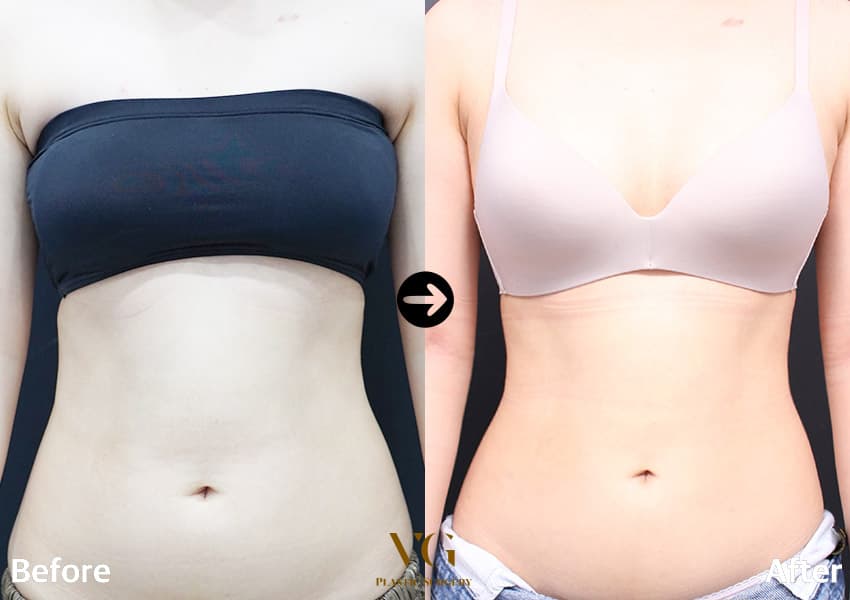
Abdominal Liposuction3 months after surgery
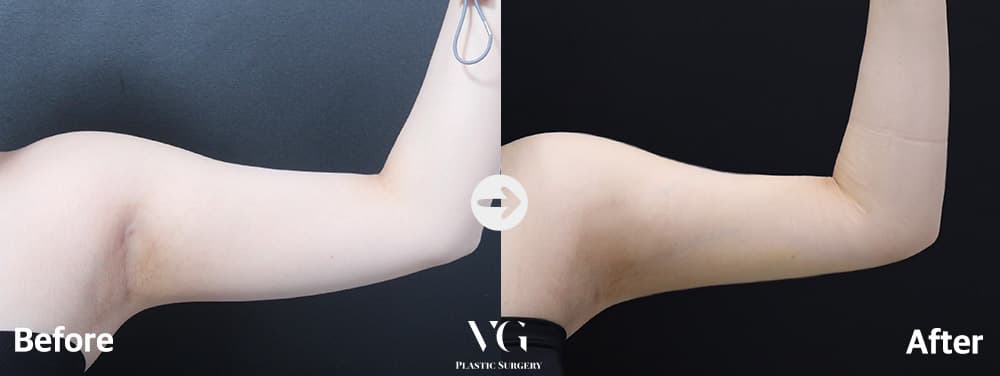
Arm Liposuction3 months after surgery
FAQ
Questions patients ask
How much is liposuction in Korea?
We do not publish a price list, because the fee depends on how many areas are treated, the time under anesthesia and whether skin needs excision as well. What we commit to is the fee policy: international patients pay the same surgical fee as Korean patients. Send photos and you receive an itemised written quote after consultation, before you decide anything.
How long is liposuction recovery?
Around 14 days before most people are back to everyday activity. Swelling peaks between days 7 and 14, stitches come out 7–10 days after surgery, and most people no longer notice the swelling at about 3 months. The final result is assessed at 6 months.
How long should I stay in Korea after liposuction?
At least 10 days. That covers stitch removal at 7–10 days and a final check before you fly; follow-up then continues remotely for three months by photograph review with written replies.
Is liposuction a way to lose weight?
No. It reduces fat cells in specific areas and changes your shape, not your weight. With severe obesity we advise losing weight first and consulting afterwards.
Will my skin sag after lipo?
That depends on your skin elasticity, which is why I examine it first. Where elasticity is good, skin settles onto the new contour over the following months; where it is significantly reduced, suction alone would leave sagging, and we discuss excision or a lift alongside.
Do I have to wear a compression garment?
Yes, for about two weeks. It is part of the recovery plan, and if you cannot keep to it, we postpone surgery rather than go ahead.
Sources
This article explains general medical information. Whether surgery suits you, and which method, is decided only after a consultation with the surgeon.
Written by
Im Young Min
Chief Director · Plastic Surgery
- Ph.D. in Medicine
- Internship and residency, Seoul St. Mary's Hospital
- Board-certified plastic surgeon, Seoul St. Mary's Hospital
- Adjunct professor of plastic surgery, Seoul St. Mary's Hospital
- Former director, Topface Plastic Surgery
Next step
Send two photos. Get a surgeon’s answer.
Front and side, natural light, no filter. Dr. Im Young Min reviews them and tells you which method fits and how many days to stay in Seoul.
International patients pay the same surgical fee as Korean patients. Pricing policy
Keep reading
Body Contouring
What Sets Liposuction Cost in Korea? Reviews, Methods and Recovery
There's no single liposuction cost in Korea: the figure is set by your areas, fat volume, anesthesia, any fat transfer and your days in Seoul. Ask on WhatsApp for your own combination.
Im Young Min ·
Body Contouring
Body Contouring Korea: Who It Suits and When to Book It
Body contouring in Korea usually means liposuction, sometimes with skin removal. It suits people at a steady weight with elastic skin, and the timing of the trip matters as much as the operation.
Im Young Min ·
Body Contouring
When Your Upper Arms Stay Full Despite the Gym: What “Arm Liposuction Korea” Can and Can't Change
Arm liposuction removes fat from the upper arm but doesn't tighten loose skin. Five common beliefs about having it done in Seoul, checked one by one, plus how to plan follow-up once you're home.
Im Young Min ·