Body Contouring
What Sets Liposuction Cost in Korea? Reviews, Methods and Recovery
There's no single liposuction cost in Korea: the figure is set by your areas, fat volume, anesthesia, any fat transfer and your days in Seoul. Ask on WhatsApp for your own combination.
In this article
The short answer
Worried that the liposuction cost in Korea you've seen quoted online won't be what you pay once you're in Seoul? There isn't one figure: it moves with how many areas you treat, how much fat comes out, the anesthesia and the days you stay. Read this before you book a flight, and you'll know what sets the cost, what reviews get right and wrong, which methods exist and how recovery fits your trip, so you can judge which plan suits your body and your budget.
- Liposuction in Korea is priced by area and volume, so one area and three areas are different operations.
- Fat texture, any fat transfer, the anesthesia and your days in Seoul all move the figure.
- Foreign patients pay the same surgical fee as Korean patients, and the estimate is given in writing.
- Liposuction shapes a stable weight; it does not tighten loose skin or treat weight gain.
- Plan the flight home around blood-clot risk and keep your surgical summary with you.
Hello, I'm Dr. Im Young Min, Chief Director, board-certified plastic surgeon, at VERYGOOD Plastic Surgery in Gangnam, Seoul.
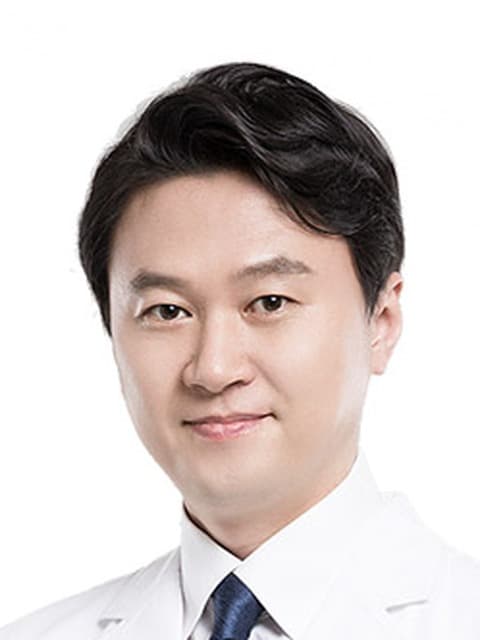
Profile
Im Young Min
Chief Director · Board-certified in Plastic Surgery
I operate across eyes, nose, breast, body and facial contouring, which matters here because body fat rarely sits in one tidy zone. Three board-certified anesthesiologists work at the clinic full time, so one of them watches your blood pressure, pulse and breathing from the first injection until you wake, and I do nothing but operate. Foreign patients pay the same surgical fee as Korean patients.
I'm writing this because most figures people compare online are for a single area, while the plan their body needs often covers two or three, and that gap is where the surprise at a consultation usually comes from.
Liposuction cost in Korea comes down to five things: which areas and how large, how much fat and how dense it is, the method and any added step such as fat transfer, the anesthesia, and your days in Seoul with follow-up.
If you want to see where your own body sits on that list, send one photo of the area that bothers you on WhatsApp, front and side in daylight, and ask which areas would actually need treating. That way the answer you get is about your body, not an average.
Send a photo of your areas on WhatsApp
Why is there no single price for liposuction?
Because “the stomach” is not one area. When people point at their belly, they usually mean the upper abdomen, the lower abdomen and often the flanks that wrap around toward the back. Each of those is suctioned through its own small openings, and each adds operating time. A quote for “abdomen” and a quote for “abdomen and flanks” describe two different operations.
The second thing a photo can't settle is what you're actually pinching. Liposuction removes fat. It does not tighten loose skin, and it does not flatten a belly pushed out by the muscle wall or by fat that sits deep inside the abdomen around the organs. If most of what you hold between your fingers is skin, removing the fat underneath can leave it looser. So the same photo can lead to a smaller plan than you expected, or to a different operation altogether.
Say you're 34, your weight has been stable for two years, and the area you dislike is the lower belly plus the “love handles” above your jeans. You have one week of leave. The way I'd reason: stable weight is a good sign, and two linked areas treated together make more sense than adding thighs just because you're already on the operating table. If your skin springs back when pinched, liposuction alone fits. If it creases and hangs, I'd tell you that, and we'd talk about whether the trip is worth it for liposuction on its own.
What decides the cost for your body
In short, these are the factors that move a liposuction quote, roughly in the order they matter:
- Number and size of areas. Abdomen, flanks, back, arms, inner and outer thighs and the chin are planned separately, and larger areas take longer.
- Volume and texture of fat. Dense, fibrous fat, common on the back and upper abdomen, takes more time to remove evenly than soft fat.
- Method and added steps. If some of the removed fat is purified and moved to another area, that is fat grafting, a second procedure with its own planning.
- Anesthesia. Larger or multiple areas are usually done under general anesthesia or deep sedation, and the anesthesiologist's time is part of the operation.
- Your days in Seoul. Hotel nights, garment fittings and follow-up visits before you fly add to what the trip costs you, even when they are not on the surgical estimate.
Previous liposuction in the same area changes things too, since scar tissue makes a second pass slower. If you're thinking about several regions at once, my piece on planning entire body liposuction across more than one trip explains why splitting the work can be the sounder plan.
The estimate is given in writing, so you can see which areas it covers before you decide. You can read how surgery and the doctors here are organized on VERYGOOD Plastic Surgery's English site.
To get the figure for your own case, write on WhatsApp which areas you mean, add a photo of each from the front and side, and ask what that combination would cost with anesthesia included. Naming every area in your first message keeps the number you get tied to the plan you actually want.
Send a photo of your areas on WhatsApp
Liposuction methods, and when another operation fits better
Most liposuction today starts the same way. A large volume of fluid containing a local anesthetic and adrenaline is infiltrated into the fat first, which reduces bleeding and makes the fat easier to remove; this is called the tumescent technique. Some surgeons add ultrasound, laser or power-assisted cannulas to loosen the fat. Which tool is used matters less to your result than how evenly the fat comes out and how much is left behind to keep the surface smooth.
The method question matters most when liposuction is the wrong operation for what you see in the mirror:
- If the fullness under your chin is fat, it can be suctioned; my article on double chin removal with liposuction covers who that suits.
- If the fullness in your chest is breast tissue, suction removes little of it, and breast reduction is the operation to read about.
- If loose skin is the main problem, removing skin through an excision procedure is what changes the shape.
- If you'd like volume somewhere else, such as the face or breasts, the fat removed can sometimes be used for fat grafting, which is one of the procedures we perform.
What do liposuction reviews get right, and what do they miss?
Reading review threads before traveling for surgery is sensible. A few claims come up again and again, and each holds a different amount of truth.
“It hurt less than I expected.” Often true for the operation itself, because you're asleep or deeply sedated. The days after are another matter: soreness like a hard workout, bruising and stiffness are common in the first days.
“I had lumps afterwards.” Firm, uneven patches in the first weeks are common while swelling settles, and they usually soften. A dent or ridge that is still there months later is a real complication called contour irregularity, and the American Society of Plastic Surgeons lists it among the risks of liposuction.
“The quote went up once I got there.” This happens when areas are added after the in-person exam, or when the first figure covered one area only. Asking for the estimate to name each area protects you from that surprise.
“The fat came back.” The fat cells removed don't regrow, but the ones left in treated and untreated areas can still enlarge if your weight rises. The American Society of Plastic Surgeons describes liposuction as a shaping procedure for people near a stable weight, and not a treatment for obesity.
How does recovery fit around a flight home?
Recovery is the part of the trip people plan last and should plan first. In general, you'll wear a compression garment for some weeks, bruising fades over the first couple of weeks, and swelling takes months to settle fully, so the shape you see on the day you fly is not the final one.
The flight itself deserves thought. The US Centers for Disease Control and Prevention notes that flying after surgery raises the risk of blood clots and advises travelers to plan time to recover before heading home. Walking the aisle, drinking water and wearing your garment as instructed are reasonable habits for anyone flying after body surgery.
How many days to plan depends on how many areas you treat and how your first days go, so ask for that number together with your estimate instead of borrowing it from someone else's trip. My guide to liposuction in Korea, what it changes and the days to stay goes into this in more detail.
Risks and side effects to know
The common, temporary reactions are bruising, swelling, soreness, numbness of the treated skin and some fluid leaking from the small openings in the first day or two. Numbness and firmness usually improve over weeks to months.
Less common problems include fluid collecting under the skin (seroma), infection, uneven contour, skin color changes and, rarely, blood clots or fat entering the bloodstream. The risk rises with the amount removed and the number of areas treated in one session, which is one reason I'd rather stage a large plan than do it all at once.
As general medicine, these are reasons to wait or not to go ahead: weight that is still changing, pregnancy or breastfeeding, a recent major illness, a history of blood clots, poorly controlled diabetes or heart disease, and smoking you can't stop around the operation. Tell your surgeon about blood thinners and supplements before anything is booked. Whether you're a candidate is decided at the in-person exam.
If something feels wrong after you're home, such as one leg swelling more than the other, fever or a spreading red area, get seen locally the same day. Sudden breathlessness or chest pain means emergency care. Carry your surgical summary home so a doctor there can see exactly what was done.
Your first message can be a single line: the areas you'd change, the dates you're thinking about, and the question that worries you most, sent on WhatsApp. You can ask before booking anything. When you come to Gangnam, I examine you in person and recommend the plan that fits your body, including telling you plainly if liposuction isn't it.
Related pages:
Body Contouring before & after — more cases
Real patients from our archive, all photographed 3 months after surgery. Tap a case to compare it full size.
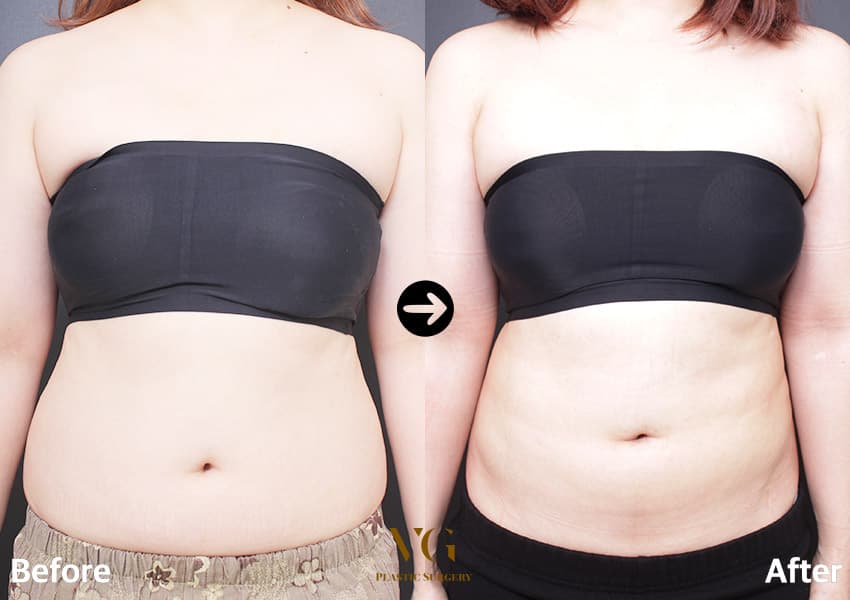
Abdominal Liposuction3 months after surgery
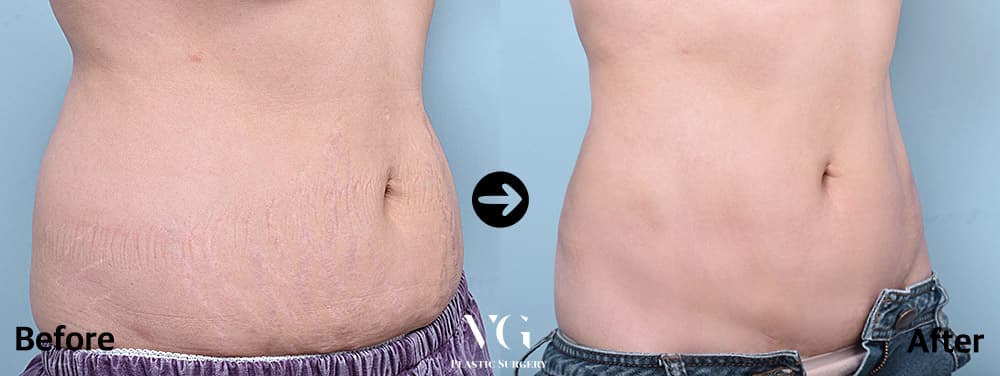
Abdominal Liposuction3 months after surgery
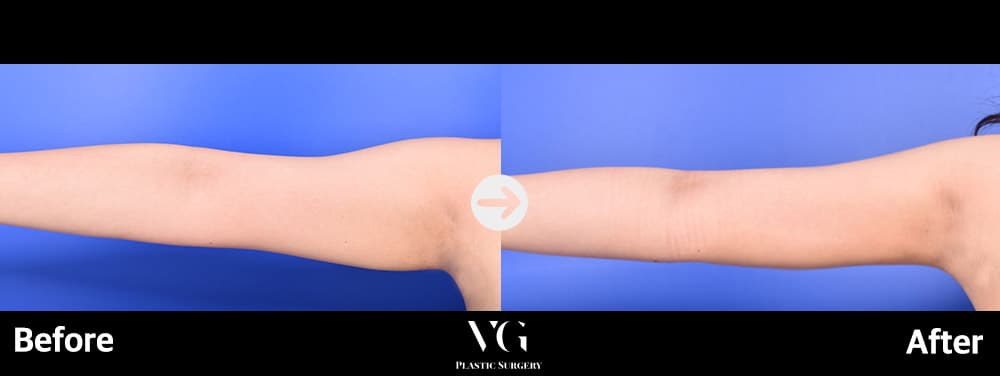
Arm Liposuction3 months after surgery
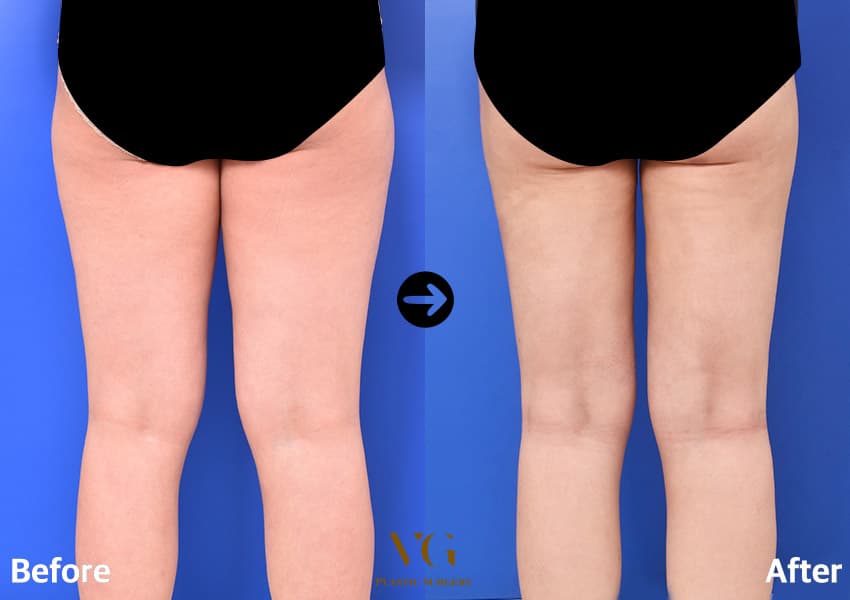
Thigh Liposuction3 months after surgery
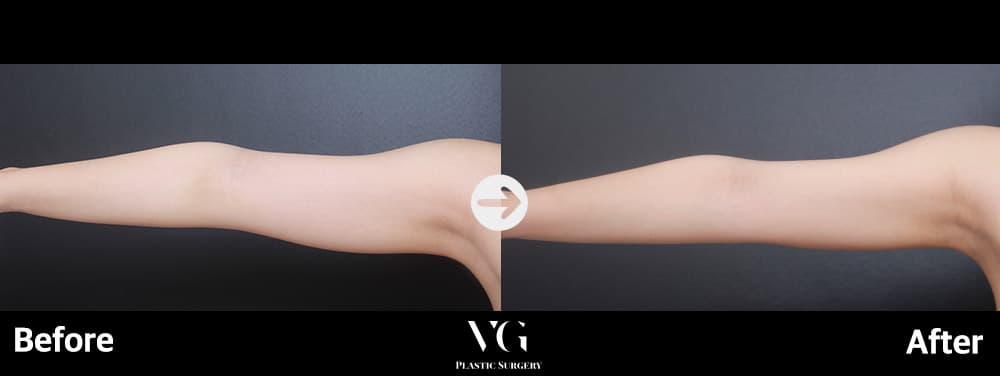
Arm Liposuction3 months after surgery
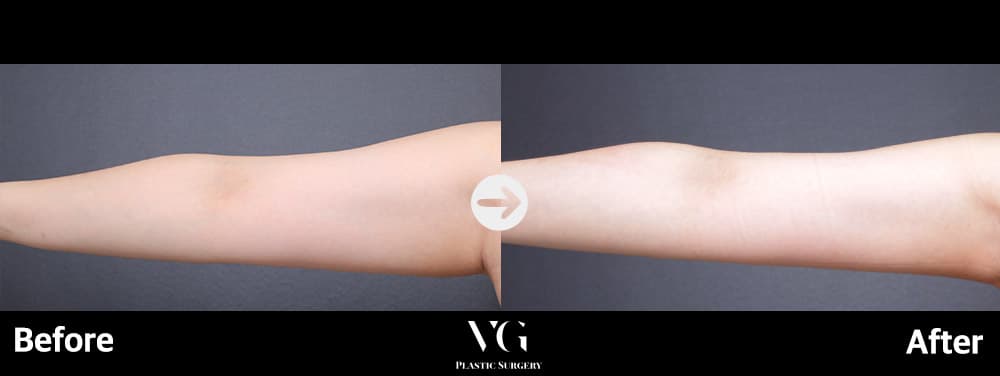
Arm Liposuction3 months after surgery
FAQ
Questions patients ask
How much is liposuction in Korea?
I don't publish figures, because the liposuction cost in Korea is set by the number and size of areas, the volume of fat, any fat transfer, the anesthesia and your days in Seoul. Send photos of each area on WhatsApp and ask what your combination would cost.
Do foreigners pay more for liposuction at VERYGOOD?
No. Foreign patients pay the same surgical fee as Korean patients, and the estimate is given in writing so you can see which areas it covers.
Is full body liposuction priced as one package?
It is planned area by area. Large total volumes are often split into stages for safety, so ask for the estimate to list each area separately.
Will liposuction leave scars?
The openings are small and usually placed in natural creases, and they generally fade over months. They can stay visible, and darker skin can show pigment changes for longer, so ask where your openings would sit.
Can I combine liposuction and fat grafting in one trip?
Sometimes. Fat grafting is one of the procedures we perform, but it adds planning, operating time and its own recovery, so mention it in your first message if you're considering it.
Sources
This article explains general medical information. Whether surgery suits you, and which method, is decided only after a consultation with the surgeon.
Written by
Im Young Min
Chief Director · Plastic Surgery
- Ph.D. in Medicine
- Internship and residency, Seoul St. Mary's Hospital
- Board-certified plastic surgeon, Seoul St. Mary's Hospital
- Adjunct professor of plastic surgery, Seoul St. Mary's Hospital
- Former director, Topface Plastic Surgery
Next step
Send two photos. Get a surgeon’s answer.
Front and side, natural light, no filter. Dr. Im Young Min reviews them and tells you which method fits and how many days to stay in Seoul.
International patients pay the same surgical fee as Korean patients. Pricing policy
Keep reading
Body Contouring
Body Contouring Korea: Who It Suits and When to Book It
Body contouring in Korea usually means liposuction, sometimes with skin removal. It suits people at a steady weight with elastic skin, and the timing of the trip matters as much as the operation.
Im Young Min ·
Body Contouring
When Your Upper Arms Stay Full Despite the Gym: What “Arm Liposuction Korea” Can and Can't Change
Arm liposuction removes fat from the upper arm but doesn't tighten loose skin. Five common beliefs about having it done in Seoul, checked one by one, plus how to plan follow-up once you're home.
Im Young Min ·
Body Contouring
Will “Double Chin Removal Korea” Work for You? Mostly When the Fullness Is Fat
Liposuction under the chin helps when the fullness is fat. If the skin is loose or the chin sits back, a lift or facial contouring may fit better. A Seoul plastic surgeon explains how to tell which it is.
Im Young Min ·