Facial Contouring
Jaw Shaving Surgery Risks: Lip Numbness, Bleeding, Uneven Angles and When to Wait
The main risks of jaw shaving are lip and chin numbness, bleeding in the first hours, uneven angles and, rarely, a fracture. Most numbness fades within months; a small share lasts beyond a year.
Send your concern and a front and side photo. Replies in English, no obligation.
In this article
- 01Why does the lower lip go numb after jaw shaving?
- 02Bleeding, swelling and infection in the first two weeks
- 03Can jaw shaving leave my face uneven or sagging?
- 04Rare risks: a broken jaw and facial nerve weakness
- 05When I'd tell you to wait, or not to have it
- 06What if something comes up after you fly home?
The short answer
Worried that shaving down your jaw angles could leave your lower lip numb, or that a problem could start after you've already flown home? The jaw shaving surgery risks that matter most are numbness of the lower lip and chin, bleeding and swelling in the first days, uneven angles, and, rarely, an unplanned break in the bone. Most numbness fades within months, but a small share lasts longer than a year, and that is the risk to plan around.
- Numbness of the lower lip and chin is the most common risk; in one 588-case review most recovered within six months, while about 1.5 percent lasted beyond a year.
- Bleeding near the jaw angle is the risk watched most closely in the first hours and the first night.
- Bone removed from the jaw does not grow back, so a nerve that sits low means a smaller reduction.
- If your width is mostly muscle or comes from your bite, jaw shaving is the wrong operation.
Hello, I'm Dr. Im Young Min, Chief Director at VG Plastic Surgery in Seoul and a board-certified plastic surgeon trained at Seoul St. Mary's Hospital.

Profile
Im Young Min
Chief Director · Board-certified in Plastic Surgery
Two things here bear directly on those risks. Before facial contouring, the nerves and bone thickness are mapped on CT, because bone does not grow back and anything that doesn't need to go should stay. And three board-certified anesthesiologists work here full time and never operate, so one of them watches your blood pressure, pulse and breathing from the first injection until you're awake.
If a surgeon at home has already called your jaw a difficult one, send a front photo and a side photo on WhatsApp, along with any panoramic X-ray or CT you already have, and ask whether your width looks like bone or muscle. A medical interpreter for your language is provided at no extra charge, so you can ask it in your own words.
Send your jaw photos or scan on WhatsApp
Why does the lower lip go numb after jaw shaving?
Inside each half of your lower jaw runs a canal carrying the inferior alveolar nerve. It travels forward under the teeth and comes out through a small opening below the premolars, where it becomes the mental nerve and gives feeling to the lower lip and chin. Jaw shaving removes bone from the angle and the outer surface of the lower jaw, so the closer that canal sits to the bone being taken, the less margin there is.
Most numbness doesn't come from cutting the nerve. It comes from stretching and pressure while the soft tissue is held back, or from swelling around the canal afterwards, and that kind usually recovers as the nerve settles. A review of 588 lower-jaw contouring operations, published in Plastic and Reconstructive Surgery Global Open in 2014, found that changes in sensation were the most common complication, at about 6.5 percent.
In 4.93 percent of the cases feeling came back within six months; in 1.53 percent it was still not normal after a year.
Of all the jaw shaving surgery risks, that last figure is the one I want you to weigh. It's small, but it isn't zero, and a numb patch on the lip is something you notice every time you drink from a cup. The review's author advised keeping the course of the nerve canal in mind on imaging and cutting bone carefully along it.
On a CT, the first question I'd ask is how far your canal sits from the outer surface and the lower border at the angle, because that distance sets how much bone can come off safely.
Say you're 34, living in Vancouver, with a square lower face you've disliked since your twenties. A surgeon at home looked at a panoramic X-ray, said your nerve sits low, and suggested you leave the bone alone. That doesn't close the door on surgery, and it isn't a reason to look for someone who'll simply say yes.
It means the plan has to be drawn around your nerve: a smaller reduction at the angle, or a curve that stays above the canal's path, with a result that's quieter than a photo you've saved. If the safe amount of bone wouldn't change what bothers you, I'd tell you so before you book a flight.
The same scan is why a jaw quote can move once the images are read, which I've explained in why a jaw shaving quote can change after CT.
If you have a panoramic X-ray or CT from home, send a clear photo of it or the file itself on WhatsApp with the dates you could travel, and ask how close the nerve canal looks to your jaw angle.
Send your jaw photos or scan on WhatsApp
Bleeding, swelling and infection in the first two weeks
The angle of the jaw sits close to the facial artery and the veins behind the jaw, which is why bleeding is the risk surgeons watch most in the first hours. Most bleeding is controlled during the operation. The danger is a collection of blood under the tissue afterwards, which swells one side quickly and, if large, can press toward the airway.
A 2017 case report in the Annals of Medicine and Surgery described this situation: bleeding after a cosmetic lower-jaw bone operation done as office day surgery, which needed a second operation in hospital. The point of that report is the first night: after bone work on the jaw, spend it where someone can act quickly.
Swelling is expected and is usually heaviest in the first several days before it slowly settles. For a while the face often looks wider than before surgery, which unsettles people who expected to see a narrower jaw at once. Stiffness when opening your mouth is common early on.
Infection is less common. In the 588-case review, infections within the first two weeks appeared in about 3 percent of cases in its results, and most cleared with treatment. Because the incisions for angle reduction are usually made inside the mouth, keeping the mouth clean, rinsing after meals and not smoking matter more here than with surgery through the skin.
How many days to stay in Seoul before flying is something to settle with your surgeon at the consultation. Leave a spare day in your plans in case the swelling is slow to come down.
Can jaw shaving leave my face uneven or sagging?
Some difference between the two sides is normal in every face, and surgery can make it more or less visible. The problems people notice after jaw reduction are usually one of three: one angle taken further than the other, a visible step where the cut ends along the jawline, or a jaw so smoothed that it no longer reads as a jaw.
A long curved reduction that blends the angle into the body of the jaw avoids the step, and whether you need the angle alone or the long curve is a separate decision I've covered in jaw angle reduction versus long-curve reduction.
Sagging soft tissue depends on age and skin. When bone support is removed, the skin and muscle over it have less to drape on. In your twenties the tissue usually shrinks back; in your forties, with thinner skin, the lower face can look looser. If the front of your jaw and chin are also part of the plan, it helps to think of the jaw and chin as one line, as described in V line surgery for the jawline and chin.
Correcting unevenness later is possible to a degree, but only in one direction. More bone can be taken from the fuller side, while a side that went too far can only be built back with fat or an implant.
Rare risks: a broken jaw and facial nerve weakness
An unplanned fracture of the lower jaw during or after angle reduction is rare. It's more likely when the remaining bone is thin or when a cut runs further than planned, and it's usually repaired with plates and screws, with a longer recovery. This is one more reason the CT matters: bone thickness is measured before the cut instead of guessed.
Weakness of the lower lip on one side, from the small facial nerve branch that runs along the jaw edge, is also uncommon. In the 588-case review there was one case of facial weakness on one side, and it recovered fully by six months. It shows as an uneven smile, with normal feeling, which is how you tell it apart from the sensory numbness above.
When I'd tell you to wait, or not to have it
In short, these are general reasons surgeons hold off, and your own exam may add others:
- Your width is mostly the masseter muscle. When you clench and the bulk at the angle hardens and grows, removing bone won't touch the main cause.
- Your face looks uneven because of your bite or the position of your teeth. That's a question for an orthodontist and a bite specialist, and contouring the outer bone won't fix it.
- You smoke and can't stop around the surgery, take blood thinners you can't pause safely, or have a bleeding disorder.
- You're pregnant or breastfeeding, or an infection in a tooth or your gums is still active.
- You're hoping for a specific face from a photo when your nerve position or bone thickness limits how far the angle can go.
I see plastic surgery as a form of self-care, and its purpose is a happier life with your own face. If the safe version of the operation wouldn't make you happier with what you see, my answer is no, and I'll explain why.
You can read who works in the facial contouring center, and where each surgeon trained, on VG Plastic Surgery's English site.
What if something comes up after you fly home?
Put simply, this is the question under most jaw questions. Knowing what's normal and what isn't covers much of it.
Normal in the weeks after: swelling that changes from day to day but is going down overall, a stiff jaw, tingling or numbness in the lip and chin that slowly shifts, and bruising that drifts down toward the neck.
Not normal, and worth contacting a doctor the same day: swelling that suddenly grows on one side, fresh bleeding inside the mouth, fever, a foul taste or pus near the incision. Any trouble breathing or swallowing means emergency care.
Before you leave Seoul, carry your operative summary, the list of medicines you were given and a copy of your scans, and line up a doctor or dentist at home who knows you've had jaw bone surgery. How a clinic handles this part is one of the points I go through in five things a clinic list can't show about facial contouring.
When you're ready, send a front photo, a side photo taken in daylight and your travel dates on WhatsApp, with any scan you have from home, and ask how close the bone work on your jaw would come to the nerve and which records you'll carry home for your doctor there. The clinic is at 635 Nonhyeon-ro, Gangnam-gu, Seoul. At the consultation, the first thing I'll look for on your CT is where that nerve canal runs past your jaw angle.
Related pages:
Facial Contouring before & after — more cases
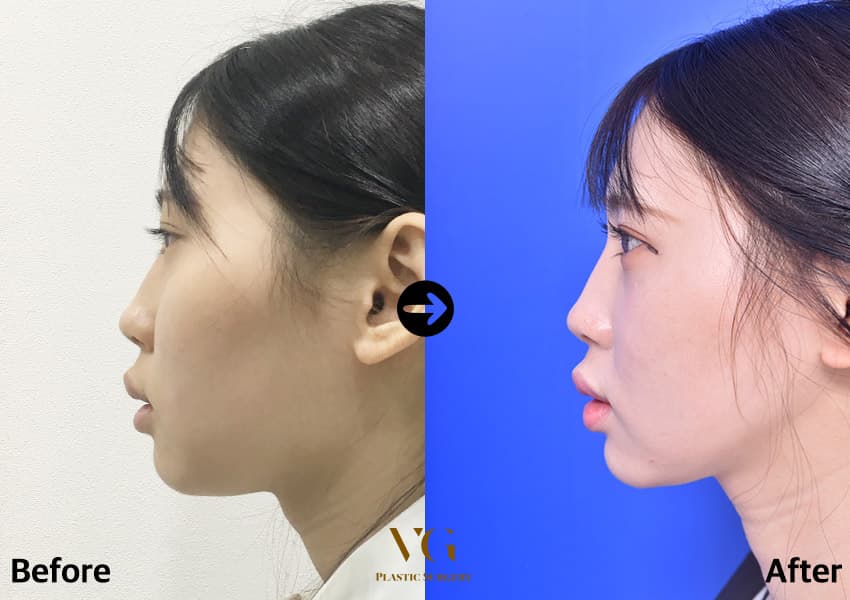
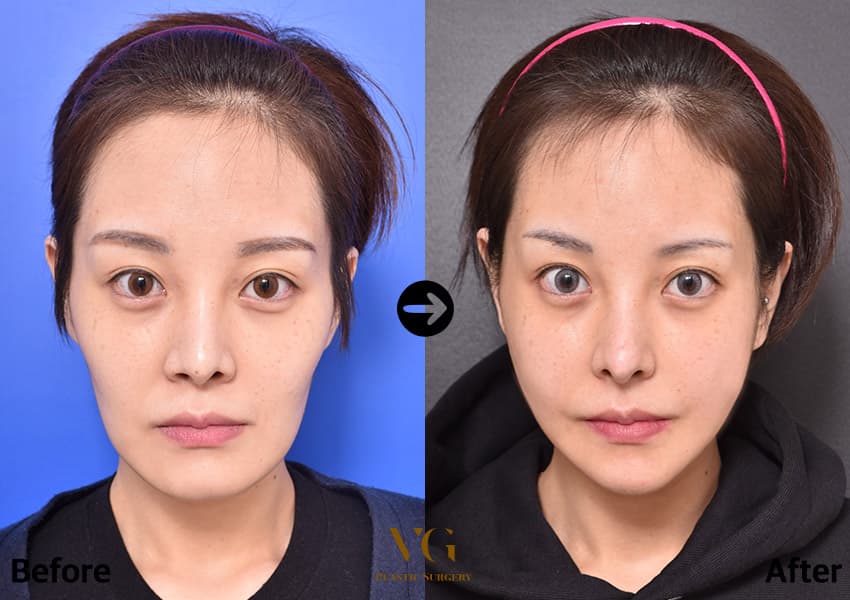
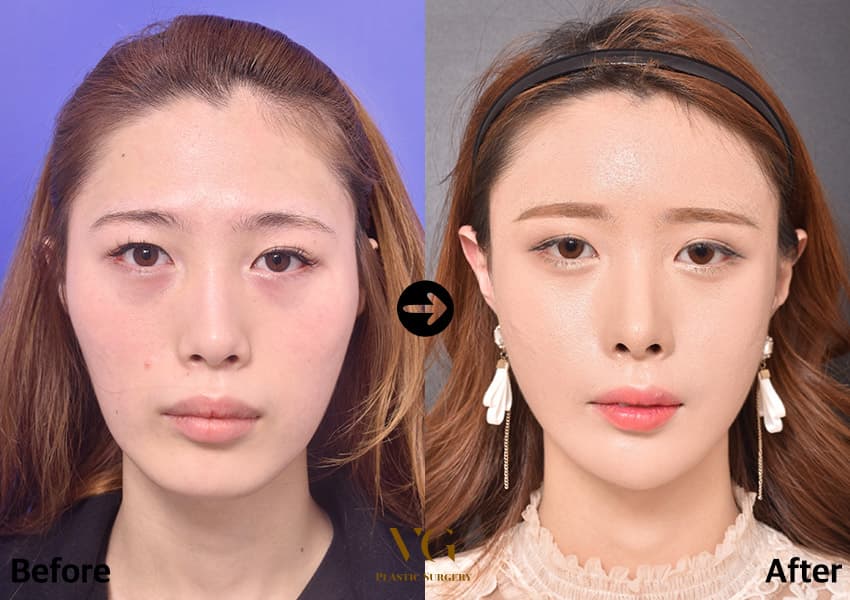
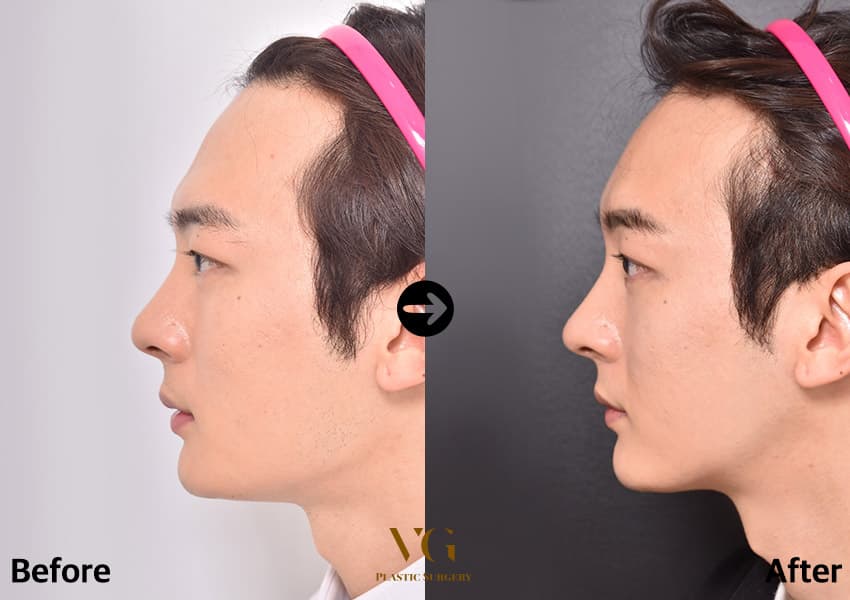
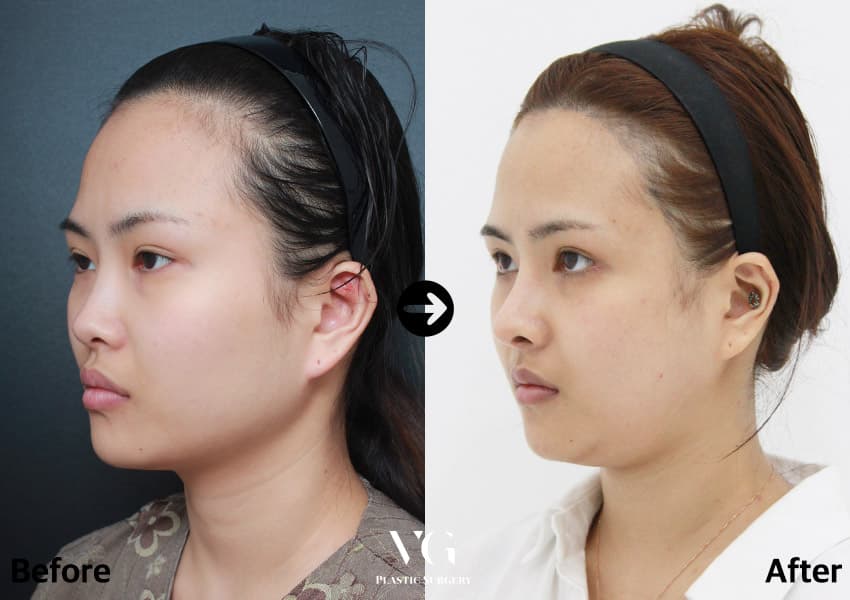
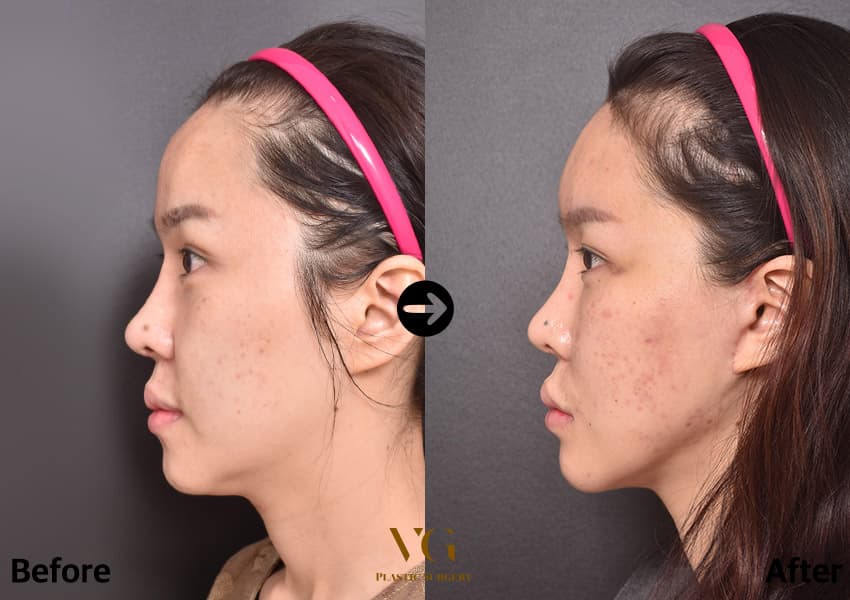
Real patients from our archive, all photographed 3 months after surgery. Tap a case to compare it full size.
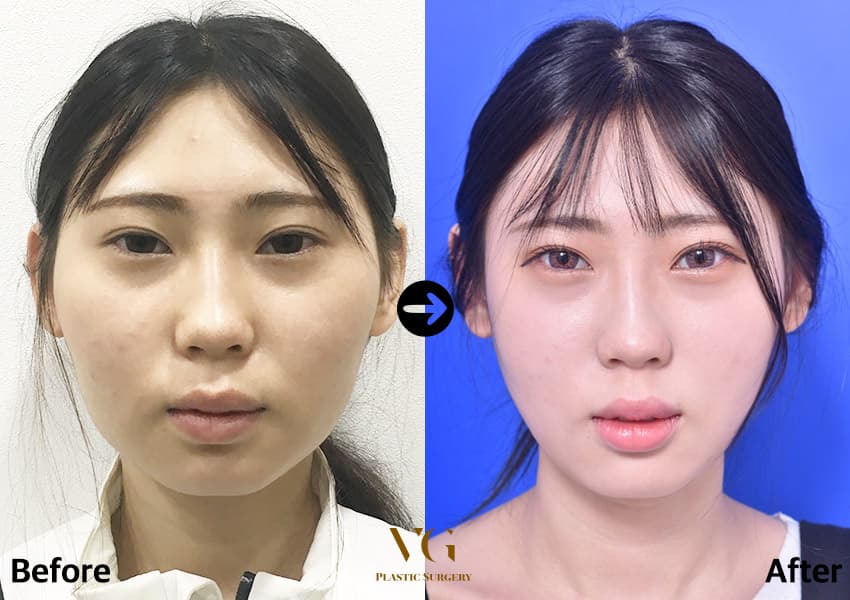
Square Jaw Reduction3 months after surgery
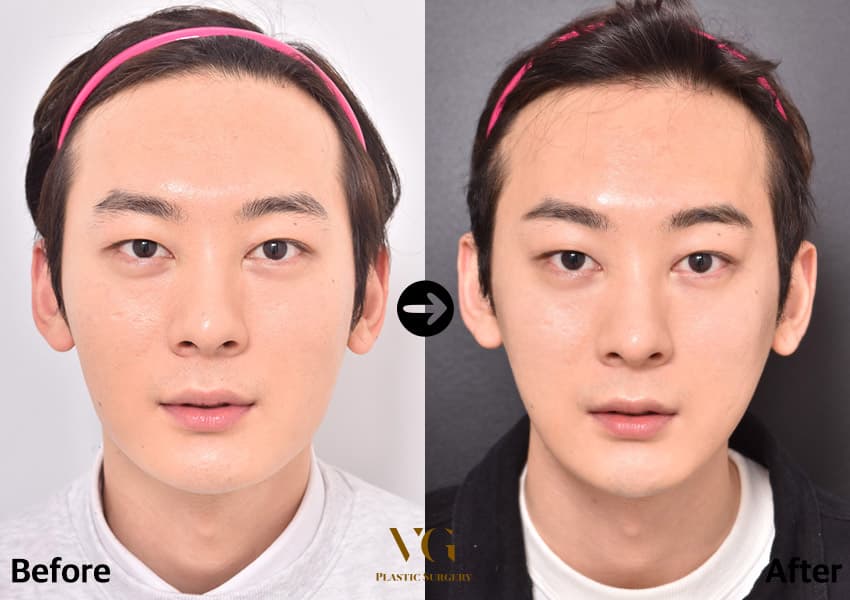
Square Jaw Reduction3 months after surgery
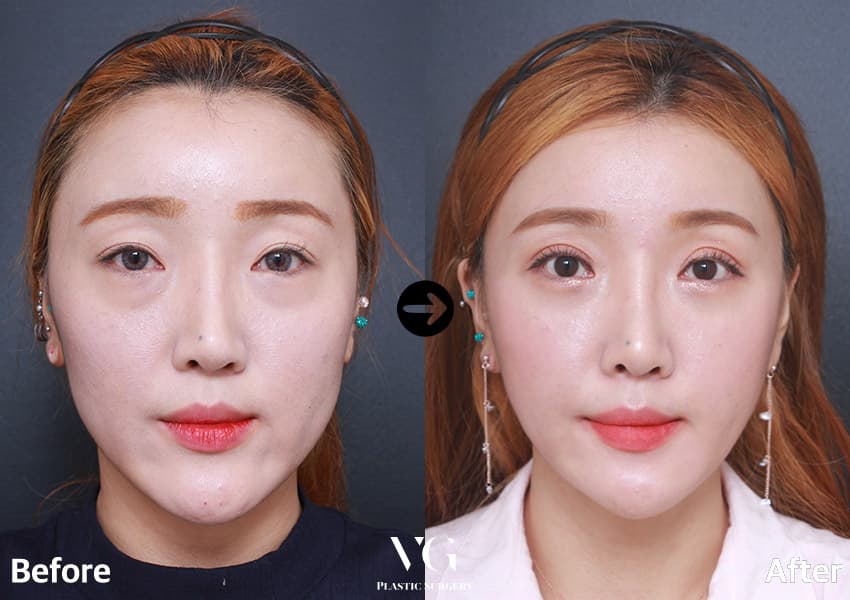
Square Jaw Reduction3 months after surgery
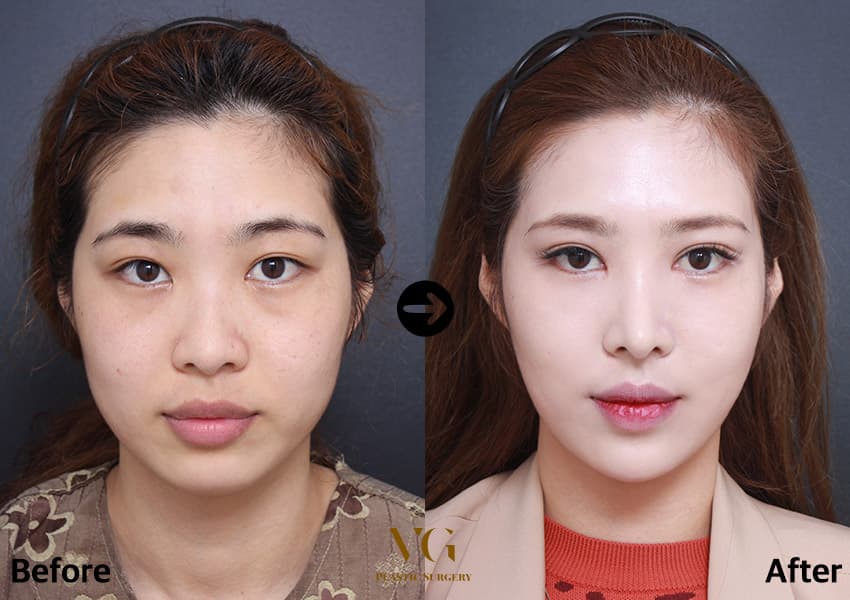
Square Jaw Reduction3 months after surgery
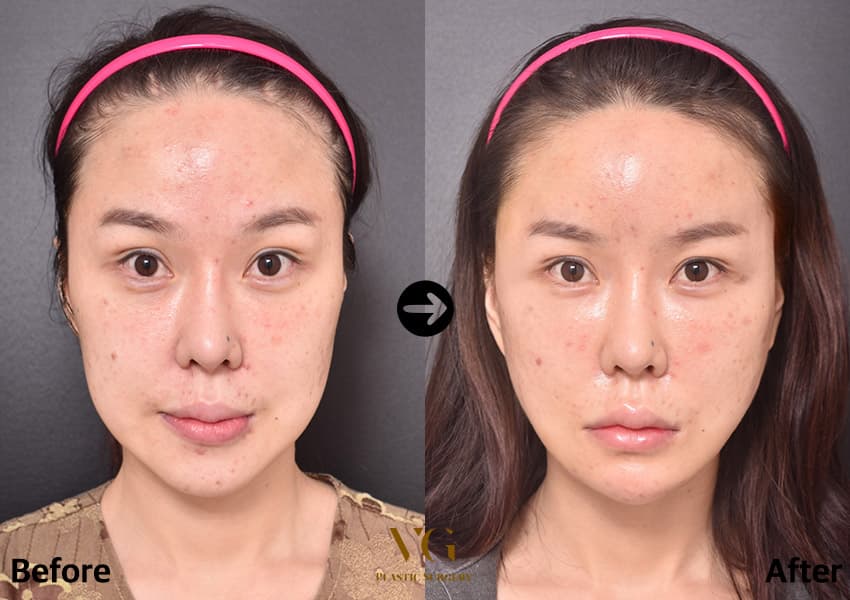
Square Jaw Reduction3 months after surgery
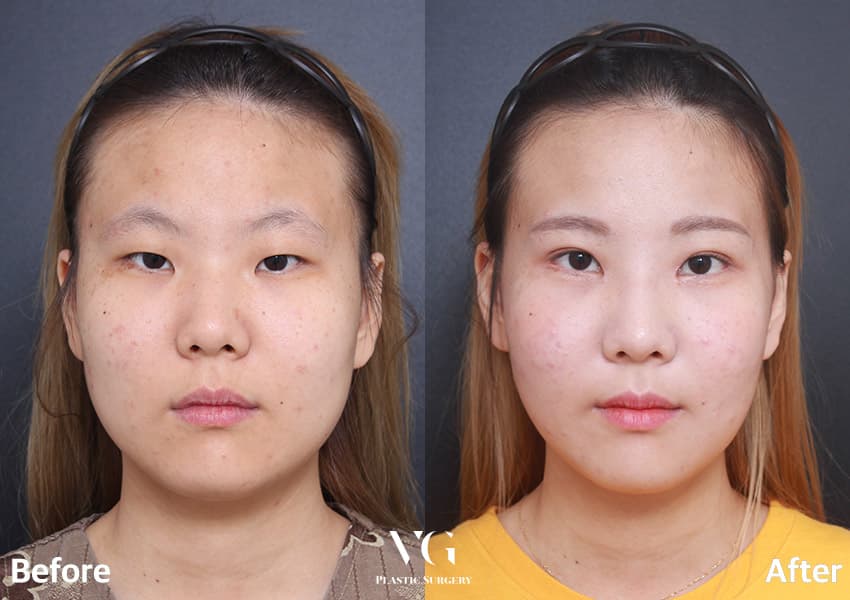
Square Jaw Reduction3 months after surgery
FAQ
Questions patients ask
What does lip numbness after jaw shaving feel like day to day?
Usually like a dental anesthetic wearing off: you can move the lip, but the skin feels thick or tingly. Because feeling is reduced, it's easy to bite your lip or miss a drip when drinking, so chew slowly and check your lip in a mirror after meals. Pins-and-needles that comes and goes is often a sign the nerve is recovering.
Will jaw shaving leave a scar on my face?
Angle reduction is usually done through incisions inside the mouth, along the gum behind the lower teeth, so there's normally no scar on the face. Those incisions are closed with stitches that need a clean mouth while they heal.
Does jaw shaving change my bite or how I chew?
Shaving the angle and the outer bone doesn't move your teeth, so the bite itself stays the same. Chewing feels stiff and tired early on because the muscles that close the jaw are swollen, and soft food is easier for a while.
If I don't like the result, can the bone be put back?
No. Removed bone does not grow back. If too much was taken, volume can be rebuilt to some degree with fat grafting or an implant, but the original angle can't be restored, which is why a cautious first reduction makes sense.
Should I stop smoking before jaw shaving?
Yes, and for as long afterwards as your surgeon advises. Smoking slows healing of the incisions inside the mouth and raises the chance of infection. Vaping and other nicotine products affect blood flow too, so mention them at the consultation.
Sources
- Incidence of Complications Associated with Mandibuloplasty: A Review of 588 Cases over 5 Years (Plastic and Reconstructive Surgery Global Open, 2014)
- In-hospital surgical treatment for haemorrhage after aesthetic mandibular osteotomy performed as an office-based day surgery: A case report (Ann Med Surg, 2017;24:15–18)
This article explains general medical information. Whether surgery suits you, and which method, is decided only after a consultation with the surgeon.
Written by
Im Young Min
Chief Director · Plastic Surgery
- Ph.D. in Medicine
- Internship and residency, Seoul St. Mary's Hospital
- Board-certified plastic surgeon, Seoul St. Mary's Hospital
- Adjunct professor of plastic surgery, Seoul St. Mary's Hospital
- Former director, Topface Plastic Surgery
Next step
Send two photos. Get a surgeon’s answer.
Front and side, natural light, no filter. Dr. Im Young Min reviews them and tells you which method fits and how many days to stay in Seoul.
International patients pay the same surgical fee as Korean patients. Pricing policy
Keep reading
Facial Contouring
Korea Facial Feminization Surgery: Bone Work Sets the Trip
Facial feminization in Korea is usually jaw, chin and cheek contouring, often with rhinoplasty. The bone work sets the trip: longer if areas are combined.
Im Young Min ·
Facial Contouring
Korea Sliding Genioplasty Consultation Booking Appointment: Why the Flight Home Gets Booked Last
For a sliding genioplasty trip to Seoul, send your photos first, have the in-person consultation early in the trip, fix the surgery date after it, and book the flight home last.
Im Young Min ·
Facial Contouring
Booking a Sliding Genioplasty Consultation in Korea: What You Pay When, and How Many Days to Stay
Sending photos to book a sliding genioplasty consultation needs no card or payment details, and the deposit and payment method are decided after the consultation. Many surgeons want you near the clinic for about a week before a long flight.
Im Young Min ·