Facial Contouring
“best facial contouring surgery Korea”: Five Things a Clinic List Can't Show About Your Bone
No ranking can name the best facial contouring surgery Korea offers for your face. Check who cuts the bone, whether a CT sets the plan, who runs the anaesthesia, and how follow-up works once you fly home.

· 8 min read · Last updated
Edited by Im Young Min
In this article
- 01Why threads about facial contouring in Korea sound alike
- 02How do you read a clinic recommendation post?
- 03Who will actually cut the bone?
- 04What the CT shows that your selfie can't
- 05Who watches your breathing while you're asleep?
- 06What decides the cost of facial contouring surgery?
- 07Risks a ranking never lists
- 08What happens after you fly home?
The short answer
Are you searching for the best facial contouring surgery Korea has, and unsure whether any list can be trusted?
- A clinic list or star rating can't tell you which bone was cut, how much, or who watched the anaesthesia.
- Ask who will actually operate and look up that surgeon's board certification under their own name.
- A CT shows bone thickness and where the nerves run, and those two things limit how much bone can come off.
- Ask whether the anesthesiologist is on staff, because bone contouring is usually done under general anaesthesia.
- Arrange follow-up at home before you fly, because swelling and numbness can take months to settle.
Please read on before you book or decide anything, because bone is not something you can redo.
Profile
Im Young Min
Chief Director · Board-certified in Plastic Surgery
After reading you will know how to read clinic recommendation posts, who should be cutting the bone, what a CT plan shows, and what happens after you fly home, so you can decide whether to ask a clinic about your own face.
Hello, I'm Im Young Min, Chief Director and a board-certified plastic surgeon.
I trained at Seoul St. Mary's Hospital, and I share the facial contouring centre at VG Plastic Surgery with Dr. Park Sang Wook, also a board-certified plastic surgeon, who is a member of a maxillofacial contouring research group.
I wrote this because many people treat a ranking as if it were advice for their own face, when the lists have never seen their bone.
Short answer: no ranking can name the best operation for you, because it depends on your bone, your nerves and your soft tissue. A CT plan and a surgeon you can check tell you more than a list does.
Send a photo and your one question on WhatsApp
Why threads about facial contouring in Korea sound alike
Most threads describe the first two weeks well and the first year badly. They cover the swelling, the hotel, the compression band and the interpreter. They rarely say which bone was cut, how much was taken, or who was watching the patient's breathing.
The search results are noisy for a second reason. Type “best facial contouring surgery Korea” or just “Korean facial” and you get spa treatments, glass skin facials, aqua peels and skincare shops in San Diego or Houston. Facial contouring is a different thing altogether. It is bone surgery on the cheekbones, jaw angle or chin, usually under general anaesthesia, with nerves running close to where the surgeon works. A list that mixes the two isn't measuring anything you need.
Star ratings mostly reflect the stay: reception, interpreters, how quickly messages were answered. Those things matter on a trip. They tell you very little about how a cheekbone was set back or where a jaw cut sat relative to the nerve.
How do you read a clinic recommendation post?
Read it for what you can check. A useful post names the surgeon, the operation and the bone involved. If a post only names a clinic and a feeling, there's nothing to check. Five questions sort posts quickly:
- Does it name who operated, and can you find that surgeon's board certification under their own name?
- Does it say which bone changed (cheekbone body, arch, jaw angle, chin), or only “V-line”?
- Was a CT taken before the plan was fixed?
- Who ran the anaesthesia: a full-time anesthesiologist, a visiting one, or does the post not say?
- Was it written at week two or at month six? Early swelling hides a lot.
A post that skips questions one and four hasn't told you much, sponsored or not. The same reading habit works for other parts of the face, too. Our checklist on how to check a facelift surgeon in Seoul applies it to a different layer of tissue.
Who will actually cut the bone?
The name on your consent form should belong to a board-certified plastic surgeon whose training you can look up before you fly. Here, four board-certified plastic surgeons divide eyes, nose, facial contouring, body and breast between them. Which centre each one belongs to, and where they trained, is published under their own name.
Two of us cover facial contouring. He belongs to the Maxillofacial Contouring Surgery Research Group and is a full member of the Korean Cleft Palate-Craniofacial Association. His work centres on nose and facial contouring, the two centres that work with bone and cartilage. My own credentials, including full membership of the American Society for Aesthetic Plastic Surgery (ASAPS), are listed on my profile page.
Whichever clinic you're considering, ask plainly: who will operate, and is that the person I'm meeting today? Before that conversation, it helps to know which contouring operation matches cheekbone, jaw or chin width, so you can tell whether the plan you're offered fits the part of your face that bothers you.
What the CT shows that your selfie can't
A photo shows width. A CT shows bone thickness, the nerve canal, and how the left and right sides really differ. The clinic's contouring page sums it up in two lines. Nerves and bone thickness are mapped on CT. And because bone does not grow back, anything that doesn't need to go stays.
Three things usually shape a contouring plan when a surgeon reads the scan:
- The jaw nerve. The inferior alveolar nerve runs inside the lower jaw toward the chin. A Korean paper on mandibular angle contouring (Journal of the Korean Society for Aesthetic Plastic Surgery, 2003) is devoted to keeping the cut clear of this nerve. How close the canal sits limits how much of the angle can come off.
- Which part of the cheekbone. The arch and the body of the cheekbone are different structures. The 2013 paper “Concept of Reduction Malarplasty” in Archives of Aesthetic Plastic Surgery is about how that reduction is planned.
- The soft tissue on top. Thick or loosening cheeks may not follow the bone neatly, so age and skin laxity become part of the plan.
| What a list tells you | What to ask instead | Why it matters |
|---|---|---|
| “Famous for V-line” | Which bone, and how much? | Jaw angle, chin and cheekbone are separate operations |
| “Natural results” | Was a CT taken before planning? | The nerve canal and bone thickness set the limit |
| “Quick recovery” | When can the shape be judged? | Swelling after bone work often takes months to settle |
| “Great doctors” | Who runs the anaesthesia? | Bone contouring usually means general anaesthesia |
If your concern is the lower face as one line, our article on shaping the jawline and chin together in V-line surgery explains how the two are planned together.
Say you are 29, you have a wide lower face, and one side of your jaw looks heavier than the other in photos. You think you need jaw reduction on both sides. On the CT, I would first check where the nerve runs through the jaw and how much bone is on each side, since the heavier side may be bone and the other side may be muscle or soft tissue.
That could mean working on one side more than the other, or leaving a part alone, and you would not see that in a selfie.
Who watches your breathing while you're asleep?
Here, three board-certified anesthesiologists work full time, and one is dedicated to every operation. They monitor blood pressure, pulse and breathing from the first injection until you are awake again. They do not perform cosmetic surgery. Their only job is to keep you safe while it happens.
The anaesthesia team also assesses underlying conditions in advance. Bring a list of your medications, any sleep apnoea diagnosis and any past reactions to anaesthesia to the consultation.
Some people ask about adding another operation to the same trip, such as liposuction for body contouring or incisional or non-incisional double eyelid surgery. Whether that makes sense depends on total operating time and your health, so it's an anaesthesia question as much as a surgical one.
What decides the cost of facial contouring surgery?
The cost of facial contouring, including surgery for facial asymmetry, depends on which bones are involved. Reducing the cheekbones, the jaw angle or the chin are different operations, and an uneven face often needs more than one of them. The amount of bone to be moved, and whether one side or both sides are corrected, changes the length of the operation. The type of anaesthesia and the monitoring it needs also count, as do the days you stay in Korea for checks and the follow-up after you go home.
Two people who search for the same operation can therefore need quite different plans. To get the figure for your case, send a front photo and a side photo on WhatsApp and ask for it.
Risks a ranking never lists
Facial contouring carries specific risks, and a clinic list mentions none of them. The common ones are swelling and bruising that take weeks to months to settle, and temporary numbness in the cheeks, lower lip or chin. Less common are lasting numbness if the inferior alveolar nerve is injured during jaw work, uneven sides, and problems specific to cheekbone reduction: sagging cheek tissue, or bone that heals out of its intended position.
A Korean paper on preventing complications and managing unfavourable results in reduction malarplasty (Archives of Plastic Surgery, 2008) covers these problems. It also gives you a useful set of questions for any consultation. How is the bone fixed? What happens if one side heals differently? Who sees me if it does? Bleeding, infection and facial nerve weakness are rarer still.
Some people should wait or not have the operation at all: anyone whose facial bones are still growing, anyone with a medical condition that makes long general anaesthesia unsafe until it's controlled, and anyone hoping a change in bone shape will settle a feeling it can't reach. Recovery and the final shape differ from person to person. Whether you are a candidate is decided at the in-person consultation, after the CT.
If numbness or the flight home is what's stopping you from booking, put it in writing. On WhatsApp, send the area you want changed (cheekbones, jaw angle or chin) and the month you could travel, with that question attached.
Send a photo and your one question on WhatsApp
What happens after you fly home?
Plan your follow-up at home before you book the flight to Seoul. The U.S. Centers for Disease Control and Prevention's medical tourism guidance tells travellers to talk with a doctor at home before the trip, take copies of their medical records, and arrange follow-up care for when they get back. After bone surgery, that means finding a local plastic or maxillofacial surgeon who is willing to see you if something changes.
Ask any clinic for the operative details in a form your doctor at home can read: which bones were cut, which segments, and how they were fixed. Swelling after contouring can take months to settle, so judge your face at six months rather than at your two-week check.
What is usually normal and what deserves a call:
- Usually expected: swelling that goes down slowly, tightness when chewing, and numbness that improves bit by bit.
- Message the clinic and see a local doctor: swelling that suddenly gets worse on one side, fever, discharge from an incision, a change in how your teeth meet, or numbness that spreads instead of fading.
Men considering a jaw change often have different goals, such as keeping some definition at the angle. Our piece on how men approach plastic surgery in Korea is a useful companion read. The clinic is at 635 Nonhyeon-ro, Gangnam-gu, Seoul.
Your search for the best facial contouring surgery Korea brought you to lists. One photo is enough to start a conversation about your own face, and you can ask before booking anything. On WhatsApp, send a front photo and a side-profile photo, and ask the one question you most want answered: which bone do you think is the issue, and is it the right place to start? When you come to Seoul, I examine you in person and recommend what fits your face.
Related pages:
Facial Contouring before & after — more cases
Real patients from our archive, all photographed 3 months after surgery. Tap a case to compare it full size.
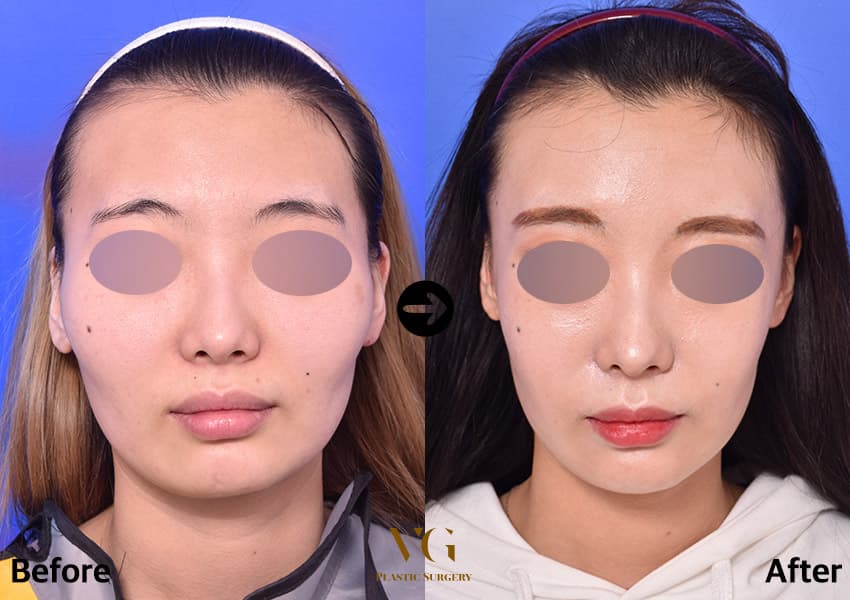
Cheekbone (Zygoma) Reduction3 months after surgery
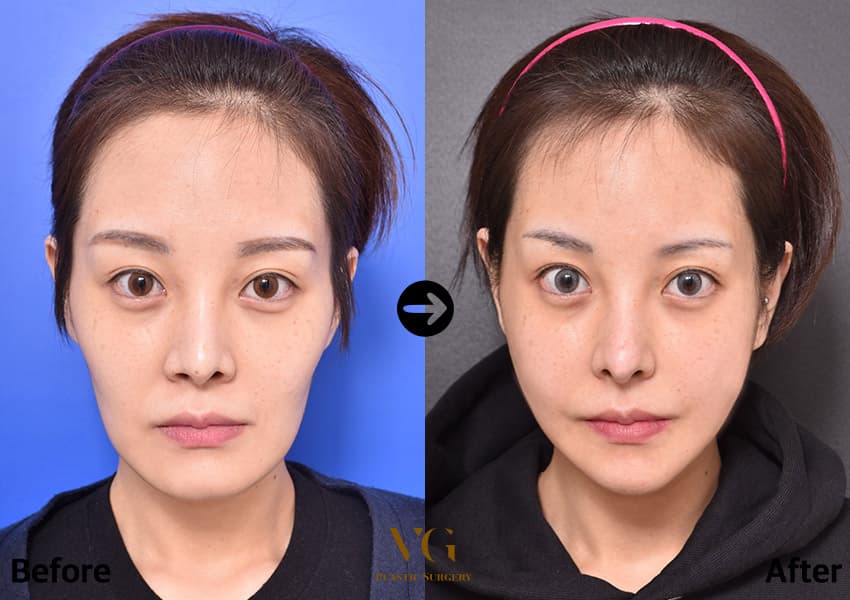
Cheekbone (Zygoma) Reduction3 months after surgery
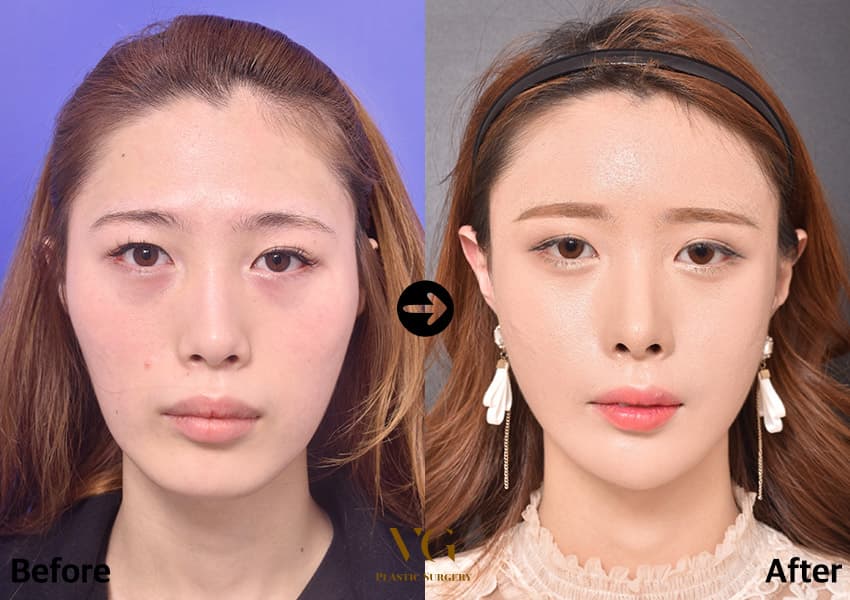
Cheekbone (Zygoma) Reduction3 months after surgery
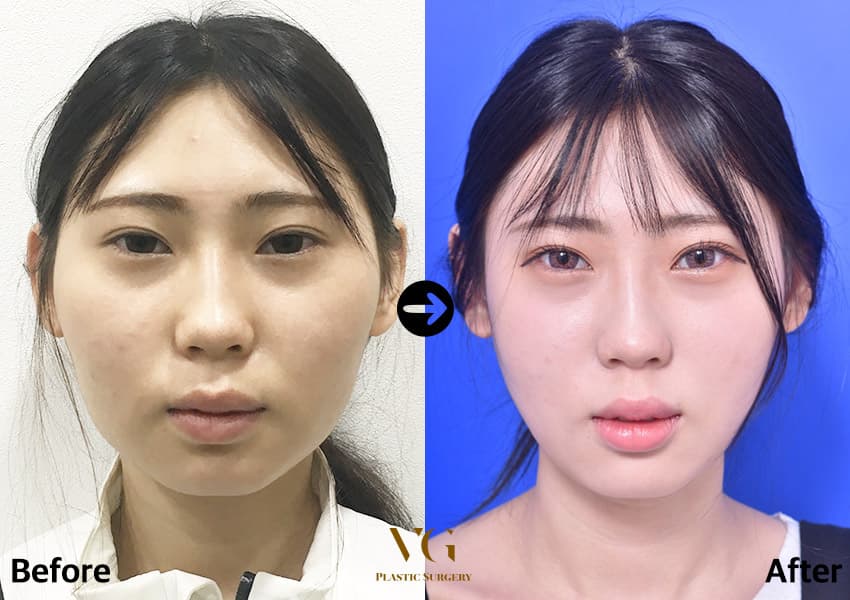
Cheekbone (Zygoma) Reduction3 months after surgery
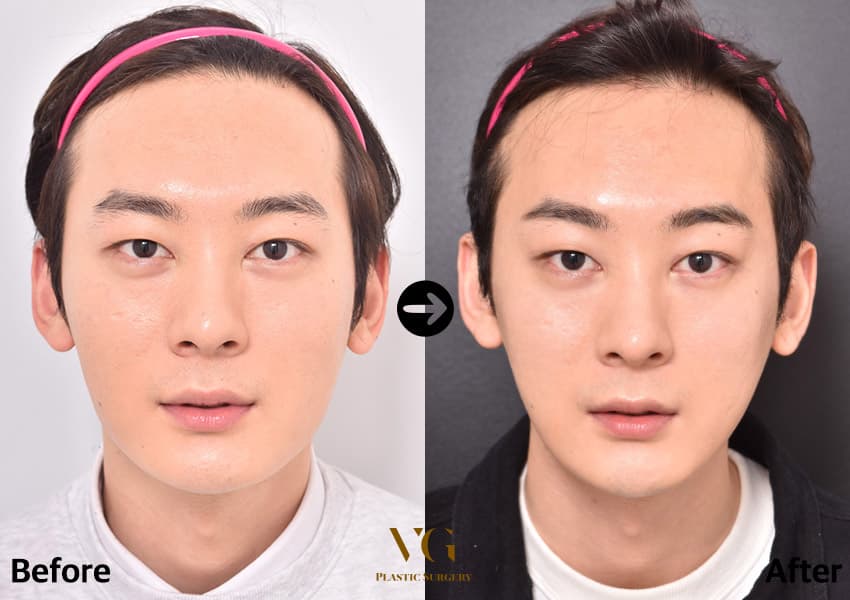
Square Jaw Reduction3 months after surgery
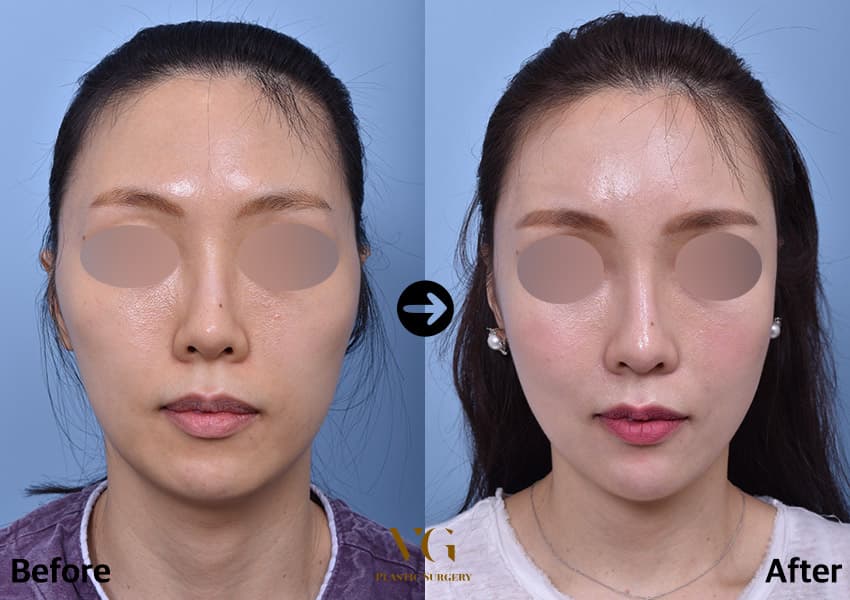
Cheekbone (Zygoma) Reduction3 months after surgery
FAQ
Questions patients ask
Is a Korean facial the same thing as facial contouring?
No. A Korean facial, glass skin facial or aqua peel is a skincare treatment done at a spa or skin clinic, and it involves no surgery. Facial contouring reshapes bone in the cheekbones, jaw angle or chin, usually under general anaesthesia. VG Plastic Surgery offers the surgical procedure only.
Can facial contouring fix an uneven face?
Sometimes. If the unevenness comes from bone, a CT shows how the two sides differ, and contouring can reduce the difference. If it comes from muscle, fat or soft tissue, bone surgery may change little. Most faces have some natural asymmetry, so the usual aim is better balance.
Will my chin or lip stay numb after jaw reduction?
Temporary numbness of the lower lip and chin is common after jaw angle or chin work, because the inferior alveolar nerve runs through the jaw. It usually improves over weeks to months. Lasting numbness is less common, and it is one of the risks to discuss with your own CT in front of you.
Can I combine cheekbone or jaw reduction with another surgery on one trip?
You can ask about it, for example with liposuction or eyelid surgery, but each added procedure lengthens the time under anaesthesia and the recovery. The surgeon and the anesthesiologist weigh total operating time against your health history, so bring a full list of your medications and past conditions.
Who is on the facial contouring team at VG Plastic Surgery?
Facial contouring at VG Plastic Surgery is done by Dr. Im Young Min, chief director, and Dr. Park Sang Wook. Both are board-certified plastic surgeons. Three full-time board-certified anesthesiologists, who do not operate, run the anaesthesia, with one dedicated to each operation.
Sources
- Concept of Reduction Malarplasty (Archives of Aesthetic Plastic Surgery, 2013;19(2):89-94)
- Prevention of Complication and Management of Unfavorable Results in Reduction Malarplasty (Archives of Plastic Surgery, 2008;35(4):465-470)
- Avoidance of Injury to the Inferior Alveolar Nerve in Mandibular Angle Contouring; Maneuver of One Inch (J Korean Soc Aesthetic Plast Surg, 2003;9(2):33-36)
- Medical Tourism
This article explains general medical information. Whether surgery suits you, and which method, is decided only after a consultation with the surgeon.
Written by
Im Young Min
Chief Director · Plastic Surgery
- Ph.D. in Medicine
- Internship and residency, Seoul St. Mary's Hospital
- Board-certified plastic surgeon, Seoul St. Mary's Hospital
- Adjunct professor of plastic surgery, Seoul St. Mary's Hospital
- Former director, Topface Plastic Surgery
Next step
Send two photos. Get a surgeon’s answer.
Front and side, natural light, no filter. Dr. Im Young Min reviews them and tells you which method fits and how many days to stay in Seoul.
International patients pay the same surgical fee as Korean patients. Pricing policy
Keep reading
Facial Contouring
South Korea Genioplasty Cost Range: What Moves the Number? Methods, Reviews and Recovery
A South Korea genioplasty cost range is wide because moving bone, shortening a chin and placing an implant are different operations; the method, anesthesia and days in Seoul set your figure.
Im Young Min ·
Facial Contouring
Three Dates That Shape a Zygoma Reduction Korea Trip, From CT to Flight Home
Zygoma reduction in Korea is bone surgery you fly home from, so plan around three dates: the consultation and CT before surgery, the check-up that clears you to fly, and your first appointment at home.
Im Young Min ·
Facial Contouring
Is chin lipo Korea Right for Your Full Chin? Cost, Reviews and What It Can't Fix
What chin lipo Korea does is remove fat under the chin and along the jaw. It won't shorten a long chin or narrow a square one, and it suits people at a stable weight whose skin still has some spring.
Im Young Min ·