Eyes
Plastic Surgery in Korea for Foreigners: From First Photo to Flight Home
A Seoul plastic surgeon walks through what actually changes when you fly in for surgery: the photo quote, how many days to stay, interpretation, surgery day, follow-up from home and how the fee is set.
In this article
- 01What actually changes when you are a foreign patient
- 02Step 1 — Before you fly: photos, the surgeon's review and a written quote
- 03Step 2 — How many days to stay in Korea
- 04Step 3 — In Seoul: interpreter, coordinator and surgery day
- 05Why eye surgery is the example here
- 06Step 4 — After you fly home: three months of follow-up
- 07What you pay: the same surgical fee as Korean patients
- 08What I check first — and when I tell people to wait
The short answer
Plastic surgery in Korea for foreigners follows the same operation a Korean patient has, at the same surgical fee. What changes is the schedule around it: a free photo quote before you book a flight, an interpreter in the room, a minimum stay of 7 to 14 days depending on the surgery, and three months of remote follow-up after you fly home.
- Start with a free photo quote from the surgeon — you can learn whether surgery is appropriate before buying a ticket.
- Plan at least 7 days in Seoul for eye surgery, 7 or 14 for nose surgery, and 14 for facial contouring or a face and neck lift.
- Interpretation covers consultation, the design check on surgery day and follow-up visits, in nine languages.
- International patients pay the same surgical fee as Korean patients, in one itemised written quote.
- After you leave, photo reviews and written answers from your surgeon continue for three months, with English medical documents.
I am Im Young Min, chief director and board-certified plastic surgeon at VG Plastic Surgery in Seoul. I trained at Seoul St. Mary's Hospital, where I am an adjunct professor of plastic surgery, and I operate in our eye, nose, facial contouring, body and breast centres. When people write to me about plastic surgery in Korea for foreigners, the operation is rarely their first question — it is how the trip around it works.
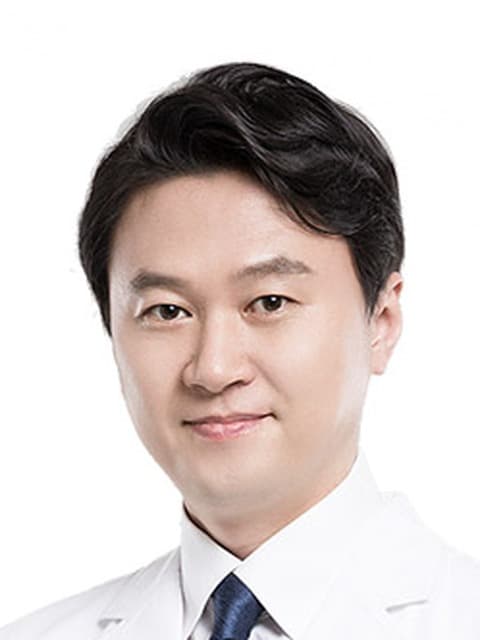
Profile
Im Young Min
Chief Director · Board-certified in Plastic Surgery
So this is not an article about one procedure. It is the order things happen in, from the photo you send to the check-up you have once you are home, using our eye surgery centre as the worked example because eyelid surgery has one of the shortest stays.
What actually changes when you are a foreign patient
The operation does not change. The surgeon, the technique, the anesthesiologist in the room and the recovery checks are the ones a patient from Seoul would have. What changes is time and distance: you have a fixed number of days here, and you will not be ten minutes away when a question comes up in week three.
Korean plastic surgery for foreigners therefore has to be planned backwards from your flight. Stitches have to come out before you leave. The first check after surgery cannot be skipped. And someone has to still be answering you once you are home.
We are registered with the city of Seoul as a healthcare provider for international patients and as a Seoul medical tourism partner institution. More than 7,000 international patients from 53 countries have come to us, so the steps below are the ones we have refined around real travel schedules.
Step 1 — Before you fly: photos, the surgeon's review and a written quote
You can find out whether surgery is appropriate for you without buying a plane ticket. This part is where most of the real decisions are made.
- Send photographs. Front and side views of the area that bothers you, plus a line on what you want changed. The surgeon who would operate reviews them, not a salesperson.
- A reply by messenger or email. The plan and what to expect come back in writing, so you can read them in your own time. The in-person consultation happens at the clinic in Seoul, with an interpreter.
- Written, itemised quote. In your language, showing what is included and what is not, with a stated validity period, before you decide anything.
- A direct answer, including no. If your concern does not need surgery, or this is not the right time, you will be told that.
- Documents for travel or leave. A letter confirming your appointment if your employer or visa process needs one.
Our international patient programme sets out everything the plan includes. The one thing I ask you not to do is book a non-refundable flight before the consultation confirms your dates.
Step 2 — How many days to stay in Korea
This is the number most people need first, because it is the one they have to give their employer. These are the minimum stays we ask international patients to plan for, so we can check your recovery before you fly.
| Surgery | Minimum stay | What decides it |
|---|---|---|
| Eye surgery | At least 7 days | Stitches come out 3–7 days after surgery |
| Nose surgery | At least 7 or 14 days | 14 days when bones are cut (osteotomy) or it is a revision; 7 otherwise |
| Facial contouring | At least 14 days | Stitches come out 10–14 days after surgery |
| Face & neck lift | At least 14 days | Stitches come out one week after surgery; hair washing waits until then |
Count from the day you land to the day you can fly, and book your return for the last day or later. Recovery differs between people, and we set the exact dates together in consultation. The trip planner lays out a day-by-day itinerary for each procedure.
Send two photos — front and side — with the dates you can travel, and I'll tell you whether they fit the surgery you are considering.
Step 3 — In Seoul: interpreter, coordinator and surgery day
One coordinator stays with your case from your first message to your final check, so you never explain your history twice. Interpretation is provided through consultation, the design confirmation on the morning of surgery and every follow-up visit.
We interpret in English, Indonesian, Japanese, Chinese, Mongolian, Vietnamese, Thai, Russian and Cambodian. Tell your coordinator which one you actually think in when you book.
For your stay, we can introduce eight partner hotels near the clinic, from one to five stars, at partner rates, so you can walk to the clinic the day after surgery. Airport pickup depends on your surgery booking, and your coordinator confirms it in writing.
| Stage | How long | What happens |
|---|---|---|
| Arrive at the clinic | 90 minutes before your slot | Clean face, no contact lenses, no food since midnight |
| Final consultation and design | 20–30 minutes | The plan is drawn on your face and explained with the interpreter present; nothing starts until you agree |
| Surgery | 1–4 hours, by procedure | An anesthesiologist stays with you the whole time |
| Recovery room | 1–2 hours | You wake up under observation, not alone |
| Back to the hotel | Once you are cleared | With medication, written aftercare in your language and a number to reach at night |
| First check | Next day | Dressing and a look at the first night — this visit is not optional |
Why eye surgery is the example here
Eyelid surgery shows the foreign-patient schedule at its simplest. It takes 30 minutes to 2 hours under sedation, usually without admission, and you can wash your hair from the next day. That leaves the 7-day stay with room for the checks that matter.
Before choosing a method, our eye team measures three things: eyelid thickness, how much fat sits under the skin, and how strong the muscle that lifts the eye is. Those decide whether an incision is needed at all. The detailed comparison of methods is in our double eyelid surgery in Korea guide.
| Eye surgery | |
|---|---|
| Operation time | 30 minutes – 2 hours |
| Anesthesia | Sedation |
| Admission | Usually not required |
| Stitches out | 3–7 days after surgery |
| Hair washing | From the day after surgery |
| Recovery | 5–14 days |
| Minimum stay in Korea | At least 7 days |
The same planning applies to longer operations. If you are considering nose surgery, for example, the stay doubles to 14 days once osteotomy or revision is involved, and that changes the whole trip.
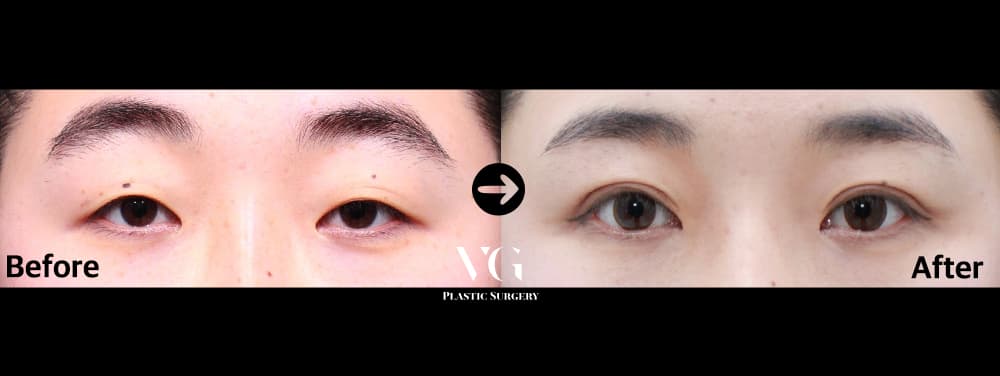
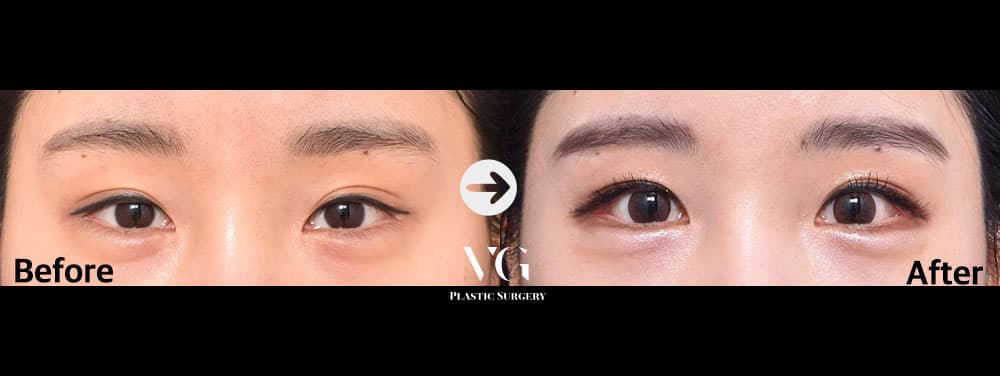
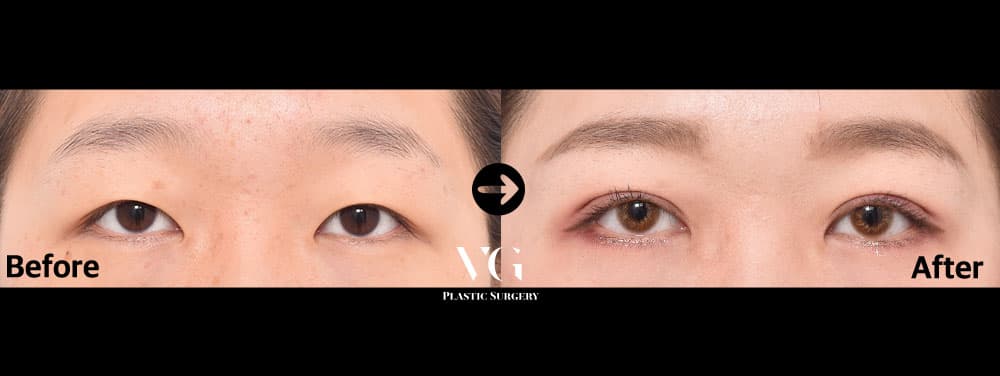
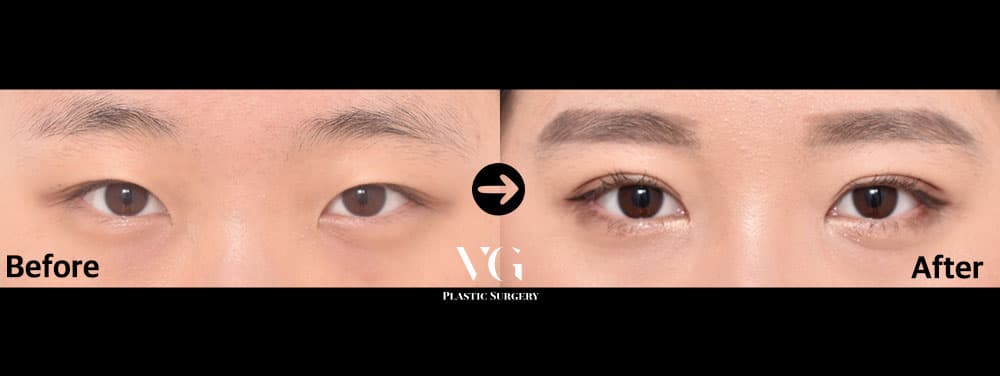
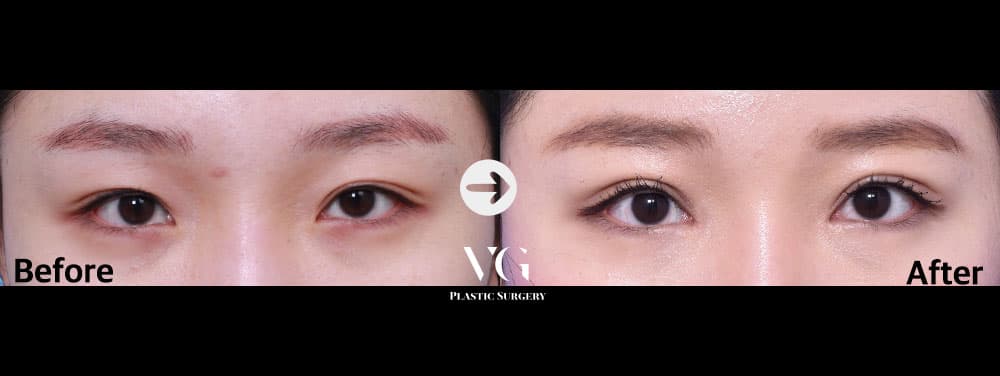
The first case above is shown in full on its incisional ptosis correction case page. Every photo carries the time since surgery, so you can compare like with like.
Step 4 — After you fly home: three months of follow-up
This is where Korea medical tourism plastic surgery most often goes wrong elsewhere: the patient lands, something looks uneven in the mirror, and there is nobody to ask. Swelling in particular keeps changing for weeks after you leave.
- Photo reviews at set intervals for three months, with a written response from your surgeon each time
- More photographs from set angles when the first ones are not enough to answer the question
- English medical documents — medical certificate, operation record and post-operative instructions — for your doctor, insurer or employer
- A written handover if something is better seen in person where you live, for the doctor who sees you
What you pay: the same surgical fee as Korean patients
There is no separate international price sheet and no markup because you booked from abroad. The fee does not change depending on which agency referred you. You receive one itemised written quote after consultation, before you decide anything.
When people search for a cosmetic surgery korea package, this is what ours contains: the surgeon's fee, anesthesia with the anesthesiologist, the operating theatre and recovery room, standard post-operative visits in Korea, dressings and discharge medication, interpretation, and three months of remote follow-up. Flights and hotel nights beyond the package are yours to arrange. Our pricing policy explains why we publish no price list.
What I check first — and when I tell people to wait
For eye surgery specifically, these are the situations where we ask you to wait or not go ahead:
- Untreated dry eye or blepharitis — we ask you to see an ophthalmologist first
- A travel schedule too short for stitch removal and the first follow-up in Korea
- You want the exact eyes from a celebrity photo — a different eyelid structure cannot produce the same shape
- Pregnancy, or an uncontrolled thyroid or bleeding disorder
Bring your passport, a list of the medication and supplements you take, and records of any previous surgery in the same area. Wear glasses rather than contact lenses on surgery day, and pack a button-up shirt. You can read more about my background on my surgeon profile.
Eyes before & after — more cases
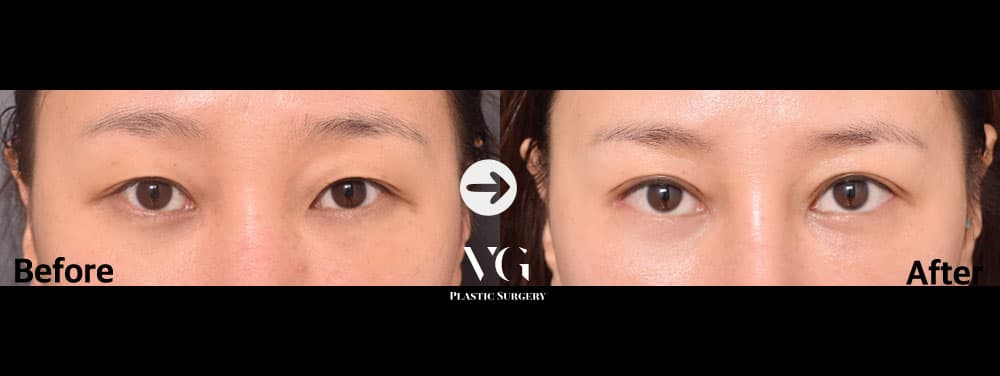
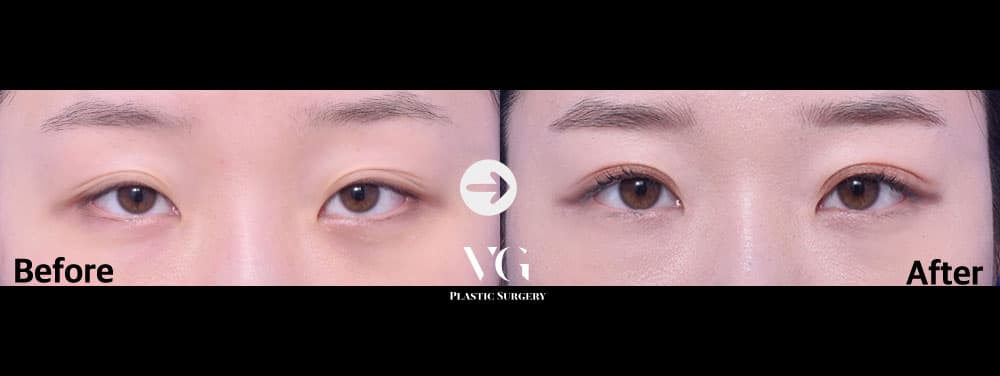
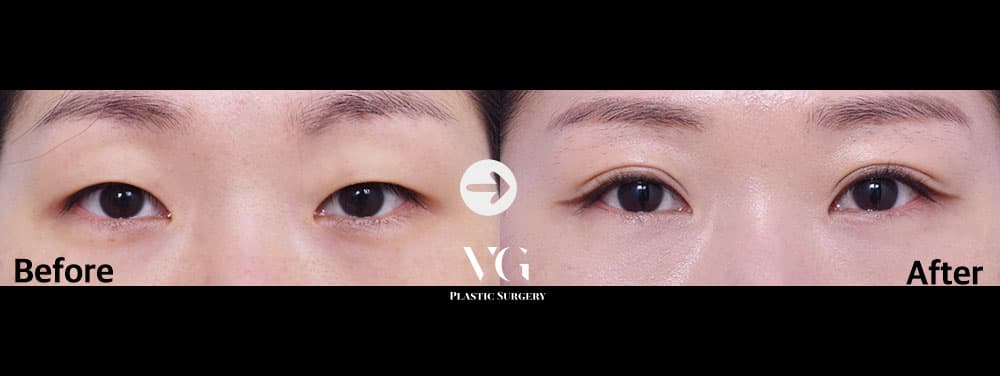
Real patients from our archive, all photographed 3 months after surgery. Tap a case to compare it full size.
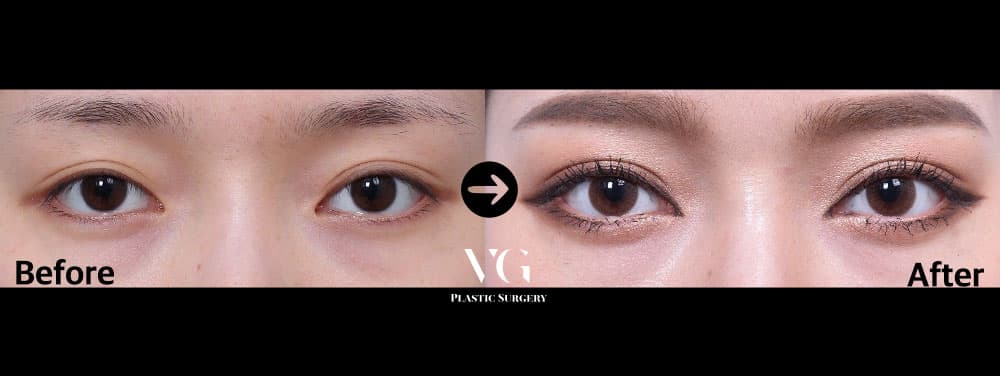
Natural-Adhesion Double Eyelid3 months after surgery
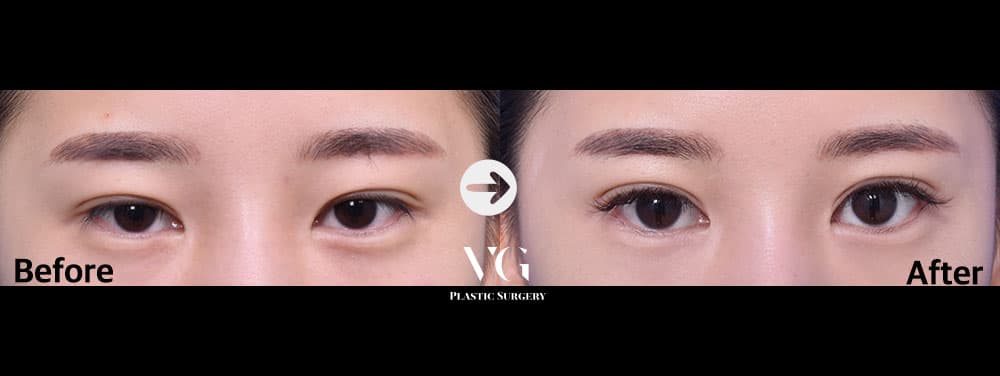
Natural-Adhesion Double Eyelid3 months after surgery
Natural-Adhesion Double Eyelid3 months after surgery
Natural-Adhesion Double Eyelid3 months after surgery
Natural-Adhesion Double Eyelid3 months after surgery
Natural-Adhesion Double Eyelid3 months after surgery
FAQ
Questions patients ask
Is plastic surgery in Korea for foreigners more expensive than for locals?
Not at our clinic. International patients pay the same surgical fee as Korean patients, with no foreigner surcharge and no agency commission built in. You receive one itemised written quote after consultation, before you commit.
How long do I need to stay in Korea after surgery?
At least 7 days for eye surgery, 7 or 14 days for nose surgery (14 with osteotomy or revision), and at least 14 days for facial contouring or a face and neck lift. We set your exact dates in consultation, because recovery differs from person to person.
Do I need to speak Korean?
No. An interpreter is with you in consultation, at the design check on surgery day and at follow-up visits. We interpret in nine languages, including English, Japanese, Chinese, Thai and Vietnamese.
Can I have a consultation before I travel?
Yes. Send photographs first; the surgeon reviews them and we reply by messenger or email with a plan. You get an honest answer and a written quote before you spend anything on travel.
What happens if I have a concern after I go home?
For three months after you leave, we review your photos at set intervals and your surgeon replies in writing. If photos are not enough we ask for more from set angles, and if something should be seen locally we write a handover for your doctor.
Can I combine eye surgery with another operation on one trip?
Sometimes, but the longer operation sets the length of your stay. Adding nose surgery with osteotomy, for instance, moves the minimum stay from 7 to 14 days. We plan the combination from your photographs, before you book flights.
This article explains general medical information. Whether surgery suits you, and which method, is decided only after a consultation with the surgeon.
Written by
Im Young Min
Chief Director · Plastic Surgery
- Ph.D. in Medicine
- Internship and residency, Seoul St. Mary's Hospital
- Board-certified plastic surgeon, Seoul St. Mary's Hospital
- Adjunct professor of plastic surgery, Seoul St. Mary's Hospital
- Former director, Topface Plastic Surgery
Next step
Send two photos. Get a surgeon’s answer.
Front and side, natural light, no filter. Dr. Im Young Min reviews them and tells you which method fits and how many days to stay in Seoul.
International patients pay the same surgical fee as Korean patients. Pricing policy
Keep reading
Eyes
How Much Does Double Eyelid Surgery Cost in Korea? Results, How Long It Lasts, Reviews and When to Spend Less
There's no single figure: the method your lids need, any ptosis or inner-corner work, the anesthesia and your days in Seoul set the quote, and foreigners pay the same surgical fee as Korean patients.
Im Young Min ·
Eyes
Lower Blepharoplasty Korea Cost: Fat, Skin or Lid Support? Reviews, Methods and Recovery
Your lower blepharoplasty cost in Korea follows what is causing the bags: bulging fat, a hollow beneath it, loose skin or a slack lower lid, plus the anesthesia and the days you plan in Seoul.
Im Young Min ·
Eyes
Double Eyelid Surgery Cost in Korea: What Changes Your Quote? Results, Reviews and Methods
Quotes for double eyelid surgery in Korea differ because they describe different operations: suture or incision, fat removal, ptosis correction, inner-corner work and revision.
Im Young Min ·