Facelift
Deep Plane Facelift Korea: Compare the Layer, Not the Name
A plastic surgeon in Seoul explains what people mean by a deep plane facelift, why we do not sell an operation under that name, and how to compare facelifts by the layer that is lifted and where it is anchored.
In this article
- 01What people mean when they search "deep plane facelift Korea"
- 02What we lift instead, layer by layer
- 03Our three facelifts, compared by the layer they lift
- 04Surgery day and recovery
- 05Coming to Korea for a facelift: stay, follow-up and fee
- 06What I check first in consultation
- 07Risks, whatever the facelift is called
The short answer
If you typed "deep plane facelift Korea" into a search bar, the useful question is not the name but the layer: is the tissue beneath the skin, the SMAS, lifted and anchored, or is only the skin pulled? We do not offer an operation called "deep plane". Our facelifts are named SMAS, mini and Crystal, and all three lift the SMAS rather than stretching skin.
- "Deep plane" describes where a surgeon works relative to the SMAS; the name alone does not tell you what will be done to your face.
- We do not use the name. Our SMAS, mini and Crystal facelifts all lift the SMAS and anchor it to the temporal muscle in front of the ear.
- Compare any facelift by four things: the layer lifted, where it is fixed, the incision, and whether the neck is included.
- Surgery takes about 2–3 hours under sedation, stitches come out at one week, and you should stay in Korea at least 14 days.
- International patients pay the same surgical fee as Korean patients, set out in a written, itemised quote.
I am Im Young Min, Chief Director and board-certified plastic surgeon at VG Plastic Surgery in Seoul, and an adjunct professor of plastic surgery at Seoul St. Mary's Hospital. Every facelift in our clinic is planned with me, from the consultation through the follow-up. Some of the messages I receive ask for a deep plane facelift Korea quote by name, and my first reply is always a question back: what do you want lifted?

Profile
Im Young Min
Chief Director · Board-certified in Plastic Surgery
What people mean when they search "deep plane facelift Korea"
A face is built in layers: skin, the fat beneath it, then a thin sheet of fibrous tissue called the SMAS, and under that the muscles. When a face sags, the SMAS has descended along with the skin. That is why a lift that only pulls skin stretches back, and the face looks taut rather than younger.
"Deep plane" is a name for working in relation to that SMAS layer rather than in the skin alone. Surgeons who use the name do not all mean exactly the same steps, and the term is not a standard of its own. So when someone asks me for a deep plane facelift in Korea, I translate it into the things that can actually be checked.
- The layer: is the SMAS lifted, or only the skin?
- The anchor: what is the lifted tissue fixed to, and does that tissue stretch?
- The incision: where does it run, and how far?
- The range: does the plan include the jawline and neck, or only the cheeks?
What we lift instead, layer by layer
Our facelift works one layer below the skin. Through an incision in front of the ear that follows its contour, the skin is separated from the loosened SMAS, and that tissue is trimmed. The SMAS is then fixed to the temporal muscle in front of the ear and drawn up.
Because it is anchored to tissue that does not stretch, the lift holds. Only after that is the excess skin trimmed and closed, without tension, so the skin itself is not pulled taut. How far the incision runs and how much is lifted are not fixed in advance; they depend on how far things have descended and on your skin, and I decide them with you at the consultation.
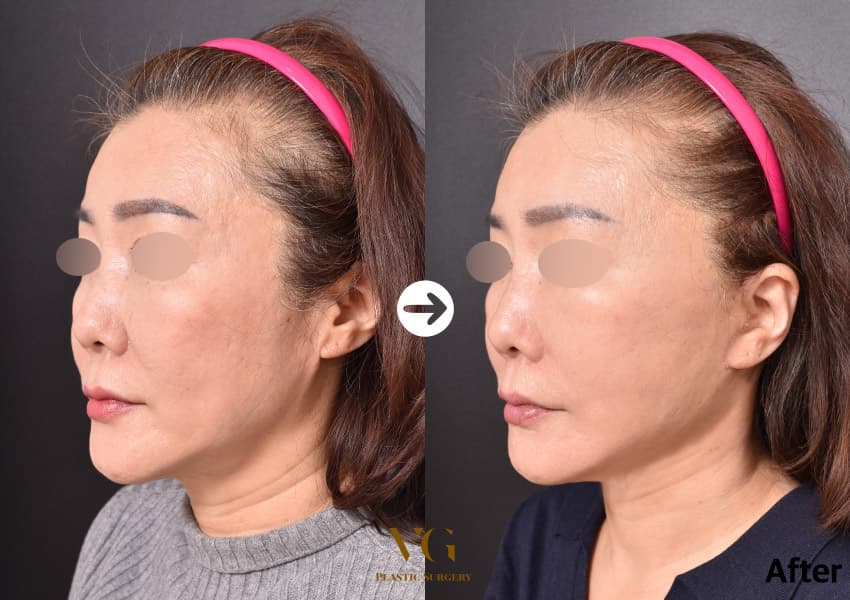
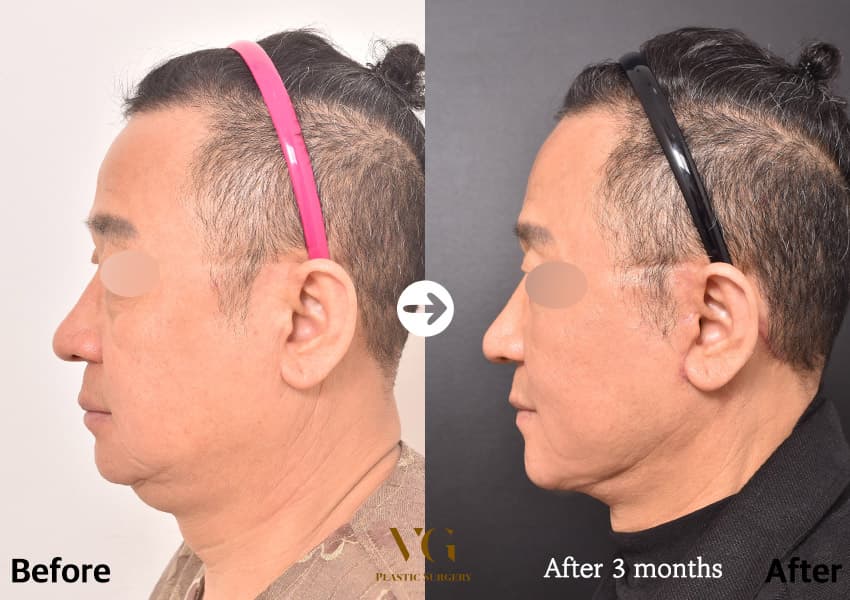
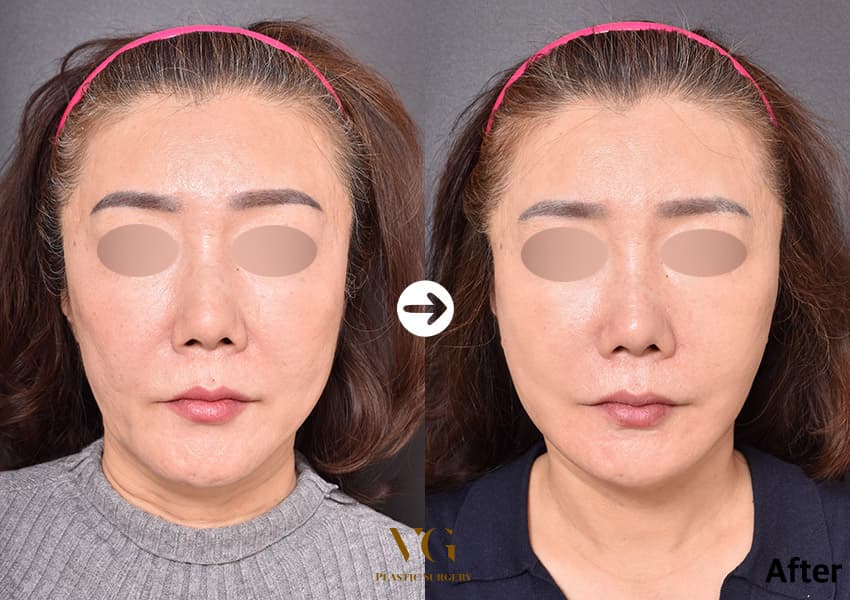
The first photo is the side view of the case at the top of this page; you can see this full-face facelift case in full. The profile view shows why the neck has to be part of the conversation: the change sits as much under the jaw as in the cheek.
Our three facelifts, compared by the layer they lift
Instead of a deep plane facelift, Seoul patients who come to us choose between three operations. All three reach the SMAS. What differs is how wide the dissection goes and whether bone is involved.
| SMAS facelift | Mini facelift | Crystal facelift | |
|---|---|---|---|
| Layer lifted | SMAS, anchored to the temporal muscle | SMAS, with less dissection | SMAS, plus cheekbone or jaw reduction |
| Incision | In front of the ear, following its contour | Part of the scalp and around the earlobe | In front of the ear, with the contouring approach |
| Areas it reaches | Cheeks, folds beside the nose and mouth, jawline | Midface: cheeks and folds; not the neck | The lift together with a wide or angular contour |
| Operating time | About 2–3 hours | Decided at consultation | About 2–3 hours |
| Anaesthesia | Sedation | Decided at consultation | Sedation |
| Stitches out | One week after surgery | Decided at consultation | One week after surgery |
If you were looking for a deep plane mini facelift
Some people search for a deep plane mini facelift because they want the layer lifted but a smaller operation. Our mini facelift is the closest answer to that wish: it still pulls down to the SMAS, but the dissection is smaller and the incision is limited to part of the scalp and around the earlobe.
It suits sagging that sits mainly in the cheeks and the folds around the mouth. If the jawline and neck have come down too, the mini range will not reach them, and I will say so rather than plan a smaller operation than your face needs.
When the face is wide as well as loose
No depth of lift changes bone. When a projecting cheekbone or an angular jaw makes the face look heavy, the Crystal facelift reduces the bone while the loosened layer is lifted. The bone work itself is covered on our facial contouring page.
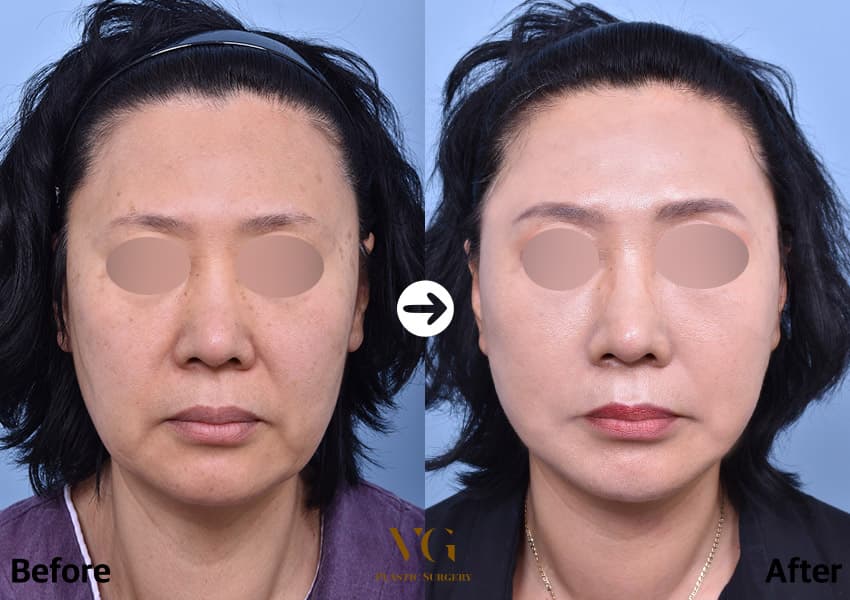
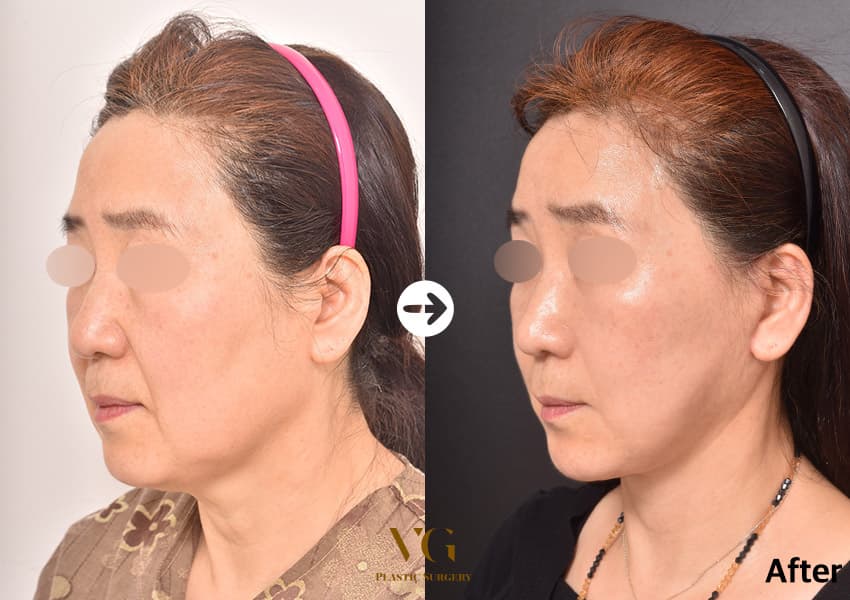
More results, filtered by face, neck, forehead and other areas, are in our facelift before-and-after gallery.
Surgery day and recovery
Whichever facelift is planned, I draw the plan on your face before surgery and go through it with you, with the interpreter present. Nothing starts until you agree to what is drawn. The SMAS and Crystal facelifts take about 2–3 hours under sedation, and no hospital admission is needed.
| When | What happens |
|---|---|
| Right after | Swelling begins to rise; cold compresses and a raised head help |
| Days 5–7 | Swelling is at its peak, then comes down noticeably |
| Day 7 | Stitches come out and we check the healing together |
| 1–2 weeks | Back to everyday life; most people fly home around here |
| 3–6 months | Tissue settles and expression eases |
| About 12 months | The final result is assessed |
The week-by-week detail, and how surgery compares with threads, is in my longer guide to the Korean facelift. This page stays on the question of layers and names.
Send three photos — front, 45 degrees and full profile with the jaw and neck in frame — and I'll tell you which layer needs lifting and which of our three facelifts I would plan.
Coming to Korea for a facelift: stay, follow-up and fee
For a face or neck lift, plan to stay in Korea at least 14 days. That covers the swelling peak, stitch removal at one week, and the checks before I confirm you are safe to fly. The day-by-day stay planner lays this out against your own dates.
After you go home, follow-up continues for three months by photograph review, written responses from me, and a request for more photographs from set angles when the first ones are not enough. One coordinator stays with you from your first message, and an interpreter is with you throughout your visit.
What decides the cost
People often ask for the deep plane facelift cost in Korea as a single figure. I cannot give one before seeing your face, because the fee depends on which of the three facelifts is planned and what is combined with it: neck, forehead, under-eyes or fat grafting.
International patients pay the same surgical fee as Korean patients, with no foreigner surcharge. After I review your photographs you receive one written, itemised quote before you decide; our pricing policy explains what it covers.
What I check first in consultation
I also tell people when a facelift is not the answer. If volume loss, rather than sagging, is the main cause, we look at fat grafting first. A diagnosis of hypertrophic or keloid scarring, an uncontrolled systemic illness or bleeding disorder, or a schedule without two weeks in Korea are all reasons not to go ahead.
My training and the areas I operate in are on my profile page.
Risks, whatever the facelift is called
A deeper or wider lift does not remove the risks of surgery, and no name does. Swelling is expected, asymmetry can show while tissue settles, and a scar sits in front of the ear. Recovery differs from person to person.
- Scarring: the incision follows the contour of the ear and the skin is closed without tension; a history of keloid scarring is a reason not to go ahead
- Anaesthesia: an anesthesiologist stays with you for the whole operation, monitoring blood pressure, pulse, oxygen and breathing
- Bleeding: an uncontrolled bleeding disorder or systemic illness is screened for before anything is planned
- Leaving too early: the 14-day minimum exists so that stitch removal and the checks happen here, not by guesswork after your flight
If you came here from a search for deep plane facelift Korea, our facelift page sets out the three operations and the results by area in more detail.
Send your photos on WhatsApp, and I'll tell you whether the SMAS needs lifting, whether the neck has to be included, and how long you would need in Seoul.
Facelift before & after — more cases
Real patients from our archive, all photographed 3 months after surgery. Tap a case to compare it full size.
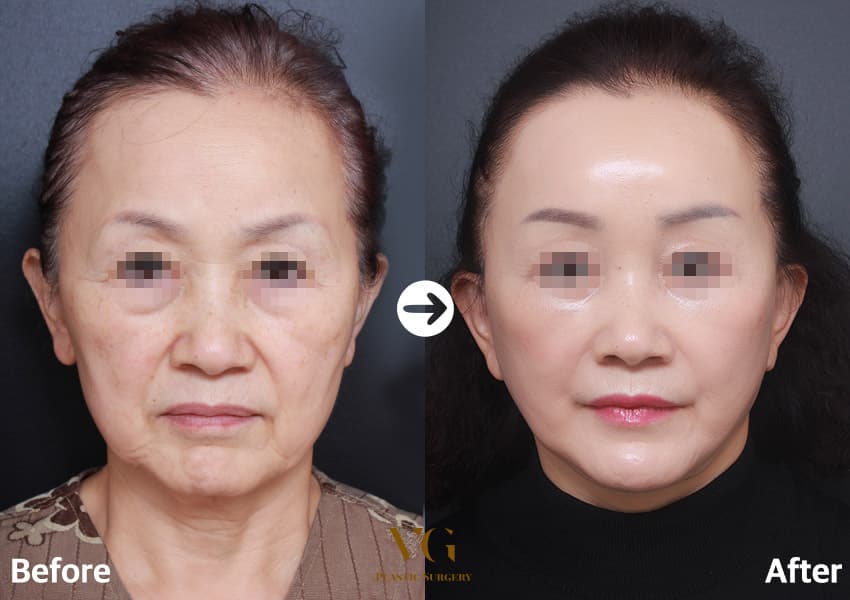
Face Lift3 months after surgery
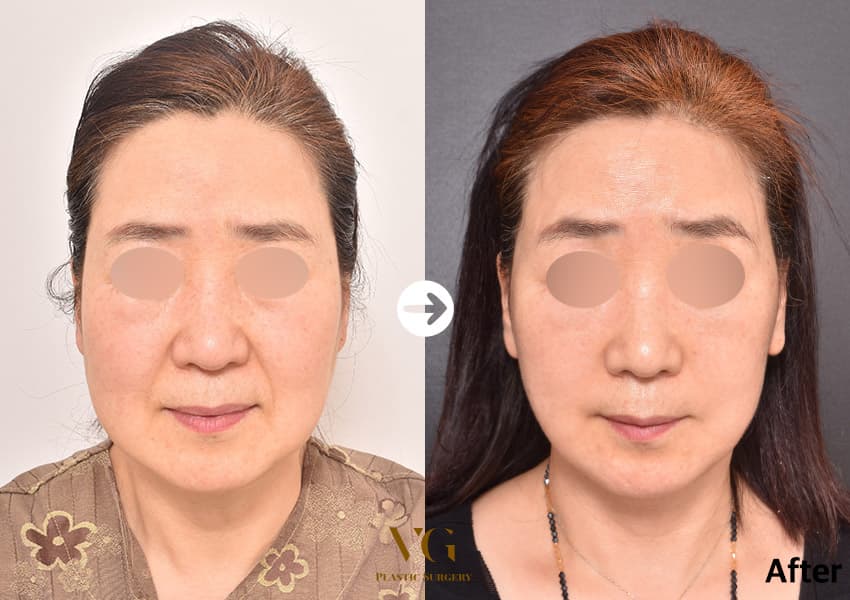
Face Lift3 months after surgery
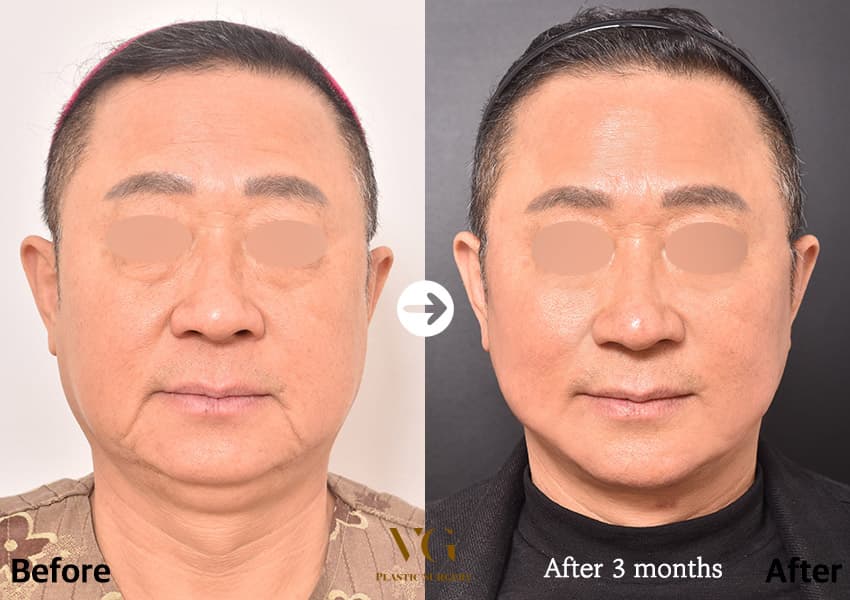
Face Lift3 months after surgery
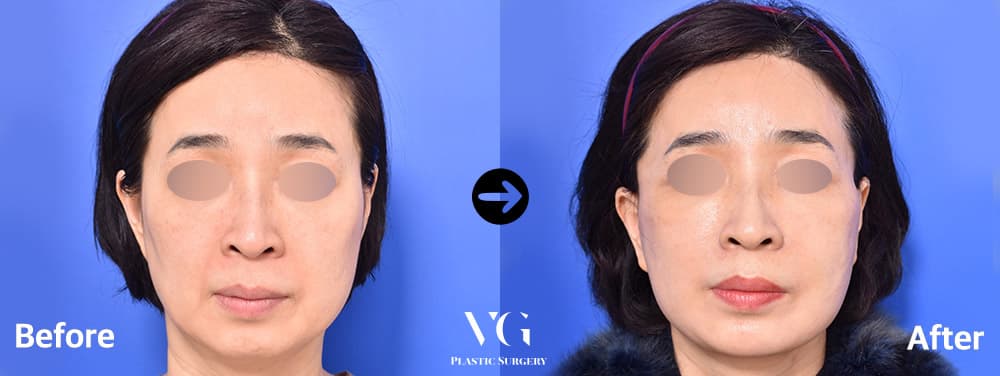
Face Lift3 months after surgery
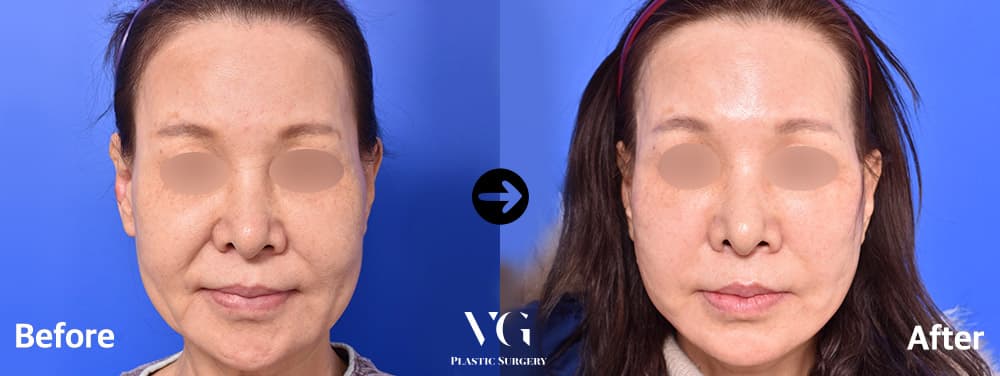
Face Lift3 months after surgery
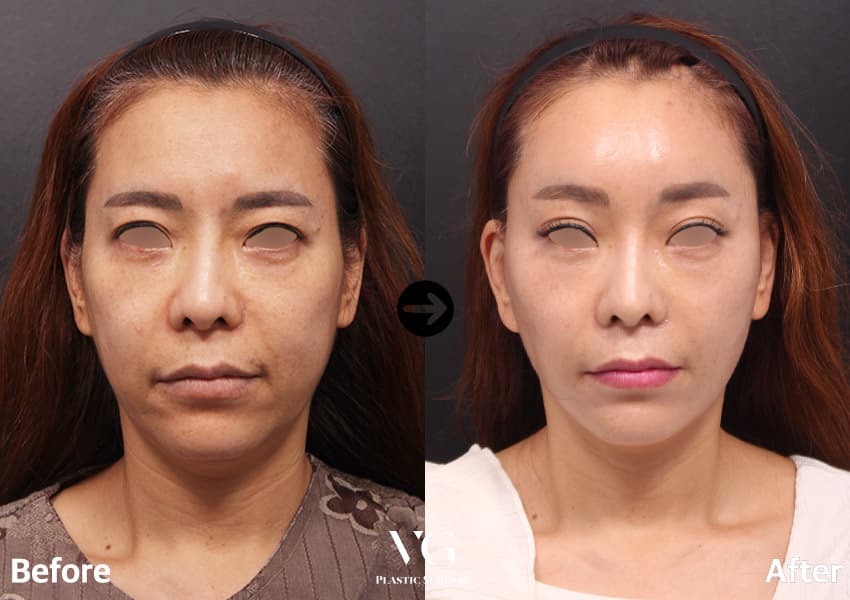
Face Lift3 months after surgery
FAQ
Questions patients ask
Do you offer a deep plane facelift in Korea?
Not under that name. Our facelifts are the SMAS, mini and Crystal facelifts, and all three lift the SMAS layer beneath the skin and anchor it to the temporal muscle in front of the ear. I describe what is lifted and where it is fixed rather than attach a label.
How do I compare a deep plane facelift with a SMAS facelift?
Ask the same four questions of each: which layer is lifted, what it is fixed to, where the incision runs, and whether the jawline and neck are included. Those answers tell you more than the name of the operation.
Is there a deep plane mini facelift?
Our mini facelift still reaches the SMAS but with less dissection and an incision limited to part of the scalp and around the earlobe. It suits sagging mainly in the cheeks and around the mouth; it does not reach the neck.
How much is a facelift in Korea for international patients?
We do not publish a price list, because the fee depends on which facelift is planned and what is combined with it. International patients pay the same surgical fee as Korean patients and receive an itemised written quote before deciding.
How long should I stay in Seoul after a facelift?
At least 14 days. That covers the swelling peak around days 5–7, stitch removal one week after surgery, and the checks before your surgeon confirms you are safe to fly.
Will a deeper facelift leave a bigger scar?
The scar depends on where the incision runs, not on the name of the operation. Ours is placed in front of the ear and follows its contour, and the skin is closed without tension. People with hypertrophic or keloid scarring are advised against the operation.
This article explains general medical information. Whether surgery suits you, and which method, is decided only after a consultation with the surgeon.
Written by
Im Young Min
Chief Director · Plastic Surgery
- Ph.D. in Medicine
- Internship and residency, Seoul St. Mary's Hospital
- Board-certified plastic surgeon, Seoul St. Mary's Hospital
- Adjunct professor of plastic surgery, Seoul St. Mary's Hospital
- Former director, Topface Plastic Surgery
Next step
Send two photos. Get a surgeon’s answer.
Front and side, natural light, no filter. Dr. Im Young Min reviews them and tells you which method fits and how many days to stay in Seoul.
International patients pay the same surgical fee as Korean patients. Pricing policy
Keep reading
Facelift
Deep Plane Facelift Korea Cost After a Lift That Didn't Last: What Are You Paying For? Reviews, Methods and Recovery
A deep plane facelift's cost follows how far the release goes, the neck, add-on procedures, earlier surgery and anesthesia time. Ask on WhatsApp with photos of your face and neck.
Im Young Min ·
Facelift
Mini Facelift Korea Price: Why Do Two Quotes Differ? Reviews, Methods and Recovery
A mini facelift Korea price moves with how deep the lift goes, whether the neck is included, the anesthesia and your days in Seoul. The word “mini” alone tells you little about the figure.
Im Young Min ·
Facelift
9D Facelift Korea: Swelling, Stitches and the Flight Home
“9D” is a brand name some Korean clinics give their facelift, not a standard technique. The decisions that shape your trip are which tissue layer is lifted, how long to wait before flying, and who sees you once you're home.
Im Young Min ·