Facelift
Deep Plane Facelift Korea Cost After a Lift That Didn't Last: What Are You Paying For? Reviews, Methods and Recovery
A deep plane facelift's cost follows how far the release goes, the neck, add-on procedures, earlier surgery and anesthesia time. Ask on WhatsApp with photos of your face and neck.
In this article
- 01What does “deep plane” add to the bill?
- 02Which parts of your face set the cost?
- 03If your first lift didn't last, how would I reason?
- 04What reviews say about deep plane lifts, and what holds up
- 05How many days in Seoul should you plan for recovery?
- 06Risks, and who should wait
- 07Who looks after you, and what to send first
The short answer
Wondering what a deep plane facelift Korea cost would actually cover, now that your first lift has worn off? Read this before you weigh one more quote. You'll know what sets the cost, what reviews claim about deep plane lifts, which methods might answer your face, and how recovery fits a trip, so you can judge which plan suits your face and your budget.
- The fee follows the extent of the work: depth of release, neck, add-ons and anesthesia time.
- Two quotes with the same lift name can describe different operations, so ask which layer is released.
- A second lift is planned around scar tissue and around what actually dropped.
- Lost volume may call for fat grafting more than a stronger pull.
- Send face and neck photos plus details of any earlier lift on WhatsApp to ask about your plan.
Hello, I'm Dr. Im Young Min, Chief Director and board-certified plastic surgeon at VG Plastic Surgery in Gangnam, Seoul.

Profile
Im Young Min
Chief Director · Board-certified in Plastic Surgery
Our facelift menu lists SMAS, Crystal and mini facelifts, and before choosing the direction of the pull, we look at which layer has actually descended. Foreign patients pay the same surgical fee as Korean patients.
I'm writing this because people often compare deep plane quotes by the name printed on them, and a second lift is a different operation from a first.
The cost of a deep plane lift is set by the extent of the work: how deep the release goes, whether the neck is included, what else is done at the same time, whether earlier surgery left scar tissue, and how long you're under anesthesia. The label alone doesn't set it.
To start with your own face, send front and both side photos in even light on WhatsApp, with a note of what was done before and when, and ask: which layer has dropped in my face?
Send face and neck photos on WhatsApp
What does “deep plane” add to the bill?
A face has layers: skin, fat, a fibrous sheet called the SMAS, and beneath it the ligaments that hold the cheek and jowl to bone. A skin-only lift tightens the outer layer. An SMAS lift tightens or trims the fibrous sheet.
Going deeper takes more operating time and works closer to the branches of the facial nerve, and both show up in a fee. The other part of the difference is vocabulary. “Deep plane”, “SMAS” and branded lift names are used differently from clinic to clinic, so two quotes with the same word can describe different operations. Our earlier piece on comparing the layer instead of the name goes further into that.
You won't find “deep plane” as its own item on our menu; the lifts are listed as SMAS, Crystal and mini, and how SMAS, mini and Crystal lifts differ is laid out separately. What you can ask, of us or of anyone, is which layer will be released, how far, and what happens to the neck.
Which parts of your face set the cost?
Any honest answer to “deep plane facelift Korea cost” comes down to five things in your own face and plan.
- Extent of the release. Mid-face and jowl only, or carried into the neck. A neck that has loosened along with the jawline usually adds time.
- What's done alongside. Upper eyelid surgery and brow lifting are often considered with a facelift, and lost volume can be restored with fat grafting, which we also offer. Each adds operating time.
- A previous lift. Scar tissue from earlier surgery makes dissection slower and the plan more individual.
- Days in Seoul and follow-up. Stitches, dressing checks and the time before you're fit to fly shape how long you stay. Hotel nights belong in your budget even though they're outside the surgical fee.
For your own figure, send your photos on WhatsApp. The doctor who would actually operate reviews the photos you send and replies by messenger or email with a plan and an estimate.
If your first lift didn't last, how would I reason?
Say you're 59, you had a mini lift some years ago, and the jowls and the softness under the jaw have come back. A surgeon at home has suggested a deep plane lift, and you'd like to know whether a trip to Seoul makes sense for you.
The first thing I'd look at is which layer actually came down. If the skin was tightened while the deeper tissue kept descending, another skin-level lift is likely to disappoint again. If the cheeks have hollowed, some of what looks like sagging is lost volume, and pulling harder won't replace it; fat grafting may do more there. And if the neck bands bother you most, the neck needs to be in the plan, or the jawline won't match it.
None of that shows up in a price list. It's also why a second lift is planned differently from a first: there's scar tissue to work through, and the skin has already been moved once. Finding the layer that dropped before choosing the lift covers that thinking in more detail.
When you write, include a side photo of your neck with your chin level, and the date and type of your earlier procedure. Those two details shape a second-lift plan more than anything else.
Send face and neck photos on WhatsApp
What reviews say about deep plane lifts, and what holds up
“Deep plane lasts longer.” It's a common claim. I don't think the published comparisons settle it, and how long any lift holds also follows your skin, your weight and the years ahead. Treat it as a question to ask before you pay more for it.
“No windswept look.” Releasing the deeper tissue lets it move without dragging on the skin, which is one reason people choose it. Direction matters as much: a face pulled too far sideways can look tight with any technique.
“Recovery takes much longer.” Swelling after any full facelift takes weeks to settle. More dissection can mean more swelling, but your own healing, your blood pressure and whether the neck was done make as much difference.
“A new name means a new operation.” Branded names come and go. Looking past names like 9D to the swelling, stitches and flight home shows what to ask instead.
How many days in Seoul should you plan for recovery?
The American Society of Plastic Surgeons describes bandages around the face after surgery, sometimes small drain tubes, and bruising and swelling that ease over the following weeks. Stitches near the ears are usually removed within the first week or two.
For a visitor, the flight is the main planning question. The CDC's medical tourism guidance notes that flying after surgery raises the risk of blood clots, advises planning recovery time before the flight, and suggests carrying your medical records home. A long-haul flight with a swollen face is uncomfortable; with an unnoticed collection of blood under the skin, it is dangerous.
So I wouldn't name a number of days before seeing your plan. Send your possible travel dates with your photos and ask how many days that plan would need. You can see the facelift options and each surgeon's training on our English homepage.
Risks, and who should wait
Common and temporary effects are swelling, bruising, tightness, numbness of the cheeks and ears, and some discomfort when you turn your head. These usually fade over weeks to a few months.
The American Society of Plastic Surgeons lists less common risks: bleeding under the skin (hematoma), facial nerve injury with weakness, which is usually temporary, hair loss at the incisions, skin loss, infection, poor wound healing, unfavorable scarring, facial asymmetry and the risks of anesthesia.
As general medicine, it's usually wiser to wait or think again if:
- you smoke or vape, which raises the risk of skin loss
- your blood pressure isn't well controlled, since that raises the risk of hematoma
- you take blood thinners or supplements that affect bleeding and can't stop them safely
- you're still in the middle of a large weight loss
If one side of your face swells suddenly, or you have increasing pain, fever or new weakness after you're home, see a doctor or an emergency department straight away and bring your operation notes. Results vary between people, and suitability for surgery is confirmed only after an in-person exam.
Who looks after you, and what to send first
On WhatsApp, send front and side photos and a line about any earlier lift, with the one question you most need answered. One set of photos is enough to start, and you can ask before booking anything. When you come to Seoul, we examine your face in person and I recommend the lift that fits it, and nothing it doesn't need.
Related pages:
Facelift before & after — more cases
Real patients from our archive, all photographed 3 months after surgery. Tap a case to compare it full size.
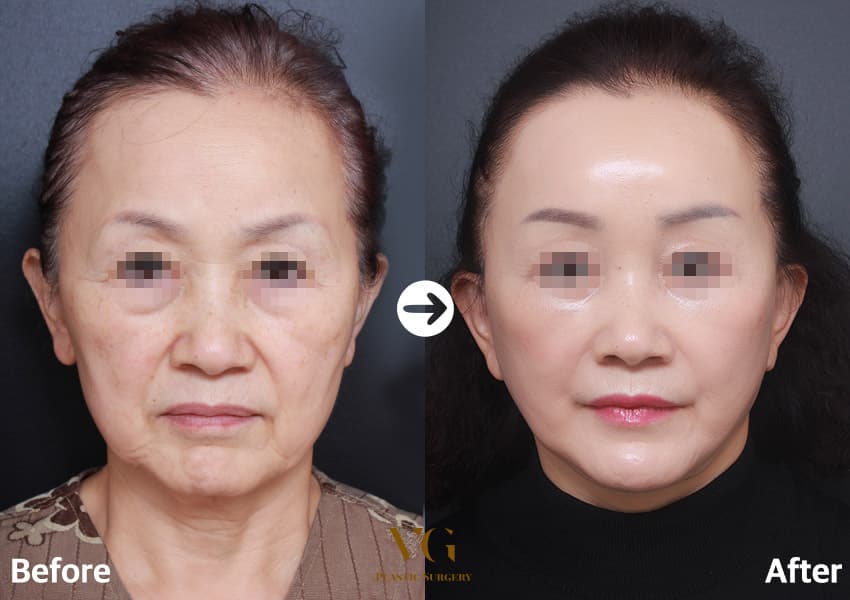
Face Lift3 months after surgery
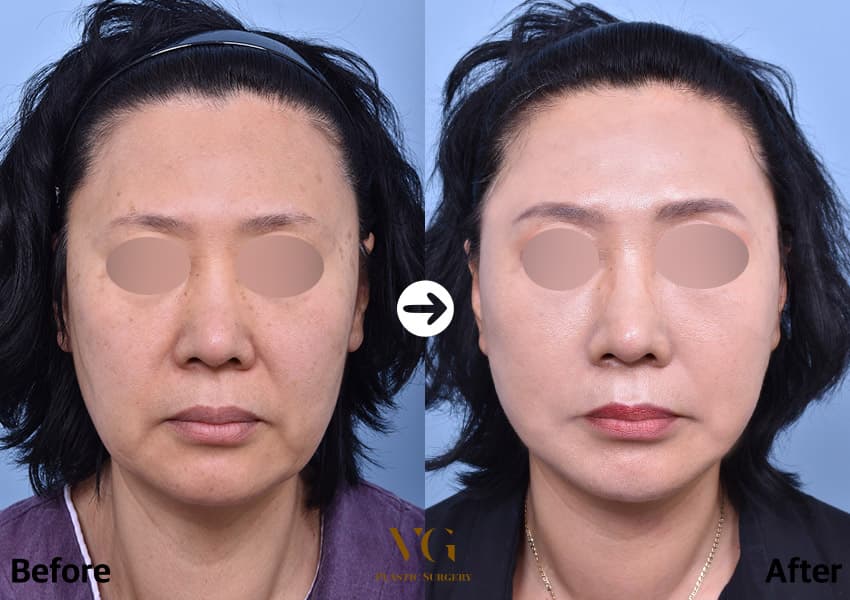
Face Lift3 months after surgery
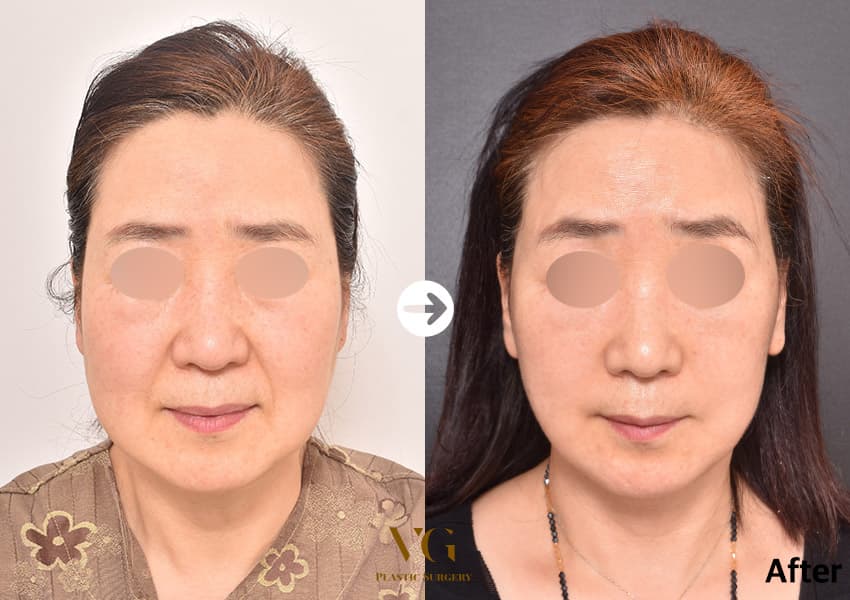
Face Lift3 months after surgery
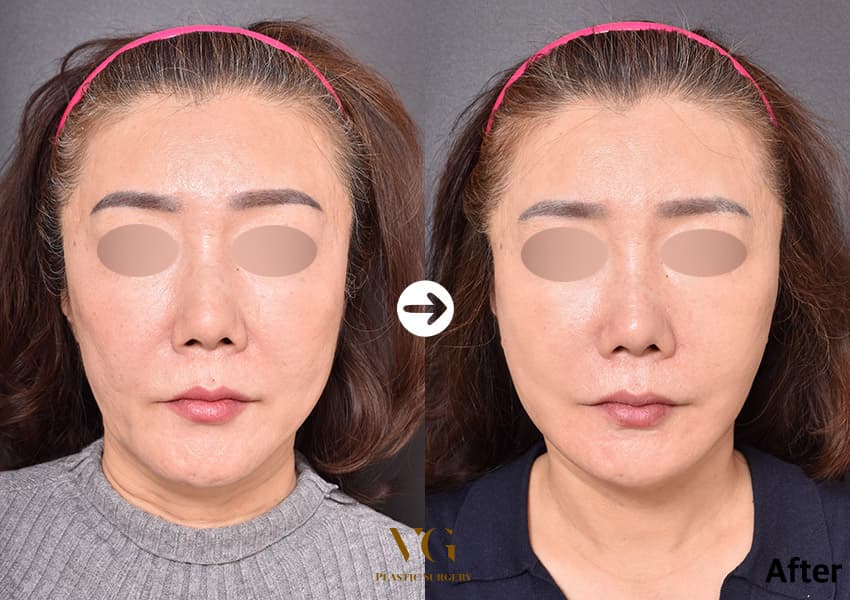
Face Lift3 months after surgery
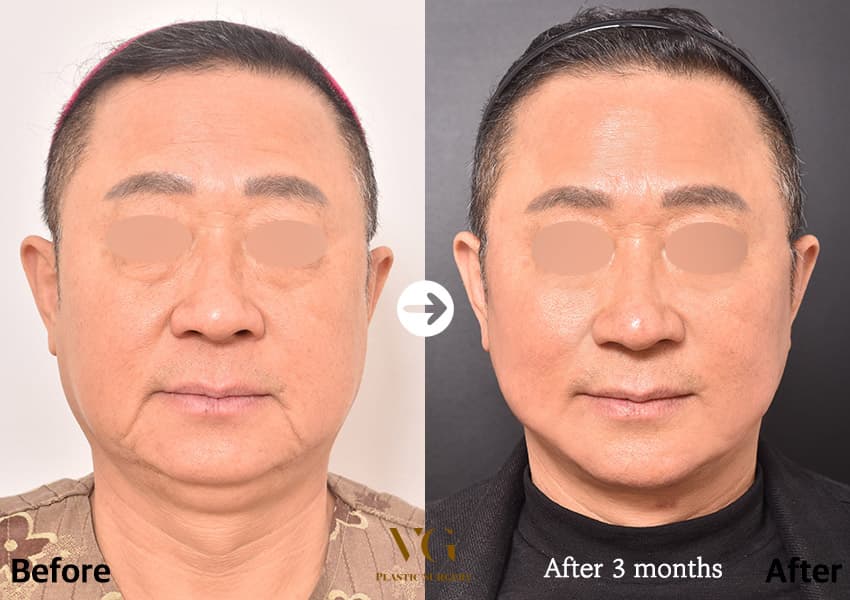
Face Lift3 months after surgery
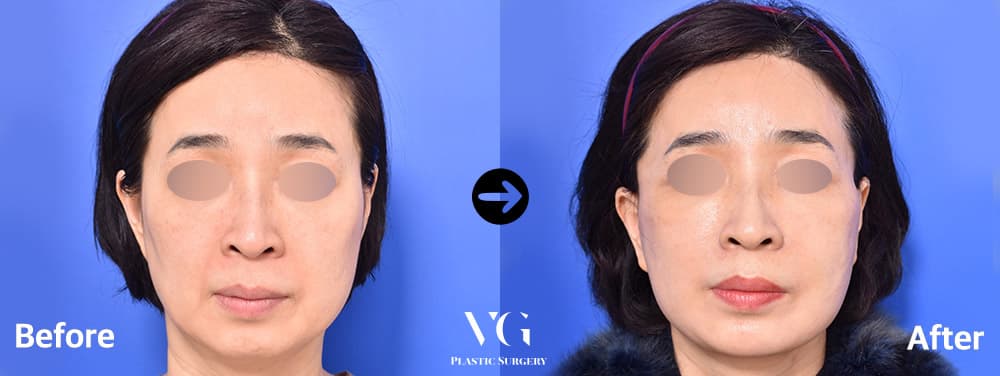
Face Lift3 months after surgery
FAQ
Questions patients ask
Is a deep plane facelift the same as an SMAS facelift?
No. Both work on the deeper support layer, but an SMAS lift tightens or trims that layer, while a deep plane lift goes beneath it and releases the ligaments. Which one a face needs is decided after an in-person exam.
Can I combine a facelift with eyelid surgery on one trip?
Often, yes. Upper eyelid surgery and brow lifting are commonly planned with a facelift. Combining them adds operating time and can change how many days you should stay, so mention it in your question.
Does a mini facelift cost less because it's smaller?
A mini lift usually involves less dissection and a shorter operation, which tends to lower the fee. It suits mild jowling more than a loose neck, so the smaller operation saves money only if it fixes what bothers you.
Do foreign patients pay a different fee?
No. At VG Plastic Surgery, foreign patients pay the same surgical fee as Korean patients. The trip costs around it, such as flights and hotel nights, are separate.
What should I bring from my earlier facelift?
Any operation notes you have, the date, and the name of the procedure. Scar tissue and the layer worked on last time change how a second lift is planned.
Sources
This article explains general medical information. Whether surgery suits you, and which method, is decided only after a consultation with the surgeon.
Written by
Im Young Min
Chief Director · Plastic Surgery
- Ph.D. in Medicine
- Internship and residency, Seoul St. Mary's Hospital
- Board-certified plastic surgeon, Seoul St. Mary's Hospital
- Adjunct professor of plastic surgery, Seoul St. Mary's Hospital
- Former director, Topface Plastic Surgery
Next step
Send two photos. Get a surgeon’s answer.
Front and side, natural light, no filter. Dr. Im Young Min reviews them and tells you which method fits and how many days to stay in Seoul.
International patients pay the same surgical fee as Korean patients. Pricing policy
Keep reading
Facelift
Mini Facelift Korea Price: Why Do Two Quotes Differ? Reviews, Methods and Recovery
A mini facelift Korea price moves with how deep the lift goes, whether the neck is included, the anesthesia and your days in Seoul. The word “mini” alone tells you little about the figure.
Im Young Min ·
Facelift
9D Facelift Korea: Swelling, Stitches and the Flight Home
“9D” is a brand name some Korean clinics give their facelift, not a standard technique. The decisions that shape your trip are which tissue layer is lifted, how long to wait before flying, and who sees you once you're home.
Im Young Min ·
Facelift
Four Checkpoints Between an endotine forehead lift in Korea and Your Flight Home
For most people travelling from the US, the UK or Australia for an endotine forehead lift in Korea, the hard part is that flight: whether a taped forehead and swollen brows can sit through a long-haul cabin, and who looks at the scalp incisions once you've landed.
Im Young Min ·