Facelift
Mini Facelift Korea: Who It Suits, Where the Incision Goes, How Long to Stay
A plastic surgeon in Seoul explains who a Korean mini facelift is for, what the smaller incision does and does not reach, how recovery runs, and why the trip is still two weeks.
In this article
The short answer
A Korean mini facelift still lifts the SMAS, the layer under the skin, but with less dissection and an incision limited to part of the scalp and around the earlobe. It suits sagging that sits mainly in the cheeks, the folds beside the nose and mouth, and along the jaw. The trip is not smaller: plan on at least 14 days in Seoul.
- The mini facelift reaches the SMAS layer; what is reduced is the extent of dissection and the incision, not the layer being lifted.
- The incision runs along part of the scalp and around the earlobe; a conventional facelift also extends behind the ear.
- Surgery takes about 2–3 hours under sedation with no admission, and stitches come out one week later.
- Recovery is 1–2 weeks to everyday life, with two follow-up visits; stay in Korea at least 14 days.
- If the jawline, the double chin or the neck have descended as well, a mini facelift is usually not enough.
I am Im Young Min, Chief Director and board-certified plastic surgeon at VG Plastic Surgery in Seoul. I trained at Seoul St. Mary's Hospital, where I am an adjunct professor of plastic surgery, and every facelift at our clinic — Crystal, SMAS and mini — comes through my consultation room. Patients who search mini facelift Korea usually write with one sentence: "I don't think I need the full thing."
Profile
Im Young Min
Chief Director · Board-certified in Plastic Surgery
Sometimes they are right. This article is about how I decide, what the smaller operation actually changes, and what it does not. For the wider picture of the three facelifts we perform, read our Korean facelift guide first; here I stay with the mini.
What "mini" means in a Korean mini facelift
A mini facelift is not a skin tuck. It still goes down to the SMAS, the layer beneath the skin that descends with age, and lifts it. Pull the skin alone and it stretches back by as much as it was pulled.
What becomes smaller is the extent of dissection — how far under the skin we work — and the incision. That is why it is aimed at the midface: the cheeks and the folds around the nose and mouth. It is not aimed at the whole lower face and neck.
| Mini facelift | Conventional facelift | |
|---|---|---|
| Who it is for | A full facelift feels like too much, or you want a lift with a shorter recovery | Sagging is severe and a mini facelift is unlikely to be enough |
| Incision area | Part of the scalp and around the earlobe | Part of the scalp, around the earlobe and part of the area behind the ear |
| Areas improved | Part of the nasolabial folds, marionette lines, sagging cheeks, slackened flesh along the jaw | The same, plus the jawline and part of the double chin |
| Layer lifted | SMAS | SMAS |
Read the last row twice. Both operations work on the same layer, which is why a mini facelift can hold. The difference is reach, not depth.
Mini facelift Korea: who it suits, and who should not choose it
On our facelift page the mini facelift is listed for a fairly specific face. In consultation I look for these:
- Sagging mainly in the cheeks, with the nasolabial folds and marionette lines deepening because of it.
- A facial line that has turned uneven as the skin has loosened.
- Skin elasticity that has dropped with age, but sagging that is not yet severe across the whole face.
- You want a lift, and a full facelift feels like more than you need.
And these are the faces where I tell people the mini is the wrong tool:
- Sagging across the whole face, including the jawline and under the chin — that is the range of a SMAS or Crystal facelift.
- Volume loss rather than sagging is the main cause — we would look at fat grafting first.
- A diagnosed tendency to hypertrophic or keloid scarring.
- Uncontrolled systemic illness or a bleeding disorder.
- A schedule that cannot fit two weeks in Korea.
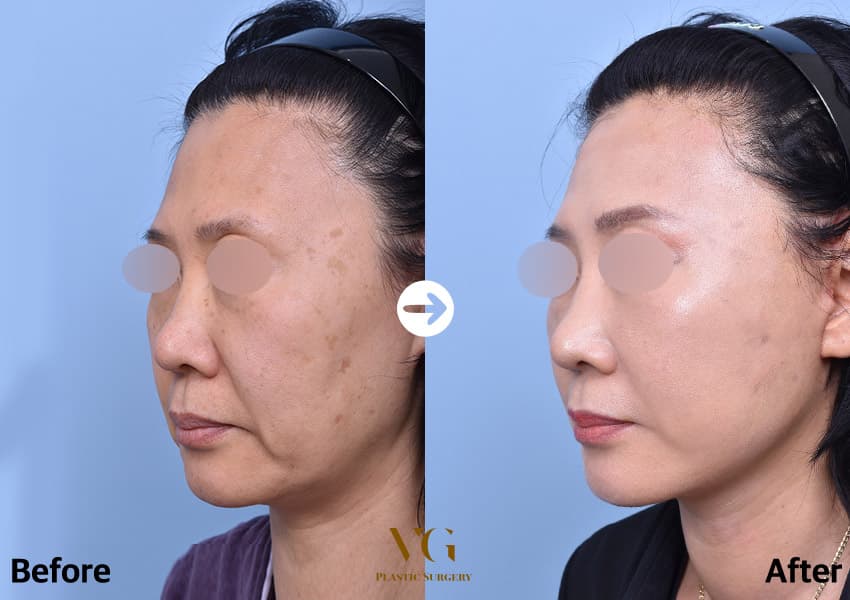
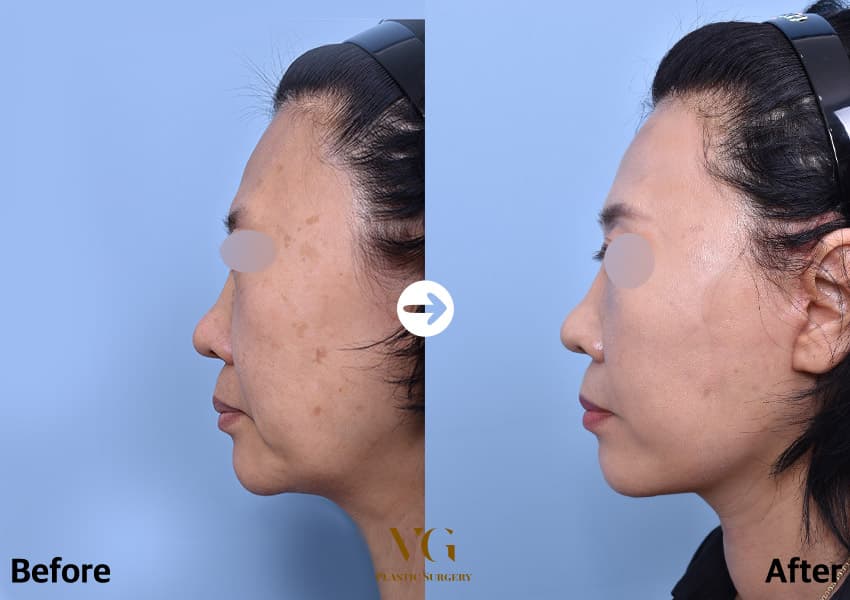
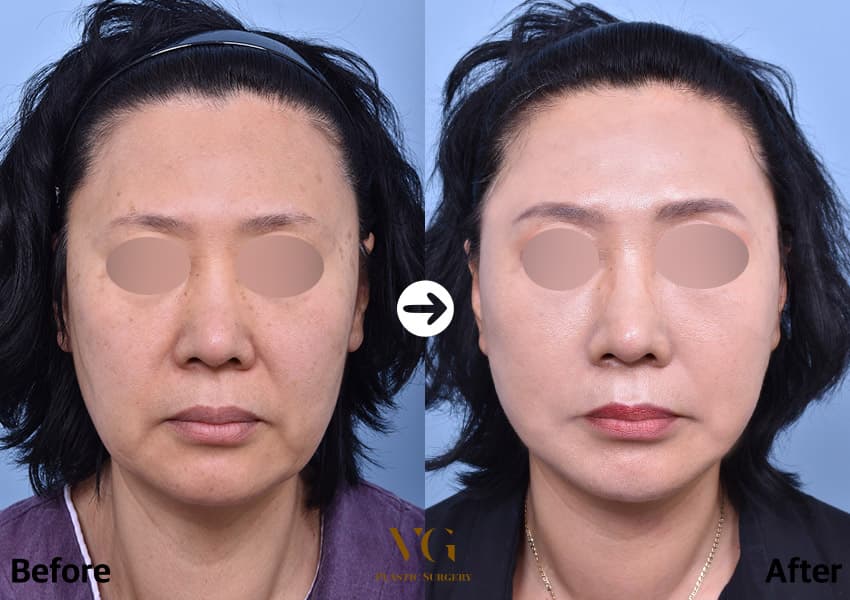
This is one of our facelift team's mini facelift cases, photographed at three months. Look at the side profile: the change is along the cheek and the jaw, which is the range this operation is built for.
Surgery day and recovery, in numbers
The surgery details below are the figures on our mini facelift information tile. They are close to the SMAS facelift; the smaller dissection does not shorten the time in theatre much.
| Item | Mini facelift |
|---|---|
| Operating time | About 2–3 hours |
| Anesthesia | Sedation |
| Hospital stay | Not required |
| Suture removal | One week after surgery |
| Hair washing | From the day after suture removal |
| Follow-up visits | 2 |
| Recovery to everyday life | 1–2 weeks |
Our facelift recovery data runs like this. Swelling peaks around days 5–7, stitches come out at one week, and everyday life returns at 1–2 weeks. The face starts to look natural at 3–6 months, and I judge the final result at about 12 months.
For the first days, cold compresses help the swelling, and sleeping with your head raised on two or three pillows eases the discomfort. You go back to the hotel the same day once you are cleared from the recovery room.
Send three photos — front, three-quarter and side — and I will tell you whether your sagging sits in the mini range.
Coming to Seoul for a mini facelift: the trip is not mini
This is the point people most often plan wrongly. Our minimum recommended stay for a face or neck lift is 14 days, and that applies to the mini facelift too.
| When | What happens |
|---|---|
| Day 0 | Final consultation and design with the interpreter present, surgery under sedation, recovery room, back to the hotel |
| Day 1 | First check and dressing at the clinic |
| Days 5–7 | Swelling at its peak; you rest near the clinic |
| Day 7 | Stitches out; hair washing from the next day |
| Days 8–14 | Follow-up check before you fly |
| After you fly | Photo reviews and written replies from the surgeon for three months |
Interpretation in English runs through the consultation, surgery day and every follow-up. Our partner hotels are within walking distance, so you do not cross Seoul the day after surgery. The details are on our international patients page.
What about a mini facelift Korea price?
We do not publish a price list. International patients pay the same surgical fee as Korean patients, with no foreigner surcharge, and you receive one itemised written quote after your consultation. Our pricing policy explains why.
What sets the figure is the operation you agree to, the time in theatre, and whether anything is added — fat grafting, for example. A mini facelift and a SMAS facelift take a similar amount of time, so do not choose the mini to save money. Choose it because the range fits your face.
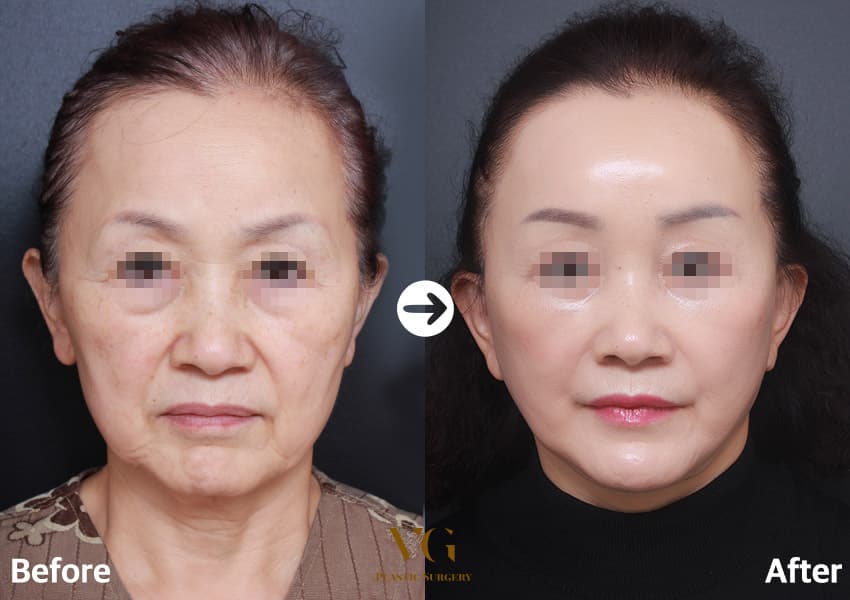
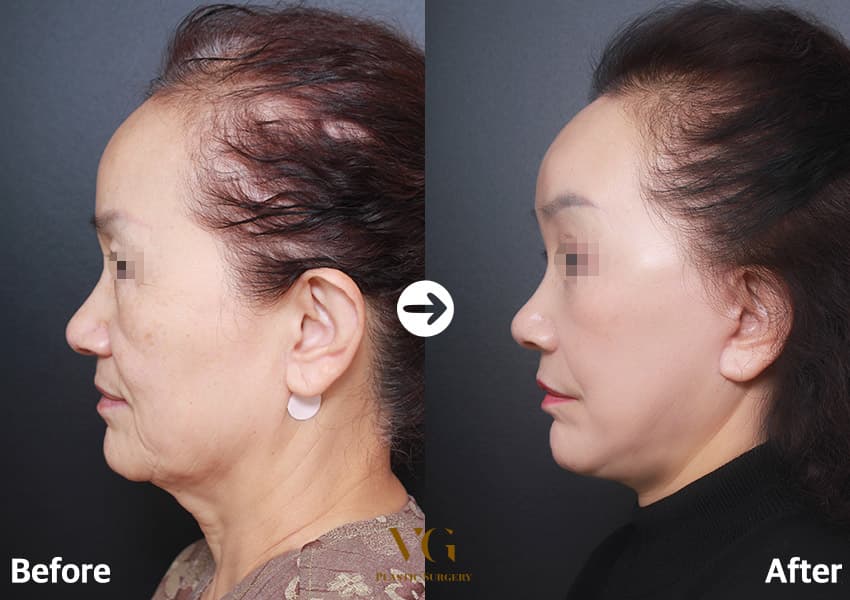
What I check before I say "mini"
I analyse the skin, its elasticity and thickness, and the skeletal structure together, because every face sags differently. Then I ask three questions.
- Where is the sagging? Mainly the cheeks and the folds beside the nose and mouth points to the mini. The whole face points to a SMAS facelift.
- Is it sagging or volume loss? A hollow cheek is not fixed by lifting. That is fat grafting, sometimes alongside the lift.
- Is the bone part of the problem? If the cheekbone or the jaw widens the face, the Crystal facelift, which combines contouring with the lift, is worth discussing.
If the answer to the first question is "the jawline and under the chin", I will not offer a mini facelift. Taking the smaller operation when the sagging is beyond its reach leaves the lower face where it was. You can read my background on my profile page.
Risks, and how we reduce them
A smaller incision is still surgery. Swelling and bruising are expected in the first week. The scar sits along part of the scalp and around the earlobe, and how it matures depends on your skin; patients with a keloid tendency are not good candidates.
An anesthesiologist stays with you for the whole operation, monitoring blood pressure, pulse, oxygen and breathing. We review your medical history before surgery because uncontrolled illness or a bleeding disorder rules surgery out. And because the stitches come out at one week and swelling peaks before that, the 14-day stay exists so that a problem is seen in Seoul, not after you land.
Once you are home, photograph reviews continue for three months, and we issue your operation record and aftercare instructions in English for your own doctor.
Facelift before & after — more cases
Real patients from our archive, all photographed 3 months after surgery. Tap a case to compare it full size.
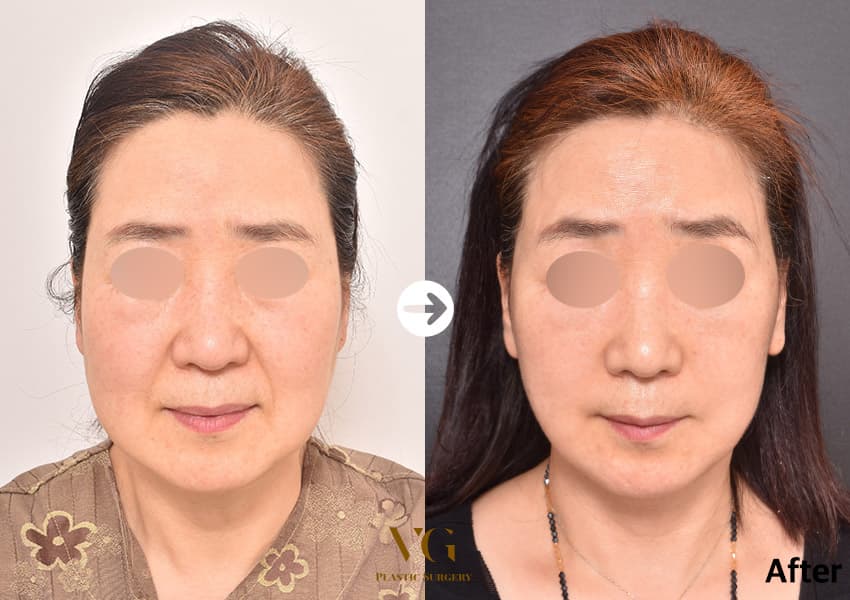
Face Lift3 months after surgery
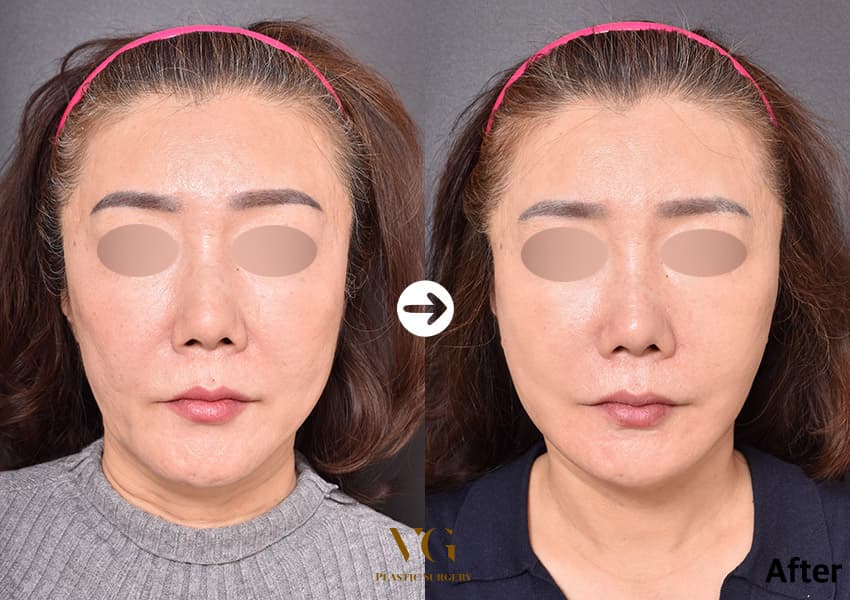
Face Lift3 months after surgery
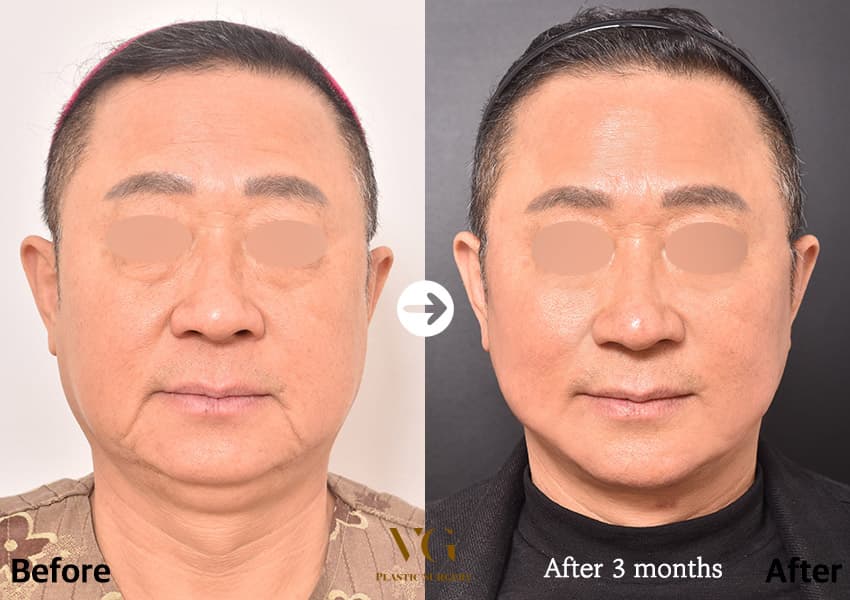
Face Lift3 months after surgery
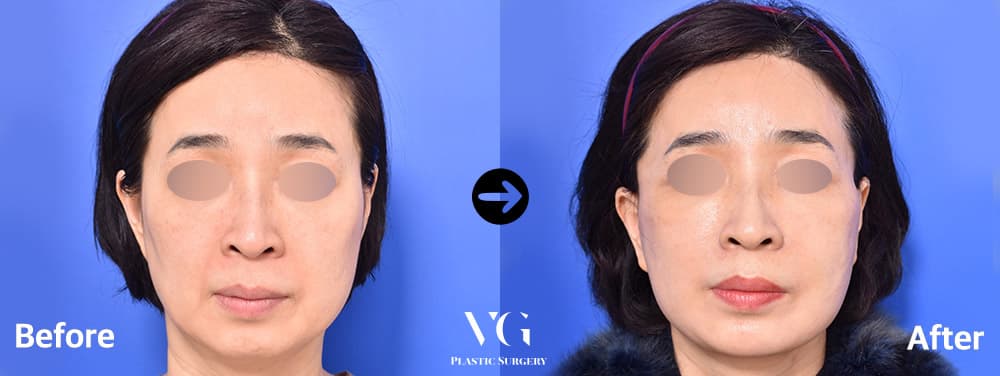
Face Lift3 months after surgery
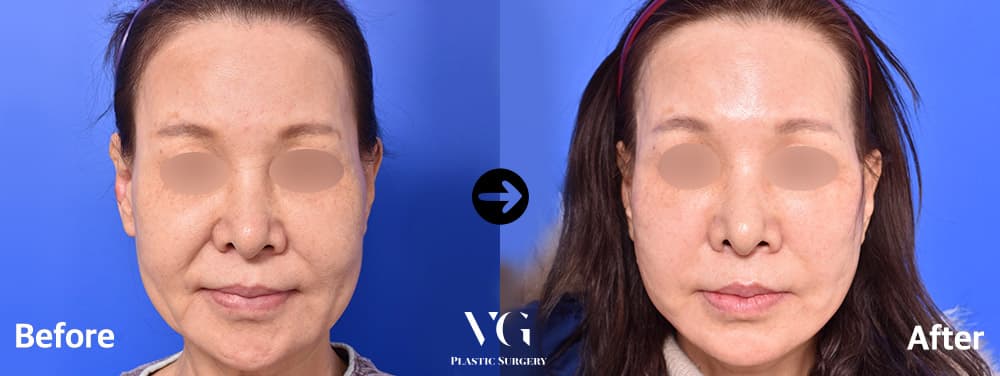
Face Lift3 months after surgery
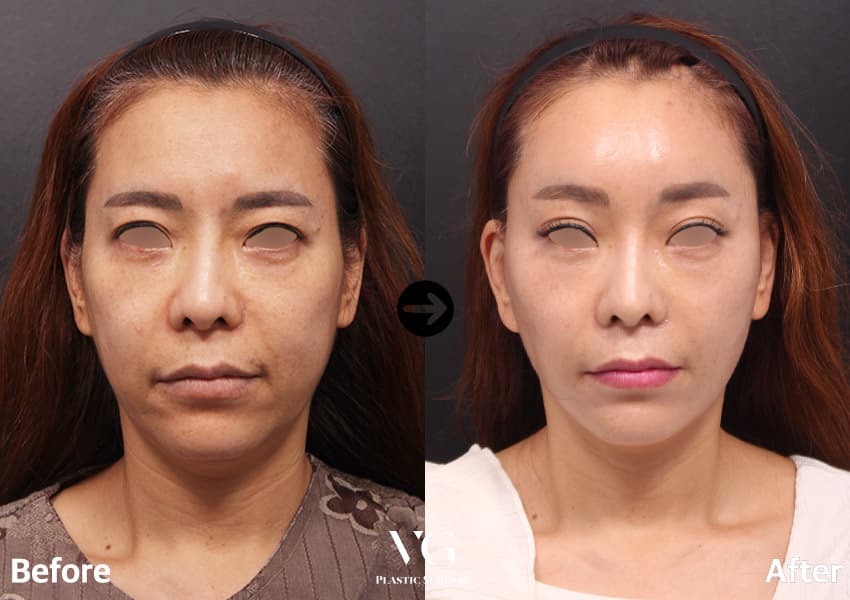
Face Lift3 months after surgery
FAQ
Questions patients ask
Is a mini facelift in Korea a thread lift?
No. A mini facelift is surgery: an incision along part of the scalp and around the earlobe, and the SMAS layer beneath the skin is lifted and fixed. The excess skin is trimmed and closed.
How long should I stay in Korea for a mini facelift?
At least 14 days. Stitches come out one week after surgery, swelling peaks around days 5–7, and there are two follow-up visits. The smaller incision does not shorten that schedule.
Can a mini facelift fix my jawline and double chin?
Only partly. The mini facelift improves sagging cheeks, the folds around the nose and mouth, and slackened flesh along the jaw. If the jawline and under the chin have descended, a conventional facelift reaches further.
Is a mini facelift done under general anesthesia?
At our clinic it is done under sedation, takes about 2–3 hours, and does not require admission. An anesthesiologist monitors you throughout.
How much does a mini facelift in Korea cost?
We do not publish a price list. International patients pay the same surgical fee as Korean patients, and you receive an itemised written quote after your consultation, before you decide.
When will I see the result?
Everyday life returns at 1–2 weeks. The face starts to look natural at around 3–6 months, and the final result is judged at about 12 months.
This article explains general medical information. Whether surgery suits you, and which method, is decided only after a consultation with the surgeon.
Written by
Im Young Min
Chief Director · Plastic Surgery
- Ph.D. in Medicine
- Internship and residency, Seoul St. Mary's Hospital
- Board-certified plastic surgeon, Seoul St. Mary's Hospital
- Adjunct professor of plastic surgery, Seoul St. Mary's Hospital
- Former director, Topface Plastic Surgery
Next step
Send two photos. Get a surgeon’s answer.
Front and side, natural light, no filter. Dr. Im Young Min reviews them and tells you which method fits and how many days to stay in Seoul.
International patients pay the same surgical fee as Korean patients. Pricing policy
Keep reading
Facelift
Deep Plane Facelift Korea Cost After a Lift That Didn't Last: What Are You Paying For? Reviews, Methods and Recovery
A deep plane facelift's cost follows how far the release goes, the neck, add-on procedures, earlier surgery and anesthesia time. Ask on WhatsApp with photos of your face and neck.
Im Young Min ·
Facelift
Mini Facelift Korea Price: Why Do Two Quotes Differ? Reviews, Methods and Recovery
A mini facelift Korea price moves with how deep the lift goes, whether the neck is included, the anesthesia and your days in Seoul. The word “mini” alone tells you little about the figure.
Im Young Min ·
Facelift
9D Facelift Korea: Swelling, Stitches and the Flight Home
“9D” is a brand name some Korean clinics give their facelift, not a standard technique. The decisions that shape your trip are which tissue layer is lifted, how long to wait before flying, and who sees you once you're home.
Im Young Min ·