Breast
Breast Augmentation Korea: Ultrasound First, Recovery, Trip and Fee
A plastic surgeon in Seoul explains how breast augmentation is planned for patients flying in: the ultrasound check, who it suits, the recovery timeline, how the trip is built around stitch removal and how the fee is set.
In this article
- 01What Korean breast augmentation looks like in practice
- 02Who it suits, and when I advise waiting
- 03Augmentation, lift or reduction: which plan fits
- 04Surgery day and the recovery timeline
- 05Planning a breast augmentation Korea trip: stay, stitches and follow-up
- 06Is breast augmentation cheaper in Korea?
- 07What I check first in consultation
- 08Risks, and how we reduce them
The short answer
Breast augmentation in Korea, as we plan it, starts with an ultrasound of the breast, not with an implant size. The operation takes 1–3 hours under general anesthesia, one night in the clinic is advised, and stitches come out 7–10 days after surgery, so your dates in Seoul are built around that. International patients pay the same surgical fee as Korean patients, set out in one written quote.
- The breast is read on ultrasound before any plan is made; an unexamined lump or nipple discharge means imaging comes first.
- Surgery takes 1–3 hours under general anesthesia, with one night in the clinic advised.
- Stitches come out 7–10 days after surgery and most people return to daily life in 10–14 days.
- The shape looks natural at around 3 months; the final result is judged at about 6 months.
- International patients pay the same surgical fee as Korean patients, confirmed in an itemised written quote.
I am Im Young Min, Chief Director and board-certified plastic surgeon at VG Plastic Surgery in Seoul. I trained at Seoul St. Mary's Hospital, where I am an adjunct professor of plastic surgery, and breast surgery is one of the fields I operate in here. When someone types breast augmentation Korea into a search bar and then writes to us, the first message is usually a photo and two questions: will it look like me, and how long do I need to be in Seoul?
Profile
Im Young Min
Chief Director · Board-certified in Plastic Surgery
This article answers both, in the order I answer them in consultation. If what you want to know first is how to check a surgeon's qualifications, I have written that separately in how to check a Korean plastic surgeon.
What Korean breast augmentation looks like in practice
People who ask about Korean breast augmentation are rarely asking for a large size. More often the breasts are small for the frame, the upper chest looks flat in clothes, or one side is visibly different from the other. What they want is volume that sits with the shoulders and ribcage they already have.
So the first decision is not a number on an implant. It is what your own tissue can hold: how much breast tissue covers the chest, how the skin stretches and where the breast fold sits. Those set the limits, and the size you want is chosen inside them.
Our breast team treats this as medicine before aesthetics. The breast is assessed on ultrasound first, and whether the plan turns out to be augmentation, a lift or a reduction, we favour the approach that preserves glandular tissue and blood supply.
Who it suits, and when I advise waiting
These are the situations I see most often where surgery is a reasonable answer.
- Volume loss that affects how clothes sit or how balanced the two sides look
- Sagging together with volume loss after pregnancy and breastfeeding
- A clear difference in size or shape between the two sides
- Shoulder or back pain from breast size, when reduction is the question rather than augmentation
And these are the situations where I tell people to wait, or to do something else first. Saying not yet is part of the consultation.
- An unexamined lump or nipple discharge — breast imaging comes first
- Breastfeeding now, or planning pregnancy within six months
- Smoking you cannot stop around the operation
- An uncontrolled cardiovascular or bleeding disorder
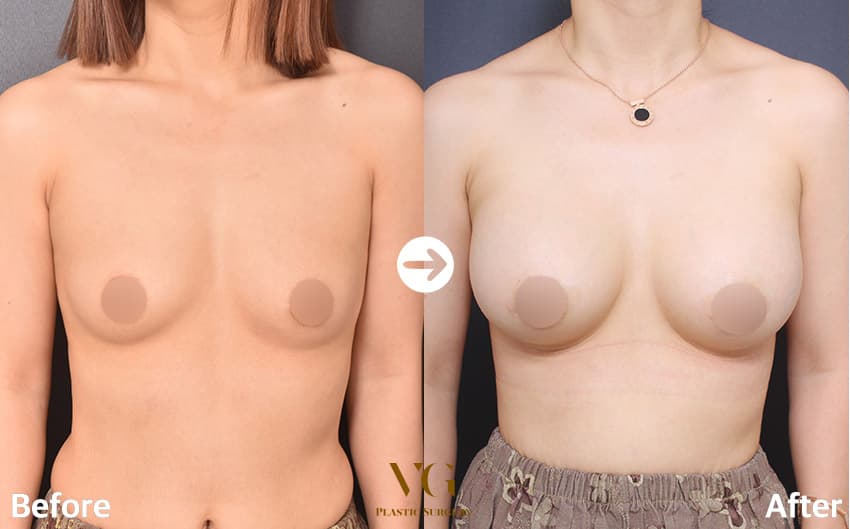
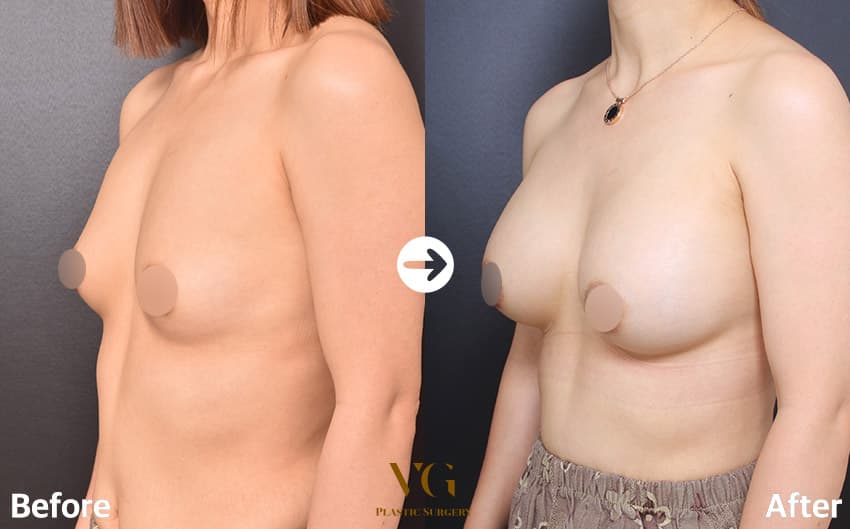
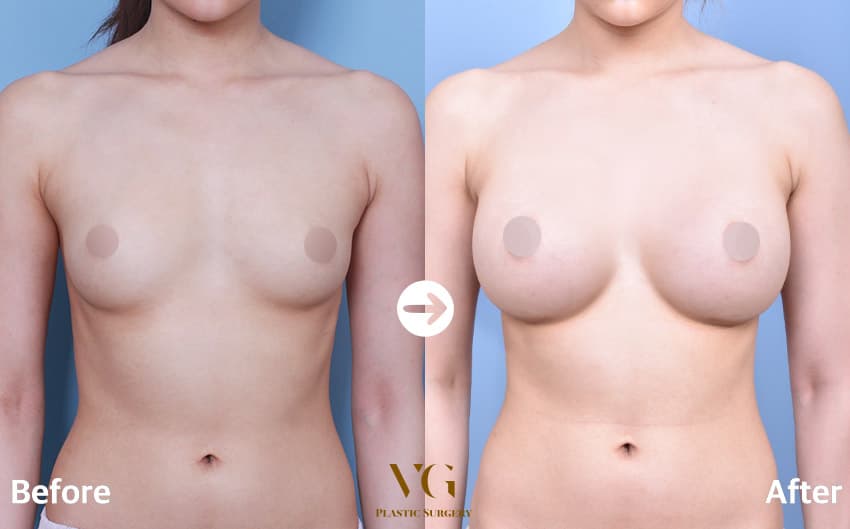
These two photos are one patient, from the front and at an angle. The angled view is the one I ask people to look at, because it shows where the volume sits in relation to the chest wall. You can browse every breast augmentation before-and-after by procedure.
Augmentation, lift or reduction: which plan fits
Korean breast surgery here covers three plans, and they are often combined. The photo you send tells me which one to start from; the ultrasound and the examination decide.
| Plan | What it is for | What I look at first |
|---|---|---|
| Augmentation | Small breasts, or a difference in size between the two sides | Tissue coverage over the chest, skin stretch and where the breast fold sits |
| Augmentation with a lift | Volume loss and sagging together, often after pregnancy and breastfeeding | How far the nipple and breast have descended, and how much skin there is |
| Reduction | Shoulder or back pain from breast size | Breast volume, the weight it puts on the shoulders, and preserving blood supply to the tissue that stays |
If sagging is the main problem, adding volume alone can make the breast look heavier rather than lifted. That is why I examine the position of the breast before talking about size.
Surgery day and the recovery timeline
On the morning of surgery I draw the plan on you and go through it with you, with the interpreter present, and nothing starts until you agree to what is drawn. The operation takes 1–3 hours under general anesthesia, and an anesthesiologist attends the whole operation.
For breast surgery I advise one night in the clinic rather than going straight back to the hotel. You can shower after 5–7 days.
| Milestone | When |
|---|---|
| Swelling at its peak | Days 5–7 |
| Stitches out | Days 7–10 |
| Back to everyday activity | 10–14 days |
| Shape looks natural | About 3 months |
| Final result | About 6 months |
The first week is the hardest part: the chest feels tight and swelling peaks between days 5 and 7. By the time stitches come out you are usually moving comfortably, and the breast keeps settling for months after that.
Send a front and a side photo on WhatsApp, and I'll tell you whether your breasts need volume, a lift or both.
Planning a breast augmentation Korea trip: stay, stitches and follow-up
For breast augmentation in Korea the length of your stay is set by stitch removal, which falls 7–10 days after surgery, and by a final check before you fly. We confirm the exact dates with you in consultation, against your flights and your leave.
- Arrival and the in-person consultation, with the ultrasound read before the plan is final
- Surgery day, then one night in the clinic as advised
- Recovery at a partner hotel within walking distance of the clinic
- Stitches out 7–10 days after surgery
- Final check before flying, and a schedule for remote follow-up
The day-by-day trip planner lays this out against your own dates. After you fly home, follow-up continues for three months: photograph reviews at set intervals, written answers from your surgeon, and a request for more photographs from set angles when the first ones are not enough.
An interpreter sits with you through consultation, the design on surgery morning and every follow-up visit, and one coordinator stays with your case from the first message to three months after you leave. Airport transfers, partner hotels and the rest are on our page for international patients. Over 7,000 international patients from 53 countries have been treated here.
Is breast augmentation cheaper in Korea?
It is the breast augmentation Korea question I hear most, and I cannot answer it with a number. I would be wary of anyone who does before seeing you. Two people asking for the same operation can need a different plan, a lift as well as volume, or a different time under anesthesia.
What I can promise is how the fee is set. International patients pay the same surgical fee as Korean patients: no foreigner surcharge, no separate price sheet and no agency commission built in. After consultation you receive one itemised written quote, before you decide anything. Our pricing policy lists what that quote covers, including anesthesia, interpretation and three months of remote follow-up.
What I check first in consultation
I operate across eyes, nose, contouring, body and breast, which means I am not looking to fit everyone into the same operation. My training and memberships are on my profile page. The clinic also holds the Korean Society of Breast and Thyroid Surgeons' Excellent Breast and Thyroid Care Clinic certification, issued in November 2024.
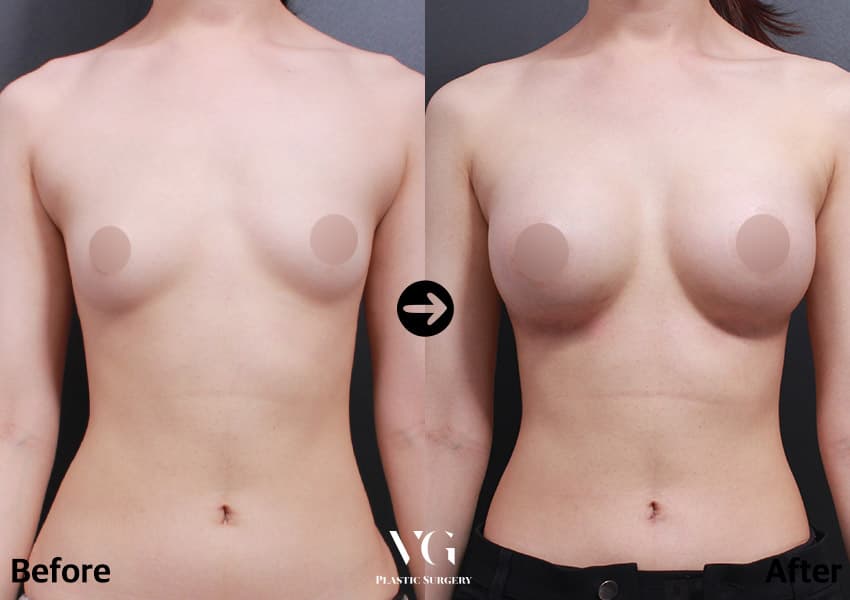
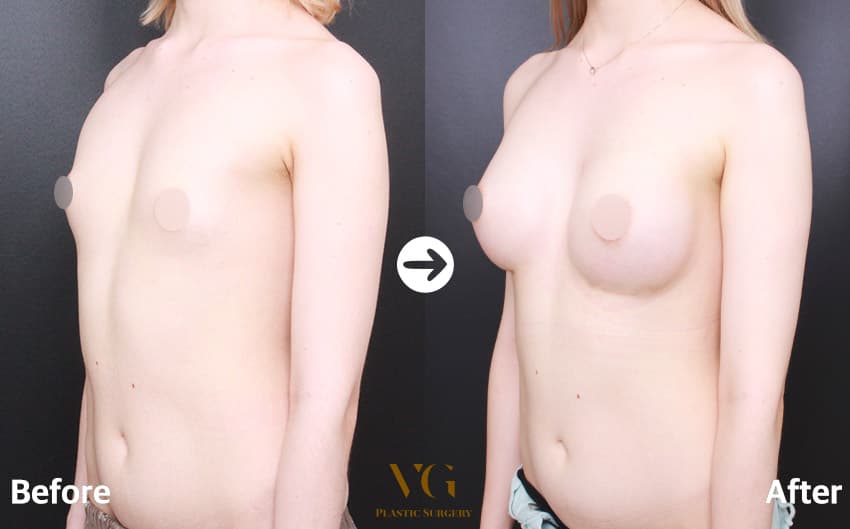
The first case started with breasts set wide apart; the second started from very little tissue, which is where the plan has to respect what the skin can cover. You can see the hero case from this article in full.
Risks, and how we reduce them
Every breast augmentation carries risk. The American Society of Plastic Surgeons lists bleeding, infection, poor scarring, changes in nipple or breast sensation, tight scar tissue forming around the implant (capsular contracture), implant leakage or rupture, and wrinkling of the skin over the implant. Recovery and outcome differ from person to person, and I would rather you hear that from me before surgery.
- Imaging before the plan: the breast is read on ultrasound, and a lump or discharge is investigated before anything else
- Tissue kept where it can be: we favour approaches that preserve glandular tissue and blood supply
- Anesthesia: an anesthesiologist attends your whole operation, and one night in the clinic is advised
- Follow-up after you leave: three months of remote review, and we tell you what to watch for at home
Implants are not lifetime devices, and future surgery may be needed to replace one or both. ASPS also notes the FDA recommendation to screen silicone implants by MRI or ultrasound 5–6 years after placement and every 2–3 years after that, which is worth arranging at home.
For the full picture of how breast surgery is done here, including results by concern, start with the breast surgery page.
Send photos from the front and both sides on WhatsApp, and I'll tell you which plan I would make and how your dates in Seoul would look.
Breast before & after — more cases
Real patients from our archive, all photographed 3 months after surgery. Tap a case to compare it full size.
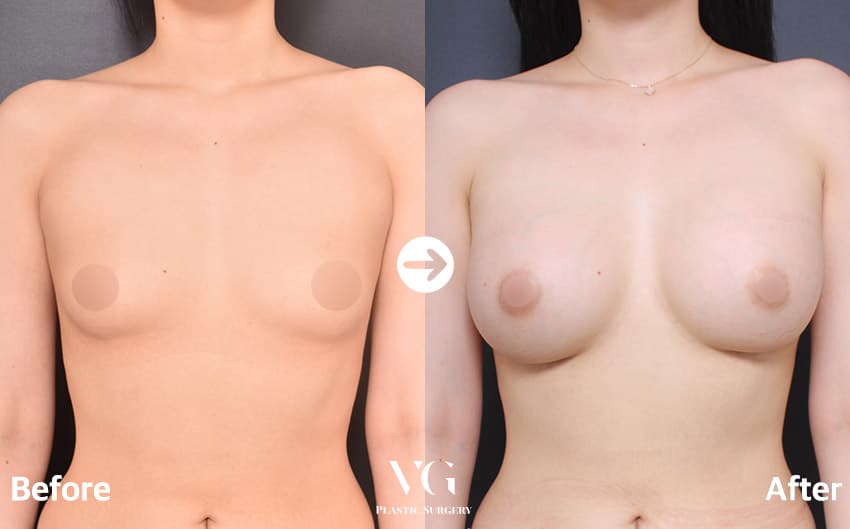
Breast Augmentation3 months after surgery
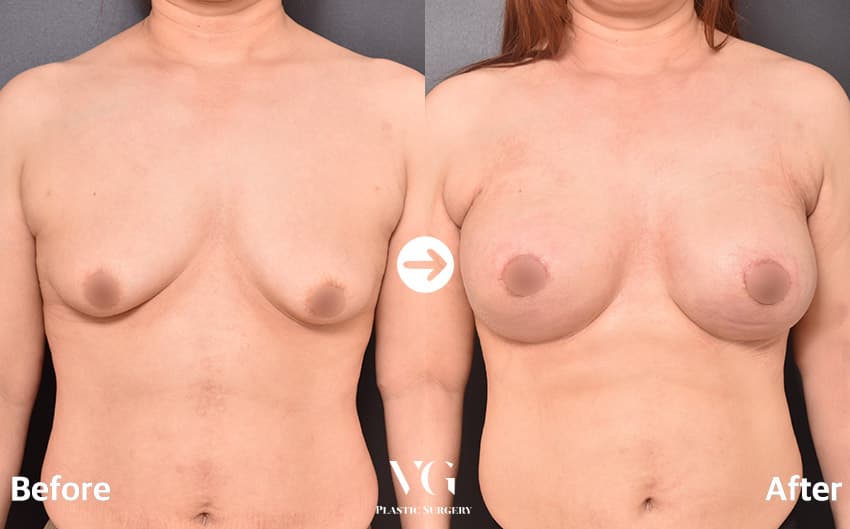
Breast Augmentation3 months after surgery
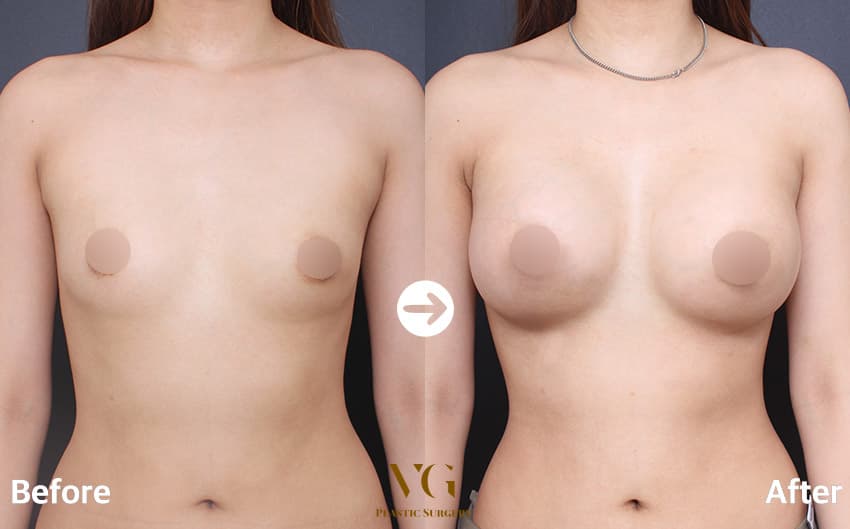
Breast Augmentation3 months after surgery
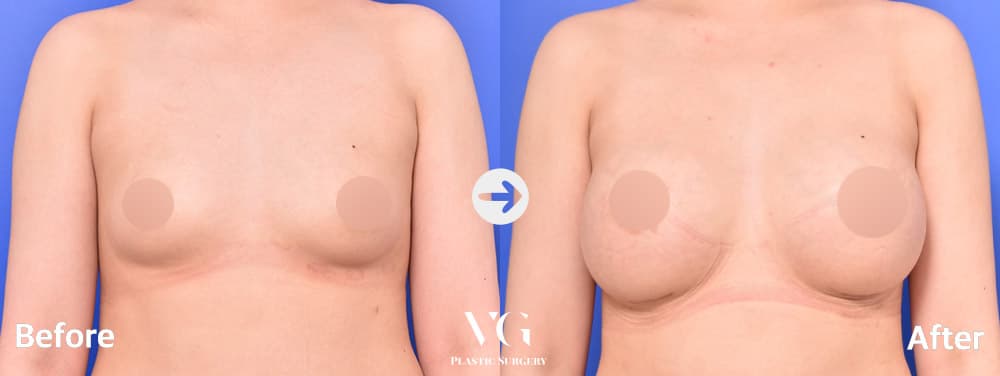
Breast Augmentation3 months after surgery
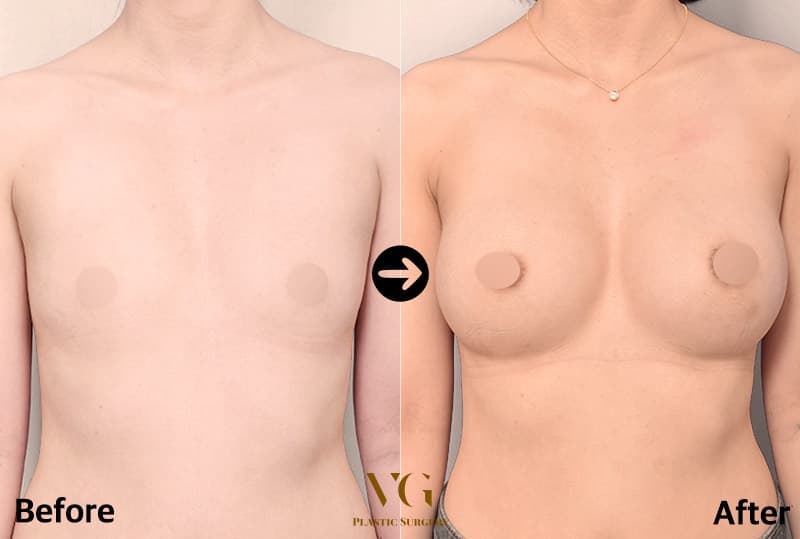
Breast Augmentation3 months after surgery
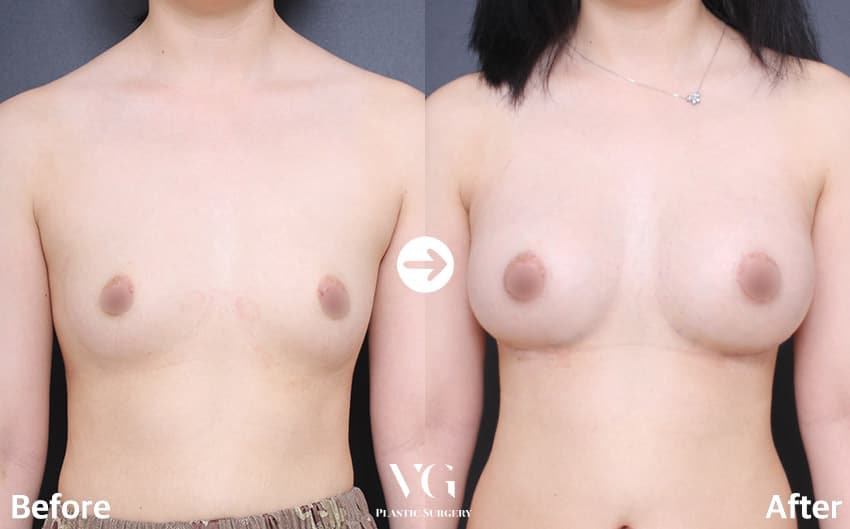
Breast Augmentation3 months after surgery
FAQ
Questions patients ask
Is breast augmentation cheaper in Korea?
We do not publish a price list, because the figure depends on the plan, whether a lift is added and the time under anesthesia. What we commit to is the fee: international patients pay the same surgical fee as Korean patients, with no foreigner surcharge. You receive an itemised written quote after consultation, before you decide.
How long should I stay in Korea for breast augmentation?
Your stay is built around stitch removal, which is 7–10 days after surgery, plus a final check before you fly. We set the exact dates with you in consultation, and the trip planner shows a typical schedule day by day.
When can I go back to normal activity?
Most people return to everyday activity in 10–14 days. Swelling peaks around days 5–7, the shape looks natural at about 3 months, and the final result is judged at about 6 months.
Do I need to stay in hospital after surgery?
One night in the clinic is advised after breast surgery. The operation itself takes 1–3 hours under general anesthesia, and you move to a partner hotel within walking distance afterwards.
Can I have breast augmentation if I plan to get pregnant?
If you are breastfeeding now or planning pregnancy within six months, I advise waiting. Pregnancy and breastfeeding change the breast, and it is better to plan surgery after that.
Is a breast augmentation Korea trip possible without speaking Korean?
Yes. An interpreter is with you at consultation, on surgery morning and at every follow-up visit, and one coordinator handles your case from the first message to three months after you fly home.
Sources
This article explains general medical information. Whether surgery suits you, and which method, is decided only after a consultation with the surgeon.
Written by
Im Young Min
Chief Director · Plastic Surgery
- Ph.D. in Medicine
- Internship and residency, Seoul St. Mary's Hospital
- Board-certified plastic surgeon, Seoul St. Mary's Hospital
- Adjunct professor of plastic surgery, Seoul St. Mary's Hospital
- Former director, Topface Plastic Surgery
Next step
Send two photos. Get a surgeon’s answer.
Front and side, natural light, no filter. Dr. Im Young Min reviews them and tells you which method fits and how many days to stay in Seoul.
International patients pay the same surgical fee as Korean patients. Pricing policy
Keep reading
Breast
Considering Fat Transfer Breast Augmentation Korea? Price, Recovery and Trip Days
Fat transfer breast augmentation moves your own fat from the belly, flanks or thighs into the breast in thin layers. Only part of it stays, so it suits a modest, soft change in people with fat to spare.
Im Young Min ·
Breast
Worried About Korean Breast Implants? Cost Factors, Tissue Limits and Long-Term Checks
Korean breast implants carry the same risks the U.S. FDA lists for any breast implant, and they are not lifetime devices. Your tissue limits the size, the flight home needs room, and the checks continue for years.
Im Young Min ·
Breast
Gynecomastia Surgery Cost Korea: How the Fee Is Set and Your Stay
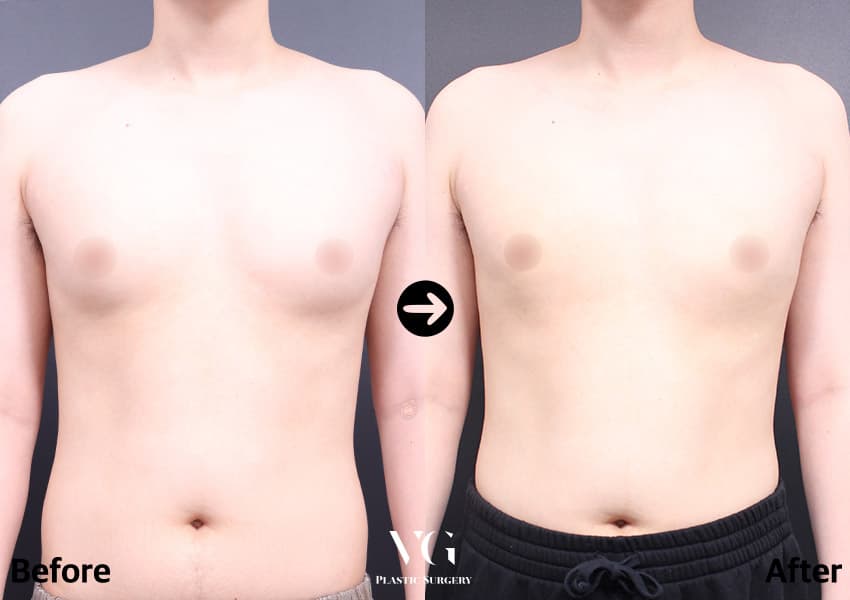
A plastic surgeon in Seoul explains what decides the fee for gynecomastia surgery, why the gland and the fat are both treated, real cases from our breast surgery team, recovery, and how your days in Korea are planned.
Im Young Min ·