Breast
Korean Plastic Surgeon: How to Check Who Will Actually Operate on You
The chief director of a Seoul clinic explains what to verify before you choose a Korean plastic surgeon: board certification, whether the surgeon you talk to is the one who operates, who runs the anesthesia, and what the photos can and cannot prove.
In this article
- 01The short answer: four things to verify
- 021. Board certification and where the surgeon trained
- 032. Is the doctor you talk to the one who operates?
- 043. Who is watching you while the surgeon operates
- 054. What the photos and the paperwork should show
- 06The same checks, applied to breast surgery
- 07When a good surgeon should tell you to wait
- 08What happens after you fly home
The short answer
To choose a Korean plastic surgeon, check four things before you book a flight: that the surgeon is board-certified in plastic surgery, that the doctor who reviews your photos is the one who would operate, that a board-certified anesthesiologist stays with you for the whole operation, and that the before-and-after photos come from the clinic's own archive. None of these depend on a ranking. All of them can be asked in writing.
- Board certification in plastic surgery is the starting point; check where the surgeon trained and which societies list them as members.
- Ask who reviews your photos. At our clinic the surgeon who would operate does it, not a salesperson or a chat agent.
- Ask who watches your breathing and blood pressure. Here, one of three anesthesiologists on staff stays for the whole operation.
- Before-and-after photos should come from the clinic's archive with the time since surgery printed on them.
- International patients here pay the same surgical fee as Korean patients, confirmed in one itemised written quote.
I am Im Young Min, chief director and board-certified plastic surgeon at VG Plastic Surgery in Seoul. I trained and completed my residency at Seoul St. Mary's Hospital, where I am also an adjunct professor of plastic surgery. Patients writing from abroad rarely ask me which Korean plastic surgeon is the most famous; they ask how to tell whether the one they are talking to is qualified, and whether that person will really be in the operating room.
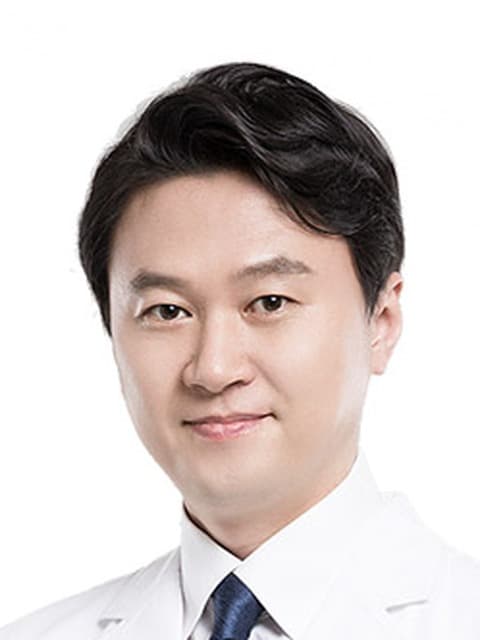
Profile
Im Young Min
Chief Director · Board-certified in Plastic Surgery
This page answers that question the way I answer it in consultation. I use breast surgery as the running example because I perform it myself, but the checks are the same for eyelids, facial contouring or a nose operation.
The short answer: four things to verify
Searches for a top plastic surgeon in Korea usually lead to rankings and lists. A list cannot tell you whether a surgeon suits your body. What you can check are facts, and every one of them should be available to you in writing before you pay for anything.
| What to check | Why it matters | How to ask |
|---|---|---|
| Board certification in plastic surgery | It shows the surgeon completed residency and specialty training in plastic surgery | Ask for the training hospital and the board specialty by name |
| The consulting doctor is the operating surgeon | The person who plans your surgery should be the person who performs it | Ask: "Who reviews my photos, and who operates?" |
| An anesthesiologist for the whole operation | Your surgeon should be doing nothing but operating | Ask whether the anesthesiologist is on staff or called in for the day |
| Photos from the clinic's own archive | Photos without a time since surgery hide how the result settled | Ask how many months after surgery each photo was taken |
1. Board certification and where the surgeon trained
"Doctor" and "plastic surgeon" are not the same title. A board-certified plastic surgeon trained in plastic surgery through residency, and that is the first line to check. It is published on every doctor page on our medical team page.
Mine reads: doctorate in medicine, internship and residency at Seoul St. Mary's Hospital, board-certified in plastic surgery. I am a full member of the Korean Society of Plastic and Reconstructive Surgeons, the Korean Society for Aesthetic Plastic Surgery, the Korean Association of Plastic Surgeons and the American Society for Aesthetic Plastic Surgery (ASAPS). You can read the full list on my profile as chief director.
Four board-certified Korean plastic surgeons work here, and each one's centres and training are listed under their own name. When a clinic only says "our doctors are experts", ask for names. A plastic surgeon in Korea who is proud of their training will give it to you.
2. Is the doctor you talk to the one who operates?
This is the question I would ask first if I were choosing a surgeon abroad. At some clinics the first conversation is with a consultant or a coordinator, and the surgeon is met on the morning of surgery.
Here, the surgeon who would operate looks at your photographs and writes the assessment. The plan and quote we send back by messenger or email come from that surgeon, and the in-person consultation in Seoul is with that surgeon too, with an interpreter. On the day, your surgeon draws the plan and goes through it with you before anything starts, with the interpreter in the room. Nothing begins until you agree to what is drawn.
One honest limit: our before-and-after photos are published by procedure category, not by surgeon. No case carries a surgeon's name, so no photo can prove who operated on that patient. Which doctor would see you is confirmed at consultation, and you should get that answer in writing.
3. Who is watching you while the surgeon operates
Many patients never ask about anesthesia, and it is the part of the day I care about most. Three board-certified anesthesiologists work at our clinic full time. They are not called in for the day.
One of them stays with you for the whole operation, monitoring blood pressure, pulse, oxygen and breathing continuously. That is why the surgeon can concentrate on nothing but the operation. Breast surgery is done under general anesthesia and takes 1–3 hours, so this matters.
After surgery you wake up in the recovery room under observation, and nursing staff stay with you until you are stable and alert. For nose surgery, an ENT specialist also works here and checks the septum and airway, which our nose surgeons explain in the Korean nose job guide.
Send front and side photos and tell me what bothers you — the surgeon who would operate will tell you what is realistic, including when the answer is no.
4. What the photos and the paperwork should show
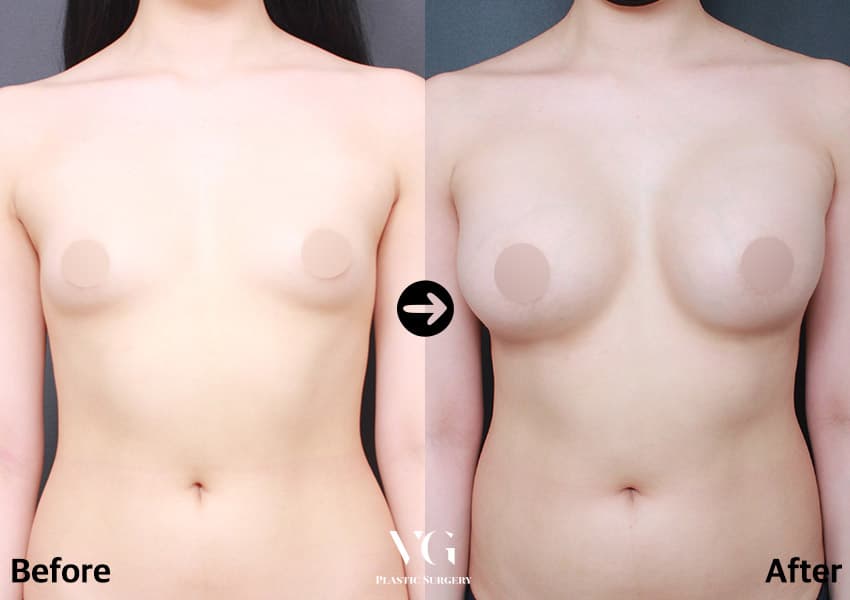
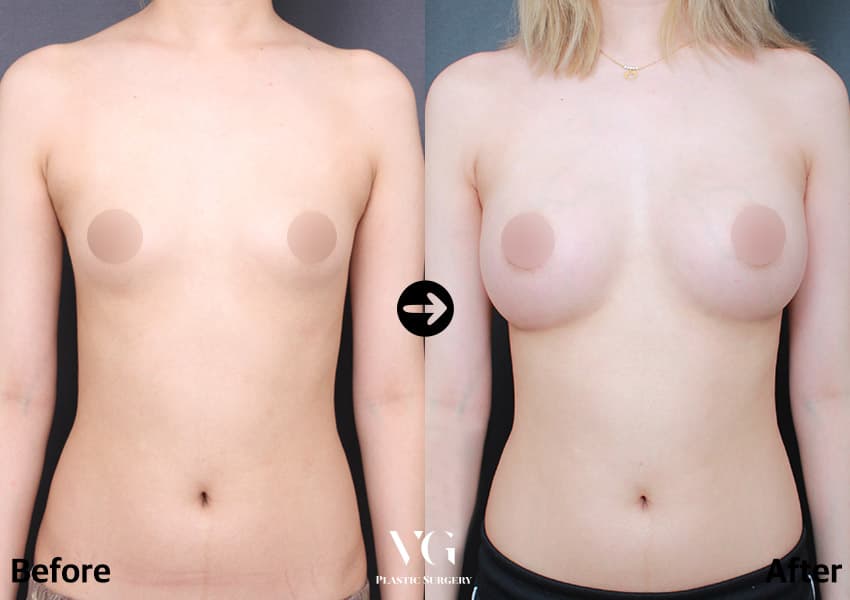
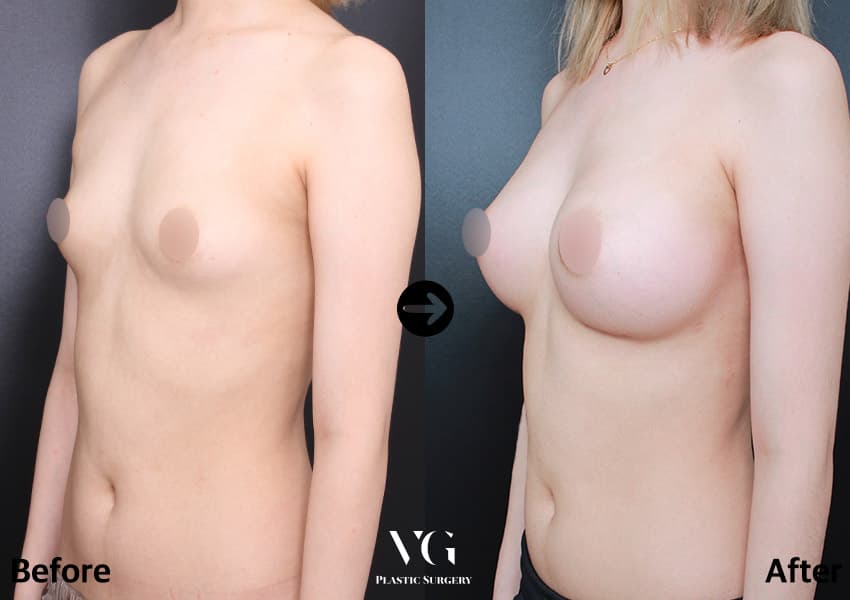
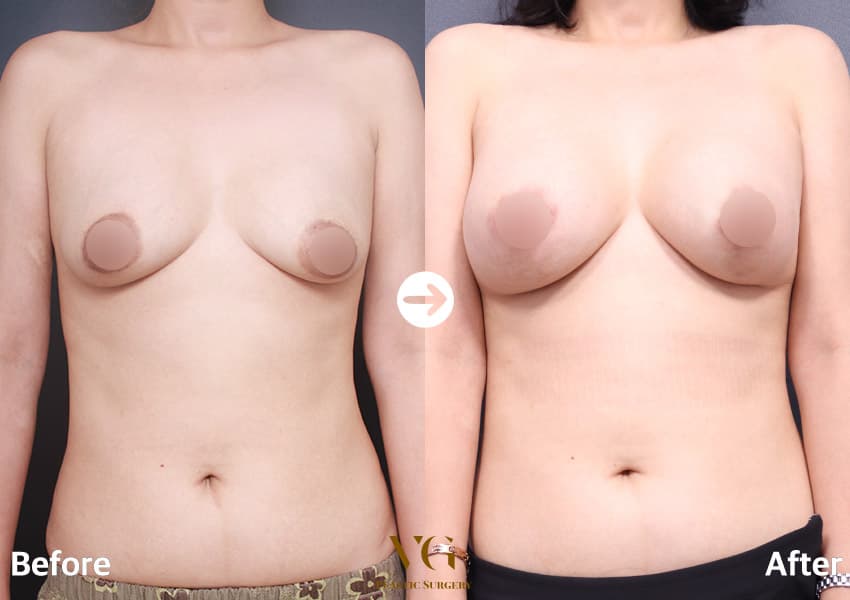
Before-and-after photos are the evidence most people look at first. Look at when each one was taken: breast augmentation usually looks natural at about 3 months and reaches its final shape at about 6 months. A photo taken the week after surgery shows swelling, not a result.
Every photo in our breast surgery archive comes from the clinic's own cases and carries the time since surgery. The case at the top of this page, for example, was photographed 3 months after augmentation.
The paperwork matters as much. Ask for an itemised written quote in your language before you decide. International patients here pay the same surgical fee as Korean patients, with no agency commission built in. After surgery you get your medical certificate and operation record in English.
The same checks, applied to breast surgery
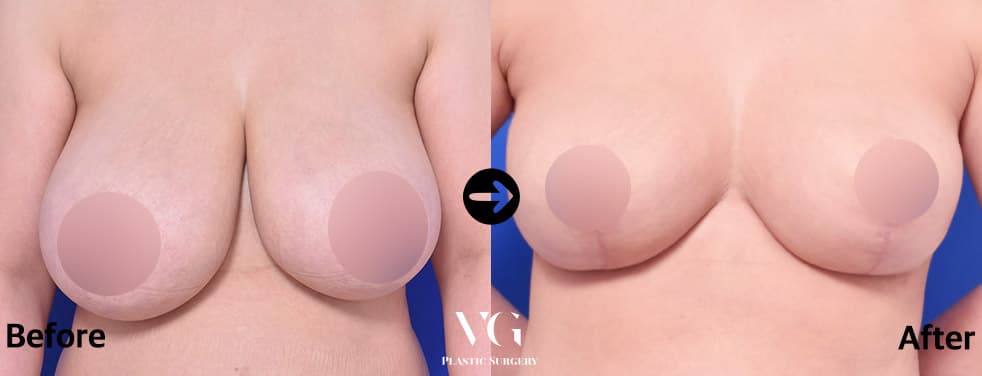
At our clinic the breast is assessed on ultrasound before a plan is made. Whether it is augmentation, a lift or a reduction, we favour the approach that preserves glandular tissue and blood supply. The clinic also holds the Korean Society of Breast and Thyroid Surgeons' Excellent Breast and Thyroid Care Clinic certification, issued on 23 November 2024.
| Stage | What to expect |
|---|---|
| Surgery | 1–3 hours under general anesthesia; 1 day of admission advised |
| Days 5–7 | Swelling peaks; showering is usually allowed after 5–7 days |
| Days 7–10 | Stitches come out |
| About 2 weeks | Back to most daily routines; recovery takes 10–14 days |
| 3 months | The shape usually looks natural |
| 6 months | Final result |
The full list of methods and cases is on our breast surgery page. Your stay in Seoul depends on the operation and on how recovery goes, so we set the dates with you in consultation; the trip planner shows a typical schedule day by day.
When a good surgeon should tell you to wait
A qualified Korean plastic surgeon should be willing to say no. For breast surgery, these are the situations where I ask patients to wait or not go ahead.
- An unexamined lump or nipple discharge — breast imaging comes first
- You are breastfeeding, or planning pregnancy within six months
- You cannot stop smoking around the operation
- An uncontrolled cardiovascular or bleeding disorder
If a clinic agrees to everything in the first message, before anyone has seen you properly, treat that as information. A direct answer, including no, is part of what you should expect before you travel.
What happens after you fly home
Choosing a surgeon abroad also means choosing who looks after you once you leave. Here you get three months of remote follow-up: photograph reviews at set intervals, with a written response from your surgeon each time, and a request for more photographs from set angles when the first ones are not enough.
If something is better seen in person where you live, we put the details in writing for the doctor who sees you. One coordinator stays with your case from the first message to that final check. The full list is on our page for international patients.
Breast before & after — more cases
Real patients from our archive, all photographed 3 months after surgery. Tap a case to compare it full size.
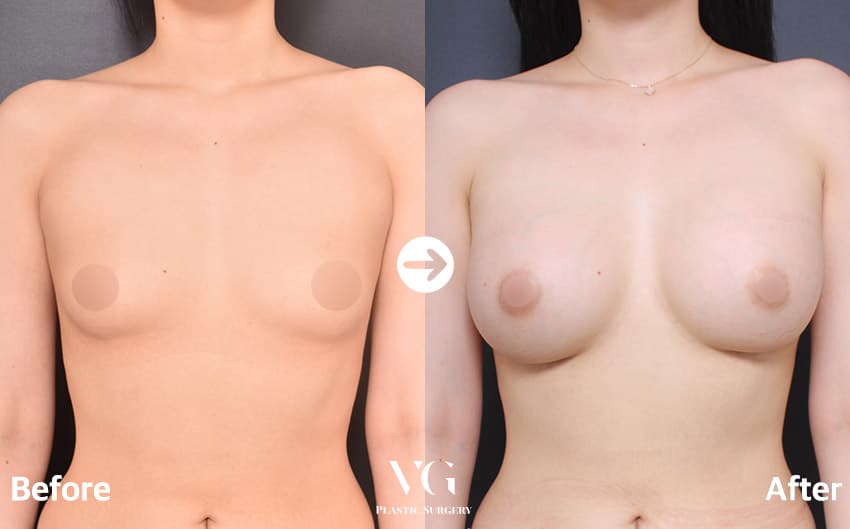
Breast Augmentation3 months after surgery
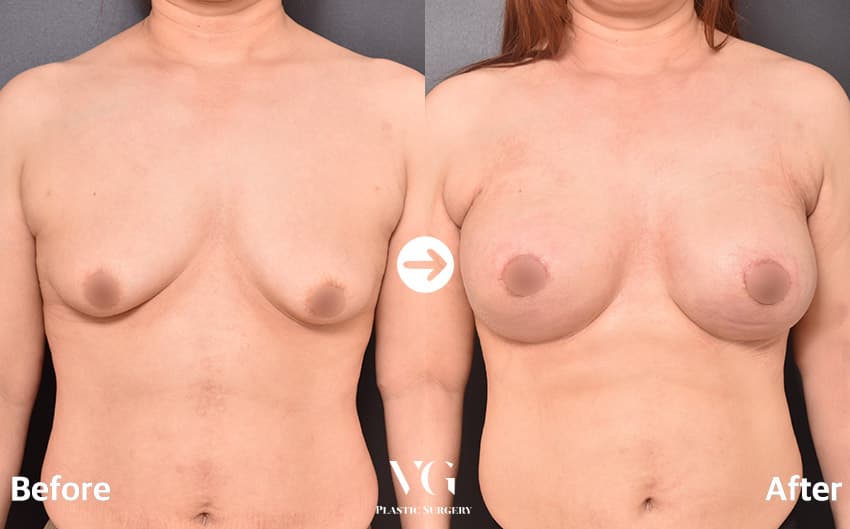
Breast Augmentation3 months after surgery
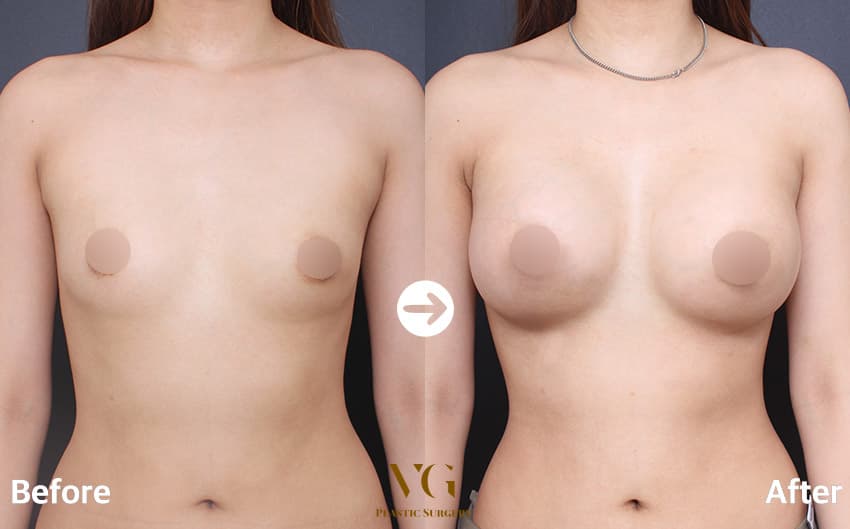
Breast Augmentation3 months after surgery
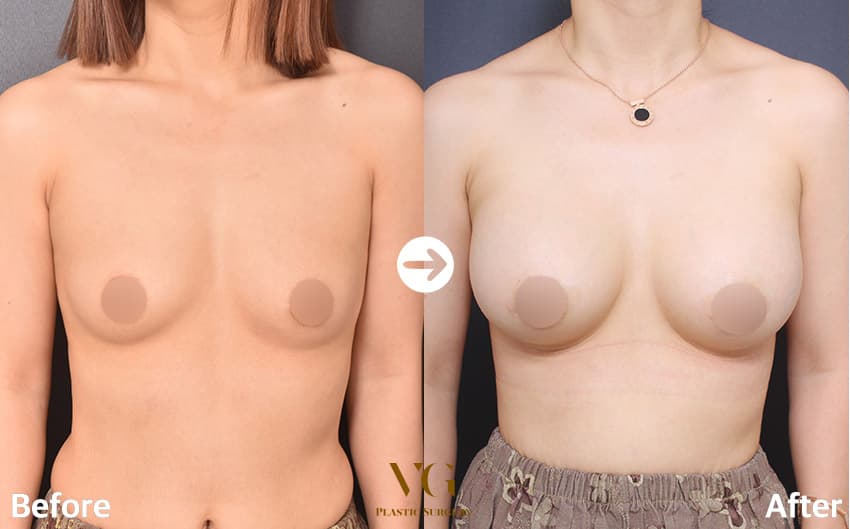
Breast Augmentation3 months after surgery
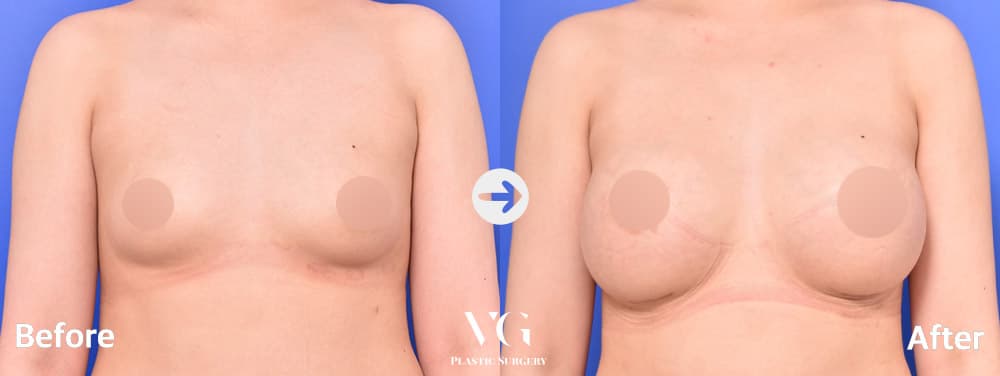
Breast Augmentation3 months after surgery
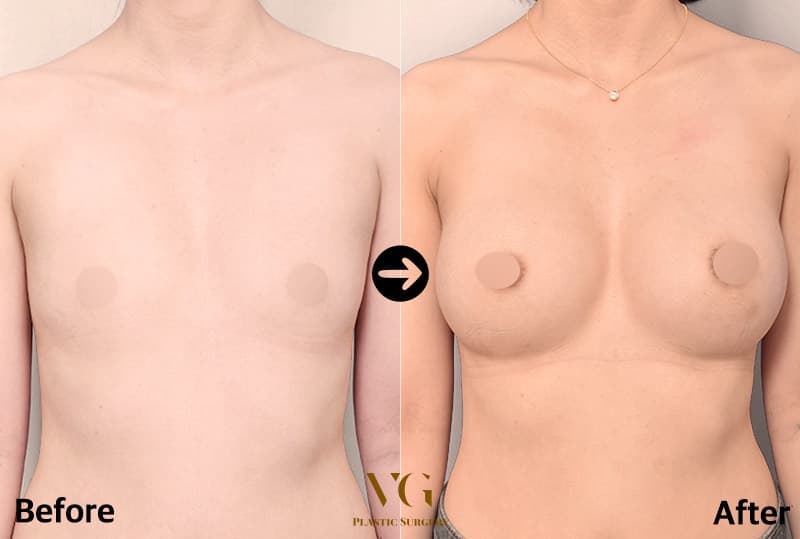
Breast Augmentation3 months after surgery
FAQ
Questions patients ask
How do I know if a Korean plastic surgeon is board-certified?
Ask for the surgeon's name, the hospital where they did their residency and their board specialty, and check that it says plastic surgery. Membership of the Korean Society of Plastic and Reconstructive Surgeons is another line you can ask about. At our clinic these details are published on each doctor's own page.
Will the surgeon I consult with be the one who operates?
It depends on the clinic, so ask directly and get the answer in writing. Here, the surgeon who would operate reviews your photographs, sees you at the in-person consultation and draws the plan with you on the morning of surgery.
How can I find a top plastic surgeon in Korea?
Rankings cannot tell you whether a surgeon suits your body. Compare surgeons on facts you can verify: board certification, who consults versus who operates, who runs the anesthesia and whether the photos show the time since surgery. Then ask each surgeon what they would not do for you.
Is there an anesthesiologist during surgery?
At our clinic, yes. Three board-certified anesthesiologists work here full time, and one stays with you for the whole operation, monitoring blood pressure, pulse, oxygen and breathing.
Do I need to speak Korean to see a plastic surgeon in Korea?
No. English interpretation is provided through your consultation, the design confirmation on the morning of surgery and every follow-up visit. Other languages can be arranged if you ask when you book.
Do foreigners pay more than Korean patients?
Not here. International patients pay the same surgical fee as Korean patients, and the fee does not change with the agency or person who referred you. You receive one itemised written quote before you decide.
This article explains general medical information. Whether surgery suits you, and which method, is decided only after a consultation with the surgeon.
Written by
Im Young Min
Chief Director · Plastic Surgery
- Ph.D. in Medicine
- Internship and residency, Seoul St. Mary's Hospital
- Board-certified plastic surgeon, Seoul St. Mary's Hospital
- Adjunct professor of plastic surgery, Seoul St. Mary's Hospital
- Former director, Topface Plastic Surgery
Next step
Send two photos. Get a surgeon’s answer.
Front and side, natural light, no filter. Dr. Im Young Min reviews them and tells you which method fits and how many days to stay in Seoul.
International patients pay the same surgical fee as Korean patients. Pricing policy
Keep reading
Breast
Considering Fat Transfer Breast Augmentation Korea? Price, Recovery and Trip Days
Fat transfer breast augmentation moves your own fat from the belly, flanks or thighs into the breast in thin layers. Only part of it stays, so it suits a modest, soft change in people with fat to spare.
Im Young Min ·
Breast
Worried About Korean Breast Implants? Cost Factors, Tissue Limits and Long-Term Checks
Korean breast implants carry the same risks the U.S. FDA lists for any breast implant, and they are not lifetime devices. Your tissue limits the size, the flight home needs room, and the checks continue for years.
Im Young Min ·
Breast
Gynecomastia Surgery Cost Korea: How the Fee Is Set and Your Stay
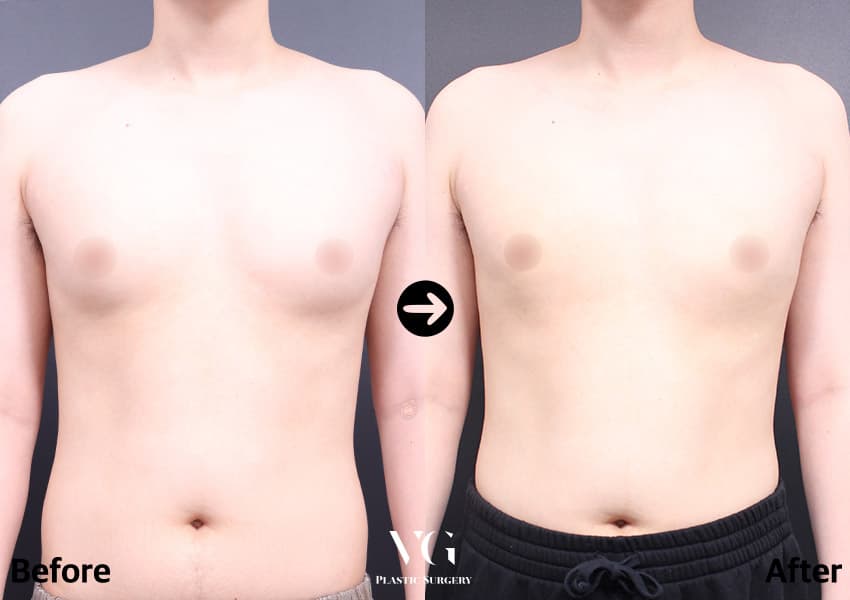
A plastic surgeon in Seoul explains what decides the fee for gynecomastia surgery, why the gland and the fat are both treated, real cases from our breast surgery team, recovery, and how your days in Korea are planned.
Im Young Min ·