Breast
Worried About Korean Breast Implants? Cost Factors, Tissue Limits and Long-Term Checks
Korean breast implants carry the same risks the U.S. FDA lists for any breast implant, and they are not lifetime devices. Your tissue limits the size, the flight home needs room, and the checks continue for years.
· 8 min read · Last updated
Edited by Im Young Min
In this article
- 01Is there anything Korean about Korean breast implants?
- 02Your own tissue sets the size ceiling
- 03What does the ultrasound before the plan look for?
- 04How soon can you fly home after breast implant surgery?
- 05What decides the cost of breast implant surgery in Korea?
- 06Long-term risks: implants are not lifetime devices
- 07Who shouldn't have implants yet
- 08Who looks after your implants once you're home?
The short answer
Are you worried about what korean breast implants mean for you years from now, when a check or a second operation comes up and your surgeon is a long flight away?
- Breast implants are not lifetime devices, so a later operation belongs in the plan.
- The breast tissue and skin you have now limit how large an implant can be covered well.
- An ultrasound of the breast comes before the implant and incision are chosen.
- The CDC suggests delaying air travel for 10 to 14 days after major surgery.
- Leave Seoul with copies of your records and your implant details for the doctor at home.
It's worth reading to the end before you book or decide anything.
Profile
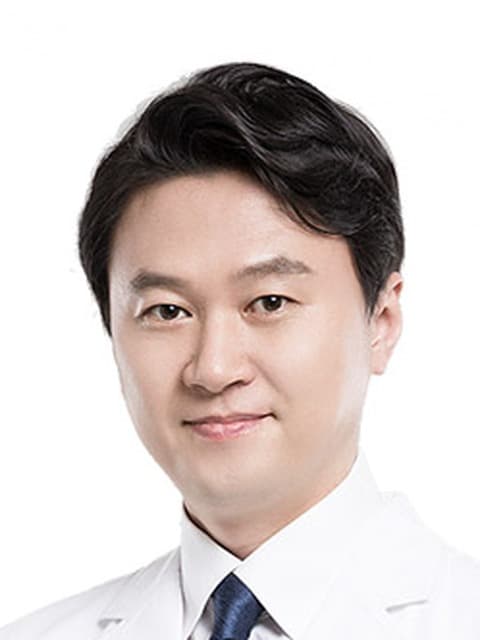
Im Young Min
Chief Director · Board-certified in Plastic Surgery
After this post you will know what decides the cost, how your own tissue limits the size, what the long-term risks are, and who looks after the implants once you're home. That is enough to judge whether to go ahead now, wait, or choose a surgeon closer to home.
Hello, I'm Dr. Im Young Min, Chief Director and a board-certified plastic surgeon at VG Plastic Surgery in Gangnam, Seoul.
I trained and became board-certified at Seoul St. Mary's Hospital, and I'm a full member of the American Society for Aesthetic Plastic Surgery (ASAPS). At the clinic, an ultrasound of the breast comes first, and the implant and incision are chosen around what it shows.
I wrote this because many people assume the word "Korean" means a different kind of implant, or a lower risk.
In practice, korean breast implants means breast augmentation done in Korea, and the implant carries the same risks the U.S. FDA lists for every breast implant. The first is that implants are not lifetime devices.
Send your dates and your one question on WhatsApp
Is there anything Korean about Korean breast implants?
Very little that changes your risk. What differs from one patient to the next is the filling, the surface, the shape, the size and whether the implant sits above or below the chest muscle, and those choices exist in Seoul as they do in Los Angeles or Sydney.
The surface is worth a direct question. The FDA notes that breast implant-associated anaplastic large cell lymphoma (BIA-ALCL), a T-cell lymphoma that can develop after breast implants, appears more often in patients with textured implants. Ask for the manufacturer, the model, the size and whether the shell is smooth or textured, and keep that information for the rest of your life. A doctor in your home country will need it, and so will any surgeon who operates on you again.
People also search for a "Korean" result as if it were a product. In practice it describes a proportion: a size chosen for the frame it sits on. That brings us to the real limit.
Your own tissue sets the size ceiling
The breast tissue and skin you have now limit how large an implant can be covered well. An implant that is wide or heavy for thin tissue is more likely to show its edges, ripple under the skin or be felt through it, and the tissue keeps stretching under that weight for years.
If a surgeon at home told you your tissue is too thin for the size you want, that is a measurement of coverage. It doesn't mean surgery is impossible. Several things can change the picture, and each has its own trade-off:
- Placing the implant under the chest muscle adds a layer of cover over the upper part, at the cost of a different recovery and some movement of the implant when the muscle contracts.
- A smaller or narrower implant fits the base of your breast and leaves the skin less to carry.
- Fat grafting can add a thin layer of your own fat, and it is sometimes considered alongside an implant when coverage is the problem. Not all of the grafted fat stays, so the amount that takes is never known on the day.
What most plastic surgeons measure first is the width of the breast and the chest, since the implant's diameter follows from that and the volume follows from the diameter. A photo of Korean breast implants saved from social media can't tell you how much tissue sits behind it.
Say you are 34, you have thin tissue over the chest and you want a clearly fuller shape, and you're flying in from abroad for ten days. I would start with the ultrasound, because it shows how much of your own tissue can cover an implant. If the cover is thin, a very large implant is more likely to show its edge, or to stretch the tissue over the years. I would then talk you through a smaller, better-covered size, and what that means for check-ups after you fly home. If the ultrasound shows more cover, the options widen. The size is set by what your tissue can hold, not by the number you arrive with.
What does the ultrasound before the plan look for?
A breast ultrasound looks at the tissue itself before any implant is chosen, so that a cyst or a lump is known about before surgery and not found after it. Anything that needs a closer look is dealt with before an augmentation is planned.
At this clinic the ultrasound comes first, and the implant and the incision are decided around it. If you have had a mammogram or a breast ultrasound at home within the past year, bring the report and the images. Two sets of findings taken months apart say more than one.
The trip itself, from arrival to the day you leave, is covered in our page on breast augmentation in Korea and how the trip is planned. If your goal is the opposite, less volume and less weight on the shoulders, the breast reduction guide covers who that operation suits.
How soon can you fly home after breast implant surgery?
Later than many first plans assume.
Your surgeon decides what that means for your operation, your drains and stitches, and your flight length. Long-haul flights, smoking, hormonal contraception and any past blood clot all matter here, so put them on the medical history form and say them out loud at the consultation.
The day of surgery is the part people fear most, and it is the part with the clearest facts. Three board-certified anesthesiologists work here full time, and one of them is dedicated to each operation. That anesthesiologist watches your blood pressure, pulse and breathing from the first injection until you are awake again, and does not perform cosmetic surgery, so the surgeon does nothing but operate.
Send your earliest arrival date and the date you must be back at work on WhatsApp.
Send your dates and your one question on WhatsApp
What decides the cost of breast implant surgery in Korea?
The main factors are the implant type and the incision, and whether the implant sits over or under the muscle. How much work the pocket needs also matters, as does whether it is a first operation or a revision of implants placed elsewhere. Anaesthesia and the number of days you stay in Seoul add to it, as does the follow-up you'll need once you're home. Your own tissue thickness shapes several of these choices, which is why two people asking about the same size can end up with different plans. To get the figure for your case, send a photo on WhatsApp and ask what would apply to you.
Long-term risks: implants are not lifetime devices
The FDA puts it plainly: breast implants are not considered lifetime devices. Over the years, a second operation to replace or remove one or both implants is a realistic part of the plan for many people, and it is worth deciding now where that operation would happen.
The FDA lists local complications that occur in at least 1 percent of breast implant patients at any time, among them asymmetry, breast pain, capsular contracture, deflation, infection, malposition and rupture. The ones that matter most for someone living far from their surgeon:
| Risk | How it shows up | What follows |
|---|---|---|
| Capsular contracture | The breast firms, the shape tightens, it may ache | Examination; sometimes surgery |
| BIA-ALCL | Persistent swelling, pain or other changes around the implant | Prompt examination by a doctor |
| Systemic symptoms | Fatigue, memory loss, rash, "brain fog", joint pain | Poorly understood; discuss with a doctor |
The FDA also lists compression during a mammogram as one possible cause of rupture, so tell whoever performs your breast imaging that you have implants. Infection and malposition tend to show in the first weeks or months; contracture and rupture can appear years later, which is why the distance question doesn't end when the stitches come out.
How each of these plays out differs from person to person, and suitability is decided at the in-person consultation and exam.
Who shouldn't have implants yet
Some situations call for a later date, and a trip already booked is a poor reason to go ahead anyway.
- You are pregnant, breastfeeding, or planning a pregnancy soon. Breast size changes through those months, and an implant chosen before it settles may not match what comes after.
- Your weight is still changing noticeably.
- An ultrasound or mammogram has shown something that hasn't been explained yet.
- You smoke and can't stop around the operation, since smoking slows wound healing.
- Your main concern is sagging, which an implant alone does not correct.
- You want an operation you never have to think about again. Given what the FDA says about lifespan, implants are a poor match for that wish.
- Your trip has no room for the days before you can fly.
Each of these moves the date. It rarely closes the question for good, and a later date your body agrees with is worth more than a flight already paid for.
Who looks after your implants once you're home?
Mostly a doctor near you, with your Korean records in hand. The routine checks, the imaging and the first look at any new symptom happen at home, so the hand-off matters as much as the operation.
The CDC advises medical travelers to get copies of all their medical records from the facility before returning home, and notes that those records may need translation. Ask for them before your last day in Seoul, and check that they include:
- the implant manufacturer, model, size and surface
- the placement (above or below the muscle) and the incision site
- the operation and anesthesia notes, and the ultrasound findings
Find a plastic surgeon or breast clinic at home before you travel, so you know who you would call. The CDC also warns that follow-up care for complications can be expensive and may not be covered by your health insurance, so read your policy for what it says about treatment of complications from surgery abroad. For the wider picture of planning an operation in Seoul, the overview of Korean plastic surgery walks through stay length and choosing an operation.
The surgeons, the ENT specialist and the anesthesiologists are listed by name on the clinic's English site, so you can check who would be in the room before you write.
If you are weighing korean breast implants against a surgeon at home, send two things on WhatsApp: one photo, and your travel window. Add the one question that would decide it for you, such as tissue thickness, the flight, or a revision. For a revision, add the implant card or operation note if you kept it. One photo is enough, and you can ask before booking anything. When you come to Seoul, I examine you and recommend what fits your body and your history.
Related pages:
Breast before & after — more cases
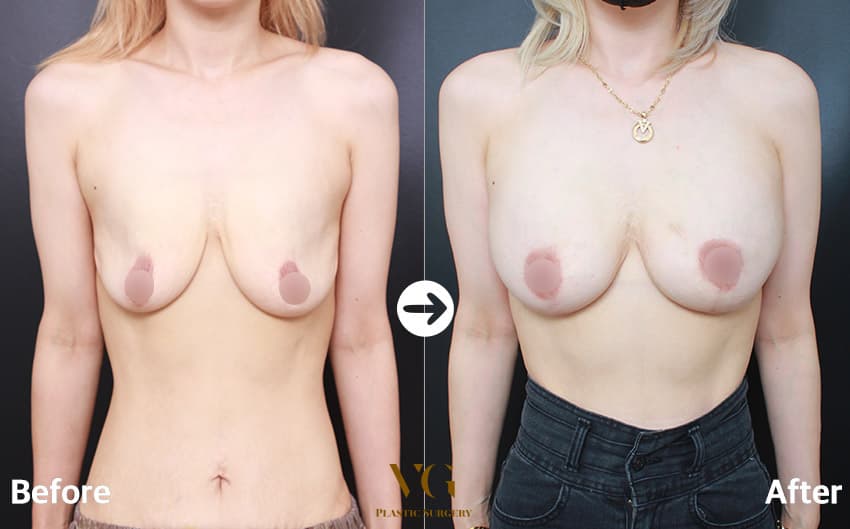
Real patients from our archive, all photographed 3 months after surgery. Tap a case to compare it full size.
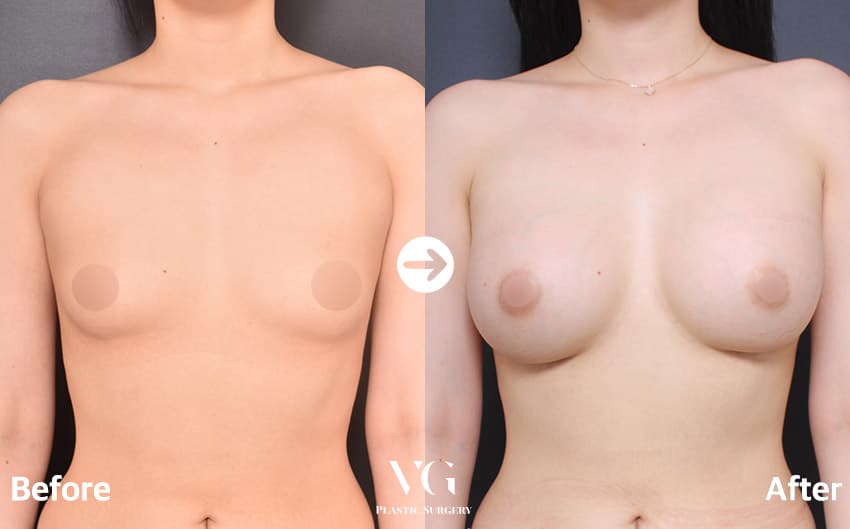
Breast Augmentation3 months after surgery
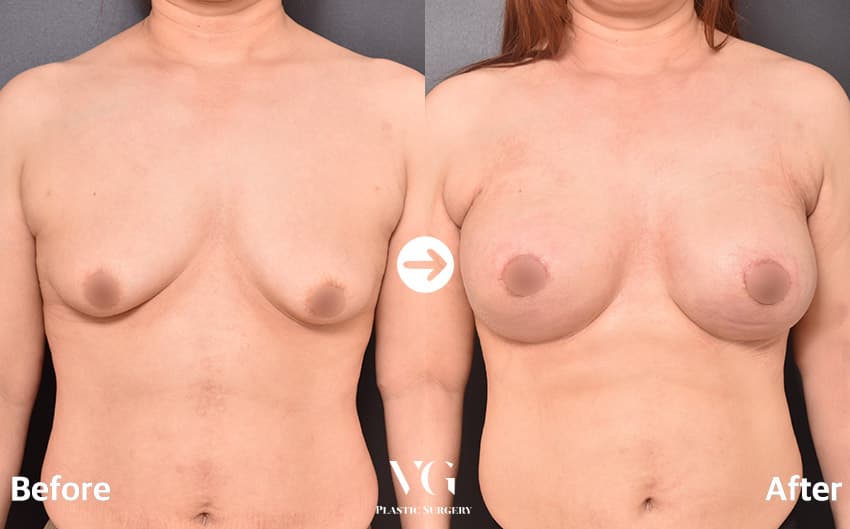
Breast Augmentation3 months after surgery
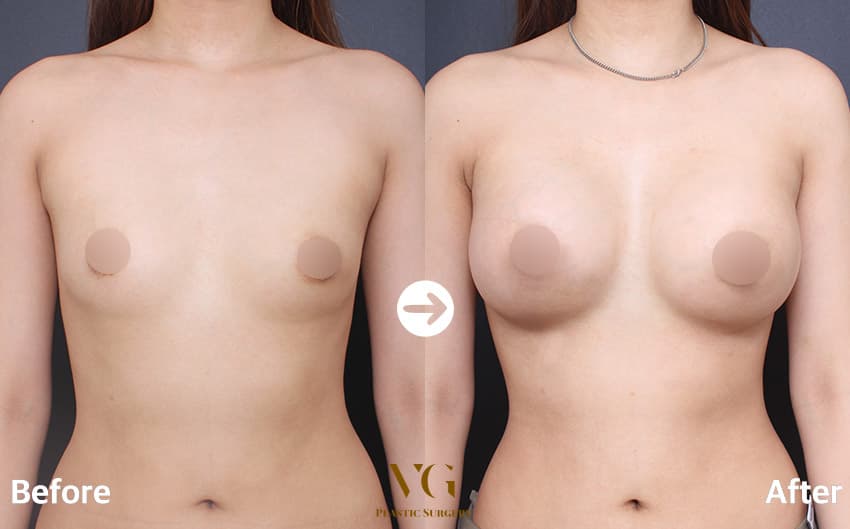
Breast Augmentation3 months after surgery
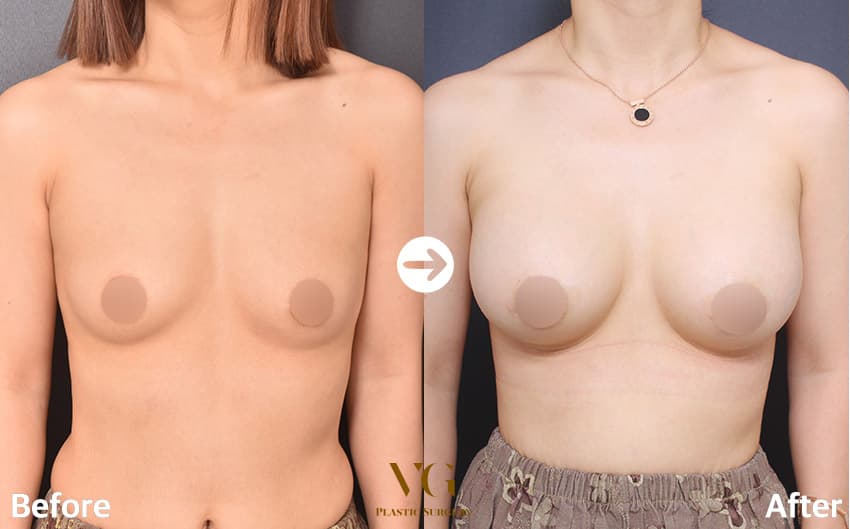
Breast Augmentation3 months after surgery
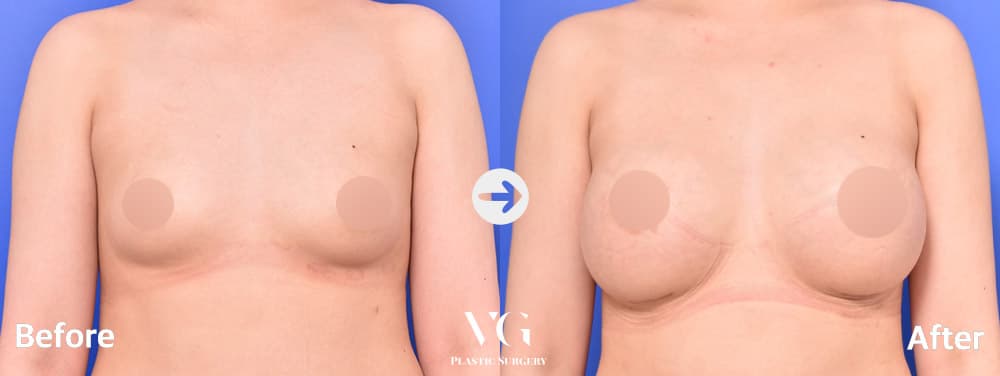
Breast Augmentation3 months after surgery
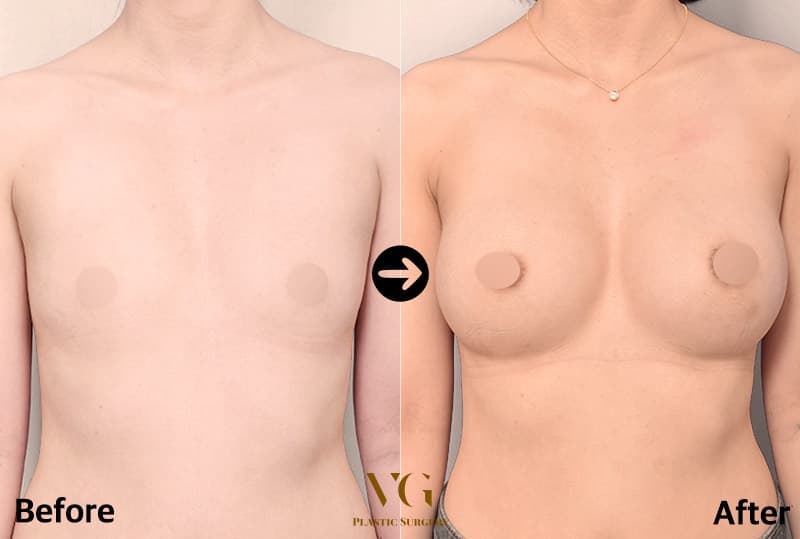
Breast Augmentation3 months after surgery
FAQ
Questions patients ask
Do breast implants have to be replaced after 10 years?
There is no fixed expiry date. The FDA states that breast implants are not considered lifetime devices, so replacement or removal is likely at some point, usually prompted by a problem or a change you or your doctor notice. Regular checks with a doctor at home are how that point is found.
How is a silent rupture of a silicone implant found?
Most silicone implant ruptures cause no symptoms, which is why they are called silent. According to the FDA, MRI is the most effective way to detect them and ultrasound is an acceptable alternative for screening people without symptoms. Ask your doctor at home which schedule suits you.
Are textured breast implants riskier than smooth ones?
The FDA notes that BIA-ALCL, a lymphoma linked to breast implants, appears more often in patients with textured implants. Persistent swelling, pain or other changes around an implant should be examined by a doctor. Knowing your implant's surface is one reason to keep your device details.
What should I bring to a breast implant consultation in Seoul?
Bring any recent mammogram or breast ultrasound reports, a list of your medications and past operations, and for a revision, the implant card or operation notes from your first surgery. Mention smoking, hormonal contraception and any past blood clot.
Which languages does the clinic work in?
VG Plastic Surgery works in English, Japanese, Chinese (Taiwan), Thai and Korean. Messages sent on WhatsApp in English are answered in English.
Sources
This article explains general medical information. Whether surgery suits you, and which method, is decided only after a consultation with the surgeon.
Written by
Im Young Min
Chief Director · Plastic Surgery
- Ph.D. in Medicine
- Internship and residency, Seoul St. Mary's Hospital
- Board-certified plastic surgeon, Seoul St. Mary's Hospital
- Adjunct professor of plastic surgery, Seoul St. Mary's Hospital
- Former director, Topface Plastic Surgery
Next step
Send two photos. Get a surgeon’s answer.
Front and side, natural light, no filter. Dr. Im Young Min reviews them and tells you which method fits and how many days to stay in Seoul.
International patients pay the same surgical fee as Korean patients. Pricing policy
Keep reading
Breast
Considering Fat Transfer Breast Augmentation Korea? Price, Recovery and Trip Days
Fat transfer breast augmentation moves your own fat from the belly, flanks or thighs into the breast in thin layers. Only part of it stays, so it suits a modest, soft change in people with fat to spare.
Im Young Min ·
Breast
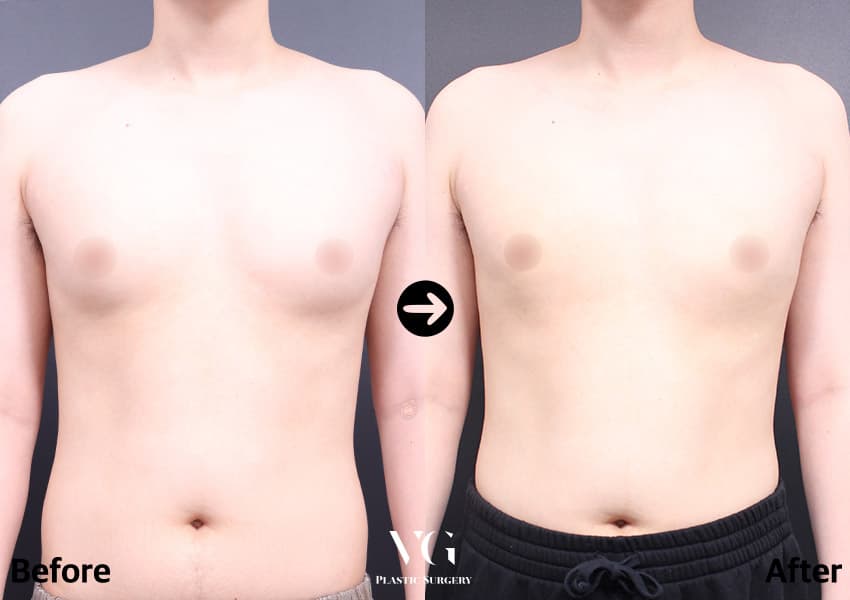
Gynecomastia Surgery Cost Korea: How the Fee Is Set and Your Stay
A plastic surgeon in Seoul explains what decides the fee for gynecomastia surgery, why the gland and the fat are both treated, real cases from our breast surgery team, recovery, and how your days in Korea are planned.
Im Young Min ·
Breast
Breast Lift in Korea: Sagging, Volume and the Trip, From the Surgeon
A plastic surgeon in Seoul explains how a breast lift is planned for patients flying in: when sagging needs a lift and when it needs volume too, the ultrasound check, recovery, the trip and how the fee is set.
Im Young Min ·