Facial Contouring
Facial Contouring Korea: Cheekbone, Jaw or Chin — Which Surgery You Need
A facial contouring surgeon in Seoul maps the three operations — cheekbone, square jaw and chin — explains who each one suits, how recovery runs over 14 days in Korea, and what is checked on CT before any bone is cut.
· 6 min read · Last updated
In this article
- 01What facial contouring covers: three bones, three decisions
- 02Who facial contouring suits — and who it doesn't
- 03One area, two or all three: how the choice is made
- 04Surgery day and the recovery timeline
- 05Facial contouring surgery in Korea: your stay, stitches and fee
- 06What I check first in consultation
- 07Risks and how we reduce them
The short answer
Facial contouring in Korea means reshaping the bone of the face — the cheekbones, the jaw angle and the chin — usually through incisions inside the mouth. Which operation you need, and whether you need one or all three, depends on which bone actually makes your face look wide or hard, and that is read on CT before anything is planned. Plan to stay in Korea for at least 14 days.
- There are three areas to work on: the cheekbones, the jaw angle and the chin. Many faces need only one of them.
- Nerve position and bone thickness are read on CT before the cut is planned. Bone does not grow back, so we cut only what needs cutting.
- Surgery takes 1.5–4 hours under general anesthesia, with one night in the clinic advised. Stitches come out 10–14 days later.
- Stay in Korea at least 14 days. Most people are back to daily life in 3–4 weeks, and the final shape settles around 12 months.
- International patients pay the same surgical fee as Korean patients, confirmed in one itemised written quote.
I am Park Sang Wook, deputy medical director and board-certified plastic surgeon at VG Plastic Surgery in Seoul, working in our facial contouring and nose centres. I am a member of the Maxillofacial Contouring Surgery Research Group and a full member of the Korean Cleft Palate-Craniofacial Association. People who search for facial contouring Korea usually write to me with one question: which of these surgeries do I actually need?
Profile
Park Sang Wook
Deputy Medical Director · Board-certified in Plastic Surgery
What facial contouring covers: three bones, three decisions
Facial contouring is surgery on bone, not on skin or fat. It works on three areas, and each one changes a different part of how your face reads.
| Area | What bothers people | What the surgery does |
|---|---|---|
| Cheekbones | The face looks wide from the front because the cheekbones project sideways | Cheekbone (zygoma) reduction brings the projection inward |
| Jaw angle | A square angle at the back of the jaw makes the face look hard | Square jaw reduction removes the angle; a long-curve reduction follows the jawline further forward |
| Chin | The chin is short, long, wide or off-centre and breaks the profile | Chin reduction, chin advancement or chin setback, depending on the direction it needs to move |
A chin can be reduced or brought forward, and those are not the same surgery. The same goes for the jaw: how much bone comes off is decided only after the nerve position is read on CT.
Upcoming articles on this blog go deeper into V-line and jawline surgery. This one is the map: what each operation is for, and how to tell which one is yours.
Who facial contouring suits — and who it doesn't
These are the faces where bone surgery is a reasonable answer.
- Cheekbones that project sideways and make the face read as wide from the front
- A square jaw angle that gives the face a harder impression
- A short or asymmetric chin that breaks the profile line
- You can stay in Korea two weeks or more for follow-up
I also tell people when not to go ahead. Bone does not grow back, so saying no in consultation matters more here than in any other category.
- The width comes from soft tissue rather than bone. A soft jawline is often fat, and then double chin and jawline liposuction is the first thing to consider, not an osteotomy
- Facial bone growth is not yet complete
- Your schedule is too short to stay through the swelling and the follow-up visits
- You have an uncontrolled systemic or bleeding disorder
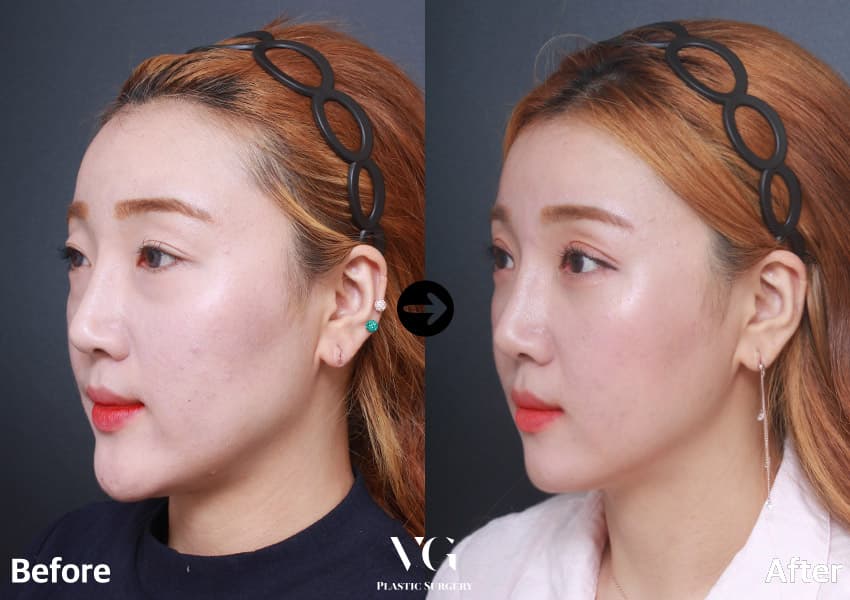
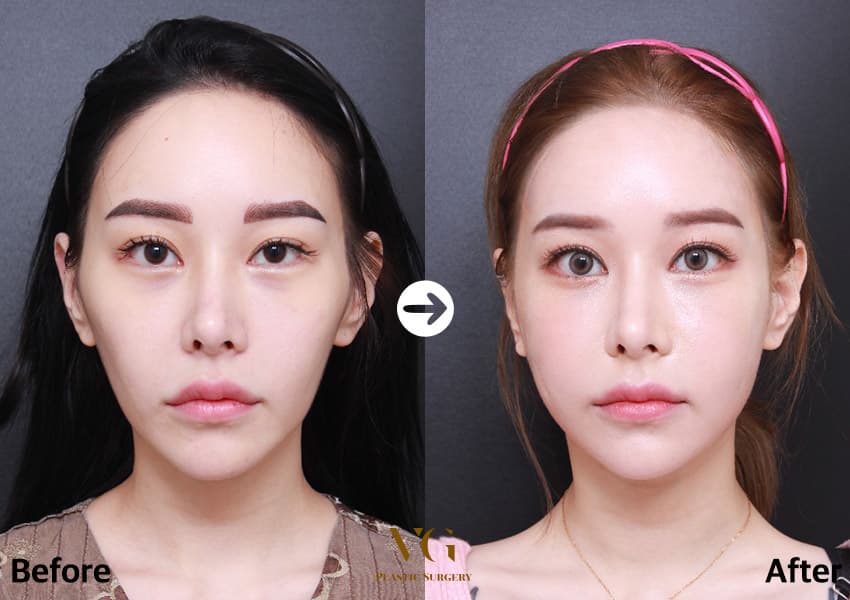
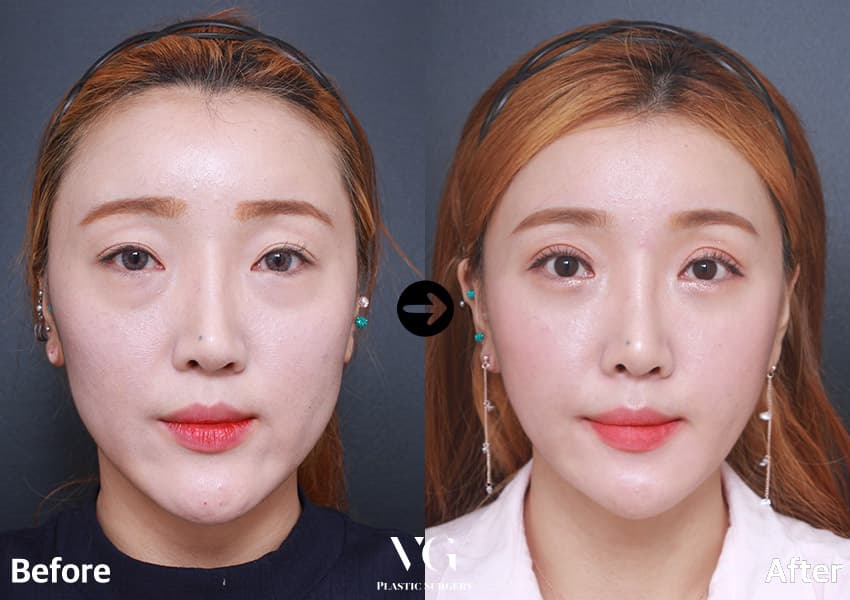
The first patient had all three areas treated; the second had cheekbone and jaw only. You can see this three-area contouring case in full, with every angle and the time since surgery.
One area, two or all three: how the choice is made
Most people arrive convinced they need everything. Often they do not. The question I work through is which bone is creating the impression you dislike.
When the face looks wide from the front
If the widest point of the face sits at the cheekbones, cheekbone reduction does most of the work. Cheekbones also read stronger in photographs than in the mirror, so I compare your photos with what I see in person before deciding.
When the face looks hard or square
If the corners below the ears give the face its shape, the jaw angle is the target. A slimmer front view sometimes also needs the chin narrowed, which is why jaw and chin surgery are often planned together.
When the profile looks unfinished
A short or receding chin changes the side view more than the front. Here the chin may need to come forward rather than get smaller. Reducing a chin that is already short would make the profile worse.
When the cheekbones and the jaw both stand out, we address them in one operation. If the skin has already started to sag, contouring can also be combined with a lift — I explain that below and in our Korean facelift guide.
Surgery day and the recovery timeline
Facial contouring takes 1.5–4 hours under general anesthesia. An anesthesiologist stays with you for the whole operation, monitoring blood pressure, pulse, oxygen and breathing. We advise one night in the clinic, and you can wash your hair from the day after surgery.
| When | What to expect |
|---|---|
| Day 0–1 | Surgery, one night in the clinic, first check the next day |
| Days 7–14 | Swelling is at its peak in this window, then starts to come down |
| Days 10–14 | Stitches come out |
| Weeks 3–4 | Most people are back to daily life |
| Months 3–6 | The face starts to look natural to other people |
| Month 12 | The final shape |
This is the longest recovery of any category we treat. Swelling in the lower face is the part people underestimate, so plan the trip generously rather than tightly.
Send one front photo and one side photo, and I will tell you whether your width comes from the cheekbones, the jaw or soft tissue.
Facial contouring surgery in Korea: your stay, stitches and fee
For facial contouring Korea trips, we ask international patients to stay at least 14 days. That covers the swelling peak, stitch removal at 10–14 days and the follow-up visits before you fly. Your exact dates are set together during consultation, and you can work through a day-by-day schedule on how many days to plan in Seoul.
- An interpreter in the room for consultation, the design confirmation on the morning of surgery and every follow-up visit
- One coordinator from your first message to your final check, so you never explain your history twice
- Partner hotels near the clinic at partner rates, so you do not cross Seoul the day after surgery
- Three months of follow-up after you leave: photograph reviews, written answers from your surgeon and a request for more photographs from set angles when the first ones are not enough
- Records in English: medical certificate, operation record and post-operative instructions for your doctor at home
On cost: there is no foreigner surcharge. International patients pay the same surgical fee as Korean patients, and the quote comes to you itemised and in writing before you decide. We do not publish a single price, because one figure for contouring would only be true for one plan.
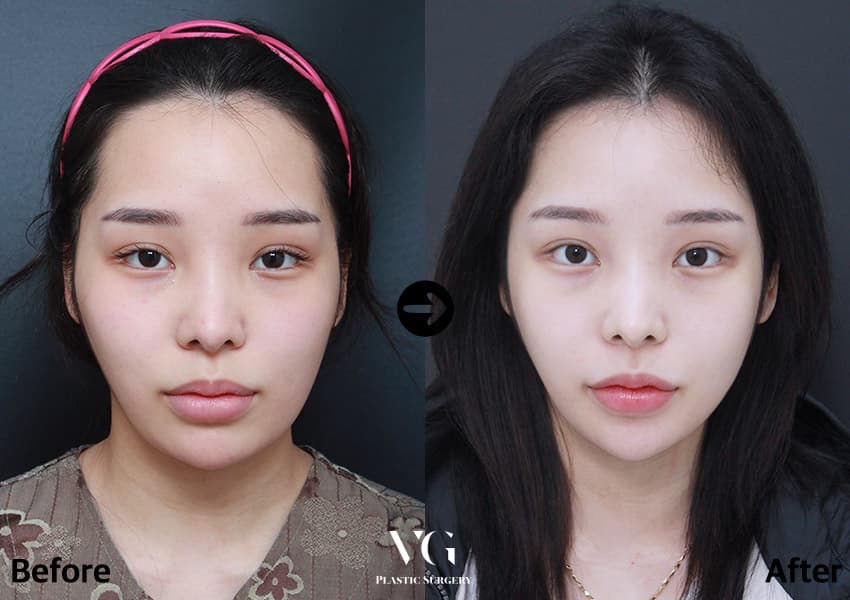
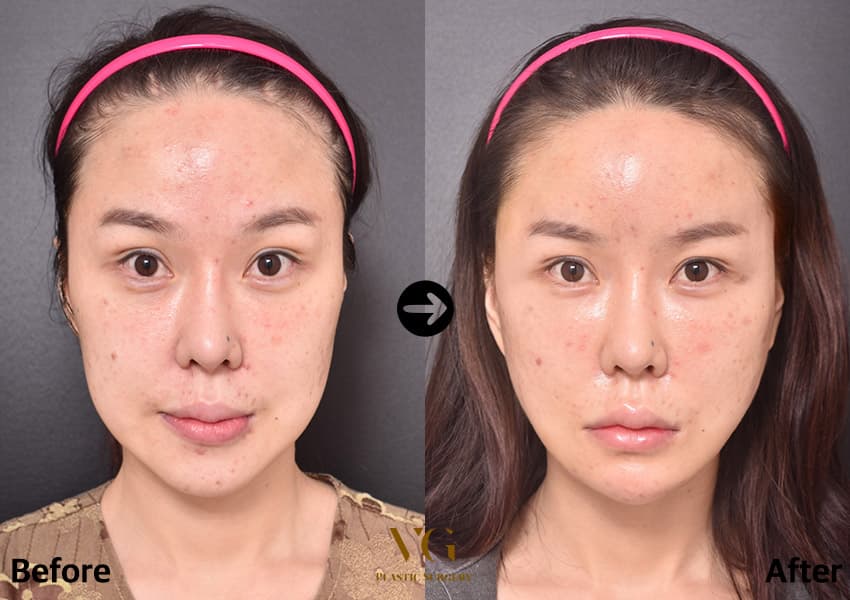
Our archive holds more cheekbone, jaw and chin cases, each labelled with the operations that patient actually had. You can filter them by area on our facial contouring surgery page.
What I check first in consultation
That last point is the principle our facial contouring team works by: bone does not grow back, so we cut less of it. A face that has had one area done well looks better than a face that has had three areas done because they were on a list.
You can read my training and memberships on my surgeon profile. Your photographs are reviewed by the person who would plan your operation, and at the in-person consultation in Seoul you meet that same surgeon.
Risks and how we reduce them
Facial contouring is hard to undo. Anyone weighing facial contouring Korea options should hear the risks from me rather than discover them afterwards.
- Nerves run through the jaw. This is why the nerve position is read on CT before the osteotomy is planned, not during surgery.
- Swelling is heavy and slow. It peaks around days 7–14 and the face only starts to look natural at 3–6 months. Leaving Korea early means leaving before your follow-up visits.
- Too much bone removed cannot be put back. We plan conservatively and keep untouched what does not need cutting.
- Soft tissue can loosen after bone is reduced. If the jawline and cheeks have slackened after contouring, a lift is the answer rather than more bone surgery.
- General anesthesia carries its own risk. An anesthesiologist attends the whole operation, and we do not proceed with an uncontrolled systemic or bleeding disorder.
If something looks different once you are home, the three months of remote follow-up exist for exactly that. Send photographs, and I answer in writing.
Facial Contouring before & after — more cases
Real patients from our archive, all photographed 3 months after surgery. Tap a case to compare it full size.
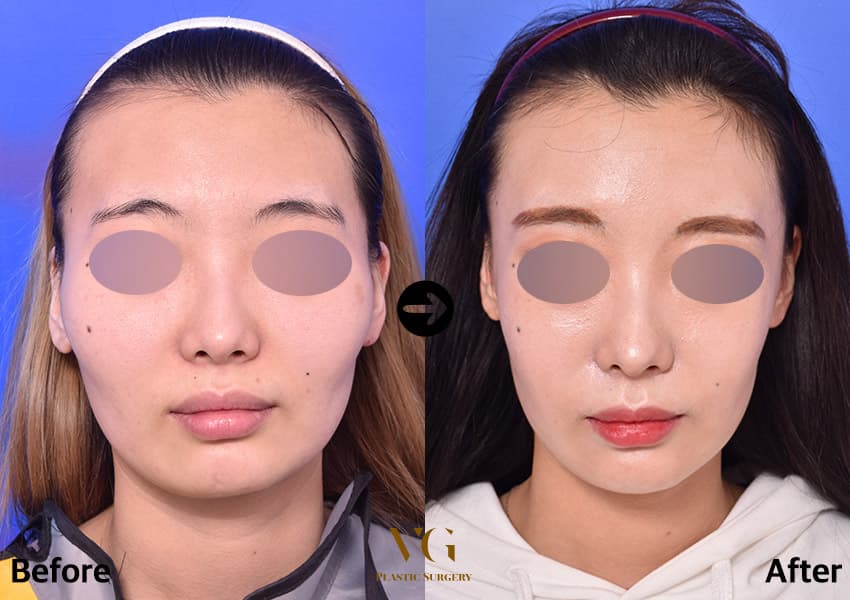
Cheekbone (Zygoma) Reduction3 months after surgery
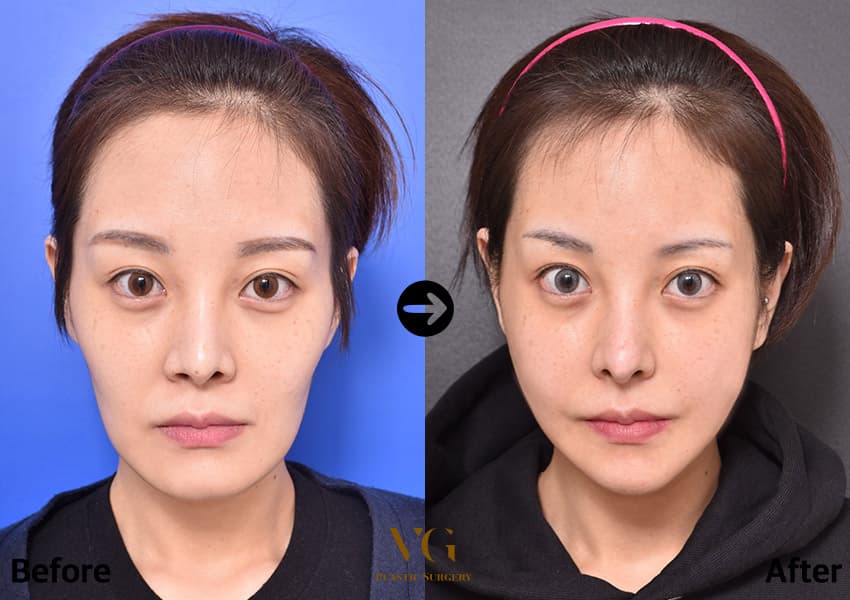
Cheekbone (Zygoma) Reduction3 months after surgery
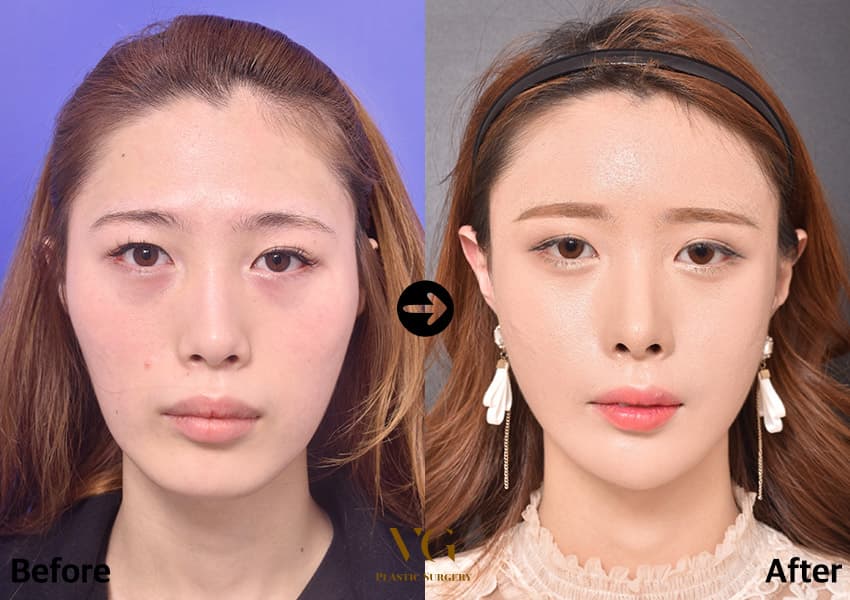
Cheekbone (Zygoma) Reduction3 months after surgery
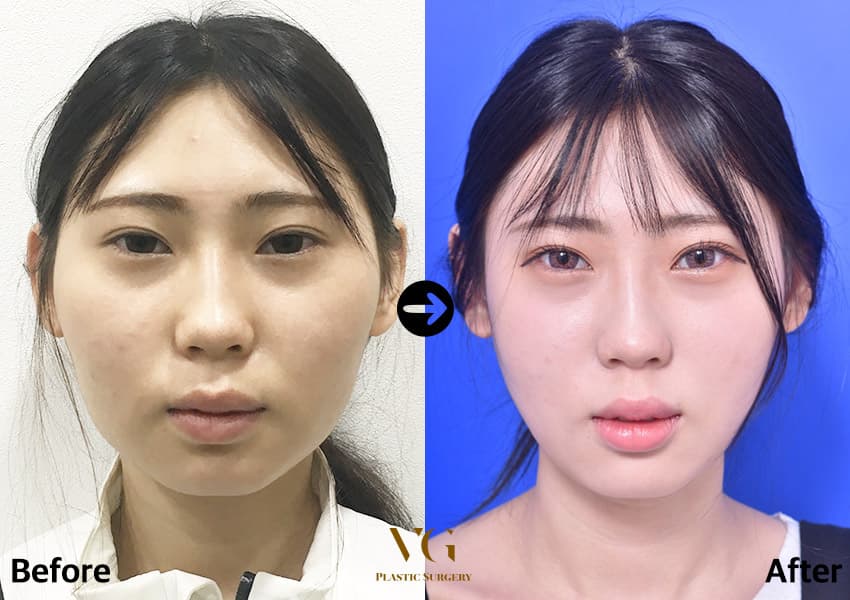
Cheekbone (Zygoma) Reduction3 months after surgery
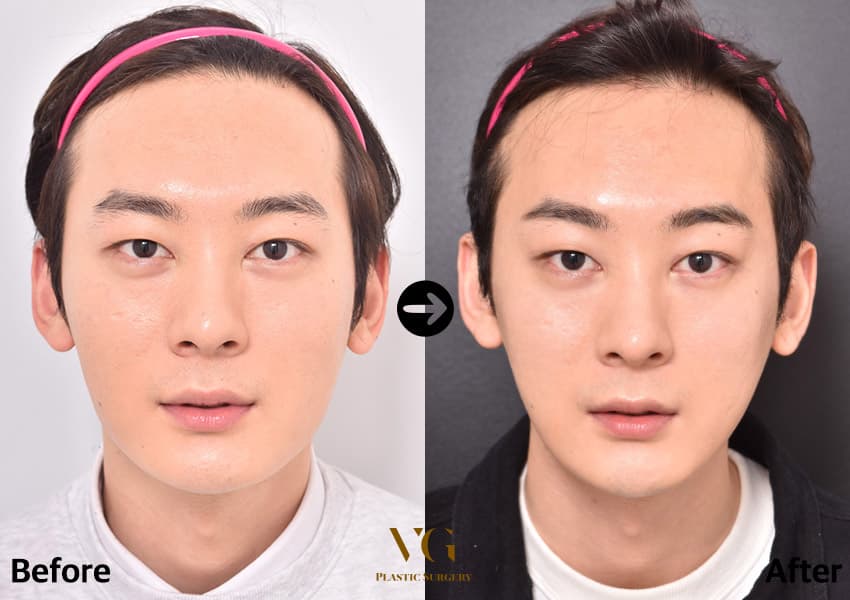
Square Jaw Reduction3 months after surgery
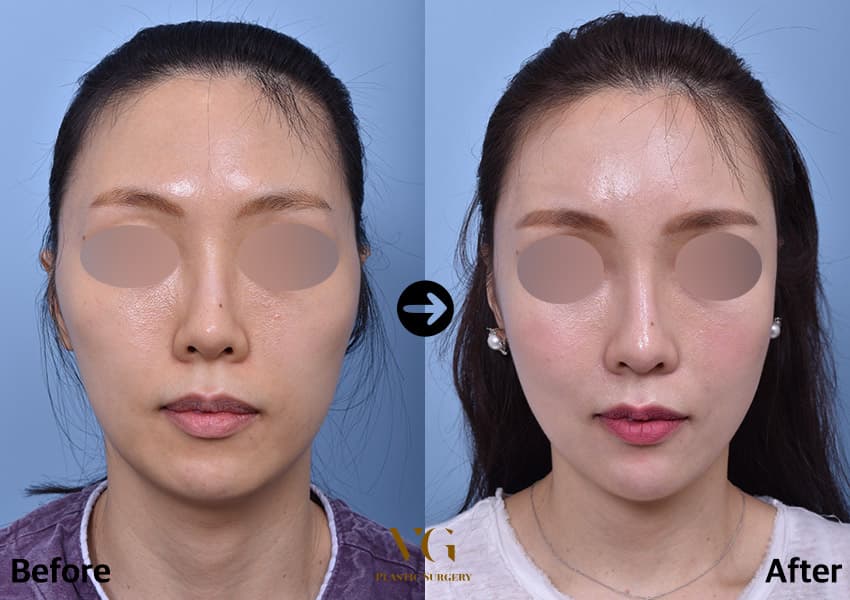
Cheekbone (Zygoma) Reduction3 months after surgery
FAQ
Questions patients ask
How long should I stay in Korea for facial contouring?
At least 14 days. Stitches come out 10–14 days after surgery and swelling peaks in the same window, so we want to see you through it before you fly. The exact dates are confirmed at consultation.
Do I need cheekbone, jaw and chin surgery all together?
Not necessarily. Many faces need only one area. We look at which bone creates the width or hardness you dislike, read it on CT, and treat only that.
How long does facial contouring surgery take?
Between 1.5 and 4 hours under general anesthesia, depending on how many areas are treated. We advise one night in the clinic, and the first check is the next day.
When can I go back to work after facial contour surgery?
Most people are back to daily life in 3–4 weeks. The face starts to look natural to others at 3–6 months, and the final shape settles around 12 months.
Is facial contouring in Korea more expensive for foreigners?
No. International patients pay the same surgical fee as Korean patients. You receive one itemised quote in writing after consultation, before you decide anything.
My jawline looks soft. Do I need bone surgery?
Often not. A soft jawline is frequently fat rather than bone, and then liposuction is the first step. Bone surgery is for width or angles that come from the bone itself.
This article explains general medical information. Whether surgery suits you, and which method, is decided only after a consultation with the surgeon.
Written by
Park Sang Wook
Deputy Medical Director · Plastic Surgery
- Board-certified plastic surgeon
- Plastic surgery residency, Seoul St. Mary's Hospital, Catholic University of Korea
- Former director, DA Plastic Surgery
- Full member, Korean Cleft Palate-Craniofacial Association
- Maxillofacial Contouring Surgery Research Group
Next step
Send two photos. Get a surgeon’s answer.
Front and side, natural light, no filter. Dr. Park Sang Wook reviews them and tells you which method fits and how many days to stay in Seoul.
International patients pay the same surgical fee as Korean patients. Pricing policy
Keep reading
Facial Contouring
South Korea Genioplasty Cost Range: What Moves the Number? Methods, Reviews and Recovery
A South Korea genioplasty cost range is wide because moving bone, shortening a chin and placing an implant are different operations; the method, anesthesia and days in Seoul set your figure.
Im Young Min ·
Facial Contouring
Three Dates That Shape a Zygoma Reduction Korea Trip, From CT to Flight Home
Zygoma reduction in Korea is bone surgery you fly home from, so plan around three dates: the consultation and CT before surgery, the check-up that clears you to fly, and your first appointment at home.
Im Young Min ·
Facial Contouring
Is chin lipo Korea Right for Your Full Chin? Cost, Reviews and What It Can't Fix
What chin lipo Korea does is remove fat under the chin and along the jaw. It won't shorten a long chin or narrow a square one, and it suits people at a stable weight whose skin still has some spring.
Im Young Min ·