Facial Contouring
Three Dates That Shape a Zygoma Reduction Korea Trip, From CT to Flight Home
Zygoma reduction in Korea is bone surgery you fly home from, so plan around three dates: the consultation and CT before surgery, the check-up that clears you to fly, and your first appointment at home.
In this article
The short answer
Zygoma reduction Korea plans hold up when the trip is built around three dates: the in-person consultation before surgery, the check-up that clears you to fly, and your first appointment back home. The operation narrows the face by cutting and repositioning the cheekbone under general anesthesia, and the bone keeps healing long after you've left Seoul. So the worry under this search is usually a practical one: if my cheeks feel loose or uneven a few weeks after I land at home, who do I call?
- Build the trip around three dates: the consultation before surgery, the check-up that clears you to fly, and your first appointment at home.
- Sagging after zygoma reduction can mean bone that shifted or soft tissue that dropped, and the two have different causes.
- Leave room in your flights for an in-person consultation and CT before the surgery date.
- Arrange follow-up at home and ask for copies of your records, including the operation note, before you leave Seoul.
I'm Im Young Min, chief director at VG Plastic Surgery in Gangnam and a board-certified plastic surgeon, and facial contouring is one of the centers I work in, alongside Dr. Park Sang Wook. Before contouring, we map nerves and bone thickness on CT. Three board-certified anesthesiologists work here full time, so one of them watches your blood pressure, pulse and breathing from the first injection until you're awake again.

Profile
Im Young Min
Chief Director · Board-certified in Plastic Surgery
If that question about home is what's keeping you from booking, send a front photo and a three-quarter photo taken in daylight on WhatsApp, with the window of dates you could travel, and ask it in your own words.
Send your photos and travel dates on WhatsApp
What is cut in zygoma reduction surgery?
The cheekbone has two parts that make a face look wide. The body sits under the eye and gives the front of the cheek its fullness. The arch runs back toward the ear and sets the widest point of your face seen from the front.
Reduction malarplasty, the name you'll find in medical journals, usually involves one cut in the body and another near the back of the arch, so the bone can be moved inward and fixed in its new position. The front is commonly reached from inside the mouth and the back through a short incision near the sideburn, though the approach differs between surgeons.
“Mini zygoma reduction Korea” is a phrase you'll see on forums and clinic pages, and it doesn't describe one fixed operation. It may mean a smaller incision, work on the arch alone, or less bone moved. Whatever the label, three questions decide what you're actually agreeing to: which part of the bone is cut, how it's held in place afterward, and through which incision.
Why a surgeon at home may have said no
If you're reading this after a surgeon in London or Toronto told you they don't do cheekbone reduction, that can be a statement about their practice rather than your face.
Sometimes, though, the no is about you, and it deserves a hearing. A face can look wide because of the jaw angle, the chewing muscle over it, or soft tissue in the cheek, and cutting the cheekbone changes none of those. If the widest point of your face sits lower down, the questions in square jaw surgery in Korea: jaw angle or long-curve reduction fit you better. If what reads as width is the base of your nose, nostril reduction for a wide nose is a far smaller conversation. And if you're still working out whether your width really is bone, start with when the width of your face is bone.
I'll tell you whether this operation suits you, and if it doesn't, I'll say so. I operate across eyes, nose, breast, body, anti-aging and facial contouring, and that range is why I recommend only the operations you need and leave out the ones you don't.
Date one: the consultation before anything is cut
The scan shows where the nerves run and how thick the bone is, and those two things set how far a cheekbone can safely move. One of our anesthesiologists also assesses underlying conditions in advance, so bring a list of your medications and any recent blood test results.
When you book, ask how many days separate the consultation from the surgery date, and build your flights around that gap. On a zygoma reduction Korea itinerary this is the date people are tempted to squeeze, landing the night before and hoping the first meeting is quick. A jet-lagged hour is a poor setting for a decision about bone that won't grow back.
The U.S. Centers for Disease Control and Prevention suggests carrying copies of your records, including lab and test results, when you travel for care. Add anything about your cheeks specifically: filler or fat that was placed there, and the operation note from any earlier facial surgery.
Each surgeon's training is published under their own name on the VG Plastic Surgery site, so you can check who works in the facial contouring center before you fly. Dr. Park's listed credentials include the Maxillofacial Contouring Surgery Research Group.
Does zygoma reduction cause sagging?
In short, it can, and two different things get called sagging. One is the bone itself shifting after it was cut; the other is the soft tissue of the cheek sitting lower over a narrower frame. They have different causes, so they're worth separating before you decide.
The bone side is about how securely the cut segment is held while it heals. The most common pattern was an arch left too wide while the body had been taken down too far; a drooped or displaced cheekbone needed repositioning in some, and malunion and nonunion each appeared in two patients. The prevention points the authors list are a complete analysis of the facial contour before surgery, a suitable technique, a precise cut under direct vision, and securing the bone's position.
The soft-tissue side is quieter. Your cheek skin and fat were draped over a wider frame, and during surgery some of that tissue is lifted off the bone. When the frame narrows, the tissue tends to settle lower in some people, more so with thinner skin, less elasticity, older age, or a larger reduction. This is the part most readers mean when they type “zygoma reduction sagging” into a search bar.
Risks and side effects to know
Numbness of the cheek, upper lip or gums can follow, because the nerve that supplies them leaves the bone just below the eye; it often recovers gradually, though not always completely. Opening the mouth wide can feel stiff for a while.
Less common problems include asymmetry, bone that heals out of place or doesn't unite, infection, and a visible scar near the sideburn. Rare but serious ones include bleeding that needs a return to the operating room and injury to a branch of the facial nerve that moves the forehead. Results vary from person to person, and whether this operation suits your face is something only an in-person exam with CT can settle.
Date two: when can I fly home after zygoma reduction?
The day you fly should come from a check-up in Seoul, once your surgeon has looked at the swelling, the incisions, and how your mouth opening feels. I won't print a number of days here, because that check-up is about your face on that day.
The CDC notes that flying after surgery can increase the risk of blood clots, and its medical tourism guidance mentions delaying air travel for 10 to 14 days after major surgeries. Ask at your consultation how that general advice applies to facial bone surgery and to you, then book a return ticket you can move. A spare day at the end of a zygoma reduction Korea stay is easier to absorb than a rushed boarding gate.
On the flight, general advice after facial surgery holds: an aisle seat so you can get up and walk, plenty of water, and a travel pillow that keeps your head upright and off a swollen cheek.
If you've already had a CT or X-ray of your face at home, send the report on WhatsApp too, and ask whether it changes anything you'd need to plan for in Seoul.
Send your photos and travel dates on WhatsApp
Date three: who looks after me once I'm home?
Arrange this before you leave home. Book an appointment with your family doctor, or a plastic surgeon near you, for the days after you're back, and ask them up front whether they'll see someone after surgery abroad. The CDC advises confirming follow-up care at home before you travel and checking whether your insurance covers complications.
Before you leave Seoul, ask for copies of all your records; the CDC also mentions you may need English translations. The page a doctor at home will use most is the operation note: which parts of the bone were cut, how they were fixed, and which incisions were used. With that in hand, a surgeon who has never met you can read a swollen cheek with far more confidence.
Know the signs that shouldn't wait for a booked appointment: a fever, swelling that grows on one side after it had started to settle, discharge from the incision inside your mouth, pain that gets worse instead of easing, or any change in your vision. Any of these is a reason to be seen locally the same day.
One operation per trip
Some readers try to fit two operations around one long flight. When bone in the face is being cut, my preference is a trip planned around that operation alone, because two recoveries overlap and the time under anesthesia grows. If you're also considering something else, such as breast reduction in Korea, read about it on its own before deciding whether it belongs on the same trip.
Once your leave dates are fixed, send them on WhatsApp with the one question about follow-up at home that you'd want answered before committing to a zygoma reduction Korea trip.
Related pages:
Facial Contouring before & after — more cases
Real patients from our archive, all photographed 3 months after surgery. Tap a case to compare it full size.
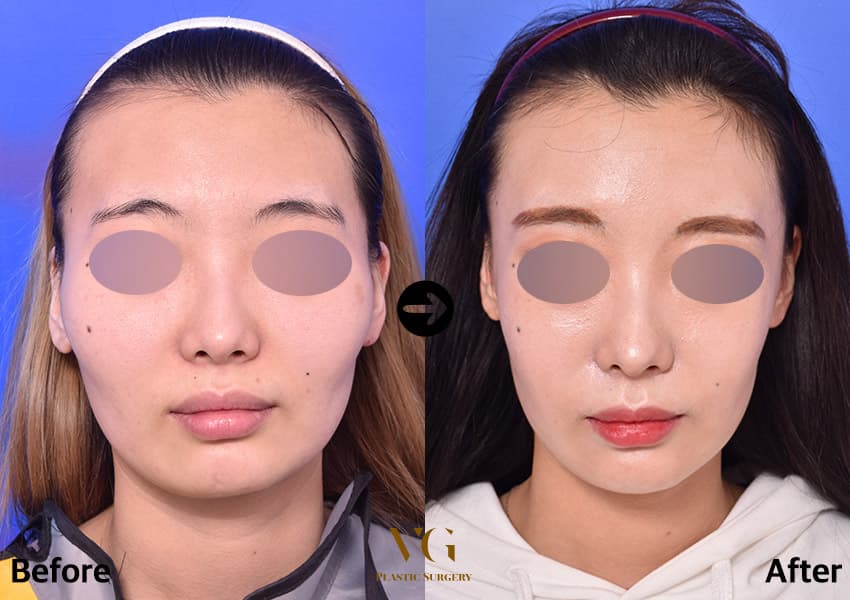
Cheekbone (Zygoma) Reduction3 months after surgery
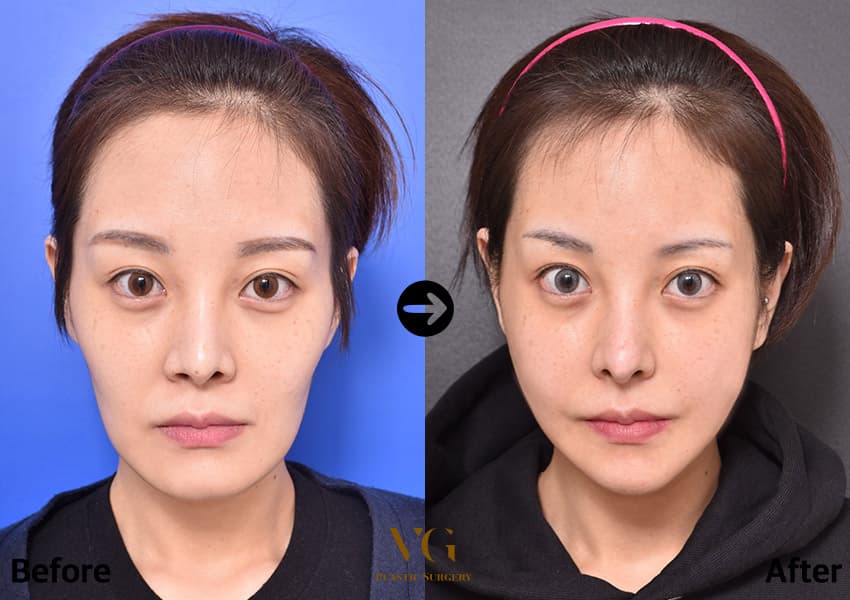
Cheekbone (Zygoma) Reduction3 months after surgery
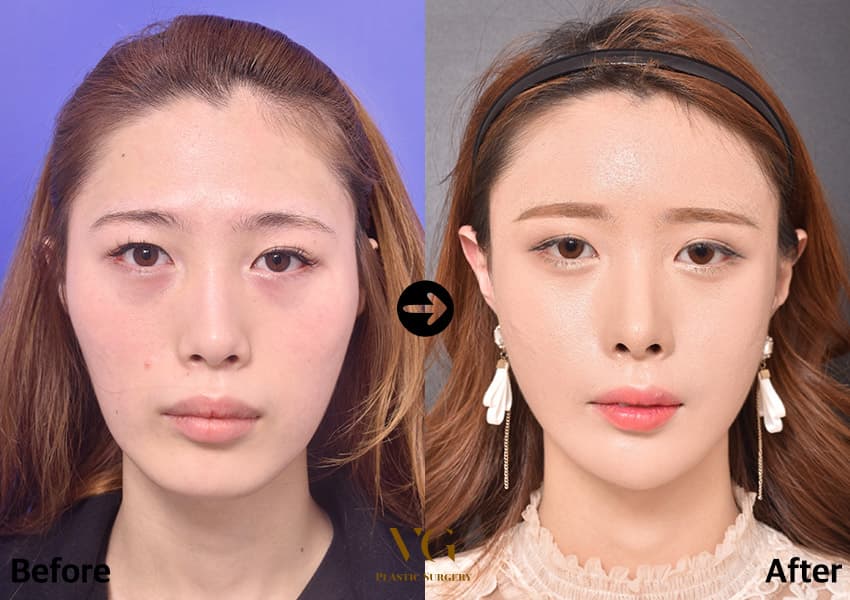
Cheekbone (Zygoma) Reduction3 months after surgery
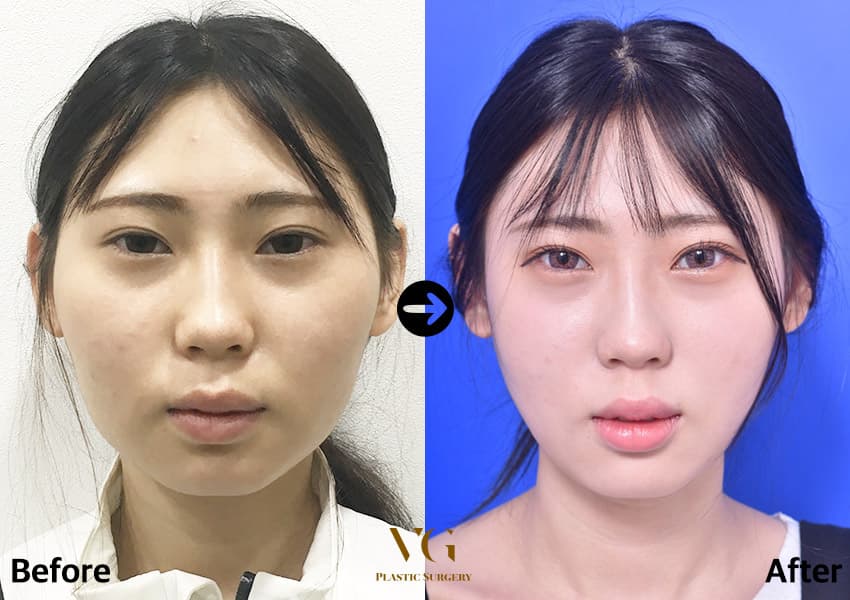
Cheekbone (Zygoma) Reduction3 months after surgery
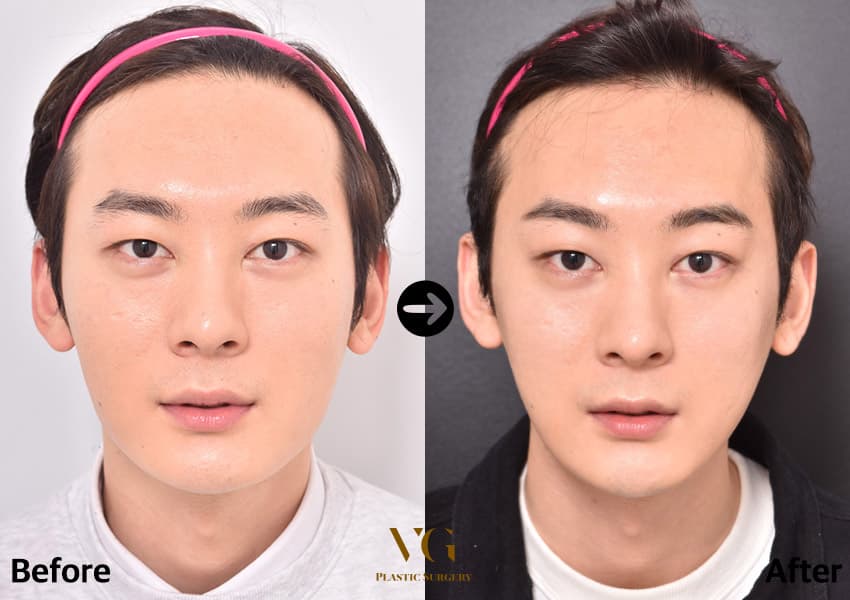
Square Jaw Reduction3 months after surgery
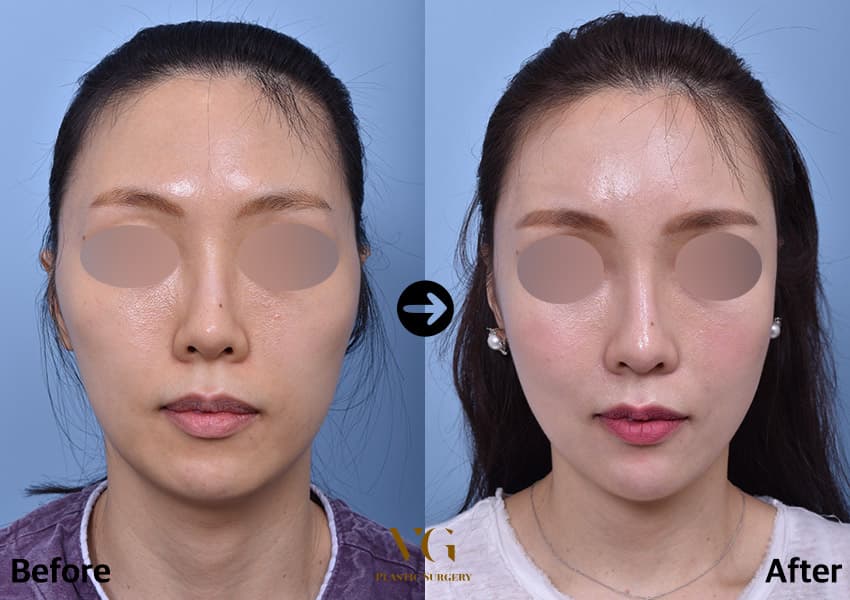
Cheekbone (Zygoma) Reduction3 months after surgery
FAQ
Questions patients ask
Is zygoma reduction the same as cheekbone reduction?
Yes. The zygoma is the medical name for the cheekbone, and surgeons writing in journals usually call the operation reduction malarplasty. Clinics and forums use all three names for the same family of operations, so ask which part of the bone a given plan actually cuts.
Can the cheekbones and the jaw be reduced in the same operation?
It's possible, and some faces have width in both places. The trade-off is a longer operation under general anesthesia and swelling over a larger area of the face, which matters when you also have to fly home. A CT and an in-person look at where your width comes from show whether both are needed.
Where are the scars after zygoma reduction?
The front of the cheekbone is commonly reached from inside the mouth, so that incision isn't visible. The back of the arch is often reached through a short incision near the sideburn, which usually sits in or close to the hairline. How noticeable it is later differs with your skin and hair, so ask to see where your incisions would go.
My cheeks are already starting to sag. Should I still consider this?
Possibly, but with more caution. Narrowing the frame under skin that is already loosening can make the cheek sit lower. The answer may be a smaller reduction, a lift instead, or no operation at all, and a surgeon who examines your skin and bone together is the one to weigh those options with you.
Can a doctor at home take over my aftercare?
Often, for wound checks and general recovery, if you arrange it before you travel. Bring copies of your records and the operation note so they know exactly what was done. Ask your local doctor in advance whether they're comfortable seeing a patient after facial bone surgery abroad.
Sources
This article explains general medical information. Whether surgery suits you, and which method, is decided only after a consultation with the surgeon.
Written by
Im Young Min
Chief Director · Plastic Surgery
- Ph.D. in Medicine
- Internship and residency, Seoul St. Mary's Hospital
- Board-certified plastic surgeon, Seoul St. Mary's Hospital
- Adjunct professor of plastic surgery, Seoul St. Mary's Hospital
- Former director, Topface Plastic Surgery
Next step
Send two photos. Get a surgeon’s answer.
Front and side, natural light, no filter. Dr. Im Young Min reviews them and tells you which method fits and how many days to stay in Seoul.
International patients pay the same surgical fee as Korean patients. Pricing policy
Keep reading
Facial Contouring
South Korea Genioplasty Cost Range: What Moves the Number? Methods, Reviews and Recovery
A South Korea genioplasty cost range is wide because moving bone, shortening a chin and placing an implant are different operations; the method, anesthesia and days in Seoul set your figure.
Im Young Min ·
Facial Contouring
Is chin lipo Korea Right for Your Full Chin? Cost, Reviews and What It Can't Fix
What chin lipo Korea does is remove fat under the chin and along the jaw. It won't shorten a long chin or narrow a square one, and it suits people at a stable weight whose skin still has some spring.
Im Young Min ·
Facial Contouring
Planning v line jaw surgery Korea? Cost, Reviews and Methods, Plus the First Two Weeks
For v line jaw surgery Korea, plan the trip around the first two weeks: one to two days of close watch, a compression dressing for four to five days, and the window when early infection tends to appear.
Im Young Min ·