Facial Contouring
South Korea Genioplasty Cost Range: What Moves the Number? Methods, Reviews and Recovery
A South Korea genioplasty cost range is wide because moving bone, shortening a chin and placing an implant are different operations; the method, anesthesia and days in Seoul set your figure.
In this article
- 01Sliding genioplasty vs chin implant: which one does your chin need?
- 02What sets the genioplasty cost range
- 03Questions to ask before you accept a genioplasty quote
- 04What do genioplasty reviews say about numbness and implants?
- 05How long is recovery after genioplasty, and when can you fly?
- 06Risks and side effects to know
The short answer
Trying to pin down a South Korea genioplasty cost range before deciding whether the trip is worth it, and finding nobody will give you one number? The spread is wide because “genioplasty” can mean moving your own chin bone, shortening a long chin or placing an implant, and each takes different operating time, anesthesia and days in Seoul.
- Genioplasty covers moving bone, shortening a long chin and placing an implant, so one figure can't fit every chin.
- The method, direction and distance of movement, CT planning, anesthesia and anything combined move the cost.
- An implant adds projection only; a long or uneven chin usually needs the bone itself moved.
- Temporary lip and chin numbness is common after bone work; plan the flight around blood-clot risk.
- Foreigners are charged the same surgical fee as Korean patients, with the estimate given in writing.
Read on before you request quotes: you'll know which methods there are, what reviews say about numbness and implants, what recovery looks like, and which questions make two quotes comparable, so you can match the method to your chin and your budget.

Profile
Im Young Min
Chief Director · Board-certified in Plastic Surgery
Hello. I'm Dr. Im Young Min, Chief Director, board-certified plastic surgeon at VERYGOOD Plastic Surgery, and facial contouring is one of the five centers I cover.
For facial contouring here, nerves and bone thickness are mapped on CT, and the rule we work by is that bone doesn't grow back, so whatever doesn't need to go stays. Three anesthesiologists are on staff, one dedicated to every operation. Foreigners are charged the same surgical fee as Korean patients.
I wrote this because people often weigh a bone operation against an implant as if they were two prices for one product, when they are two operations that solve different problems.
What sets a genioplasty quote is mostly the method, how far and in which direction the bone moves, the planning and anesthesia that come with it, anything done in the same session, and the days you spend in Seoul. Those five sit behind any South Korea genioplasty cost range you'll come across.
If you're unsure which of those applies to your chin, send a side-profile photo on WhatsApp, teeth together and lips relaxed, and ask whether your chin looks short of projection, too long, or both. Starting from your own profile makes the reply about your chin instead of chins in general.
Send a side-profile photo on WhatsApp
Sliding genioplasty vs chin implant: which one does your chin need?
Start with direction, because it decides the method more than anything else. A chin can sit too far back, stick out too far, be too long from lip to lower edge, be too short, or lean to one side. Many chins have two of these at once.
A sliding genioplasty works on your own bone. Through an incision inside the lower lip, the surgeon cuts the chin bone horizontally below the tooth roots and below the point where the nerve supplying feeling to the lip leaves the bone, moves the freed segment, and fixes it with a small plate and screws. That segment can go forward, back, up or sideways, and a horizontal strip can be removed to shorten a long chin.
Because it is your bone moved and healed in place, nothing foreign sits on the surface.
A chin implant is a shaped piece of material placed in front of the bone, through the mouth or a small cut under the chin. It adds forward projection and some width. It cannot shorten a long chin or move it upward, and over the years an implant can shift, become infected or press into the bone beneath it, which may mean revising or removing it.
So my reasoning tends to run like this. If you want a little more projection and your chin height is fine, an implant is a reasonable conversation. If your chin is long, uneven, or needs to come forward a lot, moving bone is usually the more fitting tool. If your chin sits back because your whole lower jaw and bite sit back, neither is the full answer: that calls for jaw surgery that moves the teeth, which we don't perform, and I'd tell you so.
Say you're 52, your chin has always been small, and lately your jawline seems to blur into your neck in photos. You've been told at home that an implant is the usual route. The way I'd think it through: does your bite close normally, how long is your lower face compared with the middle of your face, and is some of that blur actually loose skin and fat under the chin? A chin moved forward carries the soft tissue with it a little more than an implant does.
If loose neck skin is the main issue, though, chin surgery alone won't change your profile much, and I'd say that before you book a flight.
The nose belongs in this conversation too, because a chin is judged against the nose in profile. If yours also feels blocked, the questions in this guide to rhinoplasty when your nose breathes badly are worth reading before you plan both.
What sets the genioplasty cost range
In short, these factors move the figure, roughly in order of weight:
- The method. A sliding genioplasty means cutting and fixing bone; an implant does not. Shortening a long chin, or shortening and advancing together, takes more planning and time.
- Direction, distance and symmetry. Correcting a chin that leans to one side, or moving it in two directions at once, adds complexity.
- Imaging and planning. CT shows the nerve, the tooth roots and the bone thickness before any cut is made.
- Anesthesia. Bone work on the chin is commonly done under general anesthesia, which brings the anesthesiologist's time and monitoring into the cost.
- Anything combined. Jaw angle reduction, a V-line, a nose, or eye corner surgery such as canthoplasty in the same session changes the operating time and the plan. If you're adding a nose, the factors behind rhinoplasty cost in South Korea apply on top.
- Your days in Seoul and follow-up. Hotel nights and the check-ups before you fly are part of the trip's total even when they are not on the surgical estimate. An old implant that has to come out first adds another step.
People also search for a genioplasty figure in KRW or USD. I don't publish one, because the same word covers operations of very different size, and a currency conversion goes out of date quickly. The estimate here is given in writing. For a wider view of how operations, stays and costs fit together, there's this overview of Korean plastic surgery.
Questions to ask before you accept a genioplasty quote
A quote is easier to judge when it names things. Wherever you consult, these questions make two quotes comparable:
- Which method is this: bone moved, bone shortened, an implant, or a combination?
- In which direction does my chin move, and roughly how far?
- Does the plan include CT, and who gives the anesthesia?
- What else, if anything, is done in the same session?
- How many days should I stay before flying, and how many follow-up visits does that cover?
You can see how the surgeons and centers here are presented on VERYGOOD Plastic Surgery's English home page.
To get the figure for your own chin, write on WhatsApp the dates you could travel and whether you've had any chin or jaw surgery before, then ask what the estimate would be for your method and how many days to plan. With your dates and history in that first message, the answer can fit the trip you can actually take.
Send a side-profile photo on WhatsApp
What do genioplasty reviews say about numbness and implants?
Review threads tend to circle three claims.
“My lip was numb for months.” Partly true for many people. The nerve that gives feeling to the lower lip and chin runs right next to the bone cut and is often stretched during surgery, so tingling or numbness is common at first and usually returns gradually. A lasting change is possible, which is why the nerve's position matters so much in planning.
“The implant was easier and looked fine.” Often true in the short term, and for a modest gain in projection it can be a sound choice. Threads rarely follow up years later, when shifting, a visible edge or wear in the bone under the implant can show up.
“Sliding genioplasty looks more natural.” Moving bone does carry the soft tissue with it, and it can correct length and asymmetry that an implant can't. Whether the result looks natural on you comes down to the distance moved and the balance with your nose and jaw.
What reviews can't tell you is whether your bite allows the chin you want, or where your nerve runs inside your bone.
How long is recovery after genioplasty, and when can you fly?
Recovery from chin surgery is usually milder than people fear and slower than they hope. In general, swelling of the lower face and lips is greatest in the first days, eases over the following weeks and keeps settling for months. With an incision inside the mouth, you'll eat soft food for a while and rinse after meals to keep the stitches clean. Speaking and smiling feel stiff at first.
The flight needs as much planning as the operation. The US Centers for Disease Control and Prevention advises people traveling for surgery to allow time to recover before flying, since flying after surgery raises the risk of blood clots, and to bring copies of their medical records home. I won't put a number of days here because it depends on your method and on what is combined; ask for it alongside your estimate.
Consultation hours are Monday to Friday 10:00–20:00 and Saturday 10:00–16:00, Korea time, which is worth knowing when you choose your arrival day.
Risks and side effects to know
Common and temporary: swelling, bruising, stiffness of the lower lip, numbness or tingling of the lip and chin, and discomfort when eating. Most of these settle over weeks to months.
Less common but real: lasting numbness, infection around the plate or implant, asymmetry, a step you can feel at the edge of the moved bone, bleeding, and, for implants, shifting or the need for removal later. Korean surgical literature on lower-jaw contouring has looked at these closely. A 2003 paper in the Korean Society for Aesthetic Plastic Surgery's journal deals with avoiding the inferior alveolar nerve when contouring the jaw.
A five-year review of 588 mandibuloplasty cases in Plastic and Reconstructive Surgery Global Open (2014) catalogued the complications surgeons plan for. A 2017 case report in the Annals of Medicine and Surgery describes bleeding after an aesthetic lower-jaw osteotomy done as office-based day surgery that needed hospital treatment. Those are the reasons anesthesia and monitoring matter as much as the cut.
As general medicine, these are reasons to wait or reconsider: a face that is still growing, braces or a bite change still planned, active gum or tooth infection, pregnancy, smoking you can't stop around surgery, blood thinners or a bleeding disorder, and a profile driven mainly by the neck or the bite. Whether you're suited is decided at the in-person exam.
If something changes after you're home, such as swelling that grows on one side, fever, pus or a bad taste from the incision, bleeding that won't stop, or a plate you can feel moving, see an oral and maxillofacial or plastic surgeon locally that day and take your operation summary with you. Difficulty breathing or swallowing means emergency care.
Your first message doesn't need to be a full plan. Send a front and a side photo on WhatsApp with the one question on your mind, for example whether bone or an implant suits your chin. The surgeon who would operate reviews the photos you send, and you get a plan and an estimate back by messenger. When you come to Gangnam, I examine your chin and bite in person and recommend the method that fits your face, even when that is less surgery than you expected.
Related pages:
Facial Contouring before & after — more cases
Real patients from our archive, all photographed 3 months after surgery. Tap a case to compare it full size.
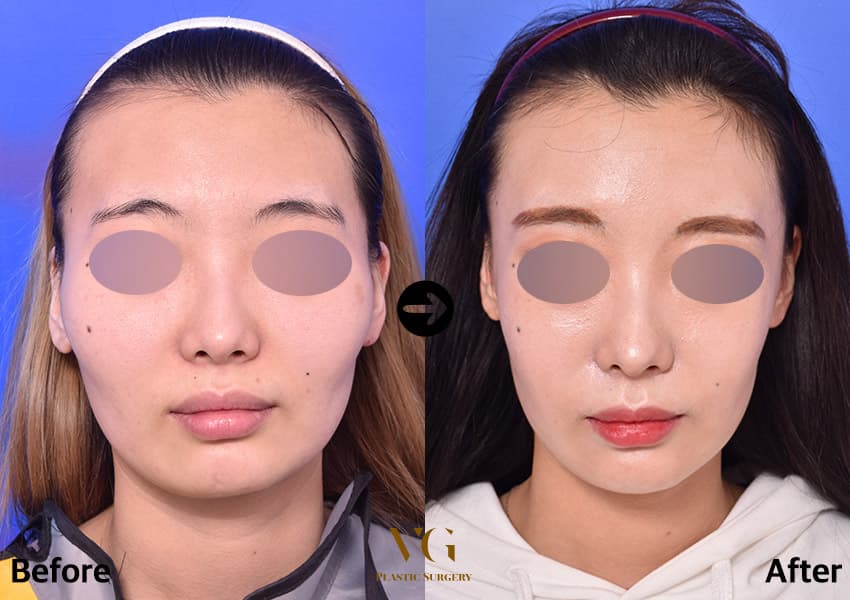
Cheekbone (Zygoma) Reduction3 months after surgery
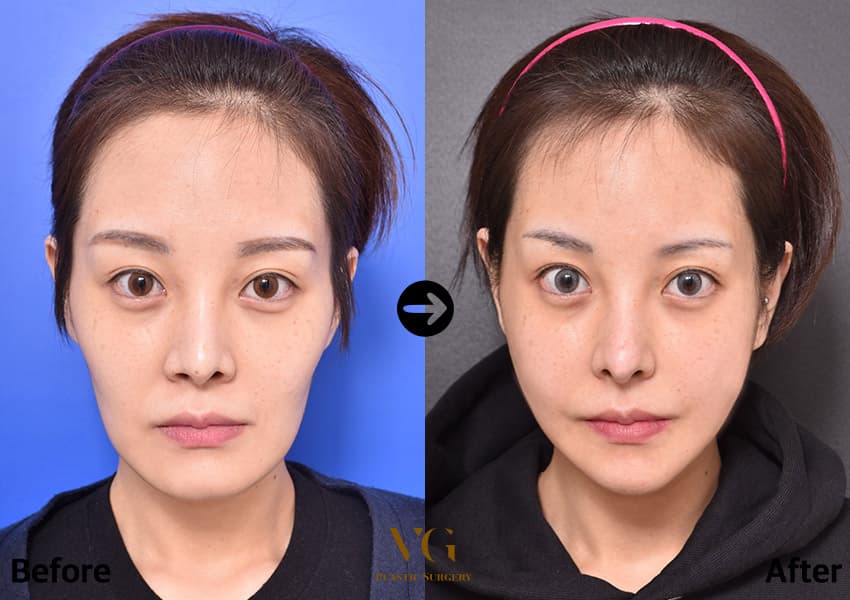
Cheekbone (Zygoma) Reduction3 months after surgery
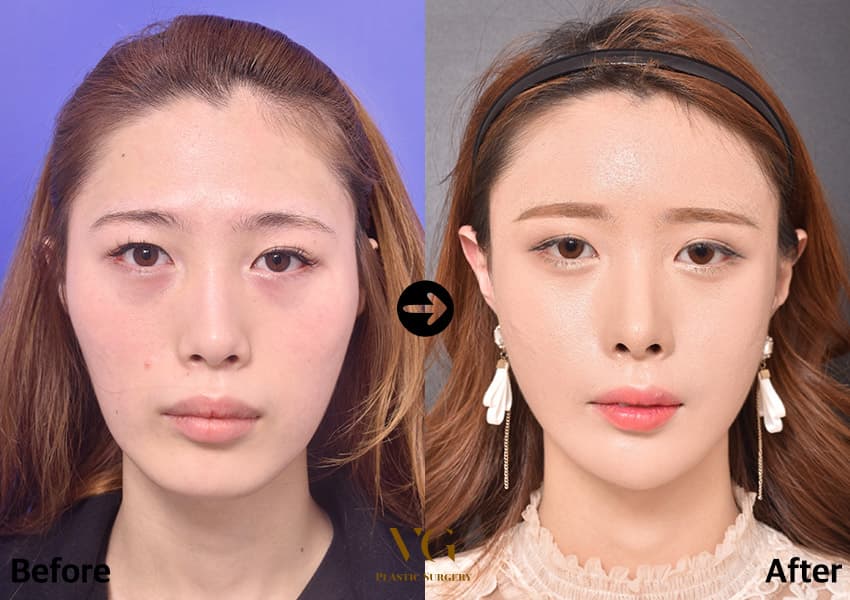
Cheekbone (Zygoma) Reduction3 months after surgery
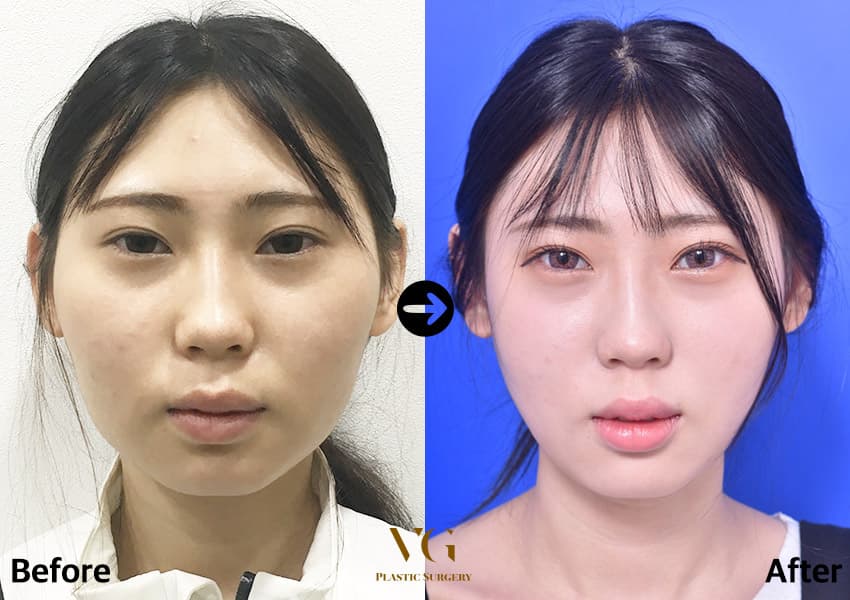
Cheekbone (Zygoma) Reduction3 months after surgery
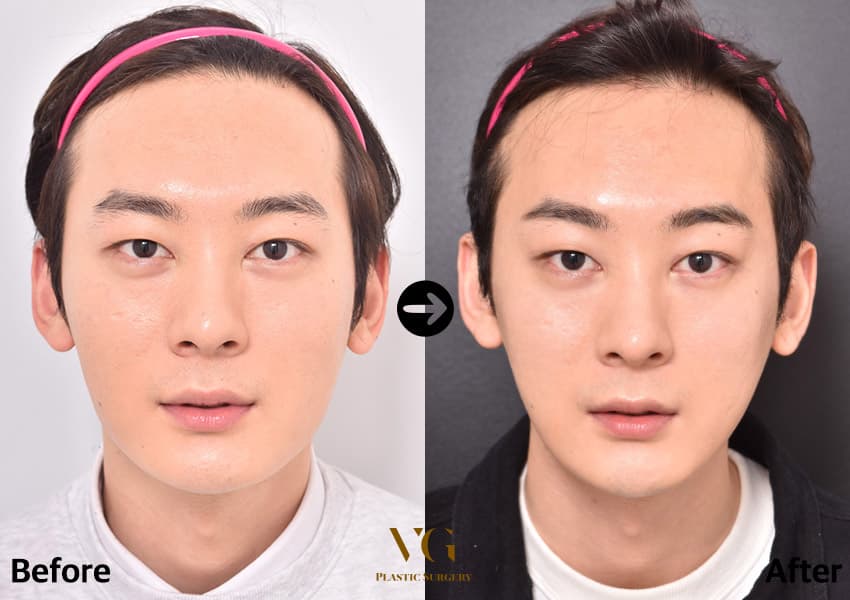
Square Jaw Reduction3 months after surgery
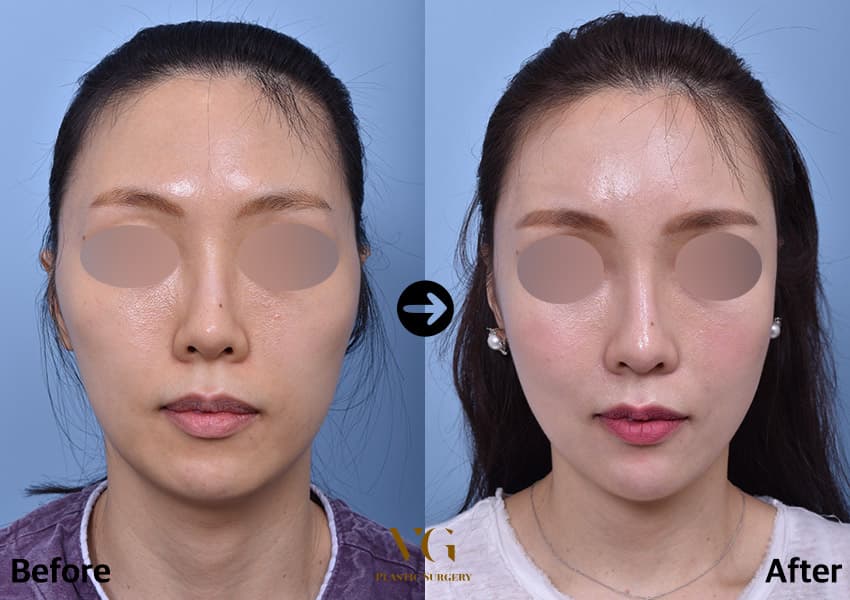
Cheekbone (Zygoma) Reduction3 months after surgery
FAQ
Questions patients ask
Is there a fixed South Korea genioplasty cost range I can budget with?
Not one that fits every chin. A South Korea genioplasty cost range covers bone advancement, chin shortening, implants and combinations, so the method, anesthesia and days in Seoul set your figure. Ask on WhatsApp for your own case.
Which lasts longer, sliding genioplasty or a chin implant?
Bone that has been moved heals in its new position. An implant can shift, wear into the bone or need removal years later, so think about the long term when you compare them.
Can genioplasty help a long face?
It can shorten a chin that is long from lip to lower edge. If the length comes from the midface or from the bite, chin surgery alone changes less, and jaw surgery that moves the teeth is not something we perform.
Will my lower lip stay numb after chin surgery?
Numbness or tingling is common at first because the nerve sits close to the bone cut, and feeling usually returns gradually. A lasting change is possible, which is why the nerve's position is mapped on CT before surgery.
Can I combine genioplasty with jaw angle or nose surgery?
Often, yes. Facial contouring and rhinoplasty are both on our menu, but each addition lengthens the operation and the anesthesia, so mention everything you're considering in your first message.
Sources
- Medical Tourism
- Avoidance of Injury to the Inferior Alveolar Nerve in Mandibular Angle Contouring; Maneuver of One Inch (J Korean Soc Aesthetic Plast Surg, 2003;9(2):33-36)
- Incidence of Complications Associated with Mandibuloplasty: A Review of 588 Cases over 5 Years (Plastic and Reconstructive Surgery Global Open, 2014)
- In-hospital surgical treatment for haemorrhage after aesthetic mandibular osteotomy performed as an office-based day surgery: A case report (Ann Med Surg, 2017;24:15–18)
This article explains general medical information. Whether surgery suits you, and which method, is decided only after a consultation with the surgeon.
Written by
Im Young Min
Chief Director · Plastic Surgery
- Ph.D. in Medicine
- Internship and residency, Seoul St. Mary's Hospital
- Board-certified plastic surgeon, Seoul St. Mary's Hospital
- Adjunct professor of plastic surgery, Seoul St. Mary's Hospital
- Former director, Topface Plastic Surgery
Next step
Send two photos. Get a surgeon’s answer.
Front and side, natural light, no filter. Dr. Im Young Min reviews them and tells you which method fits and how many days to stay in Seoul.
International patients pay the same surgical fee as Korean patients. Pricing policy
Keep reading
Facial Contouring
Three Dates That Shape a Zygoma Reduction Korea Trip, From CT to Flight Home
Zygoma reduction in Korea is bone surgery you fly home from, so plan around three dates: the consultation and CT before surgery, the check-up that clears you to fly, and your first appointment at home.
Im Young Min ·
Facial Contouring
Is chin lipo Korea Right for Your Full Chin? Cost, Reviews and What It Can't Fix
What chin lipo Korea does is remove fat under the chin and along the jaw. It won't shorten a long chin or narrow a square one, and it suits people at a stable weight whose skin still has some spring.
Im Young Min ·
Facial Contouring
Planning v line jaw surgery Korea? Cost, Reviews and Methods, Plus the First Two Weeks
For v line jaw surgery Korea, plan the trip around the first two weeks: one to two days of close watch, a compression dressing for four to five days, and the window when early infection tends to appear.
Im Young Min ·