Breast
Fat Transfer Breast Augmentation Korea Price: Is Your Own Fat Enough for the Size You Want?
Being slim doesn't rule out fat transfer to the breast. For many people one session adds about one cup size, and the price moves with how many areas give fat and whether one session is enough.
Send your concern and a front and side photo. Replies in English, no obligation.
In this article
The short answer
Fat transfer breast augmentation Korea price: is it worth asking about when a surgeon at home has already told you you're too slim to have fat to spare? Often it is, because slim doesn't mean empty, and for many people one session of fat transfer adds roughly one cup size. The result and the price come down to the same two things: how many areas have to give fat, and whether one session gets you to the size you want.
- Being slim doesn't rule you out; what matters is how much fat you can spare against the size you want.
- For many people one session adds about one cup size; a bigger goal usually means two sessions or an implant.
- The price moves with the number of donor areas, the number of sessions, time under anesthesia and your days in Seoul.
- Foreign patients pay the same surgery fee as Korean patients, and the estimate comes in writing.
- Tell your radiologist at home about the fat grafting so your mammogram is read correctly.
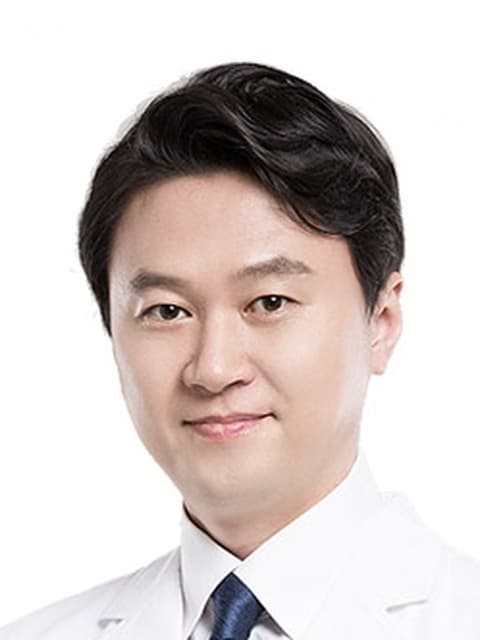
Hello, I'm Dr. Im Young Min, Chief Director and a board-certified plastic surgeon at VG Plastic Surgery in Gangnam, Seoul. I trained at Seoul St. Mary's Hospital, where I was board-certified in plastic surgery, and breast surgery and fat grafting are both part of my work here.
Profile
Im Young Min
Chief Director · Board-certified in Plastic Surgery
Two facts matter most when a lean body goes under general anesthesia far from home. Three board-certified anesthesiologists work here full time, one is dedicated to each operation, and none of them operate. And foreign patients pay the same surgery fee as Korean patients, with the estimate given in writing.
If you've been told there isn't enough fat, send two daylight photos on WhatsApp, front and side, showing your belly, flanks and thighs, with the cup size you'd be happy with. That way you're asking about your own body rather than an average, and the question to put with it is whether fat alone can get you to that size. A medical interpreter for your language is provided at no extra charge, which helps if the person traveling with you prefers another language.
Send your photos and goal size on WhatsApp
How does fat transfer to the breast work?
In short, it is two operations joined together. First, liposuction takes fat from places you can spare it, usually the belly, flanks, inner thighs or back. That fat is processed to separate the usable fat cells from fluid and oil, then injected into the breast in many thin passes, a little at a time, at different depths. Our fat grafting center describes those three steps as harvest, purify and layered injection.
The thin passes matter because transferred fat has no blood supply of its own when it arrives. Each small strand has to pick one up from the tissue around it in the first days. Fat packed too thickly in one spot can't do that, and the center of the clump dies. That is where lumps and oil cysts come from, and it is why a single session has a ceiling however much fat you have.
Part of what is injected is reabsorbed over the first few months. Published figures for how much stays vary widely, partly because studies measure it in different ways, from photographs to 3D scans to MRI, as a 2024 review in the Journal of Clinical Medicine sets out. I've written separately about how much of the transferred fat stays and why, so here I'll stay with the question that comes before it: whether your body suits the operation at all.
Is your fat enough, or does an implant fit you better?
“Too slim” usually means one of two different things, and it helps to know which one you were told. The first is that you have very little fat to harvest anywhere. The second is that you have enough fat, but not enough for the size you described. The first rules fat transfer out for now. The second only means the goal has to be smaller, or reached in two sessions.
Many lean people still carry a soft pinch at the lower belly, the flanks or the inner thighs, and for a modest change that can be enough. The other limit is the breast itself. Tight skin and very little breast tissue leave less room for fat to settle, so the same amount of fat can take less well in a small, firm breast than in one that has stretched after pregnancy.
| Your situation | What fat transfer can do | What usually fits better |
|---|---|---|
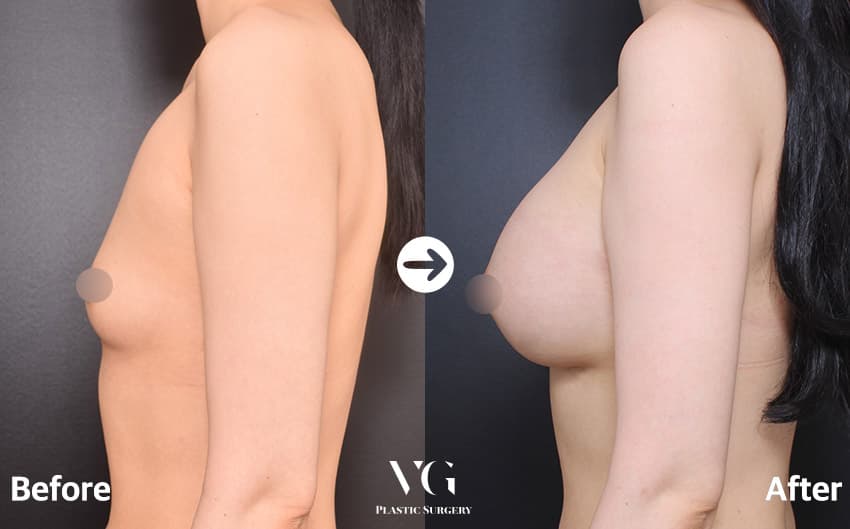
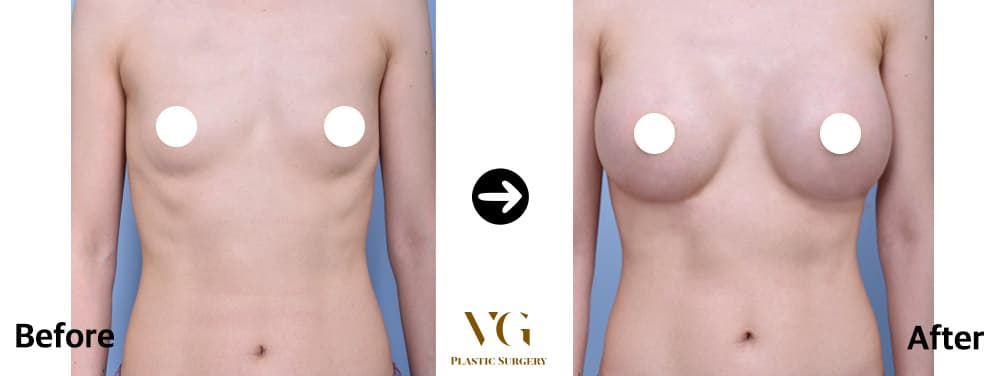
| Lean, with a soft pinch at belly, flanks or thighs, wanting a little more fullness | A modest change, sometimes over two sessions | Fat transfer |
| Very lean, almost nothing to pinch anywhere | Too little fat for a visible difference | An implant |
| Wanting a clearly larger size in one trip | One session rarely gets there | An implant |
| A hollow upper chest, or a visible implant edge | Fat can be placed in specific spots | Fat transfer to that area |
| Nipple sitting low, breast sagging | Adds volume, does not lift | A breast lift, sometimes with added volume |
Risks and side effects to know
An implant is the other answer for many slim women, and it has trade-offs of its own: the FDA notes that breast implants are not lifetime devices and that capsular contracture, a tightening of scar tissue around the implant, is among the more common complications. For breast surgery here, an ultrasound comes first and the implant and incision are chosen around it; the implant route, from ultrasound to recovery has its own post.
To settle this for your own body, one more photo helps: pinch the fullest part of your lower belly or inner thigh between finger and thumb, photograph it from the side, and add your height and weight. Send it on WhatsApp with the earlier photos and ask whether your goal fits one session or two.
Send your photos and goal size on WhatsApp
What changes the price of a fat transfer to the breast?
No single published figure for a fat transfer breast augmentation Korea price can account for the five things that actually move it:
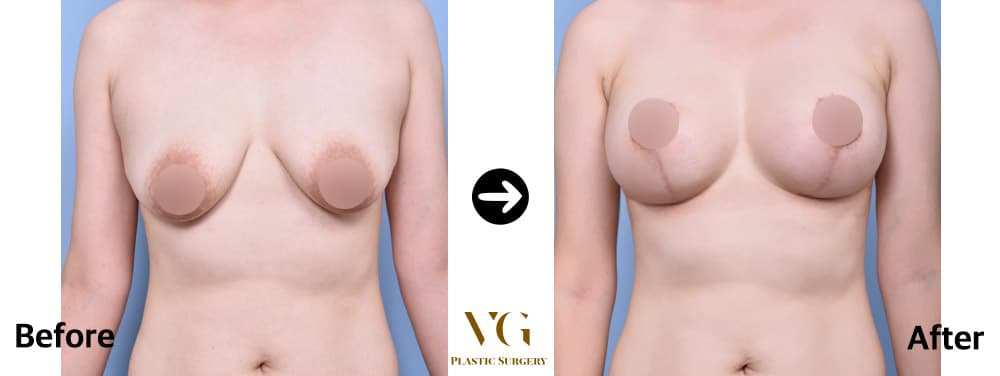
- How many areas give fat. The leaner you are, the more areas may need liposuction to collect enough, and each extra area adds operating time.
- How much volume, and whether a second session is planned. Each session is a separate operation, with its own anesthesia, its own recovery and, for you, its own flight.
- General anesthesia. The length of the operation sets the anesthesia time, and an anesthesiologist is dedicated to your operation for all of it.
- Fat alone, or a change of plan. If the consultation shows that fat won't reach your goal and you choose an implant, you are pricing a different operation.
- Your days in Seoul. Hotel nights, compression garments for the donor areas and the check-ups before you fly sit around the surgery and belong in your budget too.
Foreign patients pay the same surgery fee as Korean patients, and the estimate comes in writing, which makes it easier to see which of these five lines each quote covers. If you're weighing fat against an implant on cost, how an implant or your own fat changes the bill walks through that. Each surgeon's training is published under their own name on our English site, so you can check who would operate before you book.
For your own figure, ask on WhatsApp what your case would cost, with the photos above and the dates you can travel. The deposit and how you'd pay are settled after the consultation, so it makes sense to raise both in that same message.
Lumps, oil cysts and what a mammogram will show back home
Bruising and swelling are expected at both ends, and for many people the donor areas are sorer than the breasts for the first week or two. Patches of numbness over the liposuction areas are common and usually fade. Liposuction carries its own risks, which the American Society of Plastic Surgeons lists, among them contour irregularities, fluid collecting under the skin, infection, changes in skin sensation and, rarely, blood clots.
In the breast, the main risk is fat that doesn't survive. Small areas can turn into firm lumps (fat necrosis) or oil cysts, and over time some of these calcify. Most are harmless, but a lump in the breast is something nobody should guess about. The American Society of Plastic Surgeons has reported that fat injected into the breast can produce findings on mammograms that need careful reading. Uneven take between the two sides is another reason a second session is sometimes needed.
Healing differs from one body to another, so treat every timeline here as a range, not a schedule.
It makes sense to wait, or to talk it through first, if any of these apply:
- Pregnancy, breastfeeding, or the months right after you stop, while the breasts are still changing
- A breast lump that hasn't been checked, or a strong family history of breast cancer, until you've had imaging and a breast specialist's view
- Smoking or nicotine, which cuts down the blood supply grafted fat depends on
- A big weight loss you're still planning, since grafted fat behaves like the fat it came from
Here is the step most people miss. Before you fly, find your most recent mammogram or breast ultrasound report and bring it. After surgery, write on the intake form at every breast imaging appointment at home that you had fat grafted to both breasts, and the month it was done. That one line is often what lets a radiologist read a calcification correctly instead of calling you back for more tests.
If a new lump, redness, warmth or fever shows up after you're home, see your own doctor or a breast clinic for an exam and an ultrasound, and send the report and a photo on WhatsApp along with your surgery date.
Say you're lean and want one size up
Say you're 34, you run most mornings, and you can pinch a soft fold at your lower belly and inner thighs but not much anywhere else. You'd like more fullness in the upper part of the breast and about one size more, and you have one trip's worth of leave this year.
I would think about it in this order. A one-size goal with that much fat is within reach of fat transfer, so you aren't ruled out. What I'd want to know next is how tight your breast skin is, because tight skin limits how much one session can hold. If it is tight, I'd tell you plainly that the size you want may take two sessions a few months apart, and ask whether you'd really come back.
If you wouldn't, a smaller single-session goal or an implant is the plan that fits one trip.
One more thing I'd ask of you: don't diet down before the trip. Fat you lose in the weeks before surgery is fat that isn't there to move.
Recovery on the trip and after you land
For the first days after surgery, most of what you feel is the donor areas: bruising, a snug compression garment, soreness when you sit up. The breasts are swollen and tender, and for many people that is the milder of the two. Pressure on freshly grafted fat can harm it, so expect to sleep on your back, skip underwire and tight sports bras, and not massage the breasts unless your surgeon asks you to.
The long flight home deserves planning. Sitting still for hours after surgery raises the risk of blood clots, so book an aisle seat, get up and walk regularly, drink water and ask about compression stockings for the flight. Ask at booking which check-up has to happen before you fly, and book your return after it.
The size you see in the first weeks includes swelling. What has stayed is usually judged a few months later, which is also when a second session, if you need one, would be planned. Ask for a copy of your operation record listing the donor areas and how much was placed in each breast; your doctor at home and any future surgeon will want it.
When you're ready, send on WhatsApp the front, side and pinch photos, your height and weight, and the dates you could be in Seoul, with the question that matters most for a trip like this: is my goal one session or two, and who do I contact if a lump shows up once I'm home?
In the consultation, the two things I want to see in person are how much fat you can genuinely spare and how much room your breast skin has, because those decide the plan far more than any figure online.
Related pages:
Breast before & after — more cases
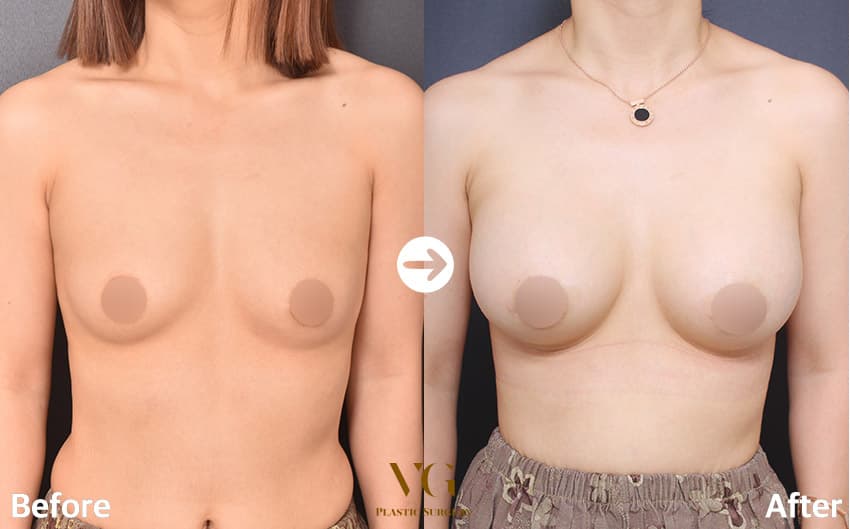
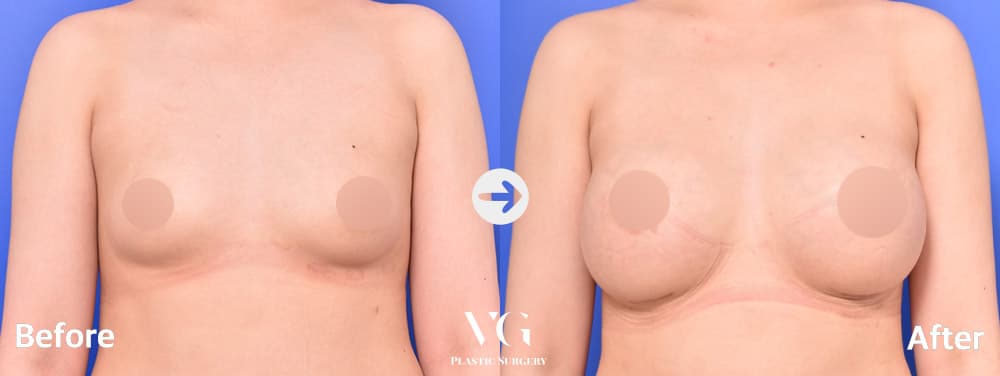
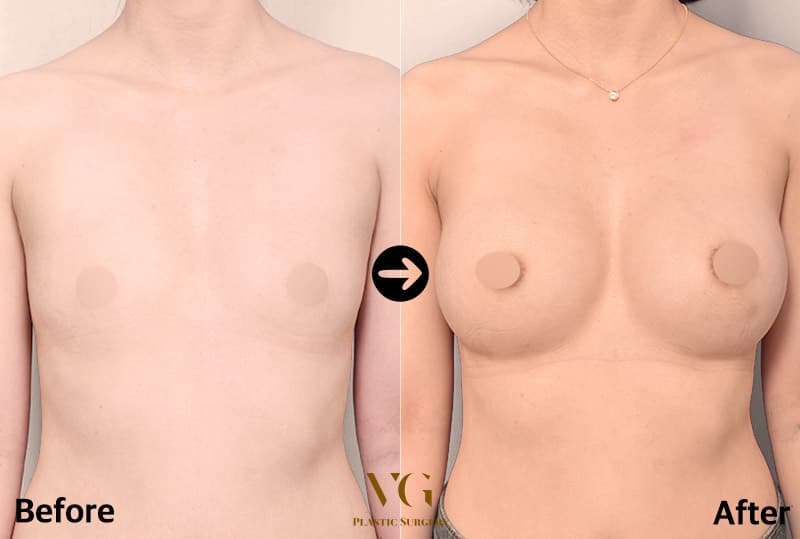
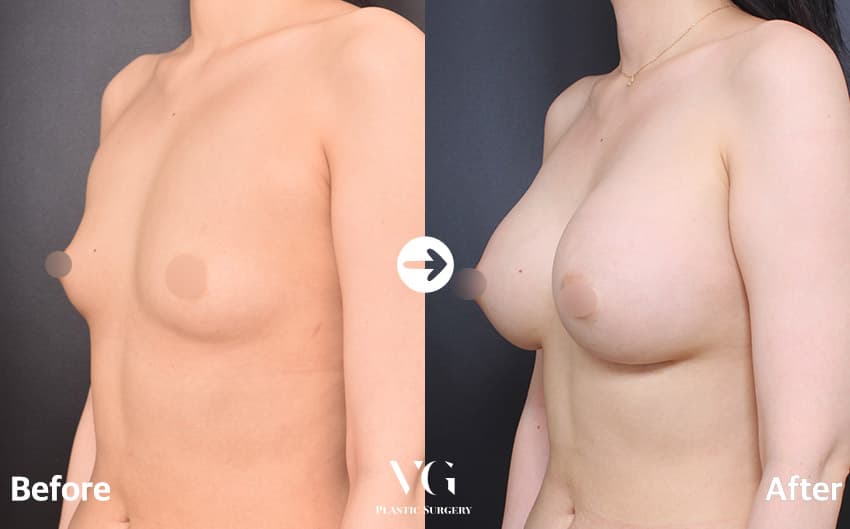
Real patients from our archive, all photographed 3 months after surgery. Tap a case to compare it full size.
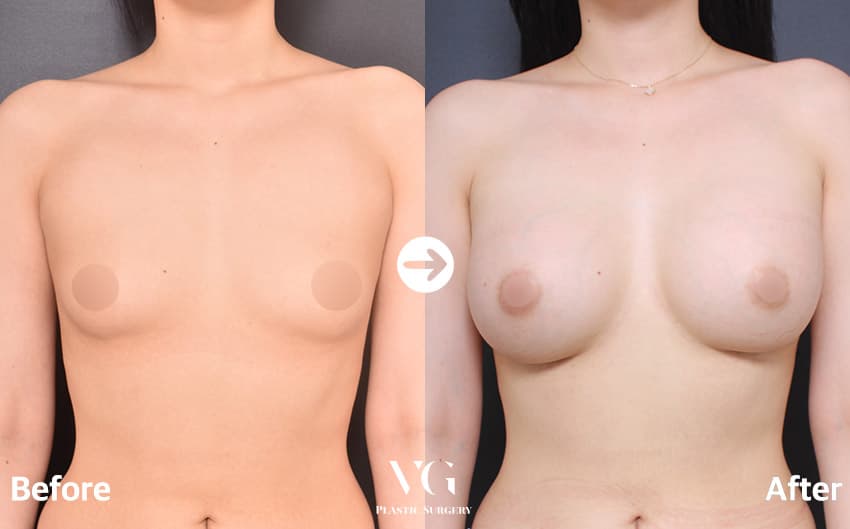
Breast Augmentation3 months after surgery
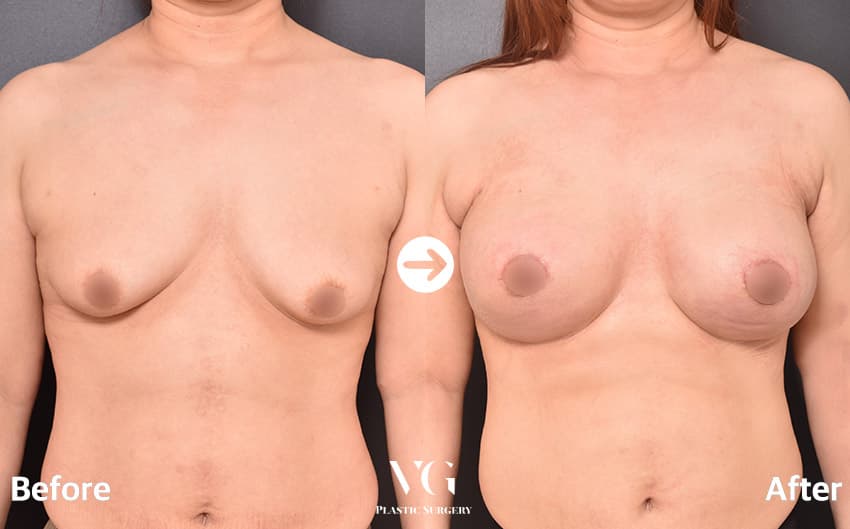
Breast Augmentation3 months after surgery
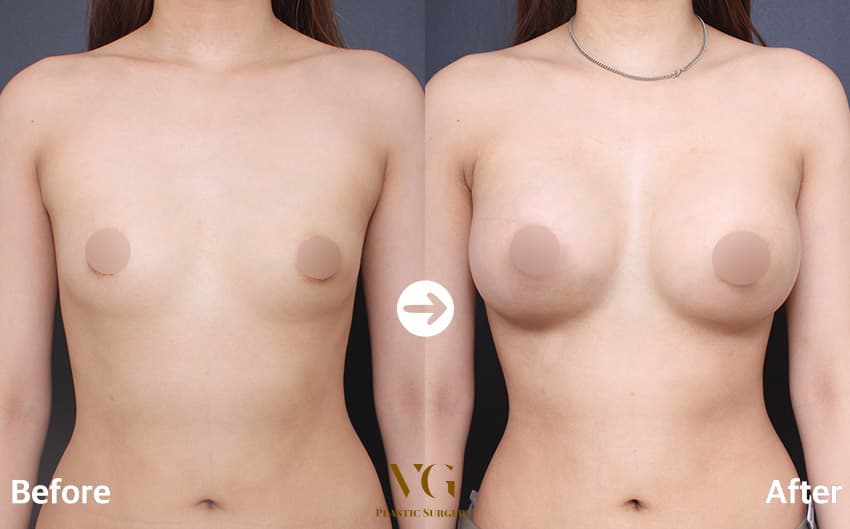
Breast Augmentation3 months after surgery
Breast Augmentation3 months after surgery
Breast Augmentation3 months after surgery
Breast Augmentation3 months after surgery
FAQ
Questions patients ask
Does the fat that survives stay for good?
Fat that is still there a few months after surgery generally stays, and it behaves like the fat it came from. If you gain weight, the breasts can grow a little; if you lose a lot, they can shrink.
Can I have fat transfer if I've had liposuction before?
Often, yes, using areas that weren't treated. Previously suctioned areas tend to have less fat and some scar tissue, so mention the earlier surgery and which areas were done when you send your photos.
How far apart are two fat transfer sessions?
Usually a few months, because what survived from the first session has to settle before anyone can judge how much more is needed. If a second session is a real possibility, plan for two trips from the start.
Where are the scars from fat transfer?
Small entry points a few millimeters long at the donor areas and near the breast, usually placed in natural creases. They fade over the following months, and there is no long incision on the breast itself.
Is fat transfer safer than an implant?
Each carries its own risks. Fat leaves no device behind that may need replacing later, but it can form lumps and oil cysts that need imaging. An implant gives more size in one operation but brings risks such as capsular contracture and possible future replacement. Which risk you'd rather manage is part of the decision.
Sources
This article explains general medical information. Whether surgery suits you, and which method, is decided only after a consultation with the surgeon.
Written by
Im Young Min
Chief Director · Plastic Surgery
- Ph.D. in Medicine
- Internship and residency, Seoul St. Mary's Hospital
- Board-certified plastic surgeon, Seoul St. Mary's Hospital
- Adjunct professor of plastic surgery, Seoul St. Mary's Hospital
- Former director, Topface Plastic Surgery
Next step
Send two photos. Get a surgeon’s answer.
Front and side, natural light, no filter. Dr. Im Young Min reviews them and tells you which method fits and how many days to stay in Seoul.
International patients pay the same surgical fee as Korean patients. Pricing policy
Keep reading
Breast
Breast Implants Korea Price: The Five Things That Set Your Quote After Children
No single figure fits everyone. Five things set the quote: implant alone or with a lift, the implant itself, the scan and tests, anesthesia, and your days in Seoul. Foreign patients pay the same surgery fee as Korean patients.
Im Young Min ·
Breast
Average Cost of Breast Augmentation in Korea: Implant or Your Own Fat Changes It
The average cost of breast augmentation in Korea blends implants, fat transfer and different trips, so it rarely fits one chest. Method, implant, incision, anesthesia and days in Seoul set yours.
Im Young Min ·
Breast
Fat Transfer Breast Augmentation Korea: How Much of the Fat Stays?
Fat transfer breast augmentation moves your own fat from the belly, flanks or thighs into the breast in thin layers. Only part of it stays, so it suits a modest, soft change in people with fat to spare.
Im Young Min ·