Facelift
Korea Face Lift: Find the Layer That Dropped, Then Choose the Lift
A Korea face lift lifts the deeper support layer of the lower face and neck (the SMAS) back into place, then trims extra skin. It usually suits people in their 40s to 60s with jowls and a loosened neck.
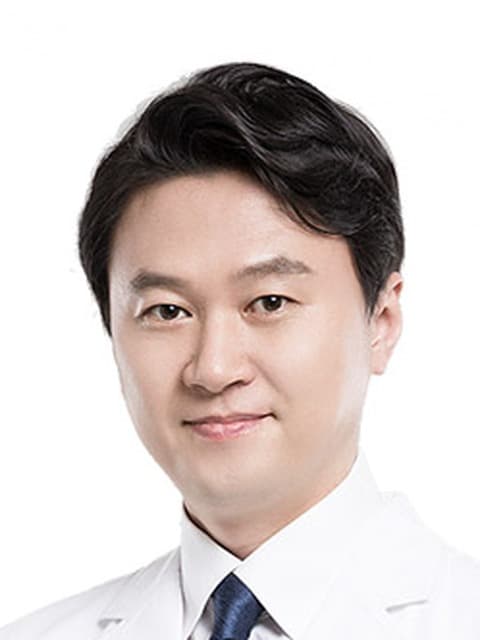
· 8 min read · Last updated
Edited by Im Young Min
In this article
- 01What a face lift actually moves
- 02Who a Korea face lift suits, and who should wait
- 03What the surgeon checks in the consultation
- 04Questions worth asking before you agree to a plan
- 05What decides the cost of a face lift?
- 06What are the risks of a face lift?
- 07How long to stay in Seoul, and what the first two weeks look like
- 08When you are arranging this for a parent
The short answer
Wondering whether a Korea face lift fits the sagging you see along your jawline and neck? Read on before you book or decide anything.
- A face lift repositions the deeper SMAS layer of the lower face and neck, then trims extra skin.
- It usually suits people in their 40s to 60s with jowls, a loose neck and skin that still has some recoil.
- Volume loss, a low brow or hooded upper lids are separate problems with separate operations.
- At VG Plastic Surgery one of three on-staff anesthesiologists is dedicated to every operation.
- Plan the number of nights in Seoul around the stitch-removal visit, not the operation day.
After this you will know what a face lift moves, who it suits and who should wait, what the consultation checks, what the risks are, and how long to stay in Seoul, so you can decide whether to ask for a plan.
Profile
Im Young Min
Chief Director · Board-certified in Plastic Surgery
I'm Im Young Min, Chief Director, board-certified plastic surgeon. I did my internship and residency at Seoul St. Mary's Hospital, where I am adjunct professor of plastic surgery. I wrote this because many people assume a face lift just pulls the skin tight, when the deeper layer is usually what has dropped.
Short answer: a Korea face lift lifts the deeper support layer of the lower face and neck (the SMAS) back into place and then trims the extra skin. It usually suits people in their 40s to 60s with jowls and a loosened neck.
Send two face photos and your dates on WhatsApp
What a face lift actually moves
A face lift moves tissue, not just skin. Under the skin sits a layer of fat, then the SMAS, a sheet of fibrous tissue connected to the muscles of expression. With age, the ligaments that hold it stretch, and the cheek and jaw tissue slide down and forward. Lifting that layer is what reshapes a jowl.
Skin makes a poor anchor. When skin alone is pulled tight, it stretches again, and the face can look swept towards the ears. When the deeper layer takes the tension, the skin can be closed with less strain, which tends to help the scar lie flat. On our site we put the principle in one line: before the direction of the pull, look at which layer has actually descended.
The three lifts this clinic lists, Crystal, SMAS and mini, differ in how far the incision runs and how much tissue is released.
What a Korea face lift leaves alone matters just as much. It works on the lower two-thirds of the face and the neck. Hooded upper lids, a low brow, hollow temples and fine surface wrinkles are different problems, which is why our facelift page lists upper blepharoplasty and brow lift next to it.
Who a Korea face lift suits, and who should wait
The typical candidate has jowls that break the line of the jaw, a neck that has loosened, skin that still springs back when pinched, and general health that allows surgery under anesthesia. Age alone doesn't decide it. The tissue and the medical history do.
Signs that point towards a lift:
- The jawline was straight in photos ten years ago and now dips in front of the ear and beside the chin.
- Lifting the cheek skin gently upward and backward with your fingertips brings back the face you remember.
- Loose skin or vertical bands have appeared under the chin.
- The folds beside the mouth have grown heavy. Deep creases themselves usually soften less than the jawline changes.
Signs that call for a different plan, or for waiting:
- Smoking. Nicotine reduces blood flow to the lifted skin, and wound problems become more likely. Stopping well before surgery is part of the preparation.
- High blood pressure that isn't controlled. It raises the chance of bleeding under the skin after surgery.
- Blood thinners and some supplements. These need a plan made together with the doctor who prescribes them at home. Never stop a prescribed medicine on your own.
- A face that looks tired mainly from lost volume. Fat, not slack, may be the issue; face fat grafting may be a better fit.
- Heaviness that sits mostly at the brow and forehead. That is the territory of a brow lift.
- The hope of looking exactly as you did at 35, or of smoother skin texture. Surgery repositions tissue. It doesn't change skin quality.
What the surgeon checks in the consultation
A facelift consultation is mostly hands-on. The face is examined sitting upright, at rest and while talking, and the skin is lifted gently in different directions to see which pull restores the jaw and neck. Photos help with planning. The decision comes from the examination.
| What is checked | What it tells the surgeon |
|---|---|
| Cheek skin lifted upward vs backward | Which direction of pull restores the jawline |
| Neck skin pinched, vertical bands looked for | Whether the neck needs its own work |
| Skin thickness and sun damage | How the skin will redrape and how scars may settle |
| Where fat sits and where it has thinned | Whether volume loss, not laxity, is the main problem |
| Hairline, sideburn and earlobe position | Where incisions can hide and whether the hairline would shift |
| Blood pressure, medicines, smoking, past surgery | Whether surgery is safe now or needs preparation first |
One finding makes me hesitate. Sometimes pressing a fingertip of volume into the upper cheek makes most of the jowl disappear. That person's problem is mainly deflation, and cutting skin won't put the volume back.
The second half of the consultation is medical. Because a dedicated anesthesiologist is assigned to every operation here, the history of heart conditions, blood pressure, medicines and any previous anesthesia matters to the plan. Bring it as a written list in English, with the doses.
It can't replace the hands-on examination, but it tells you early whether the trip makes sense.
Say you are 52 and you notice that your jawline has softened and a fold has started to hang beside your mouth, while your forehead and eyes still look like you. You might assume you need the most extensive lift available. In the consultation I would first check which layer has actually dropped: whether it is the deeper tissue under the cheek, the skin of the neck, or fat sitting below the chin.
I would also look at how the skin moves when I lift it gently with my fingers, and ask about blood pressure and the medicines you take. If the descent sits mainly in the lower face and neck, the plan can stay focused there instead of treating the whole face. If something else is adding to the heaviness, we would talk about it before deciding on anything.
Questions worth asking before you agree to a plan
Ask any clinic these, including us: which layer will be lifted, where every incision ends, who operates and who gives the anesthesia, and what happens if something worries you after you fly home. A clear answer to each is a fair test of a facelift plan.
- Which layer is being lifted, and is the neck included?
- Where exactly will the incisions run around the ear and into the hairline? Ask to see the line drawn on your own face.
- Every surgeon here is board-certified and operates under their own name.
- Who is responsible for anesthesia during the operation? Here, one anesthesiologist is dedicated to each operation.
- When do the stitches come out, and does that fall before your flight?
- Which records will you take home for a local doctor?
- If one side swells more than the other on night three, who do you contact?
What decides the cost of a face lift?
The cost depends on how much work your face needs, not on the name of the operation. The method matters first: lifting only the lower face and neck is a different amount of surgery from a lift that also treats the midface. The type of anaesthesia and the length of the operation count too. Any extra procedure planned in the same session, such as eyelid surgery, changes the plan as well.
The number of nights you stay in Seoul and the follow-up visits you need before flying home also play a part. To get the figure for your case, send two daylight photos, front and side, on WhatsApp and ask for it.
What are the risks of a face lift?
Every face lift carries surgical risk. The American Society of Plastic Surgeons lists bleeding under the skin (hematoma), infection, poor wound healing, facial nerve injury with weakness, hair loss at the incision sites, skin loss, numbness, persistent swelling, unfavorable scarring and anesthesia risks among the possible complications.
For a traveler, timing matters. Nerve weakness can be temporary or, less often, lasting. Smoking and uncontrolled blood pressure make several of these problems more likely, which is why they come up in the consultation.
The U.S. Centers for Disease Control and Prevention notes that flying soon after surgery raises the risk of blood clots, and advises medical travelers to arrange follow-up care at home and carry copies of their medical records. Whether you're a candidate at all, and which lift fits, is decided at the in-person examination in Seoul.
How long to stay in Seoul, and what the first two weeks look like
Plan the trip around the follow-up visits, not the operation day. Bruising and swelling are heaviest in the first days and fade over the following weeks. The stitches come out at a visit in Seoul, and the shape keeps settling for months after you're home.
The number of nights is set at the consultation, once the type of lift is chosen and it's clear whether the neck or another procedure is included. It's built around the stitch-removal visit, with time added for a check of how the swelling is behaving.
A few practical points help most families:
- Someone should stay with the patient for the first nights. Sleeping with the head raised and keeping still is easier with help.
- Choose a hotel near the clinic at 635 Nonhyeon-ro, Gangnam-gu, so early visits don't mean a long ride with a swollen face.
- On the flight home, ask the surgeon about walking in the aisle and fluids, given the clot risk.
- Carry the operation summary and medicine list for your doctor at home.
I'd rather someone booked two extra nights than flew home the morning after a stitch check with a question still unanswered.
To get a realistic number of nights, send your earliest and latest possible travel dates together with the two photos, and mention any blood-pressure or blood-thinning medicine.
Send two face photos and your dates on WhatsApp
When you are arranging this for a parent
Bring three things: your parent's own words about what bothers them, a written medication list, and a plan for who stays with them for the first nights. The decision has to be theirs, and the consultation is where they say it.
Our site starts from what a person notices in the mirror rather than from the name of an operation, and that works well with parents. One may say the neck bothers her and the cheeks don't. Another may want only the jowls softened. A Korea face lift can be planned to that request, and a narrower plan usually means a shorter stay. Adult children sometimes arrive wanting more than the parent does. Let the parent speak first.
A recent check-up from the family doctor at home, with blood pressure and any heart findings, saves time on the medical side.
If you are thinking of a face lift for yourself or for a parent, send two daylight photos, one from the front and one from the side with the face relaxed, to WhatsApp. Add one line about blood pressure and the medicines taken, and your possible travel dates. Then ask one question: "Which kind of lift fits where my face has dropped, and how many nights should I plan in Seoul?" Asking is easy: you can do it before booking anything, and the photos are enough to start.
Related pages:
Facelift before & after — more cases
Real patients from our archive, all photographed 3 months after surgery. Tap a case to compare it full size.
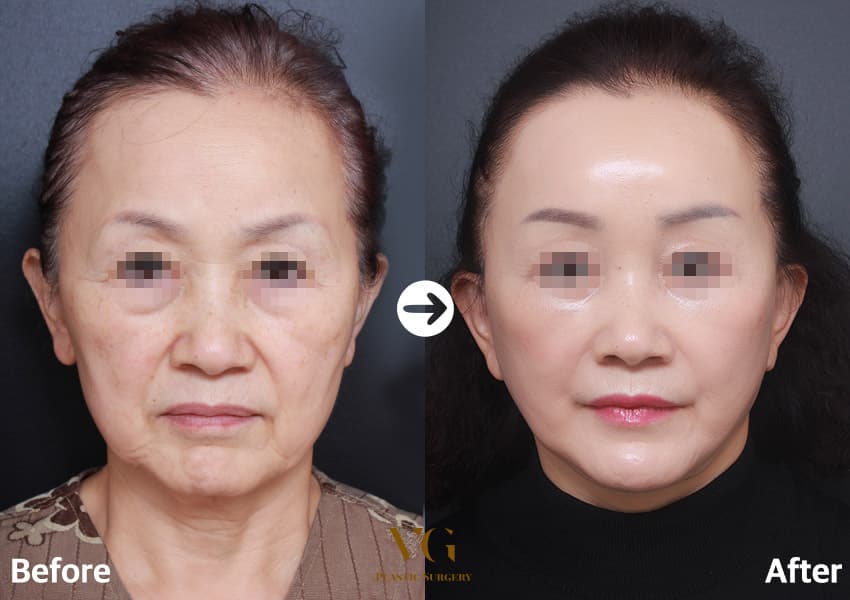
Face Lift3 months after surgery
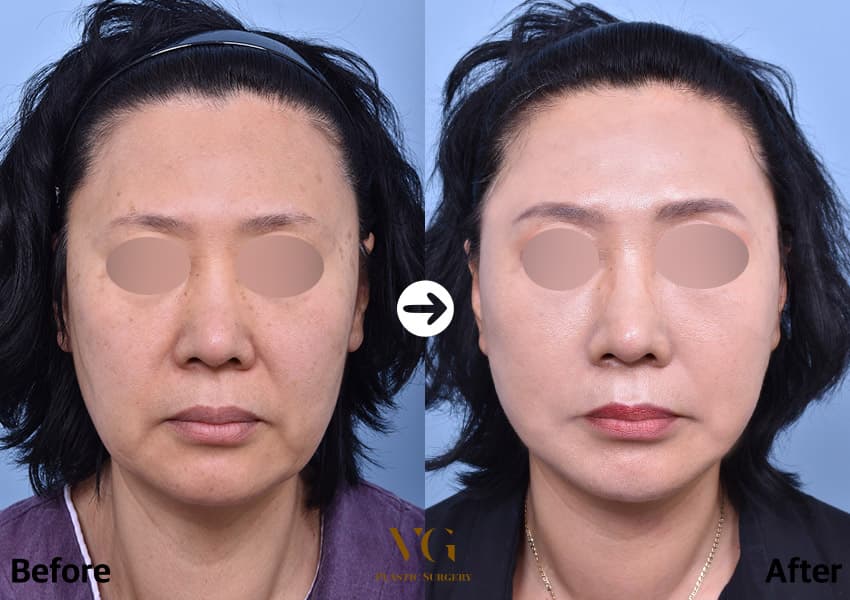
Face Lift3 months after surgery
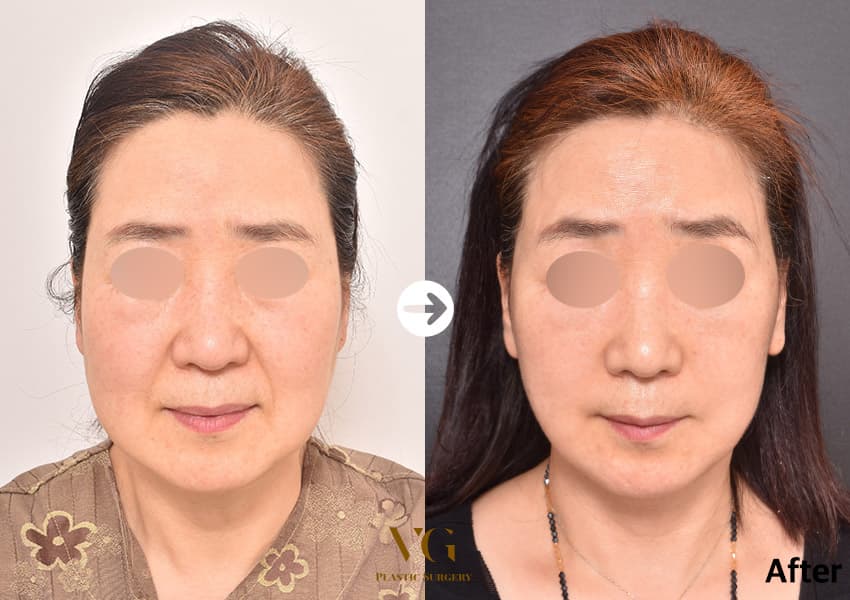
Face Lift3 months after surgery
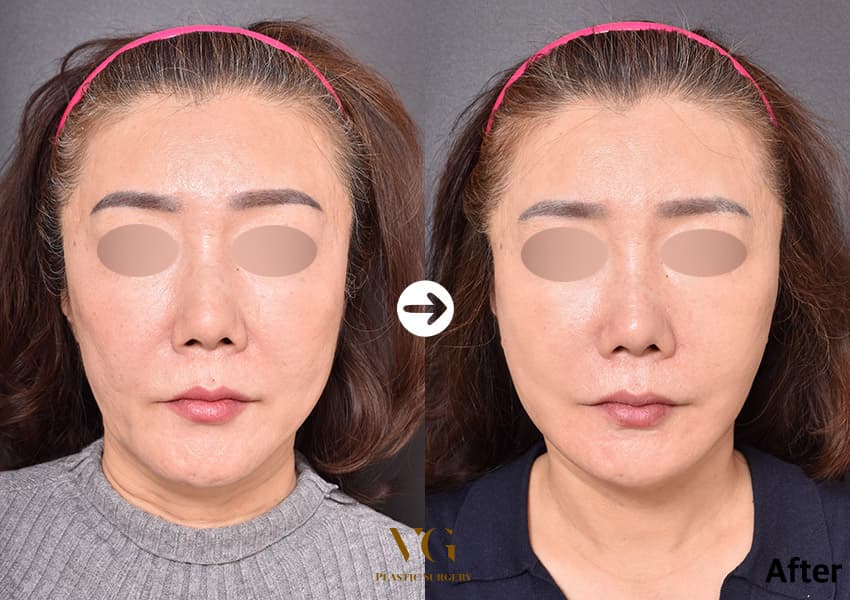
Face Lift3 months after surgery
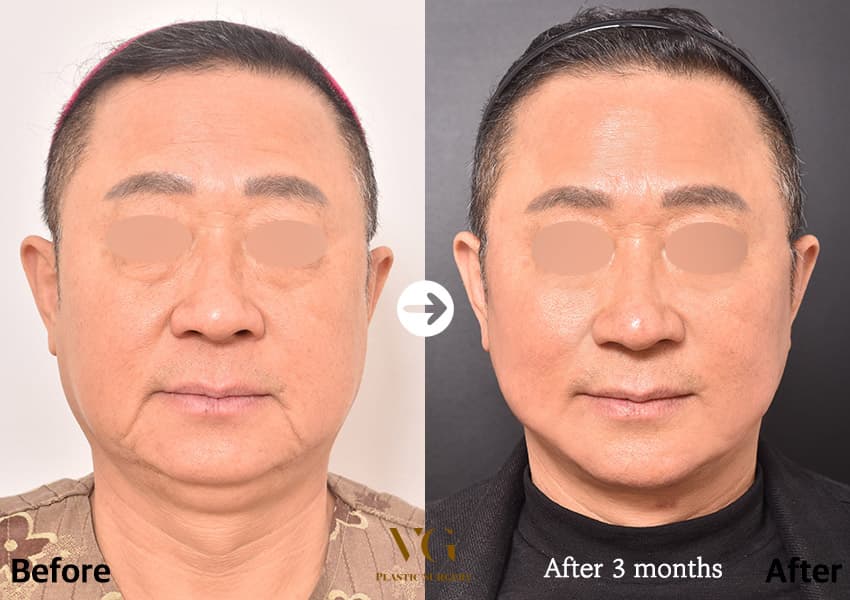
Face Lift3 months after surgery
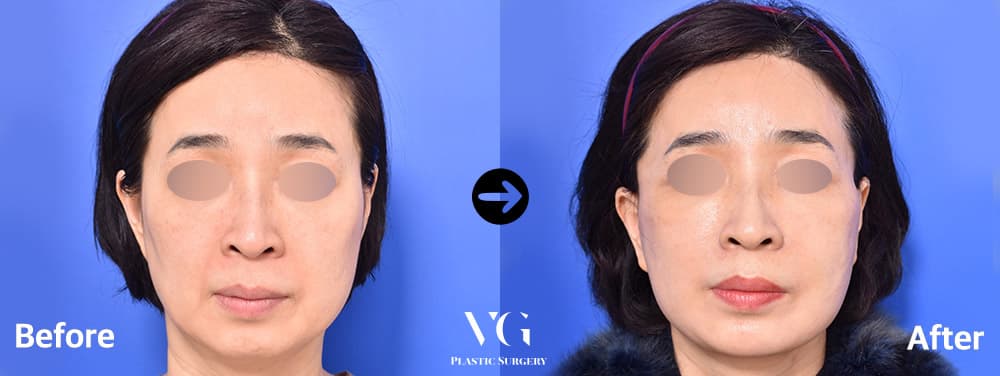
Face Lift3 months after surgery
FAQ
Questions patients ask
Is there an age limit for a face lift in Korea?
There is no fixed age. The tissue and general health decide whether surgery is reasonable. People in their 70s can be candidates when blood pressure, heart health and medicines allow anesthesia, and that medical review is part of planning.
Will the face lift scars be visible?
The incisions run around the ear and into or along the hairline, so most of the line sits in natural creases or hair. They look pink at first and usually fade over months. Unfavorable scarring is a listed risk, and smoking and skin tension make it more likely.
Can a face lift be combined with eyelid surgery or fat grafting?
Combining them can be considered in the same session when health and operating time allow. A longer operation adds load on the body and can lengthen recovery, so the combination is weighed against the travel dates at the consultation.
How long do face lift results last?
A face lift sets the clock back but doesn't stop it. The face keeps ageing from its new starting point, and skin quality, sun exposure, smoking and weight changes all affect how the result holds over the years.
What does the cost of a face lift depend on?
The main factors are the type of lift (Crystal, SMAS or mini), whether the neck is included, any procedures combined in the same session, and the anesthesia and operating time that follow from those choices. Send a photo on WhatsApp and the team tells you what applies to your case.
Sources
This article explains general medical information. Whether surgery suits you, and which method, is decided only after a consultation with the surgeon.
Written by
Im Young Min
Chief Director · Plastic Surgery
- Ph.D. in Medicine
- Internship and residency, Seoul St. Mary's Hospital
- Board-certified plastic surgeon, Seoul St. Mary's Hospital
- Adjunct professor of plastic surgery, Seoul St. Mary's Hospital
- Former director, Topface Plastic Surgery
Next step
Send two photos. Get a surgeon’s answer.
Front and side, natural light, no filter. Dr. Im Young Min reviews them and tells you which method fits and how many days to stay in Seoul.
International patients pay the same surgical fee as Korean patients. Pricing policy
Keep reading
Facelift
Deep Plane Facelift Korea Cost After a Lift That Didn't Last: What Are You Paying For? Reviews, Methods and Recovery
A deep plane facelift's cost follows how far the release goes, the neck, add-on procedures, earlier surgery and anesthesia time. Ask on WhatsApp with photos of your face and neck.
Im Young Min ·
Facelift
Mini Facelift Korea Price: Why Do Two Quotes Differ? Reviews, Methods and Recovery
A mini facelift Korea price moves with how deep the lift goes, whether the neck is included, the anesthesia and your days in Seoul. The word “mini” alone tells you little about the figure.
Im Young Min ·
Facelift
9D Facelift Korea: Swelling, Stitches and the Flight Home
“9D” is a brand name some Korean clinics give their facelift, not a standard technique. The decisions that shape your trip are which tissue layer is lifted, how long to wait before flying, and who sees you once you're home.
Im Young Min ·