Eyes
Ptosis Correction in Korea: Incisional or Not, Recovery and Your Stay
An eye surgeon in Seoul explains how ptosis correction is planned for patients flying in: how droop is measured, when sutures are enough and when an incision is needed, real cases, recovery, the stay and how the fee is set.
In this article
- 01What ptosis correction changes, and who it suits
- 02Non-incisional or incisional ptosis surgery in Korea
- 03Surgery day and recovery
- 04Planning ptosis correction in Korea: stay, stitches and follow-up
- 05How the fee for ptosis surgery in Korea is set
- 06What I check first in consultation
- 07Korean ptosis surgery after a previous eyelid operation
- 08Risks, and how we reduce them
The short answer
Ptosis correction in Korea, as our eye team plans it, adjusts the muscle that lifts the upper eyelid so the eye opens without help from the forehead. Mild droop can often be corrected with sutures through a non-incisional method; heavier droop, thick lids or a previous operation usually need the incisional route. Eye surgery here needs a minimum stay of 7 days in Korea, and international patients pay the same surgical fee as Korean patients, set out in one written quote.
- Ptosis correction adjusts the lifting muscle of the upper eyelid; a double eyelid crease alone does not change how far the eye opens.
- Non-incisional correction uses sutures and recovers faster, but it has a limit; heavier droop or thicker lids usually need an incision.
- If it is the brow, not the eyelid, that has dropped, ptosis correction is not the answer, and I will tell you so.
- Eye surgery takes 30 minutes to 2 hours under sedation, and the minimum stay in Korea is 7 days to cover stitch removal and the first follow-up.
- International patients pay the same surgical fee as Korean patients, with no foreigner surcharge, confirmed in one written quote.
Hello, I'm Hong Dae Won, a board-certified plastic surgeon on the eye surgery team at VG Plastic Surgery in Seoul. Ptosis correction in Korea is one of the questions I hear most from people abroad, and it usually arrives as a photo with a short message: people keep asking if I am tired. Many of them have already had a double eyelid done somewhere and still look sleepy, which is exactly the clue.

Profile
Hong Dae Won
Director · Board-certified in Plastic Surgery
A crease changes the shape of the lid. It does not change how strongly the lid lifts. That job belongs to the levator muscle, and adjusting it is what eye-opening surgery, or ptosis correction, actually does. Our eye surgery page lays out every method we use side by side, and this article follows the order I use in consultation.
What ptosis correction changes, and who it suits
In consultation I look for one habit first: do you raise your forehead and eyebrows to open your eyes? People with droop often do it without noticing, and over the years it leaves horizontal lines across the forehead. When the lid lifts properly again, the forehead can rest.
These are the situations where ptosis correction, alone or with a crease, is a reasonable answer.
- You raise your forehead and eyebrows to open your eyes, leaving lines on your forehead
- People often tell you that you look sleepy, and you want the shape of the eye itself to change
- Your double eyelid line keeps fading, or the two sides no longer match
- A previous eyelid surgery made a crease but the eyes still look sleepy, because the droop itself was never corrected
And these are the situations where I advise waiting or doing something else first. Saying not yet is part of a fair consultation.
- The brow, not the eyelid, is what has dropped; then a brow lift is the operation to look at, not ptosis correction
- Untreated dry eye or blepharitis; we ask you to see an ophthalmologist first
- A travel schedule too short for stitch removal and the first follow-up in Korea
- Pregnancy, or an uncontrolled thyroid or bleeding disorder
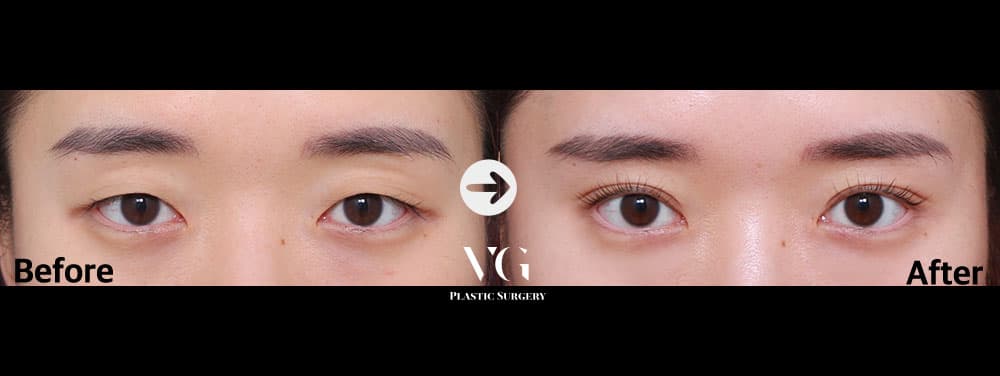
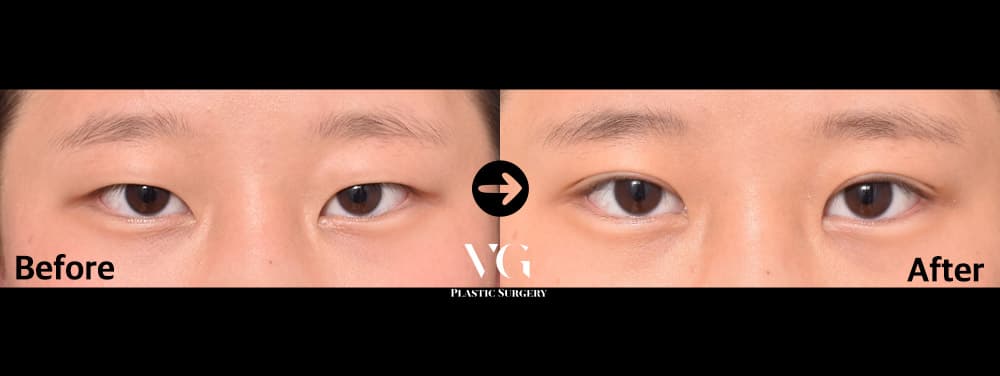
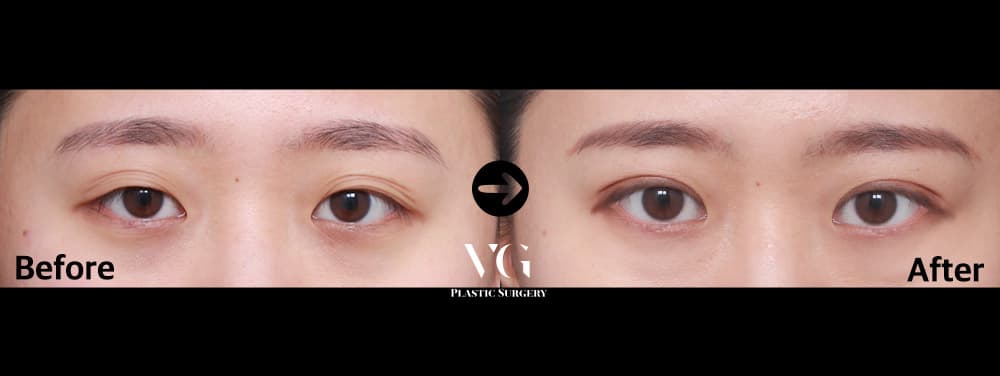
These three are cases from our eye surgery team, all photographed 3 months after non-incisional correction combined with a natural adhesion crease. Look at how much of the iris the upper lid covers before and after, not only at the crease. In the first case on its own page the eyebrows look more relaxed afterwards, because the forehead no longer helps.
Non-incisional or incisional ptosis surgery in Korea
Most people who search for ptosis surgery Korea options find two names and assume one is simply the gentler version of the other. They are closer to two tools for two kinds of lid. The table sets them side by side on the points patients ask about.
| Non-incisional | Incisional | |
|---|---|---|
| How it works | The lifting force is adjusted with sutures, without an incision | The lifting muscle itself is adjusted through an incision along the eyelid line |
| Suits | Mild droop, thinner lids with little fat | Heavier droop, thicker lids, or a lid operated on before |
| Swelling | Peaks at 2–3 days; back to daily life in 3–5 days | Peaks at 3–5 days; settles over the following weeks |
| Looks natural | Around 1 month; final result at 3 months | Around 2–3 months; final result at 6 months |
| Scarring | Almost none | Follows the eyelid line, inside the fold |
| Limit | There is a limit to how much it corrects | Used when the correction needed is larger |
The non-incisional route is the one people hope for, and when the lid is thin and the droop is mild it is a good fit. For heavier droop I suggest the incisional route, because sutures alone cannot hold a larger correction. Our comparison of the four eye surgeries sets ptosis correction against incisional and non-incisional double eyelids and epicanthoplasty.
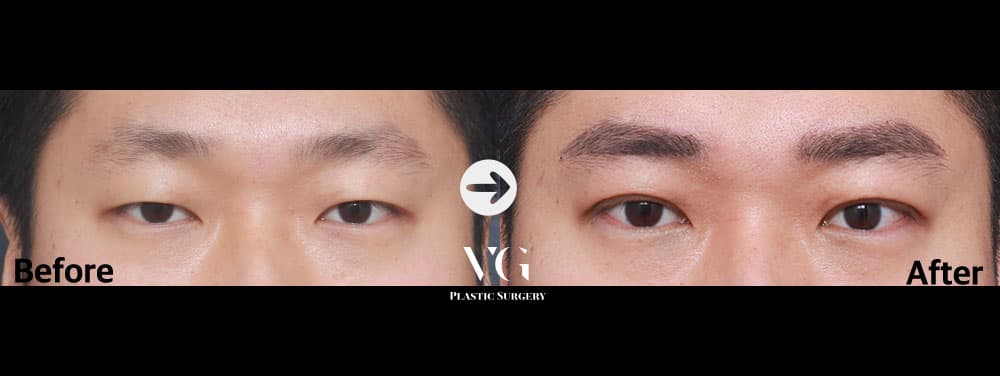
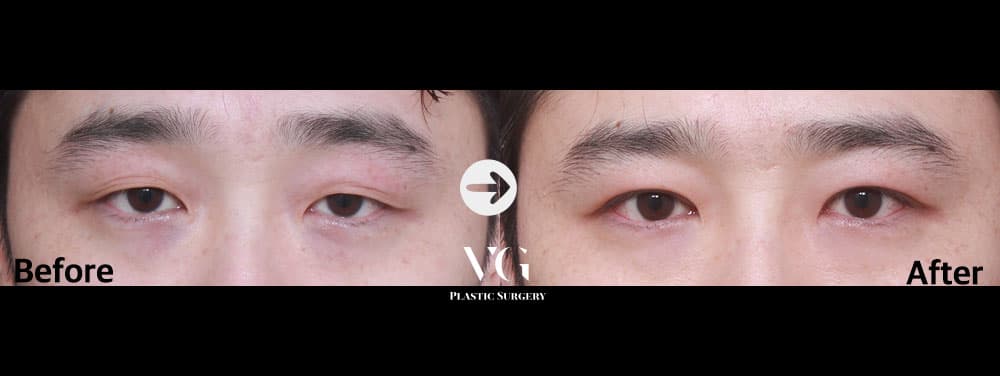
Both of these are our eye surgery team's cases, men with thicker lids, photographed 3 months after incisional ptosis correction with an incisional crease. In the first one the eyes looked almost closed before, and the forehead was doing much of the lifting. The crease was kept low on purpose so the result still reads as his own eyes.
Surgery day and recovery
On the morning of surgery I draw the plan on your lids and go through it with you, with the interpreter present. Nothing starts until you agree to what is drawn. Eye surgery takes 30 minutes to 2 hours under sedation, and an overnight stay is usually not required.
| Activity | When |
|---|---|
| Phone and screens | Short periods from the next day |
| Eye makeup | 3–5 days after stitches are out |
| Contact lenses | After 2 weeks |
| Light exercise | After 2 weeks |
| Alcohol and smoking | After 4 weeks |
| Flying home | After the minimum stay of 7 days |
The first few days are the most swollen, and the eyes can look uneven while that settles. What you see at one month is not the final result. Recovery differs from person to person, and we adjust these points at your follow-up visits.
Send a photo of your eyes looking straight ahead and one with your eyes gently closed, and I'll tell you whether sutures could be enough or an incision is needed.
Planning ptosis correction in Korea: stay, stitches and follow-up
For ptosis correction in Korea, plan a minimum stay of 7 days. That covers stitch removal and the first follow-up before you fly, so you do not travel with stitches still in. It is not the same as being back to daily life, which is a separate and longer number for incisional surgery.
- Day 0: design check with the interpreter, then surgery under sedation
- First days: swelling at its peak, rest at the hotel, short screen time only
- Within the 7-day stay: stitch removal and the first follow-up visit
- After you fly: photo reviews at week 1, month 1 and month 3, with more photos requested when the first ones are not enough
Do not book your return flight for the day of your last appointment, because appointments move. Blurred or changed vision, sudden swelling on one side, bleeding that will not stop or fever are signs not to wait on: send a photo through the messenger and you get an answer the same day.
An interpreter sits with you in consultation, on surgery morning and at every follow-up visit. One eye surgeon performs the whole operation from start to finish, and a board-certified anesthesiologist is resident at the clinic.
How the fee for ptosis surgery in Korea is set
People searching ptosis surgery cost Korea want a figure, and I understand why. I cannot give one before I have seen your eyes, because the method, whether a crease or an inner-corner procedure is combined, and whether it is a revision all change the plan.
What I can tell you is how it works. International patients pay the same surgical fee as Korean patients, with no foreigner surcharge, and you receive one written quote before you decide. Our pricing policy page shows what is included and what can be added.
What I check first in consultation
I also look at facial proportion, eye length and spacing, the height of the eye tail and how the two sides differ. A small difference in droop between the eyes is common, and it is one reason a crease made without correcting the droop can look uneven.
I work mainly on eyes and noses, and I am a full member of the Eyelid Surgery Research Group of the Korean Society of Plastic and Reconstructive Surgeons. My training and memberships are on my profile page.
Korean ptosis surgery after a previous eyelid operation
A good share of Korean ptosis surgery is revision. The pattern I see most is simple: ptosis was present, only the crease was made, and the eyes still look sleepy. Correcting the droop opens the eye so it reads larger and clearer.
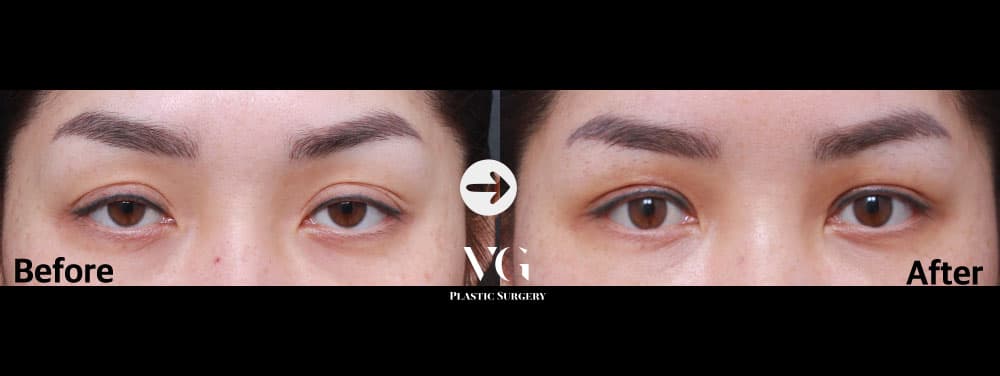
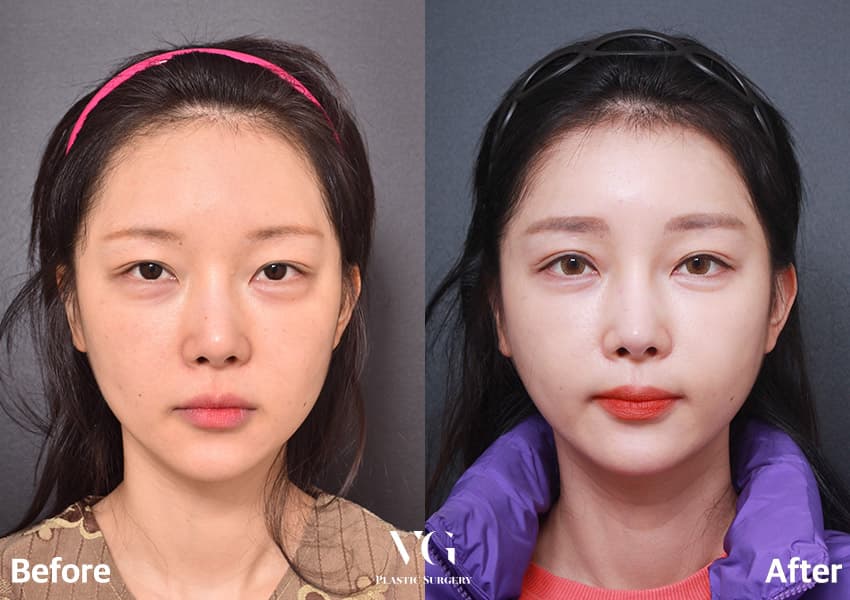
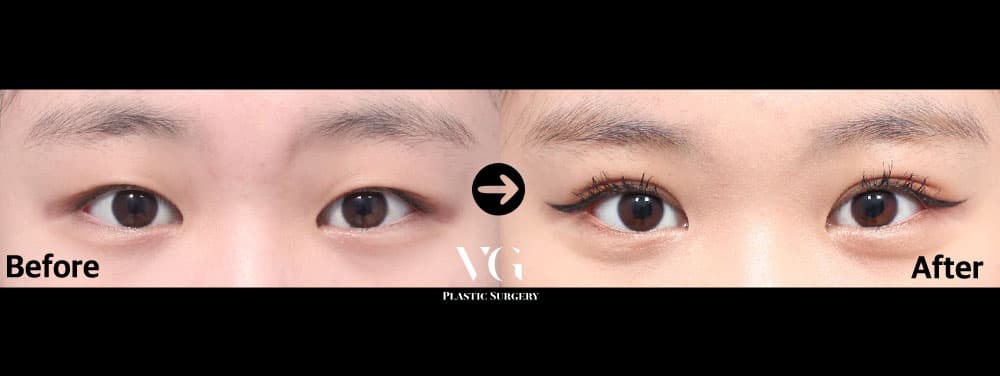
These two are revision cases from our eye surgery team, photographed 3 months after an incisional crease combined with incisional ptosis correction. The full-face view shows what the close-up cannot: how much more awake the whole face reads once the lids open. Revision is planned at least 6 months after the first surgery, so bring photos and, if you have them, records from that operation.
If you want to look at more results before writing to us, the complete before and after gallery holds every published case. I have also written about how to read Korean eyelid surgery photos so you know what to compare.
Risks, and how we reduce them
Every eyelid operation carries risk. The ones I discuss with every patient are asymmetry between the two sides, under- or over-correction of the lid height, a crease that loosens over time, swelling that takes longer than expected and, after incisional surgery, a visible scar along the line.
- Asymmetry: both lids are measured before surgery, and the design is drawn and checked with you before surgery, so the difference between the sides is accounted for
- Loosening: non-incisional correction can loosen on a thicker lid, which is why I recommend the incisional route when the lid calls for it
- Scarring: we do not over-resect tissue or fix too deeply, and the incision sits inside the fold
- After you fly: photo reviews at set points, and more photos requested if the first ones are not enough
Ptosis correction also sits close to the double eyelid question, and many people need both. If you are still deciding between a crease alone and a crease with correction, read my guide to double eyelid surgery in Korea, then come back to the eye surgery centre page, where results are sorted by concern.
Send two photos on WhatsApp, eyes open and eyes gently closed, and I'll tell you which correction your lids need and how your days in Seoul would look.
Eyes before & after — more cases
Real patients from our archive, all photographed 3 months after surgery. Tap a case to compare it full size.
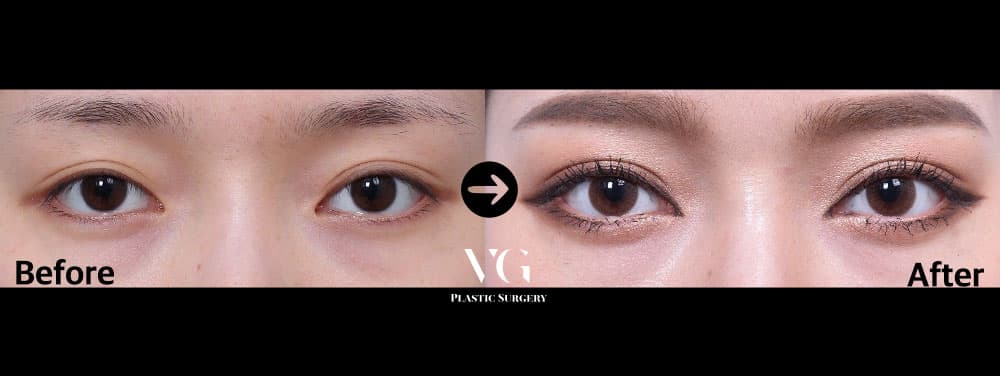
Ptosis Correction3 months after surgery
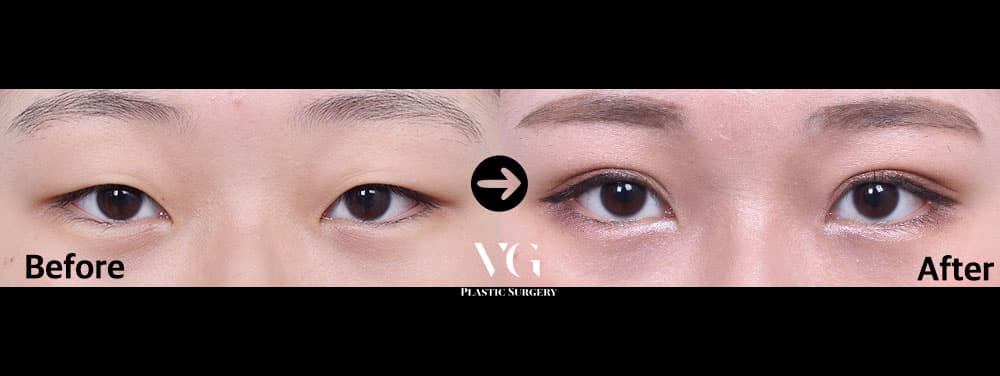
Incisional Ptosis Correction3 months after surgery
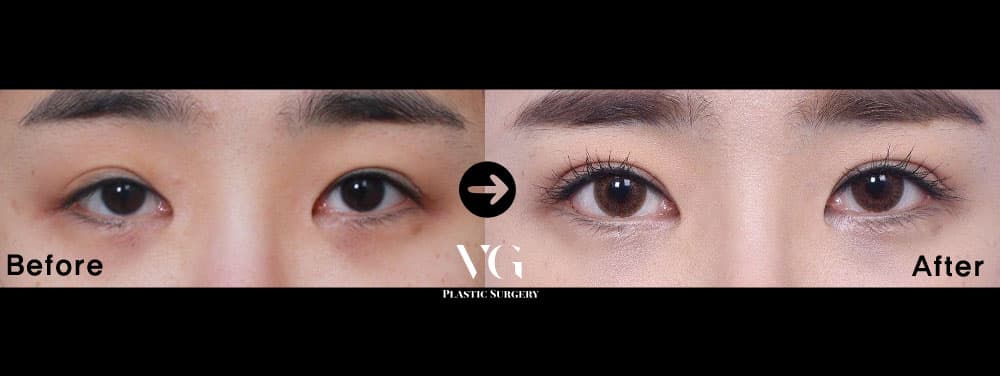
Ptosis Correction3 months after surgery
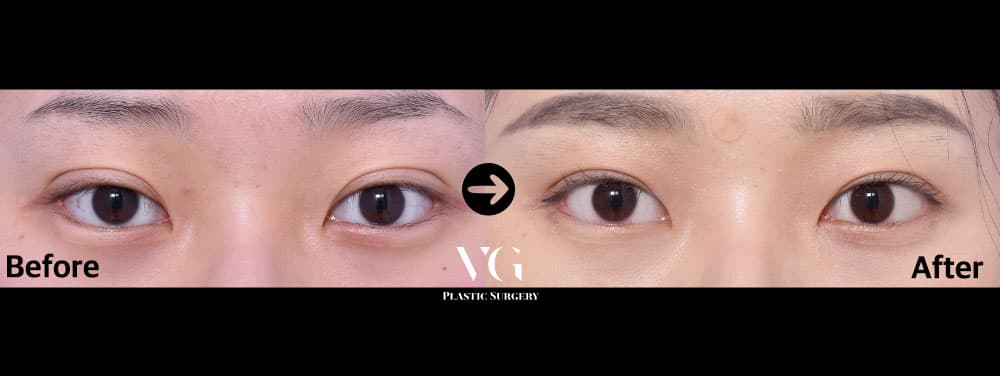
Incisional Ptosis Correction3 months after surgery
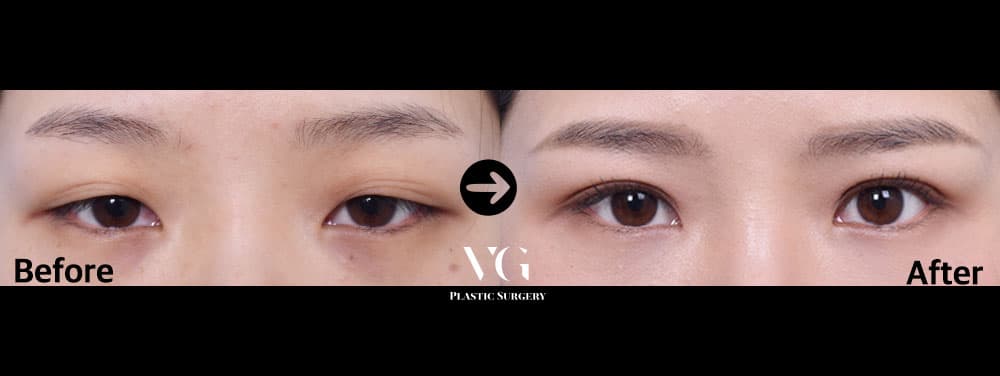
Incisional Ptosis Correction3 months after surgery
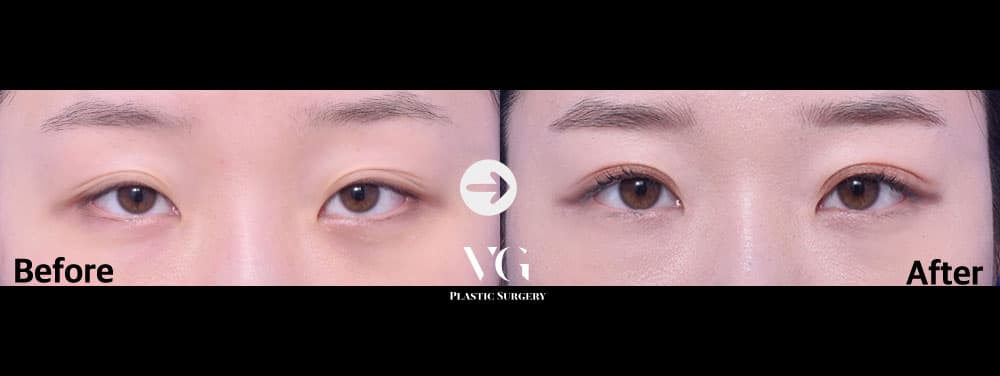
Non-Incisional Ptosis Correction3 months after surgery
FAQ
Questions patients ask
How long should I stay in Korea for ptosis correction?
Eye surgery needs a minimum stay of 7 days in Korea. That covers stitch removal and the first follow-up before you fly. We confirm the exact dates with you after reviewing your photographs, so it is safer to do that before buying a non-refundable ticket.
How much does ptosis correction in Korea cost?
We do not publish a price list, because the fee depends on the method and what is combined with it. International patients pay the same surgical fee as Korean patients, with no foreigner surcharge. You receive one written quote after consultation, before you decide.
Is non-incisional ptosis correction enough for me?
It suits mild droop and thinner lids with little fat, and recovery is quicker. There is a limit to how much sutures can correct, so for heavier droop, thick lids or a previous operation I usually suggest the incisional route. Photos with your eyes open and closed are enough for a first opinion.
How long does swelling last after ptosis surgery?
After non-incisional correction, swelling peaks at 2–3 days, most people are back to daily life in 3–5 days, and the final result is at 3 months. Incisional surgery swells more: it peaks at 3–5 days, looks natural at around 2–3 months and reaches its final result at 6 months.
Can ptosis correction be done with double eyelid surgery?
Yes, and it often is. All of the cases on this page combined correction with a crease. When the lid opens properly, the crease sits more evenly on both sides.
I had double eyelid surgery and still look sleepy. Can this be fixed?
Often the reason is that ptosis was present but only the crease was made. Correcting the droop can open the eye, though revision is planned at least 6 months after the first surgery. Please send photos and, if you have them, records from the first operation.
This article explains general medical information. Whether surgery suits you, and which method, is decided only after a consultation with the surgeon.
Written by
Hong Dae Won
Director · Plastic Surgery
- Board-certified plastic surgeon, Asan Medical Center, Seoul
- Plastic surgery fellowship, Florence University Hospital, Italy
- International Confederation for Plastic, Reconstructive and Aesthetic Surgery (IPRAS)
- American Society of Plastic and Reconstructive Surgeons (ASPRS)
- American Society for Aesthetic Plastic Surgery (ASAPS)
Next step
Send two photos. Get a surgeon’s answer.
Front and side, natural light, no filter. Dr. Hong Dae Won reviews them and tells you which method fits and how many days to stay in Seoul.
International patients pay the same surgical fee as Korean patients. Pricing policy
Keep reading
Eyes
How Much Does Double Eyelid Surgery Cost in Korea? Results, How Long It Lasts, Reviews and When to Spend Less
There's no single figure: the method your lids need, any ptosis or inner-corner work, the anesthesia and your days in Seoul set the quote, and foreigners pay the same surgical fee as Korean patients.
Im Young Min ·
Eyes
Lower Blepharoplasty Korea Cost: Fat, Skin or Lid Support? Reviews, Methods and Recovery
Your lower blepharoplasty cost in Korea follows what is causing the bags: bulging fat, a hollow beneath it, loose skin or a slack lower lid, plus the anesthesia and the days you plan in Seoul.
Im Young Min ·
Eyes
Double Eyelid Surgery Cost in Korea: What Changes Your Quote? Results, Reviews and Methods
Quotes for double eyelid surgery in Korea differ because they describe different operations: suture or incision, fat removal, ptosis correction, inner-corner work and revision.
Im Young Min ·