Eyes
Canthoplasty Korea: Inner, Outer or Lower Corner, and How Far to Open
An eye surgeon in Seoul explains the three corners of canthoplasty — inner, outer and lower — what limits each one, how a trip to Korea is planned around stitch removal, and what real cases look like at three months.
In this article
- 01Three corners, three different operations
- 02Who canthoplasty suits, and when I say no
- 03Canthoplasty before and after: what the inner corner changes
- 04Canthoplasty Korea: surgery day and how many days to stay
- 05Canthoplasty Korea cost: how the fee is set
- 06Revision: when a previous canthoplasty looks unnatural
- 07Risks, and how we reduce them
The short answer
Canthoplasty opens the corner of the eye to change its length or height. There are three corners to choose from: the inner corner (epicanthoplasty, often searched as medial canthoplasty), the outer corner (lateral canthoplasty) and the lower corner. Each one has a limit set by your anatomy, and the change is hard to reverse, so how far to open is decided before surgery, not during it. For a canthoplasty Korea trip, plan at least 7 days in Seoul.
- Inner, outer and lower corner opening are three different operations with three different limits.
- The inner corner suits an epicanthal fold that makes the eye look short; it is not advised for eyes already set close together.
- The outer corner opens only as far as the bone allows, and we show you that limit in advance.
- Plan at least 7 days in Seoul: stitches come out 5–7 days after surgery, and you do not fly with them in.
- There is no price list: international patients pay the same surgical fee as Korean patients, set out in a written quote.
Hello, I'm Hong Dae Won, a board-certified plastic surgeon in the eye surgery team at VG Plastic Surgery in Seoul, and a full member of the Eyelid Surgery Research Group of the Korean Society of Plastic and Reconstructive Surgeons. Messages about canthoplasty Korea trips reach me almost every week, and most of them ask the same thing in different words: my eyes look short or small, which corner should I open?

Profile
Hong Dae Won
Director · Board-certified in Plastic Surgery
It is a fair question, because "canthoplasty" is used for three operations. Opening the inner corner, the outer corner and the lower corner each change a different dimension of the eye. On our eye surgery page, where each method is set out with recovery and stay, they appear as separate procedures for that reason.
Three corners, three different operations
Before I talk about any corner, I measure the eye as it is. Our analysis covers eye shape, eye length and spacing, the height of the eye tail, pupil size, skin thickness and the eye muscle, and whether ptosis is present. The corner you ask about and the corner that answers your concern are not always the same.
| Corner | What it changes | What limits it |
|---|---|---|
| Inner corner (epicanthoplasty / medial canthoplasty) | Lengthens the eye toward the nose where an epicanthal fold covers the corner | Eyes already set close together; opened too far, the look turns sharp |
| Outer corner (lateral canthoplasty) | Makes the eye wider at the tail | Opens only as far as the bone allows |
| Lower corner | Opens the lower edge slightly to make the eye taller | Too much shows the white below, so it goes in small steps |
Inner corner
This is for eyes set wide apart, or where the fold at the inner corner is covered by epicanthal skin and the eye reads short. Swelling is usually mild, and a fine trace may remain at the inner corner. Open it too far and the expression turns sharp, so we decide how far together, with the line drawn on your face.
Outer corner
A lateral canthoplasty opens the outer edge to make the eye wider. How much it can give depends on where the bone at the outer corner sits, and that varies a great deal between people. I show you that limit before surgery, so the result you expect is one your anatomy can produce.
Lower corner
Lower corner opening lowers the lower edge slightly so the eye looks taller and softer. It is the corner where small amounts matter most. Too much shows the white of the eye below the iris, so we work in small steps. Bags and hollows under the lower lid are a different operation, covered in under eye fat repositioning in Korea.
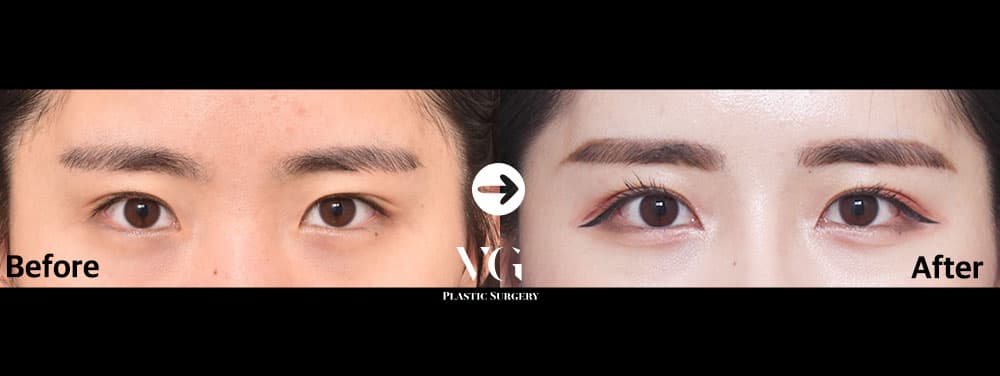
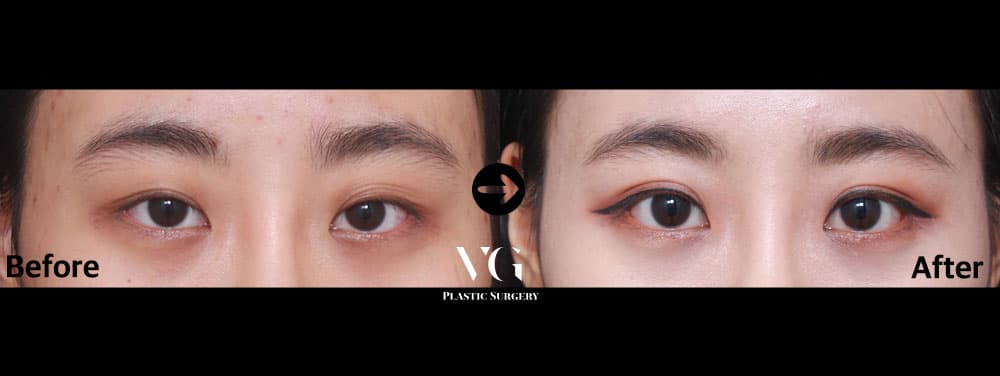
These two are cases from our eye surgery team, both photographed 3 months after surgery. In the first case, outer and lower corner opening only, the eye gains width at the tail and a little height below; the second adds a non-incisional double eyelid. Neither eye was pulled into a different shape — the tail simply sits further out.
Who canthoplasty suits, and when I say no
These are the situations where corner opening is worth discussing.
- An epicanthal fold covers the inner corner and the eye looks short.
- Your eyes are set wide apart and you want the space between them to read less.
- The tail of the eye ends early and you want the eye to look wider, within what the bone allows.
- A previous corner surgery healed unnaturally and you are considering revision.
And these are the cases where I would tell you to wait or plan differently.
- Your eyes are already set close together — opening the inner corner is not advised.
- Untreated dry eye or blepharitis — we ask you to see an ophthalmologist first.
- A travel schedule too short for stitch removal and the first follow-up in Korea.
- You want the exact eyes from a celebrity photo; a different eyelid structure cannot produce the same shape.
- Pregnancy, or an uncontrolled thyroid or bleeding disorder.
Canthoplasty before and after: what the inner corner changes
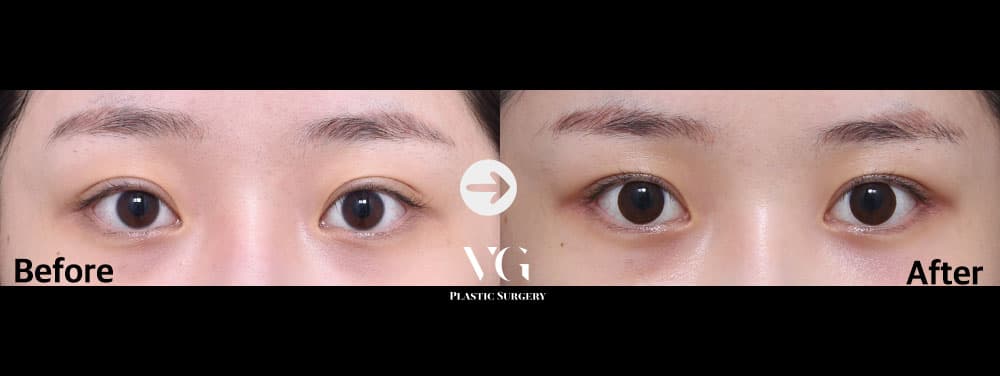
The inner corner is the one people ask about most, usually combined with a double eyelid. These three are from our eye surgery team, each at 3 months, and each paired with a non-incisional double eyelid. Look at the pink inner corner: before, the skin fold covers it; after, it shows, and the eye reads longer toward the nose.
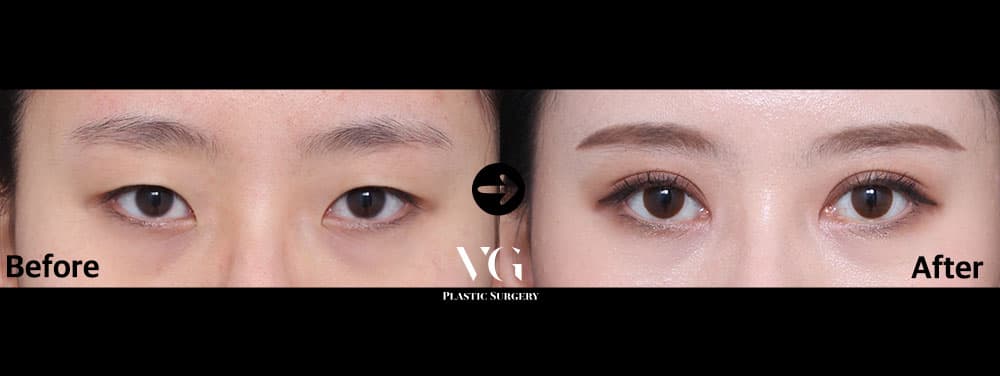
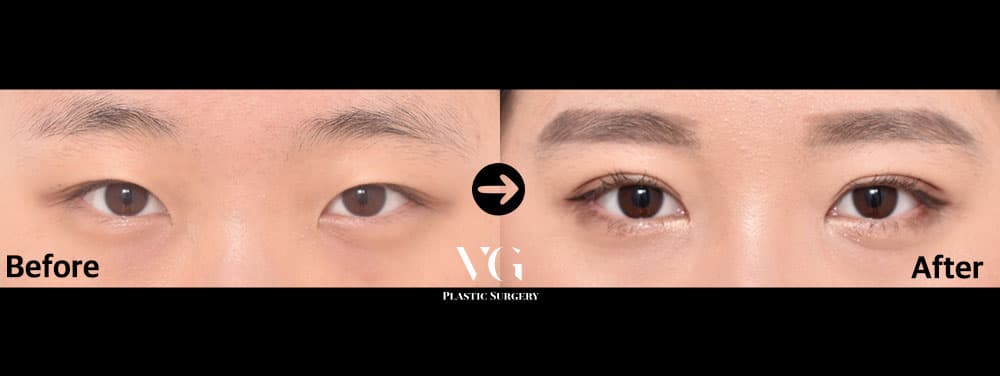
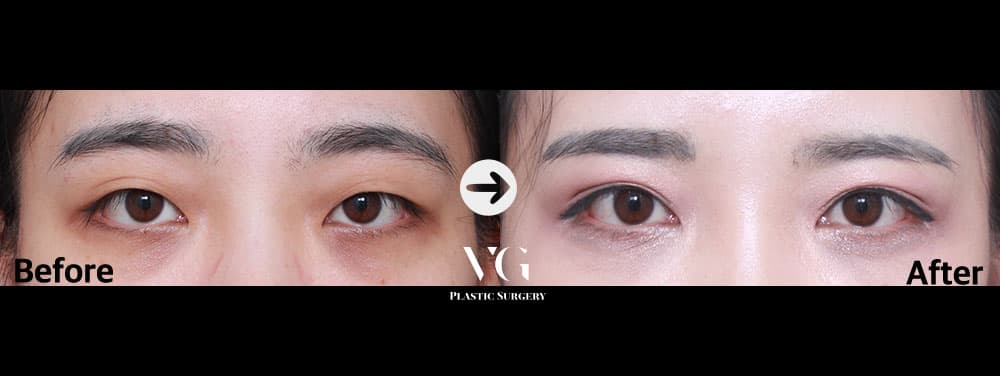
None of these three were opened to the maximum. In the first case, an inner corner opening with a non-incisional double eyelid, the change is a few millimetres, and that is what keeps the expression soft. If you want to see how the crease itself is planned, I compare the methods in our guide to double eyelid surgery in Korea.
Canthoplasty Korea: surgery day and how many days to stay
You come in with a clean face and no contact lenses. I draw the plan at the corner and go through it with you, with the interpreter present, and nothing starts until you agree to what is drawn. Eye operations here are done under sedation, run from 30 minutes to 2 hours depending on what is combined, and usually do not require admission.
For any eye surgery, plan at least 7 days in Seoul. That covers stitch removal and the first follow-up before you fly, and it is not the same as being back to daily life.
| When | What to expect |
|---|---|
| Days 2–3 | Swelling peaks |
| Days 5–7 | Stitches come out |
| Day 7 | Back to daily life; earliest day to fly home |
| 3–5 days after stitches are out | Eye makeup |
| After 2 weeks | Contact lenses and light exercise |
| After 4 weeks | Alcohol and smoking |
| 1–2 months | Looks natural |
| 3 months | Final result |
If the corner is combined with an incisional double eyelid or ptosis correction, the slower of the two sets the timeline. Do not book your return flight for the day of your last appointment; appointments move. Our page on what international patients can expect in Seoul walks through the airport, the hotel and the interpreter in more detail.
Send two photos — front with your eyes open, and front looking straight at the camera without makeup — and I'll tell you which corner, if any, answers what bothers you.
Canthoplasty Korea cost: how the fee is set
We do not publish a price list. The fee depends on which corners are opened and what is combined: inner corner alone, outer and lower together, or a corner added to a double eyelid or ptosis correction are different operations with different time under sedation.
What does not change is the policy. International patients pay the same surgical fee as Korean patients, and after your consultation you receive one itemised quote in writing before you decide anything. Interpretation through the consultation, the morning of surgery and every follow-up is free.
Revision: when a previous canthoplasty looks unnatural
Some of the people who ask me about canthoplasty Korea revision have had a corner opened elsewhere and feel the shape now looks unnatural — too sharp at the inner corner, or pulled at the tail. Revision is possible, but what was done last time sets what is possible this time. It is planned at least 6 months after the first surgery, and we ask you to bring photos and, if you have them, records from the first operation.
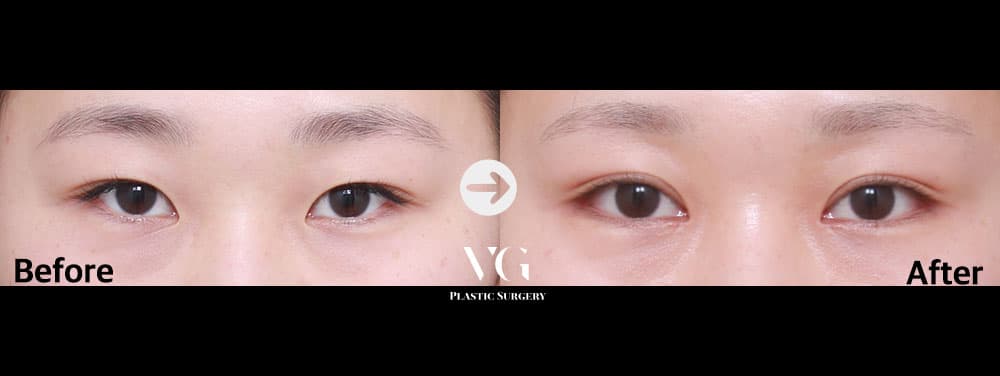
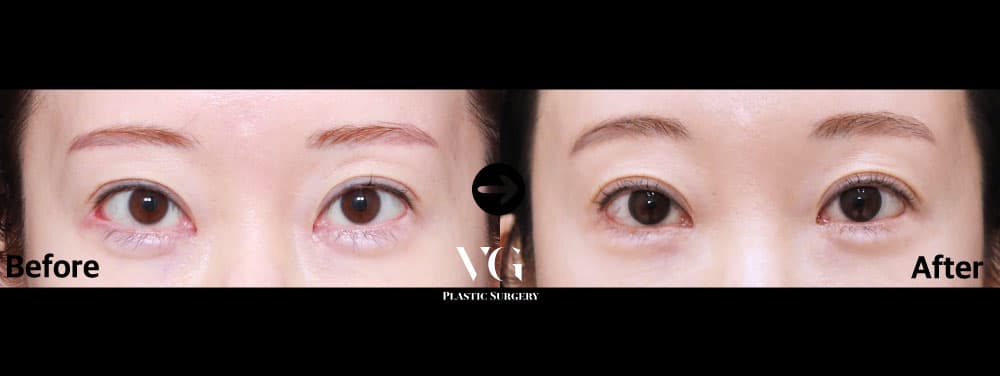
The first case combines all three corners with a non-incisional double eyelid, and the change still reads quiet because each corner was opened a little. The second is a restoration: inner and outer corners that had been opened too far, brought back so the red tissue no longer shows. You can browse more of our before and after archive, filtered by procedure, and our article on Korean eyelid surgery before and after photos explains how to read them.
Risks, and how we reduce them
Corner opening is surgery, and the change is hard to reverse. These are the things I explain before anyone signs.
- Over-correction. An inner corner opened too far looks sharp; a lower corner opened too far shows white below the iris. We decide the amount together before surgery and work in small steps.
- Less change than expected at the tail. The outer corner opens only as far as the bone allows, and I show you that limit in advance.
- Scarring. A fine trace may remain at the inner corner. It sits in the corner itself, and it is checked at follow-up.
- Asymmetry while swelling settles. The two sides can look different in the first weeks. The result is judged at 3 months, not at stitch removal.
After you fly home, follow-up continues through photograph reviews at week 1, month 1 and month 3, and the surgeon who operated answers in writing. Send a photo the same day if you notice bleeding that will not stop, pain that keeps getting worse, fever, blurred vision, or sudden swelling on one side.
If you want to see who would operate, my profile and eyelid surgery credentials are on our site. And if you are weighing a canthoplasty Korea trip and want to compare corners side by side with the double eyelid and ptosis options, our eye surgery centre page with real cases and stay length is the place to start.
Send your photos on WhatsApp, and I'll tell you whether your eye needs the inner corner, the outer corner, or no canthoplasty at all.
Eyes before & after — more cases
Real patients from our archive, all photographed 3 months after surgery. Tap a case to compare it full size.
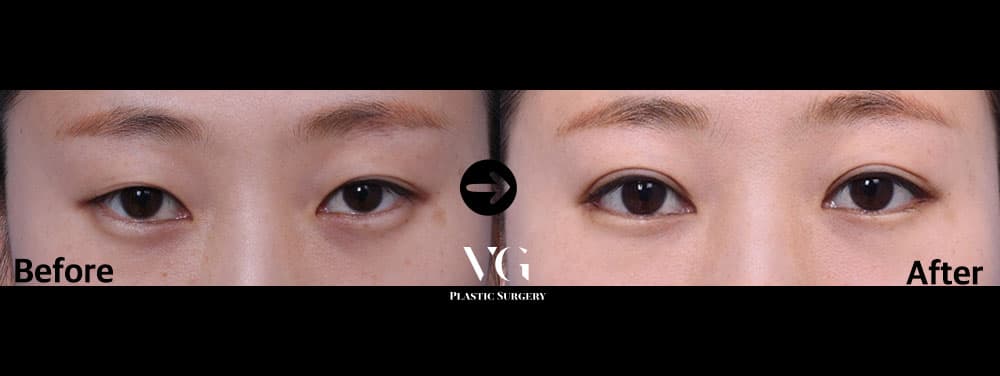
Lateral Canthoplasty (Outer Corner)3 months after surgery
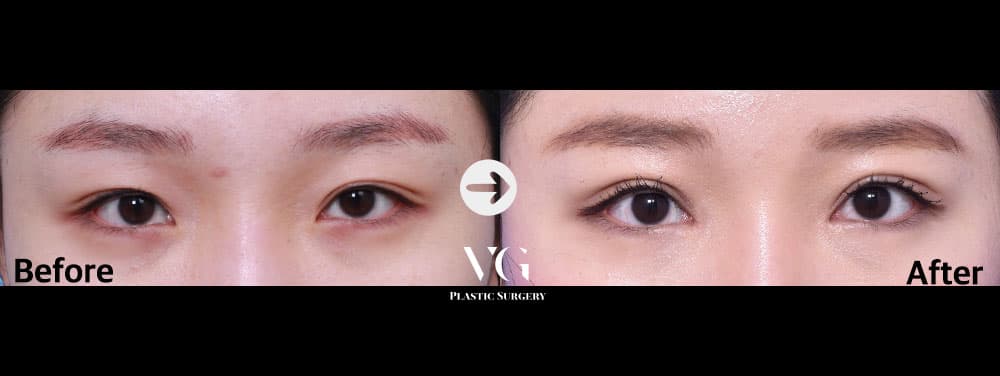
Epicanthoplasty (Inner Corner)3 months after surgery
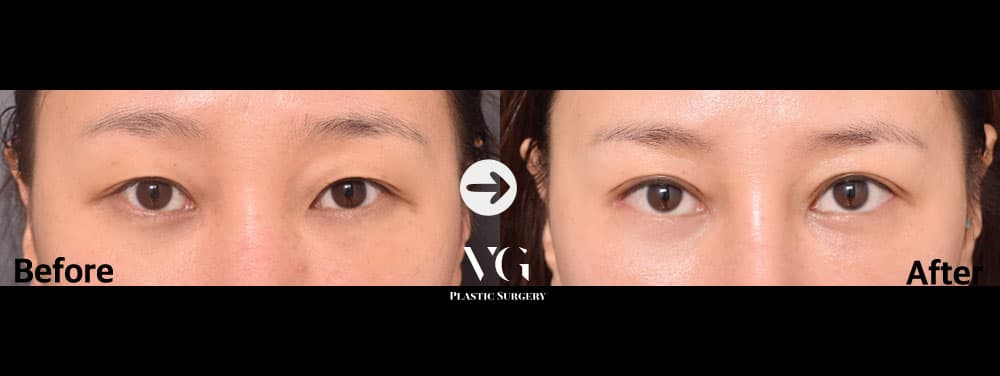
Lateral Canthoplasty (Outer Corner)3 months after surgery
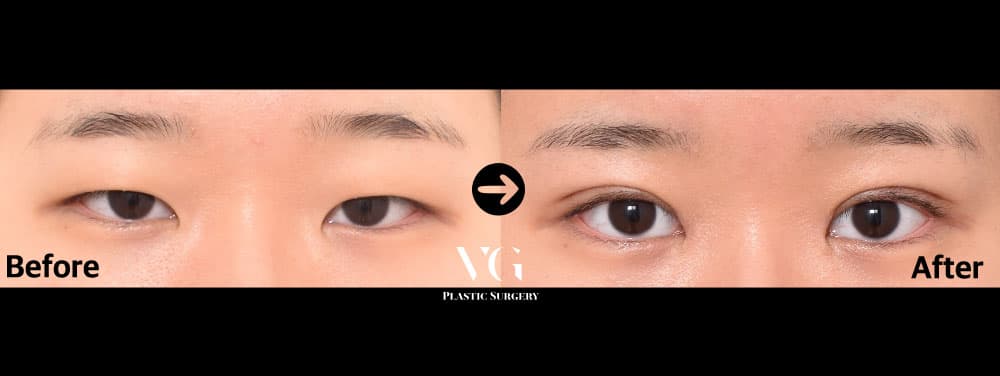
Epicanthoplasty (Inner Corner)3 months after surgery
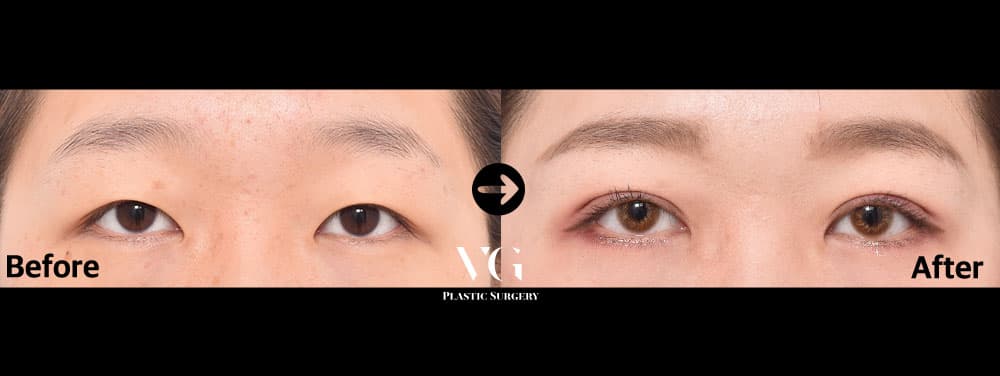
Epicanthoplasty (Inner Corner)3 months after surgery
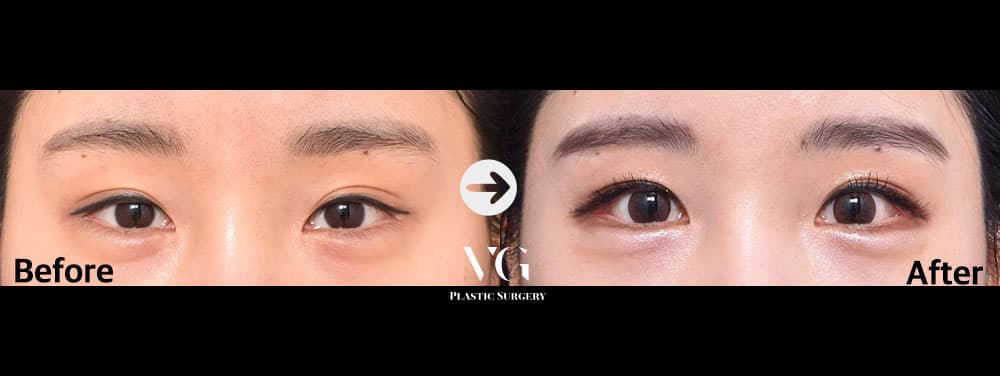
Lateral Canthoplasty (Outer Corner)3 months after surgery
FAQ
Questions patients ask
What is the difference between epicanthoplasty and lateral canthoplasty?
Epicanthoplasty opens the inner corner, near the nose, where an epicanthal fold covers it. Lateral canthoplasty opens the outer corner to make the eye wider at the tail. They change different dimensions and have different limits, so they are planned separately even when done together.
Is medial canthoplasty the same as epicanthoplasty?
Patients use the two terms for the same request: opening the inner corner so the eye looks longer. In consultation I avoid the label and look at the fold itself — how much it covers, and how close your eyes already sit.
Canthoplasty Korea trip: how long should I stay?
At least 7 days. Stitches come out 5–7 days after surgery and you should not fly with them in. If the corner is combined with an incisional double eyelid or ptosis correction, plan around the longer of the two.
Canthoplasty cost Korea: is there a price list?
No. The fee depends on which corners are opened and what is combined. International patients pay the same surgical fee as Korean patients, and you receive an itemised written quote after consultation, before you decide.
Can a canthoplasty be reversed?
It is a change that is hard to reverse. Corner restoration is possible, and we do revision, but it is planned at least 6 months after the first surgery and depends on what was done before. That is why I would rather open a little less the first time.
Will a lateral canthoplasty make my eyes much wider?
It opens only as far as the bone at the outer corner allows, and that differs between people. I show you the expected limit before surgery so the result you are planning for is one your anatomy can give.
This article explains general medical information. Whether surgery suits you, and which method, is decided only after a consultation with the surgeon.
Written by
Hong Dae Won
Director · Plastic Surgery
- Board-certified plastic surgeon, Asan Medical Center, Seoul
- Plastic surgery fellowship, Florence University Hospital, Italy
- International Confederation for Plastic, Reconstructive and Aesthetic Surgery (IPRAS)
- American Society of Plastic and Reconstructive Surgeons (ASPRS)
- American Society for Aesthetic Plastic Surgery (ASAPS)
Next step
Send two photos. Get a surgeon’s answer.
Front and side, natural light, no filter. Dr. Hong Dae Won reviews them and tells you which method fits and how many days to stay in Seoul.
International patients pay the same surgical fee as Korean patients. Pricing policy
Keep reading
Eyes
How Much Does Double Eyelid Surgery Cost in Korea? Results, How Long It Lasts, Reviews and When to Spend Less
There's no single figure: the method your lids need, any ptosis or inner-corner work, the anesthesia and your days in Seoul set the quote, and foreigners pay the same surgical fee as Korean patients.
Im Young Min ·
Eyes
Lower Blepharoplasty Korea Cost: Fat, Skin or Lid Support? Reviews, Methods and Recovery
Your lower blepharoplasty cost in Korea follows what is causing the bags: bulging fat, a hollow beneath it, loose skin or a slack lower lid, plus the anesthesia and the days you plan in Seoul.
Im Young Min ·
Eyes
Double Eyelid Surgery Cost in Korea: What Changes Your Quote? Results, Reviews and Methods
Quotes for double eyelid surgery in Korea differ because they describe different operations: suture or incision, fat removal, ptosis correction, inner-corner work and revision.
Im Young Min ·