Nose
Rib Cartilage Rhinoplasty Korea Cost: What the Rib Adds, and the Scar and Warping You Trade for It
Rib cartilage adds a chest site, longer anesthesia and a sore chest, and that is what raises the cost. It's worth it mainly when septum or ear can't supply enough strong cartilage.
Send your concern and a front and side photo. Replies in English, no obligation.
In this article
- 01How is rib cartilage different from septum or ear cartilage?
- 02What sets the price when rib is involved?
- 03Chest scar, rib pain and the rare lung injury
- 04Will the cartilage warp or show through the skin?
- 05Say your septum is small and your skin is thick
- 06Flying home with a healing chest and a new nose
The short answer
Rib cartilage rhinoplasty Korea cost: why does it run higher than a nose job with a silicone implant, and is a scar on your chest worth it? Taking rib adds a second surgical site, more time under anesthesia and a sore chest during recovery, and those, together with any septum or airway work, are what set the figure. It's worth it mainly when your septum or ear can't supply enough strong cartilage for the bridge or tip your nose needs.
- Rib adds a second surgical site, more time under anesthesia and a sore chest, and that is why it changes the cost.
- It makes sense mainly when septum or ear can't supply enough strong cartilage for your nose.
- Its known drawbacks are a chest scar, early chest pain and warping after carving.
- Foreign patients pay the same surgery fee as Korean patients, and the estimate comes in writing.
- Keep a copy of your operation record listing what was used and where.
Hello, I'm Dr. Im Young Min, Chief Director and a board-certified plastic surgeon at VG Plastic Surgery in Seoul. The nose center is one of the five centers I work in, and here an ENT specialist practices alongside the plastic surgeons, so a deviated septum or a narrow airway is examined and treated as part of the same operation.

Profile
Im Young Min
Chief Director · Board-certified in Plastic Surgery
For a rib operation, two more facts carry weight. Three board-certified anesthesiologists work here full time and one is dedicated to each operation, watching your breathing and blood pressure while the surgeon only operates. Foreign patients pay the same surgery fee as Korean patients, and the estimate comes in writing.
If you have quotes open side by side, the first thing worth sending on WhatsApp is a front and side photo of your nose in daylight, plus the operation note from any earlier nose surgery. Ask with it whether your nose needs rib at all, or whether septum or ear could do the job, because that one answer reshapes the whole estimate. A medical interpreter for your language is provided at no extra charge.
Send nose photos and any old op note on WhatsApp
How is rib cartilage different from septum or ear cartilage?
Every cartilage nose job starts with the same problem: the graft has to come from somewhere. Your own body has three places to take it from, and each answers a different need.
| Source | What it does well | Its limit |
|---|---|---|
| Septum (the wall inside your nose) | Straight, firm pieces that support and project the tip | The supply is small, often smaller still in noses with a low bridge |
| Ear (the bowl behind the ear canal) | Soft, curved pieces for shaping the tip or filling small dips | Too soft and curved to build a bridge or hold a tip up against thick skin |
| Rib | Enough strong cartilage to rebuild a bridge and a tip framework, including in revision | A chest scar, a sore chest while it heals, and a tendency to warp after carving |
A 2014 review of Asian rhinoplasty in Plastic and Reconstructive Surgery Global Open discusses this same balance: septal cartilage is often limited in these noses, and rib brings strength and volume along with its own drawbacks. Rib is not a better material in general; it's a bigger, stronger supply.
If you want to know whether your nose actually calls for it, when your own rib is the right source covers who it suits, and where the bridge starts and what raises it looks at the bridge on its own.
What sets the price when rib is involved?
Any figure for rib cartilage rhinoplasty Korea cost is built from the same handful of parts, and quotes differ mostly in which of them they include:
Risks and side effects to know
- Whether rib is needed at all. If septum or ear can do the job, there is no chest site and the operation is shorter.
- First surgery or revision. Removing an old implant, releasing scar tissue and rebuilding a collapsed tip take longer than working on an untouched nose.
- Septum and airway work. Straightening a deviated septum or opening a narrow nasal valve with the ENT specialist is part of the plan when your breathing needs it.
- Time under general anesthesia. Harvesting and carving rib adds time, and the anesthesiologist dedicated to your operation is there for all of it.
- Your days in Seoul. Hotel nights, the splint and stitch checks before your flight, and any follow-up visit sit around the surgery.
Because the fee for foreign patients is the same as for Korean patients and the estimate is written down, you can line it up against another quote item by item: rib or not, septum or not, revision or not. The plastic surgeons and the ENT specialist are listed under their own names on our English site, with the center each one belongs to.
For the figure for your own nose, ask on WhatsApp what your case would cost, sending the photos and any old operation note with your travel dates. Deposit and payment method are agreed after the consultation; if they matter to your planning, ask about them in that same message.
Chest scar, rib pain and the rare lung injury
The rib is reached through a short incision on the chest, usually a few centimeters long. In women it is often placed in or close to the fold under the breast, where a bra line covers it; in men it sits over the lower ribs. Like any scar it can widen or thicken, especially in skin that tends to form raised scars, so mention it if you've ever had a keloid.
For many people the chest is the sorer of the two sites in the first days. Deep breaths, coughing, laughing and getting out of bed all pull on it. A tip that rarely makes it into brochures: hold a small pillow or a folded jacket against the incision when you cough or sneeze. It takes the sting out, and it's worth having one in your carry-on for the flight home.
The serious risk on the chest side is rare. The thin lining over the lung can be nicked while the cartilage is lifted out, a pneumothorax. Surgeons typically check for it before closing, and when it happens it is usually recognized and managed during the operation. It is one more reason a rib operation is done under general anesthesia with someone watching your breathing the whole time.
Will the cartilage warp or show through the skin?
Warping is the drawback rib cartilage is known for. Carving releases tension inside the cartilage, and a straight piece can slowly bend over the following weeks, which shows as a bridge that drifts off-center. Surgeons lower the risk through the way they cut and combine pieces, but no method removes it entirely, and a warped graft is one of the reasons people return for a revision.
Age matters too. Rib cartilage calcifies over the years, so after about 40 it can be harder and more brittle to carve. Skin matters in the other direction: thin skin can show a graft's edges, while thick skin hides them but limits how defined a tip can look. Whether your nose will still look like yours goes further into skin and identity, and heavier skin is part of why a man's nose sets tighter limits.
The rest are the risks of any rhinoplasty. The American Society of Plastic Surgeons lists infection, poor wound healing, difficulty breathing, a hole in the septum (septal perforation), an appearance you aren't happy with, and the possibility of revision. The ASPS also notes that the final contour of the nose can take up to a year to refine. Healing differs from one person to the next, so read every timeline here as general.
It is worth waiting, or talking it through first, if any of these apply:
- An active sinus infection, or a cold in the week before surgery
- Smoking or nicotine, which slows healing at both sites
- A lung condition such as asthma that isn't well controlled
- Pregnancy, or blood thinners you can't safely pause
- A rib injury or chest surgery on the side that would be used
After you're home, redness, swelling that suddenly gets worse, discharge from the nose or the chest wound, a fever, or a bridge that seems to be shifting all mean seeing a doctor promptly. Take photos from the front and side, and send them on WhatsApp with your surgery date.
If one of these risks is what's holding you back, put it in your first message: your age, any chest surgery or lung condition, and a side photo of your nose. Those three details are what decide whether rib is a sensible source for you.
Send nose photos and any old op note on WhatsApp
Say your septum is small and your skin is thick
Say you're 30, you've spent weeks comparing quotes, and one clinic suggested silicone, another ear cartilage and a third rib. Your bridge is low, your tip is round and sits low, and your skin is on the thick side.
Here is how I'd reason through it. A silicone implant could raise the bridge, but thick skin presses down on a tip, and a tip needs firm support underneath to hold its shape; ear cartilage is usually too soft for that job. If your septum turns out to be small, as it often is with a low bridge, rib is what can supply both a tip framework and bridge material without placing an implant. Silicone has its own trade-off, mainly a small risk over the years of infection, shifting or showing through thin skin.
If, on the other hand, you only want the tip refined and your bridge is fine, I wouldn't open your chest for it.
Flying home with a healing chest and a new nose
The first week is mostly about the nose. A splint usually stays on for about a week, swelling peaks in the first few days and then eases, and you'll sleep with your head raised. For many people the chest is sore but quieter by the time they fly. Don't lift your suitcase into the overhead bin yourself; ask for help, because both the chest and the nose dislike straining.
Ask at booking which check-ups need to happen before you fly, splint removal included, and book your return after the last one. On the plane, keep your head up, drink water and keep that pillow handy for coughs.
Before you leave, ask for a copy of your operation record: what was taken from the rib, what was used from the septum, and where each piece went. If you ever need care at home or another operation years later, that page saves the next surgeon from guessing what is inside your nose.
When you write on WhatsApp, include front, side and base photos of your nose, any earlier operation note and the dates you could spend in Seoul, and ask what you'd want settled before booking: does my nose need rib, and who do I go to if something changes once I'm home? In person, what I most want to feel is how much support your tip has under a fingertip and how thick the skin over it is, because those two decide whether your chest gets involved at all.
Related pages:
Nose before & after — more cases
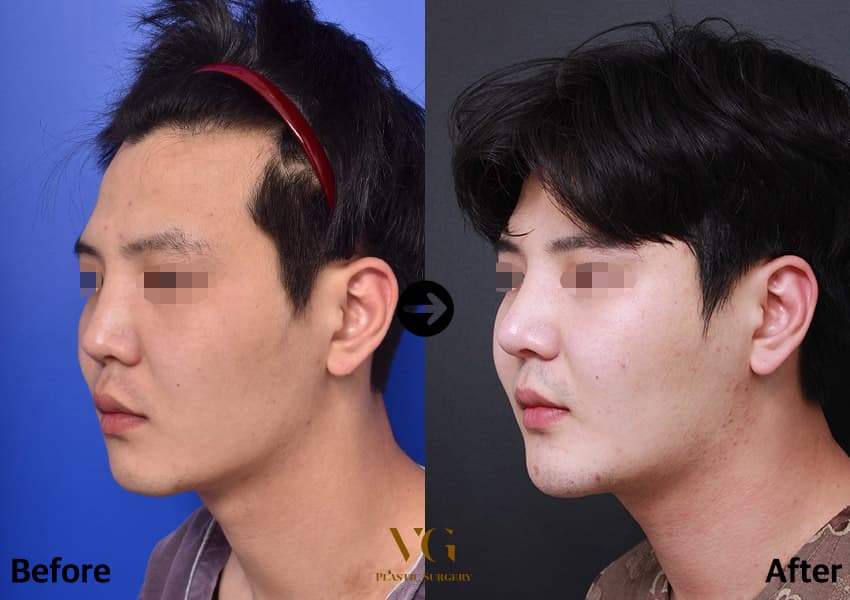
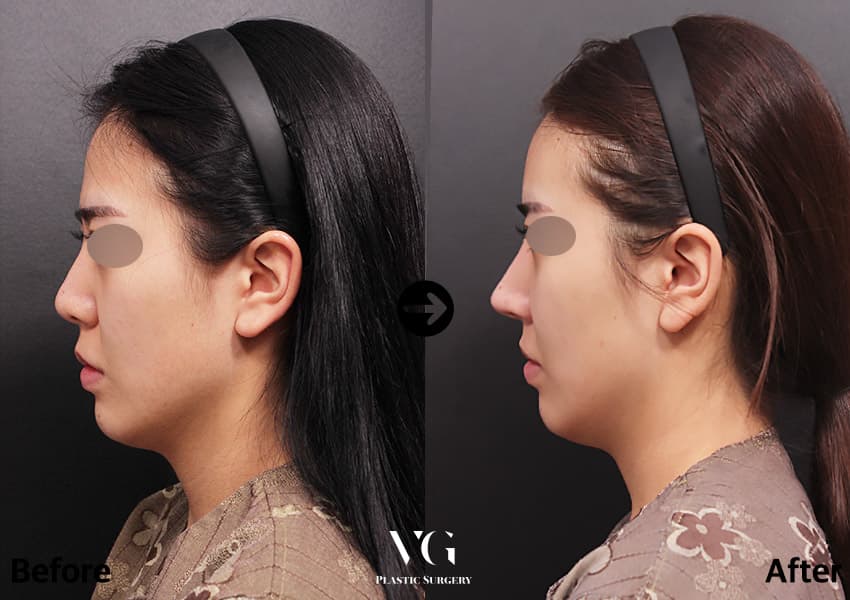
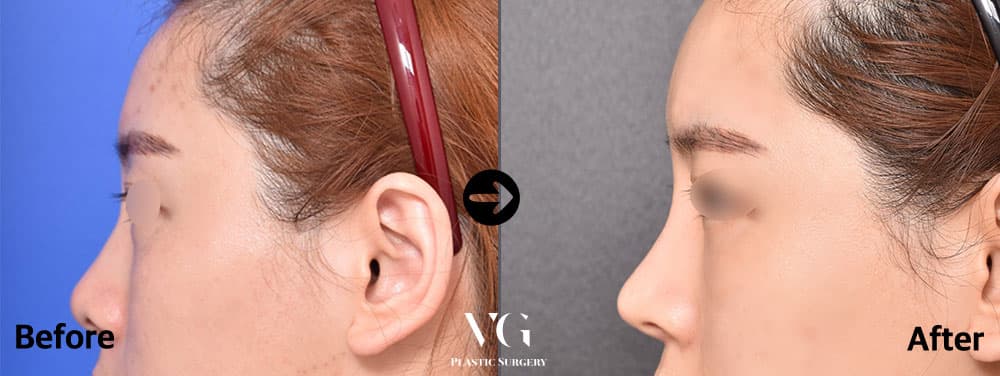
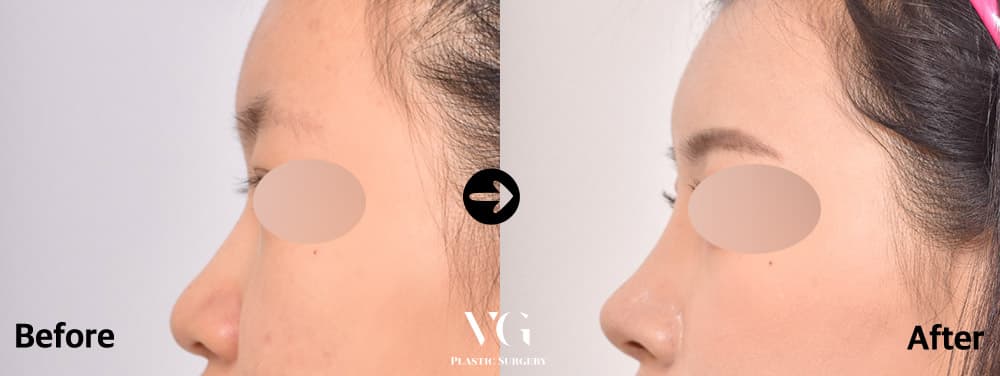
Real patients from our archive, all photographed 3 months after surgery. Tap a case to compare it full size.
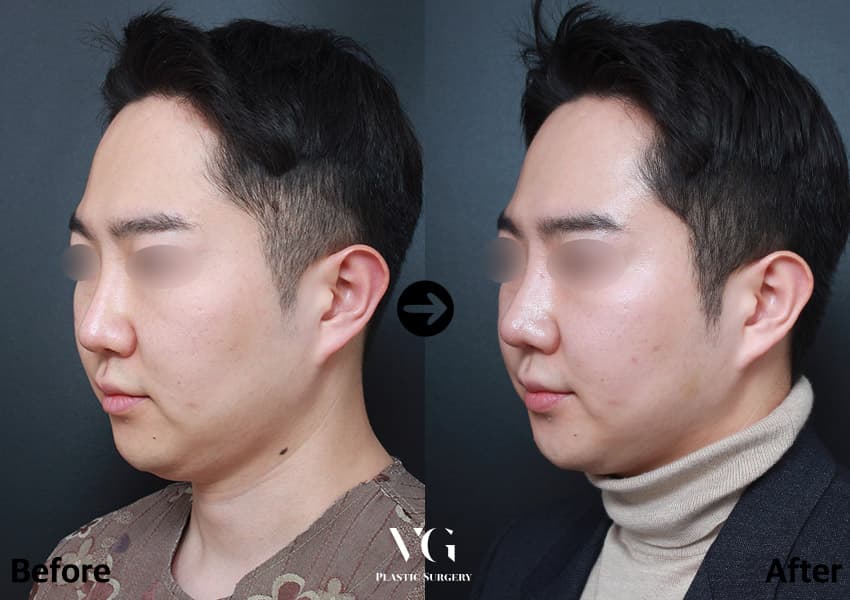
Autologous Rib Cartilage3 months after surgery
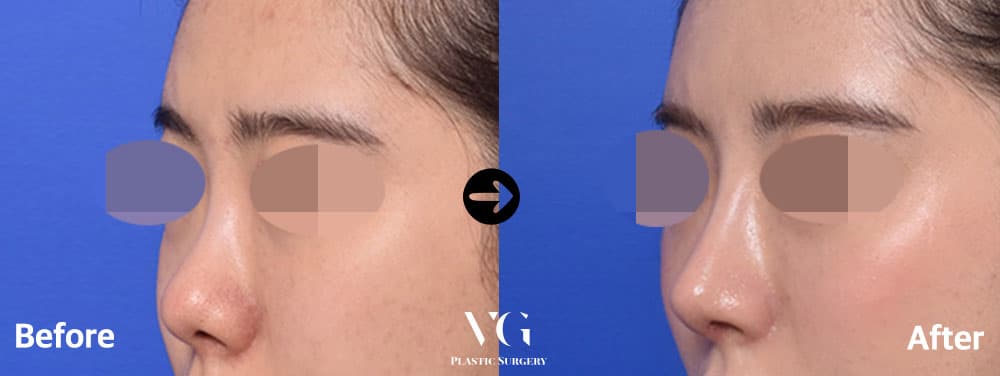
Rhinoplasty3 months after surgery
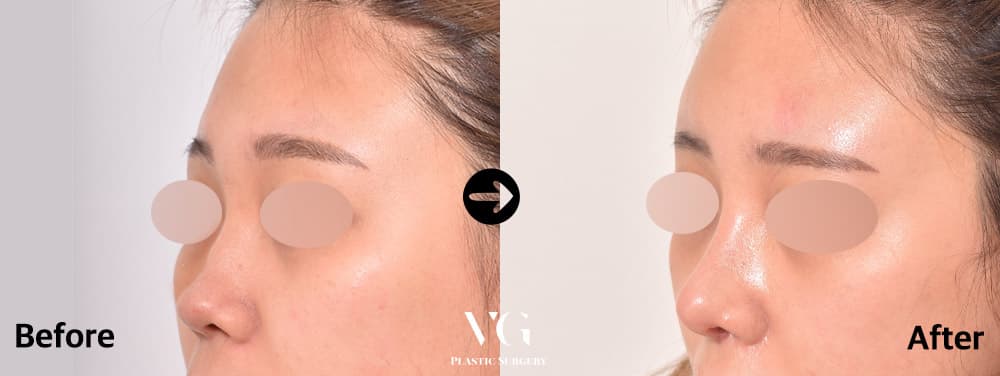
Rhinoplasty3 months after surgery
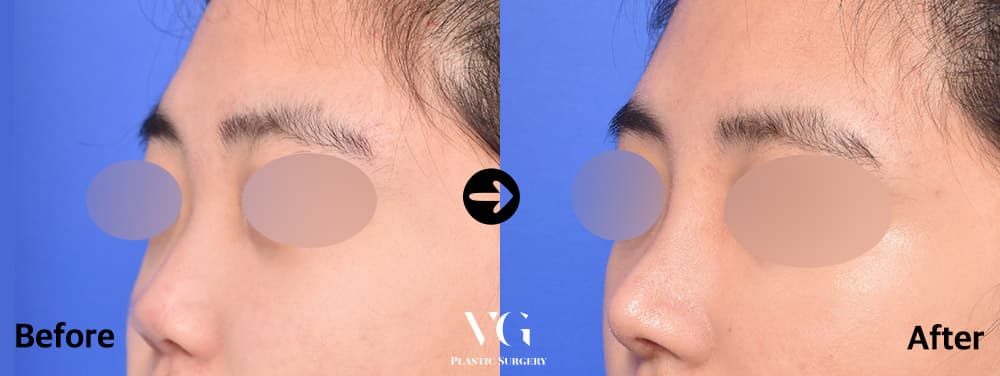
Rhinoplasty3 months after surgery
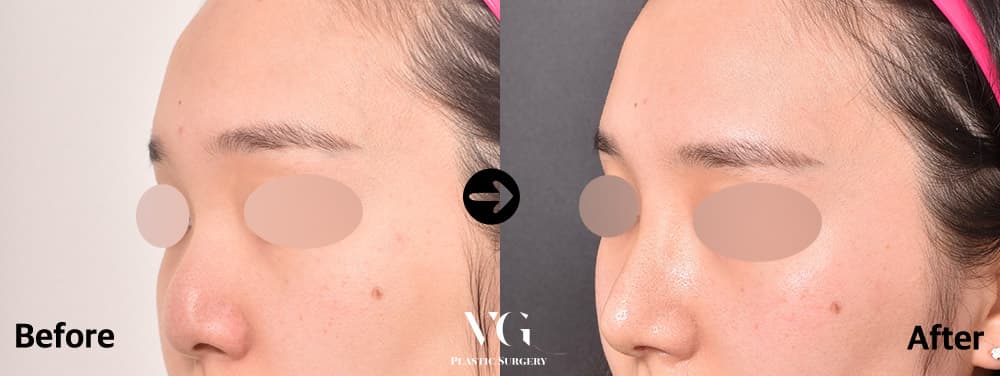
Rhinoplasty3 months after surgery
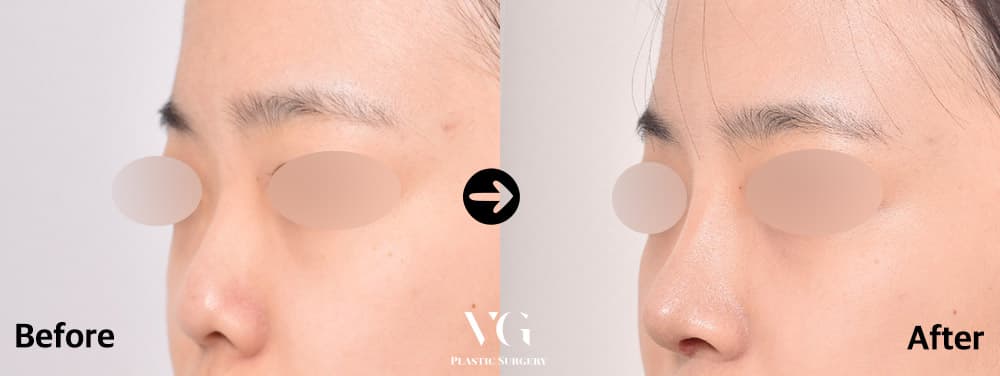
Rhinoplasty3 months after surgery
FAQ
Questions patients ask
Does rib cartilage get absorbed over time?
Your own cartilage generally holds its volume well once it has healed in, which is one reason surgeons choose it for revision. Some softening or slight shrinkage at the edges can happen, and warping is the change people are more likely to notice.
Can rib cartilage replace a silicone implant I already have?
Often, yes. Rib is a common choice in revision when an old implant has shifted, thinned the skin or become infected, because it can rebuild the bridge without placing another implant. Send your old operation note if you still have it.
Is there an age limit for using rib cartilage?
There's no fixed cut-off. After about 40, rib cartilage is more likely to be calcified, which makes it harder to carve, and a CT scan before surgery can show how much usable cartilage is left.
Will the ENT specialist be part of my rhinoplasty?
Rhinoplasty here is reviewed with an ENT specialist, so your breathing and the inside of your nose are assessed alongside the shape. If your septum is deviated or your airway is narrow, it is treated in the same operation.
When can I exercise after rib cartilage rhinoplasty?
Walking from the first days helps circulation. Heavy lifting, running and anything that strains the chest or raises your blood pressure are usually held off for several weeks, and contact sports that could knock the nose wait longer. Ask for your own dates at your last check-up before flying.
Sources
This article explains general medical information. Whether surgery suits you, and which method, is decided only after a consultation with the surgeon.
Written by
Im Young Min
Chief Director · Plastic Surgery
- Ph.D. in Medicine
- Internship and residency, Seoul St. Mary's Hospital
- Board-certified plastic surgeon, Seoul St. Mary's Hospital
- Adjunct professor of plastic surgery, Seoul St. Mary's Hospital
- Former director, Topface Plastic Surgery
Next step
Send two photos. Get a surgeon’s answer.
Front and side, natural light, no filter. Dr. Im Young Min reviews them and tells you which method fits and how many days to stay in Seoul.
International patients pay the same surgical fee as Korean patients. Pricing policy
Keep reading
Nose
Inside a Korean Plastic Surgery Tour Package: Fee, Days, Hotel and Interpreter
A plastic surgery trip to Seoul, taken apart piece by piece: the surgical fee, the interpreter, airport pickup, partner hotels, the days your operation needs, and the three months of follow-up after you fly home.
Im Young Min ·
Nose
Rhinoplasty in Korea for Foreigners: Cost, Language and Who Checks Your Nose at Home
Rhinoplasty in Korea for foreigners runs on the same surgery fee as for Korean patients, with an interpreter at no extra charge. The real planning is the splint week and follow-up at home.
Im Young Min ·
Nose
A South Korea Rhinoplasty Package Can't Pick Your Operation: Cost Factors, Days in Seoul and When to Wait
A rhinoplasty package in Korea can bundle surgery, anesthesia and follow-up visits, but only an exam of your skin, cartilage and septum decides the operation, and with it the cost and your days in Seoul.
Im Young Min ·