Nose
Rhinoplasty in Korea for Foreigners: Cost, Language and Who Checks Your Nose at Home
Rhinoplasty in Korea for foreigners runs on the same surgery fee as for Korean patients, with an interpreter at no extra charge. The real planning is the splint week and follow-up at home.
In this article
The short answer
Thinking about rhinoplasty in Korea but worried that, as a foreigner, you'll pay more, miss half of what the surgeon says, or fly home with a nose designed for someone else's face? Rhinoplasty in Korea for foreigners runs on the same terms here as it does for Korean patients: the same surgery fee, an estimate in writing, and a medical interpreter for your language at no extra charge.
- Foreign patients pay the same surgery fee as Korean patients and get a medical interpreter at no extra charge.
- Reducing or reshaping a nose is a different operation from the augmentation many East Asian patients ask for.
- An ENT specialist on staff means a blocked or deviated nose is treated within the same operation.
- Plan the trip around splint removal, generally about a week, and line up a doctor at home.
- Revision, graft source, functional work and anesthesia time decide the cost.
What actually changes for a visitor is the calendar, because most surgeons keep a splint on for about a week, and you need someone at home who can look at your nose once you've flown back.
Profile
Im Young Min
Chief Director · Board-certified in Plastic Surgery
Hello, I'm Dr. Im Young Min, chief director and a board-certified plastic surgeon at VG Plastic Surgery in Gangnam, Seoul. Rhinoplasty is one of the centers I operate in, and I'm a full member of the American Society for Aesthetic Plastic Surgery, a credential you can check from wherever you live.
Two facts about this clinic matter for a nose operated far from home. An ENT specialist practices here alongside the plastic surgeons, so a deviated septum or a side that blocks up is examined and treated within the same operation. And three board-certified anesthesiologists work here full time, one dedicated to each operation; they don't perform cosmetic surgery, they watch your breathing, pulse and blood pressure until you're awake.
Before you book flights, send two photos on WhatsApp, front and side profile in daylight, and mention whether one side of your nose blocks up or whether it has ever been broken. That detail changes a rhinoplasty plan more than most people expect, and your first message is the easiest place to raise it.
Send your nose photos on WhatsApp
Will a surgeon in Seoul give you a Korean-looking nose?
People from outside Asia ask this often, and the worry has a real origin. A review of Asian rhinoplasty by Ishii in Plastic and Reconstructive Surgery Global Open describes how many East Asian patients ask for augmentation: a higher bridge and a more projected tip, built with an implant or cartilage, on a nose that tends to have thicker skin and smaller tip cartilages. Because that is the most familiar request in Korea, it's easy to assume nothing else is on offer.
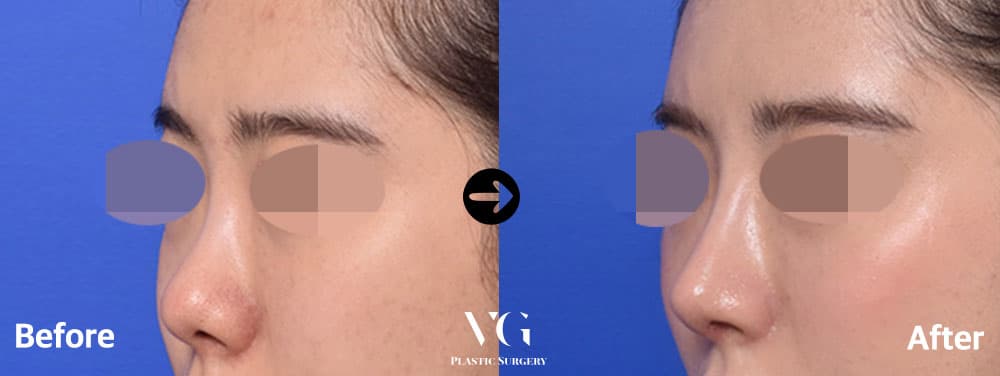
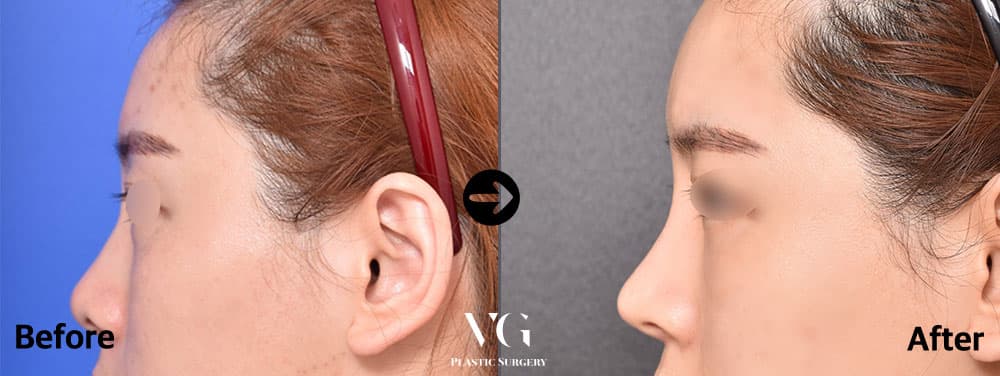
Many foreign patients want the opposite operation. Taking down a dorsal hump, narrowing the nasal bones, refining a wide or bulbous tip and straightening a crooked nose are reduction and reshaping techniques with their own trade-offs: removing bone and cartilage can narrow the airway if support isn't rebuilt. The plan has to start from your bone, cartilage, skin thickness and breathing.
If your goal is a smaller nose, I've written about reducing a big nose without losing airflow, and men may want to read what changes in male rhinoplasty and when to wait.
Risks and side effects to know
Skin thickness is the factor people underestimate. Thick, oily skin over the tip hides fine cartilage work and holds swelling longer; thin skin shows every detail, including small irregularities. Neither is better, but your skin sets how much definition the tip can show.
Your days in Seoul, from consultation to boarding
The order is the same for everyone: an in-person consultation with your interpreter, surgery once the plan is agreed, a few quiet days at your hotel, the splint and any packing removed, then the flight. Bruising around the eyes usually fades over the first one to two weeks. Ask at booking whether your consultation and surgery can fall on consecutive days, since that decides your arrival date.
Stay close to the clinic at 635 Nonhyeon-ro in Gangnam, so that in the first days every trip is a short taxi ride. Sleep with your head raised on two pillows, and keep the sightseeing for the days after the splint is off; a crowded subway car is a bad place for a fresh nose.
Two things to pack make the first week easier. If you wear glasses, bring contact lenses: heavy frames resting on a bridge that has just had bone work are usually kept off for several weeks. And bring lip balm, because you'll breathe through your mouth for the first nights and cabin air on the way home is dry. Don't blow your nose; dab, or sniff gently.
The sequence that applies to any operation here is set out in plastic surgery in Korea for foreigners, from first photo to flight home, and the months after the splint are covered in natural rhinoplasty in Korea and how swelling settles.
Who checks your nose after you fly home?
Most of the healing happens after you leave. Swelling goes down over weeks, while the tip can take a year or more to settle, longer with thick skin. For anyone choosing rhinoplasty in Korea for foreigners' schedules, the follow-up plan matters as much as the surgery date.
Before you leave Seoul, ask for a written note of what was done: which parts were changed, whether an implant or a cartilage graft was used, and where the cartilage came from. Give that to an ENT specialist or plastic surgeon at home, and ask them before you travel whether they'll see you if something comes up. The US Centers for Disease Control and Prevention gives the same advice in its medical tourism guidance: carry copies of your records and arrange follow-up care at home before you go.
See a doctor the same day for fever, redness spreading from the nose, swelling that suddenly gets worse on one side, a bad smell or discharge, or breathing that gets harder over time. Heavy bleeding that won't stop with gentle pressure is an emergency.
Add your travel dates to your WhatsApp message and ask how many days your plan needs before you fly. A tip refinement and a hump reduction with bone work ask different things of your calendar, and knowing which one you're planning lets you book flights that fit.
Send your nose photos on WhatsApp
What decides the cost of rhinoplasty in Korea?
Five things move the figure for a nose:
- First operation or revision. Revision means working through scar tissue and often rebuilding support, which takes longer.
- What the new shape is built from. An implant, septal cartilage, ear cartilage or rib cartilage each involve different steps; rib cartilage adds a second small operating site.
- How many parts change. Bridge, hump, tip, nostrils and nasal bones are each separate work.
- Functional work. Correcting a deviated septum or a narrow nasal valve with the ENT specialist adds time and planning.
- Anesthesia and length of surgery, which follow from the four points above.
Hotel nights and flights sit outside the surgery fee. Here, foreign patients pay the same surgery fee as Korean patients, and the estimate is given in writing; the nose center and the clinic's other surgery centers are listed on VG Plastic Surgery's English home page. Ask on WhatsApp what your plan would cost, with your two photos and a note of anything done to your nose before. The deposit and payment method are decided after the consultation, so put any questions about them in the same message.
Infection, breathing trouble and a shape you don't like
For the first weeks, expect swelling, bruising, a stuffy nose and some numbness at the tip or along the upper lip. The American Society of Plastic Surgeons lists the risks of rhinoplasty as including anesthesia risks, infection, poor wound healing or scarring, nosebleeds, difficulty breathing through the nose, numbness, skin discoloration and lasting swelling, a rare hole in the septum (septal perforation), an appearance you're unhappy with, and the possibility of a second operation.
With an implant, infection or shifting can appear months later, which is one more reason to keep the written note of what was used.
Wait if your nose is still growing (most teenagers), if it was injured recently, if you have an active sinus infection, a bleeding disorder or blood thinners you can't pause, if you're pregnant, or if you smoke and can't stop for the weeks around surgery. The same goes if you're bringing a photo of someone else's nose as the goal. How your nose heals, and how long the tip takes to settle, varies from person to person, and suitability is decided at the in-person exam.
If you're ready to plan, send a WhatsApp message with your dates and the one question you most want answered about your own nose, for example whether it can get smaller and still breathe as well as it does now. At the consultation in Gangnam, I'll start with your side profile and the inside of your nose, and our ENT specialist joins in when breathing is part of your plan.
Related pages:
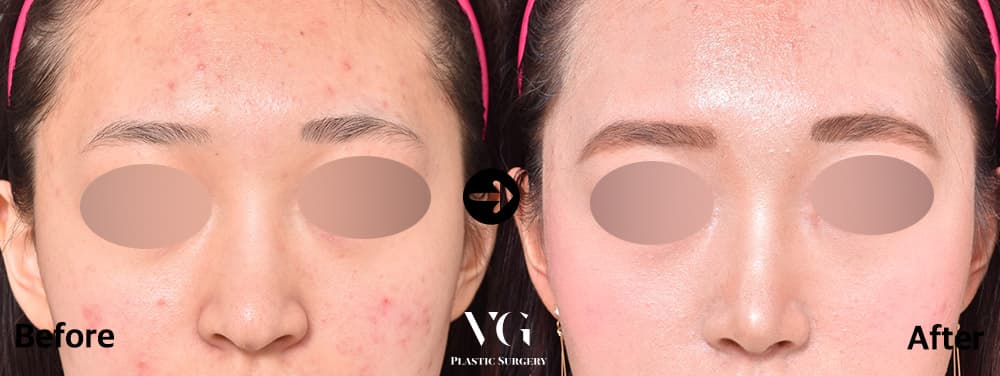
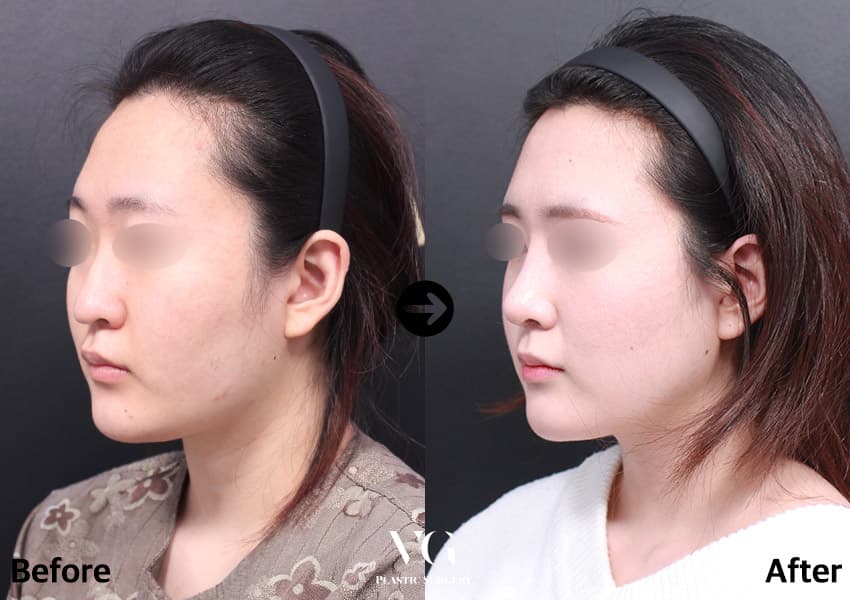
Nose before & after — more cases
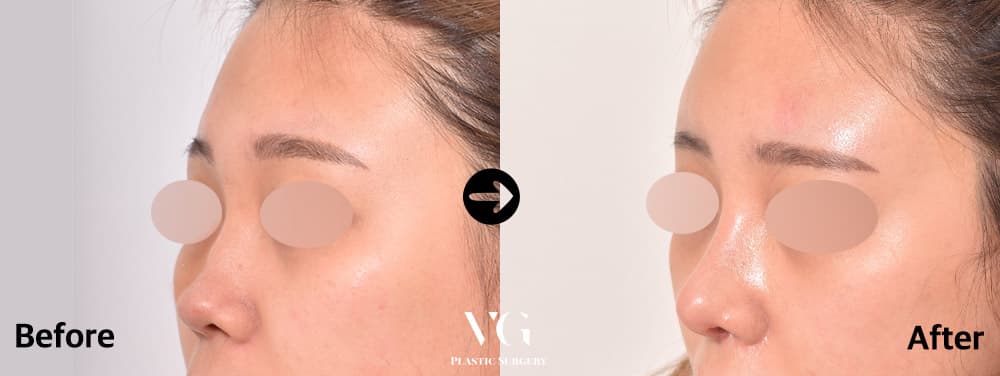
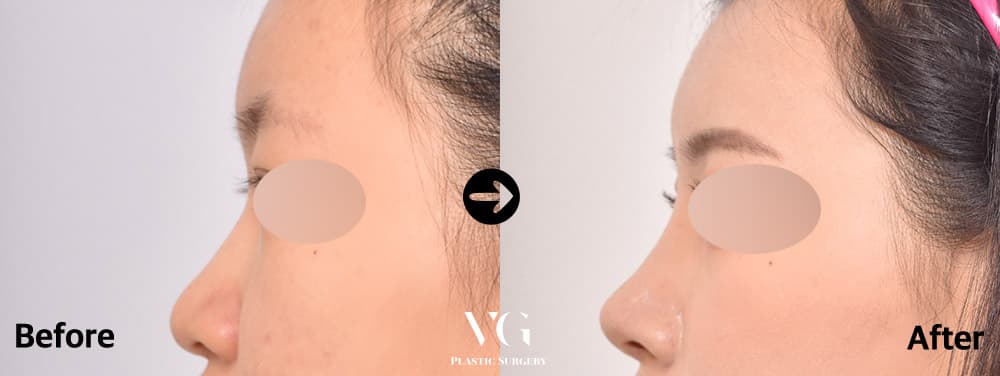
Real patients from our archive, all photographed 3 months after surgery. Tap a case to compare it full size.
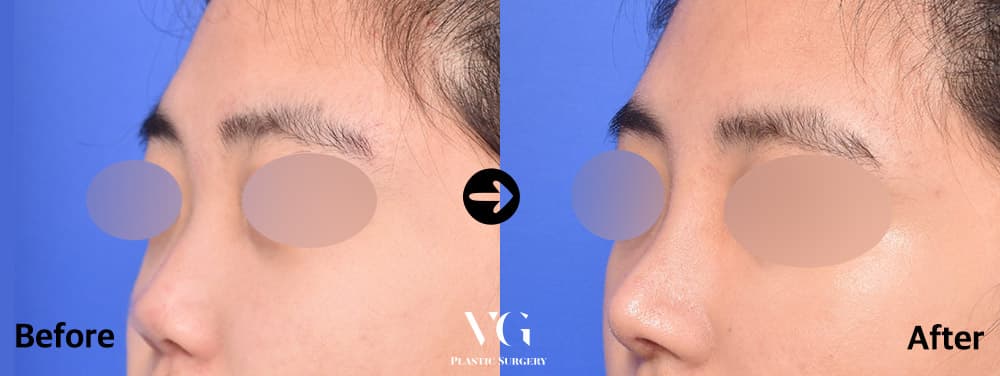
Rhinoplasty3 months after surgery
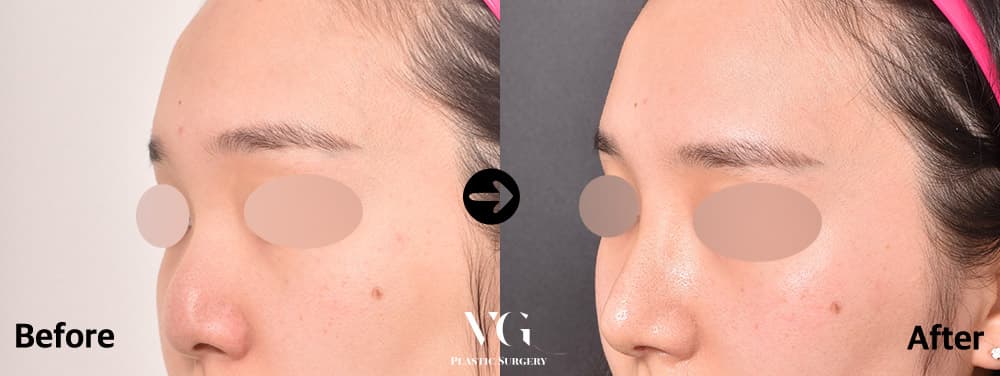
Rhinoplasty3 months after surgery
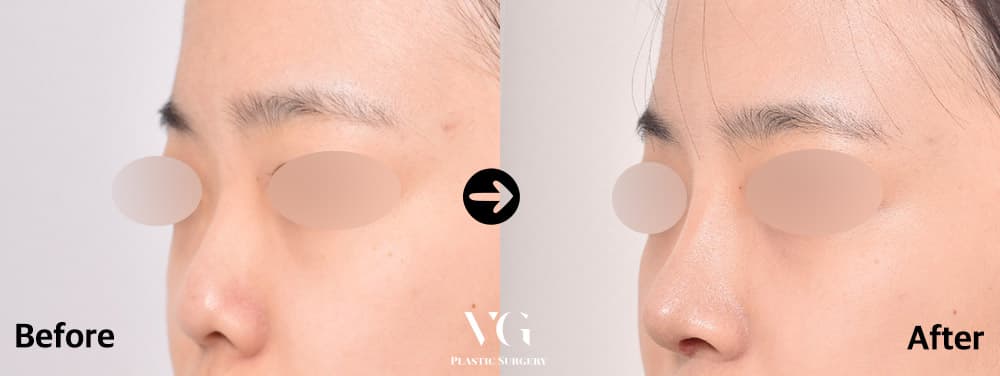
Rhinoplasty3 months after surgery
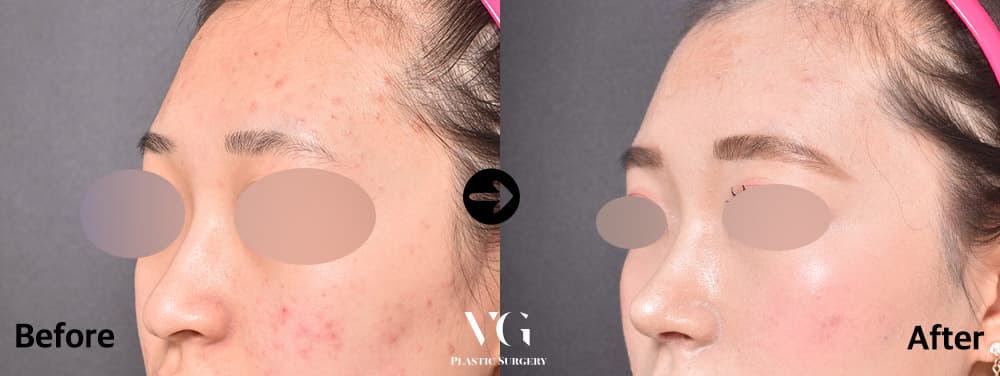
Rhinoplasty3 months after surgery
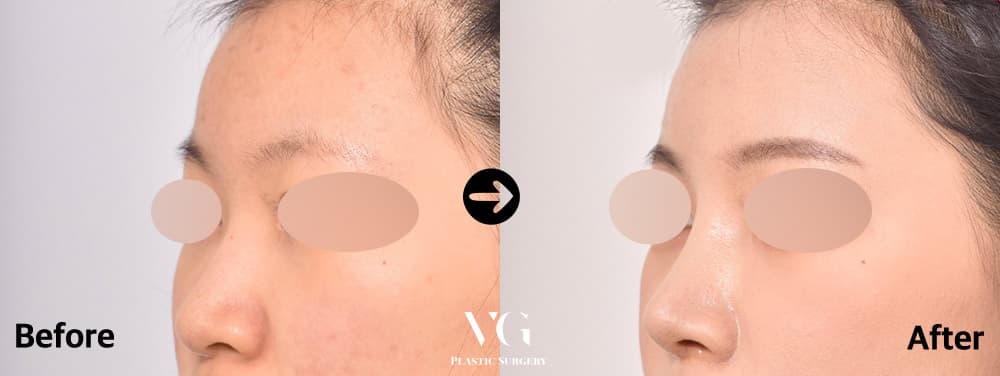
Rhinoplasty3 months after surgery
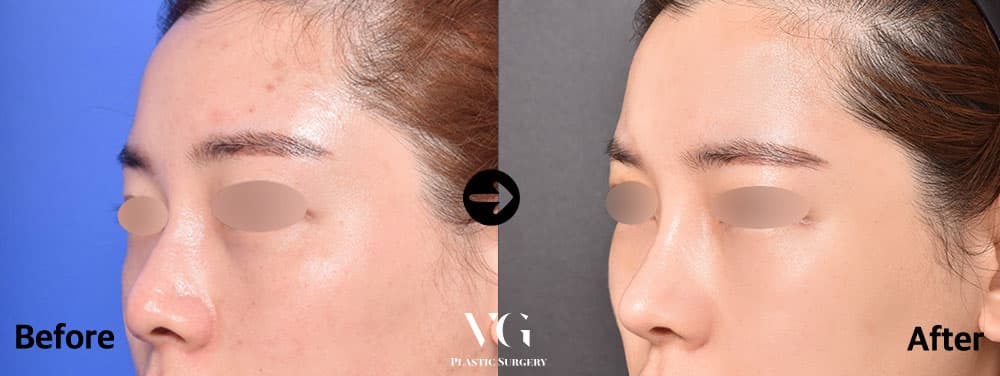
Rhinoplasty3 months after surgery
FAQ
Questions patients ask
Is my own cartilage better than an implant for the bridge?
Neither wins everywhere. An implant needs no second surgical site and gives a predictable line, but carries a long-term risk of infection, shifting or showing through thin skin. Your own cartilage, from the septum, ear or rib, is living tissue and less prone to infection, though rib cartilage can warp slightly over time and leaves a small chest scar. The choice follows from how much height you need, your skin thickness and whether you've had nose surgery before.
Can I fly home with the splint still on?
It's physically possible, but most people plan to fly after the splint comes off and the first check is done. A fresh nose is congested, cabin air is dry, and if something needs attention in the first week you want to be near the clinic. If your dates are tight, say so in your first message so you can ask what fits them.
What should I avoid in the first weeks after rhinoplasty?
In general practice: blowing your nose, bending with your head below your heart, heavy lifting and hard workouts for the first one to two weeks; contact sports, swimming and anything that could knock your nose for longer, often around six weeks. Keep sun off bruised skin and sleep with your head raised.
Do I need to stop any medicines or supplements before surgery?
Aspirin, ibuprofen-type painkillers, fish oil, vitamin E and ginkgo can all increase bleeding, and surgeons generally ask you to stop them about two weeks before. Never stop a prescribed medicine, such as a blood thinner or an antidepressant, without talking to the doctor who prescribed it. List everything you take in your first message.
What if I don't like the shape once I'm home?
Give it time first. Swelling, especially at the tip, can make a nose look wider or less defined for months. Surgeons generally avoid revising a nose until about a year after the first operation, when the tissue has settled. Take photos once a month in the same light so you can see real change, and keep your operation note for any doctor who examines you.
Sources
This article explains general medical information. Whether surgery suits you, and which method, is decided only after a consultation with the surgeon.
Written by
Im Young Min
Chief Director · Plastic Surgery
- Ph.D. in Medicine
- Internship and residency, Seoul St. Mary's Hospital
- Board-certified plastic surgeon, Seoul St. Mary's Hospital
- Adjunct professor of plastic surgery, Seoul St. Mary's Hospital
- Former director, Topface Plastic Surgery
Next step
Send two photos. Get a surgeon’s answer.
Front and side, natural light, no filter. Dr. Im Young Min reviews them and tells you which method fits and how many days to stay in Seoul.
International patients pay the same surgical fee as Korean patients. Pricing policy
Keep reading
Nose
A South Korea Rhinoplasty Package Can't Pick Your Operation: Cost Factors, Days in Seoul and When to Wait
A rhinoplasty package in Korea can bundle surgery, anesthesia and follow-up visits, but only an exam of your skin, cartilage and septum decides the operation, and with it the cost and your days in Seoul.
Im Young Min ·
Nose
What's New in Korean Rhinoplasty? What Has Actually Changed, and When to Fly Home
Newer rhinoplasty approaches mostly change how the tip is built and how breathing is planned. Swelling heals on its own clock, so your trip length follows the splint, the first check and a spare day or two.
Im Young Min ·
Nose
Rhinoplasty Cost South Korea USD: Why the Same Nose Gets Two Different Quotes
Rhinoplasty in South Korea has no single USD price. The figure follows your plan: tip or bridge work, where the cartilage comes from, septum repair, anaesthesia and how many days you spend in Seoul.
Im Young Min ·