Nose
Upturned Nose Surgery in Korea: Lengthening a Short Nose, Less Nostril Show
A rhinoplasty surgeon in Seoul explains what makes a nose upturned, why lengthening it is harder than raising a bridge, which cartilage holds the new length, and how long to stay in Korea.
In this article
The short answer
An upturned nose is a tip that points upward, so the nose looks short in profile and the nostrils show from the front. Correcting it means lengthening the nose: the tip is brought down and forward on a cartilage framework strong enough to resist the skin pulling it back. Plan to stay in Korea at least 7 days, or 14 if it is a revision or bone is cut.
- An upturned tip is a length problem, not a height problem — raising the bridge alone can make the nose look shorter.
- Lengthened tissue pulls back; the cartilage graft is there to hold the new length against that pull.
- The cartilage comes from the septum, the ear or the rib, depending on how much support your nose needs.
- Surgery takes 1–3 hours; stitches come out 5–7 days later; stay at least 7 days, or 14 for a revision.
- International patients pay the same surgical fee as Korean patients, confirmed in one written, itemised quote.
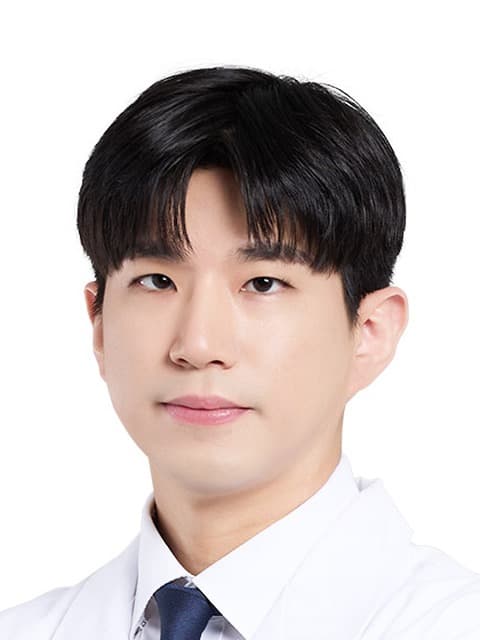
I am Hong Dae Won, a board-certified plastic surgeon at VG Plastic Surgery in Seoul, trained at Asan Medical Center and a full member of the Rhinoplasty Research Group of the Korean Society of Plastic and Reconstructive Surgeons. Most of my work is eye and nose surgery. An upturned nose is one of the concerns I hear about most from patients writing from abroad, often from people who have already had one operation and found their nose got shorter, not better.
Profile
Hong Dae Won
Director · Board-certified in Plastic Surgery
What an upturned nose actually is
An upturned nose has a tip that points up rather than forward. In profile the nose looks short, and the distance from the eyes to the tip feels too small for the face. From the front you see more of the nostrils than you would like — what patients usually call nostril show.
There are two common starting points. Some people are born with a short nose: the cartilage framework under the tip is small, and the skin over it is tight. Others arrive after a previous rhinoplasty, where the tip was lifted during surgery or scar tissue has pulled it up over the months that followed.
The distinction matters. A first operation works with fresh tissue; a revision works with whatever the first one left behind. That changes the material, the stay and the recovery time.
Who upturned nose correction suits — and who should wait
Surgery is a reasonable answer when the shape bothers you in profile or from the front and the nose has the structure to carry a longer framework.
- An upturned tip or a short nose you want changed in profile
- Nostrils that show clearly from the front, drawing attention to the lower half of the nose
- A tip that turned upward after a previous rhinoplasty, or an implant that has contracted and shortened the nose
- One side blocks often, or you snore, so breathing needs assessing at the same time
I also tell people when not to go ahead yet. A direct no in consultation saves a second operation later.
- An active sinus or nasal infection — we treat it first and reconsult afterwards
- A length that your own skin and nasal structure cannot safely support
- You cannot stop smoking around the operation — rib cartilage and revision cases heal notably worse
- Adolescence, before facial growth is complete
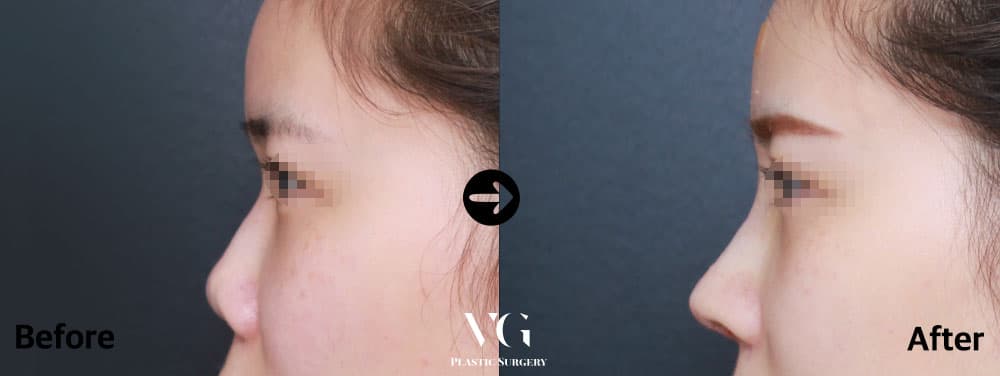
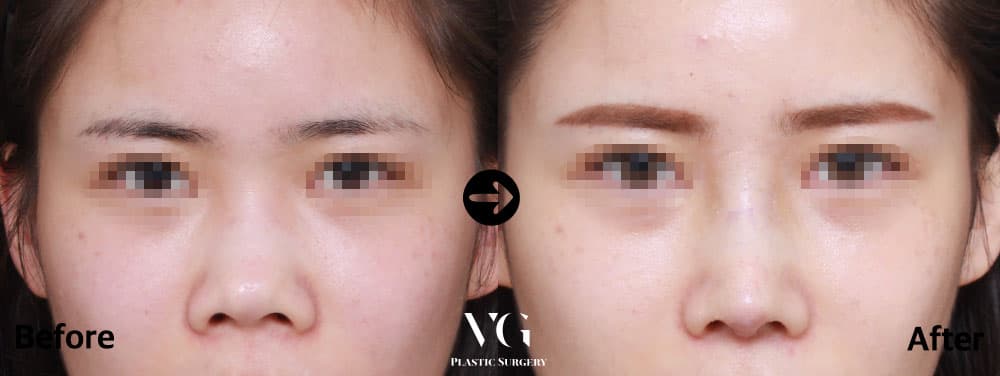
In this case the bridge and the length were planned together, with the patient's own rib cartilage as the framework. You can see this short nose case in full, including the three-quarter view.
Why lengthening is harder than raising a bridge
Adding height to a bridge means placing material under skin that can stretch over it. Lengthening a short nose asks the skin, the lining inside the nose and any scar tissue to cover more distance than before. Lengthened tissue pulls back. Holding against that pull is what the graft is for.
This is also why an implant on the bridge alone rarely helps an upturned tip. A higher bridge ending in the same lifted tip can make the nose look even shorter. In upturned nose rhinoplasty the tip is the part that has to stay stable for years, and where the cartilage sits matters more than how much is added.
Where the cartilage comes from
| Source | When we use it | What to know |
|---|---|---|
| Your own septal cartilage | A first operation where the septum has enough straight cartilage | Taken from inside the nose, so there is no second incision elsewhere |
| Your own ear cartilage | Tip shaping and smaller supporting pieces | Softer and curved; supplemented by septal or rib cartilage when more support is needed |
| Your own rib cartilage | Revision, contracted noses, or when septal cartilage is used up | It is your own tissue, so rejection is not a concern — but it means an incision on the chest, kept minimal |
| Donor rib cartilage | Rib-level firmness without a chest incision | Nothing is harvested from you; how much of it resorbs over time varies from person to person |
Breathing is part of the same decision. Our board-certified ENT specialist reads the septum and airway by 3D CT and endoscopy, because the septum is often both the support for a longer nose and the reason one side blocks.
Surgery day and recovery
You arrive 90 minutes before your slot. I draw the plan on your face and go through it with you for 20–30 minutes, with an interpreter present, and nothing starts until you agree to it.
The operation takes 1–3 hours under sedation or general anesthesia, and an anesthesiologist stays with you for the whole of it. Most people return to the hotel the same day; for a revision, one night of admission is advised. You can wash your hair from the next day, keeping the nose dry.
| Milestone | First operation, no bone work | Revision |
|---|---|---|
| Swelling at its peak | Days 3–5 | Days 5–7 |
| Stitches out | Days 5–7 | Day 7 |
| Back to everyday activity | About 7 days | About 14 days |
| Looks natural to others | 1–2 months | 3–6 months |
| Final shape | About 6 months | About 12 months |
The tip is the last part to settle. A lengthened tip can look fuller for months while the swelling over the new framework goes down, so I judge the result against the final-shape column, not the first weeks.
Send a side photo and a photo from below on WhatsApp — I'll tell you whether your nose needs lengthening, tip work or both.
Coming to Seoul for upturned nose correction
Plan to stay in Korea at least 7 days, or 14 days if it is a revision or bone work is added. The longer stay covers the swelling peak, stitch removal and a final check before you fly.
- Arrival: pickup and the in-person consultation
- Surgery day, then the first check the following morning
- Recovery at a partner hotel within walking distance of the clinic
- Stitches out 5–7 days after surgery
- Final check before flying, and a schedule for remote follow-up
The day-by-day stay planner lays this out against your own dates. After you fly home, follow-up continues for three months by photograph review with written replies.
There is no separate price list for international patients. You pay the same surgical fee as Korean patients, confirmed in one written, itemised quote before you decide anything. The fee depends on the plan — which cartilage, whether it is a revision, how long you are under anesthesia.
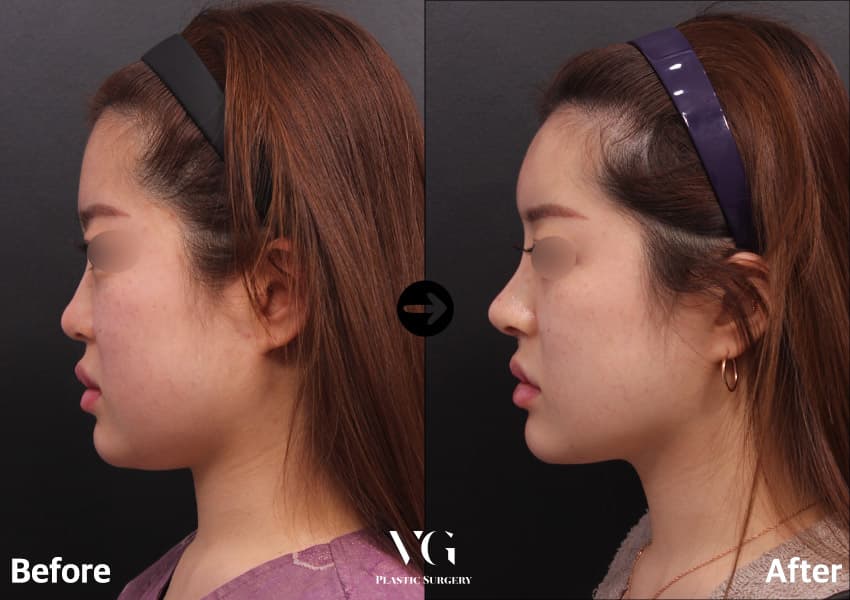
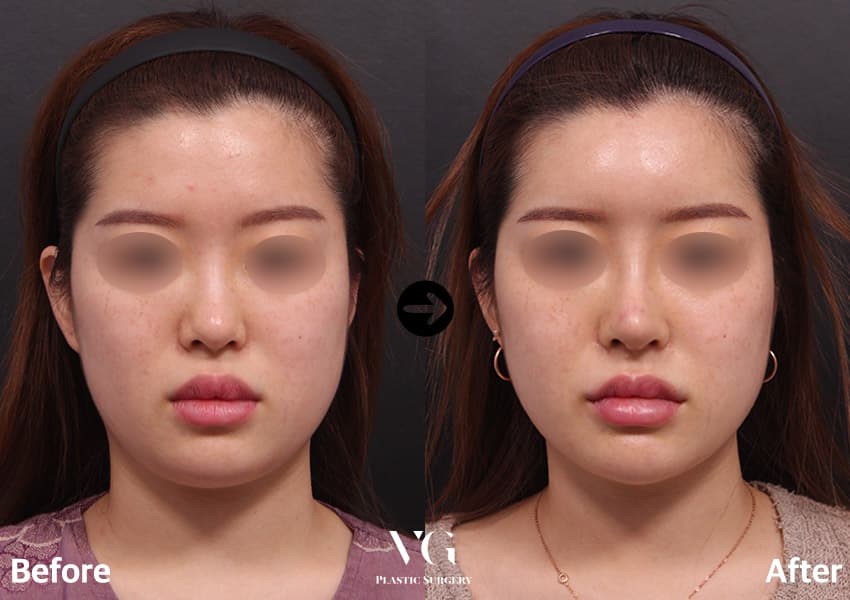
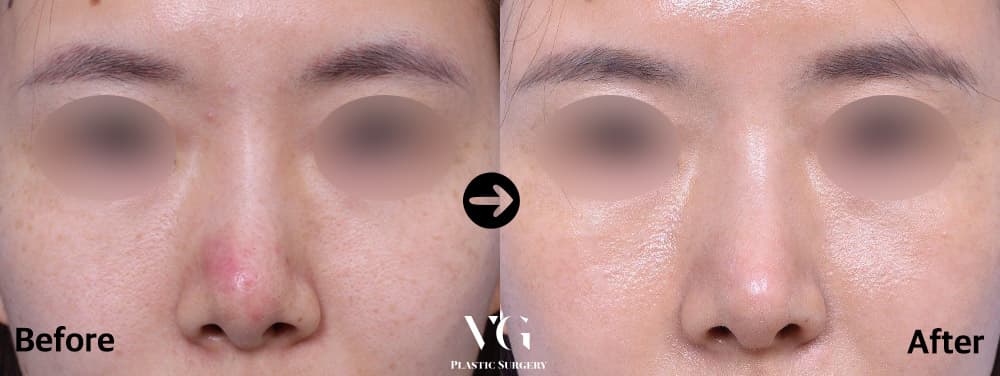
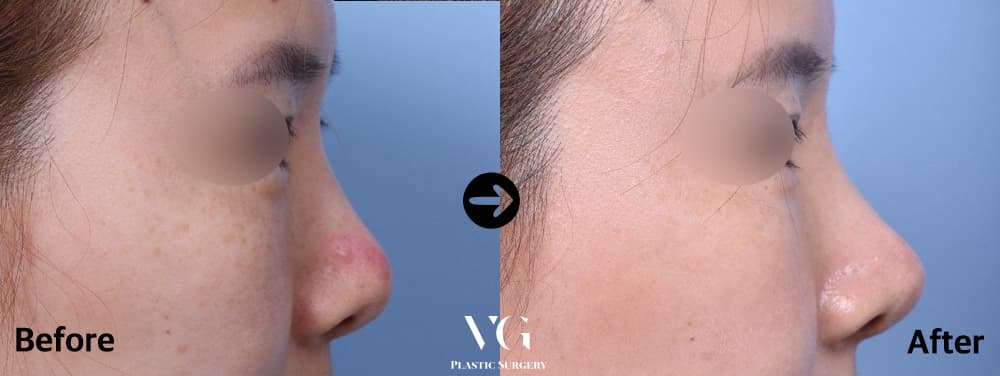
The first two photos are a first operation with donor rib cartilage; the third is a revision where a previous surgery had lifted the tip. See the upturned tip revision case, or browse every nose before-and-after photo by concern.
What I check first in consultation
I ask for photos from the side and from below for the same reason. The side view shows how the tip points; the view from below shows the nostrils and how the columella sits between them.
If your main concern is a low bridge or a round tip rather than a lifted one, our overview of the Korean nose job and its four methods is the better place to start.
Risks, and how we reduce them
Every rhinoplasty carries risk: swelling that lasts longer than expected, asymmetry while tissue settles, and breathing that changes. With lengthening, the specific risk is that some of the new length is lost as the tissue pulls back. Recovery and outcome differ from person to person.
- Support for the new length: the cartilage is chosen for how much pull your skin and scar tissue will put on it
- Breathing inside the plan: the ENT specialist reads the septum and airway before surgery, so a longer nose does not cost you airflow
- Anesthesia: an anesthesiologist stays with you for the whole operation
- Smoking: stop around the operation — rib cartilage and revision cases heal notably worse in smokers
- Transparency: a guardian travelling with you can be given access to the operating-room CCTV
You can read my credentials on my surgeon profile, and every method we use, with results by concern, on the full rhinoplasty page.
Send photos from the front, side and below on WhatsApp, and I'll tell you how far your nose can be lengthened and how long you would need in Seoul.
Nose before & after — more cases
Real patients from our archive, all photographed 3 months after surgery. Tap a case to compare it full size.
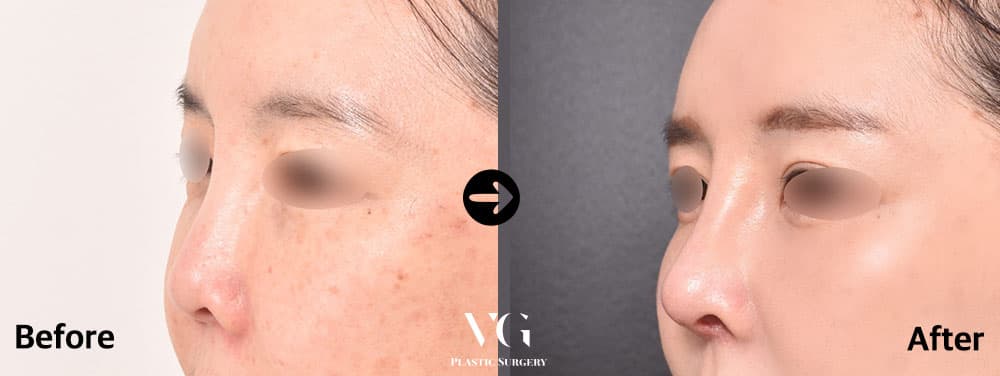
Short Nose Correction3 months after surgery
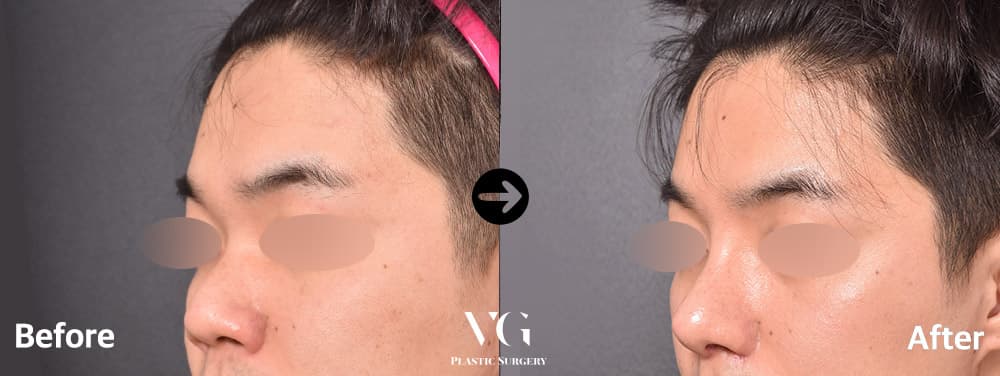
Short Nose Correction3 months after surgery
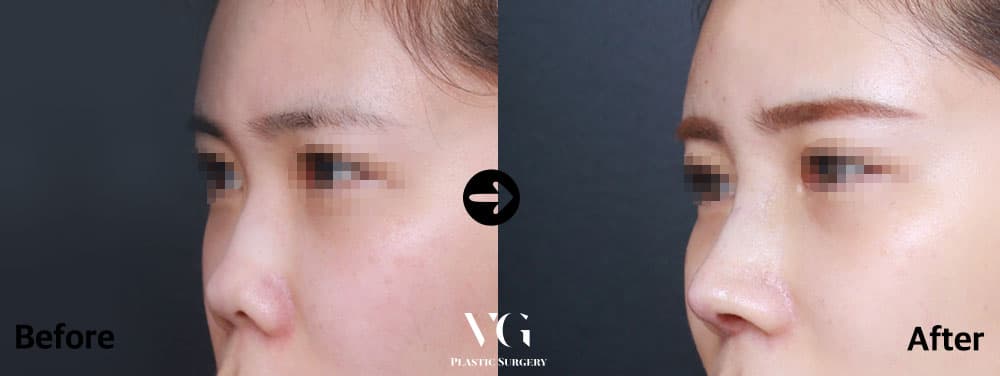
Short Nose Correction3 months after surgery
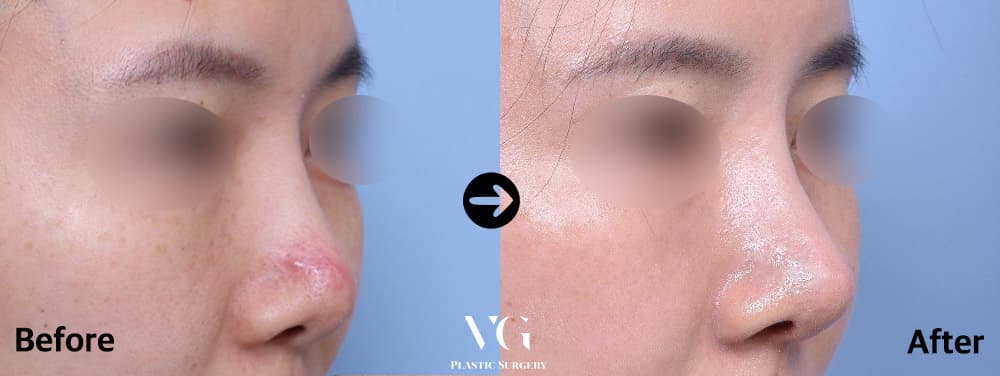
Upturned Nose Correction3 months after surgery
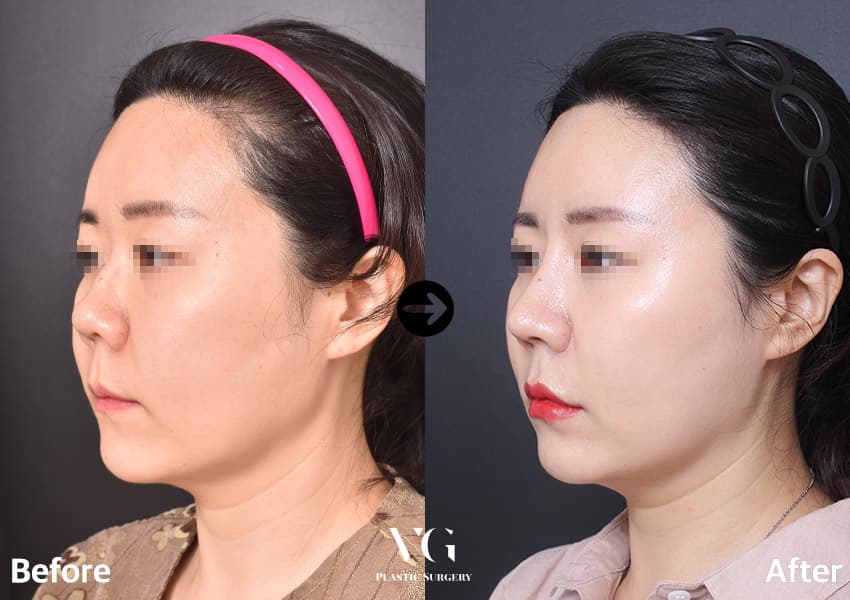
Short Nose Correction3 months after surgery
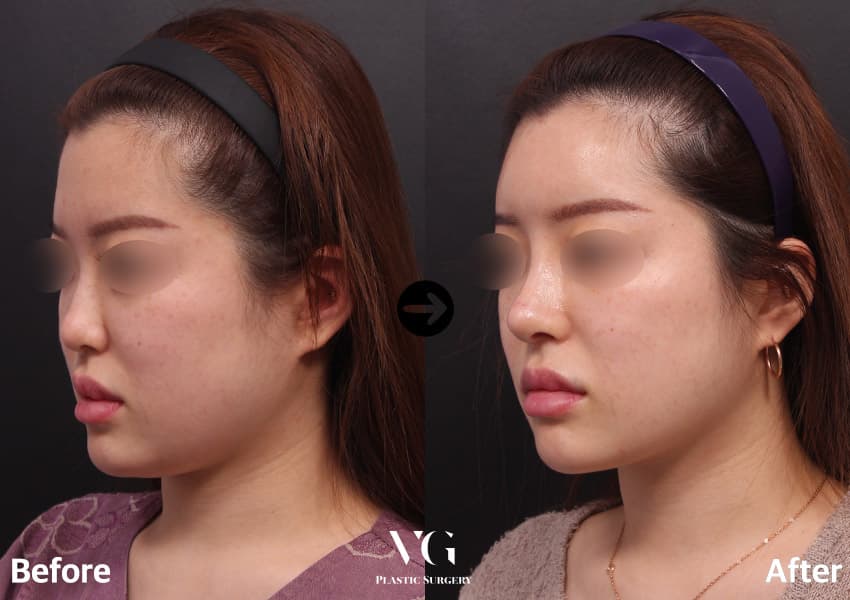
Short Nose Correction3 months after surgery
FAQ
Questions patients ask
Can an upturned nose be fixed without surgery?
Filler can add some height, but it cannot bring a lifted tip down or make the nose longer. Lengthening needs a cartilage framework placed in surgery. I will tell you in consultation if your concern does not need an operation.
How long should I stay in Korea for upturned nose surgery?
At least 7 days for a first operation, or 14 days for a revision or when bone work is added. That covers the swelling peak, stitch removal at 5–7 days and a final check before you fly.
Will my nose stay longer, or can the tip lift again?
Lengthened tissue pulls back, and some change as it heals is possible. The graft is there to hold the new length against that pull, which is why the cartilage is chosen for how tight your skin and scar tissue are. The final shape takes about 6 months, or about 12 after a revision.
Do I need rib cartilage for short nose surgery?
Not always. Septal cartilage is often enough in a first operation. Rib cartilage — your own or donor — is used for revisions, contracted noses, or when the septum does not have enough straight cartilage left.
Does it reduce nostril show?
Bringing the tip down and forward usually means less of the nostrils is seen from the front, as the before-and-after photos above show. How much depends on your own tip and nostril shape, which is why I ask for a photo from below.
My nose turned up after a previous rhinoplasty. Can it be revised?
Often, yes, but a revision starts from what the first operation left behind. How much cartilage remains and how the tissue healed decide what is possible. Plan for a 14-day stay and a longer recovery than a first operation.
Sources
This article explains general medical information. Whether surgery suits you, and which method, is decided only after a consultation with the surgeon.
Written by
Hong Dae Won
Director · Plastic Surgery
- Board-certified plastic surgeon, Asan Medical Center, Seoul
- Plastic surgery fellowship, Florence University Hospital, Italy
- International Confederation for Plastic, Reconstructive and Aesthetic Surgery (IPRAS)
- American Society of Plastic and Reconstructive Surgeons (ASPRS)
- American Society for Aesthetic Plastic Surgery (ASAPS)
Next step
Send two photos. Get a surgeon’s answer.
Front and side, natural light, no filter. Dr. Hong Dae Won reviews them and tells you which method fits and how many days to stay in Seoul.
International patients pay the same surgical fee as Korean patients. Pricing policy
Keep reading
Nose
Rhinoplasty Cost in South Korea in Rupees: What Changes It for a Flat Nose or Crooked Septum? Reviews, Methods and Recovery
There's no honest rupee figure for a nose nobody has examined. The cost follows the method, septum work, revision, anesthesia time and days in Seoul; send photos on WhatsApp to ask about yours.
Im Young Min ·
Nose
What Decides the Cost of Rhinoplasty in South Korea? Reviews, Methods and Recovery
There is no single price for a nose job in Korea: the method, the cartilage source, septum work, revision status and anesthesia set the figure for your nose.
Im Young Min ·
Nose
How Much Does a Nose Job Cost in Korea? Four Cost Drivers, Reviews, Methods and Recovery
A nose job in Korea is priced from four parts: the scope of the change, the building material, any breathing work and the anesthesia. Foreigners pay the same surgical fee as Korean patients, with a written estimate.
Im Young Min ·