Nose
Rhinoplasty Cost in South Korea in Rupees: What Changes It for a Flat Nose or Crooked Septum? Reviews, Methods and Recovery
There's no honest rupee figure for a nose nobody has examined. The cost follows the method, septum work, revision, anesthesia time and days in Seoul; send photos on WhatsApp to ask about yours.
In this article
- 01Why does every rupee figure online look different?
- 02What decides the cost of your nose surgery
- 03Which methods fit a flat nose or a deviated septum?
- 04An example: low bridge, one blocked side, ten days of leave
- 05What do Korean rhinoplasty reviews get right, and wrong?
- 06How long is recovery before you can fly home?
- 07Risks and who should wait
- 08What to send before you book anything
The short answer
Trying to work out the rhinoplasty cost in South Korea in rupees before you book a flight from India? Read this before you convert the first figure you find on a forum. You'll come away knowing what decides the cost, what reviews get right and wrong, which methods suit a flat bridge or a crooked septum, and what recovery means for your days in Seoul, so you can tell which plan fits your nose and your budget.
- A rupee figure only means something once your own plan is set, because Korean clinics quote in won.
- The material, septum work, revision, anesthesia time and days in Seoul move the cost most.
- Here, rhinoplasty is reviewed with an ENT specialist, so breathing is planned with the shape.
- Budget flights, visa, hotel nights and leave separately from the surgical fee.
- Send front and side photos and your travel month on WhatsApp to ask about your case.
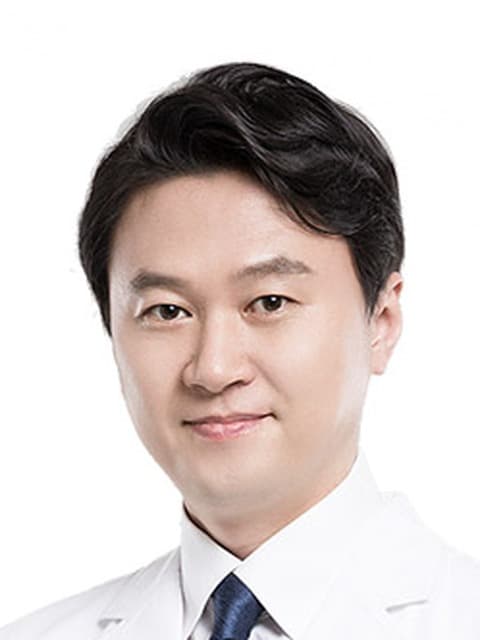
Hello, I'm Dr. Im Young Min, Chief Director and board-certified plastic surgeon at VG Plastic Surgery in Gangnam, Seoul.
Profile
Im Young Min
Chief Director · Board-certified in Plastic Surgery
Eight specialists work here full time, across plastic surgery, ENT and anesthesiology. An ENT specialist works in our rhinoplasty center alongside the plastic surgeons, so a blocked side or a deviated septum is assessed in the same plan as the shape. Foreign patients pay the same surgical fee as Korean patients.
I'm writing this because many people plan their savings around a rupee figure from someone else's operation, then find their own nose needs a different one.
There is no honest rupee figure for a nose nobody has examined. Clinics in Korea quote in Korean won, and what moves the fee is the material used, whether the septum is treated, whether it's a first or revision surgery, the anesthesia time and the days you stay.
If you want a starting point for your own nose, send one side photo taken in daylight on WhatsApp with the month you hope to travel, and ask one thing: what would my plan include?
Send front and side photos on WhatsApp
Why does every rupee figure online look different?
Look up rhinoplasty cost in South Korea in rupees and you'll find numbers that disagree with each other. That's expected. Each one is someone else's operation, quoted in won and converted at whatever the exchange rate was that week.
Three things hide inside those figures. The first is the operation itself: “rhinoplasty” can mean a bridge raised with an implant, a tip rebuilt with cartilage, a septum straightened for breathing, or a second surgery to correct a first. The second is what was included, such as anesthesia, medication, the splint and follow-up visits. The third is time, because forum posts stay online for years after the figure in them stopped being current.
So a rupee number from a thread tells you roughly what one stranger paid on one date. It can't tell you what your nose needs.
What decides the cost of your nose surgery
When I plan a nose, five things change the fee more than anything else.
- The material for the bridge and tip. An implant, your own septal or ear cartilage, or rib cartilage. Rib cartilage means a second small incision on the chest and more time in the operating room; who rib cartilage suits and what it risks is a decision of its own.
- Whether breathing is part of the plan. Straightening a deviated septum adds work inside the nose. Here, rhinoplasty is reviewed with an ENT specialist, so breathing and the internal structure are assessed alongside the shape.
- First surgery or revision. A nose that has been operated on has scar tissue and sometimes less cartilage left to borrow, which usually makes the operation longer.
- Anesthesia and time in the operating room. Three board-certified anesthesiologists work here full time, and one of them watches your blood pressure, pulse and breathing from the first injection until you are awake again. A longer operation means more anesthesia time.
- Your days in Seoul. Hotel nights, meals and the follow-up visits before you fly are part of what the trip costs you, even though they sit outside the surgical fee.
Then add what no clinic quote covers: flights from India, your visa, travel insurance and the leave you take from work. Those belong in your rupee budget too, and they're the part you can price yourself today.
For the same factors without the currency question, there's our piece on what decides the cost of rhinoplasty in South Korea. For the figure for your own case, ask on WhatsApp what your plan would cost, and attach a side photo.
Which methods fit a flat nose or a deviated septum?
A flat nose is usually two problems that people describe as one: a low bridge and a tip that sits close to the face. They're handled differently.
For the bridge, surgeons commonly use either a shaped implant or cartilage. A review of Asian rhinoplasty in Plastic and Reconstructive Surgery Global Open (Ishii, 2014) describes thicker skin and softer tip cartilage as common in Asian noses, which is why tip work often relies on cartilage grafts for support instead of an implant alone.
For a crooked septum, the work is inside: straightening the wall between the nostrils so air passes on both sides. Septal cartilage taken out during that step can sometimes be reused for the tip, which changes the plan and the fee at the same time.
My own reasoning starts with breathing. If one side is blocked, I'd rather fix that in the same operation than raise a bridge over a nose that still doesn't work. If your nose is large rather than flat and you also breathe poorly, reducing a big nose while keeping the airway open is a different plan again. Men often ask for a straighter, stronger line, and male rhinoplasty and when to wait covers that.
An example: low bridge, one blocked side, ten days of leave
Say you're 27, you work in Bengaluru, your bridge is low, your tip is round, and your left nostril has felt blocked since a fall as a teenager. You have ten days of leave and a fixed budget in rupees.
Here's how I'd reason. The blocked side comes first, so the plan includes septum work reviewed with the ENT specialist. If the septal cartilage is usable, it may support the tip, which can mean no ear or rib cartilage is needed. The bridge then gets its own decision: implant or cartilage, based on your skin thickness and how high you want it to sit.
That plan costs more than a bridge-only operation, and it's also the one that stops you paying twice. With ten days, I'd want the splint off and a check done before your flight, so I'd look hard at whether your dates leave room for that. If they don't, moving the trip is cheaper than squeezing it.
If your situation looks like this, add a photo taken from below that shows both nostrils, and mention which side feels blocked. That's the detail that changes a nose plan most.
Send front and side photos on WhatsApp
What do Korean rhinoplasty reviews get right, and wrong?
Review threads repeat a few claims. Some hold up.
“The swelling is gone in a week.” Partly. Bruising and the most visible swelling usually ease within a few weeks, but the American Society of Plastic Surgeons notes that the final shape can take up to a year to refine. Photos from week one show a nose that is still changing.
“The price I was quoted online is what I paid.” That holds when the plan stays the same after the in-person exam. Photos show shape; they don't show the inside of your nose.
“Implants always look fake.” An implant that is too high or too long for a face can look unnatural, and that's a planning problem as much as a material one. Implants can also become infected or shift, which is a real reason some people prefer cartilage.
“Your own cartilage is always safer.” It avoids a foreign material, but rib cartilage adds a chest scar and can warp over time. Neither choice comes without trade-offs.
How long is recovery before you can fly home?
Expect a splint on your nose for the first several days, swelling around the eyes and cheeks, and a stuffy feeling while the inside heals. Most people find the first week is the one that shows.
The flight matters more for a visitor than the swelling does. The US Centers for Disease Control and Prevention's guidance on medical tourism warns that flying soon after surgery raises the risk of blood clots, and suggests planning recovery time before you travel and carrying copies of your medical records home.
How many days your own plan needs depends on what's done and how you heal, so ask on WhatsApp with your dates instead of guessing. You can see the nose center and each surgeon's training on the VG Plastic Surgery English homepage before you write.
Risks and who should wait
Common, temporary effects are swelling, bruising around the eyes, a blocked feeling, small nosebleeds in the first days and numbness at the tip, which usually fade over weeks. The American Society of Plastic Surgeons also lists infection, poor wound healing, a hole in the septum, difficulty breathing, lasting numbness, an appearance you're unhappy with and the possibility of revision surgery.
As general medicine, it's usually wiser to wait if:
- your nose is still growing, as in the early teens
- you have an active sinus or skin infection
- you're pregnant or breastfeeding
- you smoke and can't stop for several weeks around surgery
- you take blood thinners that can't safely be paused
If something feels wrong after you're back in India, such as a fever, spreading redness, bleeding that won't stop or breathing that gets worse, see a doctor at home promptly and bring your operation notes. Results differ from person to person.
What to send before you book anything
Send a front and a side photo on WhatsApp, with the dates you could travel and the one question that matters most to you, whether that's breathing, the bridge or the budget. One photo is enough to start, and you can ask before booking anything. The surgeon reviews the photos you send first, and an interpreter is included. When you come to Seoul, we examine your nose in person and I recommend the operation that fits it, and nothing it doesn't need.
Related pages:
Nose before & after — more cases
Real patients from our archive, all photographed 3 months after surgery. Tap a case to compare it full size.
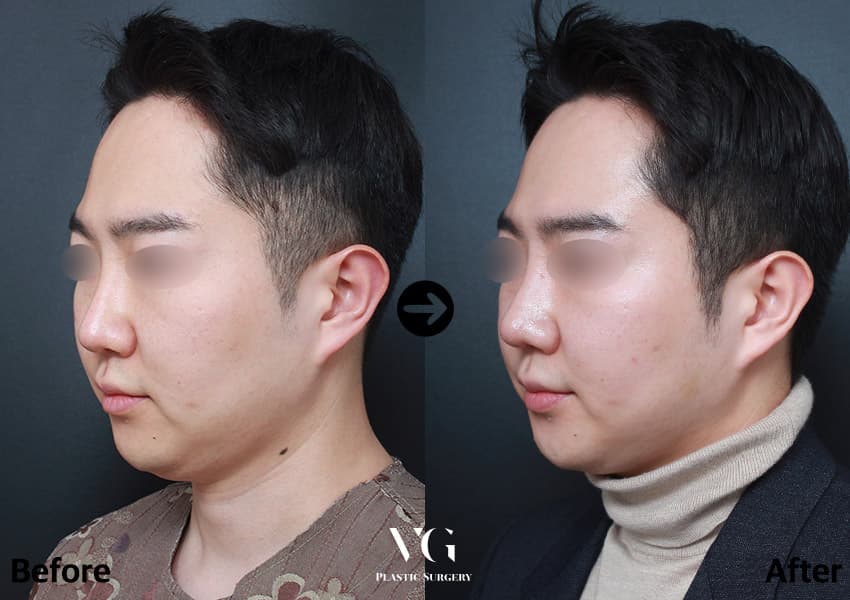
Male Rhinoplasty3 months after surgery
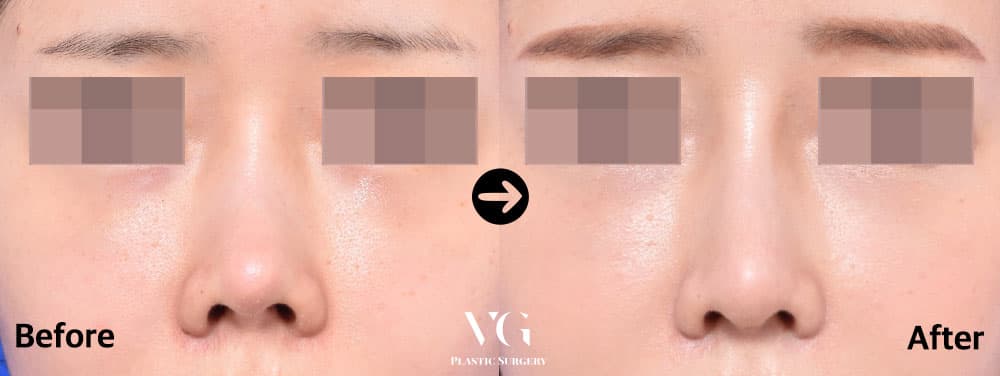
Revision Rhinoplasty3 months after surgery
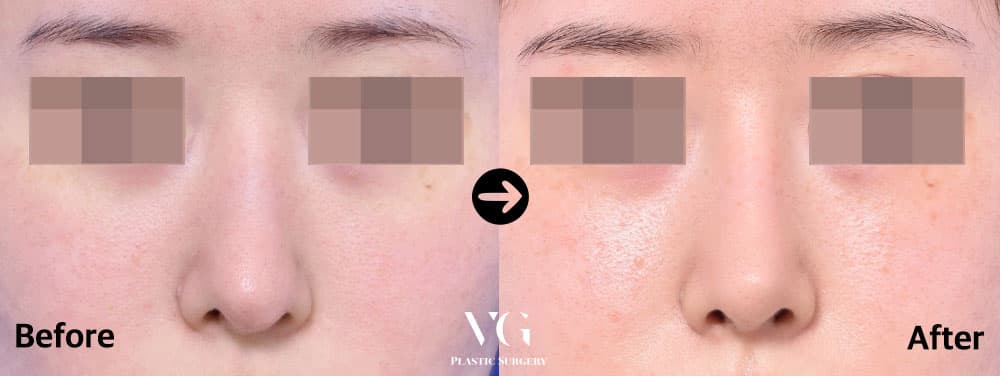
Revision Rhinoplasty3 months after surgery
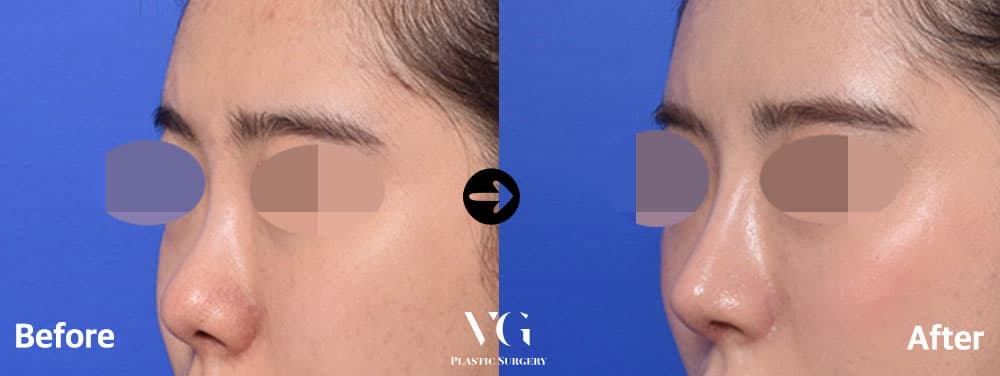
Rhinoplasty3 months after surgery
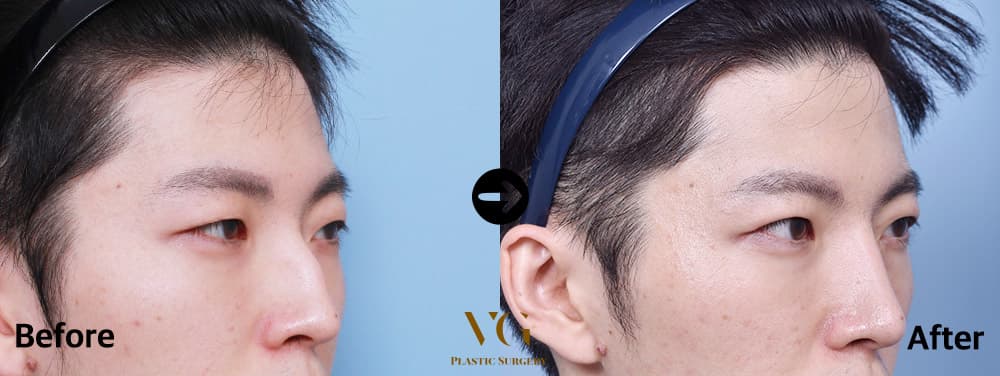
Male Rhinoplasty3 months after surgery
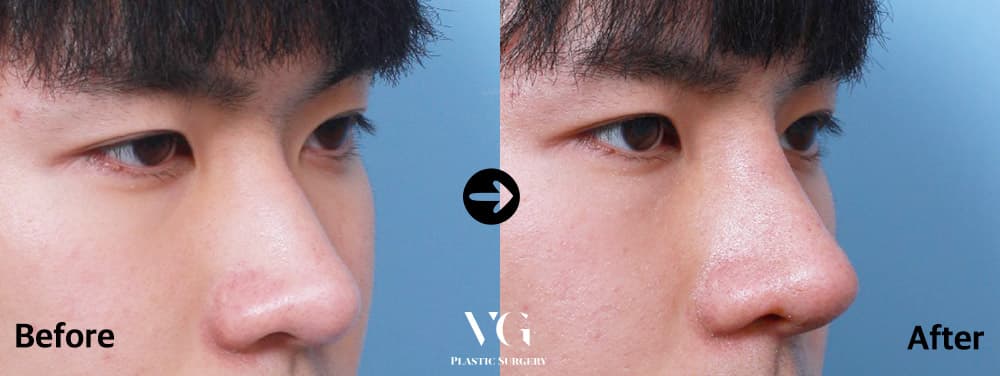
Male Rhinoplasty3 months after surgery
FAQ
Questions patients ask
Can you give me the cost in Indian rupees?
Not as a fixed figure. Clinics in Korea quote in Korean won, and your bank's rate on the day you pay sets the rupee amount. Ask for your quote, then convert it at the current rate and leave a margin for movement.
Do foreigners pay more for rhinoplasty in Korea?
At VG Plastic Surgery, foreign patients pay the same surgical fee as Korean patients. What differs for a visitor is the trip around it: flights, hotel nights and time away from work.
Is a deviated septum fixed in the same operation as the shape?
It can be. Rhinoplasty here is reviewed with an ENT specialist, so breathing is assessed together with the shape. Whether your septum needs work, and whether it fits in the same operation, is confirmed at the in-person exam.
Is rib cartilage needed for a flat nose?
Not always. Many flat noses can be raised with an implant or with septal or ear cartilage. Rib cartilage is usually considered when more material is needed, for example in some revisions.
Do I need to speak Korean for the consultation?
No. An interpreter is included, and you can write on WhatsApp in English.
Sources
This article explains general medical information. Whether surgery suits you, and which method, is decided only after a consultation with the surgeon.
Written by
Im Young Min
Chief Director · Plastic Surgery
- Ph.D. in Medicine
- Internship and residency, Seoul St. Mary's Hospital
- Board-certified plastic surgeon, Seoul St. Mary's Hospital
- Adjunct professor of plastic surgery, Seoul St. Mary's Hospital
- Former director, Topface Plastic Surgery
Next step
Send two photos. Get a surgeon’s answer.
Front and side, natural light, no filter. Dr. Im Young Min reviews them and tells you which method fits and how many days to stay in Seoul.
International patients pay the same surgical fee as Korean patients. Pricing policy
Keep reading
Nose
What Decides the Cost of Rhinoplasty in South Korea? Reviews, Methods and Recovery
There is no single price for a nose job in Korea: the method, the cartilage source, septum work, revision status and anesthesia set the figure for your nose.
Im Young Min ·
Nose
How Much Does a Nose Job Cost in Korea? Four Cost Drivers, Reviews, Methods and Recovery
A nose job in Korea is priced from four parts: the scope of the change, the building material, any breathing work and the anesthesia. Foreigners pay the same surgical fee as Korean patients, with a written estimate.
Im Young Min ·
Nose
Big Nose Korean Rhinoplasty: Will I Still Breathe Well?
Big nose Korean rhinoplasty means reducing the hump, nasal bones, tip or nostrils. The risks that matter are over-reduction and breathing, and some noses should wait.
Im Young Min ·