Nose
What Decides the Cost of Rhinoplasty in South Korea? Reviews, Methods and Recovery
There is no single price for a nose job in Korea: the method, the cartilage source, septum work, revision status and anesthesia set the figure for your nose.
In this article
- 01Why are two rhinoplasty quotes rarely for the same operation?
- 02Rhinoplasty methods and what each one adds
- 03Is a deviated septum part of the same bill?
- 04What do rhinoplasty reviews get right about cost?
- 05How does recovery change the cost of your trip?
- 06Risks and side effects to know before you book
- 07Getting a figure for your own nose
The short answer
Worried that the cost of rhinoplasty in South Korea will be one figure in an online reply and a different one once you're sitting in a consultation room in Seoul? The fee follows what your nose needs, so any figure has to start from your own nose. Read this before you compare quotes: you'll know what moves the cost, what reviews get right and wrong about it, which methods change the plan, and how recovery shapes your days in Korea.
- There is no single price for a nose job in Korea; your plan sets the figure.
- Cartilage source, septum work and revision status are the decisions that move the cost.
- Foreign patients pay the same surgical fee as Korean patients, with a written quote.
- Recovery days in Seoul are part of what your trip costs.
- Front, side and below-the-nose photos on WhatsApp are enough to start asking.
Hello, I'm Dr. Im Young Min, Chief Director and board-certified plastic surgeon at VG Plastic Surgery in Gangnam, Seoul.
Profile
Im Young Min
Chief Director · Board-certified in Plastic Surgery
Three facts about this clinic matter for a nose operation. An ear, nose and throat specialist practises here alongside the plastic surgeons, so a deviated septum or an airway that doesn't breathe well is examined and treated as part of the same operation. Three board-certified anesthesiologists work here full time, and one of them watches your blood pressure, pulse and breathing from the first injection until you're awake. And foreign patients pay the same surgical fee as Korean patients, with the quote written down.
I'm writing this because people often set two rhinoplasty quotes side by side when the two quotes describe two different operations.
There is no single price for a nose job in Korea. The figure comes from a handful of decisions about your nose: what builds the new shape, whether the septum is involved, whether it's a first operation or a revision, and the anesthesia and days in Seoul around it.
If you'd like to know which of those decisions apply to you, send a front photo and a side profile taken in daylight on WhatsApp, and ask exactly that.
Send your nose photos on WhatsApp
Why are two rhinoplasty quotes rarely for the same operation?
Rhinoplasty is a family of operations sharing one name. Refining a round tip works on the small cartilages at the end of the nose. Raising a low bridge adds material along the bridge line. Taking down a hump or narrowing wide nasal bones means working on bone. Straightening a septum happens inside, on the wall that divides your two airways. Each of these adds operating time, material and time under anesthesia, and each one shows up in the quote.
That matters for your budget, because augmentation means choosing a material, and the material is among the biggest decisions in the plan.
Raising the bridge and breathing well belong in the same surgical plan. A quote that prices only the shape can leave out the part that keeps you breathing, and two figures can look far apart simply because one includes the inside of the nose and the other doesn't.
Rhinoplasty methods and what each one adds
| Decision in your plan | What it means | Why it moves the cost |
|---|---|---|
| Implant or your own cartilage | A shaped implant on the bridge, or cartilage taken from your body | Harvesting and carving cartilage takes operating time |
| Where cartilage comes from | Septum, ear or rib | Ear and rib add a second operating site |
| Tip work only | Reshaping the cartilages at the tip | Often the shorter plan, if the bridge needs no height |
| Hump or bone work | Removing a hump, narrowing the nasal bones | Bone work adds steps and swelling |
| Septum and airway | Straightening the inner wall, opening the airway | Done with an ENT specialist in the same operation |
| Revision | Correcting an earlier operation | Scar tissue and used-up cartilage add material and time |
If your nose looks flat from the side, the first question here is what your own cartilage can do. Septal cartilage is usually the first choice when there's enough of it, because it comes from the same operating field. When there isn't enough, or a revision needs strong support, surgeons commonly turn to ear or rib cartilage. Rib gives the most material, but it adds a small chest incision, more time under anesthesia and a small risk of the graft warping later.
Implants avoid a second operating site. Under thin skin, though, their edges can show, and an infection or a shift may mean taking one out. Skin thickness also limits how defined a tip can look, which I've covered in why your skin sets the limit on the tip. Whether the incisions sit inside the nostrils or across the small column between them is a separate choice, explained in closed versus open rhinoplasty.
Is a deviated septum part of the same bill?
A deviated septum can be part of the same bill, and here it's planned that way. Rhinoplasty is reviewed with an ENT specialist, so breathing and the inside of your nose are assessed alongside its shape, and septum work is done in the same operation instead of being sent elsewhere. When you compare quotes, ask whether septum or airway work is listed as its own line.
Say you have a low bridge, a round tip under thick skin, and your left side has felt blocked since a sports injury years ago. Your photos show the outside of that nose. They can't show the septum. I'd want the inside examined before any figure is final, for two reasons. A crooked septum is a common reason one side blocks, and straightening it can also free septal cartilage to build the bridge and tip. If that cartilage is enough, you may not need a second site. If it isn't, ear or rib comes into the conversation and the plan grows.
What I'd advise against is dropping the septum work to bring the figure down. A nose that looks better and breathes worse is a poor trade, and repairing the airway later means operating again through scar tissue. If breathing is part of your worry, these questions about breathing and rhinoplasty are worth reading before your consultation.
If one side of your nose blocks, say so in your WhatsApp message and add a photo looking up at your nostrils from below. Ask whether septum work would belong in your plan.
Send your nose photos on WhatsApp
What do rhinoplasty reviews get right about cost?
Review threads repeat a few claims about price. Some hold up medically and some don't.
One common claim is that the quote changed after the in-person consultation. That can be true, and usually for a medical reason. Photos show shape; they don't show how firm your cartilage is, how thick the skin over your tip is, or how straight your septum sits. Before you fly, ask what could change your plan once you're examined.
Another is that adding a second area on the same trip saves money. The fee is only part of what an extra procedure costs you. More operating time means more anesthesia, more swelling and a longer recovery squeezed into the same trip.
A third is that the swelling was gone in two weeks. That's half true. Bruising and the obvious puffiness often settle within the first couple of weeks, but the American Society of Plastic Surgeons notes that the final contour of the nose can take up to a year to refine. Judge the result by that timeline, not by your photos at the airport.
The last pair is 'silicone always goes wrong' and 'rib always looks natural'. Neither holds as a rule. Each material has trade-offs, and the right one depends on your skin, your cartilage and how much support the nose has to carry.
How does recovery change the cost of your trip?
Part of the cost of rhinoplasty in South Korea never appears on a clinic quote: hotel nights, leave from work and the flights themselves. The operation sets how long that list gets. Rib cartilage, bone work or a revision can lengthen the plan, so ask on WhatsApp how many days your specific operation calls for before you book flights.
The U.S. Centers for Disease Control and Prevention lists flying soon after surgery among the risks for medical travelers, partly because of blood clots on long flights. The CDC also advises taking copies of your medical records home and arranging follow-up care where you live. A doctor at home who has agreed to see you if something comes up is worth lining up before you leave.
Recovery has a quieter cost too: the time before your nose looks settled in photos. If a wedding or a new job is coming, count backward from it with that year-long refinement in mind.
Risks and side effects to know before you book
Some effects are expected and temporary: swelling and bruising around the nose and under the eyes, a blocked, stuffy feeling while the inside heals, a dull ache, and a numb tip that can take weeks to months to return to normal. The American Society of Plastic Surgeons lists the less common risks, including anesthesia risks, bleeding, infection, difficulty breathing, a hole in the septum, lasting numbness, and an appearance you're unhappy with that may lead to revision surgery.
As general medicine, some people are usually advised to wait or to discuss their situation first: anyone whose nose is still growing, someone with an active sinus infection or a recent nasal injury, people who are pregnant or breastfeeding, anyone taking blood-thinning medicine or living with a bleeding disorder, and smokers, since smoking slows healing. Whether surgery suits your nose at all is settled at the in-person examination in Seoul; photos only start the conversation.
If something feels wrong after you fly home, such as fever, pain that keeps getting worse, spreading redness, discharge, sudden swelling on one side or bleeding that won't stop, see a local doctor or emergency department promptly and bring your operative notes.
Getting a figure for your own nose
The cost of rhinoplasty in South Korea for your nose is built from the table above, one line at a time. A good set of photos lets you ask about the right lines: front, both sides in profile, and the view from below, in daylight and without filters. If you've had nose surgery before, note what was done and when.
When you're ready, send those photos on WhatsApp with the dates you're considering, and one question: which of these decisions apply to my nose? You can ask before booking anything, and one clear set of photos is enough to begin.
Related pages:
Nose before & after — more cases
Real patients from our archive, all photographed 3 months after surgery. Tap a case to compare it full size.
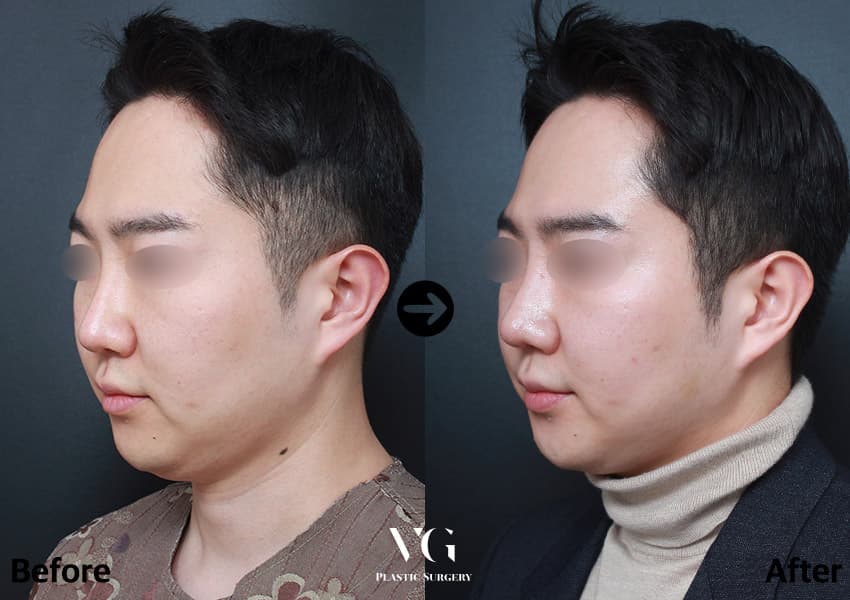
Male Rhinoplasty3 months after surgery
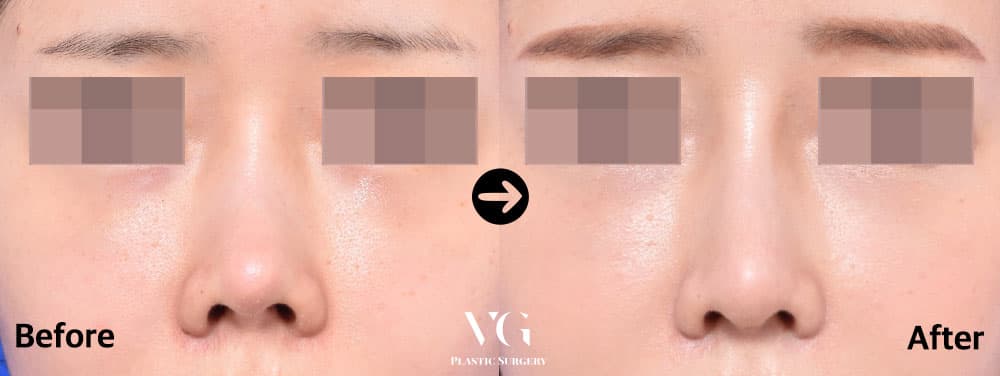
Revision Rhinoplasty3 months after surgery
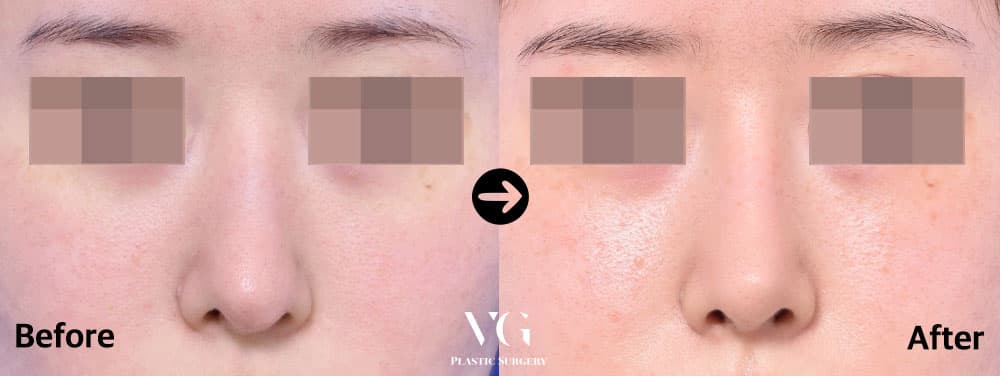
Revision Rhinoplasty3 months after surgery
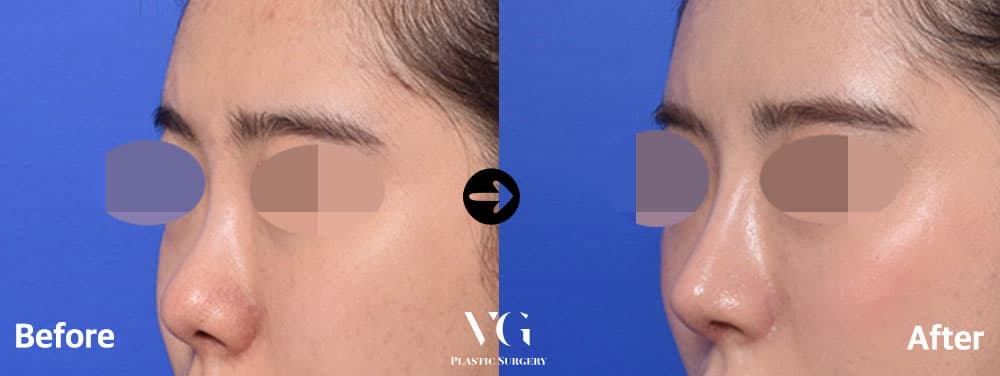
Rhinoplasty3 months after surgery
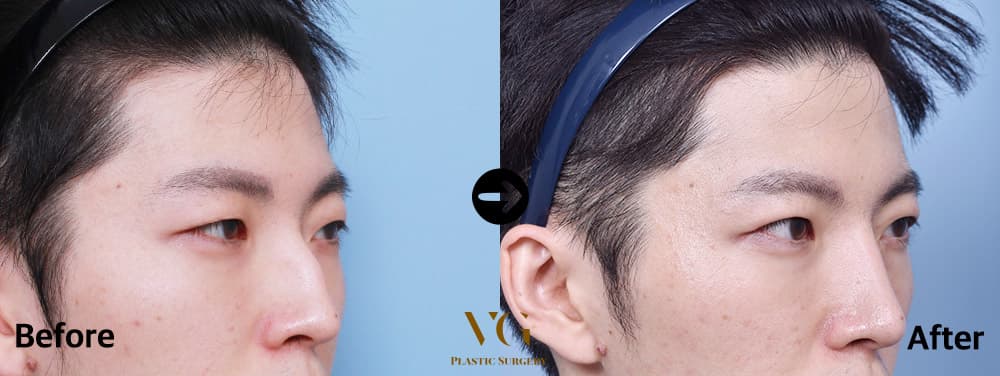
Male Rhinoplasty3 months after surgery
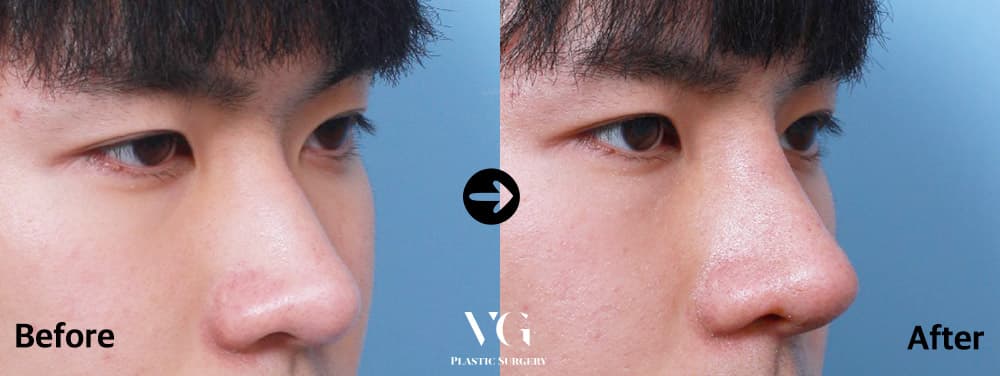
Male Rhinoplasty3 months after surgery
FAQ
Questions patients ask
How much is a rhinoplasty in Korea for a foreign patient?
There's no price list for rhinoplasty on our site, because a nose job isn't one operation. Foreign patients here pay the same surgical fee as Korean patients, and the quote is written down. The figure itself comes from the method, the cartilage source, any septum work, whether it's a revision, and the anesthesia.
Is rib cartilage rhinoplasty more expensive than using septal cartilage?
Usually it adds to the cost, because harvesting rib means a second operating site, more time under anesthesia and a small scar on the chest. It's generally chosen when septal cartilage is scarce or a revision needs strong support, so the extra buys structure the nose can't get another way.
Does flat nose rhinoplasty cost more than refining the tip?
Often, yes. A flat nose usually needs height along the bridge and support at the tip, which brings in a material decision and more operating steps. A tip-only plan works with the cartilages that are already there.
Is revision rhinoplasty priced like a first operation?
Usually not. Scar tissue, cartilage already used in the first operation and an old implant that may need removing all add steps and time. If you've had nose surgery before, say what was done and when in your first message.
Does anesthesia affect the cost of a nose job in Korea?
Yes. The type of anesthesia and how long you're under follow the length of the plan. Here, one of three full-time board-certified anesthesiologists is dedicated to your operation and does not operate. Ask which type of anesthesia your plan involves.
Sources
This article explains general medical information. Whether surgery suits you, and which method, is decided only after a consultation with the surgeon.
Written by
Im Young Min
Chief Director · Plastic Surgery
- Ph.D. in Medicine
- Internship and residency, Seoul St. Mary's Hospital
- Board-certified plastic surgeon, Seoul St. Mary's Hospital
- Adjunct professor of plastic surgery, Seoul St. Mary's Hospital
- Former director, Topface Plastic Surgery
Next step
Send two photos. Get a surgeon’s answer.
Front and side, natural light, no filter. Dr. Im Young Min reviews them and tells you which method fits and how many days to stay in Seoul.
International patients pay the same surgical fee as Korean patients. Pricing policy
Keep reading
Nose
Rhinoplasty Cost in South Korea in Rupees: What Changes It for a Flat Nose or Crooked Septum? Reviews, Methods and Recovery
There's no honest rupee figure for a nose nobody has examined. The cost follows the method, septum work, revision, anesthesia time and days in Seoul; send photos on WhatsApp to ask about yours.
Im Young Min ·
Nose
How Much Does a Nose Job Cost in Korea? Four Cost Drivers, Reviews, Methods and Recovery
A nose job in Korea is priced from four parts: the scope of the change, the building material, any breathing work and the anesthesia. Foreigners pay the same surgical fee as Korean patients, with a written estimate.
Im Young Min ·
Nose
Big Nose Korean Rhinoplasty: Will I Still Breathe Well?
Big nose Korean rhinoplasty means reducing the hump, nasal bones, tip or nostrils. The risks that matter are over-reduction and breathing, and some noses should wait.
Im Young Min ·