Eyes
What Are Double Eyelids? A Crease, Then a Week of Healing
A double eyelid is an upper lid with a visible fold, formed where the lid-lifting muscle anchors into the skin. Surgery recreates that anchor, and stitches usually come out five to seven days later.
Send your concern and a front and side photo. Replies in English, no obligation.
In this article
- 01What are double eyelids made of?
- 02Which type of eyelid do you have?
- 03What do the measurements on your lid mean?
- 04Stitches or an incision: how surgery creates the fold
- 05How many days does recovery take, and how long should you stay?
- 06Swelling, uneven folds and a fold that loosens: the risks
- 07What should you ask any clinic before you book?
- 08Where I'd start if this is your first eyelid surgery
The short answer
What are double eyelids, and could you have a fold made during one break from work in Seoul? A double eyelid is an upper lid with a visible crease a few millimeters above the lashes, formed where fibers from the muscle that lifts the lid attach to the skin; without those attachments the lid stays smooth, which is what people call a monolid.
- A double eyelid is a fold that forms where fibers from the lid-lifting muscle anchor into the skin.
- About half of people of Asian descent have no upper eyelid crease, and many more have a low, hidden fold.
- Lid thickness, fat and lifting strength decide between the suture and incisional methods.
- Stitches usually come out five to seven days after surgery, so book the flight home after that visit.
- Plan on glasses for at least two weeks and no hard exercise for about three weeks.
Surgery creates that attachment, and for a trip the date to plan around is stitch removal, usually five to seven days after surgery, with an early result readable at about two weeks.

Profile
Im Young Min
Chief Director · Board-certified in Plastic Surgery
Hello, I'm Dr. Im Young Min, Chief Director at VERYGOOD Plastic Surgery in Seoul, a board-certified plastic surgeon who did my internship and residency at Seoul St. Mary's Hospital.
A few facts here bear directly on an eyelid question asked from abroad. Our eye center is shared by three plastic surgeons, and lid thickness, fat and lifting strength are checked before anyone decides whether to cut at all. Three board-certified anesthesiologists work here full time, so the surgeon does nothing but operate.
If you aren't sure which kind of lid you have, take two photos in daylight, one looking straight ahead and one with your eyes gently closed, and send them on WhatsApp with the dates of your next break. Ask with them whether your lid looks thin enough for a stitch-only method or whether the fold would need an incision.
Send two eye photos and your break dates on WhatsApp
What are double eyelids made of?
The fold doesn't start in the skin. The muscle that opens your eye ends in a thin sheet of tissue that runs down toward the lashes. In a lid with a crease, fine fibers from that sheet reach forward and anchor into the skin, so when the lid lifts, the skin above the anchor tucks inward along one line.
Picture a roman blind with a cord threaded through it at one height. Pull the cord and the fabric folds neatly at that line; take the cord away and the blind rises as one soft bulge. In many lids without a crease, those anchoring fibers are sparse or absent, and the fat pad behind the lid sits lower and further forward, which adds the fullness you see just above the lashes.
This is ordinary anatomy.
Height matters as much as presence. That spread is why wanting a double eyelid is only the first half of the request.
Which type of eyelid do you have?
Most lids fall into one of these patterns, and many people have a slightly different one on each side.
| Lid type | What you see in the mirror | What usually sits behind it |
|---|---|---|
| Monolid | No visible crease; skin runs smoothly down to the lashes | Few or no skin anchors, a fuller fat pad |
| Hidden or partial fold | A crease that shows when you look up or feel tired, then disappears | Weak or low anchors with skin hanging over them |
| Inside (tapered) fold | Crease starts close to the lashes at the inner corner and widens outward | Often a skin fold at the inner corner covering the start of the crease |
| Outside (parallel) fold | Crease runs at an even height and is visible at the inner corner | Anchors along the whole width of the lid |
| Thick double eyelid | A fold is there but looks heavy or puffy | Thick skin, extra fat, sometimes a lid that doesn't lift fully |
Thick double eyelids deserve a word, because people search for them both as a look they want and as a problem they have. When a fold looks heavy, the cause is usually tissue sitting over the crease or a lid that opens less than it should.
What do the measurements on your lid mean?
A photo of someone else's eyes tells me less than three things about yours. The first is how far your lid opens over the colored part of the eye, which reflects the strength of the lifting muscle. The second is how thick the skin and fat are. The third is the crease height you have in mind.
The first one changes plans most often. If the lid edge covers a good part of the iris, the lifting muscle may be weak, a condition called ptosis. Adding a crease to a lid that doesn't lift enough can make eyes look more tired, so correcting the lift belongs in the same conversation, and ptosis correction is one of the eye operations we do.
Stitches or an incision: how surgery creates the fold
There are two basic routes, and the lid you have usually narrows the choice.
With the suture method, fine stitches are passed through a few tiny openings to tie the skin to the lifting layer at the height you've chosen. Nothing is cut away and swelling tends to be shorter. It suits a thin lid with little extra skin and a good lift. The trade-off is staying power: when a fold loosens over the years, it happens more often after the suture method than after an incision.
With the incisional method, the lid is opened along the planned crease line. Excess fat or skin can be trimmed, the lifting layer is fixed to the skin side directly, and a weak lift or an inner-corner fold can be treated in the same operation. It suits thicker lids, lids with extra skin, and people who need ptosis correction. You trade a longer swelling period and a fine scar that sits inside the fold.
Which way each type of lid tends to go, and how that changes the stay, is laid out in comparing the incisional and non-incisional routes in Korea.
How many days does recovery take, and how long should you stay?
In short, this is the part of the plan that sets your flight. The figures below are typical ranges from published patient guidance, and your own healing can run faster or slower.
| Days after surgery | What's typical | What it means for your trip |
|---|---|---|
| Days 3 to 5 | Keep activity light; swelling begins to ease | Short walks and meals out, nothing strenuous |
| Days 4 to 7 | Stitches come out: about day 4 to 7 after the suture method, day 5 to 7 after an incision | Book your flight after this visit, never before |
| Around week 2 | Early result is readable; bruising can last 2 to 4 weeks | Back at work with glasses on; still no contact lenses |
| Week 3 and on | Avoid lifting, bending and hard exercise for about 3 weeks | Gym sessions and hiking trips wait |
Say you're 25, teaching English in Ho Chi Minh City, with ten days off over Tet. If surgery is on day 1 or 2, stitch removal falls somewhere between day 6 and day 9, and you fly back on day 9 or 10 with swelling that tinted glasses mostly hide.
Pack dark sunglasses too. Sun protection over a healing lid is advised until healing is complete, and an afternoon in Saigon is bright.
Send the dates you can take off and the flight home you're looking at, and ask whether that window leaves room for the stitch visit before you board. A plan on paper is far easier to move than a ticket.
Send two eye photos and your break dates on WhatsApp
Swelling, uneven folds and a fold that loosens: the risks
What most people go through is temporary: swelling, bruising, irritation, dry or gritty eyes, and a tight feeling when you close your eyes in the first days. These ease over the following weeks. Healing speed differs from person to person, and one side often settles faster than the other.
Less common problems are worth knowing by name:
- An uneven fold height between the two eyes. It is the complication reported most often; part of it is swelling settling unevenly in the first weeks, and a smaller part needs a revision later.
- A fold that sits too high, which can look heavy or surprised.
- A fold that loosens or fades over time, uncommon and more likely after the suture method.
- Lashes turned upward, or a lid that droops if the lifting muscle is injured.
- Bleeding into the lid and, rarely, problems with vision.
Who should wait for now: anyone with an active stye or eye infection, significant dry eye, eye surgery in the past few months, a pregnancy, or blood-thinning medicine or supplements not yet cleared with the doctor who prescribed them. A lid that droops unevenly needs the ptosis question answered first.
If something changes once you're home, such as pain that gets worse instead of better, swelling on one side that keeps growing, a change in your vision, or fever or discharge from the wound, see a doctor locally the same day and bring the record of your operation. Before you leave Seoul, ask how to send photos to the clinic and which records you take with you, so a doctor at home can see exactly what was done.
What should you ask any clinic before you book?
Whether or not you end up with us, these are the answers I'd want on your behalf:
- Are lid thickness, fat and lifting strength measured before the method is chosen?
- Is the surgeon you meet at consultation the one who operates?
- Who monitors breathing and blood pressure if you're sedated, and does that person also operate?
- If the fold heals unevenly or loosens, what is the rule for a correction, and how long after surgery?
- Once you're home, how do you send photos or questions, and what records do you leave with?
- Can someone traveling with you follow the consultation through an interpreter?
The fee follows from these answers too: the method, whether fat or skin is removed, and any inner-corner or ptosis work done at the same time. Foreign patients here pay the same surgery fee as Korean patients, and the estimate comes in writing; what moves that estimate for thin or thick lids is explained in what changes a double eyelid quote.
If you've been reading other people's accounts, what eyelid surgery reviews get right and what they leave out is a useful check, and the photo consultation booking on our English homepage takes the same photos you'd send on WhatsApp.
Where I'd start if this is your first eyelid surgery
A crease is a small change that shows in every photo you'll take for years, so getting its height and method right matters more to me than getting it done fast. Many people in Korea see eyelid surgery as one way of looking after themselves, and I see my part as telling you plainly what your lid can carry. There's no deadline on this; if your next break is too short, the one after it will still be there.
When you're ready, send your two daylight photos on WhatsApp and mention anything your eyes have been through, such as years of eyelid tape or glue, a past stye or eye surgery. The surgeon who would operate is the one who reviews the photos you send. The question to ask with them: what fold height suits the thickness of my lid? Deposit and payment method are settled after the consultation, so those can wait until then.
What decides your method in Seoul is how much fat sits behind your lid and how strongly it opens on its own.
— Dr. Im Young Min, Chief Director
Related pages:
Eyes before & after — more cases
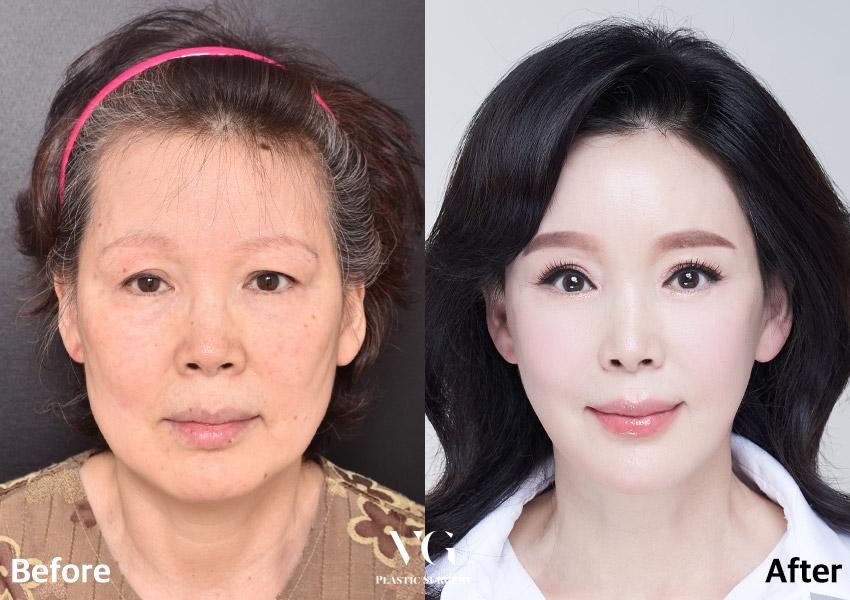
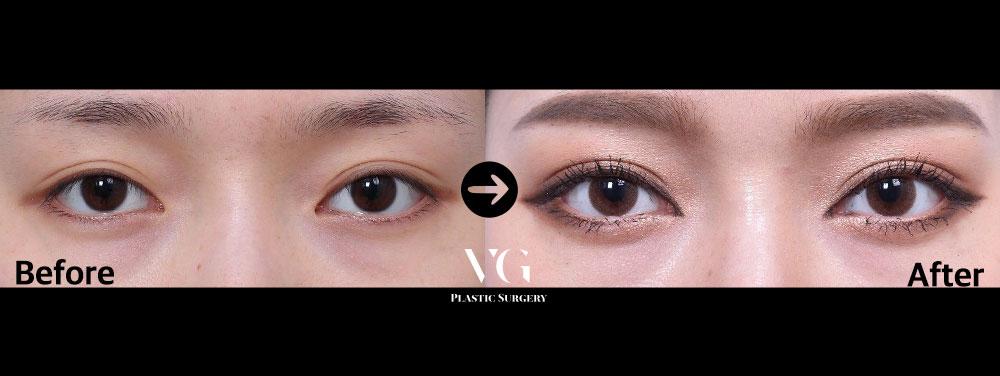
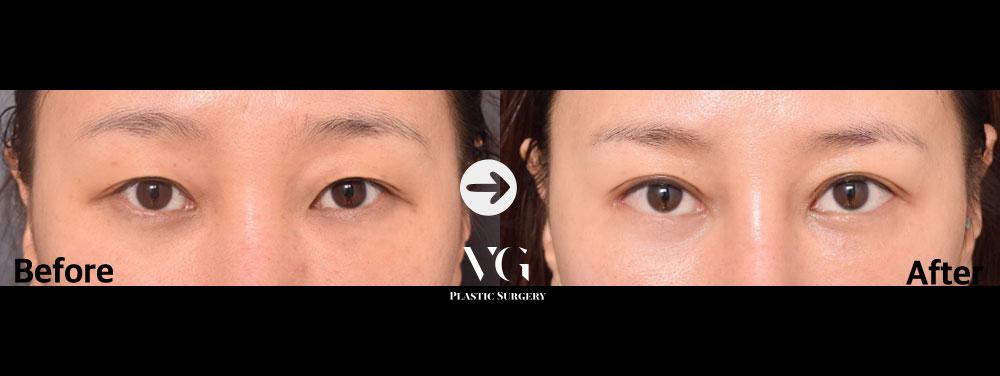
Real patients from our archive, all photographed 3 months after surgery. Tap a case to compare it full size.
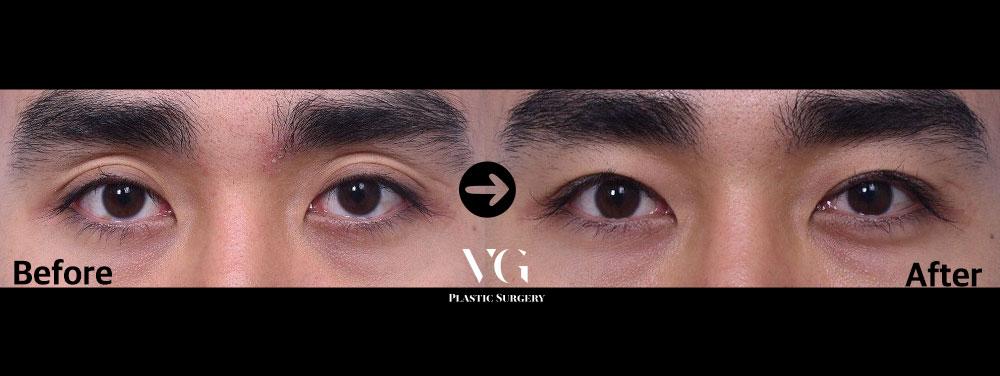
Incisional Double Eyelid3 months after surgery
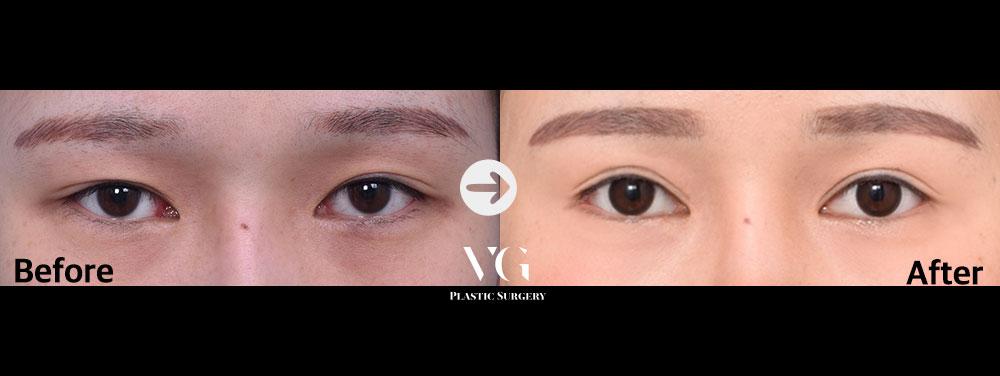
Incisional Double Eyelid3 months after surgery
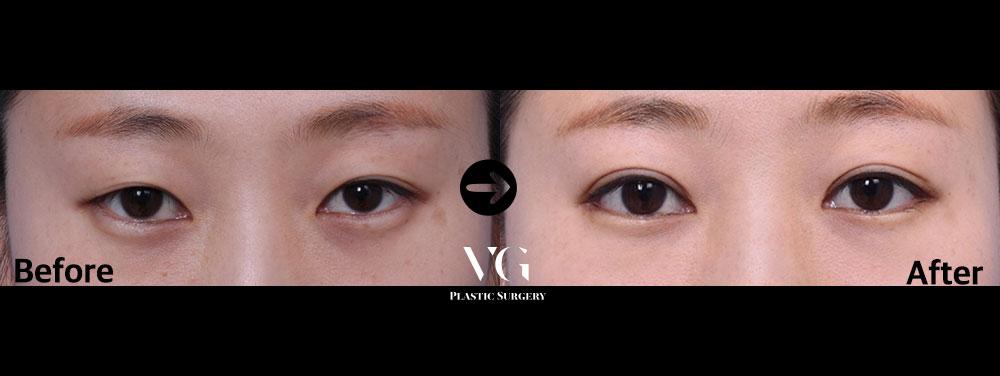
Incisional Double Eyelid3 months after surgery
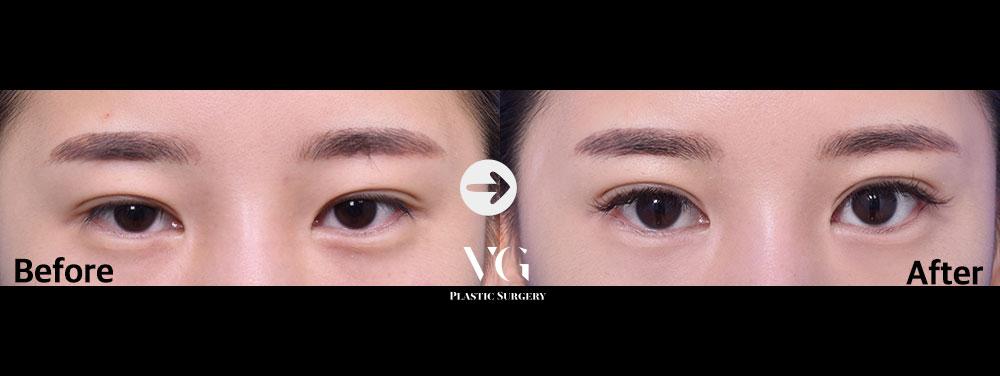
Natural-Adhesion Double Eyelid3 months after surgery
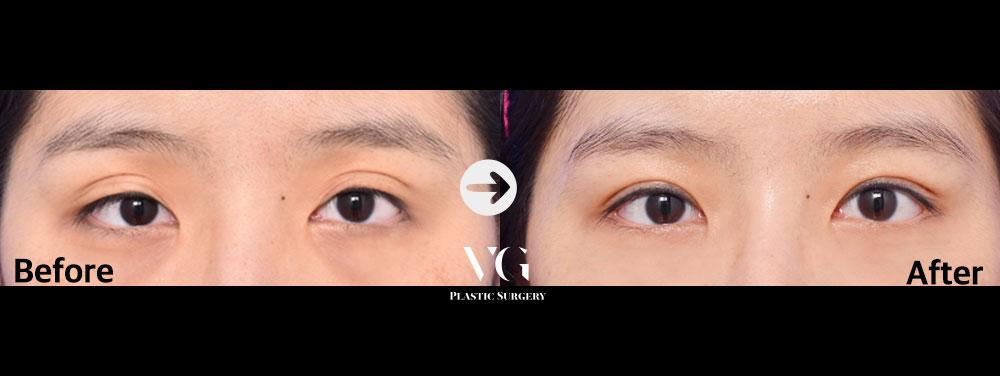
Incisional Double Eyelid3 months after surgery
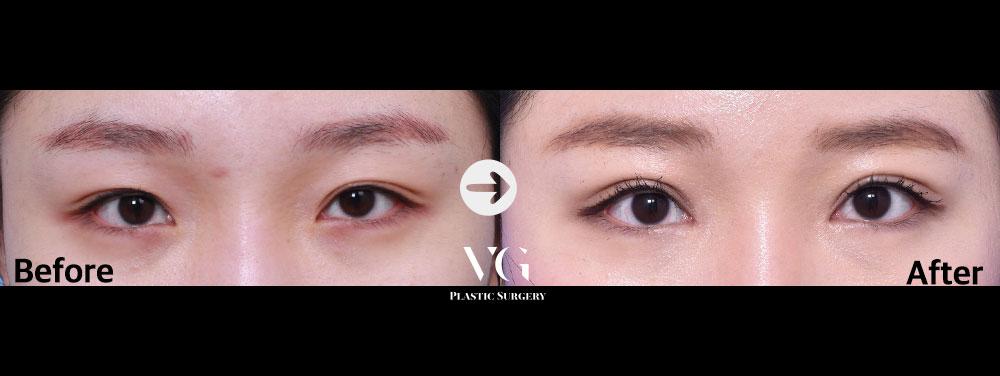
Natural-Adhesion Double Eyelid3 months after surgery
FAQ
Questions patients ask
Is blepharoplasty the same as double eyelid surgery?
Not quite. Blepharoplasty is the broader name for eyelid surgery that removes or repositions excess skin and fat, often for hooded or aging lids. Double eyelid surgery, sometimes called Asian blepharoplasty, focuses on creating the crease; on a thick or heavy lid the two are often combined in one operation.
Can a double eyelid appear or disappear on its own?
A hidden fold can show on some days and vanish on others, for example after sleep when the lid is puffy, or late in the day when you're tired. With age, skin above the lid tends to loosen and can cover a crease that used to show. Tape and glue make a temporary fold by holding skin in place; they don't change the anchors underneath.
When can I wear contact lenses again after eyelid surgery?
Plan on glasses for at least two weeks. Putting lenses in and taking them out pulls on the lid right where it is healing, so if you rely on lenses for work, pack your glasses before you fly.
Can I fly home with my stitches still in?
It's possible, but then a doctor at home has to remove them at the right time, and that doctor wasn't there for the surgery. Booking the flight after stitch removal is the simpler plan; if your dates can't stretch, raise it before surgery so the method and timing are chosen with that in mind.
Will people at work notice when I'm back?
In the first two weeks, probably, mainly from swelling and any leftover bruising, which can last two to four weeks. Glasses with lightly tinted lenses soften it, and the fold usually keeps settling for some months after the early result at two weeks.
Sources
This article explains general medical information. Whether surgery suits you, and which method, is decided only after a consultation with the surgeon.
Written by
Im Young Min
Chief Director · Plastic Surgery
- Ph.D. in Medicine
- Internship and residency, Seoul St. Mary's Hospital
- Board-certified plastic surgeon, Seoul St. Mary's Hospital
- Adjunct professor of plastic surgery, Seoul St. Mary's Hospital
- Former director, Topface Plastic Surgery
Next step
Send two photos. Get a surgeon’s answer.
Front and side, natural light, no filter. Dr. Im Young Min reviews them and tells you which method fits and how many days to stay in Seoul.
International patients pay the same surgical fee as Korean patients. Pricing policy
Keep reading
Eyes
Plastic Surgery Consultation Fee Seoul: What the Day Covers
Consultation fees in Seoul differ from clinic to clinic, so ask before you book. What sets your budget is the written surgery estimate from the exam, at the same surgery fee Korean patients pay.
Im Young Min ·
Eyes
Medical Tourism Korea Plastic Surgery: Book the Flight Last
Book the flight last and arrange care at home first.
Im Young Min ·
Eyes
Is Double Eyelid Surgery Common in Korea? Yes, Not One Fold
Double eyelid surgery is common in Korea, but common doesn't mean standard. The method still follows your own lid skin, fat and lifting muscle, and that also shapes how many days your trip needs.
Im Young Min ·