Eyes
Can a Double Eyelid Surgery Korea Review Tell You What to Expect? Partly: Results, Cost and Methods
A review shows how one person's lids healed. Ask which method suits your lid, how high the fold would sit and whether you have ptosis; those answers decide your result.
In this article
- 01What reviews get right, and what they leave out
- 02Which methods are there, and which question sorts them?
- 03What results can you expect from your own lids?
- 04Which questions should you ask, and what do the answers mean?
- 05What does double eyelid surgery cost depend on?
- 06Risks to weigh before you fly home
The short answer
Reading one double eyelid surgery Korea review after another and still unsure whether any of them says what your own lids would look like? If you're about to message clinics from abroad, keep the consultation questions further down open while you do. Below are what each method changes, which results depend on your lid, what moves the cost and which review claims hold up medically, so you can tell a useful answer from a vague one.
- A review tells you how someone else's lids healed, not which method or fold height suits yours.
- Uneven folds while swelling settles are common, and lasting asymmetry is the most reported complication.
- Ask which method, how high the fold, and whether you have ptosis, and listen for reasons tied to your lid.
- Foreign patients pay the same surgery fee as Korean patients, with a written estimate.
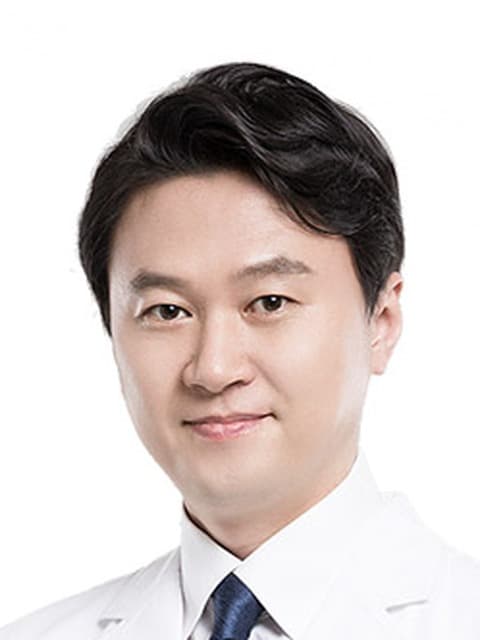
Hello, I'm Dr. Im Young Min, Chief Director and board-certified plastic surgeon at VG Plastic Surgery in Gangnam, Seoul, and eye surgery is one of the centers I work in.
Profile
Im Young Min
Chief Director · Board-certified in Plastic Surgery
Three plastic surgeons share the eye center here, and revision cases are reviewed together before anyone operates. Lid thickness, fat and lifting strength are checked before deciding whether to cut at all. Foreign patients pay the same surgery fee as Korean patients, and a medical interpreter for your language comes at no extra charge.
A review tells you about one person's lids, yet most of what decides your result sits in yours: the skin, the fat behind it and how strongly the lid lifts.
Reviews are good at telling you how a clinic communicated and how someone's days went. They can't tell you which method, fold height or result fits your eyes; the questions below get you that at any consultation, ours included.
Send one straight-on photo of your open eyes in daylight on WhatsApp, together with the one review claim you're not sure you believe.
Send a photo of your eyes and one question on WhatsApp
What reviews get right, and what they leave out
A double eyelid surgery Korea review usually covers three things: how the lids looked in the first weeks, how long the swelling lasted and whether the fold held. Here's how those claims line up with what's known medically.
"My eyes were uneven for weeks." Often true, and often temporary, because the two sides rarely swell by the same amount. Asymmetry that stays is real too: EyeWiki, from the American Academy of Ophthalmology, lists it as the most common complication of the procedure, with reported rates as high as 35%. Many people also start with lids that differ slightly, which a review photo won't show.
"Non-incisional means no downtime." Partly. The suture method is a shorter operation with faster recovery, but the lids still swell and bruise for a while, and it isn't suited to lids that need fat or skin removed.
"My fold faded after a year." It can happen. Weakening of the stitches is reported more often with the suture method, because a few stitches hold several layers of tissue. That is why lid thickness matters before choosing it.
"The photos looked amazing." A result photo is one angle, one light and one day. The clinic's own gallery doesn't name who operated on an individual case; it shows the specialties of the team that handles that procedure instead.
What reviews leave out is the measurements of your own lid, and those are what a consultation is for.
Which methods are there, and which question sorts them?
Monolid vs double eyelid isn't a question of better or worse. About half of people of Asian descent have no upper eyelid crease, according to EyeWiki, and a monolid is a normal lid. Surgery creates a crease where none is showing.
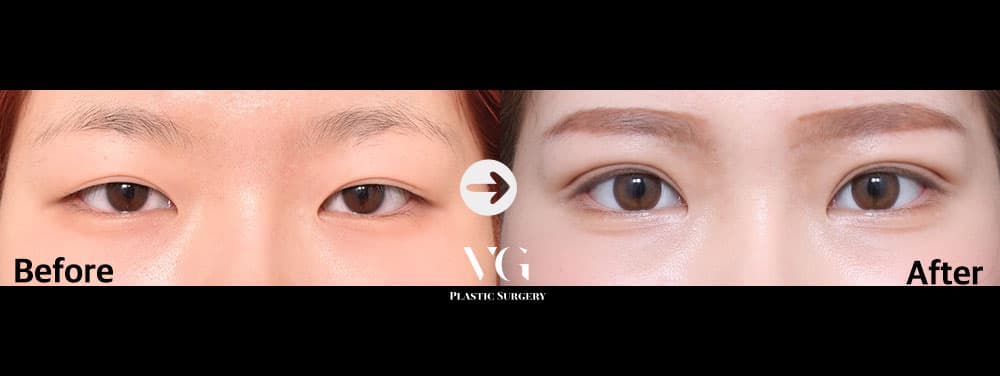
There are two main routes. The suture, or non-incisional, method uses a few stitches to fix the skin to deeper tissue, with nothing removed; EyeWiki notes it is easier to revise. The incisional method opens the lid along the planned crease, so excess fat, skin or muscle can be taken out, and it is the usual route when an inner-corner procedure is done at the same time. A partial incision sits between the two.
The question that sorts them: "Would sutures alone hold a fold in my lid, or does fat or skin need to come out?" A useful answer mentions your skin thickness, the fat you can see and how your lid lifts. An answer that gives everyone the same method hasn't looked at your lid yet. For how the two approaches differ on recovery and stay, see incision or not, recovery and stay, and if your leave is short, fitting the non-incisional method around a week off.
What results can you expect from your own lids?
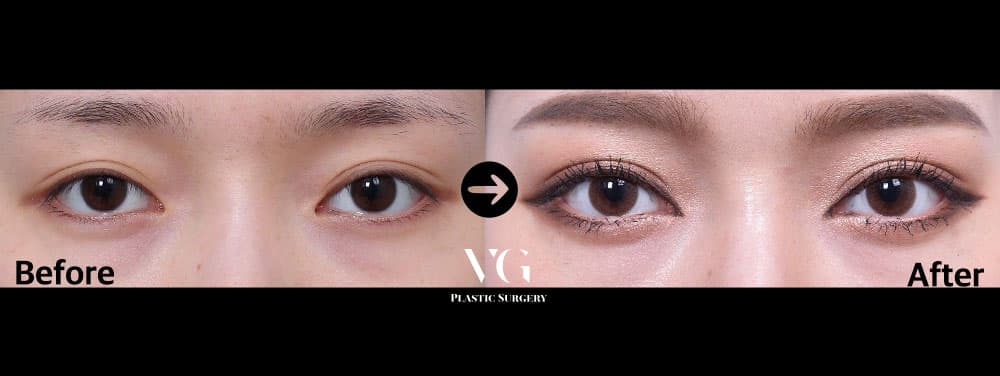
Fold height is the decision that most changes how the result reads. EyeWiki gives a standard of 6 to 8 mm above the lid margin, and notes that anywhere from 3 to 10 mm can look good. A higher fold looks more dramatic, and on a thick, full lid it can look heavy. A lower fold keeps more of the face you already have.
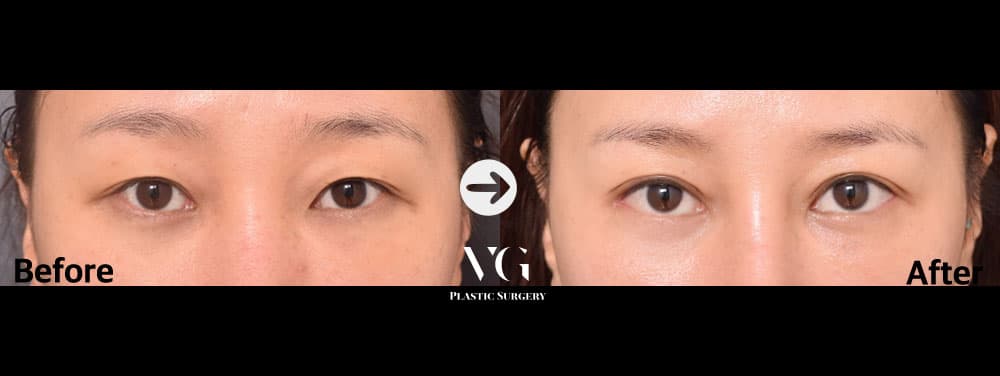
Then there's lift. Ptosis is a drooping upper eyelid, as the American Academy of Ophthalmology describes it, and when the lid muscle lifts weakly the eyes look tired. Adding a fold without addressing that can make the eyes look heavier. When someone tells me their eyes always look tired, that question decides between ptosis correction and an upper lid lift, before a fold is even discussed.
So ask: "Do I have any ptosis, and how did you check?" A clear yes or no, with how the lid's lift was assessed, tells you the result was planned around your eyes.
Which questions should you ask, and what do the answers mean?
In short, these work at any consultation. Listen less for the answer itself and more for the reason given with it.
| Question | A useful answer sounds like | What it tells you |
|---|---|---|
| Which method for my lids, and why? | It names your skin, fat and lift | Your lid was looked at, not a menu |
| How high would the fold sit? | A height tied to your eye shape | Whether you picture the same result |
| Do I have ptosis? | Yes or no, and how it was checked | Whether a fold alone could look heavy |
| Who operates, and who handles anesthesia? | A named surgeon, and who monitors you | Who is responsible on the day |
| What if the folds are uneven once swelling settles? | When it's judged and what a fix involves | How revision is handled |
| What does the written estimate include? | Separate lines for each step | Whether two figures can be compared |
On the anesthesia question, here three board-certified anesthesiologists are on staff, one dedicated to every operation, and they don't do the surgery. Each surgeon's training is listed under their own name on VG Plastic Surgery's English site, so you can check the answer to "who operates" before you fly. If a first surgery elsewhere is the reason you're reading reviews, how each revision problem is corrected covers that ground.
Had eyelid surgery before? Send a photo with your eyes gently closed and the year of that surgery on WhatsApp, and ask whether the first fold changes what can be done now.
Send a photo of your eyes and one question on WhatsApp
What does double eyelid surgery cost depend on?
If a double eyelid surgery Korea review mentions a figure, it was for someone else's method and steps. Yours depends on:
- The method. Sutures, a partial incision or a full incision.
- What's added. Ptosis correction, an inner-corner procedure or fat removal each lengthen the operation.
- Revision. Correcting an earlier fold is a different job from a first surgery.
- Anesthesia. Local anesthesia with sedation and general anesthesia are priced differently.
- Your days in Seoul. Accommodation and time off sit in your budget, outside the clinic's bill.
Foreign patients here pay the same surgery fee as Korean patients, and the figure comes as a written estimate, line by line. Deposit and payment method are decided after the consultation. There's more on what changes a double eyelid quote; for your own lids, ask on WhatsApp what it would cost for your case and how the deposit works.
Risks to weigh before you fly home
Risks and side effects to know
Swelling, bruising and a tight feeling are expected at first, and the American Society of Plastic Surgeons lists dry or irritated eyes and difficulty closing the eyes among the risks of eyelid surgery. Less often, folds stay uneven, a fold ends up too high (EyeWiki cites around 7% of patients presenting with excessively high folds), a fold weakens, the lid droops from injury to its lifting muscle, or bleeding, infection or a visible scar occurs. Healing differs from one person to the next, and whether surgery suits you is decided at the in-person exam.
As general medicine, these are reasons to wait:
- an eye infection or a stye
- dry eye that isn't under control
- blood thinners or a known bleeding disorder
- pregnancy or breastfeeding
- active thyroid eye disease
After you fly home, any change in vision, sudden swelling on one side or severe pain needs emergency care at once. Redness, discharge or a fever needs a doctor promptly. Keep copies of your surgery records with you, and before booking, ask how follow-up would work once you're home.
Send your travel month and the one question your reviews left open on WhatsApp, for example whether your lid could hold a fold without an incision. You can ask before booking anything; consultation hours are Monday to Friday 10:00–20:00 and Saturday 10:00–16:00, Korea time. When you come, the first things I look at are how thick your upper-lid skin is, how much fat sits behind it and how far your lid lifts when you look up.
Related pages:
Eyes before & after — more cases
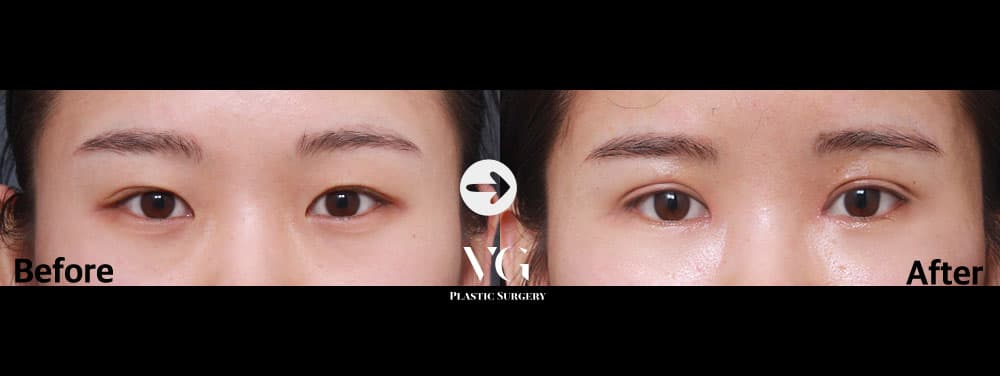
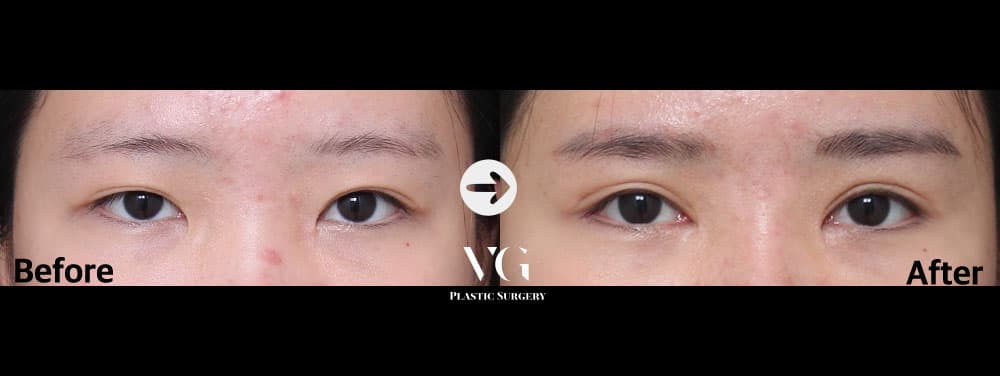
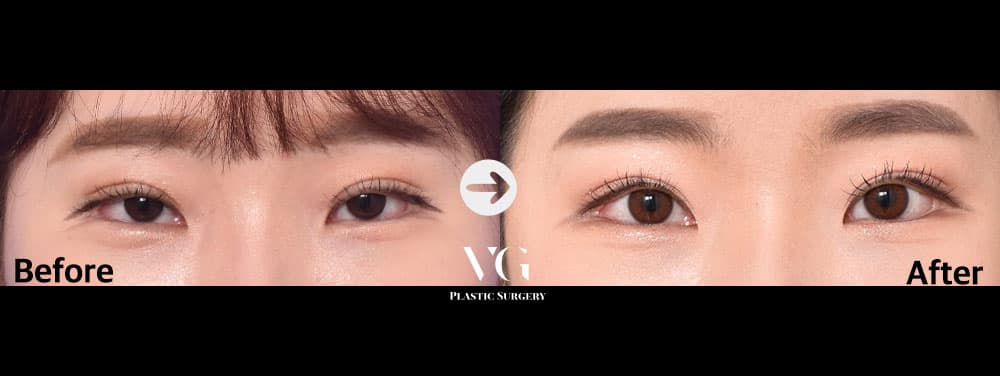
Real patients from our archive, all photographed 3 months after surgery. Tap a case to compare it full size.
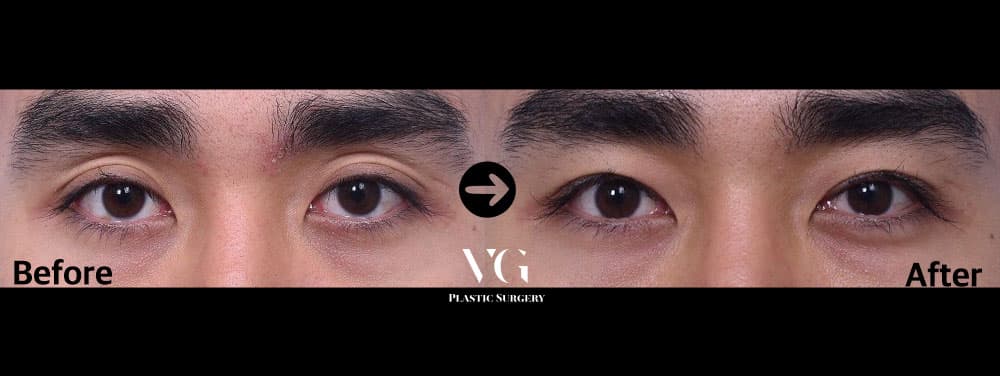
Incisional Double Eyelid3 months after surgery
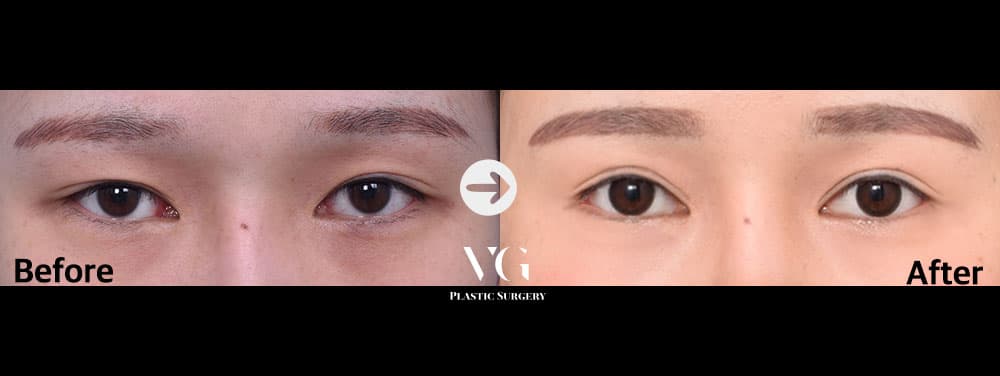
Incisional Double Eyelid3 months after surgery
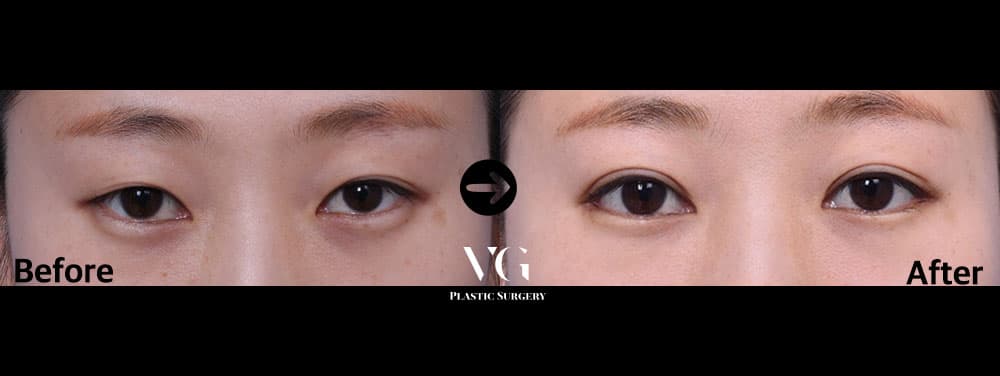
Incisional Double Eyelid3 months after surgery
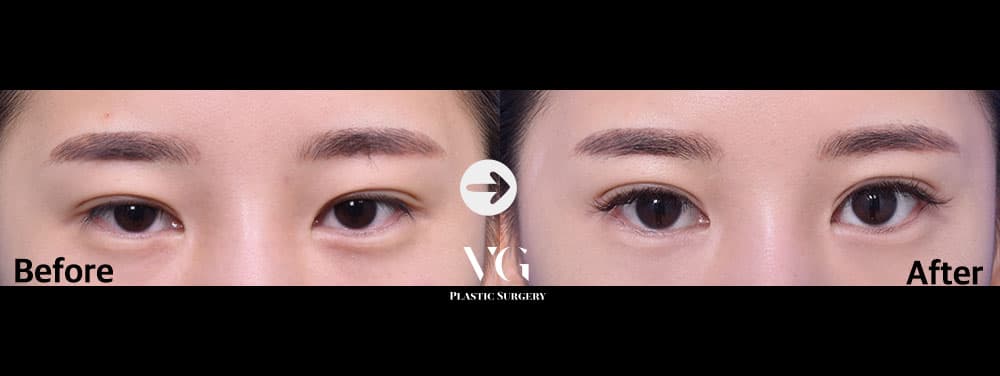
Natural-Adhesion Double Eyelid3 months after surgery
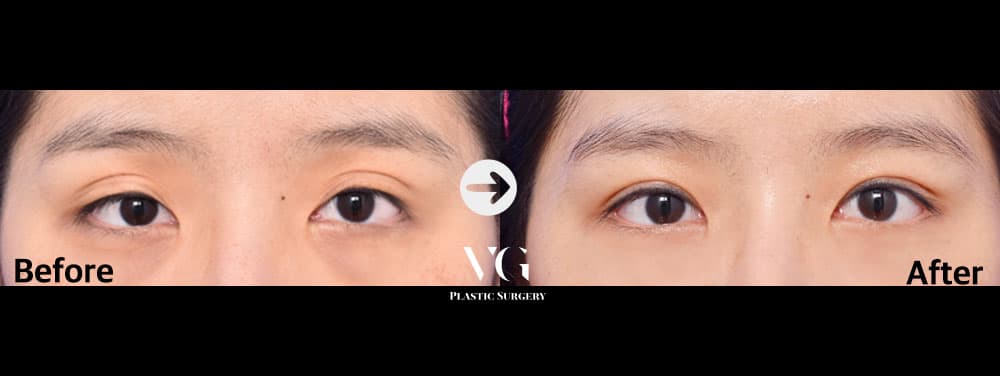
Incisional Double Eyelid3 months after surgery
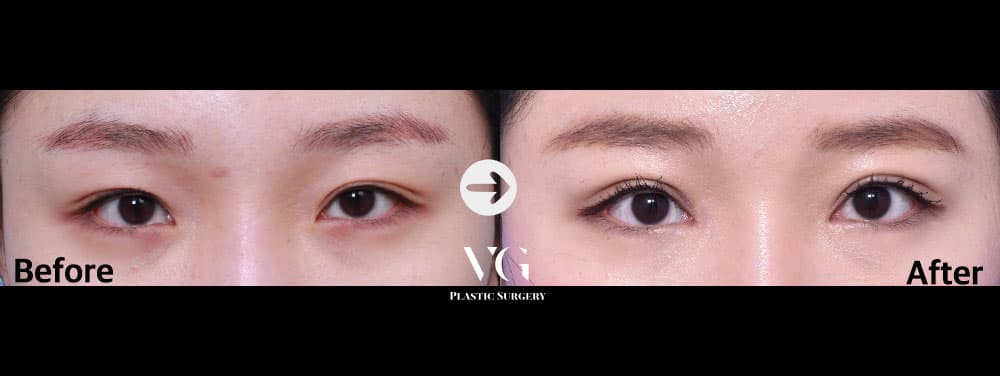
Natural-Adhesion Double Eyelid3 months after surgery
FAQ
Questions patients ask
Can a fold made with sutures be changed to an incision later?
Usually, yes. The suture method is considered easier to revise, and a later incision can remove fat or skin that stitches alone couldn't deal with. It is a second operation with its own recovery and estimate, so mention the first surgery and its year in your first message.
Can I have inner-corner surgery at the same time?
Epicanthoplasty is among the eye procedures offered here. When it is combined, the incisional route is the usual choice because it gives direct access. It adds operating time and changes the estimate, and the inner-corner scar is one more thing to ask about.
How soon will my fold look settled?
Most visible swelling goes down over the first weeks, while the fold usually keeps softening for a few months. Judging the height or symmetry in the first days tends to mislead, which is why the timing of any adjustment is worth asking about up front.
Will there be someone to translate during the consultation?
Yes. A medical interpreter for your language is provided at no extra charge, so the questions above can be asked and answered in detail.
What if one eye looks different from the other a month after surgery?
Early differences are often swelling that settles at a different pace on each side. If they remain once swelling has gone down, revision is a separate plan; at this clinic, revision cases are reviewed together by the three eye surgeons before anyone operates.
Sources
This article explains general medical information. Whether surgery suits you, and which method, is decided only after a consultation with the surgeon.
Written by
Im Young Min
Chief Director · Plastic Surgery
- Ph.D. in Medicine
- Internship and residency, Seoul St. Mary's Hospital
- Board-certified plastic surgeon, Seoul St. Mary's Hospital
- Adjunct professor of plastic surgery, Seoul St. Mary's Hospital
- Former director, Topface Plastic Surgery
Next step
Send two photos. Get a surgeon’s answer.
Front and side, natural light, no filter. Dr. Im Young Min reviews them and tells you which method fits and how many days to stay in Seoul.
International patients pay the same surgical fee as Korean patients. Pricing policy
Keep reading
Eyes
Canthoplasty Cost Korea: What Sets the Figure for Your Eyes? Reviews, Recovery and Methods
The cost of canthoplasty in Korea follows which eye corners are opened, what it's combined with, and how many days you stay in Seoul. For many tired-looking eyes, the upper lid is the real cause.
Im Young Min ·
Eyes
Epicanthoplasty Korea: How Many Days Before You Fly Home? Cost, Reviews and Methods
Stitches after epicanthoplasty usually come out around day 5 to 7, so plan your return flight after that. The pink line beside the nose often takes months to fade, which matters more for work and photos.
Im Young Min ·
Eyes
Under Eye Fat Repositioning Korea Cost: Do Your Bags Need Removing at All? Reviews, Recovery and Methods
Repositioning moves bulging lower-lid fat into the groove beside it, and it tends to suit a bag above a hollow. Your fee follows which layers need work, the anesthesia and anything added to the plan.
Im Young Min ·