Eyes
Blepharoplasty in Korea: Hooded Upper Lids, Under-Eye Bags and Your Stay
A plastic surgeon in Seoul explains upper and lower blepharoplasty for hooded lids and under-eye bags: who each suits, recovery milestones, how long to stay in Korea and how the fee is set.

· 7 min read · Last updated
In this article
- 01What blepharoplasty is — and how it differs from a double eyelid
- 02Who it suits — and when I say wait
- 03Upper blepharoplasty vs lower eyelid blepharoplasty: which problem you have
- 04Surgery day and the recovery timeline
- 05Having eyelid surgery in Korea: days to stay, stitches and follow-up
- 06What sets the cost of eyelid surgery
- 07What I check first in consultation
- 08Risks, and how we reduce them
The short answer
Blepharoplasty is surgery on the eyelid itself: on the upper lid it removes skin (and sometimes fat) that has started to hang over the lashes, and on the lower lid it treats the bags and hollows under the eye. It is a different question from making a double eyelid crease. In Seoul it takes 30 minutes to 2 hours under sedation, stitches come out 3–7 days later, and you should plan to stay at least 7 days.
- Upper blepharoplasty is for lids that hang over the lashes; lower eyelid blepharoplasty is for bags, hollows and loose skin under the eye.
- A drooping brow or forehead can look like a heavy lid — eyelid surgery does not reach that, so it is checked first.
- Under the eye, removing fat alone can leave a hollow, so repositioning the fat is considered before removing it.
- Surgery takes 30 minutes to 2 hours under sedation, usually without admission; plan at least 7 days in Korea.
- International patients pay the same surgical fee as Korean patients, set out in one itemised written quote.
I am Im Young Min, chief director and board-certified plastic surgeon at VG Plastic Surgery in Seoul. I trained at Seoul St. Mary's Hospital, where I am an adjunct professor of plastic surgery, and I operate across our eye, body, breast and anti-aging centres. The patients who ask me about blepharoplasty are rarely asking for bigger eyes — they are asking why they look tired when they are not.
Profile
Im Young Min
Chief Director · Board-certified in Plastic Surgery
What blepharoplasty is — and how it differs from a double eyelid
Blepharoplasty is the medical name for eyelid surgery. On the upper lid it means removing skin that has loosened and folded down, sometimes with a little fat. On the lower lid it means dealing with the bags, the hollow beneath them and any loose skin.
A double eyelid operation is a different goal: it creates or redesigns a crease on a lid that does not need tissue taken away. If that is what you are looking into, our double eyelid surgery guide compares the incisional and non-incisional methods in detail. This article stays with the ageing lid: the one that has started to hang, and the under-eye that has started to bulge.
In practice the two can overlap. When the upper lid is opened to remove skin, a crease can be set at the same time, and I plan that with you rather than leave it to chance.
Who it suits — and when I say wait
These are the reasons people most often come to me for an eyelid lift.
- Skin on the upper lid rests on the lashes, so the eye looks smaller and makeup smudges into the fold
- You lift your forehead and eyebrows to open your eyes, and the lines on your forehead have deepened
- Bags under the eyes, with a shadowed groove below them, make you look tired even after a full night's sleep
- A previous eyelid operation has healed in a way you are unhappy with, and you are considering revision
I also tell people when eyelid surgery is not the answer yet, or not the answer at all.
- Untreated dry eye or blepharitis — we ask you to see an ophthalmologist first
- Pregnancy, or an uncontrolled thyroid or bleeding disorder
- A travel schedule too short for stitch removal and the first follow-up in Korea
- The heaviness comes from a brow or forehead that has dropped, rather than from the lid itself
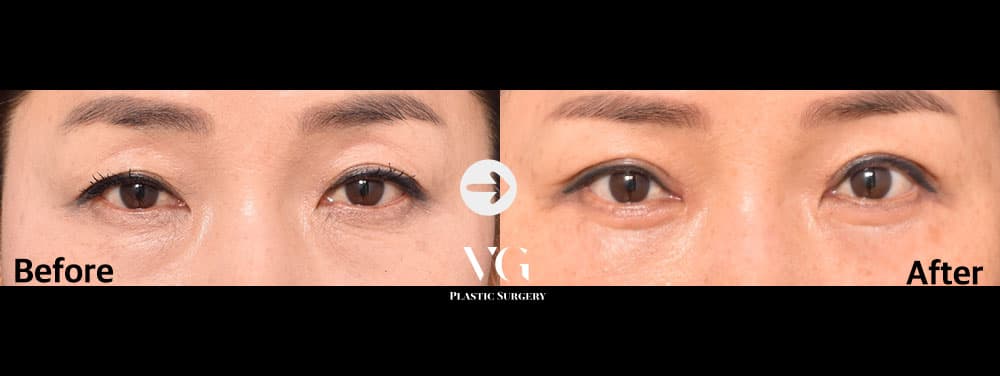
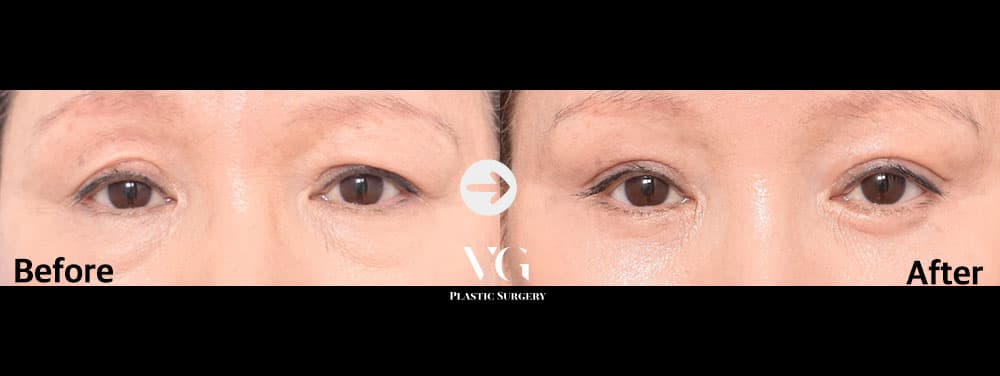
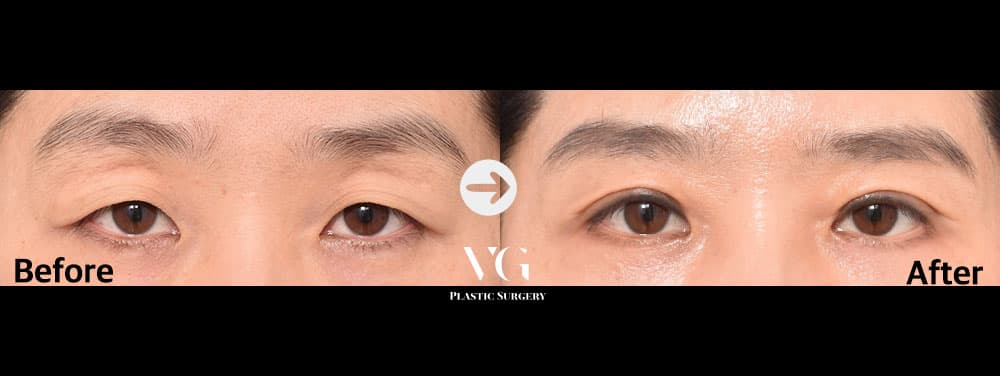
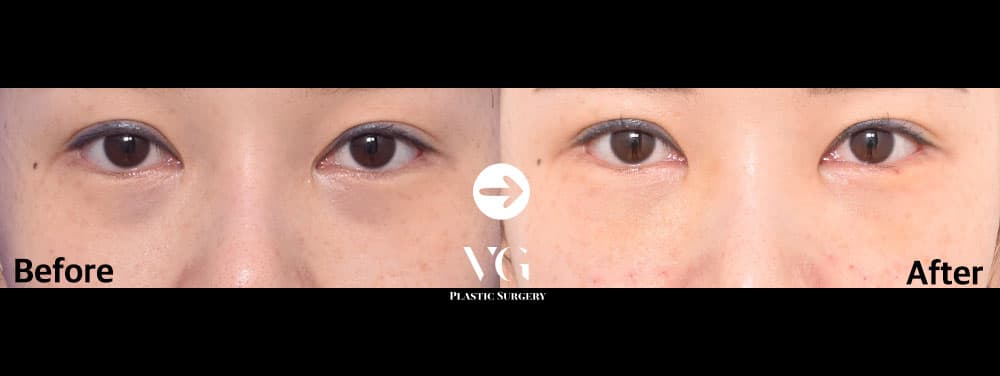
In both cases the skin hanging at the outer third of the lid was the main problem; once it was removed, the eyes read as open without being made larger. You can see this upper eyelid case in full, or browse every eye before-and-after photo by concern.
Upper blepharoplasty vs lower eyelid blepharoplasty: which problem you have
The upper and lower lids age in different ways, so the operations are planned separately even when they are done on the same day. The table sets out how I tell them apart.
| Upper blepharoplasty | Lower eyelid blepharoplasty | Brow or forehead lift | |
|---|---|---|---|
| What bothers you | Skin folding onto the lashes, a hooded or tired look | Bags, a dark groove below them, loose skin under the eye | The whole brow sits low and presses down on the lid |
| What is done | Excess skin and, where needed, fat are trimmed through the lid; a crease can be set at the same time | The fat under the eye and the loose skin are looked at together; fat is repositioned into the groove before any is removed | The brow is lifted from below it, so the scar sits in the brow line |
| Where the scar sits | Along the eyelid line | Depends on the approach chosen at consultation | In the brow line |
| When it is not the answer | When the brow, not the lid, has dropped | When volume loss across the cheek, not the under-eye, is the main cause | When the lid skin itself is the excess |
Why the brow is checked first
When the forehead descends, the eyes read heavy — and that is a droop eyelid surgery does not reach. If I remove lid skin while the brow is the real cause, the brow can sit even lower afterwards. So before any upper blepharoplasty I ask you to relax your forehead completely and I look at where the brow falls.
Why under-eye fat is moved before it is removed
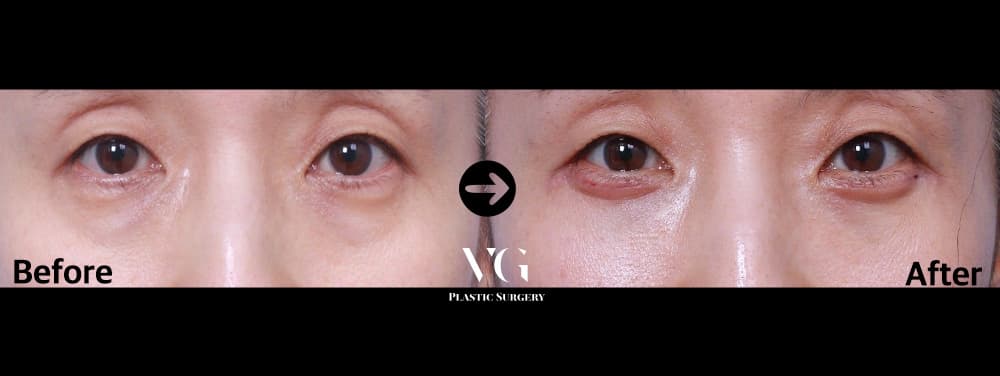
Under-eye bags are usually fat pushing forward, with a groove beneath that looks darker because of the shadow. Removing the fat alone can leave a hollow that looks older than the bag did. That is why, in lower eyelid blepharoplasty, I consider repositioning the fat into the groove first, and trim skin only where it is genuinely loose.
Surgery day and the recovery timeline
On the morning of surgery I draw the plan on your face and go through it with you, with the interpreter present. Nothing starts until you agree to what is drawn.
Eyelid surgery takes 30 minutes to 2 hours under sedation, and admission is usually not required. You can wash your hair from the day after surgery.
| Milestone | Upper lid (incisional eyelid data) | Under-eye fat repositioning |
|---|---|---|
| Swelling at its peak | Days 3–5 | Days 3–5 |
| Stitches out | Days 5–7 | Days 5–7 |
| Back to everyday activity | 10–14 days | 7–10 days |
| Most people no longer notice | 2–3 months | 1–2 months |
| Final result assessed | 6 months | 3 months |
Our recovery data do not list upper blepharoplasty on a line of its own. The closest entry is incisional eyelid surgery, which also trims skin and fat through the lid, so that is the column I use as your guide.
- Eye makeup: 3–5 days after the stitches are out
- Contact lenses and light exercise: after 2 weeks
- Phone and screens: short periods from the next day
- Alcohol and smoking: after 4 weeks
Send one photo with your eyes open and one looking down — I'll tell you whether the heaviness is in the lid, the under-eye or the brow.
Having eyelid surgery in Korea: days to stay, stitches and follow-up
For blepharoplasty in Korea, plan to stay at least 7 days. That covers stitch removal and the first follow-up before you fly, so you do not travel with stitches still in. It is not the same as being back to daily life, which is a longer, separate number.
- Arrival day: pickup and the in-person consultation, or the next morning if you land late
- Surgery day, with the design confirmed on your face that morning
- Recovery at a partner hotel within walking distance of the clinic
- Stitches out 5–7 days after surgery
- A last follow-up before you fly, where we tell you what to send and when
Do not book your return flight for the day of your last appointment — appointments move. The day-by-day stay planner lays the week out against your own dates. If you are planning another operation on the same trip, the stay is set by the longer one; a Korean nose job, for example, can need 14 days.
After you fly home, follow-up continues for three months: we review photographs at week 1, month 1 and month 3, and the surgeon who operated answers in writing, asking for more photographs from set angles when the first ones are not enough.
What sets the cost of eyelid surgery
People often ask about eyelid surgery cost before they have sent a photo. I cannot give one honest figure, because an upper lid alone, a lower lid with fat repositioning, and both lids with a brow lift are three different operations.
- Which lids: upper, lower, or both in one session
- Technique: skin only, skin and fat, or fat repositioning under the eye
- Combined work: ptosis correction or a brow lift planned alongside
- Revision: previous scar tissue changes the operating time and sometimes the approach
What does not change the fee is your passport. International patients pay the same surgical fee as Korean patients, with no foreigner surcharge and no agency commission built in. Our pricing policy sets out what the itemised written quote covers, including anesthesia, interpretation and three months of remote follow-up.
What I check first in consultation
I measure eyelid thickness, fat and muscle strength first, then decide whether an incision is needed at all. If the lid opens weakly, a ptosis correction may belong in the plan; our eye surgery page explains each technique and our results by concern. My own training and memberships are on my profile page.
Risks, and how we reduce them
Every blepharoplasty carries risk: swelling and bruising that last longer than expected, a fine trace along the incision line, asymmetry while the tissue settles, and dryness or irritation of the eye. Recovery differs from person to person, and I would rather you hear that from me before surgery than after.
- Dry eye treated first: untreated dry eye or blepharitis is sent to an ophthalmologist before we operate
- Tissue kept, not over-removed: we avoid over-resecting skin or fat, which is what makes a lid look operated on
- Anesthesia: a board-certified anesthesiologist is resident, under a named-doctor system
- One surgeon throughout: the surgeon you consult with performs the whole operation, with no ghost doctors
- Revision timing: if a revision is needed, it should wait at least 6 months after the first surgery
After you are home, some signs should not wait for the next scheduled review: blurred or changed vision, bleeding that will not stop, pain that keeps getting worse, fever, or sudden swelling on one side only. Send a photo through messenger and you will have an answer the same day.
Send photos of your eyes open, closed and looking down on WhatsApp, and I'll tell you which eyelid surgery I would plan and how many days you need in Seoul.
Eyes before & after — more cases
Real patients from our archive, all photographed 3 months after surgery. Tap a case to compare it full size.
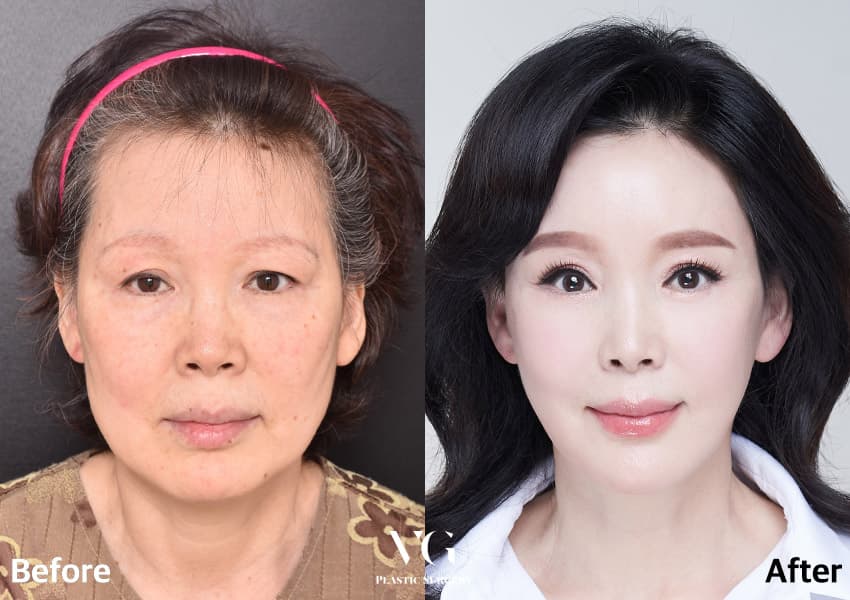
Upper Blepharoplasty3 months after surgery
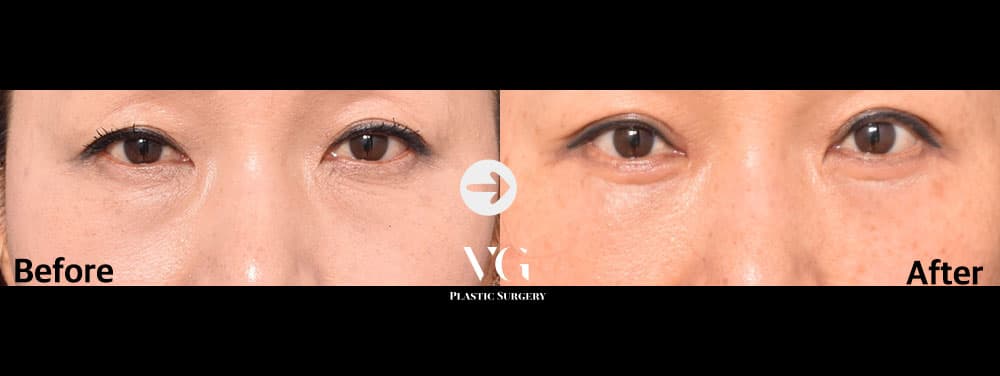
Lower Blepharoplasty3 months after surgery
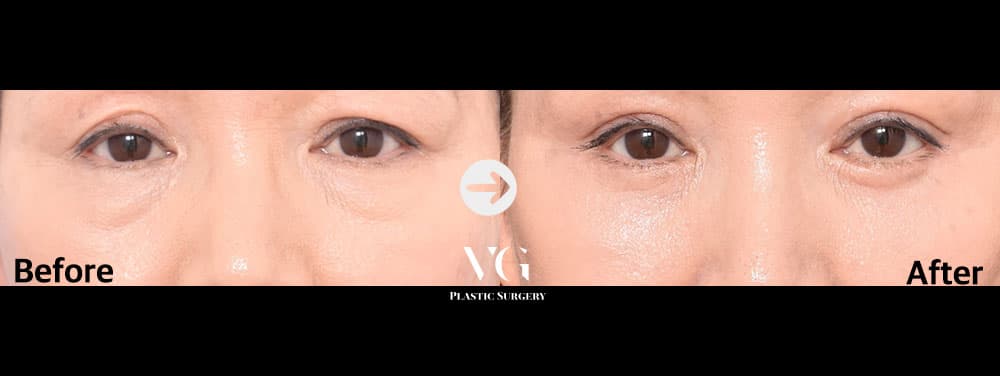
Lower Blepharoplasty3 months after surgery
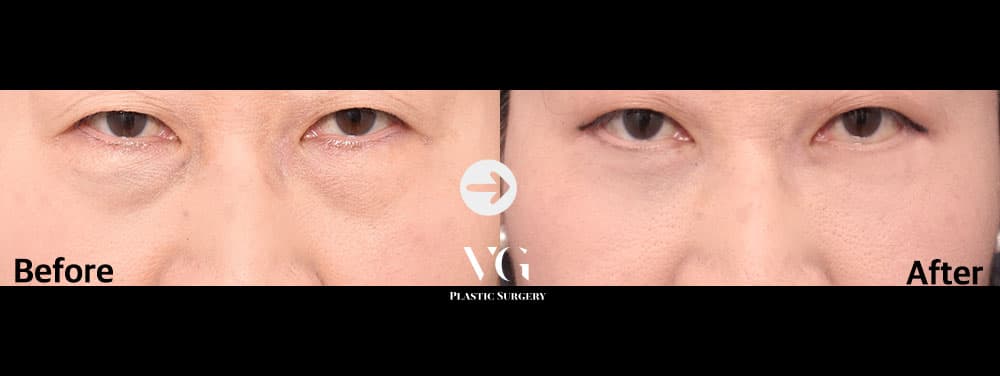
Lower Blepharoplasty3 months after surgery
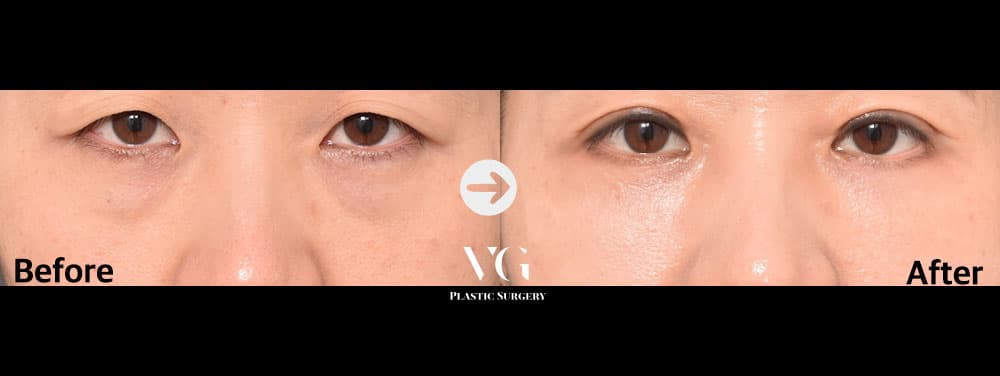
Lower Blepharoplasty3 months after surgery
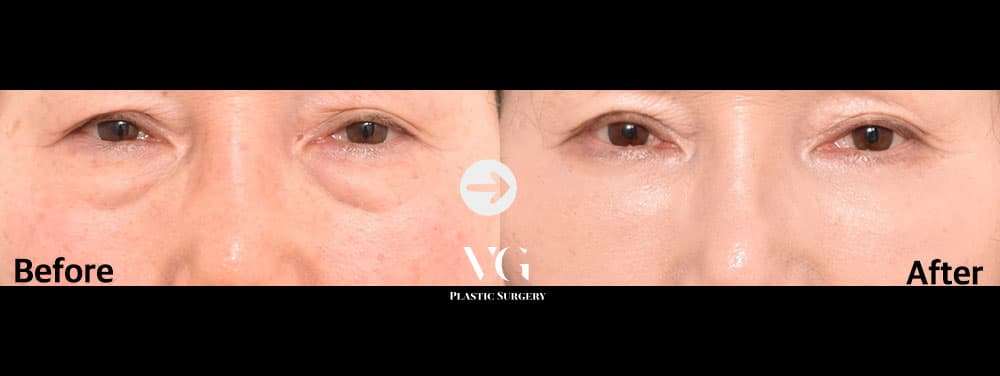
Lower Blepharoplasty3 months after surgery
FAQ
Questions patients ask
What is the difference between blepharoplasty and double eyelid surgery?
Blepharoplasty removes or repositions tissue — loose skin on the upper lid, or bags and hollows under the eye. Double eyelid surgery creates or redesigns a crease on a lid that does not need tissue removed. On the upper lid a crease can be set during blepharoplasty, and we decide that together at consultation.
How long should I stay in Korea after blepharoplasty?
At least 7 days. That covers stitch removal 5–7 days after surgery and the first follow-up before you fly. Do not book your flight for the day of your last appointment, because appointments can move.
Can upper and lower blepharoplasty be done together?
Yes, both lids can be planned in one session, and the operation still takes 30 minutes to 2 hours under sedation. Each lid is assessed on its own, because the upper lid is usually about skin and the lower lid about fat and the groove below it.
How much does eyelid surgery cost in Korea?
We do not publish a price list, because the figure depends on which lids are treated, the technique and whether anything is combined. International patients pay the same surgical fee as Korean patients. After consultation you receive an itemised written quote before you decide anything.
Will there be a visible scar?
On the upper lid the incision follows the eyelid line, and a fine trace may remain along it. How visible it is depends on your skin and how it heals. Eye makeup can be worn 3–5 days after the stitches are out.
When can I wear contact lenses and exercise again?
Contact lenses and light exercise after 2 weeks, and alcohol and smoking after 4 weeks. Short periods on your phone or screens are fine from the next day.
This article explains general medical information. Whether surgery suits you, and which method, is decided only after a consultation with the surgeon.
Written by
Im Young Min
Chief Director · Plastic Surgery
- Ph.D. in Medicine
- Internship and residency, Seoul St. Mary's Hospital
- Board-certified plastic surgeon, Seoul St. Mary's Hospital
- Adjunct professor of plastic surgery, Seoul St. Mary's Hospital
- Former director, Topface Plastic Surgery
Next step
Send two photos. Get a surgeon’s answer.
Front and side, natural light, no filter. Dr. Im Young Min reviews them and tells you which method fits and how many days to stay in Seoul.
International patients pay the same surgical fee as Korean patients. Pricing policy
Keep reading
Eyes
How Much Does Double Eyelid Surgery Cost in Korea? Results, How Long It Lasts, Reviews and When to Spend Less
There's no single figure: the method your lids need, any ptosis or inner-corner work, the anesthesia and your days in Seoul set the quote, and foreigners pay the same surgical fee as Korean patients.
Im Young Min ·
Eyes
Lower Blepharoplasty Korea Cost: Fat, Skin or Lid Support? Reviews, Methods and Recovery
Your lower blepharoplasty cost in Korea follows what is causing the bags: bulging fat, a hollow beneath it, loose skin or a slack lower lid, plus the anesthesia and the days you plan in Seoul.
Im Young Min ·
Eyes
Double Eyelid Surgery Cost in Korea: What Changes Your Quote? Results, Reviews and Methods
Quotes for double eyelid surgery in Korea differ because they describe different operations: suture or incision, fat removal, ptosis correction, inner-corner work and revision.
Im Young Min ·