Eyes
Under Eye Fat Repositioning Korea: Bags, Hollows, Recovery and Stay
An eye surgeon in Seoul explains why under-eye bags are often moved rather than removed, who the operation suits and who should wait, real cases at three months, the recovery timeline, a 7-day stay and how the fee is set.
In this article
- 01Why I move under-eye fat rather than simply remove it
- 02Who it suits, and when I advise waiting
- 03Repositioning, removal or adding volume
- 04Surgery day and recovery
- 05Planning under eye fat repositioning Korea trips: stay, stitches and follow-up
- 06How the fee is set
- 07What I check first in consultation
- 08Risks, and how we reduce them
The short answer
Under-eye bags are fat that has pushed forward, usually sitting above a groove. Removing that fat alone can leave a hollow, so on our eye surgery team we consider repositioning it first, moving it into the groove so the lid and cheek meet in one smooth line. Eye surgery here takes 30 minutes to 2 hours under sedation, swelling peaks at 3–5 days, stitches come out at 5–7 days, and you should plan to stay in Korea for 7 days.
- Fat repositioning moves the bulging fat into the groove beneath it instead of taking it all out, because removing fat alone can leave a hollow.
- The fat and the skin of the lower lid are judged together; when loose skin is the main problem, the plan changes.
- In our recovery data, swelling peaks at 3–5 days, stitches come out at 5–7 days, daily life returns at 7–10 days and the result settles by 3 months.
- Plan on a 7-day stay in Korea; follow-up continues by photograph review after you fly home.
- International patients pay the same surgical fee as Korean patients, confirmed in an itemised written quote.
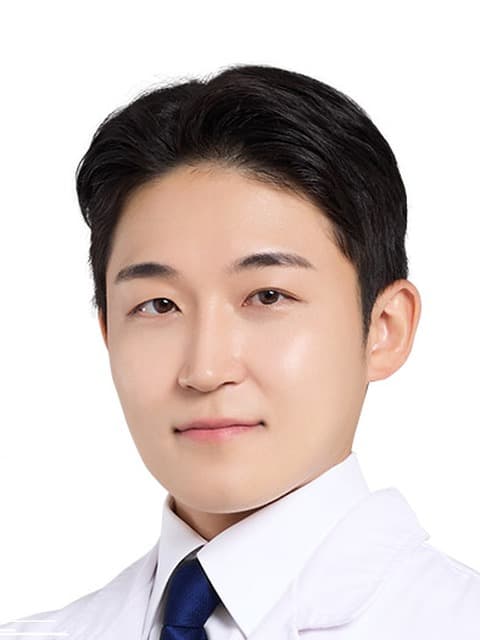
Hello, I'm Yang Jong Phil, a board-certified plastic surgeon on the eye surgery team at VG Plastic Surgery in Seoul and a full member of the Eyelid Surgery Research Group of the Korean Society of Plastic and Reconstructive Surgeons. The photos I am sent most often from abroad are close-ups of tired-looking lower lids, and the question behind most searches for under eye fat repositioning Korea is simple: will the bags go without leaving a hollow? This article answers it the way I answer it in consultation.
Profile
Yang Jong Phil
Director · Board-certified in Plastic Surgery
Our eye surgery centre page sets out every eye operation we do, side by side. Here I focus on one of them, and on what flying to Seoul for it actually involves.
Why I move under-eye fat rather than simply remove it
When someone asks about Korean eye bag surgery, they usually picture the bag being cut away. On many faces, though, the bulge is only half of the problem. Below the bulge there is often a groove, and the shadow in that groove is what makes the eye look tired.
If I remove the fat alone, the bulge flattens but the groove stays, and sometimes the area ends up looking sunken. That is why our team considers repositioning first: the same fat is moved down into the groove, so the lower lid and the top of the cheek meet in one smooth line. You keep your own tissue, just in a better place.
Not every case is pure fat. I look at the fat under the eye and the loose skin together. When the skin has stretched enough to fold, the plan includes the lower lid skin as well; I explain that version in my colleague's guide to blepharoplasty for hooded lids and under-eye bags.
Who it suits, and when I advise waiting
Korean under eye surgery of this kind is a good conversation to have when these describe you:
- You have soft bags under both eyes that stay even when you are well rested
- There is a shadow or groove below the bag, so concealer never quite hides it
- People tell you that you look tired, and the lower lid is where you see it
- The skin of the lower lid is still reasonably firm, without deep folds
These are the situations where I ask you to wait, or to deal with something else first:
- Untreated dry eye or blepharitis — we ask you to see an ophthalmologist first
- A travel schedule too short for stitch removal and the first follow-up in Korea
- Pregnancy, or an uncontrolled thyroid or bleeding disorder
- Hollowing with no bulge at all, where adding volume is a better question than moving fat
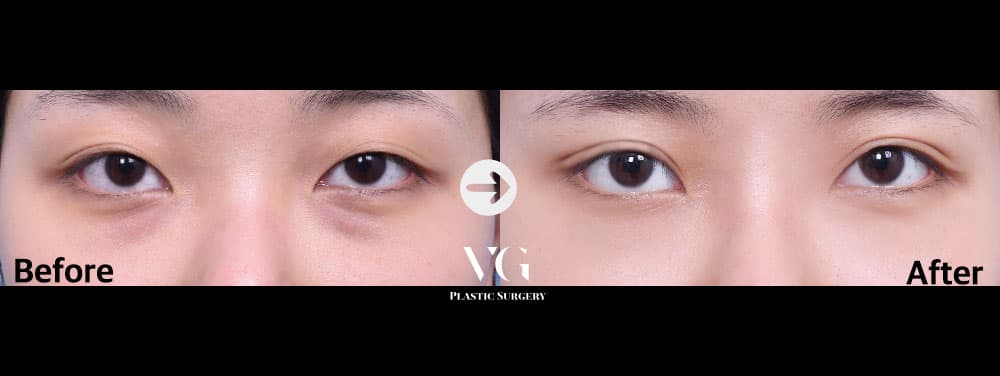
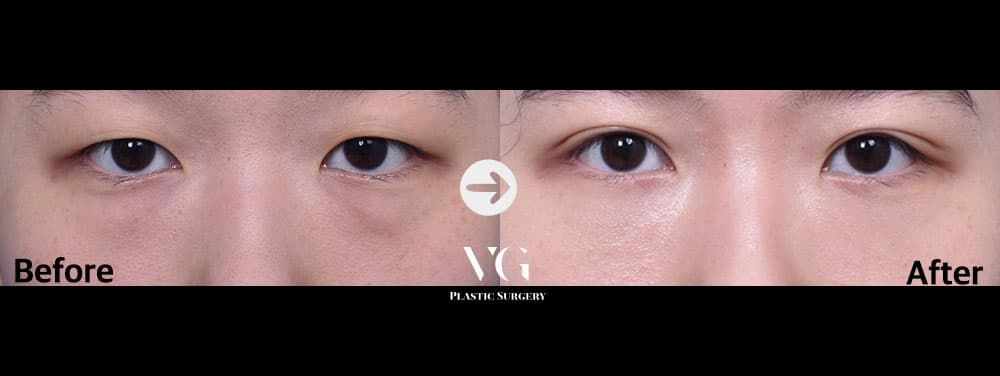
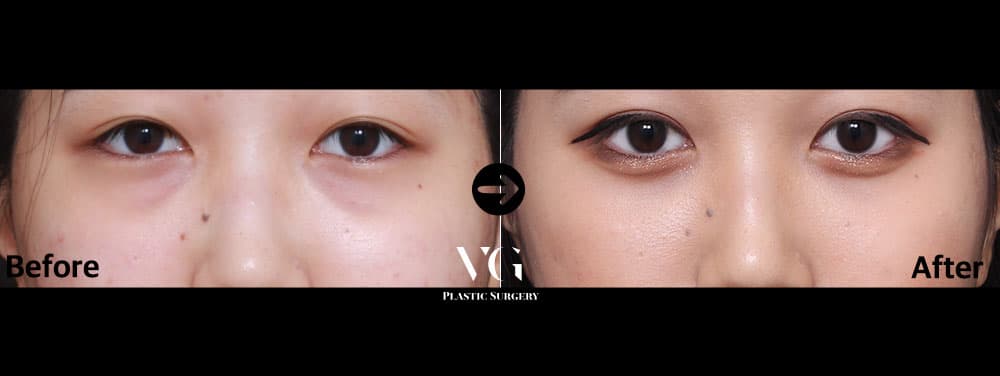
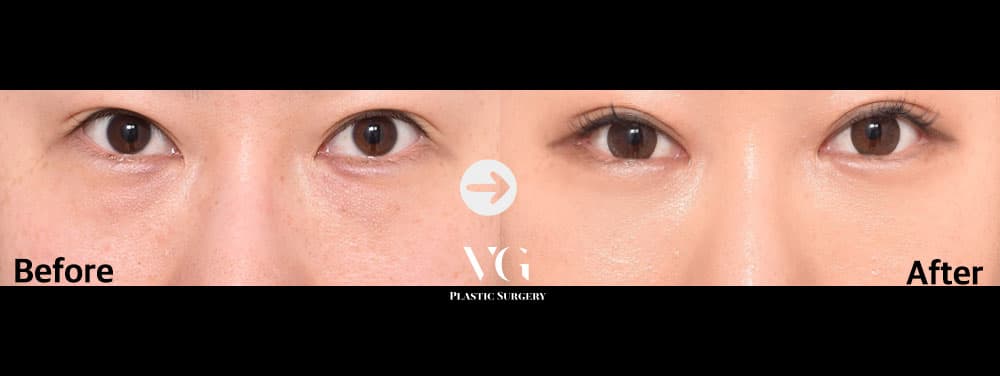
Both of these are cases from our eye surgery team, photographed 3 months after surgery. In each, the bulge under the lashes and the dark line below it were treated as one problem, so the after photo shows a single smooth slope rather than a flat lid with a groove still underneath. You can open the first case in full to look at it more closely.
Repositioning, removal or adding volume
Three different problems can look like "bags" in a photograph. I sort them before choosing a plan, and the table shows how.
| What I see | What it usually means | Where the plan starts |
|---|---|---|
| A bulge with a groove beneath it | Fat has pushed forward above a hollow | Fat repositioning: the fat is moved into the groove |
| A bulge plus folds of loose skin | Fat and skin have both changed | The lower lid skin is addressed together with the fat |
| A hollow with no bulge | Volume is missing rather than misplaced | Fat grafting from your own tissue may be discussed |
The third row matters for people who search for fat grafting under eyes. Hollowing under the eyes that makes you look tired is one of the situations our fat grafting team treats, with fat taken from your abdomen or thighs. Only part of a graft survives, so it is done conservatively; I would read about it in our guide to face fat grafting in Korea before deciding.
Surgery day and recovery
On the morning of surgery I mark the plan and go through it with you, with the interpreter present. Nothing starts until you agree. Eye surgery here takes 30 minutes to 2 hours under sedation, and an overnight stay is usually not required.
| Stage | Timing |
|---|---|
| Swelling at its peak | 3–5 days after surgery |
| Stitches out | 5–7 days after surgery |
| Back to daily life | 7–10 days |
| Looks natural to others | 1–2 months |
| Final result | 3 months |
You can wash your hair from the day after surgery. Bruising and swelling under the eye are expected in the first week, and the lower lid keeps settling for weeks after that. Healing differs from person to person, so I judge your progress at each check rather than by the calendar alone.
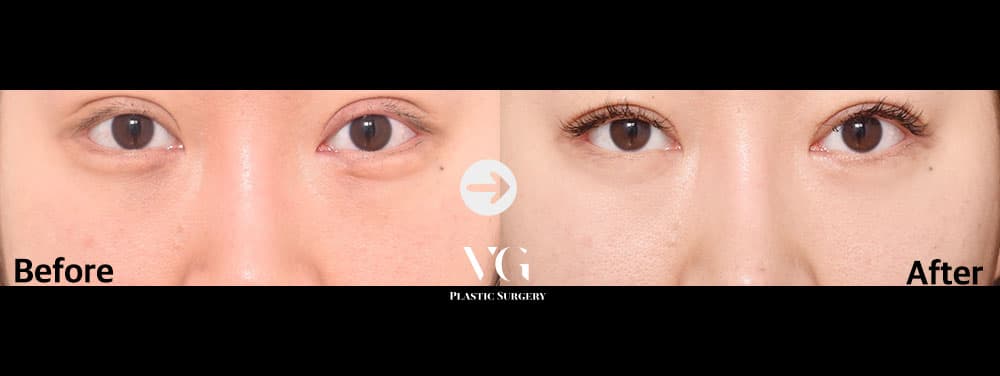
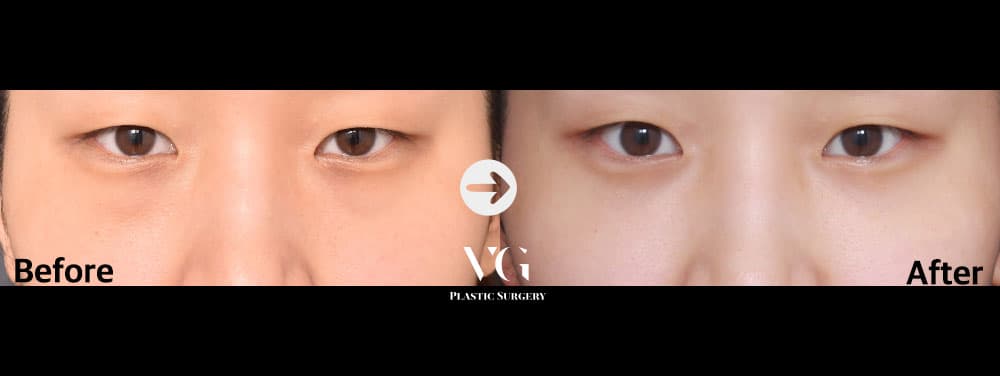
Not every bag is large. These three cases from our eye surgery team, again at 3 months, started with modest puffiness, the kind that shows mainly in photographs and under overhead light. A small bag still needs a measured plan: moving too much fat here would trade a bulge for a ridge.
Send me a front photo and one looking slightly upward, in daylight and without makeup, and I'll tell you whether your bags need moving, removing or something else.
Planning under eye fat repositioning Korea trips: stay, stitches and follow-up
For eye surgery, plan on staying in Korea for 7 days. That covers the consultation, the operation, stitch removal at 5–7 days and a check before you fly. We confirm your exact dates in consultation.
- Before you fly: a free photo quote, with the plan sent back by messenger or email
- In Seoul: consultation, surgery, stitch removal and a final check
- After you fly home: photograph reviews at set intervals, written responses from your surgeon, and a request for more photographs from set angles when the first ones are not enough
The day-by-day trip planner lays this out against your own dates. One coordinator stays with you from your first message to three months after you fly home, and an interpreter sits with you in consultation, on surgery morning and at every follow-up visit.
How the fee is set
I cannot quote a fee for eye bag fat reposition in Korea before I have seen your lids. Whether skin is involved, whether both upper and lower lids are being treated, and the time under sedation all change the plan.
What I can tell you is how the fee works. International patients pay the same surgical fee as Korean patients: no foreigner surcharge and no commission built in. After consultation you receive one itemised written quote, before you decide anything. Our pricing policy explains why there is no price list.
What I check first in consultation
My own work is mainly eye and nose surgery, alongside anti-aging procedures. My training and memberships are on my profile page, and I have also written about revision double eyelid surgery for anyone correcting an earlier result. If you want to compare more results before writing to us, my colleague's article on how to read Korean eyelid surgery before and after photos is a useful companion, and the full before and after gallery lets you filter by concern.
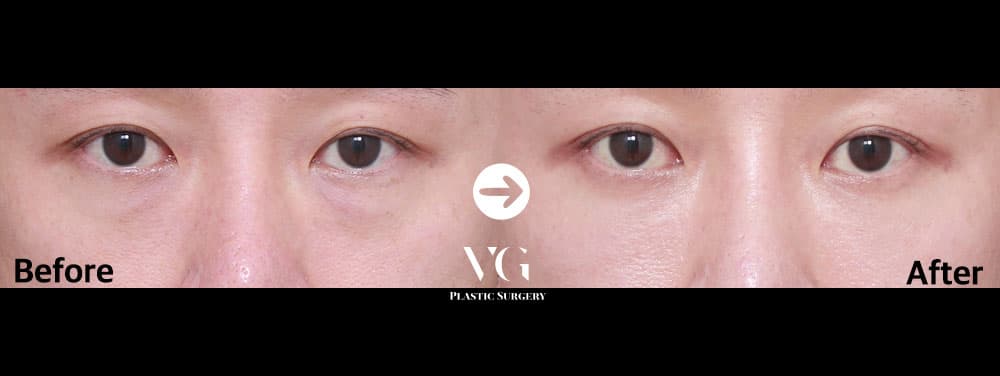
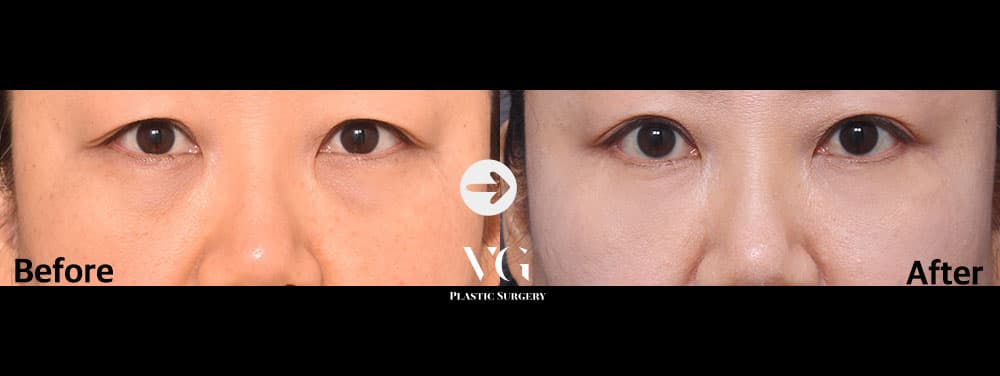
The first case here is a man, where the goal was to look rested without any change to the shape of the eye; you can see the case page in our gallery for detail. The second is a more mature face, where the skin and fat were judged together before deciding how much to move. Both are cases from our eye surgery team at 3 months.
Risks, and how we reduce them
Every eyelid operation carries risk, and I go through these before you agree to a plan:
- Bruising and swelling, which peak at 3–5 days and fade over the following weeks
- A slight difference between the two sides while the tissue settles
- An uneven contour if too much or too little fat is moved
- A hollow look if fat is taken out where it should have been moved
- Irritation of an eye that was already dry, which is why dry eye is treated first
- Bleeding or infection, as with any surgery
The way to reduce most of these is the plan itself: measuring the bulge and the groove, moving only as much fat as the groove needs, and checking you in person until the stitches are out. If anything looks wrong after you fly home, send a photo and we look at it with you.
If you are still deciding, under eye fat repositioning Korea trips take about a week, and our eye surgery page, with results sorted by concern, is the place to compare it with the other operations we do.
Send two photos on WhatsApp — front and slightly upward — and I'll tell you how I would plan your under-eye and how your 7 days in Seoul would look.
Eyes before & after — more cases
Real patients from our archive, all photographed 3 months after surgery. Tap a case to compare it full size.
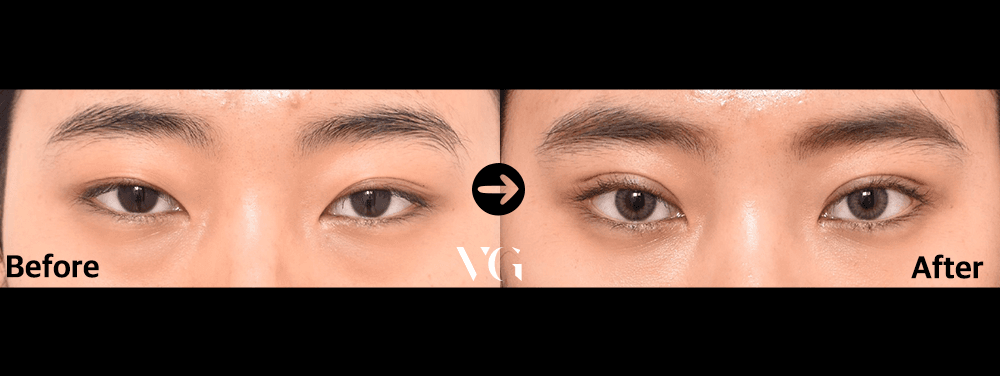
Under-Eye Fat Repositioning3 months after surgery
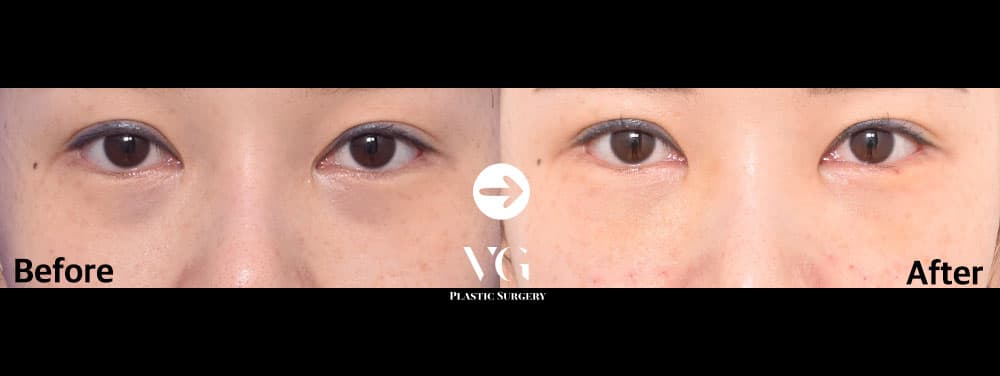
Under-Eye Fat Repositioning3 months after surgery
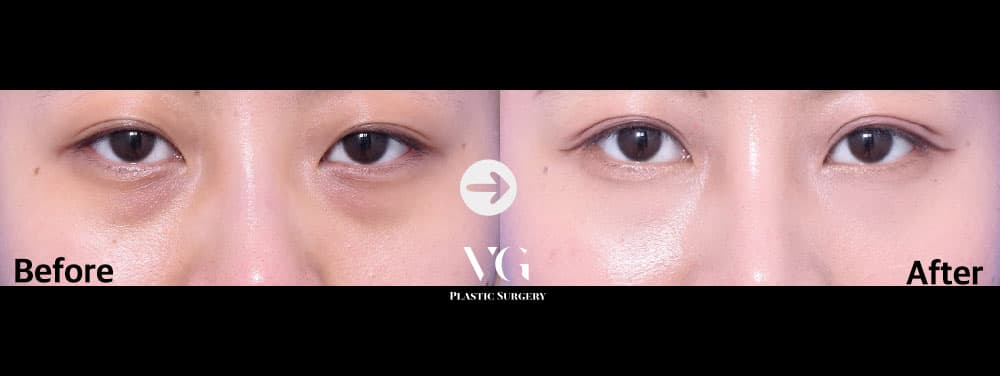
Under-Eye Fat Repositioning3 months after surgery
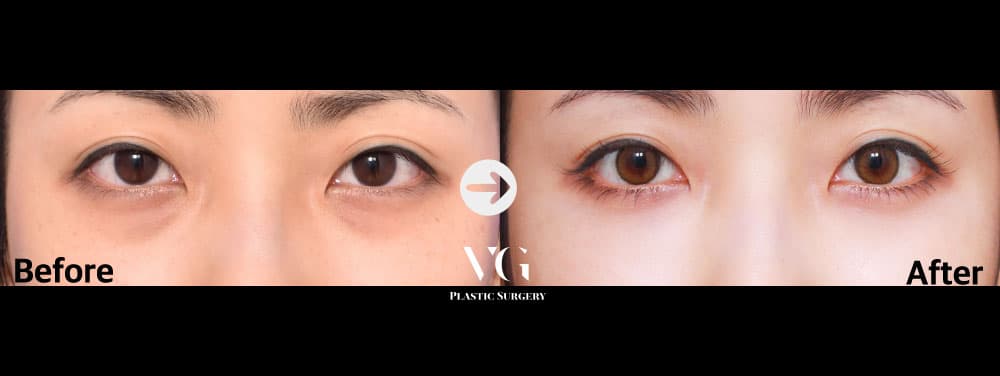
Under-Eye Fat Repositioning3 months after surgery
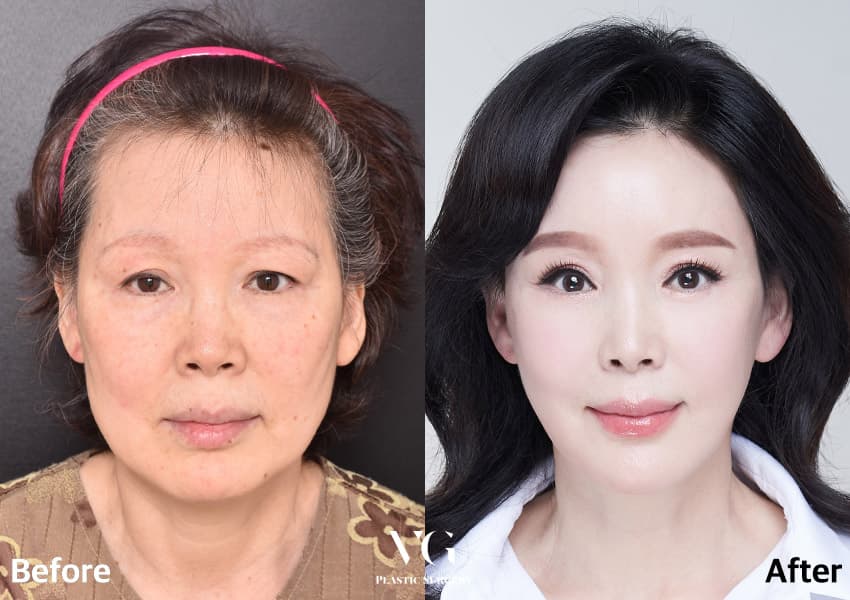
Face Lift3 months after surgery
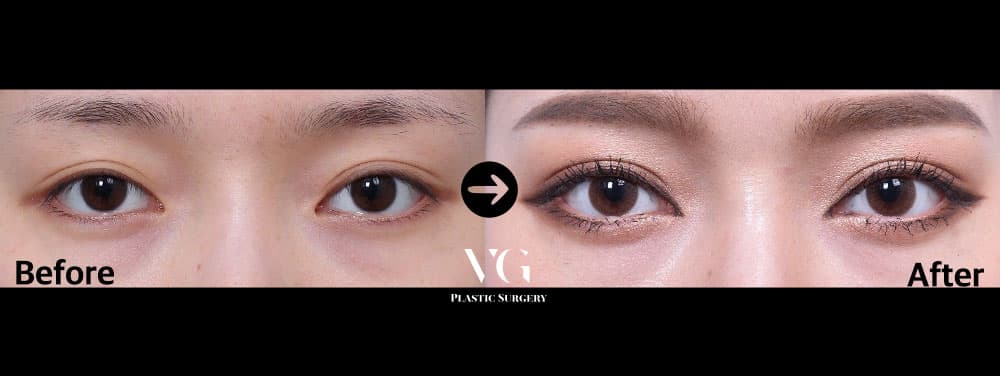
Natural-Adhesion Double Eyelid3 months after surgery
FAQ
Questions patients ask
How much does under eye fat repositioning cost in Korea?
We do not publish a price list, because the fee depends on whether skin is involved, whether other eyelid work is added and the time under sedation. International patients pay the same surgical fee as Korean patients, with no foreigner surcharge. You receive an itemised written quote after consultation, before you decide.
How long should I stay in Korea?
Plan on 7 days for eye surgery. That covers consultation, surgery, stitch removal at 5–7 days and a check before you fly. We set your exact dates with you in consultation.
Is fat repositioning the same as eye bag removal?
No. Removal takes the bulging fat out, which can leave a hollow if there is a groove beneath it. Repositioning moves that fat into the groove so the lid and cheek meet smoothly. Which one fits depends on what I see in consultation.
When can I go back to work after Korean eye bag surgery?
In our recovery data, people return to daily life 7–10 days after surgery. Swelling peaks at 3–5 days, and the result looks natural to others at 1–2 months. The final result is judged at 3 months.
Can fat grafting under the eyes be done instead?
If the problem is a hollow without a bulge, fat grafting from your abdomen or thighs may be the better conversation. Only part of a graft survives, so it is done conservatively and a second session is sometimes planned. If there is a bulge, moving that fat is usually where we start.
What happens after I fly home?
Follow-up continues by photograph at set intervals, with written responses from your surgeon and a request for more photographs from set angles when the first ones are not enough. Your coordinator stays with you for three months after you fly home.
This article explains general medical information. Whether surgery suits you, and which method, is decided only after a consultation with the surgeon.
Written by
Yang Jong Phil
Director · Plastic Surgery
- Board-certified plastic surgeon, Korea University Hospital
- Korea University College of Medicine
- Plastic surgery fellowship, University of Chicago Medical Center
- International Confederation for Plastic, Reconstructive and Aesthetic Surgery (IPRAS)
- American Society of Plastic and Reconstructive Surgeons (ASPRS)
Next step
Send two photos. Get a surgeon’s answer.
Front and side, natural light, no filter. Dr. Yang Jong Phil reviews them and tells you which method fits and how many days to stay in Seoul.
International patients pay the same surgical fee as Korean patients. Pricing policy
Keep reading
Eyes
How Much Does Double Eyelid Surgery Cost in Korea? Results, How Long It Lasts, Reviews and When to Spend Less
There's no single figure: the method your lids need, any ptosis or inner-corner work, the anesthesia and your days in Seoul set the quote, and foreigners pay the same surgical fee as Korean patients.
Im Young Min ·
Eyes
Lower Blepharoplasty Korea Cost: Fat, Skin or Lid Support? Reviews, Methods and Recovery
Your lower blepharoplasty cost in Korea follows what is causing the bags: bulging fat, a hollow beneath it, loose skin or a slack lower lid, plus the anesthesia and the days you plan in Seoul.
Im Young Min ·
Eyes
Double Eyelid Surgery Cost in Korea: What Changes Your Quote? Results, Reviews and Methods
Quotes for double eyelid surgery in Korea differ because they describe different operations: suture or incision, fat removal, ptosis correction, inner-corner work and revision.
Im Young Min ·