Nose
Bulbous Nose: Why the Tip Looks Round and What Tip Plasty Can Change
A rhinoplasty surgeon in Seoul explains what makes a nose tip look round, what tip plasty can and cannot change, how long the swelling takes on thick skin, and how many days to plan in Korea.
· 6 min read · Last updated
In this article
The short answer
A bulbous nose is a tip that looks round or wide because two things happen at once: the cartilage inside the tip is splayed, and the skin over it is thick. Tip plasty reshapes the cartilage; the skin then has to settle over the new shape, which takes weeks when it is thin and months when it is thick. For tip work without bone surgery, plan to stay in Seoul at least 7 days.
- A round tip is usually splayed cartilage and thick skin together, and the skin decides how long the result takes to show.
- Tip plasty takes 1–3 hours under sedation or general anesthesia; stitches come out 5–7 days after surgery.
- Without bone work, swelling peaks on days 3–5 and the final shape is assessed at around 6 months.
- Stay in Korea at least 7 days, or 14 if the plan adds bone narrowing or it is a revision.
- If the nose still reads wide after the tip is refined, nostril width is often what is left — we check it in the same consultation.
I am Yang Jong Phil, a board-certified plastic surgeon at VG Plastic Surgery in Seoul, trained at Korea University Hospital with a plastic surgery fellowship at the University of Chicago Medical Center. I am a full member of the Rhinoplasty Research Group of the Korean Society of Plastic and Reconstructive Surgeons. A bulbous nose is one of the most common reasons people send me a photo of their nose, so this is how I explain it in consultation.
Profile
Yang Jong Phil
Director · Board-certified in Plastic Surgery
What makes a nose tip look bulbous
When someone describes a bulbous nose, they usually mean the lower third: the tip looks round, soft and wider than the bridge above it. From the front the nose ends in a ball rather than a point. In profile the tip can look low, as if it sits back on the face.
Underneath, a round tip is thick skin and splayed cartilage at the same time. The two small cartilages that shape the tip sit wide apart or curve outward, so the tip spreads. Over them lies skin that may be thick, oily and firm. Most people I examine have some of both.
That matters, because surgery works directly on the cartilage, not on the skin. The skin has to shrink down over the new framework on its own. How quickly and how far it does that is the biggest difference between one bulbous nose tip and another.
Why an Asian bulbous nose often comes with a low bridge
Many of the patients who write to me from abroad describe the same starting point: a round tip together with a low or flat bridge. Asian bulbous nose rhinoplasty therefore often has two parts. The tip is refined, and the bridge may be raised so that the tip no longer stands out on its own.
If the bridge is your main concern, the four ways we rebuild it are laid out in my colleague's guide to the Korean nose job and its four methods. This article stays with the tip.
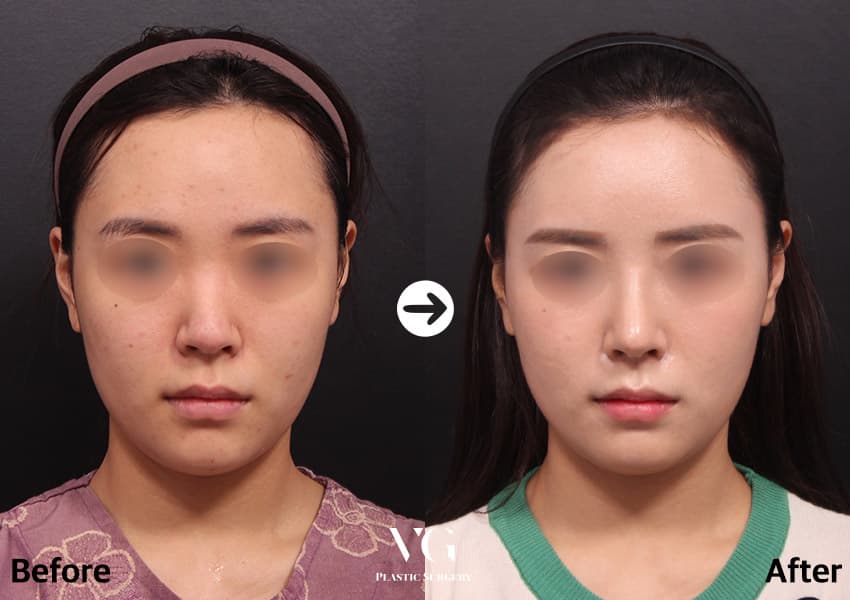
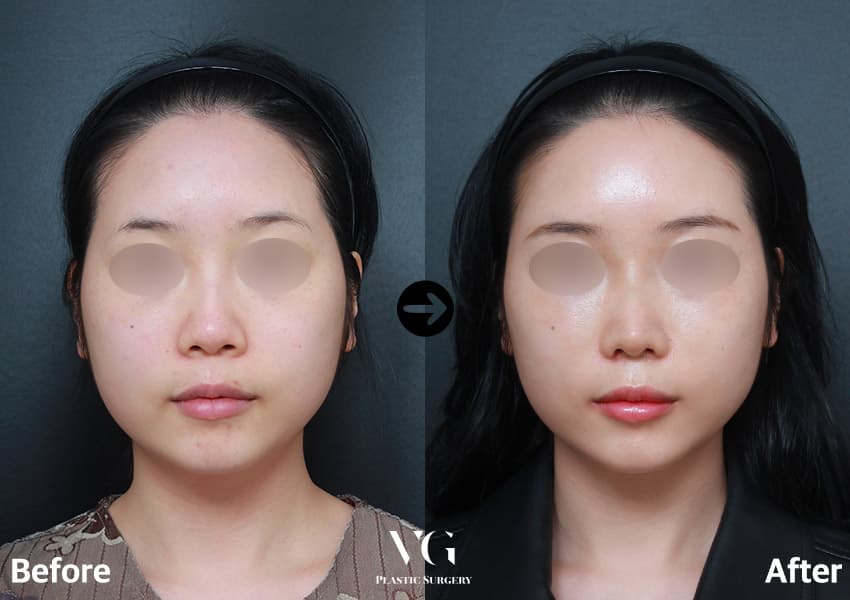
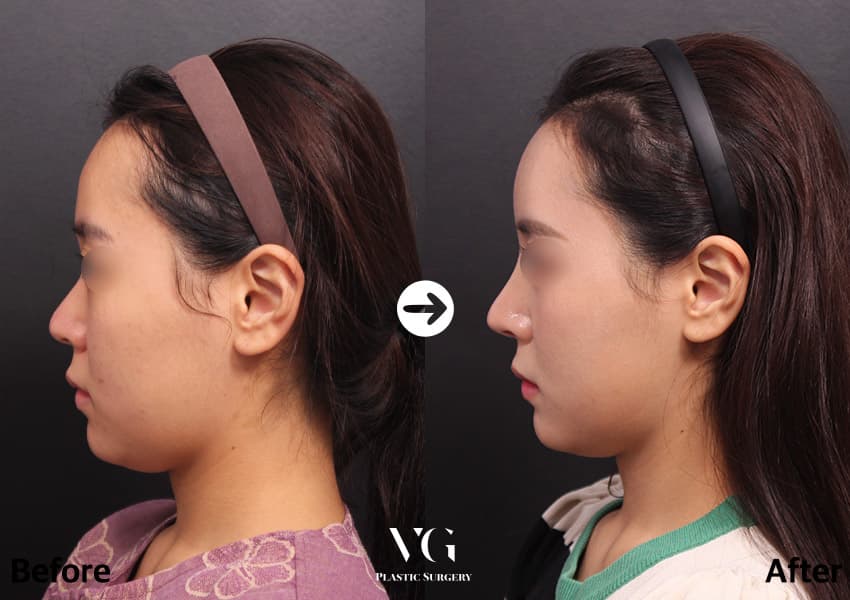
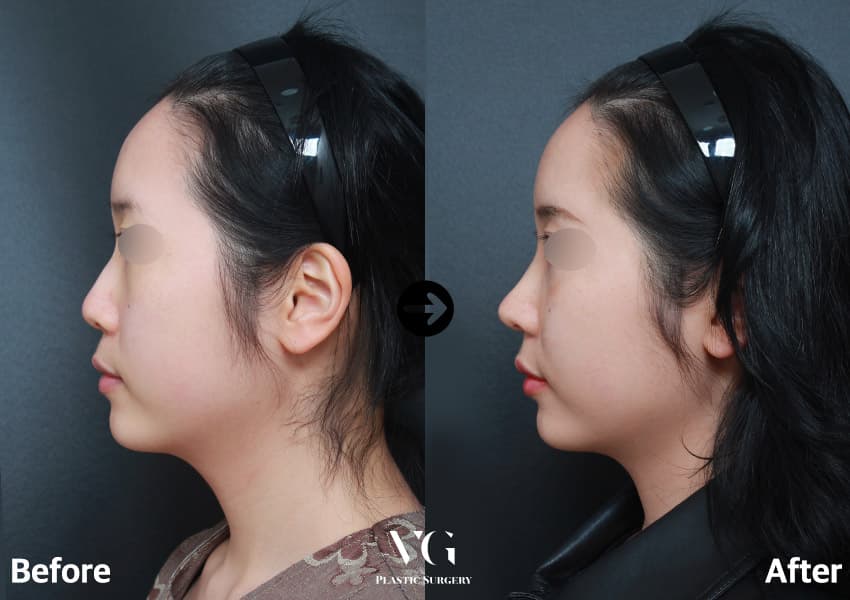
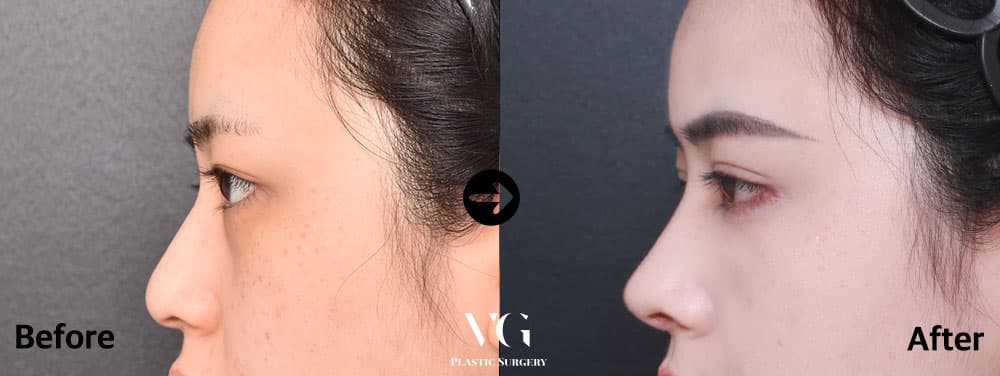
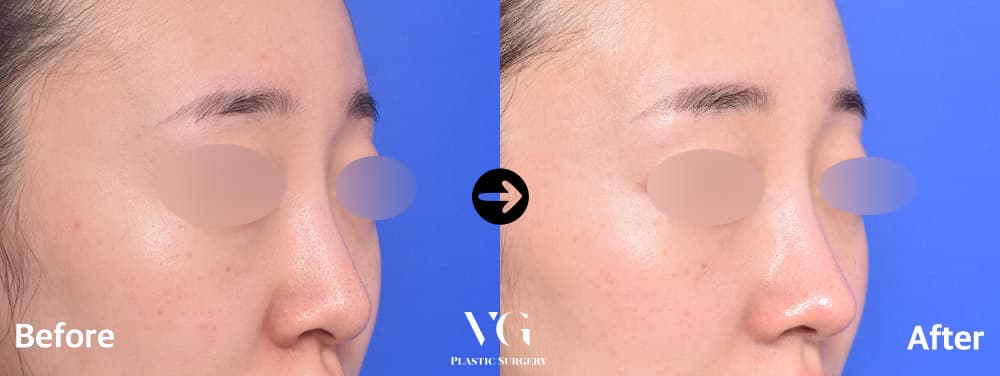
The first case combined tip correction with rhinoplasty of the bridge; you can see this bulbous tip case from three angles. The second added nostril reduction to the tip work, and the full set of that case shows the side view too.
Who tip plasty suits — and who should wait
Tip plasty is the part of bulbous nose rhinoplasty that reshapes the cartilage of the tip. It is a reasonable answer in these situations.
- The tip looks round or wide from the front and you want it narrower and more defined
- The tip sits low or back in profile, together with a low bridge you would like raised
- A dorsal hump or an upturned tip changes your profile as well, so both are planned together
- One side of the nose blocks often, and breathing needs assessing in the same plan
I also tell people when to wait, or when not to go ahead at all.
- An active sinus or nasal infection — we treat it first and reconsult afterwards
- A tip height that your own nasal structure cannot safely support
- You cannot stop smoking around the operation — cartilage and revision cases heal notably worse
- Adolescence, before facial growth is complete
There is one more conversation I have with every patient who has thick skin. The tip will be narrower, but it will not look sharp or pinched, and it should not. A tip that has to stay stable for years depends on where the cartilage sits, not on how much is added.
What changes the plan: skin, cartilage, nostrils, bridge
No two bulbous noses need the same operation. These are the four things that decide what goes into yours.
| What I look at | What it tells me | What it changes in the plan |
|---|---|---|
| Skin thickness over the tip | How far the skin can shrink over a narrower framework | Thin skin settles quickly; thick skin takes months, so expectations and follow-up are set for that |
| Tip cartilage | Whether the cartilages are splayed, weak or both | How the cartilage is reshaped and supported so the tip holds its position |
| Nostril width | Whether the nose will still read wide once the tip is refined | Whether nostril reduction is added — we watch how far the nostrils spread when you smile |
| Bridge height and septum | Whether the tip stands out because the bridge is low, and whether the septum is straight | Whether bridge work or breathing surgery joins the same plan |
When the nostrils are the rest of the width
Some people have their tip refined and still see a wide nose from the front. That remaining width is often the nostrils, not the tip. I would rather find that in consultation than after surgery, so I ask you to smile while I look at the base of the nose.
Surgery day and the recovery timeline
You arrive 90 minutes before your slot. I draw the plan on your face and go through it with you, with an interpreter present, and nothing starts until you agree to what is drawn.
The operation takes 1–3 hours under sedation or general anesthesia, and admission is usually not required. You can wash your hair from the day after surgery, keeping water off the nose.
| Milestone | Tip work, no bone surgery | With bone narrowing | Revision |
|---|---|---|---|
| Swelling at its peak | Days 3–5 | Days 5–7 | Days 5–7 |
| Stitches out | Days 5–7 | Day 7 | Day 7 |
| Back to everyday activity | About 7 days | About 14 days | About 14 days |
| Most people no longer notice | 1–2 months | About 3 months | 3–6 months |
| Final result assessed | 6 months | 6–12 months | 12 months |
The tip is the last part of the nose to settle. With thick skin, the tip can look fuller than you expected for several months while the bridge already looks finished. That is the normal curve for a bulbous nose, not a sign that something went wrong.
Send a front, a side and a from-below photo on WhatsApp — I'll tell you whether your tip is mostly cartilage, mostly skin, or both.
Coming to Seoul for bulbous nose rhinoplasty
For tip work without bone surgery, plan to stay at least 7 days. If the plan adds bone narrowing, or it is a revision, plan for 14. The stay covers the swelling peak, stitch removal and a final check where I confirm you are safe to fly.
- Arrival: a driver meets you at Incheon, and the in-person consultation happens the same day or the next morning
- Surgery day, with the design drawn and agreed before anything starts
- The first check the following morning
- Stitches out 5–7 days after surgery
- A final check before you fly, and a schedule for remote follow-up
The day-by-day stay planner lays this out against your own dates. After you fly home, follow-up continues for three months by photograph review with written replies — which matters with a bulbous nose, because the tip is still changing after you leave.
International patients pay the same surgical fee as Korean patients, with no foreigner surcharge. We do not publish one price, because a tip-only plan and a plan with bridge, nostril or bone work are different operations. Our pricing policy sets out what the itemised written quote includes.
What I check first in consultation
Rhinoplasty here is handled by four board-certified plastic surgeons and one board-certified ENT specialist, so breathing is assessed in the same plan as the shape. My own background is on my profile page, and every method we use for the nose is on our rhinoplasty page.
Risks, and how we reduce them
Tip surgery carries the risks of any rhinoplasty: swelling that lasts longer than expected, asymmetry while the tissue settles, and changes in breathing. On thick skin, the tip can stay fuller than planned. Recovery and outcome differ from person to person, and I would rather you hear that before surgery than after.
- Expectations set by your skin: we talk about how thick skin behaves before surgery, so a slow-settling tip is expected rather than a surprise
- Breathing inside the plan: our ENT specialist reads the septum, turbinates and nasal valve by 3D CT and endoscopy before surgery
- Anesthesia: board-certified anaesthesiology specialists are on site, and an anesthesiologist stays with you for the whole operation
- Aftercare in stages: recovery care such as Omega Light, hyperbaric oxygen and deswelling care is scheduled against where you are in recovery, as agreed in consultation
- Transparency: a guardian travelling with you can be given access to the operating-room CCTV
Before you decide, browse every nose before-and-after photo and filter by bulbous tip, so you see what three months after surgery looks like on noses like yours.
Send photos from the front, side and below on WhatsApp, and I'll tell you whether your bulbous nose needs tip plasty alone or tip work with the bridge or nostrils.
Nose before & after — more cases
Real patients from our archive, all photographed 3 months after surgery. Tap a case to compare it full size.
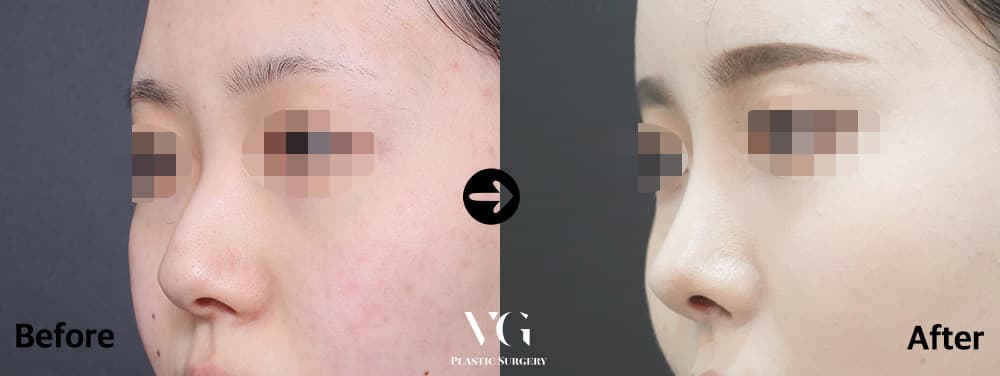
Bulbous Tip Correction3 months after surgery
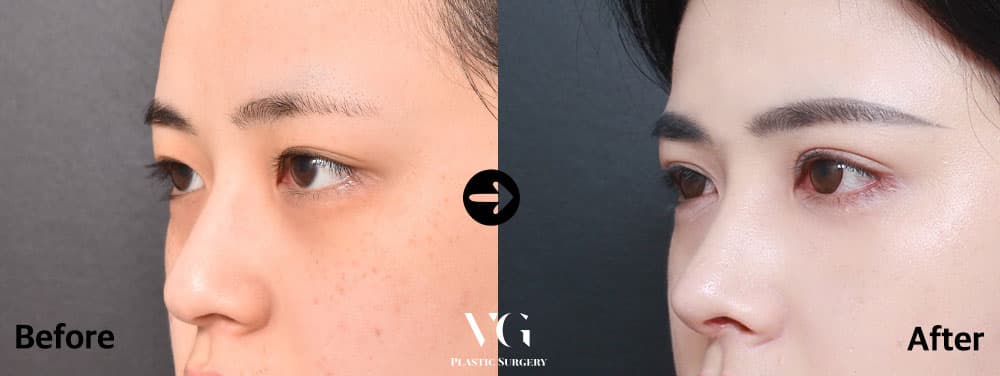
Tip Plasty3 months after surgery
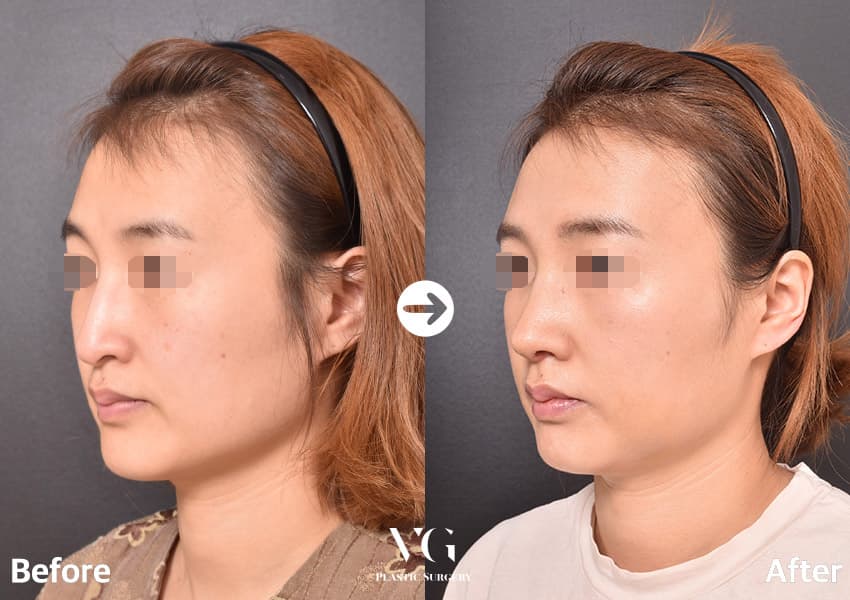
Tip Plasty3 months after surgery
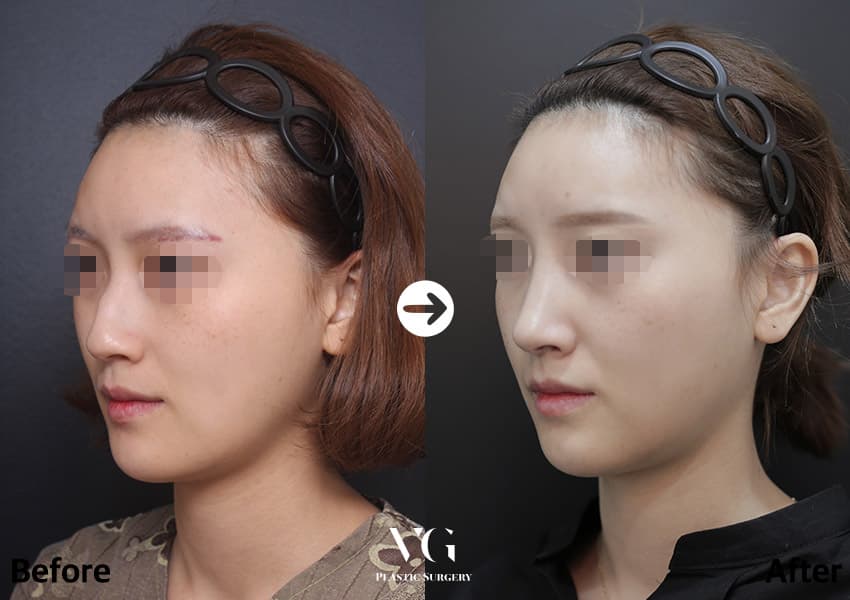
Tip Plasty3 months after surgery
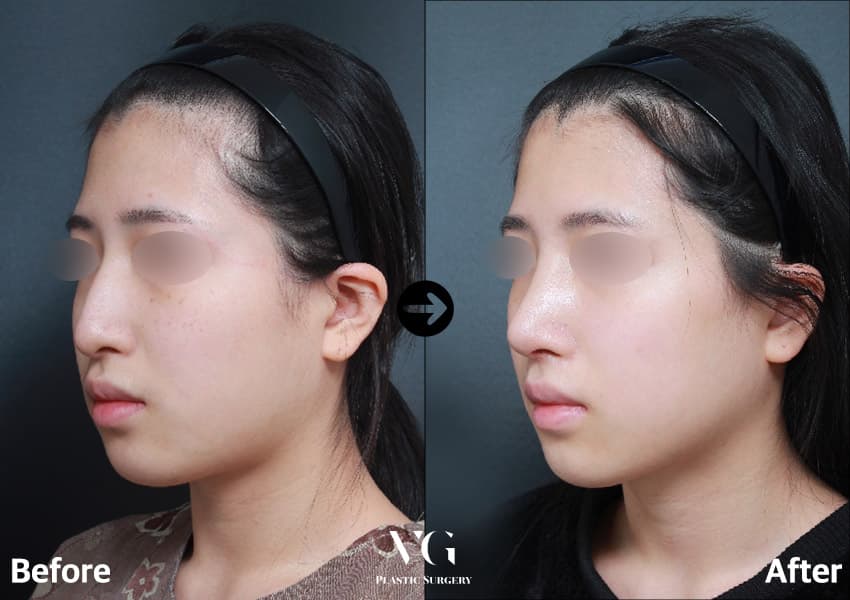
Tip Plasty3 months after surgery
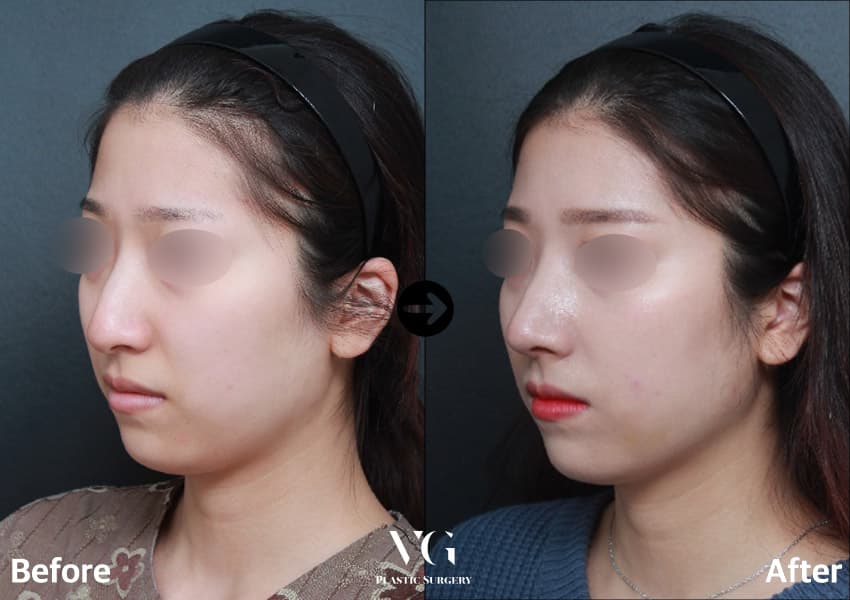
Tip Plasty3 months after surgery
FAQ
Questions patients ask
What causes a bulbous nose?
A bulbous nose is usually two things at once: tip cartilages that sit wide apart or curve outward, and thick skin over them. Surgery reshapes the cartilage; the skin then settles over the new shape on its own, quickly when it is thin and over months when it is thick.
How long does swelling last after bulbous nose rhinoplasty?
Without bone surgery, swelling peaks on days 3–5, most people no longer notice it after 1–2 months, and the final result is assessed at around 6 months. The tip is the last part to settle, and on thick skin it can stay fuller for several months.
How many days should I stay in Korea for tip plasty?
At least 7 days for tip work without bone surgery, or 14 days if bone narrowing is added or it is a revision. That covers stitch removal 5–7 days after surgery and a final check before you fly.
Can the nostrils be narrowed at the same time?
Yes. If the nose still reads wide after the tip is refined, the nostrils are often what is left, and [nostril reduction](/en/blog/alarplasty-korea) can go into the same operation. We decide that in consultation by looking at how far the nostrils spread when you smile.
Will tip surgery change my breathing?
It can, which is why our ENT specialist assesses the septum and airway before surgery and any breathing work goes into the same plan. How much breathing will change is something we tell you after an examination, not in advance.
How much does bulbous nose surgery cost in Korea?
We do not publish a single price, because tip-only surgery and a plan that adds the bridge, nostrils or bone are different operations. International patients pay the same surgical fee as Korean patients, confirmed in an itemised written quote after consultation.
This article explains general medical information. Whether surgery suits you, and which method, is decided only after a consultation with the surgeon.
Written by
Yang Jong Phil
Director · Plastic Surgery
- Board-certified plastic surgeon, Korea University Hospital
- Korea University College of Medicine
- Plastic surgery fellowship, University of Chicago Medical Center
- International Confederation for Plastic, Reconstructive and Aesthetic Surgery (IPRAS)
- American Society of Plastic and Reconstructive Surgeons (ASPRS)
Next step
Send two photos. Get a surgeon’s answer.
Front and side, natural light, no filter. Dr. Yang Jong Phil reviews them and tells you which method fits and how many days to stay in Seoul.
International patients pay the same surgical fee as Korean patients. Pricing policy
Keep reading
Nose
Rhinoplasty Cost in South Korea in Rupees: What Changes It for a Flat Nose or Crooked Septum? Reviews, Methods and Recovery
There's no honest rupee figure for a nose nobody has examined. The cost follows the method, septum work, revision, anesthesia time and days in Seoul; send photos on WhatsApp to ask about yours.
Im Young Min ·
Nose
What Decides the Cost of Rhinoplasty in South Korea? Reviews, Methods and Recovery
There is no single price for a nose job in Korea: the method, the cartilage source, septum work, revision status and anesthesia set the figure for your nose.
Im Young Min ·
Nose
How Much Does a Nose Job Cost in Korea? Four Cost Drivers, Reviews, Methods and Recovery
A nose job in Korea is priced from four parts: the scope of the change, the building material, any breathing work and the anesthesia. Foreigners pay the same surgical fee as Korean patients, with a written estimate.
Im Young Min ·