Eyes
One Week of Leave: Fitting non incisional double eyelid surgery Korea Around Your Flight
For lids that are thin, low in fat and lift normally, non incisional double eyelid surgery Korea usually fits a one-week trip. Book the flight home after the follow-up visit.

· 7 min read · Last updated
Edited by Im Young Min
In this article
- 01Is your eyelid a stitch-method eyelid?
- 02What should you sort out in the weeks before you fly?
- 03The days in Seoul, mapped
- 04How puffy will your eyes be on the flight home?
- 05What can go wrong, and why distance changes it
- 06Who looks at your eyes once you're home?
- 07What decides the cost of non-incisional double eyelid surgery in Korea?
- 08The one photo people forget to send
The short answer
Is non incisional double eyelid surgery Korea realistic on one week of leave, or will you board the flight home with swollen eyes and nobody to ask?
- The stitch method usually fits a one-week trip when the lid is thin, low in fat and lifts normally.
- EyeWiki puts suture removal for non-incisional techniques at 4–7 days, so book the flight home after the follow-up visit.
- Thick or full lids, weak lifting or a planned inner-corner procedure point toward a different method and a longer stay.
- Pack your records, aftercare instructions and dark sunglasses, and know which symptoms need a local doctor the same day.
It's worth reading to the end before you book flights or settle on a method.
Profile
Im Young Min
Chief Director · Board-certified in Plastic Surgery
By the end you'll know which eyelids suit the stitch method, what the days in Seoul look like, what swelling to expect on the flight, and what the cost depends on.
Hello, I'm Dr. Im Young Min, Chief Director and a board-certified plastic surgeon.
At VG Plastic Surgery, my training was an internship and residency at Seoul St. Mary's Hospital, where I later became an adjunct professor of plastic surgery. I'm also a full member of the American Society for Aesthetic Plastic Surgery (ASAPS) and of Korean plastic surgery societies.
I write this because many people assume the stitch method suits every eyelid, or that a short trip means a short list of questions. In practice, how thick your lid is decides most of it.
The short answer: if your lids are thin enough, a non-incisional double eyelid can fit into a week away from work. Thicker lids may need a different plan, and the photo you send shows which group you are in.
Send your eye photos and leave dates on WhatsApp
Is your eyelid a stitch-method eyelid?
Often, if the skin is thin, little fat sits behind it and the lid lifts with normal strength. EyeWiki notes that the stitch method may not be appropriate when an inner-corner procedure (epicanthoplasty) is planned at the same time, and it is less suited to lids where excess fat, skin or muscle needs to come out.
The three checks are physical. Thickness shows in how the skin and soft tissue bunch when the lid is lifted gently. Fat shows as fullness just above the lashes when you look down. Lifting strength shows in how far the lid margin travels as your gaze moves from the floor to the ceiling. A heavy, full lid tends to push a stitched crease back out over time, which is the main reason a surgeon may steer someone toward an incision even when the trip is short.
A lid that lifts weakly is a separate problem. The American Academy of Ophthalmology describes ptosis as a drooping upper lid, often linked to the muscle that raises it, and it calls for a different operation with a different stay. If that sounds familiar, read how ptosis correction in Korea is planned before you lock in a one-week trip.
Monolids bring most people to a search for non incisional double eyelid surgery Korea in the first place. A monolid on its own doesn't decide the method; the three checks do. The wider comparison of incisional and non-incisional double eyelid surgery in Korea covers what changes when the answer turns out to be an incision.
What should you sort out in the weeks before you fly?
Two things: what you send ahead, and what you carry. Neither takes long, and both protect your consultation day from surprises.
- Photos in daylight, no makeup, and no eyelid tape or glue on the day you take them. Tape changes the fold and hides how your lid behaves.
- A written list of every medicine and supplement you take, especially anything that thins the blood. Surgeons want this well before eyelid surgery, not on the morning of it.
- Copies of relevant medical records. The CDC's guidance for medical tourists says to bring them with you.
- Darkly tinted sunglasses. The American Society of Plastic Surgeons says to use them, with diligent sun protection, until healing is complete.
- A return flight booked for after the follow-up visit, never the day after the operation.
The days in Seoul, mapped
Most stitch-method trips follow one shape: consultation, operation, a few quiet days, a follow-up visit, then the airport.
| When | What happens | What it means for your plans |
|---|---|---|
| Arrival day or next morning | In-person consultation, interpreter included; the surgeon examines your lids and confirms the method | If the answer becomes an incision, the trip length changes |
| Operation day | The stitch procedure itself; the ASPS lists swelling, bruising, irritation, dry eyes and discomfort in early healing | Keep the evening for rest at the hotel |
| The next few days | Swelling is usually most noticeable early on | Indoor plans; sunglasses outdoors |
| Flight home | Swelling is still visible for many people | Aftercare instructions in your hand luggage |
The clinic is at 635 Nonhyeon-ro, Gangnam-gu, so a hotel in the same district keeps the consultation and the follow-up visit to short trips. If you're tempted to squeeze sightseeing into the first few days, choose things you can do in sunglasses and leave the rest for another visit.
Say you have a monolid with a thin upper lid, you can take one week off, and you've been wearing eyelid tape for years. When I look at a photo like that, my first question is how the lid behaves without tape. Is there little fat, and does the skin fold easily when you open your eyes? If so, stitches can hold a fold well, and a short operation fits the trip. The next thing I'd check is the calendar.
Swelling is heaviest in the first days, so I'd want the flight home placed after the follow-up visit rather than before it. If the lid turned out to be thicker, I'd tell you that before you book anything, because it changes the plan.
How puffy will your eyes be on the flight home?
Noticeably, for many people. Around the one-week mark most of the bruising has usually faded, but the fold tends to look higher and fuller than where it will settle over the following weeks and months, so the airport mirror is a poor place to judge the result.
Risks and side effects to know
The flight itself raises a fair medical question. The CDC notes that flying after surgery can increase the risk of blood clots and suggests delaying air travel for 10–14 days after major surgeries. A stitch-method eyelid procedure is a much smaller operation than that guidance has in mind, but your surgeon should still hear your flight length, any personal or family history of clots, and any hormonal medication, so the plan accounts for them.
Cabin air is dry, and lids that are already irritated notice it; keep whatever your aftercare instructions call for in your hand luggage.
People combining upper and lower lids should plan differently. The lower lid heals on its own timeline, and Korean eye bag surgery recovery, day by day shows why that week looks different.
If the return flight is the part keeping you up at night, send its length and your planned departure date on WhatsApp together with the two eye photos.
Send your eye photos and leave dates on WhatsApp
What can go wrong, and why distance changes it
The main weakness of the stitch method is loosening. EyeWiki calls a high failure rate its main disadvantage and reports that crease loss, seen in less than 3% of cases overall, occurs more often with the suture technique and is more likely when absorbable suture is used. EyeWiki also notes that suture material can sometimes be seen when the eyes are closed.
Distance matters because some of these problems surface after you've flown home. Unevenness often looks worst in the first weeks, while one side is more swollen than the other; much of it settles, and some doesn't. A fold that loosens months later is usually redone, and the article on revision double eyelid surgery in Korea walks through how each problem is corrected. Healing varies from person to person, and whether your lids suit this method at all is decided at the in-person exam; photos only start the conversation.
Who looks at your eyes once you're home?
Your own doctor does, for anything that can't wait. Pack the record of what was done, the suture type if it was written down, and your aftercare instructions, so a local doctor isn't starting from nothing.
Know the difference between normal and urgent before you leave. Swelling that's slowly going down, mild dryness and a fold that looks slightly higher on one side in the first weeks are common. Worsening pain, any change in vision, spreading redness, discharge, or a lid that won't close properly need a local doctor or emergency service the same day, without waiting for an overseas reply.
The CDC also points out that communicating with staff abroad may be challenging, which is why the interpreter at your consultation matters: ask there what to watch for in weeks two to four, and write the answers down. Our list of questions to put to any clinic about your own lids is worth working through; add one of your own about follow-up after you leave Korea.
What decides the cost of non-incisional double eyelid surgery in Korea?
The cost depends on a few things that differ from person to person. The first is the method: how many stitch points are needed and whether the lid can hold the fold with sutures alone. The second is your lid itself, because thicker lids or more fat may call for a different approach. The third is the type of anaesthesia. The last is how many days you stay in Seoul, since the check-up and suture removal visits need to fit your travel dates.
To get the figure for your own case, send a photo of your bare eyelids, eyes open, on WhatsApp and ask what applies to you.
The one photo people forget to send
Take one photo of your bare eyelid, eyes open, in daylight, without tape or glue, and send it on WhatsApp with your leave dates. Then ask one question: does my lid suit the stitch method for these dates? One photo is enough, and you can ask before booking anything. When you come to Seoul, I examine your eyes and recommend what fits your lids and your schedule.
Related pages:
Eyes before & after — more cases
Real patients from our archive, all photographed 3 months after surgery. Tap a case to compare it full size.
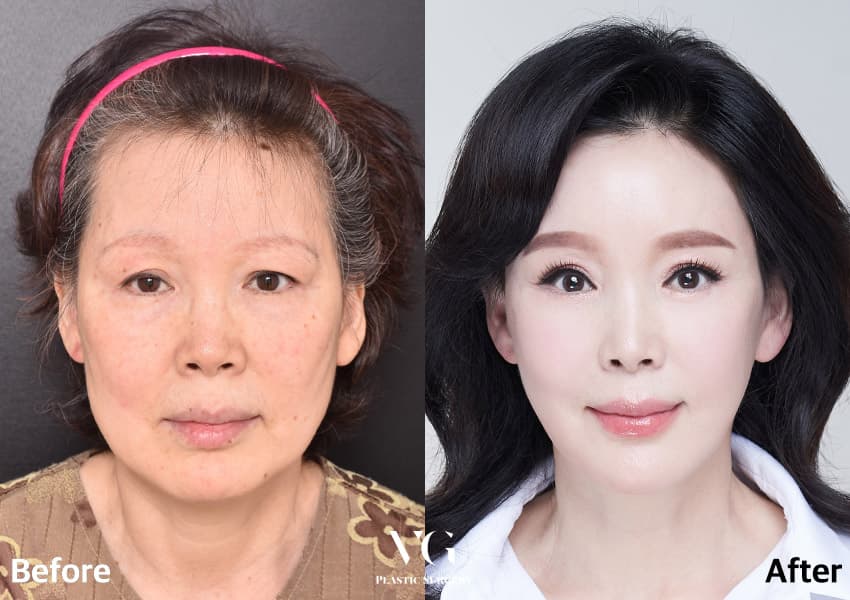
Face Lift3 months after surgery
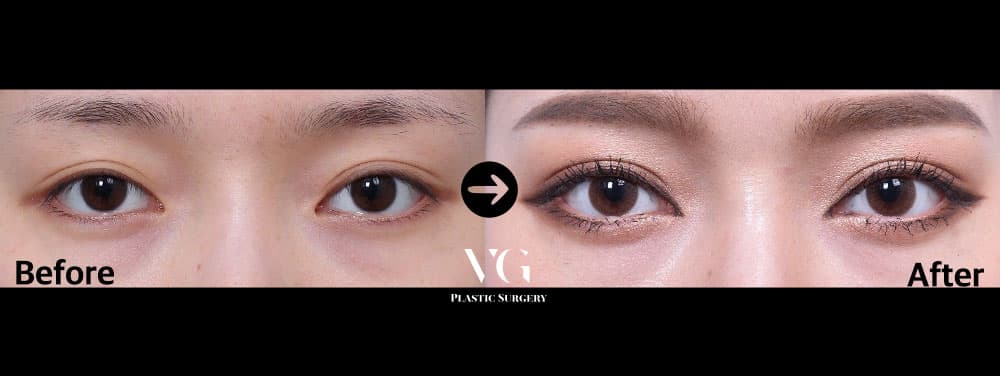
Natural-Adhesion Double Eyelid3 months after surgery
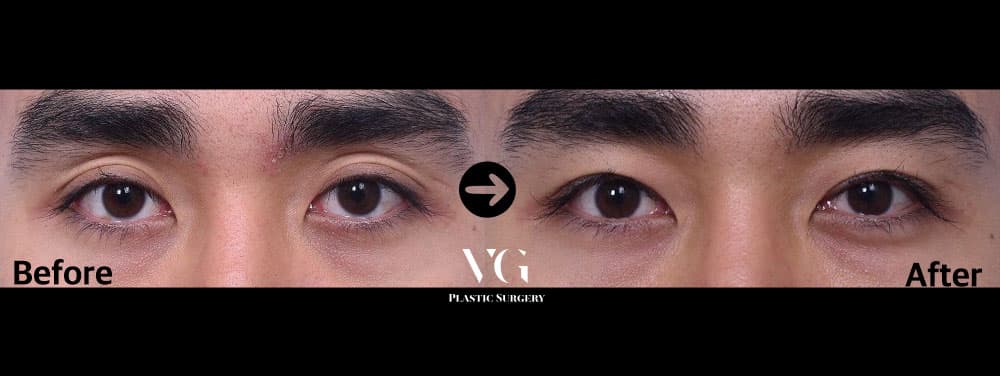
Incisional Double Eyelid3 months after surgery
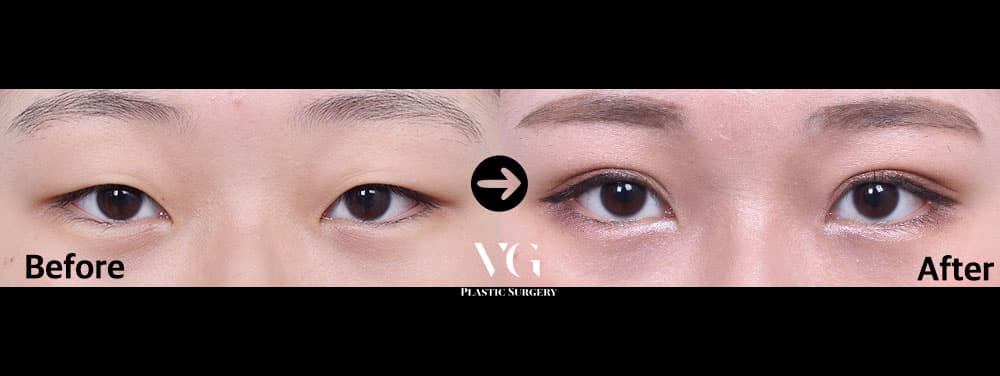
Incisional Ptosis Correction3 months after surgery
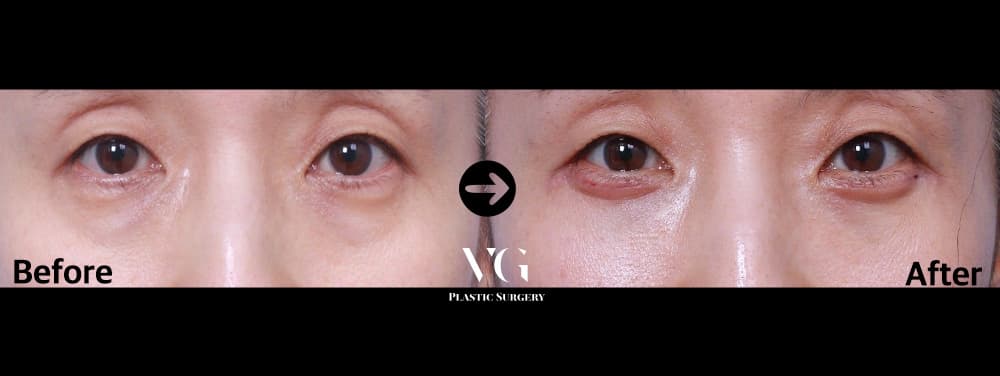
Lower Blepharoplasty3 months after surgery
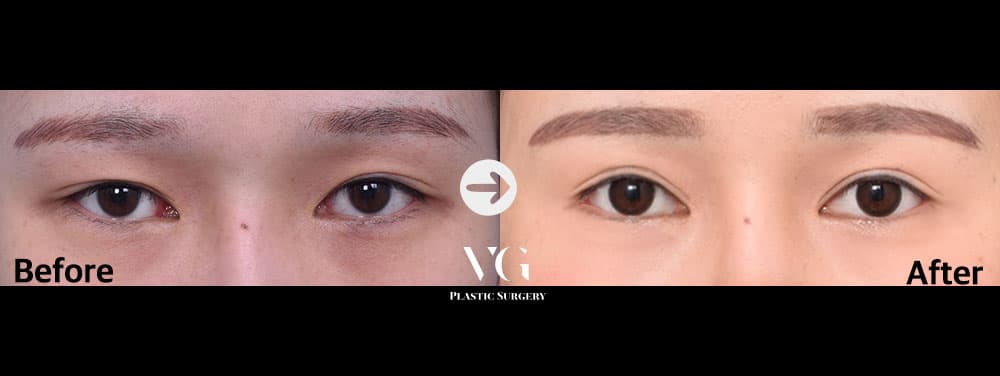
Incisional Double Eyelid3 months after surgery
FAQ
Questions patients ask
Can a non-incisional double eyelid be undone if I don't like the fold?
EyeWiki describes the non-incisional method as easier to revise than an incisional one. Easier still means a procedure, with its own swelling and its own recovery days. Settle on the fold height you want before the trip, and bring reference photos of your own face with tape if that helps you explain it.
Will the stitches show when I close my eyes?
Sometimes. EyeWiki notes that suture material can be seen when the eyes are closed. Ask at your consultation how the stitches are placed and whether any are removed later, because suture methods differ.
Do I need to speak Korean for the consultation?
No. Our homepage lists an interpreter as included, and the clinic's site runs in English, Japanese, Traditional Chinese and Thai. Write your questions down before the day so none of them get lost in translation.
Is the stitch method only for people with monolids?
No. EyeWiki describes double-eyelid surgery as an option for anyone lacking an upper-lid crease who wants a rounder eye, and people with a faint or uneven crease ask about it too. Whatever the starting point, lid thickness, fat and lifting strength decide whether stitches can hold the fold, and non incisional double eyelid surgery Korea trips are planned around that answer.
Can I add inner-corner surgery on the same trip?
Possibly, but it changes the method. EyeWiki notes that the non-incisional technique may not be appropriate when epicanthoplasty is planned alongside it, so adding an inner-corner procedure usually moves the plan toward an incision and a longer stay. Mention it in your first message so the dates are planned for the combined version.
Sources
This article explains general medical information. Whether surgery suits you, and which method, is decided only after a consultation with the surgeon.
Written by
Im Young Min
Chief Director · Plastic Surgery
- Ph.D. in Medicine
- Internship and residency, Seoul St. Mary's Hospital
- Board-certified plastic surgeon, Seoul St. Mary's Hospital
- Adjunct professor of plastic surgery, Seoul St. Mary's Hospital
- Former director, Topface Plastic Surgery
Next step
Send two photos. Get a surgeon’s answer.
Front and side, natural light, no filter. Dr. Im Young Min reviews them and tells you which method fits and how many days to stay in Seoul.
International patients pay the same surgical fee as Korean patients. Pricing policy
Keep reading
Eyes
How Much Does Double Eyelid Surgery Cost in Korea? Results, How Long It Lasts, Reviews and When to Spend Less
There's no single figure: the method your lids need, any ptosis or inner-corner work, the anesthesia and your days in Seoul set the quote, and foreigners pay the same surgical fee as Korean patients.
Im Young Min ·
Eyes
Lower Blepharoplasty Korea Cost: Fat, Skin or Lid Support? Reviews, Methods and Recovery
Your lower blepharoplasty cost in Korea follows what is causing the bags: bulging fat, a hollow beneath it, loose skin or a slack lower lid, plus the anesthesia and the days you plan in Seoul.
Im Young Min ·
Eyes
Double Eyelid Surgery Cost in Korea: What Changes Your Quote? Results, Reviews and Methods
Quotes for double eyelid surgery in Korea differ because they describe different operations: suture or incision, fat removal, ptosis correction, inner-corner work and revision.
Im Young Min ·