Eyes
Revision Double Eyelid Surgery Korea: Seven Problems and How Each Is Corrected
An eye surgeon in Seoul explains double eyelid revision: the seven problems patients bring, how each is corrected, why to wait six months, and how long to stay in Korea.
In this article
- 01Seven reasons people come back for a revision
- 02What revision cases look like: three groups from our archive
- 03Who revision suits, and when I say wait
- 04What I check first in a revision consultation
- 05Surgery day and the recovery timeline
- 06Revision double eyelid surgery Korea trips: stay, follow-up and fee
- 07Risks of a revision, and how we reduce them
The short answer
Revision double eyelid surgery corrects a crease that sits too high, has faded, is uneven, or still leaves the eye looking sleepy. The method depends on what the first operation left behind — scar tissue, skin thickness and whether ptosis was corrected — so it is decided only after an examination. Wait at least 6 months after the first surgery, and plan at least 7 days in Seoul.
- Revision is planned around what the first surgery left: the crease position, scar tissue, skin thickness and whether ptosis was corrected.
- Wait at least 6 months after your first eyelid surgery before a revision.
- Thin skin with little scarring can sometimes be revised without an incision; heavy scarring or thick skin usually needs an incisional revision.
- If the eye still looks sleepy, the missing step is often ptosis correction rather than a new crease.
- Plan at least 7 days in Korea; for a revision the exact stay is adjusted at consultation.
Hello, I'm Yang Jong Phil, a board-certified plastic surgeon on the eye surgery team at VG Plastic Surgery in Seoul and a full member of the Eyelid Surgery Research Group of the Korean Society of Plastic and Reconstructive Surgeons. Many of the eye photos people send me are not first surgeries. They come from someone who already had a double eyelid operation and is now asking about revision double eyelid surgery Korea trips because the line is too high, too faint or uneven.
Profile
Yang Jong Phil
Director · Board-certified in Plastic Surgery
A first operation starts from a blank eyelid. A revision starts from whatever the first one left behind, which is why the consultation runs longer and why I will not name a method from one photo. The eye surgery centre page, where each revision type is laid out with its correction, is a useful companion to this article.
Seven reasons people come back for a revision
On our eye team we sort revision requests into seven types. Naming yours is the first step, because each one has a different cause and a different fix.
| What you see | Why it usually happens | How it is corrected |
|---|---|---|
| The crease sits high, the lid always looks swollen (sausage line) | The line was designed too large or fixed too high | Release the old crease, remove unneeded scar tissue, reposition fat so the line sits lower |
| The two sides sit at different heights | One crease loosened, or the lines were set differently | Release and reset length, depth and height; ptosis correction if needed to level the sides |
| The crease has faded | Weak fixation, soft tissue not removed, or ptosis left uncorrected | Thin skin, little scarring: non-incisional ptosis correction with natural adhesion. Heavy scarring or thick skin: incisional revision |
| The crease sits too low | Skin loosened since surgery, or the line was set low | Lift and fix the loose skin, or set the crease higher |
| The eyes still look sleepy | Ptosis was present but only a crease was made | Ptosis correction to open the eye |
| The scar is visible | Depth of fixation or of the earlier ptosis correction | Remove the scarred section if skin allows; fat repositioning or fat grafting to rebuild a natural depth |
| The line is simply not what you wanted | Nothing went wrong; the shape or height is not your choice | Agree on the exact line in consultation and correct to it |
Most people recognise themselves in one row, some in two. A high, uneven crease with a sleepy look, for example, is both a design problem and a muscle problem.
What revision cases look like: three groups from our archive
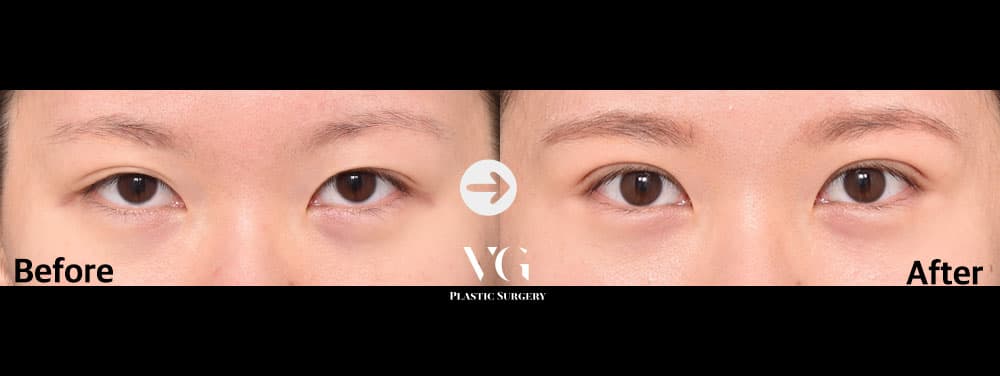
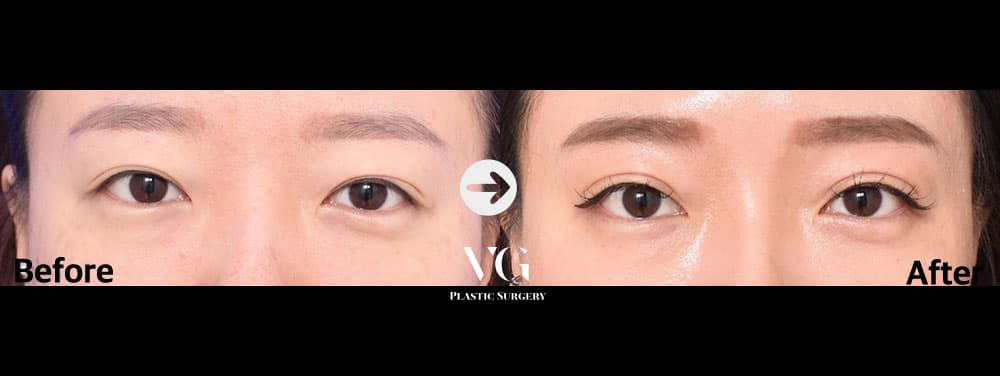
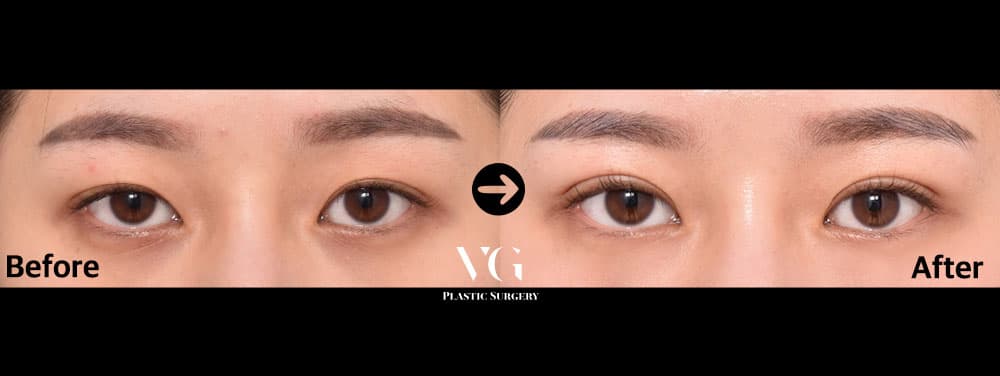
The photos below are cases from our eye surgery team, each photographed three months after surgery. I have grouped them by the kind of correction, because that is how you should compare them with your own eyes before planning revision double eyelid surgery Korea travel.
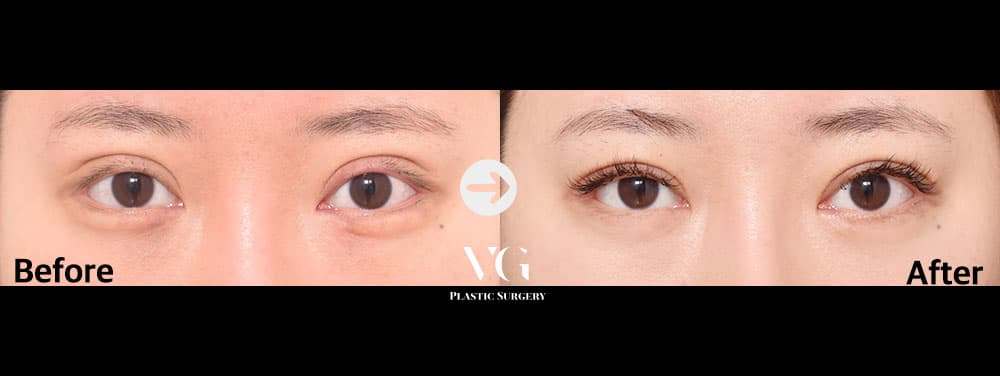
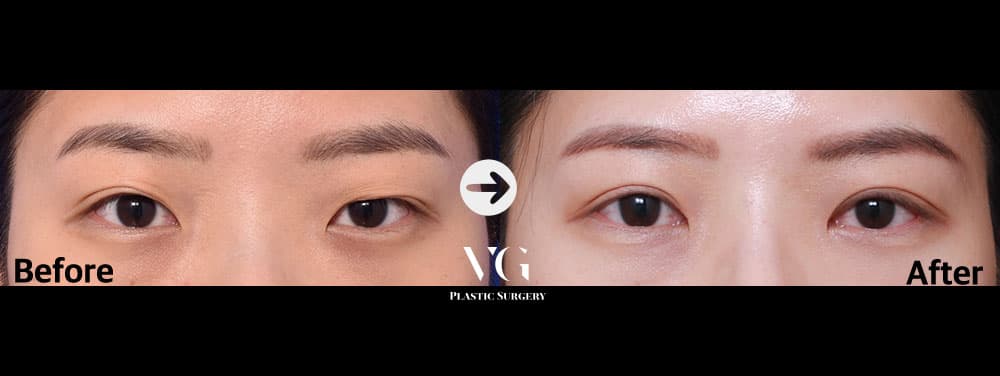
Incisional revision of a faint or narrow crease
In these two cases the first crease had become thin and inconsistent. The old line was reopened through an incision and set again, so the fold now reads clearly from the front without sitting high.
Revision without a new incision
When the skin is thin and there is little scar tissue, a faded line can sometimes be restored with the natural adhesion method instead of cutting again. These three cases were revised that way. The change is quieter, and that is the point: the lines look like they belong to the face.
Revision with incisional ptosis correction
These two cases had a crease but still looked tired, because the lid covered part of the iris. The crease was revised and the lifting muscle was corrected in the same operation. You can open this revision and ptosis correction case in full to see the case details.
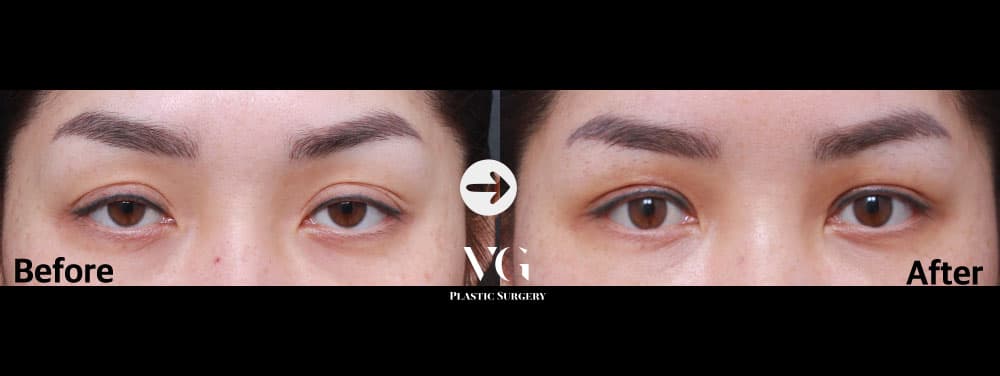
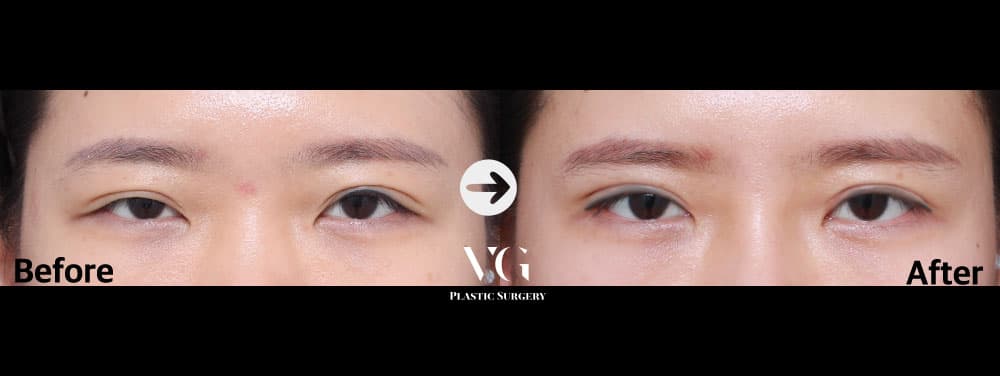
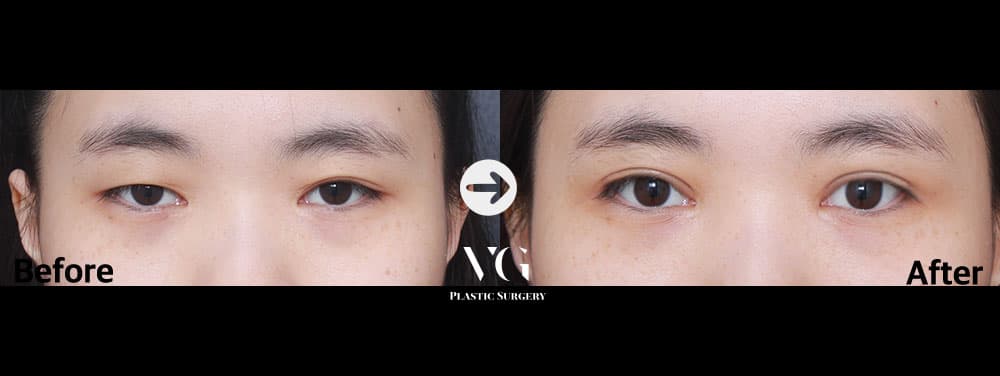
The case at the top of this page had uneven, heavy creases; you can see that asymmetric revision case on its own page. To compare more eyes with yours, browse all before-and-after photos and filter by eye surgery. Our earlier guide on how to read Korean eyelid surgery before-and-after photos explains what to look for in each pair.
Who revision suits, and when I say wait
Revision is reasonable when the first surgery healed in a way that bothers you and the tissue has had time to settle. The time I give people is clear: wait at least 6 months after the first surgery. Before that, swelling and scar tissue are still changing, and what looks wrong in month two may not look the same in month six.
These are the situations where I ask you to wait or to sort something out first.
- Less than 6 months since your first eyelid surgery
- Untreated dry eye or blepharitis — please see an ophthalmologist first
- A travel schedule too short for stitch removal and the first follow-up in Korea
- You want the exact eyes from a celebrity photo — a different eyelid structure cannot produce the same shape
- Pregnancy, or an uncontrolled thyroid or bleeding disorder
Send a front photo of your eyes open and one with them gently closed, and I will tell you which of the seven types yours is closest to.
What I check first in a revision consultation
A revision plan is built from measurements, not from a preferred style. Before anything is drawn, I look at the eye as it is now.
- Distance from brow to crease, and from crease to lashes
- Whether ptosis is present, and how strongly the eye opens
- Skin thickness, the eye muscle and how much scar tissue the first operation left
- Eye shape, eye length and spacing, and the height of the eye tail
- Facial proportion, so the new line suits the whole face
Then we choose the line together. There are four styles — in line, in-out, semi-out and out — and which suits you depends on lid thickness and eye shape. You can read more about me and my approach on my surgeon profile.
Surgery day and the recovery timeline
On the morning of surgery I draw the planned line on your lid with the interpreter in the room, and nothing begins until you agree to it. Eye surgery here takes 30 minutes to 2 hours under sedation, and admission is usually not required. One dedicated eye surgeon performs the operation from start to finish, and a board-certified anaesthesiologist is resident.
A revision follows the recovery of the method it uses. The table shows our own recovery data for the two main approaches.
| Incisional crease | Non-incisional crease | |
|---|---|---|
| Swelling peaks | Days 3–5 | Days 2–3 |
| Stitches out | Days 5–7 | Days 3–5 |
| Back to daily life | 10–14 days | 5–7 days |
| Looks natural | 2–3 months | About 1 month |
| Final result | About 6 months | About 3 months |
Eye makeup can return 3–5 days after the stitches are out. Contact lenses and light exercise wait for 2 weeks, and alcohol and smoking for 4 weeks.
Revision double eyelid surgery Korea trips: stay, follow-up and fee
As with any revision surgery in Korea, the trip is built around your follow-up visits. For eye surgery, plan at least 7 days in Korea. That covers stitch removal and the first follow-up before you fly. For a revision the exact number of days is adjusted at consultation, once we know what the operation involves.
- Interpretation during consultation is free, and an interpreter is with you on the morning of surgery and at every follow-up visit.
- Do not book your return flight for the day of your last appointment — appointments move.
- After you fly home we review photos at week 1, month 1 and month 3, and ask for more from set angles when photos are not enough.
- Bleeding that will not stop, worsening pain, fever, blurred vision or sudden swelling on one side are signs to message us about straight away.
People often ask about double eyelid revision surgery cost in Korea before anything else. We do not publish a price list, and the reason is that two revisions are rarely the same operation. What sets your quote is what has to be corrected — crease only, ptosis, scar or fat — whether an incision is needed, and the time in theatre.
Our pricing policy is simple: international patients pay the same surgical fee as Korean patients, and you receive one itemised quote in writing before you decide. The guide to what actually sets a plastic surgery quote in Korea goes through the same factors across all procedures.
Risks of a revision, and how we reduce them
Every operation carries possible side effects, including bleeding, infection, swelling, asymmetry, scarring and anaesthesia-related risks. A revision adds one honest limit: scar tissue from the first operation can restrict what is possible, and the result depends on how your tissue heals.
- Waiting 6 months lets scar tissue soften before we operate again.
- Measuring ptosis first avoids repeating the commonest cause of a sleepy revision.
- Not over-resecting tissue or fixing the crease too deeply keeps scarring to a minimum.
- Scheduled follow-up, in Seoul and after you fly home, tracks how the line settles.
If you have never had eyelid surgery and are still choosing a method, start with our double eyelid surgery in Korea guide on incisional versus non-incisional instead. If you are already living with a first result you are unhappy with, the eye surgery page that walks through every revision type with photos is the next place to look before you message us.
Send two photos — eyes open and gently closed — with any records from your first surgery, and I will tell you whether your revision needs an incision.
Eyes before & after — more cases
Real patients from our archive, all photographed 3 months after surgery. Tap a case to compare it full size.
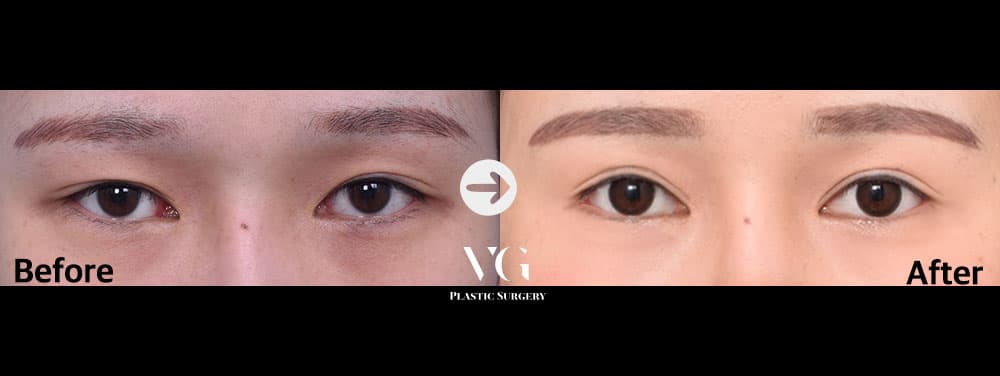
Eye Revision Surgery3 months after surgery
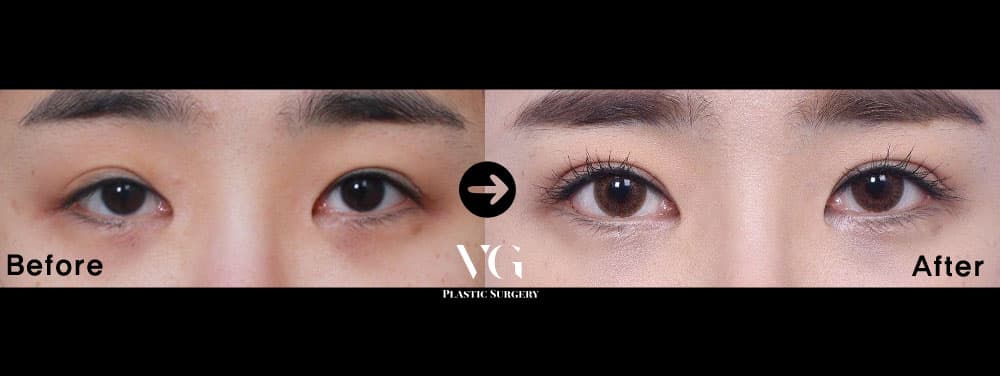
Eye Revision Surgery3 months after surgery
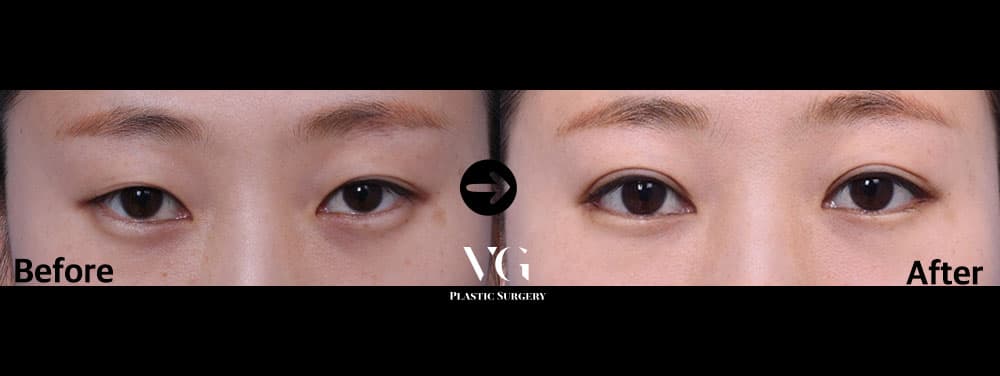
Eye Revision Surgery3 months after surgery
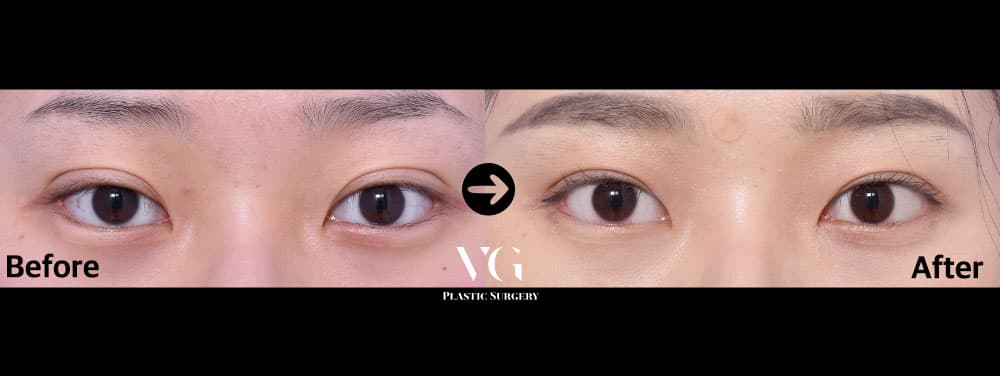
Eye Revision Surgery3 months after surgery
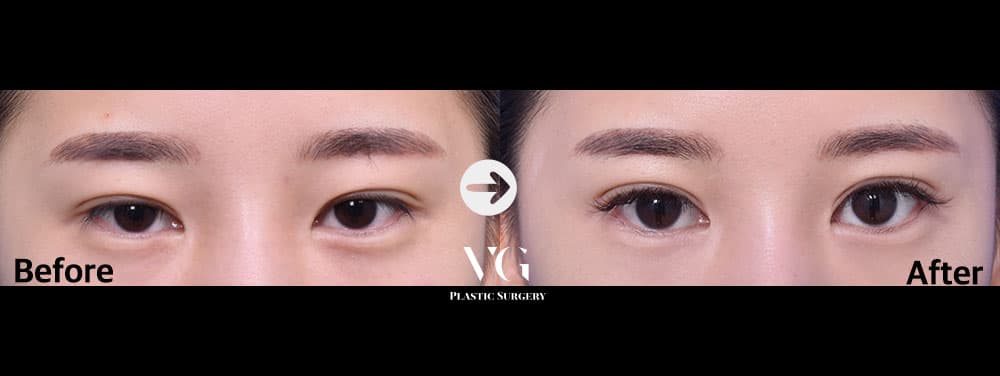
Eye Revision Surgery3 months after surgery
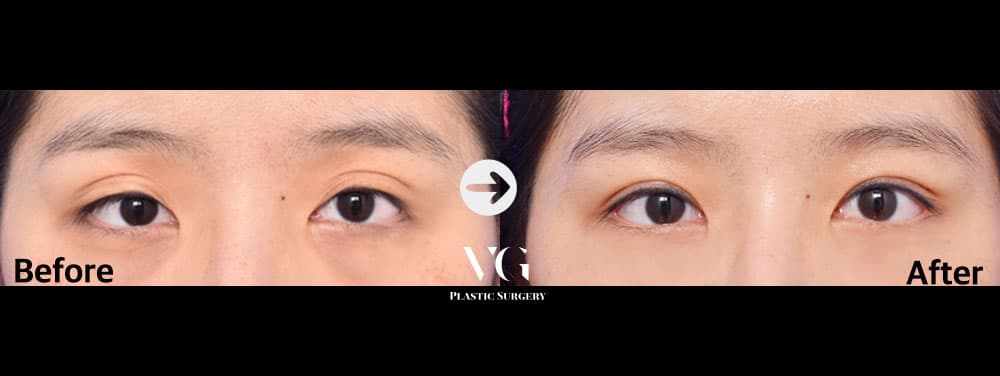
Eye Revision Surgery3 months after surgery
FAQ
Questions patients ask
How long after my first double eyelid surgery can I have a revision?
At least 6 months. Before that, swelling and scar tissue are still changing, and the line you see may not be the line you end up with. If something looks urgent earlier, send photos and we will tell you whether it can wait.
Can a revision be done without a new incision?
Sometimes. If the skin is thin and there is little scar tissue, a faded crease can be restored with non-incisional ptosis correction using the natural adhesion method. Where scarring is heavy or the skin is thick, an incisional revision is used.
How many days should I stay in Korea for revision double eyelid surgery?
Plan at least 7 days, which covers stitch removal and the first follow-up. For a revision the exact stay is adjusted at consultation, depending on whether ptosis correction or scar work is part of the plan.
How much does double eyelid revision surgery cost in Korea?
We do not publish a price list, because each revision corrects something different. International patients pay the same surgical fee as Korean patients, and you receive an itemised quote in writing after consultation.
My crease is too high. Can it be lowered?
Often, yes. The old crease is released, unnecessary scar tissue removed and fat repositioned so the line sits lower. How low it can go depends on how much lid skin remains.
Can I combine an eyelid revision with revision rhinoplasty in Korea?
Some patients ask about both. A nose revision is planned separately: in our recovery data it needs 10–14 days in Korea, longer than eye surgery, so the nose sets the length of the trip. Whether both are done together is decided after examining both.
This article explains general medical information. Whether surgery suits you, and which method, is decided only after a consultation with the surgeon.
Written by
Yang Jong Phil
Director · Plastic Surgery
- Board-certified plastic surgeon, Korea University Hospital
- Korea University College of Medicine
- Plastic surgery fellowship, University of Chicago Medical Center
- International Confederation for Plastic, Reconstructive and Aesthetic Surgery (IPRAS)
- American Society of Plastic and Reconstructive Surgeons (ASPRS)
Next step
Send two photos. Get a surgeon’s answer.
Front and side, natural light, no filter. Dr. Yang Jong Phil reviews them and tells you which method fits and how many days to stay in Seoul.
International patients pay the same surgical fee as Korean patients. Pricing policy
Keep reading
Eyes
How Much Does Double Eyelid Surgery Cost in Korea? Results, How Long It Lasts, Reviews and When to Spend Less
There's no single figure: the method your lids need, any ptosis or inner-corner work, the anesthesia and your days in Seoul set the quote, and foreigners pay the same surgical fee as Korean patients.
Im Young Min ·
Eyes
Lower Blepharoplasty Korea Cost: Fat, Skin or Lid Support? Reviews, Methods and Recovery
Your lower blepharoplasty cost in Korea follows what is causing the bags: bulging fat, a hollow beneath it, loose skin or a slack lower lid, plus the anesthesia and the days you plan in Seoul.
Im Young Min ·
Eyes
Double Eyelid Surgery Cost in Korea: What Changes Your Quote? Results, Reviews and Methods
Quotes for double eyelid surgery in Korea differ because they describe different operations: suture or incision, fat removal, ptosis correction, inner-corner work and revision.
Im Young Min ·