Facelift
Best Facelift Surgeon in Seoul? Cost, Methods and the Seven Checks Before You Choose
No official ranking names the best facelift surgeon in Seoul. What you can check is the surgeon's board certification, how the consultation reads your face, who runs anesthesia, and how follow-up works once you're home.
· 7 min read · Last updated
Edited by Im Young Min
In this article
- 01Seven questions to ask before you choose a facelift surgeon
- 02Who will actually operate, and can you check their training?
- 03What the consultation should measure before anyone names a technique
- 04Who watches your breathing while you're asleep?
- 05What decides the cost of a facelift in Korea?
- 06Risks a facelift carries in any city
- 07How does follow-up work once you've flown home?
- 08If you're arranging this for a parent
The short answer
Wondering who the best facelift surgeon in Seoul really is, and how you would even tell? Read on before you book anyone.
- No official ranking exists, so check board certification and training under the surgeon's own name.
- A facelift plan should start from which layer of the face has dropped, and only then name a technique.
- Ask who runs anesthesia and whether that doctor stays in the room for the whole operation.
- Settle follow-up before you fly: records to carry, a local doctor, and the clinic's WhatsApp number.
After this you will know what drives the cost, which methods get discussed, and the seven checks that help you choose a surgeon.
Profile
Im Young Min
Chief Director · Board-certified in Plastic Surgery
Hello, I'm Dr. Im Young Min, Chief Director, board-certified plastic surgeon at VERYGOOD.
Two things at our clinic matter for this worry. I trained and was board-certified at Seoul St. Mary's Hospital, and I'm a full member of the American Society for Aesthetic Plastic Surgery (ASAPS). Three board-certified anesthesiologists work here full time, and one is dedicated to each operation, so the surgeon only operates.
Most people go looking for a ranking because a list feels safer than comparing training, exams and aftercare one clinic at a time.
Short answer: no official ranking exists, so the useful question is whose training, exam and follow-up you can verify.
Send your dates and two photos on WhatsApp
Seven questions to ask before you choose a facelift surgeon
Ask these seven questions of every clinic on your list, in this order, and write the answers down. People searching for the best facelift surgeon in seoul usually end up comparing names; the answers below let you compare what each name actually means for your face and your trip.
| Question | Why it matters | A useful answer includes |
|---|---|---|
| Who operates on me? | You want the name before you book the flight | One named surgeon you can look up |
| Where did that surgeon train? | Board certification is the floor | Training hospital, board, society memberships |
| Which layer of my face has dropped? | The technique should follow the anatomy | Skin, deeper tissue, fat and neck discussed separately |
| Who runs anesthesia? | Long operations need steady blood pressure | A named anesthesiologist present throughout |
| What raises my own risk? | Smoking, blood pressure and medication change the plan | A list specific to you |
| How many nights should I stay nearby? | Stitches and check-ups happen in Seoul | A number tied to your technique |
| What happens once I'm home? | Problems don't follow a flight schedule | Records, a contact channel, a local doctor |
If you already have dates in mind, send them on WhatsApp with one front and one side photo of your face taken in daylight.
Send your dates and two photos on WhatsApp
Who will actually operate, and can you check their training?
Ask for the operating surgeon's name before you pay for a flight, then check it against published credentials. In Korea, look first for board certification in plastic surgery, then the hospital where residency was done, then society memberships.
The same test applies to any clinic you're weighing. VERYGOOD has eight specialists on staff across plastic surgery, ENT and anesthesiology, and each one's training is published under their own name so you can check it before you fly. If a clinic can't tell you who will hold the scalpel, put that question first at the consultation and don't sign until it's answered.
What the consultation should measure before anyone names a technique
A facelift plan should start with where your face has descended and which tissue layer moved, and only then choose between SMAS, mini, Crystal or another name. On our homepage we put it this way: before the direction of the pull, we look at which layer has actually descended.
In general, a surgeon reading a face for a lift is separating four things:
- Skin: how loose and how thin it is, and how it has been treated by sun and smoking.
- The deeper supporting layer (SMAS): whether the jowl and the fold beside the mouth come from this layer sliding down, which skin tightening alone won't correct.
- Volume: hollow cheeks or temples often read as sagging when the real change is lost fat; that part is a question for fat grafting to the face, and a lift may not touch it.
- The neck: bands and loose skin under the jaw change where the incision has to go.
If the jowl and the fold soften together, the deeper layer is involved. If only fine skin creases move, a lift may be more surgery than the problem needs. For a side-by-side of how the SMAS, mini and Crystal facelift differ, and who a mini facelift with a shorter incision tends to suit, those two pages go further.
"Deep plane" comes up often in searches. The name describes the plane where the surgeon releases tissue. Ask which layer will be lifted, where the incision will run, and why that fits your face; a clear answer to those three is worth more than the label.
Say you are 58, you live abroad, and you've saved three clinic names from a forum thread. You ask each of them the same thing: who operates, what training do they have, and who monitors your breathing. I would start from your face rather than a technique name. I would look at how much skin laxity you have, where the descent sits in the midface, jawline and neck, and how your skin has held up. I'd also ask about your medications, any blood pressure issues and whether you smoke, because these change the anesthesia plan and healing. Only after that would we discuss which approach fits, and how many days you would need to stay before flying home.
Who watches your breathing while you're asleep?
At VERYGOOD, a board-certified anesthesiologist on staff watches your blood pressure, pulse and breathing from the first injection until you are awake again, with one of the three dedicated to your operation. The anesthesiologists don't operate; their job is choosing the anesthetic that suits your body and keeping you stable while the surgeon works.
This matters more for a facelift than for many shorter cosmetic operations. A facelift can run for hours, and steady blood pressure during and after surgery is one of the things surgeons watch to limit bleeding under the lifted skin. When you compare clinics, ask two plain questions: who is the anesthesiologist, and will that person stay in the room until you wake up?
What decides the cost of a facelift in Korea?
The figure depends on how much work your face and neck need. The technique and how extensive the lift is come first, and whether the neck or other procedures are done in the same operation changes the plan too. Anesthesia and the time the operating team needs are part of it. So is the number of days you stay in Korea, since stitches and early swelling checks have to fit before you fly. Follow-up after you are home also belongs in the picture. For the figure for your own case, send a daylight front and side photo on WhatsApp and ask for it there.
Risks a facelift carries in any city
A facelift carries the same risks in Seoul as anywhere. The American Society of Plastic Surgeons lists bleeding under the skin (hematoma), infection, poor wound healing, facial nerve injury (usually temporary), numbness, hair loss at the incisions, visible scarring, facial asymmetry, anesthesia risks, and a result you're not happy with that may need another operation.
Some people should postpone or reconsider:
- Smokers who can't stop in the weeks around surgery, because smoking slows skin healing.
- People with blood pressure that isn't controlled, or who take blood thinners their own doctor hasn't cleared them to pause.
- Anyone hoping a lift will change hollows or skin texture that a lift doesn't address.
Healing speed, swelling and the final shape differ from person to person. Whether a facelift suits your health and your face is decided at the in-person exam in Seoul, after the surgeon has examined you and reviewed your medical history.
How does follow-up work once you've flown home?
Settle it before you leave Korea: copies of your records in English, a local doctor who knows what was done, and the clinic's WhatsApp number in your phone.
The U.S. Centers for Disease Control and Prevention advises medical travelers to plan follow-up care at home before they go, to carry copies of their records, and notes that flying soon after surgery raises the risk of blood clots.
Ask the clinic for these before your flight:
- The operative note: which technique, which layers, where the incisions are.
- The anesthesia record and any medicines given.
- Your medication schedule and when each one stops.
- The dates any remaining stitches should come out, if some will be removed at home.
Ask how many nights the surgeon wants you nearby for your particular operation, and make your return booking around that answer, not the reverse. Our overview of facelift types and the stay in Seoul covers how the plan is usually built.
Once home, sudden swelling on one side with growing pain, fever, a wound that opens or leaks, shortness of breath, or a swollen painful calf are reasons to see a doctor locally the same day. Then send the clinic a message so the records and the local findings can be put together.
If follow-up is the part that worries you most, send the date you need to be back at work or home, alongside the dates you could travel.
Send your dates and two photos on WhatsApp
If you're arranging this for a parent
Adult children often organize a facelift trip for a mother or father, and three things make that trip safer: the full medication list, a companion for the first nights, and the parent taking part in the consultation directly.
The medication list should include supplements as well as prescriptions, because some of them affect bleeding. Bring recent blood pressure readings too. Plan who will stay with your parent for the first nights after surgery, since swelling and tiredness make the hotel stay harder than people expect.
Most of all, your parent should hear the plan and the risks in a way they understand, and agree to it themselves. If their English is limited, raise that early so the consultation is arranged with it in mind.
Send me on WhatsApp the dates you're considering and a daylight front and side photo, plus the medication list if it's for a parent, and ask one thing: what would a safe plan look like for my face and my dates? One photo is enough, and you can ask before booking anything. When you come in, I'll examine you and recommend what fits you.
Related pages:
Facelift before & after — more cases
Real patients from our archive, all photographed 3 months after surgery. Tap a case to compare it full size.
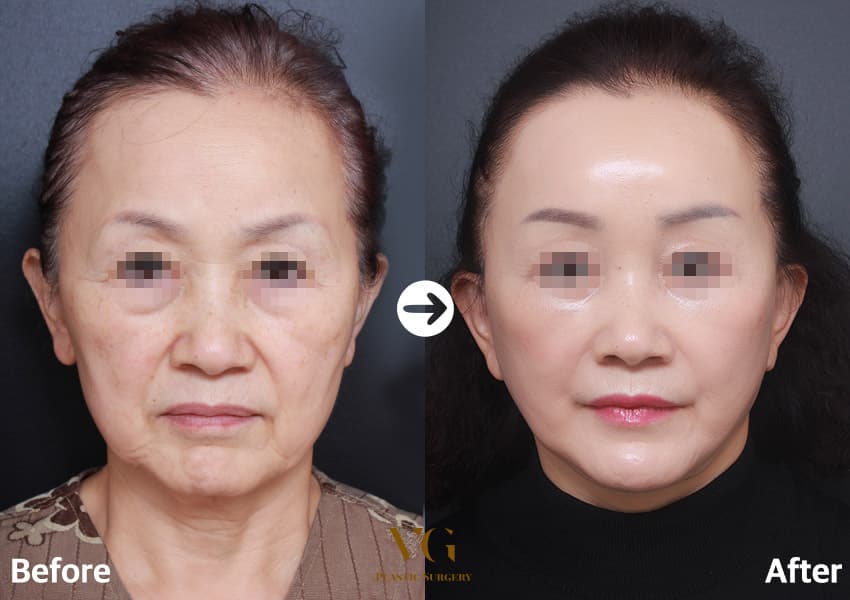
Face Lift3 months after surgery
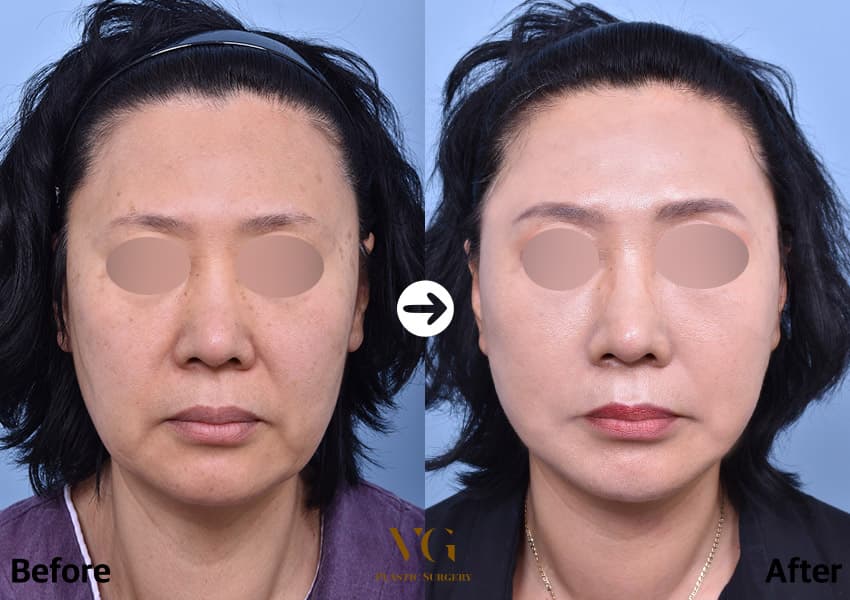
Face Lift3 months after surgery
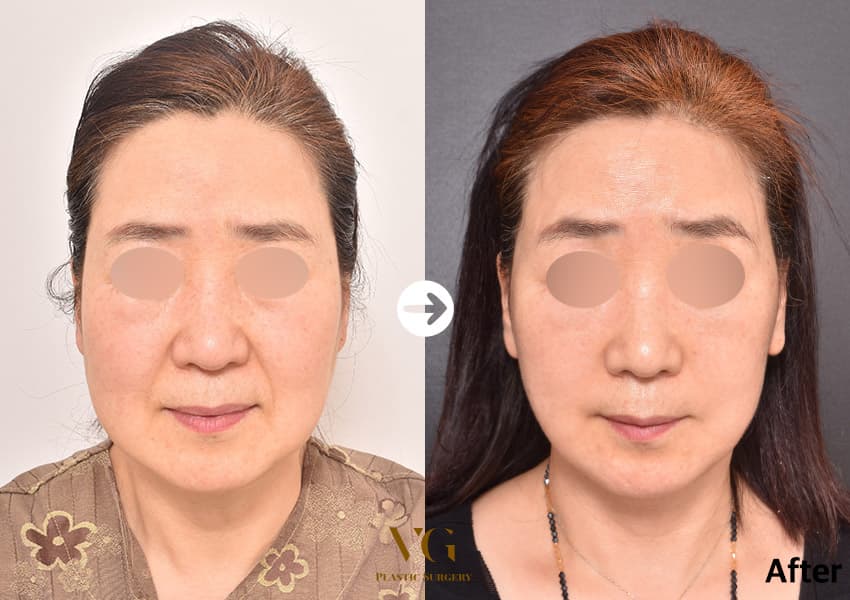
Face Lift3 months after surgery
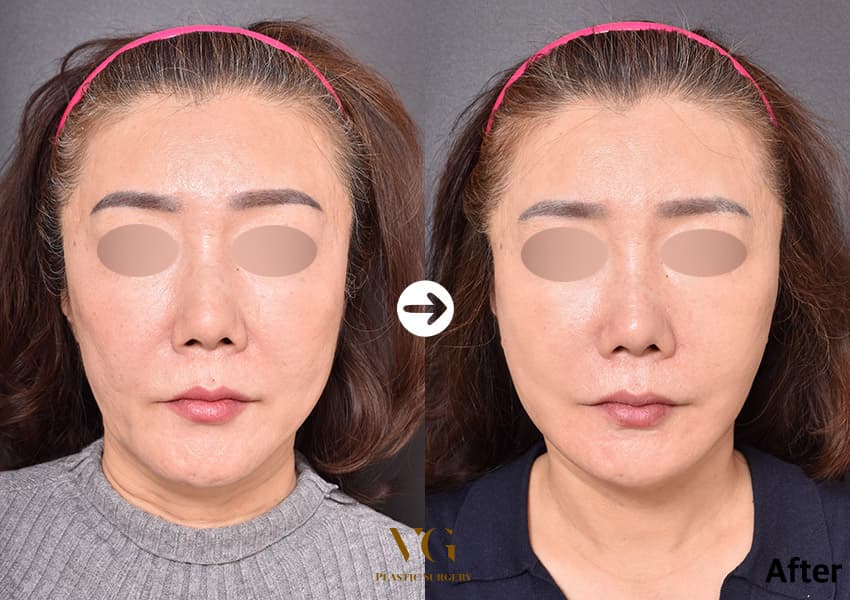
Face Lift3 months after surgery
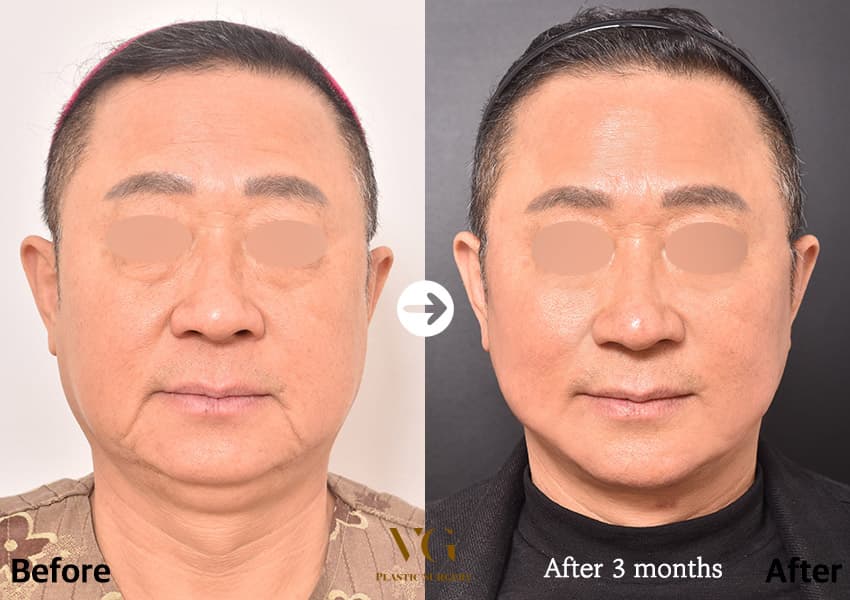
Face Lift3 months after surgery
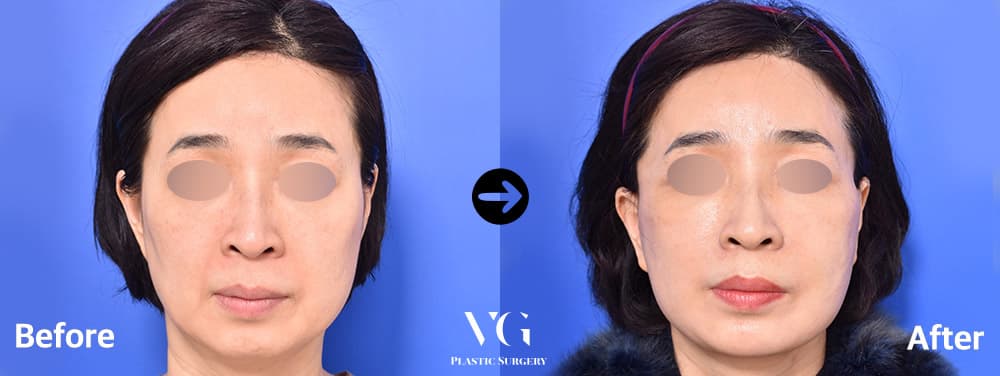
Face Lift3 months after surgery
FAQ
Questions patients ask
Is there an official ranking of facelift surgeons in Korea?
No. Korean medical-advertising rules restrict superlative claims, so no clinic can lawfully call itself the top choice. Check each surgeon's board certification in plastic surgery, training hospital and society memberships under their own name instead.
Can I ask for a deep plane facelift in Seoul?
You can ask, but the more useful question is which layer of your face will be lifted and where the incision will run. VERYGOOD lists Crystal, SMAS and mini facelift. The surgeon explains which approach fits after examining your face in person.
Will I be under general anesthesia for a facelift?
The anesthetic is chosen by the anesthesiologist after examining you, to suit your body and the length of the operation. At VERYGOOD one of three staff anesthesiologists is dedicated to each operation and monitors you until you are awake.
How soon after a facelift can I fly home?
There's no single number for everyone, because stitches, swelling and the technique all play a part. The CDC notes that flying soon after surgery raises the risk of blood clots. Ask your surgeon to name a date for your operation and book the return flight after that.
What should I give my doctor at home after a facelift abroad?
Bring the operative note, the anesthesia record, your medication schedule and the planned stitch-removal dates, in English. Show your local doctor these on the first visit so they know which layers were lifted and where the incisions are.
Sources
This article explains general medical information. Whether surgery suits you, and which method, is decided only after a consultation with the surgeon.
Written by
Im Young Min
Chief Director · Plastic Surgery
- Ph.D. in Medicine
- Internship and residency, Seoul St. Mary's Hospital
- Board-certified plastic surgeon, Seoul St. Mary's Hospital
- Adjunct professor of plastic surgery, Seoul St. Mary's Hospital
- Former director, Topface Plastic Surgery
Next step
Send two photos. Get a surgeon’s answer.
Front and side, natural light, no filter. Dr. Im Young Min reviews them and tells you which method fits and how many days to stay in Seoul.
International patients pay the same surgical fee as Korean patients. Pricing policy
Keep reading
Facelift
Deep Plane Facelift Korea Cost After a Lift That Didn't Last: What Are You Paying For? Reviews, Methods and Recovery
A deep plane facelift's cost follows how far the release goes, the neck, add-on procedures, earlier surgery and anesthesia time. Ask on WhatsApp with photos of your face and neck.
Im Young Min ·
Facelift
Mini Facelift Korea Price: Why Do Two Quotes Differ? Reviews, Methods and Recovery
A mini facelift Korea price moves with how deep the lift goes, whether the neck is included, the anesthesia and your days in Seoul. The word “mini” alone tells you little about the figure.
Im Young Min ·
Facelift
9D Facelift Korea: Swelling, Stitches and the Flight Home
“9D” is a brand name some Korean clinics give their facelift, not a standard technique. The decisions that shape your trip are which tissue layer is lifted, how long to wait before flying, and who sees you once you're home.
Im Young Min ·