Fat Grafting
Facial Balancing Fat Grafting Korea: Fly Home Puffy or Wait?
After facial fat grafting, swelling is usually heaviest in the first three days and eases over one to two weeks, but how evenly your face is balanced only shows once the fat has settled, around three months.
Send your concern and a front and side photo. Replies in English, no obligation.
In this article
The short answer
Will one side of your face still look fuller, and swollen, when you board the plane home? Most planning for a facial balancing fat grafting Korea trip comes down to that gap: swelling is usually heaviest in the first three days and eases over one to two weeks. The fat that actually evens out your face only shows its final amount at around three months, so the flight date follows the swelling and the result follows the fat.
- Facial swelling after fat grafting is usually heaviest in the first three days and eases over one to two weeks.
- The side that receives the fat swells more, so the balance you see in week one is not the final balance.
- Fat fills soft-tissue hollows; it cannot narrow a jaw angle or move a cheekbone.
- How much fat stays is judged at around three months, which is also when a second session can be weighed.
- Foreign patients pay the same surgery fee as Korean patients and receive a written estimate.
Hello, I'm Dr. Im Young Min, Chief Director and a board-certified plastic surgeon at VG Plastic Surgery in Gangnam, Seoul. I operate across every field here, including eyes, nose, breast, body, anti-aging and facial contouring. For an uneven face that matters, because when the difference turns out to be bone and not soft tissue, I can tell you so instead of filling over it.
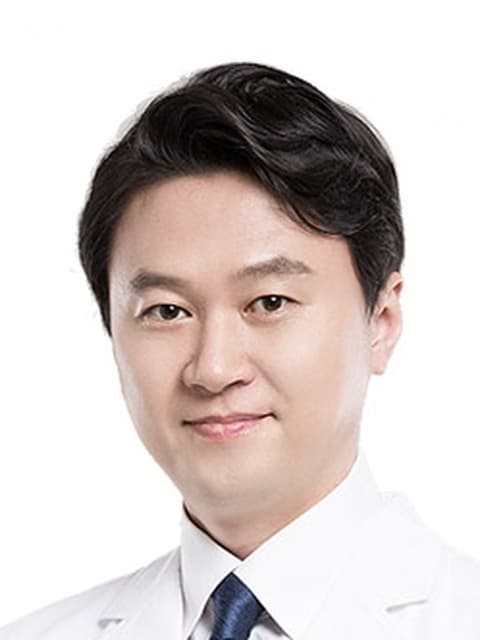
Profile
Im Young Min
Chief Director · Board-certified in Plastic Surgery
Two more facts bear on a trip like this. Three board-certified anesthesiologists work here full time, one dedicated to each operation, and they don't perform the surgery. And a medical interpreter for your language is provided at no extra charge, so the consultation doesn't depend on your Korean.
If one cheek or temple has always looked flatter than the other, take three daylight photos (straight on and from each side) and send them on WhatsApp with the dates you could travel. Ask whether the difference looks more like missing fat or bone shape.
Send your face photos and travel dates on WhatsApp
Is your imbalance missing fat, or bone shape?
Fat grafting adds volume. It can raise a flat cheek, fill a sunken temple, or soften a hollow under one eye. It can't narrow a jaw angle that sticks out further on one side, and it can't move a cheekbone that sits higher.
Think of a sofa cushion that has gone flat at one end. More stuffing fixes it if the cushion is the problem. If the frame underneath is bent, stuffing hides only part of the tilt, and adding too much just makes the cushion look overfilled.
When the cause is bone, a small difference can often be softened by adding fat to the smaller side. A larger one usually needs bone work, and that changes the plan and the trip far more than fat does. If that might be you, read how bone work sets the length of a facial contouring trip before you choose your leave dates.
If a surgeon at home called fat grafting unpredictable, that wasn't a brush-off. Grafted fat has to pick up a new blood supply to survive, and part of what is injected is reabsorbed over the first months. Published reviews of facial fat transfer report good overall results alongside retention that varies between people and between areas, which is why some faces need a second, smaller session. Whether one session will be enough or you should plan for two is worth settling before you book anything.
How swollen will you be, day by day?
The pattern below is the general course after facial fat grafting, not a promise for your face.
| When | What you usually see | What it means for your trip |
|---|---|---|
| Days 1–3 | Swelling at its heaviest; bruising on the face and where fat was taken, often the thigh or abdomen | Rest days; not the time for a long-haul flight |
| Days 4–7 | Swelling easing, bruises turning yellow, the treated side still looks fuller | Short walks and meals out are usually fine; the balance isn't final |
| Week 2 | For many people most visible swelling has gone and makeup covers the rest | A common point to plan the flight home around |
| Months 1–3 | Leftover swelling fades and some fat is reabsorbed | You're home; take photos in the same light each month |
| Months 3–6 | What remains is generally considered settled | When a second session can be judged |
One thing catches people with uneven faces off guard. The flatter side is the one receiving the fat, so it also swells more, and for the first week it can look as if the imbalance has flipped to the other side. Don't judge the result in a hotel mirror on day four. Take a photo the morning before surgery and compare against it only from about the third month, under the same light.
The donor site is often the sorer part. Thighs or belly can feel bruised and tight for a week or so, and a compression garment is common. Pack loose trousers for the flight, and plan to get up and walk the aisle every hour or two.
Lumps, uneven take and the rare serious risk
Common and temporary: swelling, bruising, firmness, numbness around the donor site, and small lumps you can feel under the skin in the first weeks. Most of these fade over several weeks.
Less common: uneven take, where one area keeps more fat than another and ends up under- or over-corrected, and small oil cysts from fat that didn't survive. These are the usual reasons for a touch-up session. How much fat stays differs from person to person, which is why nobody can promise the exact final balance on day one.
Rare but serious: reviews of facial fat grafting complications describe cases in which fat entered a blood vessel and caused vision loss or stroke. They are rare, and they are the reason experience with facial anatomy matters more than speed.
As general medicine, these are reasons to wait or to rethink:
- You smoke or vape.
- You take blood thinners or supplements that increase bleeding, and haven't checked whether they can be paused.
- There's an active infection or inflamed skin in the area.
- You're pregnant or breastfeeding.
- Your weight is still changing, or you're very lean with little fat to harvest.
After you fly home, a sudden change in vision, a severe headache, weakness on one side, or skin in the treated area turning pale or dusky is an emergency: go to the nearest emergency department straight away. For lumps or a side that looks too full at week three, keep taking monthly photos and send them on WhatsApp. It also helps to tell your family doctor at home about the surgery before you leave.
Before you buy flights, write down every medicine and supplement you take, and whether you smoke or vape. Send that list on WhatsApp with your landing and return dates, and ask which items you'd need to pause and how many nights after surgery your plan should leave before boarding.
Send your face photos and travel dates on WhatsApp
How many days should the trip cover?
There isn't one number that fits every face, because the nights you need move with how many areas are treated, whether fat is the whole plan, and how you swell. As general planning, keep the first three days after surgery for rest and keep the long flight out of them. Many people aim for the end of the first week or into the second, once bruising can be covered. Confirm the date at your consultation before you buy a nonrefundable ticket.
Say you're 31, living in Denver, and your left cheek has looked flatter than the right since your teens. A surgeon at home suggested a cheek implant on one side. You have ten days of leave.
If the exam shows that your right cheekbone simply projects more, adding fat to the left may even out the front view but not the view from below, and you should hear that before you spend the leave. If the left side is genuinely short on soft tissue, fat fits the problem. Then the ten days work better with surgery near the start, rest after it, and the flight at the very end of the trip.
If the uneven spot sits under one eye, check first whether you have a hollow or a bag, because a bag needs a different operation. For how fat behaves area by area, from temples to cheeks to the chin, see which areas of the face take fat and how much stays.
What decides the cost of evening out one side?
In short, these are the things that move it:
- How many areas are treated, and whether one side or both
- Where the fat is taken from and how much is needed
- The anesthesia, sedation or general, with an anesthesiologist present throughout
- Whether bone contouring is combined in the same trip
- Whether a second session is likely to be part of the plan
Foreign patients pay the same surgery fee as Korean patients, and the quote comes as a written estimate. The deposit and how you pay are settled after the consultation. If you'd like to know those before you fly, put that question in your WhatsApp message alongside a front photo and ask what your own case would cost.
Questions worth asking wherever you go
Whichever clinic you choose, these questions show you how a balancing plan is built:
- Did the surgeon check whether my difference is bone, soft tissue, or both?
- Is the surgeon who examines me the one who operates, under their own name?
- Is a dedicated anesthesiologist present for the whole operation?
- Is a medical interpreter in the room, and at what charge?
- Is the fee the same for foreign patients, and is the estimate written?
- After I fly home, how do I send photos, and what happens if a second session is needed?
It doesn't have to be us. Choose the place that answers these clearly. Each of our surgeons' training is listed under their own name on VG Plastic Surgery's English site, so you can check it before you fly.
Where I stand on evening out a face
I think of plastic surgery as a way of looking after yourself, and a balancing graft is one of the quieter forms of it. Most people who ask about it don't want a new face, just the one they have with both sides matching. Being useful to that one person matters more to me than adding procedures. There is no need to decide this month; the right time is when your leave, your weight and your plan line up.
When you're ready, take a front photo and both profiles in daylight without makeup, and send them on WhatsApp with the month you're thinking of. Ask whether your plan would be fat alone or fat plus contouring, and what that means for the length of your stay. At the consultation in Seoul, at 635 Nonhyeon-ro, Gangnam-gu, the deciding factor is how much soft tissue each side is missing, measured against the bone underneath.
— Dr. Im Young Min, Chief Director
Related pages:
Fat Grafting before & after — more cases
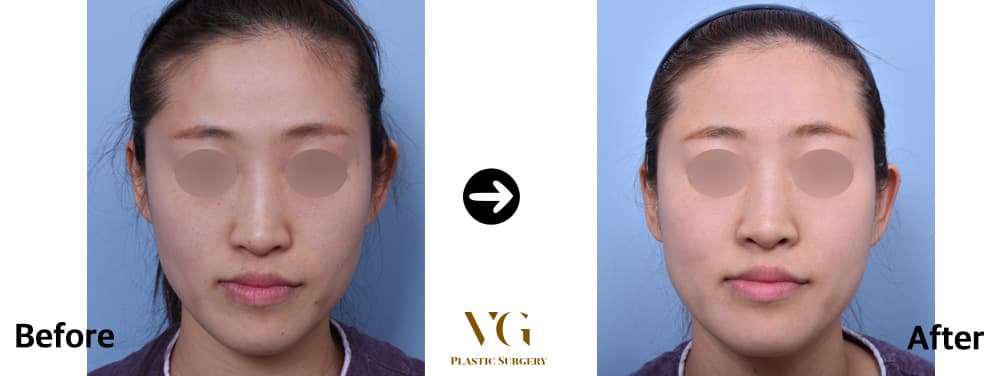
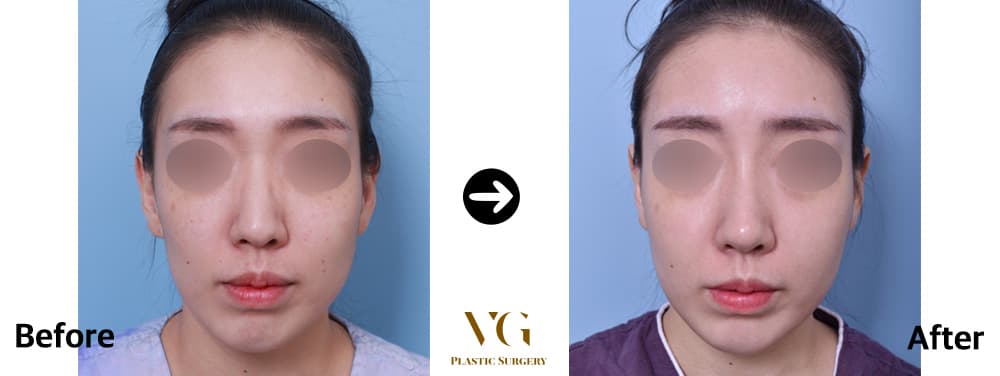
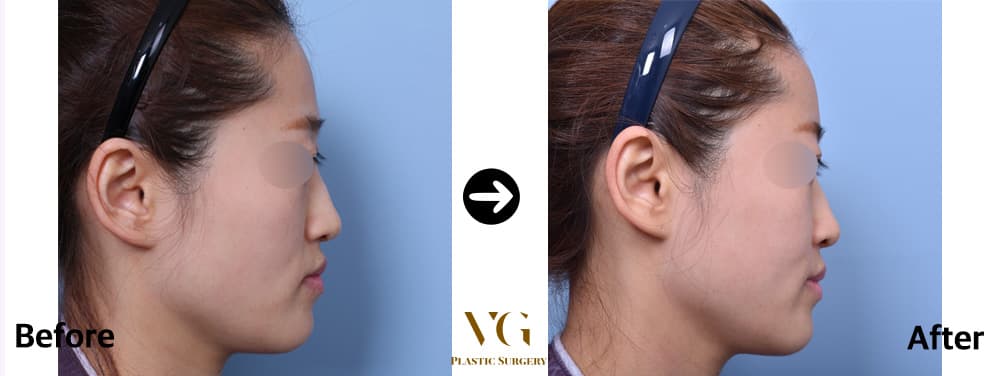
Real patients from our archive, all photographed 3 months after surgery. Tap a case to compare it full size.
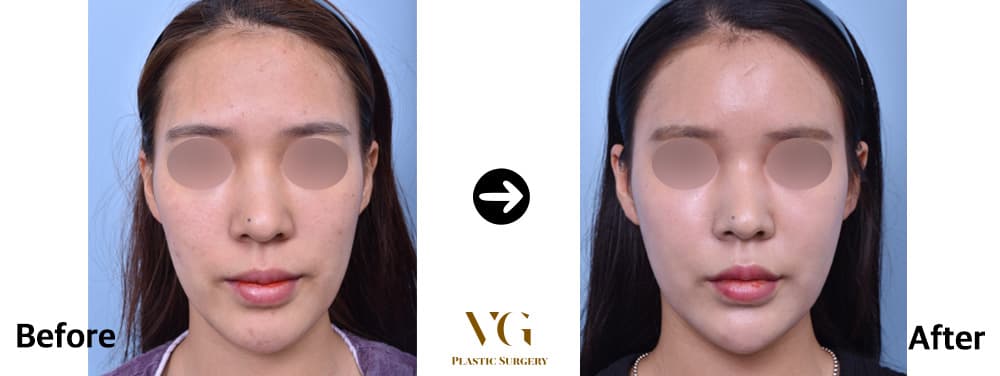
Fat Grafting3 months after surgery
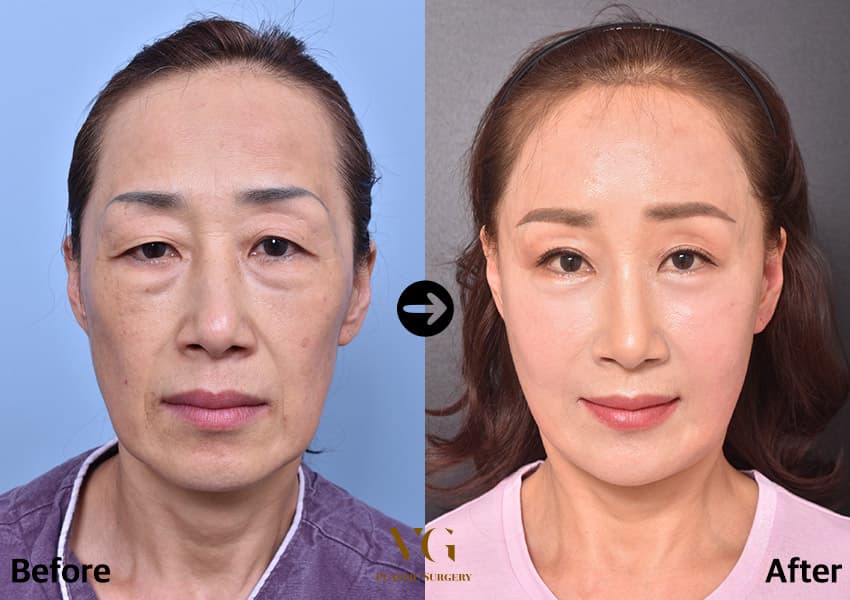
Fat Grafting3 months after surgery
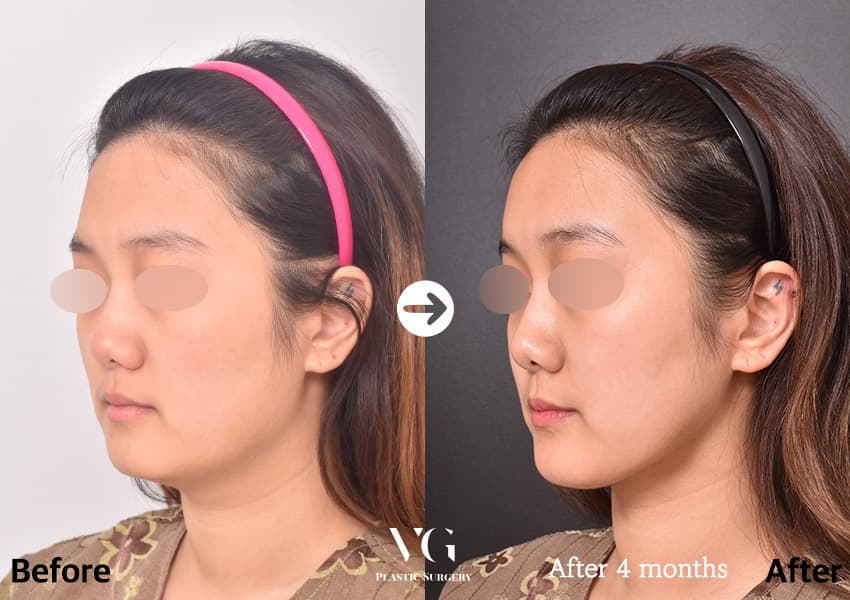
Fat Grafting3 months after surgery
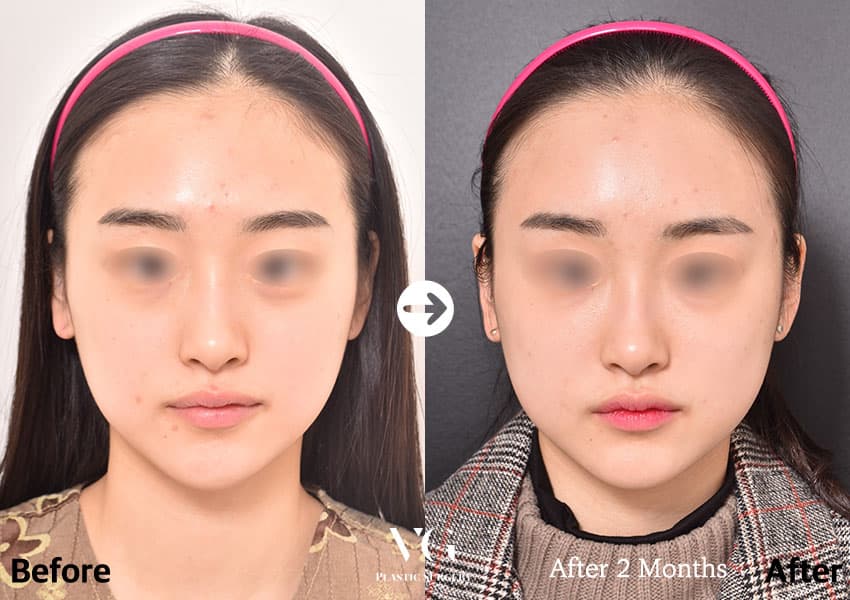
Fat Grafting3 months after surgery
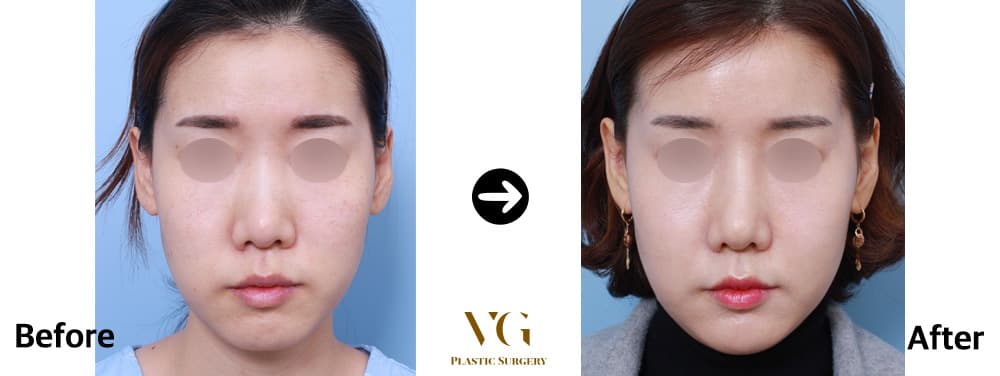
Fat Grafting3 months after surgery
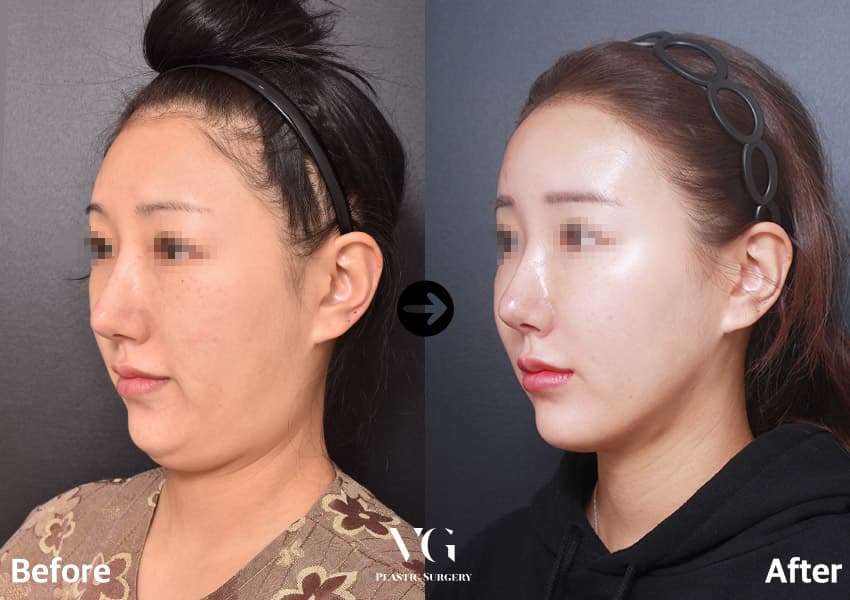
Fat Grafting3 months after surgery
FAQ
Questions patients ask
Can I fly home three or four days after facial fat grafting?
The cabin itself isn't usually the issue. Sitting still for hours with fresh swelling and a sore donor site, far from your surgeon during the peak days, is. Many surgeons prefer you to be past the first few days. On a long flight, walk the aisle regularly, drink water, and wear compression only if it was advised.
Will the grafted fat change if I gain or lose weight?
Usually yes. Fat that survives the transfer behaves like fat elsewhere in your body, so a large weight gain can make the treated side look fuller and a large loss can thin it. Keeping your weight stable for a few months before surgery makes the result easier to predict.
Can fat even out asymmetry from an old injury or scar?
Sometimes, but scar tissue has fewer blood vessels, and grafted fat needs blood supply to survive. Scarred areas may keep less fat, and more than one session is more likely. If your uneven area is scarred, mention it and include a close-up photo of the scar in your message.
Do I need general anesthesia for a balancing graft?
A small graft may be done under sedation, a larger plan under general anesthesia. Either way, an anesthesiologist who doesn't operate watches your blood pressure, pulse and breathing from the first injection until you're awake again.
Can facial contouring and fat grafting be done on the same trip?
In some plans they are combined, for example bone reduction on one side and fat on a hollow the bone work can't reach. Bone work brings more swelling and a longer recovery, so it sets the trip length. For contouring, nerves and bone thickness are mapped on CT before the plan is made.
Sources
- Efficacy and Safety of Autologous Fat Transfer in Facial Reconstructive Surgery: A Systematic Review and Meta-analysis (JAMA Facial Plastic Surgery, 2018;20(5):351-360)
- Facial Fat Grafting (FFG): Worth the Risk? A Systematic Review of Complications and Critical Appraisal (Journal of Clinical Medicine, 2022;11(16):4708)
- Medical Tourism
This article explains general medical information. Whether surgery suits you, and which method, is decided only after a consultation with the surgeon.
Written by
Im Young Min
Chief Director · Plastic Surgery
- Ph.D. in Medicine
- Internship and residency, Seoul St. Mary's Hospital
- Board-certified plastic surgeon, Seoul St. Mary's Hospital
- Adjunct professor of plastic surgery, Seoul St. Mary's Hospital
- Former director, Topface Plastic Surgery
Next step
Send two photos. Get a surgeon’s answer.
Front and side, natural light, no filter. Dr. Im Young Min reviews them and tells you which method fits and how many days to stay in Seoul.
International patients pay the same surgical fee as Korean patients. Pricing policy
Keep reading
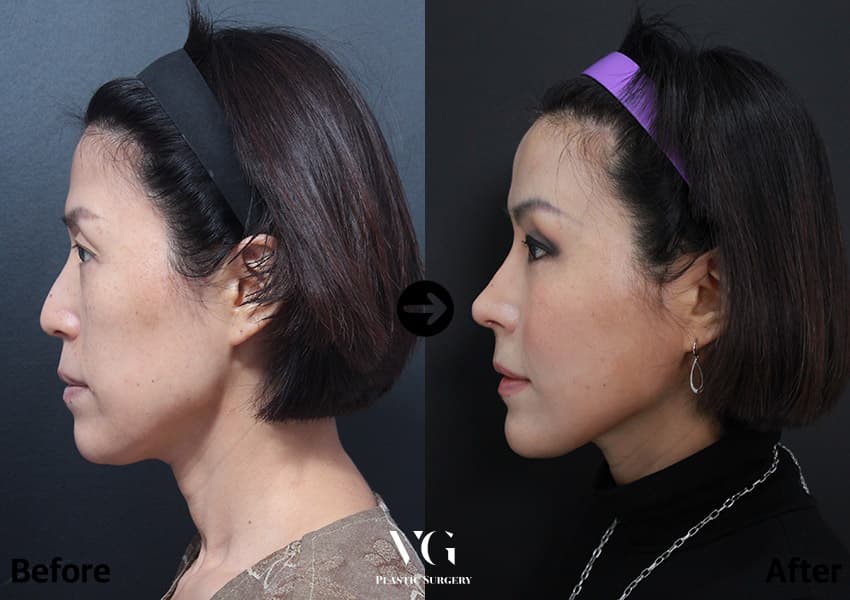
Fat Grafting
Fat Grafting Under Eyes Recovery: How Long the Swelling Lasts, When to Fly and What Sets the Cost
Swelling and bruising after under-eye fat grafting usually ease enough for daily life within one to two weeks; how much fat stays takes about three months to judge. Plan your Seoul days around the slow part, not the fast one.
Im Young Min ·
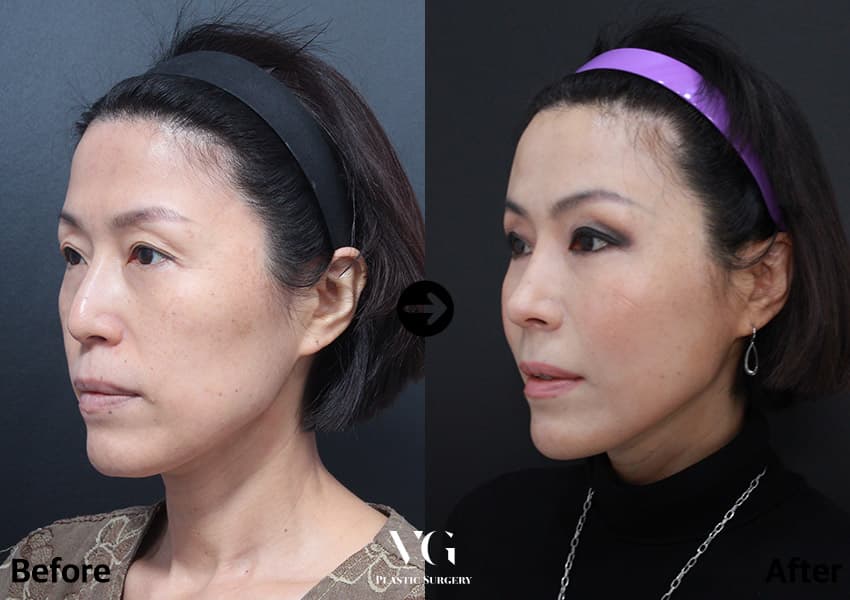
Fat Grafting
Under Eye Fat Grafting Cost Korea: Do You Have a Hollow or a Bag?
Under-eye fat grafting adds your own fat to a true hollow. It does not fix a bulging bag. What it costs comes down to the cause, how many areas are treated, the anesthesia and whether a second session is planned.
Im Young Min ·
Fat Grafting
Facial Fat Grafting Cost Korea: Will One Session Do, or Two?
Facial fat grafting moves your own fat into hollow areas of the face. Its cost follows the number of areas, the harvest site, the sessions and the anesthesia, and it suits lost volume far better than sagging or wide bone.
Im Young Min ·