Fat Grafting
Fat Grafting Under Eyes Recovery: How Long the Swelling Lasts, When to Fly and What Sets the Cost
Swelling and bruising after under-eye fat grafting usually ease enough for daily life within one to two weeks; how much fat stays takes about three months to judge. Plan your Seoul days around the slow part, not the fast one.
Send your concern and a front and side photo. Replies in English, no obligation.
In this article
- 01Why the lower lid swells more than the amount of fat suggests
- 02Fat grafting under eyes recovery, day by day
- 03How many days should you stay in Seoul?
- 04Lumps, uneven take and lingering swelling: the risks under thin lower-lid skin
- 05What moves the cost of fat grafting under the eyes
- 06The questions to settle before you pack
The short answer
How long will you look swollen after fat grafting under the eyes, and can it all fit inside one trip to Seoul? Fat grafting under eyes recovery runs on two clocks. Swelling and bruising usually ease enough for everyday life within one to two weeks, while the question of how much fat has stayed takes about three months to answer.
- Under-eye swelling usually peaks around days two to three and eases enough for daily life within one to two weeks.
- Whether the grafted fat has stayed takes about three months to judge, so week two is not the final look.
- The donor site, often the belly or thighs, can bother you more on the flight than your eyes.
- Avoid flying home before your first post-op check; confirm that day at consultation.
- Cost depends on the areas treated, any combined lid surgery, the anesthesia and whether a second session is needed.
Hello, I'm Dr. Im Young Min, Chief Director and board-certified plastic surgeon at VeryGood Plastic Surgery in Gangnam. I'm on the fat grafting team here and I also work in the eye center, which matters for this operation because the lower lid is exactly where those two meet.
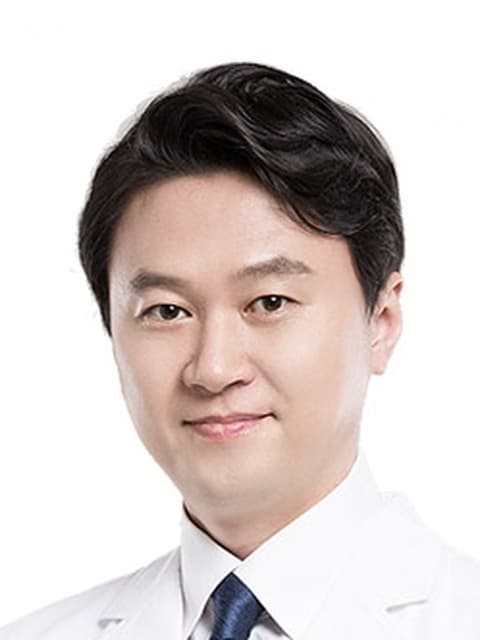
Profile
Im Young Min
Chief Director · Board-certified in Plastic Surgery
Two facts shape how your days here would run. Three board-certified anesthesiologists work at the clinic full time, and one is dedicated to each operation, watching your breathing and blood pressure so the surgeon does nothing but operate. And a medical interpreter for your language is provided at no extra charge, so the instructions for your first nights aren't something you piece together from a translation app.
If your leave dates are already fixed, send a daylight photo of your lower lids, taken straight on without makeup, together with those dates on WhatsApp, and ask whether the shadow you see is a hollow that fat could fill or a bag that needs a different plan.
Send a daylight photo of your lower lids and your leave dates on WhatsApp
Why the lower lid swells more than the amount of fat suggests
The volume placed under each eye is small compared with cheeks or breasts. The trouble is the setting. Lower-lid skin is some of the thinnest on the body, and the loose tissue underneath holds fluid easily, so a modest injection plus the fluid your body sends to heal it can make the lids look much fuller than the graft itself.
Gravity adds to it overnight. Many people wake on day two or three with the puffiest lids of the week, then watch the swelling and bruise drift lower toward the cheeks as it drains. That downward drift is normal and is one reason a mirror on day four can look worse than day three.
There is a second place to recover from: the area the fat came from, usually the belly or inner thighs. Harvesting is a small liposuction, so that spot aches and bruises much as it does after liposuction in Korea, on a smaller scale. On a long-haul flight, the donor site is often what people notice more than their eyes.
Then there is the slow clock. Not all grafted fat survives. A 2018 systematic review and meta-analysis in JAMA Facial Plastic Surgery found fat transfer in the face to be generally effective and safe, while noting that part of the volume is reabsorbed and that retention differs between studies. That is why the face you see at week two is not the face you will have at month three.
Fat grafting under eyes recovery, day by day
In short, this is general medicine for under-eye grafting, not a fixed schedule. Confirm your own check-up and stitch days at consultation.
| Days after surgery | What you'll likely see and feel | What it means for your trip |
|---|---|---|
| Day 0 to 1 | Tight, full lower lids, watery eyes, a sore donor site | Hotel rest, head raised on two pillows |
| Days 2 to 3 | Swelling usually at its peak, bruises darkening | Plan nothing; these are the puffiest days |
| Days 4 to 7 | Swelling draining down, bruises turning yellow-green | Short walks and cafés; small stitches commonly come out around now |
| Days 8 to 14 | You look tired rather than operated on for most people | The usual window to fly home after your check |
| Weeks 3 to 6 | Lids soften, small firm spots can still even out | Normal routine for most |
| Around 3 months | The fat that survived has settled | The point to judge the result |
One habit helps more than any cream. Take a photo every morning at the same window, from the same distance. A hotel mirror under ceiling light deepens every shadow under the eye, so day nine looks worse than it is; a row of daylight photos shows you the trend instead of the mood.
How many days should you stay in Seoul?
Count the days the procedure itself needs: an in-person consultation before surgery, the surgery day, the two or three nights of peak swelling, and the first post-op check. Many surgeons want to see you once in the first week, when small incisions are checked and stitches come out, so flying home before that check is the part I would avoid.
Say you're 34, live in Toronto, and have ten days of leave. Give the landing day to jet lag, because a consultation on no sleep is a poor time to decide anything. Keep the surgery early in the trip rather than late, so the peak-swelling nights fall in the middle and your check falls before the flight, not after it. If you only have five days, you would be boarding at peak swelling and before the first check; that is a reason to move the trip, not to shrink the plan.
The flight itself doesn't usually harm the graft, but thirteen hours of sitting lets fluid gather, so your lids may look puffier when you land than when you boarded. Walk the aisle, drink water, skip the salty snacks, and keep sunglasses and a cap in your carry-on. Long flights soon after surgery also raise the risk of blood clots in the legs; ask about leg exercises and clot prevention before you fly, especially if you take hormonal contraception.
The clinic's English homepage lists each surgical center and the surgeons who work in it, which is useful if you want to see who sits on the fat grafting team before you book anything.
Lumps, uneven take and lingering swelling: the risks under thin lower-lid skin
The temporary part comes first. Swelling, bruising, a sore donor site and a slightly firm feel under the lids are expected and usually fade over the first weeks, with the firmness the last to go.
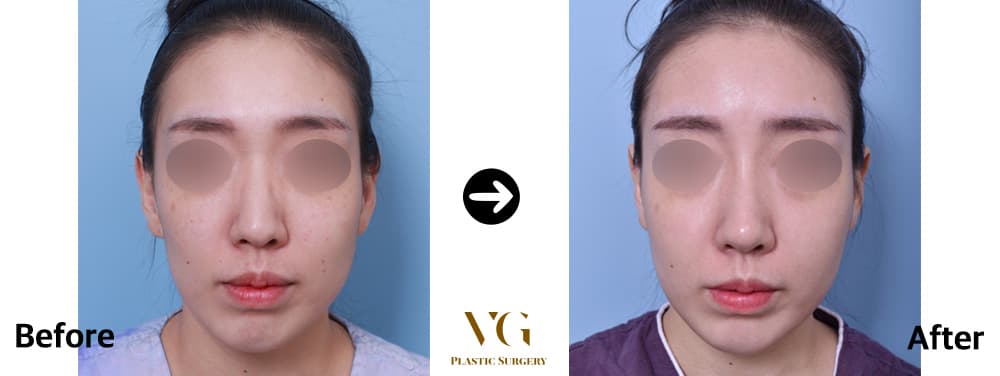
Less common, and more specific to this area: small lumps or ridges that show through thin skin, one side taking more fat than the other, too little correction that calls for a second session, and swelling that lingers for months. Rarely, infection or fat entering a blood vessel can occur. A 2022 systematic review of facial fat grafting complications in the Journal of Clinical Medicine reported that most problems were minor and temporary, while also documenting rare serious vascular events. How quickly swelling settles and how much fat survives differ between people, which is why I'd plan your trip around the slow days rather than the fast ones.
As general medicine, these are reasons to wait or rethink:
- an eye or skin infection near the lids, or a recent eye operation
- pregnancy or breastfeeding
- blood thinners or supplements that increase bleeding (never stop a prescribed medicine on your own; ask the doctor who prescribed it)
- smoking, which slows healing and can reduce how much fat survives
- very little spare body fat to harvest
- a bag that pushes forward rather than a hollow, where adding fat can make it look bigger; that is where under-eye fat repositioning comes into the conversation instead
If something changes after you fly home, act on it locally the same day. Increasing pain or redness, warmth, fever, discharge, or any change in your vision needs a doctor or an emergency department where you are, and vision changes are urgent. Before you leave Seoul, keep a copy of your operation record showing where the fat was taken and where it was placed, so a doctor at home can read it in minutes.
Before booking your flights, send the list of medicines and supplements you take on WhatsApp, and ask what follow-up looks like once you're back home, so you know the answer before you need it.
Send a daylight photo of your lower lids and your leave dates on WhatsApp
What moves the cost of fat grafting under the eyes
The figure for your case depends on a handful of things, not on the word fat grafting alone:
- whether it is the lower lids only, or the lids together with cheeks or temples, which is how a facial fat grafting cost in Korea can change from one face to the next
- whether the plan adds lower-lid surgery or fat repositioning for a bag
- the anesthesia, which is given by an anesthesiologist rather than the surgeon
- the donor site and how much fat has to be harvested
- whether a second, smaller session is likely
Foreign patients pay the same surgery fee as Korean patients, and the estimate comes in writing. If you'd like to see how a hollow and a bag lead to different quotes, the post on under-eye fat grafting cost in Korea walks through it. The deposit and how you pay are settled after the consultation, so put those questions in the same WhatsApp message as your photo and ask what it would cost for your lids.
The questions to settle before you pack
The short list worth asking: which day your first check falls on, whether stitches at the donor site need removing before you fly, and what to wear on the plane over a sore belly or thigh. Loose trousers and a compression garment, if you're given one, make the seat far easier than jeans.
Pack for days two and three as if you won't leave the room: a soft cold compress, a pillow you can raise your head on, easy food. The tourism can wait until the bruises turn yellow.
Send three daylight photos on WhatsApp, one straight on and one from each side, no makeup, and ask how your days would line up around the first check. In person, the first thing I want to see is how thin your lower-lid skin is and whether the shadow comes from a hollow or a bag, because that decides how much fat belongs there, if any. VeryGood Plastic Surgery is at 635 Nonhyeon-ro, Gangnam-gu, Seoul.
Related pages:
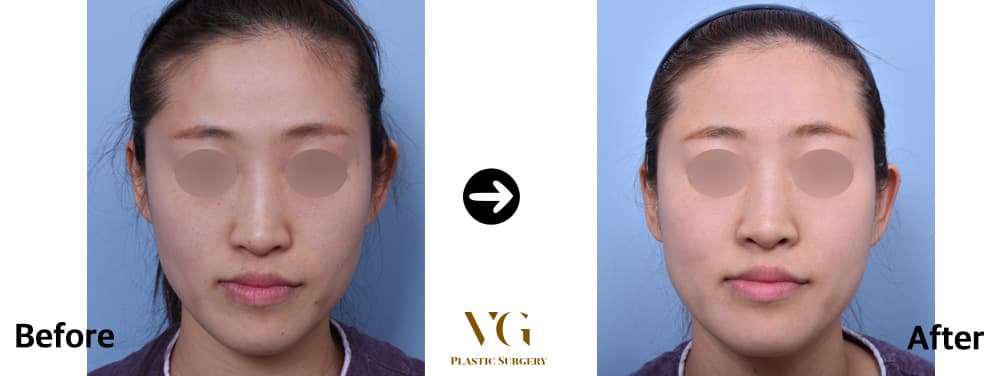
Fat Grafting before & after — more cases
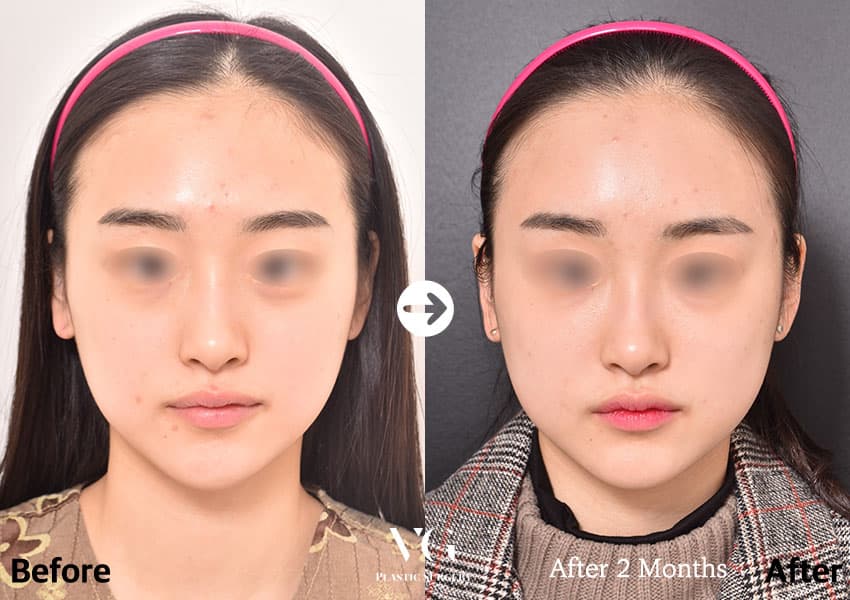
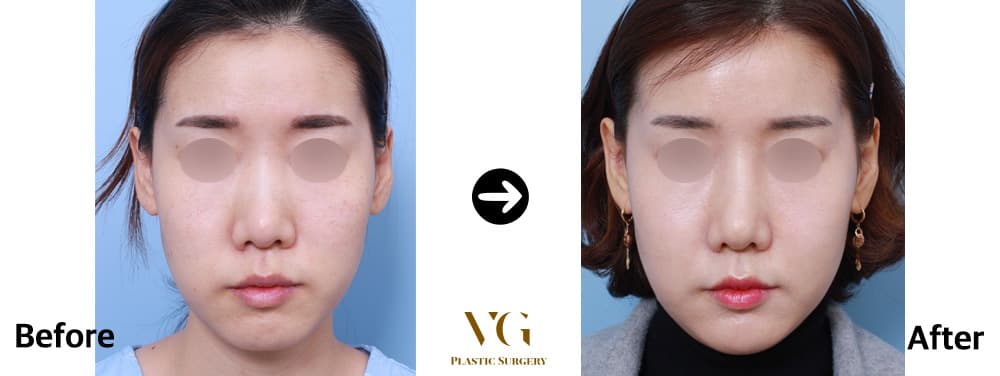
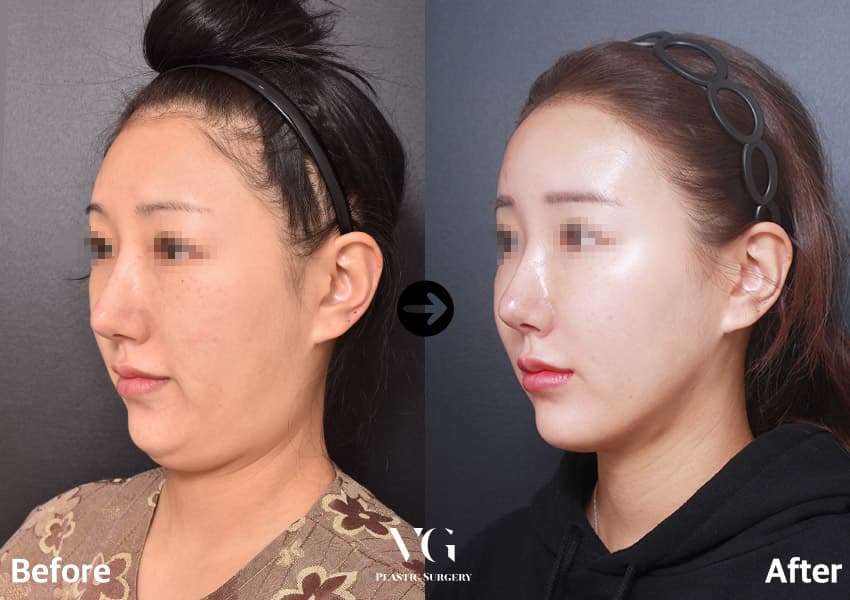
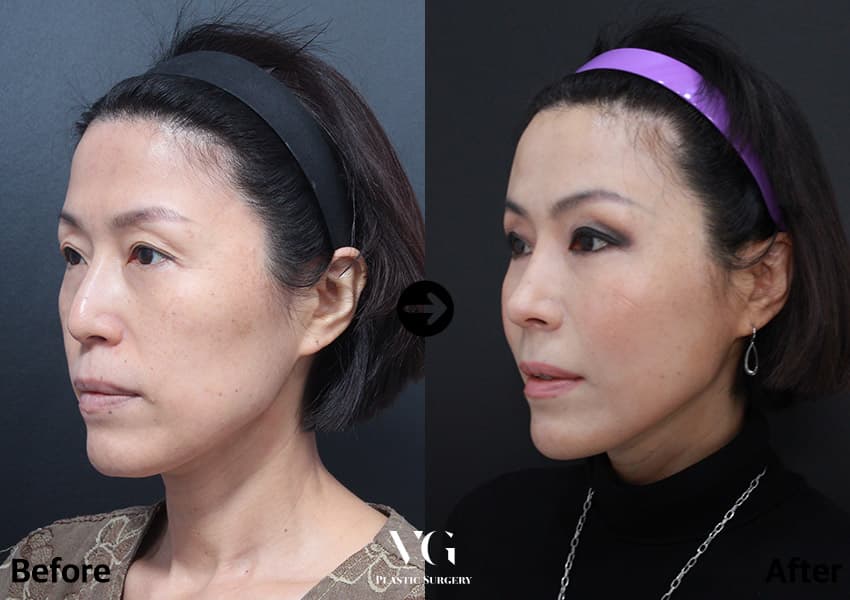
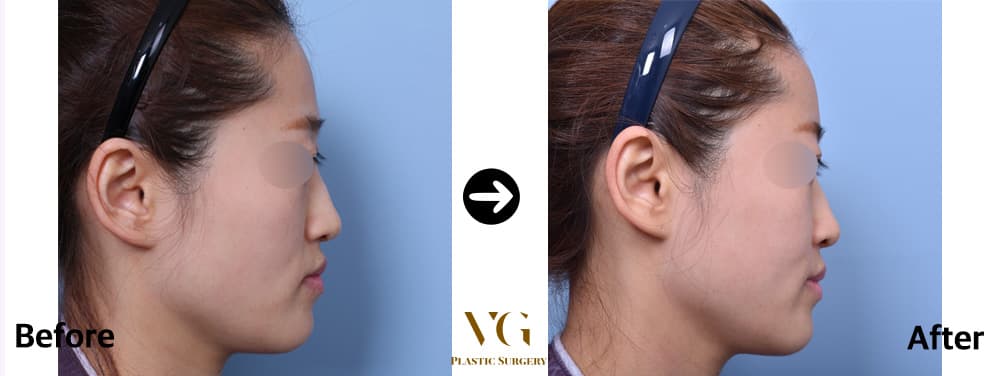
Real patients from our archive, all photographed 3 months after surgery. Tap a case to compare it full size.
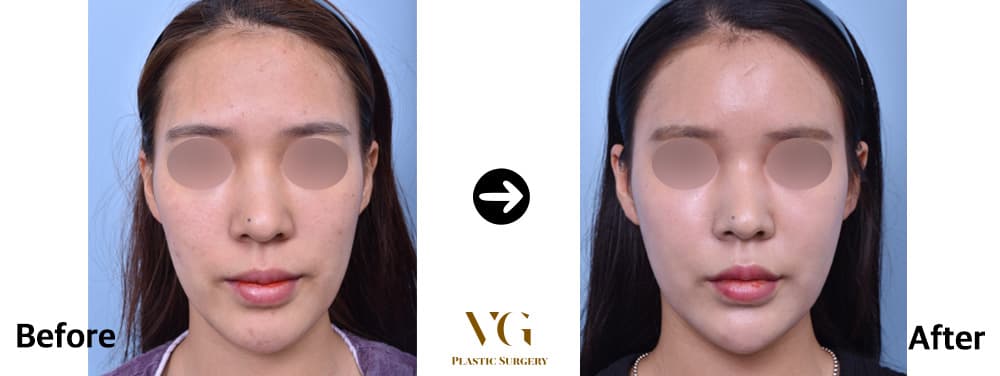
Fat Grafting3 months after surgery
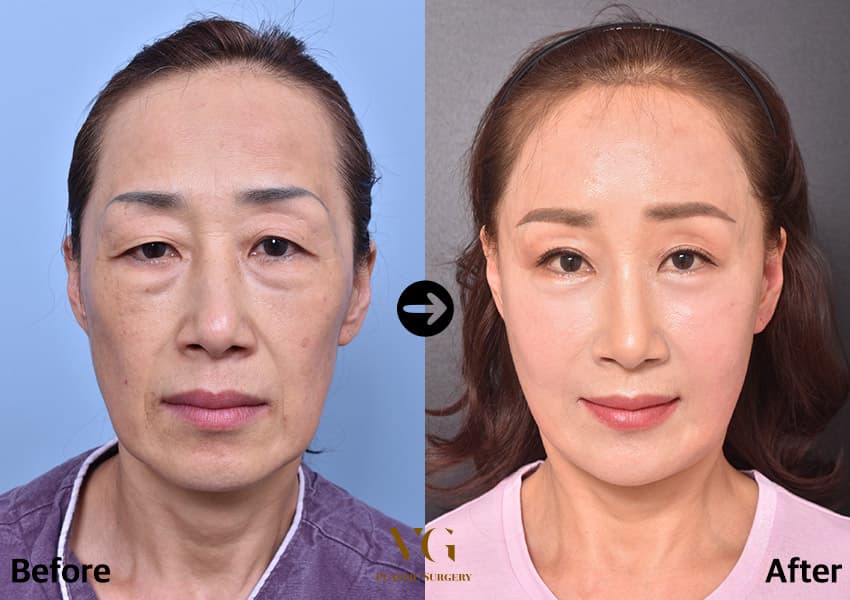
Fat Grafting3 months after surgery
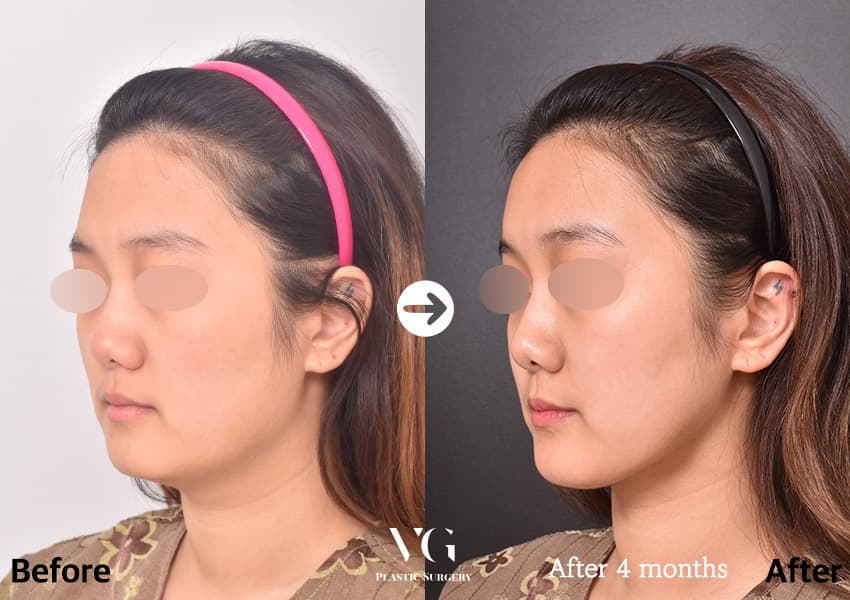
Fat Grafting3 months after surgery
Fat Grafting3 months after surgery
Fat Grafting3 months after surgery
Fat Grafting3 months after surgery
FAQ
Questions patients ask
When can I wear concealer over the bruises?
Usually once any small incisions have closed and the doctor has checked them, which for many people is around the end of the first week. Pat it on rather than rubbing, since pressing hard on fresh graft is the thing to avoid.
When can I go back to the gym?
Easy walking helps from the first days. Hard workouts, heavy lifting and head-down positions raise blood flow to the face and can bring swelling back, so most surgeons ask you to hold off for roughly two weeks.
Will I need a second session?
Sometimes, if too little fat survives on one or both sides. That is judged after the fat has settled at around three months, so a second session would be a separate trip, not an extra day on the first one.
Can I wear glasses afterward?
Glasses are usually fine as long as the frames don't rest on the lower lid or upper cheek. Heavy frames that sit low are worth swapping for a lighter pair for the first weeks.
Does weight gain or loss later change the result?
It can. Grafted fat that survives behaves like fat from where it was taken, so a large weight change later can make the area under the eyes fuller or flatter.
Sources
- Efficacy and Safety of Autologous Fat Transfer in Facial Reconstructive Surgery: A Systematic Review and Meta-analysis (JAMA Facial Plastic Surgery, 2018;20(5):351-360)
- Facial Fat Grafting (FFG): Worth the Risk? A Systematic Review of Complications and Critical Appraisal (Journal of Clinical Medicine, 2022;11(16):4708)
This article explains general medical information. Whether surgery suits you, and which method, is decided only after a consultation with the surgeon.
Written by
Im Young Min
Chief Director · Plastic Surgery
- Ph.D. in Medicine
- Internship and residency, Seoul St. Mary's Hospital
- Board-certified plastic surgeon, Seoul St. Mary's Hospital
- Adjunct professor of plastic surgery, Seoul St. Mary's Hospital
- Former director, Topface Plastic Surgery
Next step
Send two photos. Get a surgeon’s answer.
Front and side, natural light, no filter. Dr. Im Young Min reviews them and tells you which method fits and how many days to stay in Seoul.
International patients pay the same surgical fee as Korean patients. Pricing policy
Keep reading
Fat Grafting
Under Eye Fat Grafting Cost Korea: Do You Have a Hollow or a Bag?
Under-eye fat grafting adds your own fat to a true hollow. It does not fix a bulging bag. What it costs comes down to the cause, how many areas are treated, the anesthesia and whether a second session is planned.
Im Young Min ·
Fat Grafting
Facial Fat Grafting Cost Korea: Will One Session Do, or Two?
Facial fat grafting moves your own fat into hollow areas of the face. Its cost follows the number of areas, the harvest site, the sessions and the anesthesia, and it suits lost volume far better than sagging or wide bone.
Im Young Min ·
Fat Grafting
Face Fat Grafting Korea: Which Areas, How Much Takes, and 7 Days in Seoul
A plastic surgeon in Seoul explains facial fat grafting: which hollows it fills, why only part of the graft survives, what the first ten days look like and how long to stay in Korea.
Yang Jong Phil ·