Eyes
Most Common Plastic Surgery in Korea: What 426 of Our Cases Show
A Seoul plastic surgeon counts the 426 cases in his clinic's before-and-after archive by surgery type, explains what foreign patients ask about most, and says who each operation does not suit.
Send your concern and a front and side photo. Replies in English, no obligation.
In this article
- 01What our own archive shows, operation by operation
- 02Eye surgery: the question I hear most from abroad
- 03Rhinoplasty: the largest group in our archive
- 04Facial contouring and breast surgery
- 05The smaller groups: fat grafting, body contouring, facelift
- 06Why "common" should not decide your operation
- 07Planning a trip for one of these operations
- 08Who should not book any of these yet
The short answer
We do not publish a national ranking, because we cannot verify one. In our own archive of 426 before-and-after cases, rhinoplasty (151) and eye surgery (126) together make up 277 cases, about two thirds. Facial contouring (52) and breast surgery (50) come next; fat grafting, body contouring and facelift are smaller groups.
- In our archive of 426 cases, nose surgery accounts for 151 and eye surgery for 126 — about 65% between them.
- Within eye surgery, 78 of 126 cases include a double eyelid procedure, and 49 include ptosis correction.
- Common does not mean right for you: each operation has people it does not suit, listed below.
- Minimum stay in Seoul ranges from 7 days (eyes, breast augmentation) to 14 days (facial contouring, facelift).
- International patients pay the same surgical fee as Korean patients, confirmed in one itemised written quote.
I am Im Young Min, Chief Director and board-certified plastic surgeon at VG Plastic Surgery in Seoul, and an adjunct professor of plastic surgery at Seoul St. Mary's Hospital. I operate across eyes, nose, breast, body, anti-aging and facial contouring. When patients abroad ask me what the most common plastic surgery in Korea is, they usually want to know whether their own plan is ordinary or unusual here.

Profile
Im Young Min
Chief Director · Board-certified in Plastic Surgery
I will not quote a national league table I cannot check. What I can show you is what passes through our operating rooms, counted from the photographs patients agreed to publish, and what people ask me most in consultation.
What our own archive shows, operation by operation
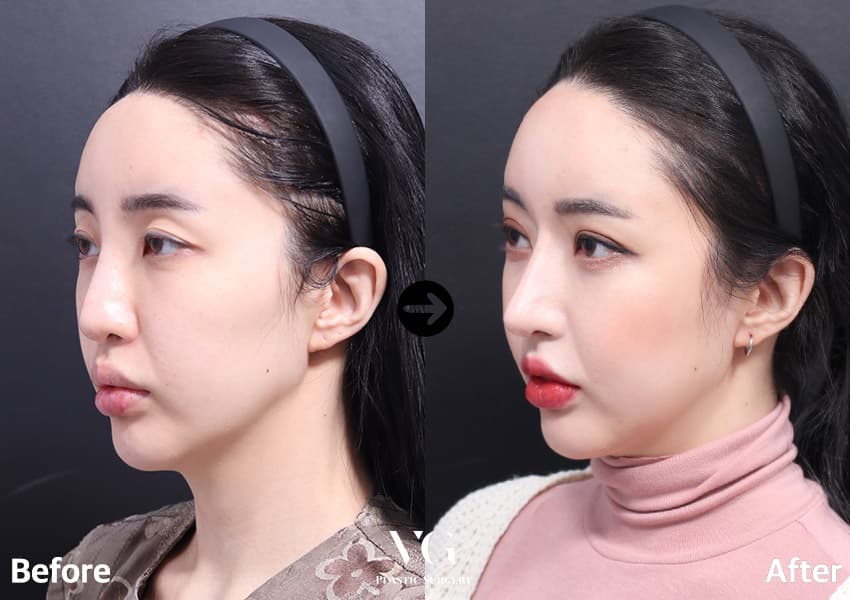
Our public before-and-after archive holds 426 cases. Each case is filed under its main operation, so a patient who had nose and eye surgery together is counted once. I counted them by category for this article.
| Operation | Cases | Share of archive | Minimum stay in Korea |
|---|---|---|---|
| Rhinoplasty | 151 | 35% | 7 days, or 14 with bone work or revision |
| Eye surgery | 126 | 30% | 7 days |
| Facial contouring | 52 | 12% | 14 days |
| Breast surgery | 50 | 12% | 7 days for augmentation |
| Fat grafting | 18 | 4% | Recovery 7–10 days |
| Body contouring | 15 | 4% | Recovery around 14 days |
| Facelift | 8 | 2% | 14 days |
| Other | 6 | 1% | — |
Two limits on these numbers. They count published photographs, not every operation we perform, because many patients do not consent to publication. And they describe one clinic in Gangnam, not Korea as a whole.
Even so, the pattern matches what I hear in consultation. The nose and the eyes are where most cosmetic surgery Korea trips begin, and they are what most first messages from abroad are about.
Eye surgery: the question I hear most from abroad
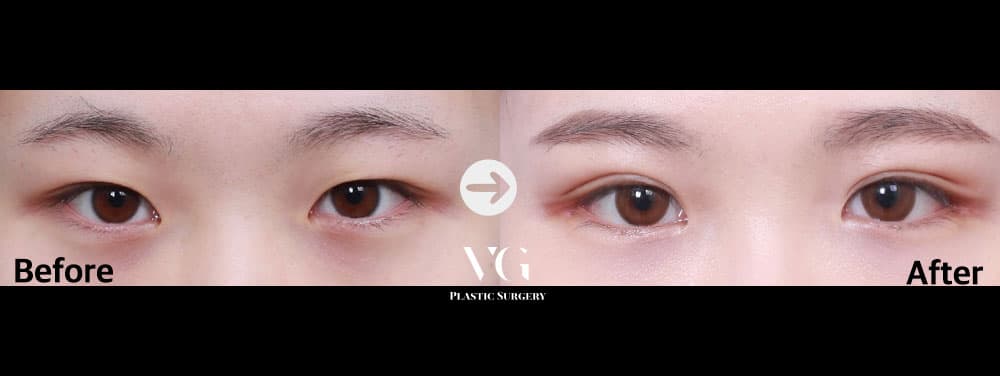
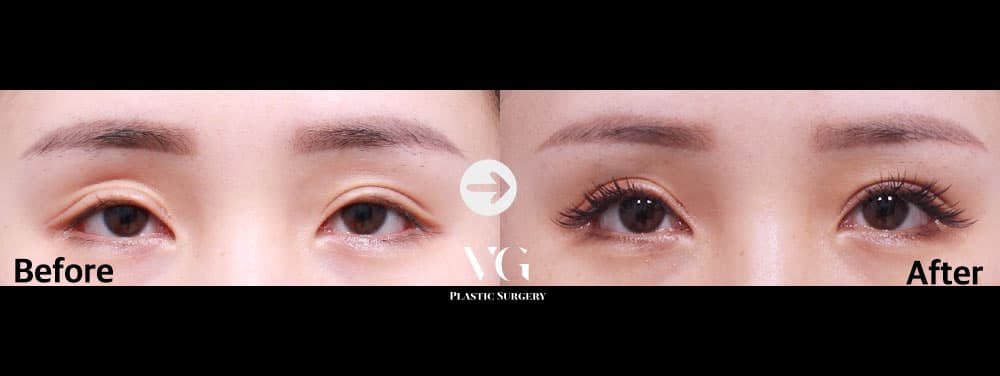
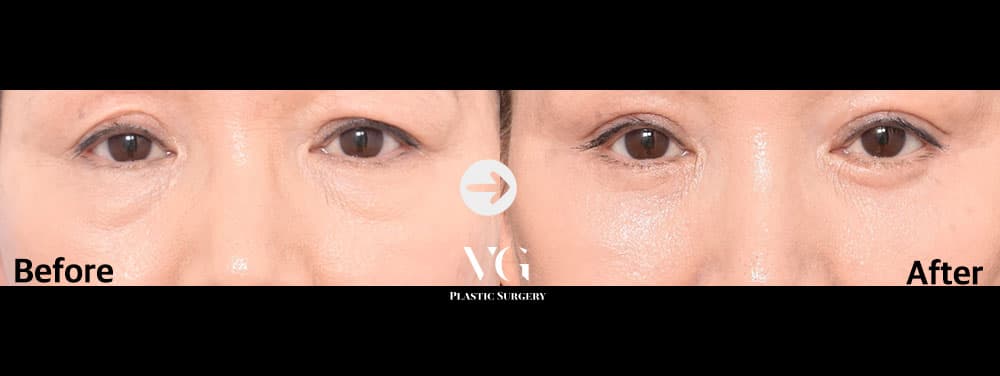
If you ask me which operation international patients ask about most, it is the double eyelid. Inside our 126 eye cases, 78 include a double eyelid procedure, 49 include ptosis correction (adjusting the muscle that lifts the lid), 25 involve the lower eyelid or under-eye fat, and 39 are revisions of an earlier eyelid operation.
Those numbers overlap because one patient often has two procedures at once. A crease and ptosis correction together is a frequent pairing, since a crease alone does not open an eye that sits low.
- Non-incisional crease: formed by adhesion without an incision. Recovery is quicker; on a thicker lid the line can loosen.
- Incisional crease: chosen when the crease has to hold. The scar sits inside the fold, but swelling takes longer to settle.
- Lower eyelid: fat and loose skin under the eye looked at together. Removing fat alone can leave a hollow, so we consider repositioning it.
Surgery takes 30 minutes to 2 hours under sedation, stitches come out 3–7 days later, and recovery runs 5–14 days. Our article on double eyelid surgery in Korea goes through method choice in detail.
Rhinoplasty: the largest group in our archive
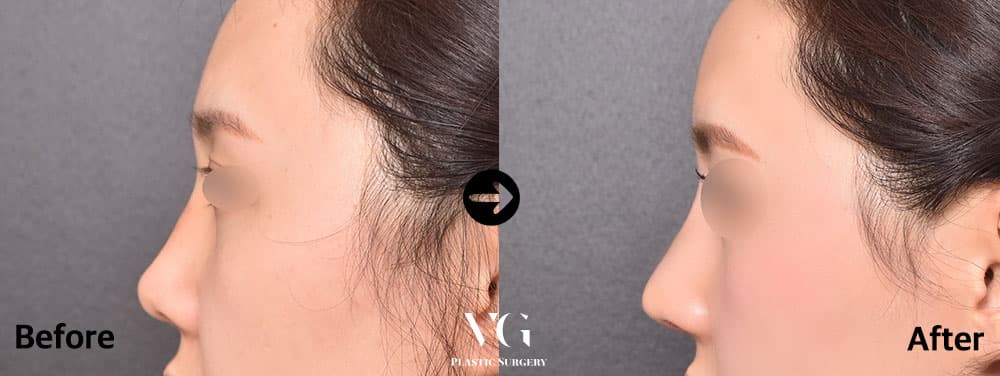
By photograph count, the nose is the most common Korean plastic surgery we perform. Of 151 nose cases, 48 are revisions and 48 used rib cartilage, which tells you something: a large share of our nose work is not a first operation but a correction of one.
A primary nose usually means raising a low bridge and refining the tip. The method — your own cartilage, an implant, rib cartilage, or breathing surgery in the same plan — is chosen after the nose is examined, with our ENT specialist checking the septum and airway when needed.
Surgery takes 1–3 hours under sedation or general anesthesia. Stitches come out 5–7 days later and recovery takes 7–14 days.
Facial contouring and breast surgery
These two sit close together in our archive, at 52 and 50 cases. They are bigger operations than eyes or nose, under general anesthesia with a one-night stay advised, so they suit people who can give the trip more time.
Facial contouring
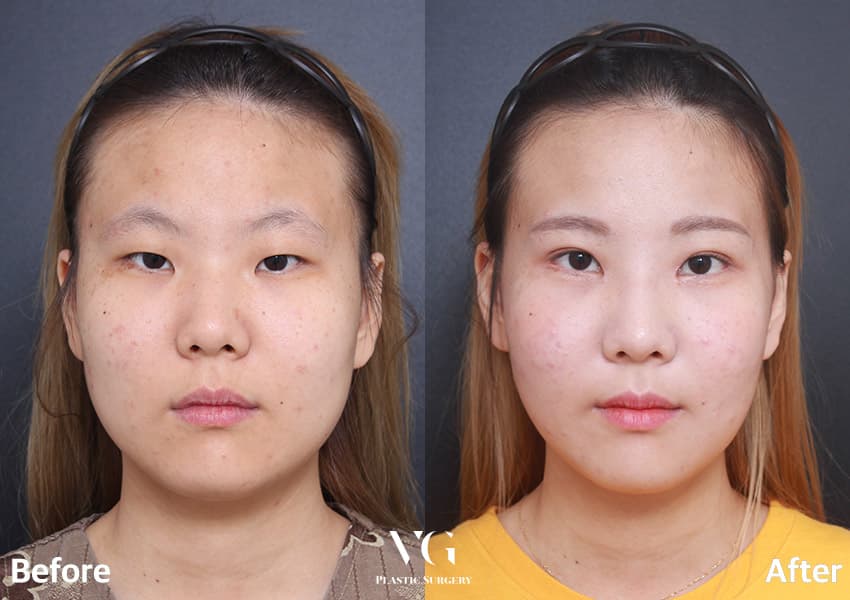
Of 52 contouring cases, 25 involve bone — cheekbone, jaw angle or chin — and 18 are chin and jawline liposuction. Bone surgery takes 1.5–4 hours, stitches come out 10–14 days later and recovery runs 14–28 days, which is why the minimum stay is 14 days.
Breast surgery
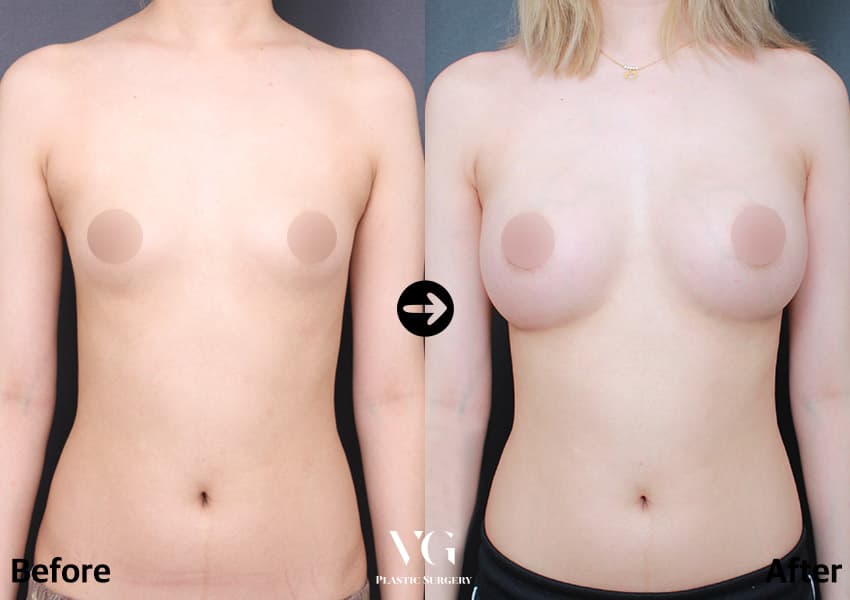
Augmentation is 41 of our 50 breast cases; the rest are lifts, reductions and male chest surgery. Size and profile are chosen against chest width and tissue thickness, so the same implant looks different on different bodies. Stitches come out 7–10 days after surgery.
Send a front and side photo of the area that bothers you, and I'll tell you which of these operations — if any — fits it.
The smaller groups: fat grafting, body contouring, facelift
Fat grafting (18 cases), body contouring (15) and facelift (8) appear less often in our archive. They are not lesser operations, and each has a clear group of people it does not suit.
- Fat grafting — not for you if your body weight is too low to harvest enough donor fat, or if you want maximum volume in one session; graft survival varies and a second session may be needed.
- Body contouring — not a weight-loss operation. With severe obesity we advise losing weight first, then consulting.
- Facelift — not the answer when volume loss, rather than sagging, is the main cause; we would look at fat grafting first. Not advised if you have been diagnosed with keloid scarring.
Why "common" should not decide your operation
The most popular plastic surgery in Korea tells you what many people wanted. It does not tell you what your face needs. Someone who asks for a double eyelid may need ptosis correction instead. Someone who asks for a higher bridge may have a nose that cannot safely support it.
If you want to see how results look across categories, our guide to reading Korean plastic surgery before and after photos explains what the time stamp and the angle tell you.
Planning a trip for one of these operations
Your stay is set by the operation, not by the airline. Eye surgery and breast augmentation need at least 7 days; nose surgery 7 days, or 14 when bone is cut or it is a revision; facial contouring and facelift at least 14 days. Our trip planning guide for international patients lays out the days.
An English interpreter is with you through consultation, the design confirmation on the morning of surgery and every follow-up visit. After you fly home, follow-up continues for three months by photograph review with written replies from your surgeon.
On cost, our pricing policy is simple: international patients pay the same surgical fee as Korean patients. There is no foreigner surcharge, and you receive one itemised written quote after consultation, before you decide.
Who should not book any of these yet
Some reasons to wait apply across every category above. I would rather say them now than at the clinic.
- Pregnancy, breastfeeding, or an uncontrolled bleeding, thyroid or cardiovascular condition
- Facial growth not yet complete, for nose and bone surgery
- A trip shorter than the minimum stay for the operation you want
- Smoking you cannot stop around the operation, which affects healing in nose, breast and fat grafting work
You can read more about my background and the operations I perform on my profile page.
Eyes before & after — more cases
Real patients from our archive, all photographed 3 months after surgery. Tap a case to compare it full size.
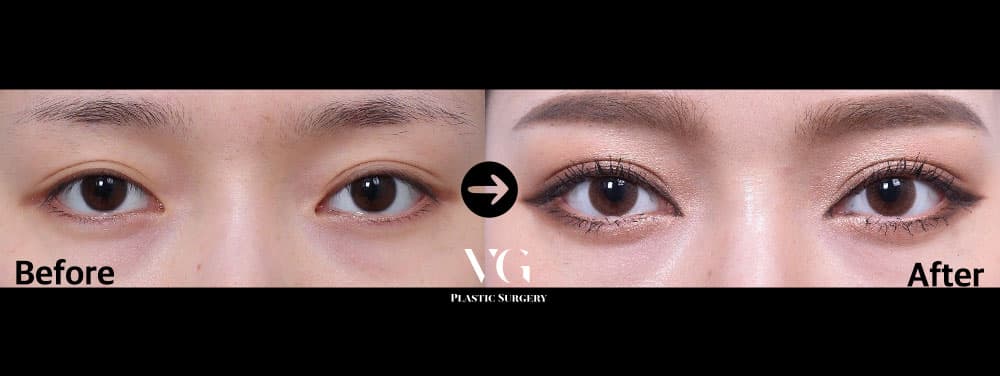
Natural-Adhesion Double Eyelid3 months after surgery
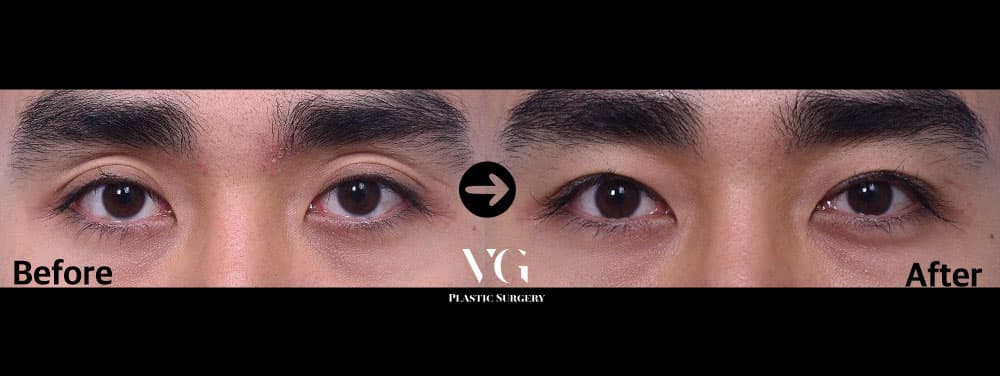
Incisional Double Eyelid3 months after surgery
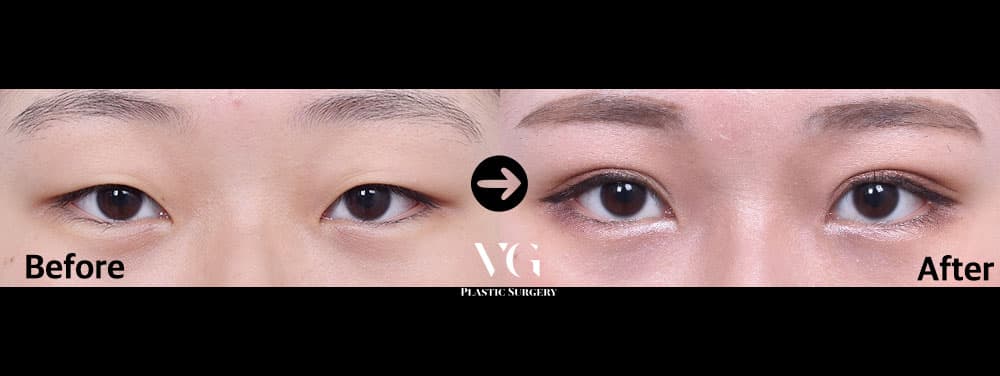
Incisional Ptosis Correction3 months after surgery
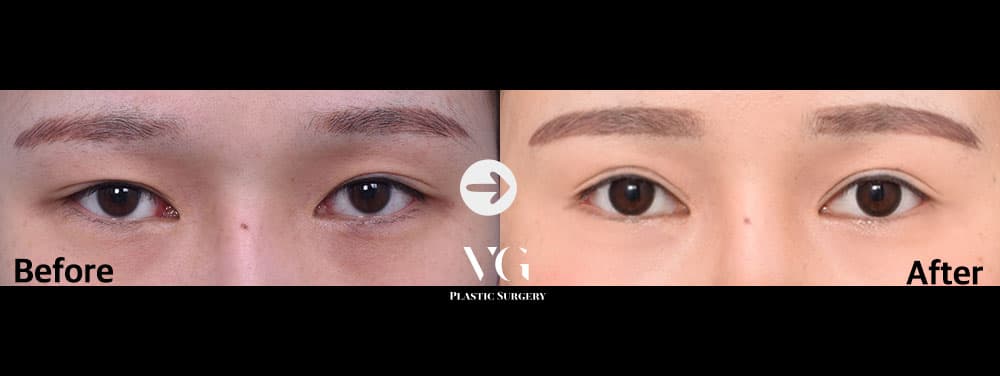
Incisional Double Eyelid3 months after surgery
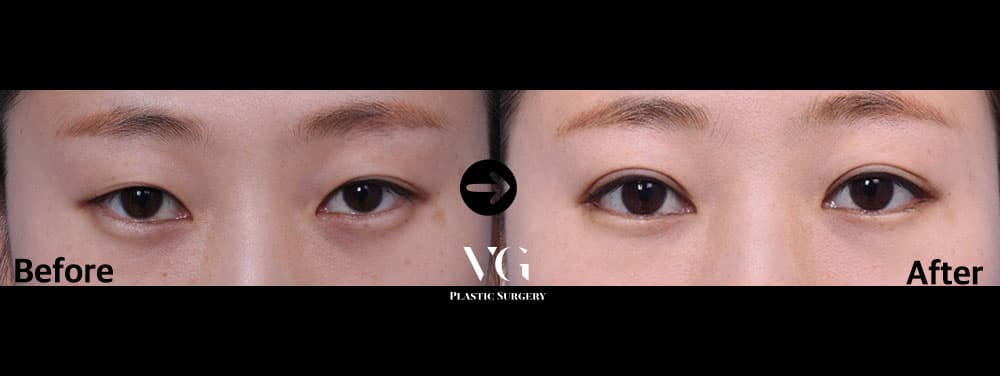
Incisional Double Eyelid3 months after surgery
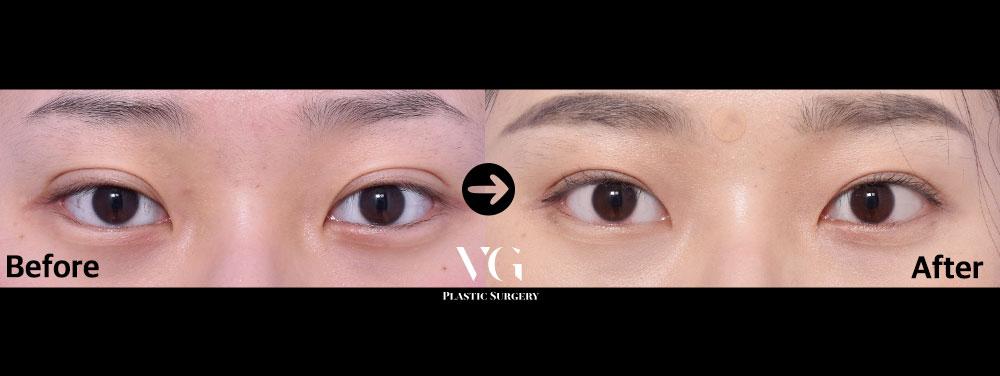
Incisional Ptosis Correction3 months after surgery
FAQ
Questions patients ask
What is the most common plastic surgery in Korea?
We cannot verify a national ranking, so we answer from our own records. In our archive of 426 before-and-after cases, rhinoplasty (151) and eye surgery (126) together account for about two thirds. Facial contouring and breast surgery follow at around 50 cases each.
Is double eyelid surgery the most popular Korean plastic surgery for foreigners?
It is the operation international patients ask me about most often. In our archive, 78 of 126 eye cases include a double eyelid procedure, often combined with ptosis correction. Whether you need a crease, ptosis correction or both is decided after the eyelid is examined.
How long do I need to stay in Korea for the common operations?
At least 7 days for eye surgery and breast augmentation, 7 or 14 days for nose surgery depending on bone work or revision, and at least 14 days for facial contouring and facelift. The stay covers stitch removal and a final check before you fly.
Do foreigners pay more for cosmetic surgery in Korea?
Not at our clinic. International patients pay the same surgical fee as Korean patients, with no foreigner surcharge and no agency commission built in. You receive an itemised written quote after consultation.
Can I combine eye and nose surgery in one trip?
Some of our archive cases list both. Whether it is advisable depends on your health, the length of each operation and how long you can stay; the stay follows the longer of the two operations.
This article explains general medical information. Whether surgery suits you, and which method, is decided only after a consultation with the surgeon.
Written by
Im Young Min
Chief Director · Plastic Surgery
- Ph.D. in Medicine
- Internship and residency, Seoul St. Mary's Hospital
- Board-certified plastic surgeon, Seoul St. Mary's Hospital
- Adjunct professor of plastic surgery, Seoul St. Mary's Hospital
- Former director, Topface Plastic Surgery
Next step
Send two photos. Get a surgeon’s answer.
Front and side, natural light, no filter. Dr. Im Young Min reviews them and tells you which method fits and how many days to stay in Seoul.
International patients pay the same surgical fee as Korean patients. Pricing policy
Keep reading
Eyes
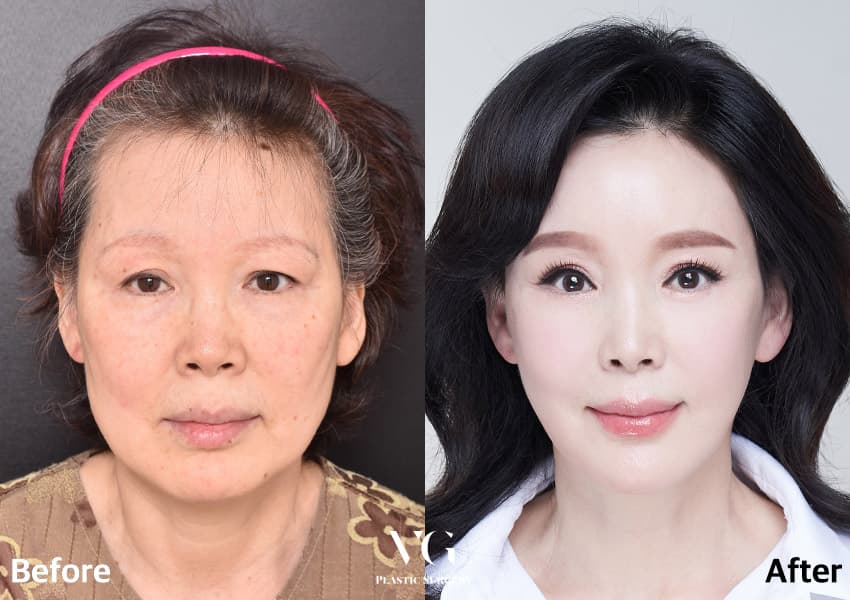
Canthoplasty Recovery Time by Corner: Stitches, Scar, Flight Home and What Sets the Cost
Stitches usually come out around day 5 to 7, most bruising settles over two to four weeks, and the scar keeps softening for six months or more. Plan your flight home around the stitch day.
Im Young Min ·
Eyes
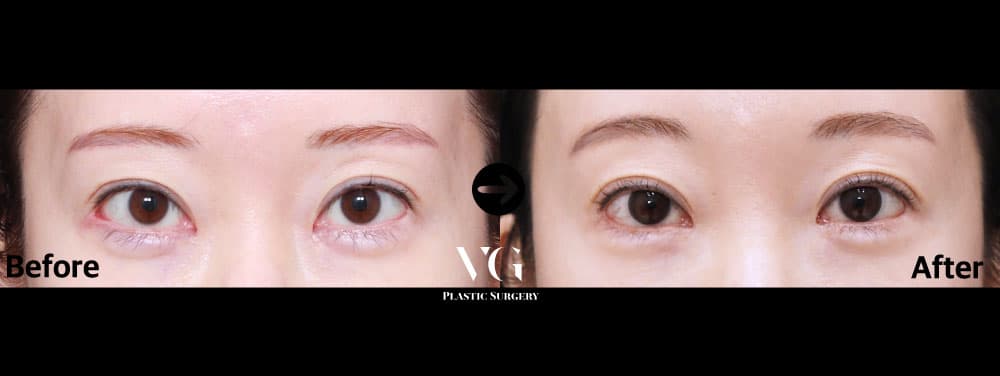
Your Plastic Surgery Interpreter in Seoul: Six Moments Where Words Matter
An eye surgeon in Seoul walks through the six points where interpretation shapes your result — photo quote, consultation, what you agree to, surgery morning, stitch removal and the messages after you fly home — and what to check in any interpreter.
Im Young Min ·
Eyes
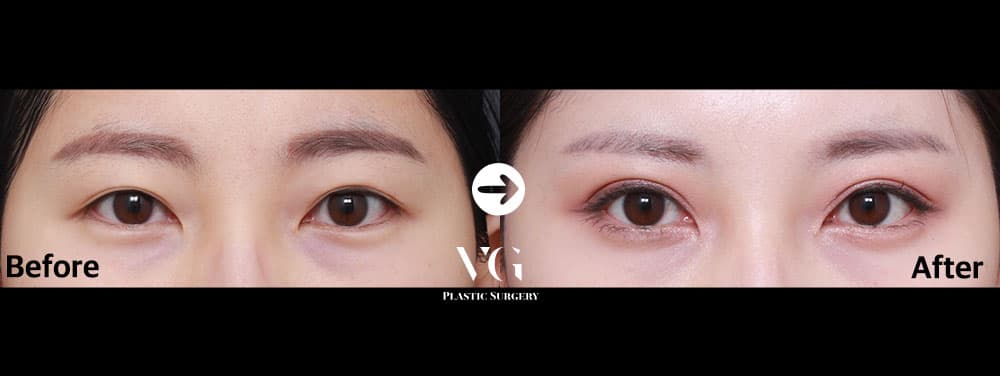
Single vs Double Eyelid: What Differs Under the Skin, and How Each Method Creates a Fold
A double eyelid has a crease because fibers of the lid-lifting muscle reach the skin; a single lid lacks that attachment and carries fat lower. Surgery rebuilds it by stitches or incision, with skin removal when skin has loosened.
Im Young Min ·