Eyes
Your Plastic Surgery Interpreter in Seoul: Six Moments Where Words Matter
An eye surgeon in Seoul walks through the six points where interpretation shapes your result — photo quote, consultation, what you agree to, surgery morning, stitch removal and the messages after you fly home — and what to check in any interpreter.
Send your concern and a front and side photo. Replies in English, no obligation.
In this article
- 01The short answer: six moments, and what you leave each one with
- 021. The photo quote: you write, the surgeon reads
- 032. The consultation: where "natural" has to become a measurement
- 043. What you agree to: get it on paper in your language
- 054. Surgery morning: the drawing on your eyelids
- 065. Stitch removal and the instructions you take home
- 076. After you fly home: the same messenger thread
- 08Clinic interpreter or outside agency: what to check either way
- 09When I tell people to wait, in any language
The short answer
A Seoul plastic surgery interpreter matters most at six points: the photo quote, the face-to-face consultation, what you agree to in writing, the design check on surgery morning, stitch removal with its aftercare instructions, and the messages after you fly home. At VG, interpretation is free at consultation, and an interpreter is with you at the consultation, the design check and every follow-up visit — in English, or one of eight other languages arranged in advance.
- The words that change an eyelid result are small ones: crease height, where the line starts, how open the eye should look.
- Learn four line names before you land — in line, in-out, semi-out and out — so you and the surgeon point at the same shape.
- Nothing starts on surgery morning until you agree to the line drawn on your eyelids, with the interpreter present.
- Aftercare instructions come in writing in your language; medical certificate and operation record come in English.
- Whoever interprets for you, check who replies after you fly home, and whether that reply comes from the surgeon in writing.
I am Im Young Min, chief director and board-certified plastic surgeon at VG Plastic Surgery in Seoul. I trained at Seoul St. Mary's Hospital, where I am an adjunct professor of plastic surgery, and I operate in our eye, nose, facial contouring, body and breast centres. Patients who write from abroad often ask whether they will need a plastic surgery interpreter in Seoul, and how much the language gap can change what happens to their face.
Profile
Im Young Min
Chief Director · Board-certified in Plastic Surgery
My answer is that language matters at particular moments, not evenly through the trip. I use eye surgery to show where, because an eyelid crease is decided in millimetres, and a millimetre is easy to lose in translation.
The short answer: six moments, and what you leave each one with
Most of a trip for plastic surgery in Korea runs without much talking. Check-in and the walk from the hotel need little conversation. The six moments below are different: each one produces a decision about your eyes, or an instruction you have to follow alone.
| Moment | What is being decided | What you have afterwards |
|---|---|---|
| 1. Photo quote | Whether surgery is reasonable, and roughly which method | The surgeon's assessment and an itemised quote, in your language |
| 2. Face-to-face consultation | Crease height, line shape, whether the eye needs opening | A written summary of what was agreed |
| 3. What you agree to | The plan and the fee | The quote and the summary; a signed consent form for patients under 19 |
| 4. Surgery morning | The line drawn on your eyelids | Nothing starts until you agree to the drawing |
| 5. Stitch removal | What you may and may not do, and when | Written aftercare in your language; English medical documents |
| 6. After you fly home | Whether healing is on track | Written replies from the surgeon who operated |
1. The photo quote: you write, the surgeon reads
No interpreter sits between you and the surgeon at this stage, and that is useful. You send front and side photographs on WhatsApp and describe what bothers you in your own words. The surgeon who would operate looks at the photographs, and the assessment and estimate reach you in your language.
The quote is itemised, says what is included and what is not, and states how long it is valid. The consultation form asks your nationality for one reason: to arrange the right interpreter before you arrive. Tell your coordinator the language you actually think in — English, Indonesian, Japanese, Chinese, Mongolian, Vietnamese, Thai, Russian or Cambodian.
2. The consultation: where "natural" has to become a measurement
This is the moment that needs the interpreter most. Interpretation during consultation is free for international patients, and the interpreter sits with you in the consultation room rather than being called over from reception.
Before I talk about a line, I look at eyelid thickness, how much fat sits under the skin and how strongly the muscle lifts the eye. I also check eye length and spacing, the height of the outer corner and whether ptosis is present. These decide whether an incision is needed at all.
Then comes the hard part. Patients say "natural", "bigger" or "not too Western", and those words carry different pictures in different languages. An interpreter can carry the words faithfully and still leave us imagining two different eyes.
Four line names worth learning before you land
- In line — the crease tucks inward at the front, close to an inner fold. A calm look.
- In-out line — tucked at the front, opening outward toward the tail. The line most patients choose.
- Semi-out line — a little more of the front shows than an in-out line.
- Out line — the line shows from the inner corner onward. A defined, open look.
When you can say "in-out, but lower", the interpreter has a name to pass on rather than an adjective to guess at. Which line suits you still depends on your lid thickness and eye shape, and we settle that in person.
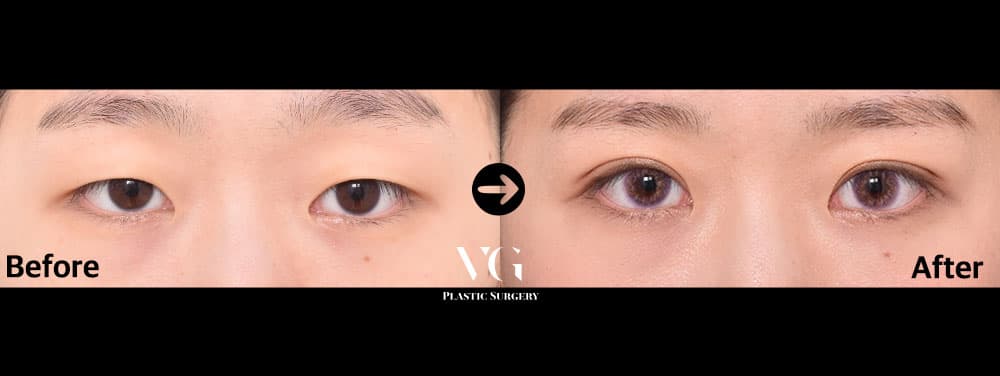
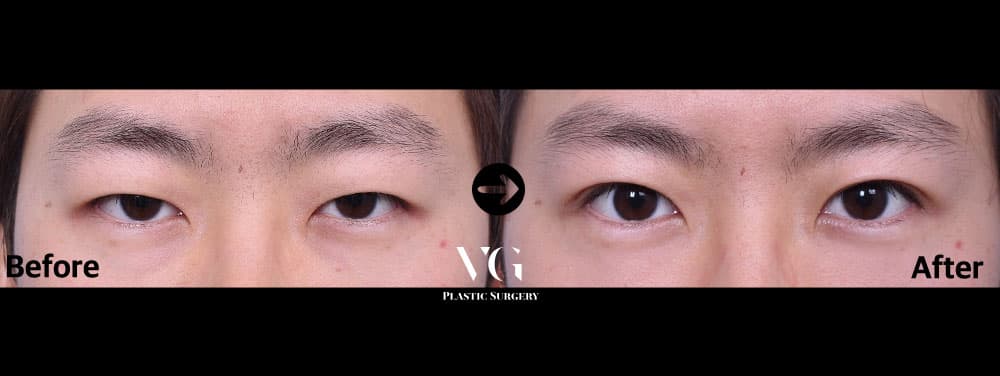
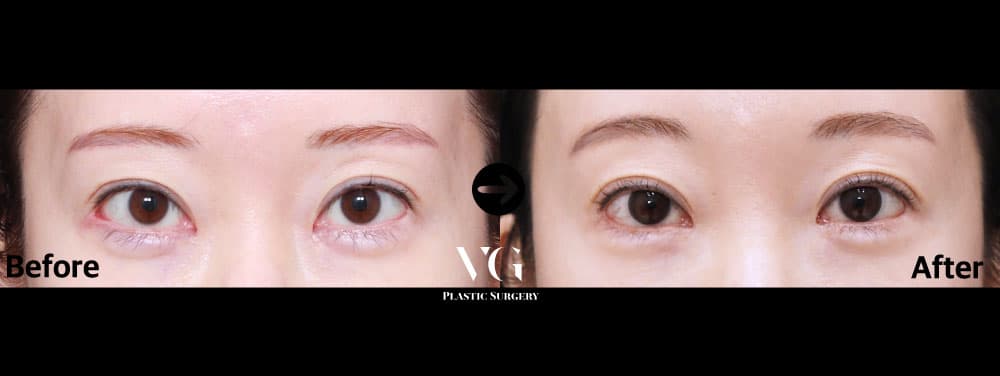
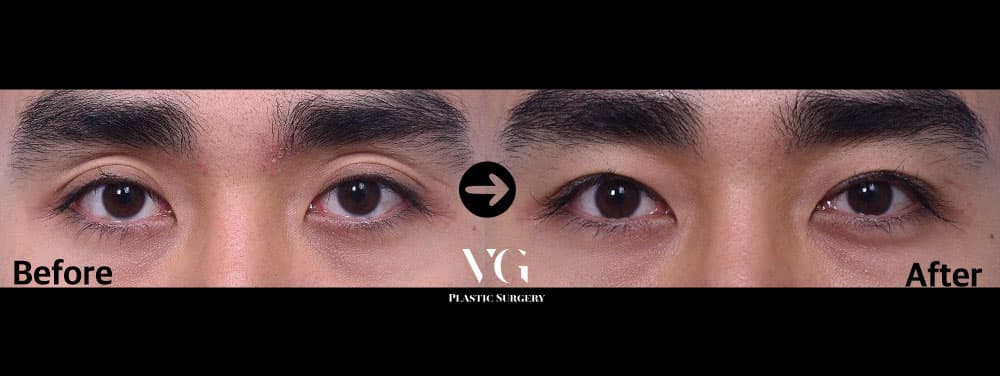
Both cases used the natural adhesion method, yet the lines read very differently. Pointing at photographs like these during the consultation does more than any adjective. You can open this natural-adhesion crease case or browse eye before-and-after photos by concern and save the ones closest to what you want.
3. What you agree to: get it on paper in your language
At the end of the consultation you receive a written summary of what was agreed. Together with the itemised quote in your language, that is the record of the plan. If you are under 19, a parent or legal guardian joins the consultation and signs the consent form.
Read the summary before you leave the room and ask the interpreter about every line you are unsure of. Check that the method, the line and anything added — ptosis correction, for example — match what you heard. Any Korean plastic surgeon should be comfortable being asked to repeat a point.
4. Surgery morning: the drawing on your eyelids
You arrive 90 minutes before your slot with a clean face and no contact lenses. For 20–30 minutes I draw the planned line on your eyelids and go through it with you, with the interpreter present. Nothing starts until you agree to what is drawn.
Eye surgery then takes 30 minutes to 2 hours under sedation, and one dedicated eye surgeon performs the whole operation. An anesthesiologist stays with you throughout, and nursing staff stay with you in the recovery room until you are alert.
Send front and side photos of your eyes and tell me in your own words what bothers you — I'll reply with the method I would consider and a written quote.
5. Stitch removal and the instructions you take home
You go back to the hotel with medication, written aftercare instructions in your language and a number to reach at night. Stitches come out 3–7 days after surgery, depending on the method, and the interpreter is with you at that visit and every other follow-up.
| Activity | When |
|---|---|
| Phone and screens | Short periods from the next day |
| Washing your face | After stitches are out |
| Eye makeup | 3–5 days after stitches are out |
| Contact lenses | After 2 weeks |
| Light exercise | After 2 weeks |
| Alcohol and smoking | After 4 weeks |
| Flying home | After the minimum stay of 7 days |
Plan to stay in Korea for at least 7 days. With an incisional crease, swelling peaks at 3–5 days, everyday life returns around 10–14 days and the eye looks natural at 2–3 months. Non-incisional methods settle faster. The eye surgery recovery and stay details list each method side by side.
Before you fly, you also receive a medical certificate, operation record and post-operative instructions in English, for your own doctor, insurer or employer. If a pharmacist needs something explained, our staff can call ahead in Korean.
6. After you fly home: the same messenger thread
Follow-up runs for three months. At week 1, month 1 and month 3 you send photographs, and the surgeon who operated replies in writing. At month 1 the line is still settling, so what you see then is not the final result.
Some signs should not wait for the next scheduled review. Send a photo through the messenger and you will have an answer the same day:
- Bleeding that will not stop
- Pain that keeps getting worse
- Fever or chills
- Blurred or changed vision
- Sudden swelling on one side only
- Discharge or an odor
If something is better seen in person where you live, we put the details in writing for the doctor who sees you. Everything included before, during and after the trip is listed on the international patient package page.
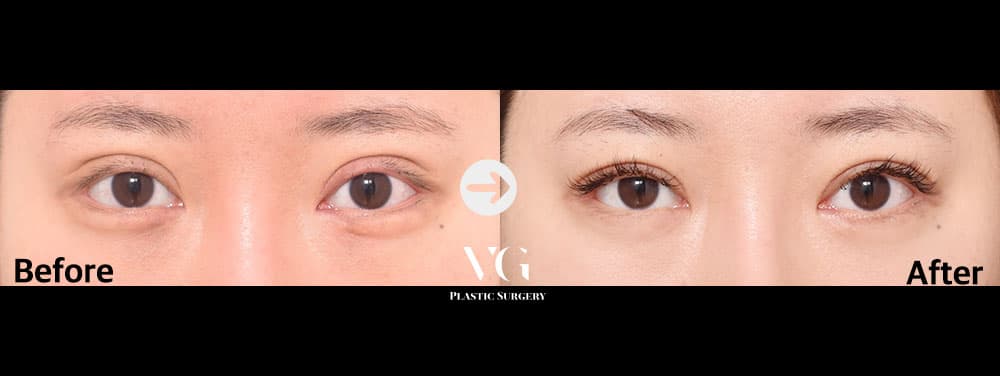
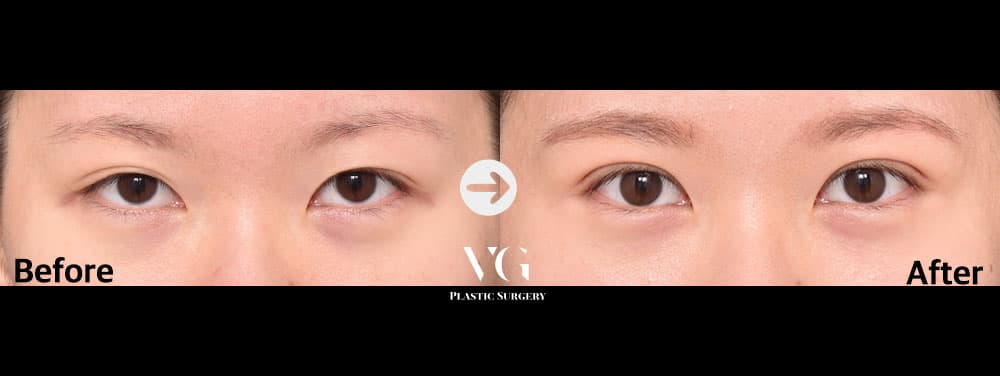
If you have had eyelid surgery before, bring any records from it — what was done last time sets what is possible this time. Revision should wait at least 6 months after the first operation. Revision double eyelid surgery in Korea covers that planning in detail.
Clinic interpreter or outside agency: what to check either way
Some patients arrive with an agency interpreter, some use the clinic's, some bring a bilingual friend. I don't think the label matters as much as the answers to these questions.
- Will the same person be in the consultation room and at the design check on surgery morning, not only at reception?
- Do they translate what the surgeon says sentence by sentence, or summarise it? Ask for sentence by sentence when the line is being discussed.
- Is the written summary of the plan in a language you read?
- After you fly home, who answers your photographs — the surgeon in writing, or a third party passing messages on?
- Is interpretation listed in the itemised quote, so you know what you are paying for?
- Is the surgical fee the same one a Korean patient pays?
At VG, interpretation through consultation, surgery day and follow-up is in the quote, and international patients pay the same surgical fee as Korean patients. One coordinator stays with your case from the first message to the final check, so you never explain your history twice. The international patients page shows how that works across plastic surgery in Korea as a whole.
When I tell people to wait, in any language
Good interpretation also has to carry a no. These are the situations where I advise against eye surgery for now:
- Untreated dry eye or blepharitis — I ask you to see an ophthalmologist first
- A travel schedule too short for stitch removal and the first follow-up in Korea
- You want the exact eyes from a celebrity photo
- Pregnancy, or an uncontrolled thyroid or bleeding disorder
Swelling peaks at 3–5 days after an incisional crease, and on a thicker lid a non-incisional line can loosen. I would rather explain these clearly through a Seoul plastic surgery interpreter before you book than after. You can read more about my background and the centres I work in, or see how the whole trip fits together in plastic surgery in Korea for foreigners.
Eyes before & after — more cases
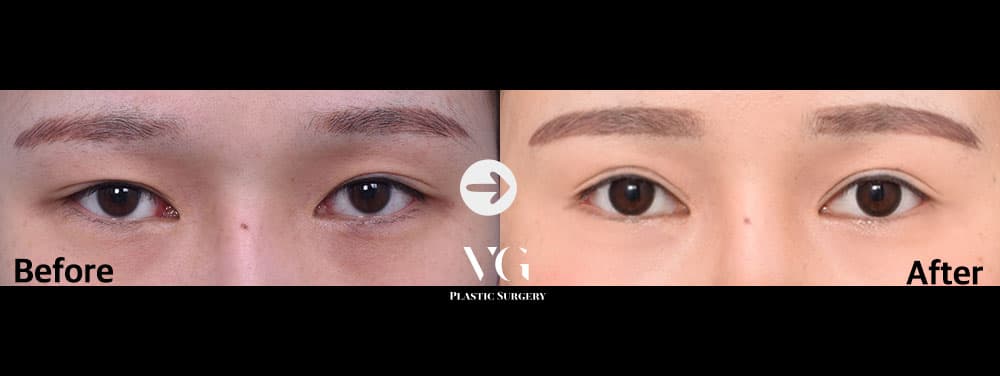
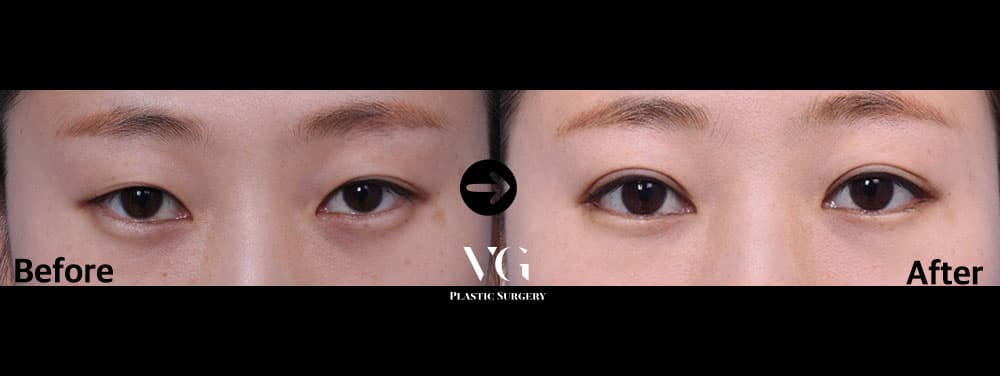
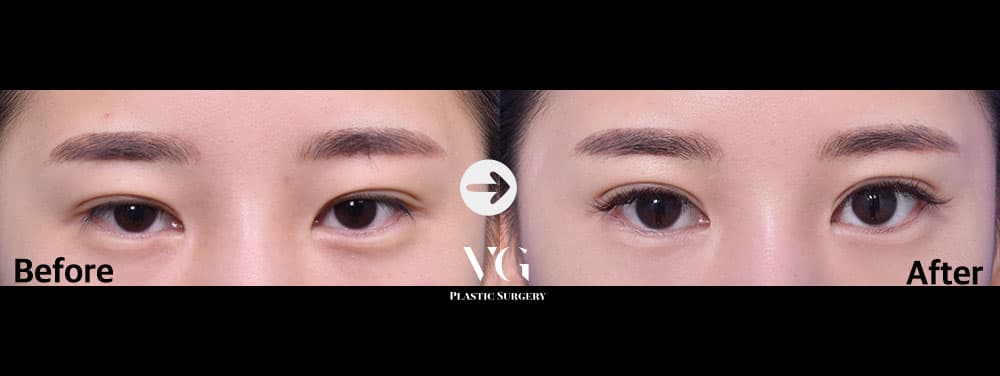
Real patients from our archive, all photographed 3 months after surgery. Tap a case to compare it full size.
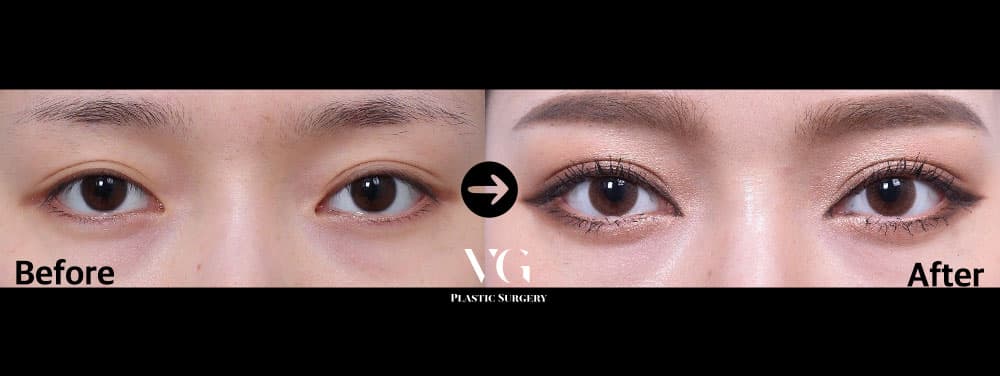
Natural-Adhesion Double Eyelid3 months after surgery
Incisional Double Eyelid3 months after surgery
Incisional Double Eyelid3 months after surgery
Incisional Double Eyelid3 months after surgery
Natural-Adhesion Double Eyelid3 months after surgery
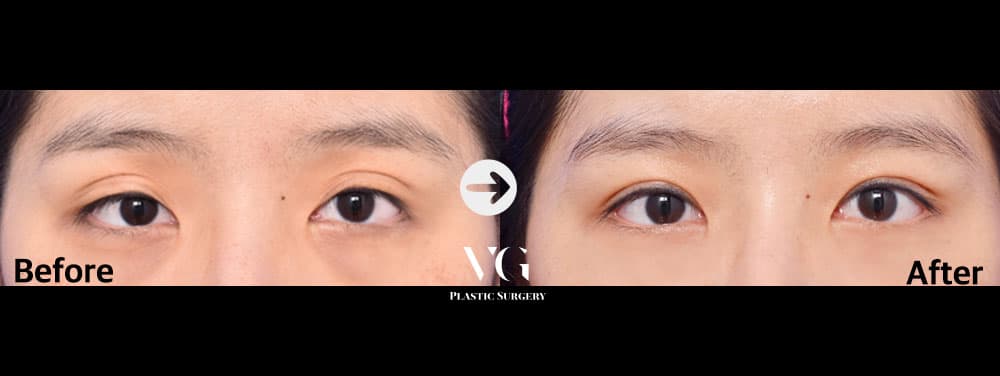
Incisional Double Eyelid3 months after surgery
FAQ
Questions patients ask
Do I have to pay for a Seoul plastic surgery interpreter?
Interpretation during consultation is free for international patients who live outside Korea. Interpretation through consultation, surgery day and follow-up is included in your surgical quote, which is itemised in your language.
Which languages can be interpreted?
English is always available. Indonesian, Japanese, Chinese, Mongolian, Vietnamese, Thai, Russian and Cambodian can be arranged with advance notice — tell your coordinator which one when you book.
Will my aftercare instructions be in my language?
Yes. You go back to the hotel with written aftercare instructions in your language and a number to reach at night. Your medical certificate, operation record and post-operative instructions are also issued in English for your doctor, insurer or employer.
How do I describe the eyelid shape I want if I don't speak Korean?
Learn the four line names — in line, in-out, semi-out and out — and bring photographs of real results you like, ideally of eyes similar to yours. Describe what bothers you about your own eyes rather than naming a celebrity. The surgeon then examines lid thickness, fat and muscle strength before deciding the line.
What if I'm under 19?
A parent or legal guardian needs to join the consultation and sign the consent form. Mention your age when you send your photographs so the appointment can be planned around it.
What happens if something worries me after I fly home?
Send a photo in the same WhatsApp thread. Bleeding that will not stop, worsening pain, fever, changed vision, sudden one-sided swelling or discharge get an answer the same day. Scheduled photo reviews at week 1, month 1 and month 3 are answered in writing by the surgeon who operated.
This article explains general medical information. Whether surgery suits you, and which method, is decided only after a consultation with the surgeon.
Written by
Im Young Min
Chief Director · Plastic Surgery
- Ph.D. in Medicine
- Internship and residency, Seoul St. Mary's Hospital
- Board-certified plastic surgeon, Seoul St. Mary's Hospital
- Adjunct professor of plastic surgery, Seoul St. Mary's Hospital
- Former director, Topface Plastic Surgery
Next step
Send two photos. Get a surgeon’s answer.
Front and side, natural light, no filter. Dr. Im Young Min reviews them and tells you which method fits and how many days to stay in Seoul.
International patients pay the same surgical fee as Korean patients. Pricing policy
Keep reading
Eyes
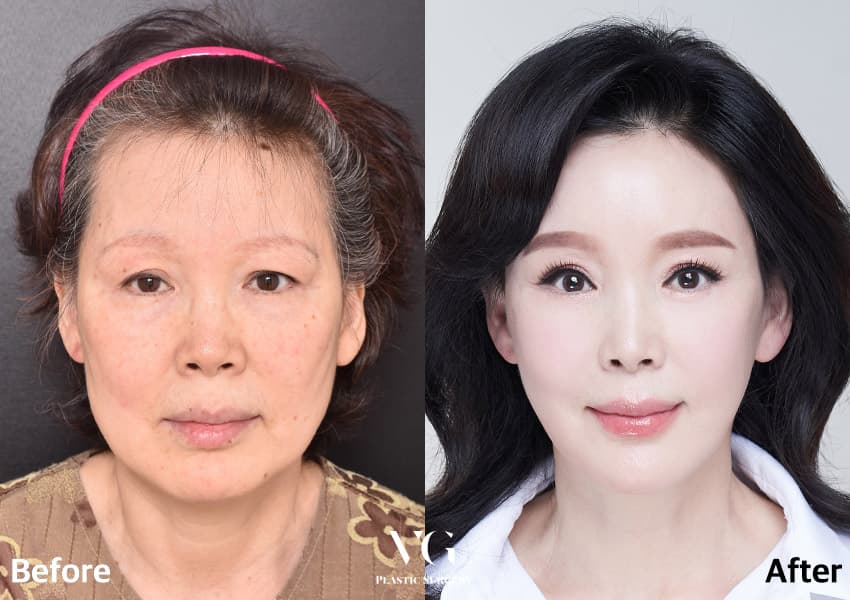
Canthoplasty Recovery Time by Corner: Stitches, Scar, Flight Home and What Sets the Cost
Stitches usually come out around day 5 to 7, most bruising settles over two to four weeks, and the scar keeps softening for six months or more. Plan your flight home around the stitch day.
Im Young Min ·
Eyes
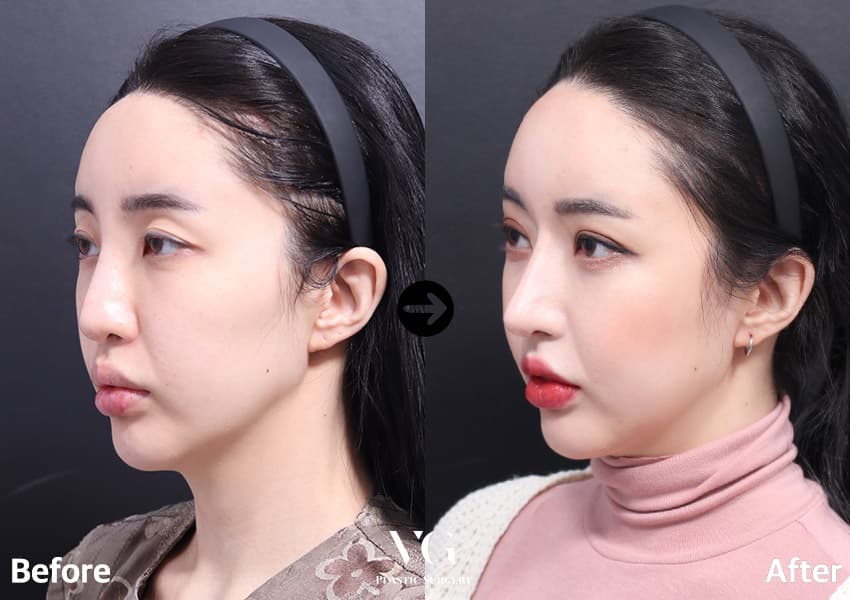
Most Common Plastic Surgery in Korea: What 426 of Our Cases Show
A Seoul plastic surgeon counts the 426 cases in his clinic's before-and-after archive by surgery type, explains what foreign patients ask about most, and says who each operation does not suit.
Im Young Min ·
Eyes
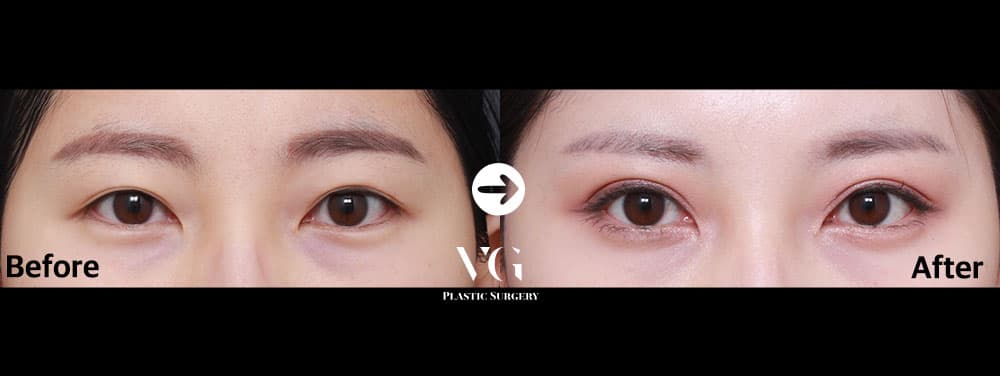
Single vs Double Eyelid: What Differs Under the Skin, and How Each Method Creates a Fold
A double eyelid has a crease because fibers of the lid-lifting muscle reach the skin; a single lid lacks that attachment and carries fat lower. Surgery rebuilds it by stitches or incision, with skin removal when skin has loosened.
Im Young Min ·