Eyes
Canthoplasty Recovery Time by Corner: Stitches, Scar, Flight Home and What Sets the Cost
Stitches usually come out around day 5 to 7, most bruising settles over two to four weeks, and the scar keeps softening for six months or more. Plan your flight home around the stitch day.
Send your concern and a front and side photo. Replies in English, no obligation.
In this article
The short answer
Worried you'll still look freshly operated on when you board the plane home? Canthoplasty recovery time follows a fairly predictable arc: stitches usually come out around day 5 to 7, most bruising and puffiness settle over two to four weeks, and the scar keeps softening for six months or more. For your trip, the day the stitches come out matters more than any other date.
- Stitches from eye corner surgery usually come out around day 5 to 7, so plan your flight for after that day.
- Bruising can last two to four weeks, and the scar may stay pink for six months or more.
- The corner often looks wider in week one than it will at month three, so final width is judged later.
- Lower corner work and surgery combined with the eyelids need the most margin in your calendar.
- Foreign patients pay the same surgery fee as Korean patients and receive a written estimate.
Hello, I'm Dr. Im Young Min, Chief Director and board-certified plastic surgeon at VG Plastic Surgery in Seoul. I trained at Seoul St. Mary's Hospital and operate in our eye center, as well as on noses, facial contouring, breast and body.

Profile
Im Young Min
Chief Director · Board-certified in Plastic Surgery
Three facts here bear directly on how your recovery goes. A medical interpreter for your language is with you at no extra charge, so the instructions about ice, ointment and the stitch day are clear in words you follow. Three board-certified anesthesiologists work here full time, and one of them watches your breathing and blood pressure through the operation while the surgeon only operates.
And before deciding whether to cut at all, we check lid thickness, fat and lifting strength, which is what separates a corner-only operation from one that also involves the lid and takes longer to settle.
If you're not sure which corner is making your eyes look short, send one front photo on WhatsApp, eyes open and looking straight ahead in daylight, with the dates you could spend in Seoul, and ask whether those dates leave room for the stitch day before you fly.
Send a front photo and your Seoul dates on WhatsApp
How long until your eyes look ordinary again?
For eyelid surgery in general, the U.S. National Library of Medicine's MedlinePlus guide says stitches are removed 5 to 7 days after surgery if they need removing, bruising may last 2 to 4 weeks, and scars may stay slightly pink for 6 months or more. Lid surgery done at the same time pushes it toward the slower end.
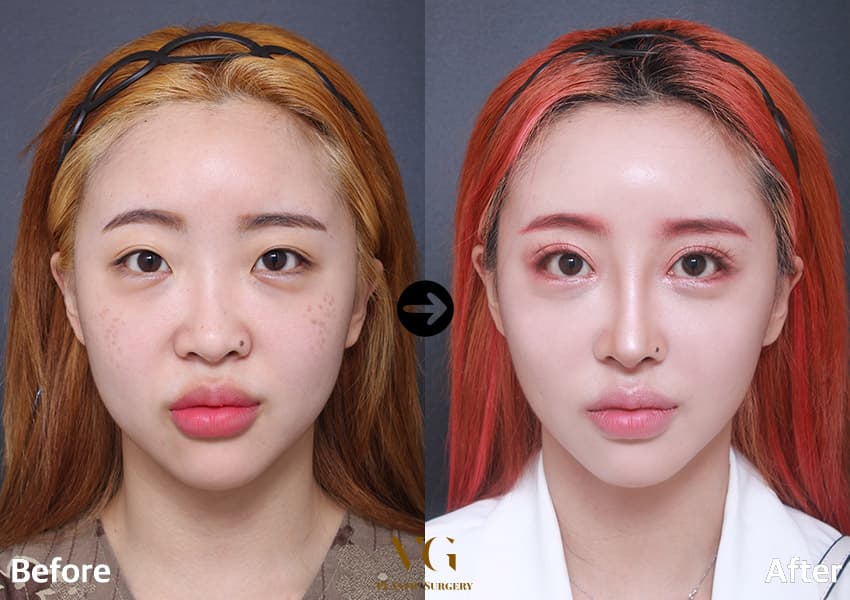
| When | What you'll likely see and feel | What it means for your trip |
|---|---|---|
| Days 1 to 3 | Swelling at its peak, tight corners, watery or sticky eyes, ointment smearing your vision | Stay close to your hotel, use cold packs, sleep with your head raised |
| Days 5 to 7 | Stitches usually removed; corners look red and a little stiff | The date your flight should follow, not come before |
| Week 2 | Most swelling down; yellow or green bruising can linger | Desk work in glasses is realistic for many people |
| Weeks 3 to 4 | Bruising mostly gone; the incision line still pink | Strenuous exercise usually resumes around here |
| Months 3 to 6 and later | Scar pales; the opened corner settles into its lasting shape | This is when the width is judged, not in week one |
Two things tend to surprise people. And the corner often looks more open in week one than it will at month three, because swelling props it open and a healing wound contracts as it matures.
Age, which corner you open, and whether your lids are operated on in the same session are the three things that stretch canthoplasty recovery time. The next section takes them one at a time.
Which corner you open changes the recovery
Canthoplasty is a group of operations, and I've explained how the inner, outer and lower corners differ as operations in a separate post. For recovery, the differences come down to where the scar sits and what the corner does while it heals.
Scar and swelling: what to watch for
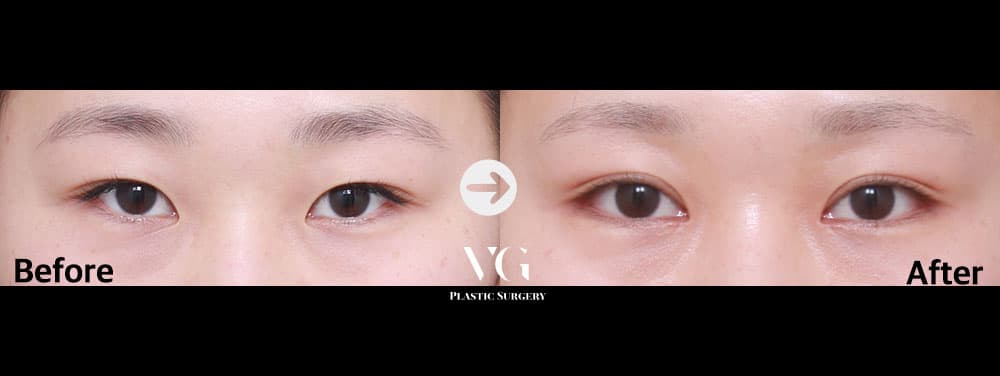
- Inner corner (medial canthoplasty, often called epicanthoplasty). The scar sits where people look first, so its pink phase is what you'll notice longest. Swelling is usually modest. If the inner corners are your main concern, the post on inner-corner surgery and the days before you fly home covers that trip in detail.
- Outer corner (lateral canthoplasty). The scar tucks into the natural crease at the side of the eye, but the newly opened corner can partly tighten back while it heals. Plan your expectations around the width at three months.
- Upper lateral. This lengthens the outer corner along the line of the upper lid. It's often paired with double eyelid surgery, and then the lid surgery sets the pace of your recovery.
- Lower corner. This works on the lower lid, which swells more and can pull downward while it heals, so it needs the most margin in your calendar.
Bruises and bruise: what to watch for
After 40, two more things change. Skin bruises more easily and the bruise fades more slowly, and many people take aspirin, fish oil, vitamin E or other supplements that make bleeding more likely. List every one of them at your consultation, and never stop a prescribed blood thinner without the doctor who prescribed it.
When can you fly home after canthoplasty?
Sitting on a plane with healing eyelids is generally fine; dry cabin air is the main nuisance. The trouble comes from leaving before the stitches are out and then finding no one at home willing to remove another surgeon's stitches.
A few things make that flight easier:
- Book the flight for a day or two after the stitch day, not the same afternoon. If a corner needs another look, you're still in Seoul.
- Pack your glasses and preservative-free lubricating drops. Contact lenses stay out for weeks, and recycled cabin air dries healing eyes quickly.
- Bring darkly tinted sunglasses. The American Society of Plastic Surgeons advises sun protection and darkly tinted sunglasses until healing is complete, and they also hide the bruising at the gate.
- On a long-haul flight, keep your head raised when you sleep and let someone else lift heavy bags into the overhead bin.
Say you're 46, flying from Los Angeles with twelve days of leave, and what bothers you is heavy upper lids plus outer corners that look short. Twelve days covers that with a little room.
Seven would be tight, and I'd tell you so. If your outer corners turn out to have little room to open and the heaviness is all lid, I might suggest leaving the corners alone this trip.
To check whether your leave is long enough, add a side photo and your return flight date to the front photo, and ask how many nights after the stitch day you should keep.
Send a front photo and your Seoul dates on WhatsApp
How often do scars, corner tightening or a pulled-down lid happen?
In the first two weeks, expect swelling, bruising, tightness at the corners, watering or dryness, and the blur of ointment. The incision line stays pink for months, and for many people the inner-corner scar is the last part to fade.
Scar and dry eyes: what to watch for
Less often, the outer corner tightens back more than planned and the opening partly closes; the lower lid pulls down and shows white beneath the iris; the two sides heal unevenly; or a thick, raised scar forms in someone prone to them. The American Society of Plastic Surgeons lists dry eyes, difficulty closing the eyes, an outward-turning lid and unfavorable scarring among the risks of eyelid surgery. Healing differs from one person to another, which is why the final width and scar are judged at three to six months.
As general medicine, these are reasons to wait or rethink:
Infection and dry eye: what to watch for
- an active stye, eye infection or inflamed lid margins
- dry eye that isn't under control yet
- a blood thinner you can't safely pause
- pregnancy or breastfeeding
- a history of keloids or thick, raised scars
- eye surgery such as LASIK or cataract surgery in the past few months (ask that surgeon first)
Risks and side effects to know
Once you're home, swelling that goes down a little each day is normal. Pain that keeps increasing, swelling that worsens after the first few days, pus, fever, a lid that won't close, or any change in your vision needs a doctor where you are, that day. Before you leave home, find an ophthalmologist or plastic surgeon who will see you if needed, and carry your operation notes and medication list on the plane.
What decides the cost of canthoplasty in Korea?
Foreign patients pay the same surgery fee as Korean patients, and the figure comes as a written estimate. What moves that figure for you:
- Which corners, and how many. Inner, outer, upper lateral or lower, on their own or combined.
- Lid surgery in the same session. Double eyelid surgery, ptosis correction or an upper lid lift changes both the operation and the recovery.
- First operation or revision. Reworking an earlier corner surgery is planned differently.
- The anesthesia your operation needs.
How each of these shifts the fee is laid out in what sets the canthoplasty fee for your eyes. If you're thinking of adding a second operation to the same trip, the larger one usually sets both the length of stay and most of the fee; how a breast augmentation fee is built shows that from the other side. The eye center's range of operations is listed on VG Plastic Surgery's English homepage.
For your own figure, ask on WhatsApp with your front photo and the corners you're thinking about. Deposit and payment method are settled after the consultation, so add that question once you've talked through the plan.
What to send before you book
Send a front photo in daylight with your eyes open, a list of the medicines and supplements you take, and a note on any earlier eyelid surgery. Then ask the question that's really on your mind, whether that's if your outer corners are worth opening at all or who you'd contact once you're home. When you're in Seoul, I'll look at your lid thickness, fat and lifting strength, and at how far each corner can open before the scar costs you more than the width gives back.
Message us on WhatsApp whenever your dates start to firm up.
Related pages:
Eyes before & after — more cases
Real patients from our archive, all photographed 3 months after surgery. Tap a case to compare it full size.
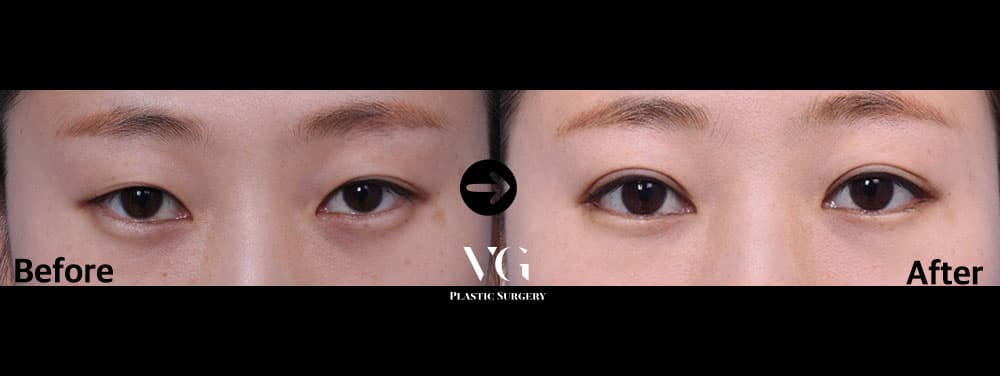
Lateral Canthoplasty (Outer Corner)3 months after surgery
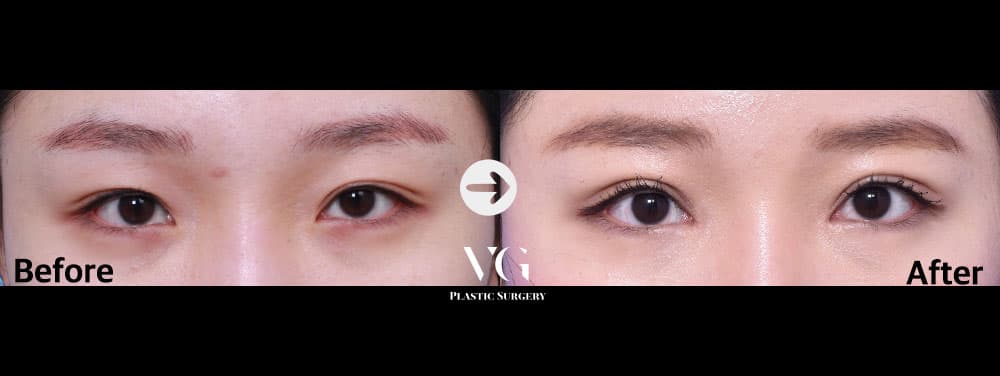
Epicanthoplasty (Inner Corner)3 months after surgery
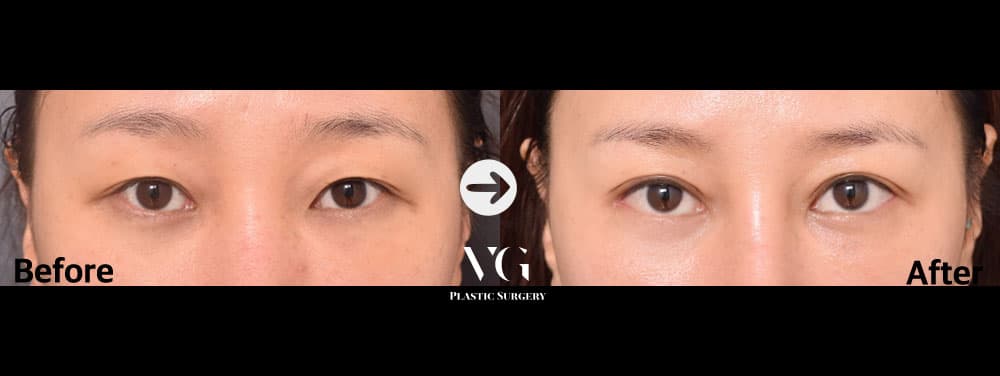
Lateral Canthoplasty (Outer Corner)3 months after surgery
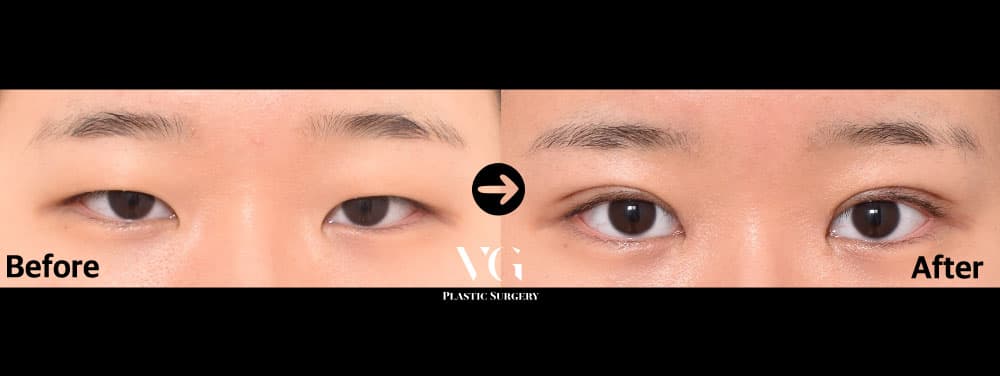
Epicanthoplasty (Inner Corner)3 months after surgery
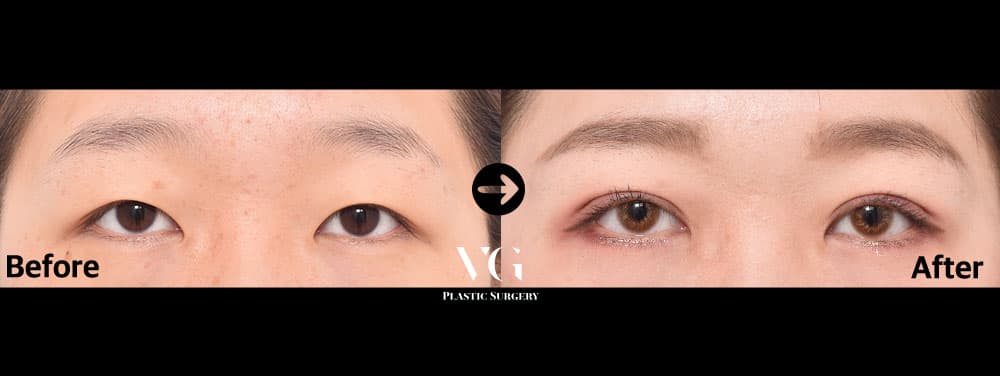
Epicanthoplasty (Inner Corner)3 months after surgery
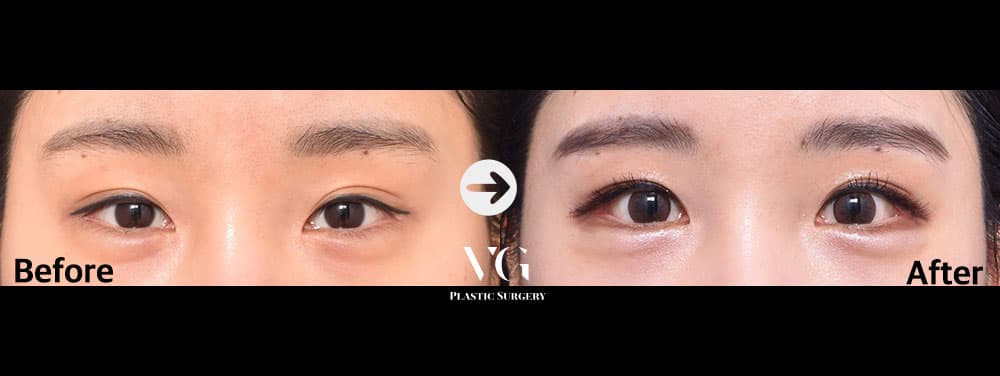
Lateral Canthoplasty (Outer Corner)3 months after surgery
FAQ
Questions patients ask
Can I wear contact lenses after canthoplasty?
Plan on glasses. MedlinePlus advises no contact lenses for at least two weeks after eyelid surgery, and pulling at a healing corner to put a lens in is worth avoiding. Pack your glasses for the whole trip.
When can I wear eyeliner or mascara again?
Keep makeup off the incision lines until the stitches are out and the wound has closed, which for many people falls in the second week. Mascara on lashes away from the corner can sometimes come sooner, so ask on the stitch day. Start with new products to lower the risk of infection.
Can I fly home with the stitches still in?
You can physically fly, but then someone at home has to remove them, and many doctors are reluctant to remove another surgeon's stitches.
Will the opened corner close back?
Partly, quite often. Healing wounds contract, and the outer corner in particular tends to lose some of the opening it showed in week one. That's why a modest change that holds is usually the wiser plan than a dramatic one that relapses.
When can I exercise or lift weights?
Light walking from the first days is fine. MedlinePlus advises keeping activity to a minimum for 3 to 5 days and avoiding strenuous activity that raises blood pressure for about 3 weeks, which covers running, heavy weights and hot yoga.
Will people notice the inner-corner scar?
Up close, while it's pink, many people will. MedlinePlus notes eyelid scars may stay slightly pink for 6 months or more before fading to a thin white line. Daily sun protection on the scar helps it fade evenly.
Sources
This article explains general medical information. Whether surgery suits you, and which method, is decided only after a consultation with the surgeon.
Written by
Im Young Min
Chief Director · Plastic Surgery
- Ph.D. in Medicine
- Internship and residency, Seoul St. Mary's Hospital
- Board-certified plastic surgeon, Seoul St. Mary's Hospital
- Adjunct professor of plastic surgery, Seoul St. Mary's Hospital
- Former director, Topface Plastic Surgery
Next step
Send two photos. Get a surgeon’s answer.
Front and side, natural light, no filter. Dr. Im Young Min reviews them and tells you which method fits and how many days to stay in Seoul.
International patients pay the same surgical fee as Korean patients. Pricing policy
Keep reading
Eyes
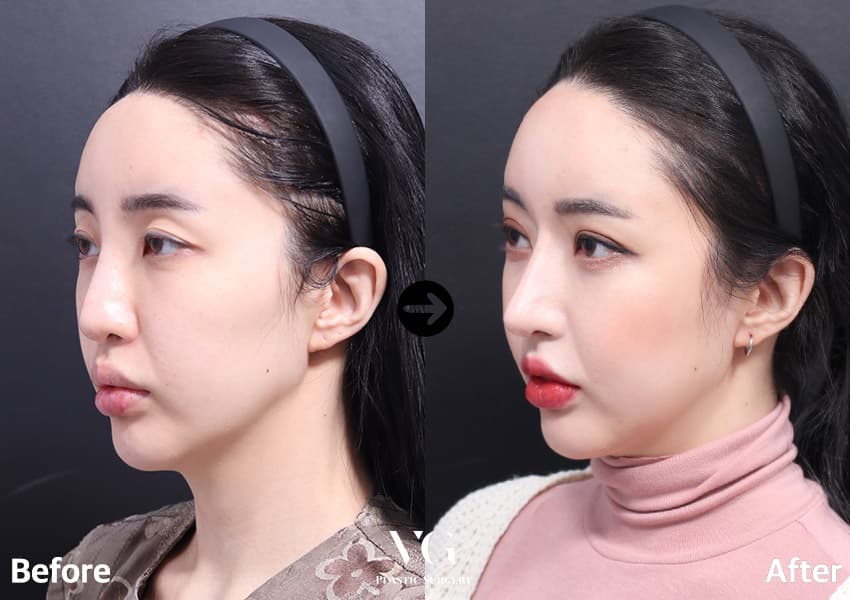
Most Common Plastic Surgery in Korea: What 426 of Our Cases Show
A Seoul plastic surgeon counts the 426 cases in his clinic's before-and-after archive by surgery type, explains what foreign patients ask about most, and says who each operation does not suit.
Im Young Min ·
Eyes
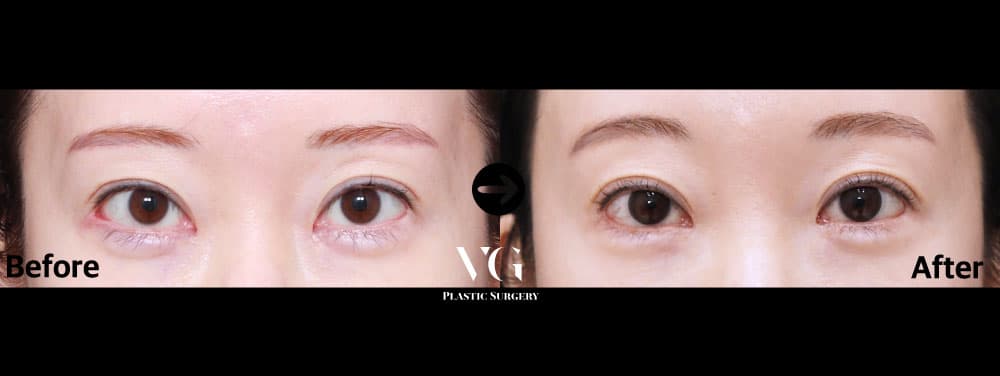
Your Plastic Surgery Interpreter in Seoul: Six Moments Where Words Matter
An eye surgeon in Seoul walks through the six points where interpretation shapes your result — photo quote, consultation, what you agree to, surgery morning, stitch removal and the messages after you fly home — and what to check in any interpreter.
Im Young Min ·
Eyes
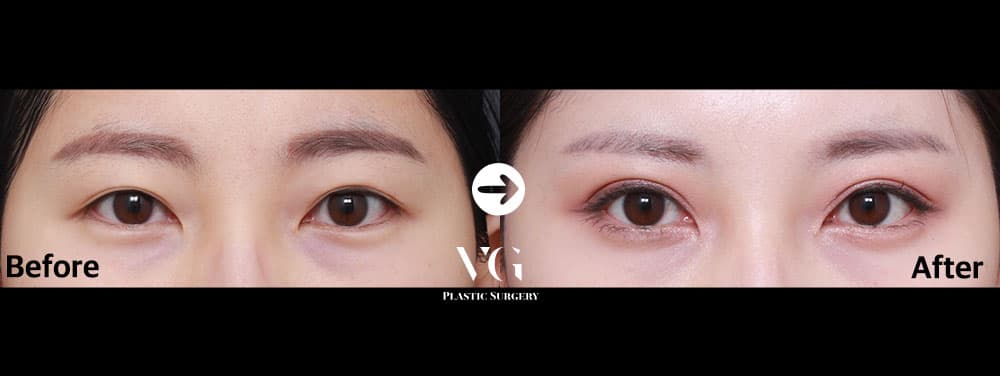
Single vs Double Eyelid: What Differs Under the Skin, and How Each Method Creates a Fold
A double eyelid has a crease because fibers of the lid-lifting muscle reach the skin; a single lid lacks that attachment and carries fat lower. Surgery rebuilds it by stitches or incision, with skin removal when skin has loosened.
Im Young Min ·