Facial Contouring
Korean Cheekbones: Cost, Reviews, Methods and the Risks of Reducing Them
Cheek sagging, leftover asymmetry and numbness are the risks to weigh before you book a flight.
· 7 min read · Last updated
Edited by Im Young Min
In this article
- 01What does "korean cheekbones" mean in a consultation?
- 02Uneven or asymmetrical cheekbones are a different problem
- 03Will my cheeks sag after cheekbone reduction?
- 04What decides the cost of korean cheekbones surgery?
- 05Other risks: numbness, a gap you can feel, bone that doesn't heal
- 06How long do I need to stay in Seoul before flying?
- 07Who shouldn't reduce them, or not yet
- 08Who works on the operation
The short answer
Are you wondering whether korean cheekbones surgery is right for your face, and what could go wrong with it?
- Korean cheekbones surgery usually means reduction malarplasty, which repositions bone rather than shaving it away.
- Cheek sagging is the most familiar risk, and loose skin, heavy soft tissue, older age and deep smile lines raise it.
- Uneven cheekbones can come from bone, soft tissue, muscle or jaw position, and only imaging shows which.
- Bone does not grow back, so over-correction is harder to fix than under-correction.
- Swelling is still settling when most visitors fly home, so plan follow-up before you book.
Please read on before you book or decide anything.
Profile
Im Young Min
Chief Director · Board-certified in Plastic Surgery
After reading, you will know what decides the cost, what review threads claim compared with what is medical fact, how the methods differ, and who should not reduce their cheekbones, so you can decide whether to go ahead.
Hello, I'm Dr. Im Young Min, Chief Director and a board-certified plastic surgeon. My training is in plastic surgery at Seoul St. Mary's Hospital, and I hold a Ph.D. in Medicine. Other surgeons on our team are members of facial contouring research groups, and the team includes anesthesiologists.
I wrote this because many people think the cheekbone is simply shaved down. It is actually cut and repositioned, and swelling is often still settling when the flight home leaves.
In short, korean cheekbones usually means reduction malarplasty, which moves the front and the side arch of the cheekbone inward to narrow the widest part of the face. It suits some faces and is the wrong tool for others.
Send your cheek photos on WhatsApp
What does "korean cheekbones" mean in a consultation?
Two separate pieces of bone. The zygomatic body is the rounded front under your eye, and the zygomatic arch is the bar running back toward your ear. Reduction mainly targets the width you see from the front, and the body and arch are planned separately.
A 2013 paper on the concept of reduction malarplasty in the Archives of Aesthetic Plastic Surgery makes a point that surprises many readers: in most cases the highlight of the cheek is moved inward or backward, and the cut is meant to reposition the body rather than reduce its volume. That matters for risk. Bone that has been moved has to be fixed in its new place and has to heal there.
Some English-speaking readers mean the opposite when they type korean cheekbones: a high, defined cheek they'd like to have, not one they'd like to lose. That is a question of adding volume, and it is a different conversation. If the look you have in mind is really about the eyes or the nose, those are separate plans too; the overview of what a Korean nose job changes covers the nose side.
Uneven or asymmetrical cheekbones are a different problem
Almost every face is a little asymmetrical. When one cheekbone looks wider, the cause can be the bone itself, the fat and skin over it, the chewing muscle lower down, or the position of the jaw, and only imaging separates these. Our contouring centre maps nerves and bone thickness on CT before planning.
This is where expectations need the most care. Surgery can reduce a difference between two sides; it cannot produce a mirror image, because the soft tissue over each cheek also differs and heals on its own schedule.
If the wider side turns out to be muscle or jaw rather than cheekbone, the plan moves lower on the face. The articles on jaw shaving and age and on V line surgery explain those options.
Will my cheeks sag after cheekbone reduction?
Cheek drooping is the most familiar risk of this operation. Soft tissue is attached to the bone, so when the bone moves inward and is not held firmly, the cheek can settle lower and the smile lines can look deeper.
The 2013 paper lists the risk factors plainly: low skin elasticity, abundant soft tissue, older age and a deep nasolabial fold. The 2008 revision series describes the other side of the same problem: a drooped or displaced cheekbone lifted back up and wired into a higher position during the second operation.
Say you are 28, your cheekbones look wide from the front, and you are afraid your cheeks will sag afterwards. I would first look at how much of the width comes from the bone and how much from the soft tissue around it. I would also check whether your skin is thin or already loose, because that changes how the face settles once the bone moves inward. If one side looks wider than the other, I would plan the two sides differently instead of cutting both the same amount. And if the width mostly comes from the soft tissue or the jaw, I would tell you that cutting the cheekbone is the wrong tool for you.
What decides the cost of korean cheekbones surgery?
The cost depends on how much bone has to move and on which method fits your face. Some people need only the front of the cheekbone and the side arch adjusted. Others need a different plan, for example if the two sides are uneven or the jaw is also involved. Anaesthesia and the length of your stay in Seoul also count, because the follow-up visits have to fit inside your trip. Checks after the operation matter too, since it is bone surgery and swelling is still settling when many people fly home. To get the figure for your own case, send a front photo and a 45-degree photo on WhatsApp and ask about the cost.
Other risks: numbness, a gap you can feel, bone that doesn't heal
Numbness, a palpable gap and poor bone healing are less common than swelling, and worth knowing before you fly. The nerve that gives feeling to the cheek and upper lip exits just below the eye, near the cheekbone body.
Temporary numbness in that area is commonly reported after cheekbone surgery and usually improves over months, though in a few people some change lasts.
When a scalp (coronal) incision is used, the nerve branch that raises the forehead can be affected, usually temporarily. In the 2008 series, the most common reason for revision was the arch left too wide while the body was taken too far, and malunion and nonunion each appeared in two patients.
| What you notice | Common early on? | Raise it promptly if |
|---|---|---|
| Swelling and tight cheeks | Yes, for weeks | One side suddenly grows larger and more painful |
| Numb cheek or upper lip | Often | Numbness spreads or the face feels weak |
| Bad taste, fever, discharge inside the mouth | No | Any of these appear |
Whether your bone, skin and expectations make you a suitable candidate is decided at the in-person exam, after the CT.
How long do I need to stay in Seoul before flying?
There is no single number for every face. The stay is set at the consultation, based on which parts of the bone are cut, which incisions are used, and how the first days of swelling go. The first days are when swelling peaks, and the final contour keeps changing for months after you are home.
For a traveller, that means three practical things. Travel with someone, because you will be coming out of general anaesthesia. Leave a margin before the flight instead of booking the earliest possible day. And ask for a copy of your operation record and imaging to take home, so a plastic surgeon where you live can see exactly what was done if a question comes up.
The longer reasoning about whether your width is bone at all is in cheekbone reduction in Korea.
If you already know the dates you could travel, send them on WhatsApp together with your front photo.
Send your cheek photos on WhatsApp
Who shouldn't reduce them, or not yet
Some faces are better served by leaving the cheekbones alone. Here are the situations where reduction is usually the wrong tool, or the wrong time.
- The width is mostly soft tissue or muscle. If the CT shows a modest bone and a full cheek or a strong chewing muscle, cutting bone changes little that you would see.
- The skin is already loose. Older age, low elasticity and deep smile lines are the same factors linked to sagging. The 2013 paper notes that a coronal approach suits older patients who want a lift at the same time, and for some faces a lift alone is the better first step; the deep plane facelift article explains that layer.
- The front of the cheek is already flat. Pushing a flat cheekbone further in can make the midface look hollow and older.
- The goal is exact symmetry. Bone surgery can narrow a difference; it cannot erase one.
- The trip is too short for the swelling. If the dates cannot move, a shorter plan or a later trip is safer than a rushed one.
Wanting korean cheekbones because a photo looks good on someone else's face is a fair starting point. The useful question is whether your bone, skin and the shape of your lower face point the same way.
Who works on the operation
My own background includes internship and residency at Seoul St. Mary's Hospital, where I am an adjunct professor of plastic surgery, and full membership of the American Society for Aesthetic Plastic Surgery (ASAPS). The clinic has eight full-time specialists across plastic surgery, ENT and anaesthesiology. The anesthesiologists do not operate; one of them watches blood pressure, pulse and breathing from the first injection until you are awake again.
The overview of facial contouring compares cheekbone, jaw and chin surgery side by side if you are still unsure which area is driving the width.
When you are ready, send a front photo and a 45-degree photo on WhatsApp, add the dates you could be in Seoul, and ask one question: "Is my cheekbone the cause of the width I see, or something else?" One photo is enough to start, and you can ask before booking anything. If you come to Seoul, I will examine your face and recommend what fits it, whether that is reduction, a smaller change, or leaving the bone alone.
Related pages:
Facial Contouring before & after — more cases
Real patients from our archive, all photographed 3 months after surgery. Tap a case to compare it full size.
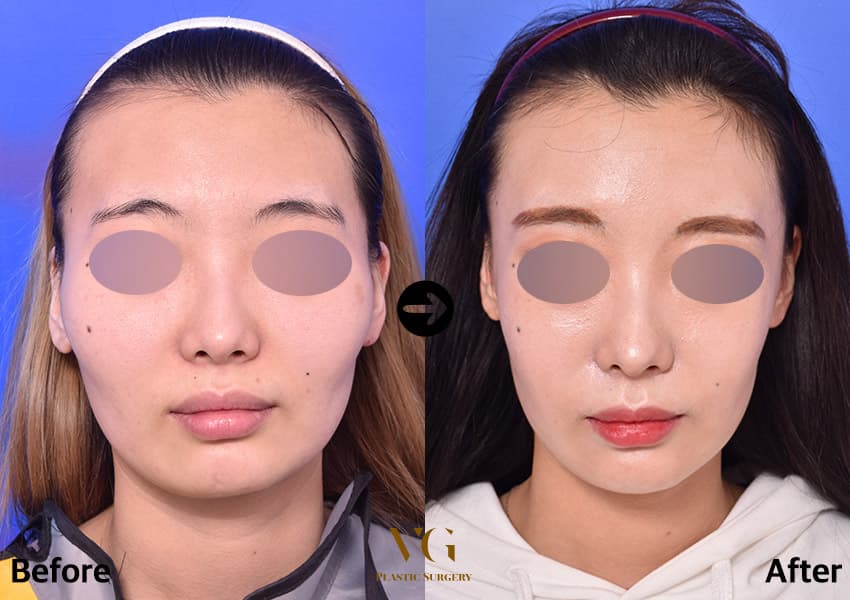
Cheekbone (Zygoma) Reduction3 months after surgery
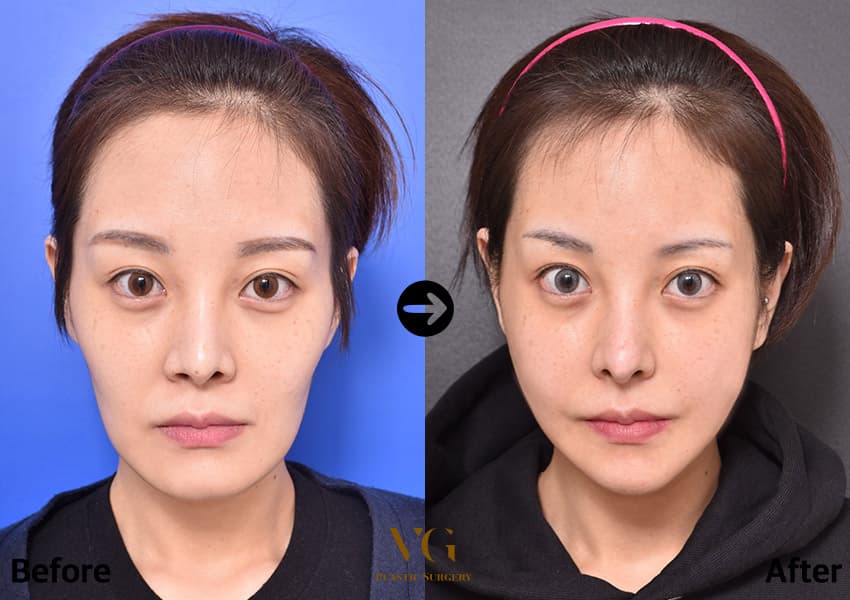
Cheekbone (Zygoma) Reduction3 months after surgery
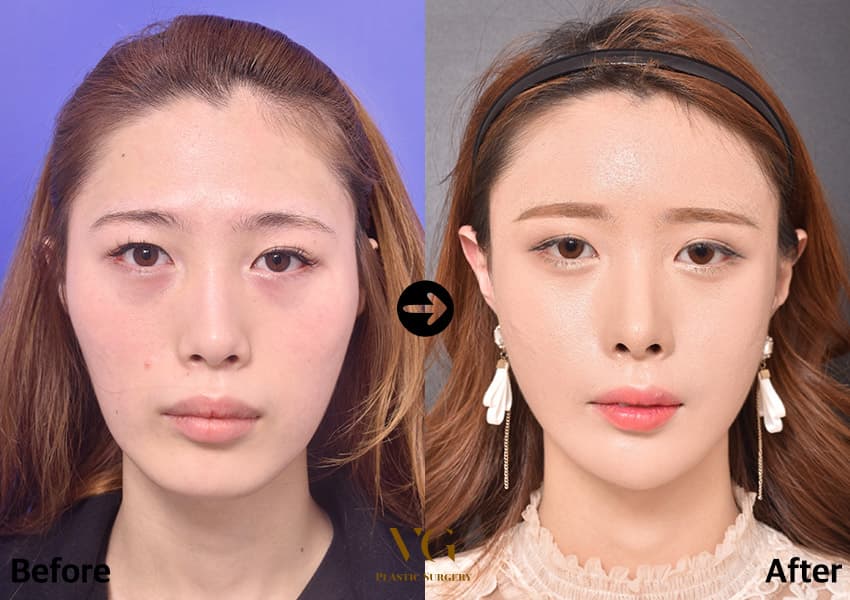
Cheekbone (Zygoma) Reduction3 months after surgery
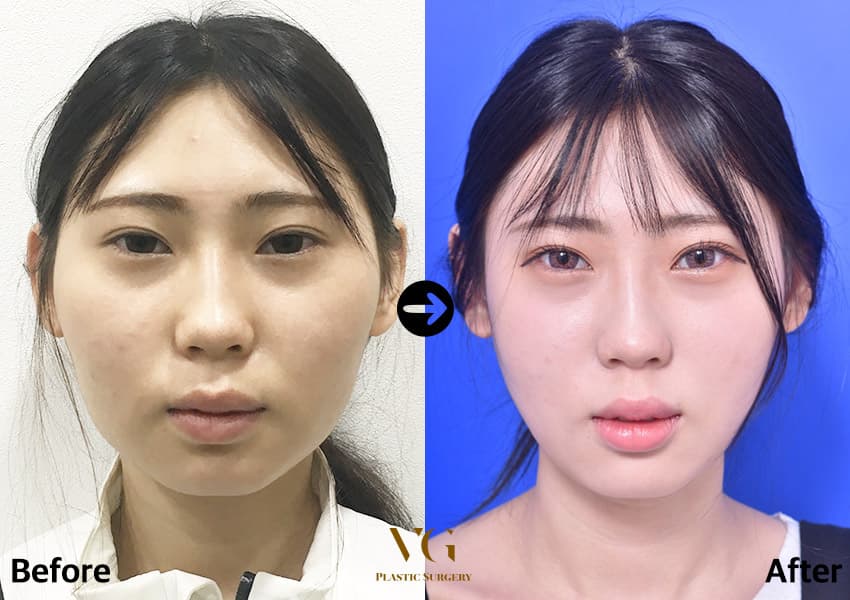
Cheekbone (Zygoma) Reduction3 months after surgery
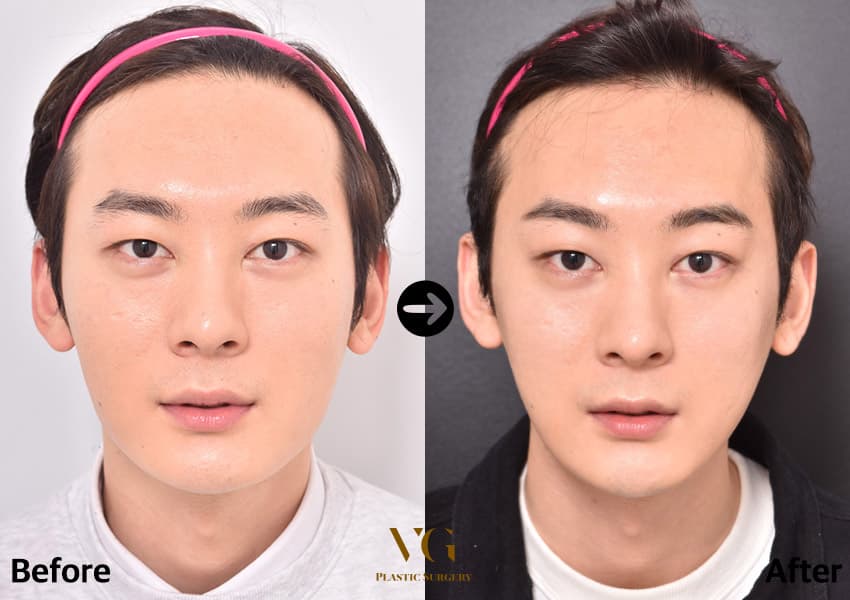
Square Jaw Reduction3 months after surgery
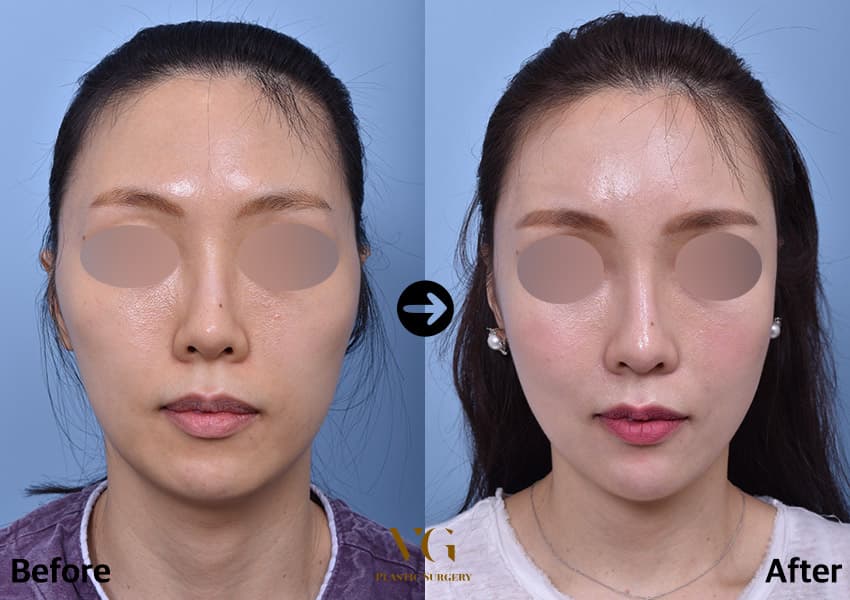
Cheekbone (Zygoma) Reduction3 months after surgery
FAQ
Questions patients ask
Does the bone grow back after cheekbone reduction?
No. Bone that has been cut and moved heals in its new position, and bone that has been removed does not regrow. This is why taking too much is harder to correct than taking too little. The soft tissue over the bone keeps ageing, so the face still changes over the years.
Can uneven cheekbones be corrected without cutting bone?
It depends on where the difference sits. When CT shows the bone is nearly even and the difference is in the soft tissue, fat grafting to the flatter side is one surgical option to discuss. When the bone itself differs, the choice is between bone surgery and accepting a small difference.
Where are the incisions for korean cheekbones surgery?
The cheekbone body is commonly reached through an incision inside the mouth, and the arch through a small incision near the sideburn. A scalp (coronal) incision is used in some revision cases or when a lift is done at the same time. The approach is chosen around your bone and your goals.
Can cheekbone and jaw surgery be done on the same trip?
They can be combined, and many faces need both to look balanced. A combined operation is longer and the swelling covers more of the face, so the stay needs more margin. Whether combining makes sense for you is weighed at the consultation, using the CT.
Should someone come to Seoul with me?
It is strongly advisable. Cheekbone reduction is done under general anaesthesia, the first days bring the most swelling, and having someone to handle the hotel, meals and the airport makes the stay much easier.
Sources
This article explains general medical information. Whether surgery suits you, and which method, is decided only after a consultation with the surgeon.
Written by
Im Young Min
Chief Director · Plastic Surgery
- Ph.D. in Medicine
- Internship and residency, Seoul St. Mary's Hospital
- Board-certified plastic surgeon, Seoul St. Mary's Hospital
- Adjunct professor of plastic surgery, Seoul St. Mary's Hospital
- Former director, Topface Plastic Surgery
Next step
Send two photos. Get a surgeon’s answer.
Front and side, natural light, no filter. Dr. Im Young Min reviews them and tells you which method fits and how many days to stay in Seoul.
International patients pay the same surgical fee as Korean patients. Pricing policy
Keep reading
Facial Contouring
South Korea Genioplasty Cost Range: What Moves the Number? Methods, Reviews and Recovery
A South Korea genioplasty cost range is wide because moving bone, shortening a chin and placing an implant are different operations; the method, anesthesia and days in Seoul set your figure.
Im Young Min ·
Facial Contouring
Three Dates That Shape a Zygoma Reduction Korea Trip, From CT to Flight Home
Zygoma reduction in Korea is bone surgery you fly home from, so plan around three dates: the consultation and CT before surgery, the check-up that clears you to fly, and your first appointment at home.
Im Young Min ·
Facial Contouring
Is chin lipo Korea Right for Your Full Chin? Cost, Reviews and What It Can't Fix
What chin lipo Korea does is remove fat under the chin and along the jaw. It won't shorten a long chin or narrow a square one, and it suits people at a stable weight whose skin still has some spring.
Im Young Min ·