Nose
Korean Nose Job Before and After: Reading Angles, Timing and Technique
A rhinoplasty surgeon in Seoul explains how to read nose photos: what the front, three-quarter and profile views each prove, how far a 3-month photo is from the final result, and what each technique should visibly change.
In this article
The short answer
A Korean nose job before and after pair is worth trusting when the three views match in angle and distance, the time since surgery is stated, and the change you see fits the technique that was used. A profile shows a hump or a short nose; only the front view shows whether a crooked nose was straightened or a wide bridge narrowed. Photos taken at 3 months are close to final for simple tip and bridge work, but still early for bone work and revision.
- Ask for all three views of the same case — front, three-quarter and profile. Each one proves something different.
- Check the time since surgery: our archive photos are at 3 months, while the final result is assessed at 6 months, 6–12 months with osteotomy and 12 months for revision.
- Match the change to the technique: a hump shows in profile, a crooked or wide bridge shows from the front.
- Discount light, makeup and hairstyle; look at the line of the bridge, the tip and the nostrils.
- Then compare the before photo with your own nose — that is the case that tells you most.
I am Yang Jong Phil, a board-certified plastic surgeon at VG Plastic Surgery in Seoul and a full member of the Rhinoplasty Research Group of the Korean Society of Plastic and Reconstructive Surgeons. Before people write to me from abroad, most have scrolled through hundreds of Korean nose job before and after photos. This is how I suggest reading them, one view and one technique at a time.
Profile
Yang Jong Phil
Director · Board-certified in Plastic Surgery
If you want the general rules for any surgery — dates, lighting, edits — my colleague covers them in how to read Korean plastic surgery before and after photos. Here I stay with the nose, which hides and reveals different things at different angles.
Why a nose needs three views, not one
A nose is a three-dimensional structure seen in a two-dimensional photo. One angle can make a result look dramatic while hiding what did not change. So a case is only complete when you see the same patient from the front, the three-quarter view and the side.
| View | What it shows well | What it hides |
|---|---|---|
| Front | A crooked bridge, the width of the bony bridge, nostril width, symmetry of the tip | Bridge height and hump — a high bridge can look the same as a low one head-on |
| Three-quarter | Where the bridge starts between the eyes, how the bridge flows into the tip | Small asymmetries, because the head is already turned |
| Profile | Hump, bridge height, tip projection, the angle between nose and lip, a short or upturned nose | Width and deviation — a crooked nose can look straight from the side |
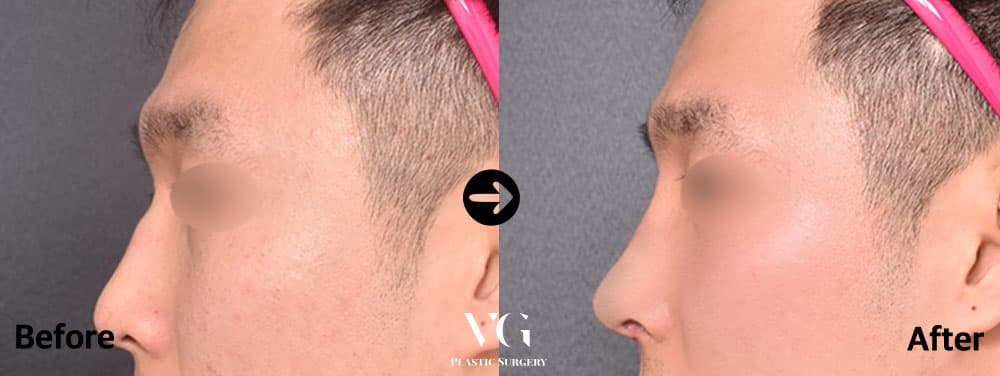
When a clinic shows only the profile of a crooked-nose case, or only the front of a hump case, you are seeing the angle that flatters it. In our archive every case carries the views we photographed, and you can open them all.
The front view: deviation and width
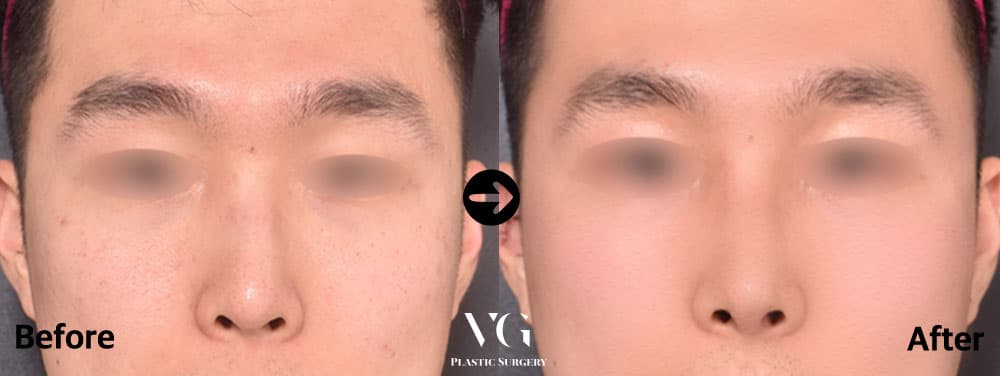
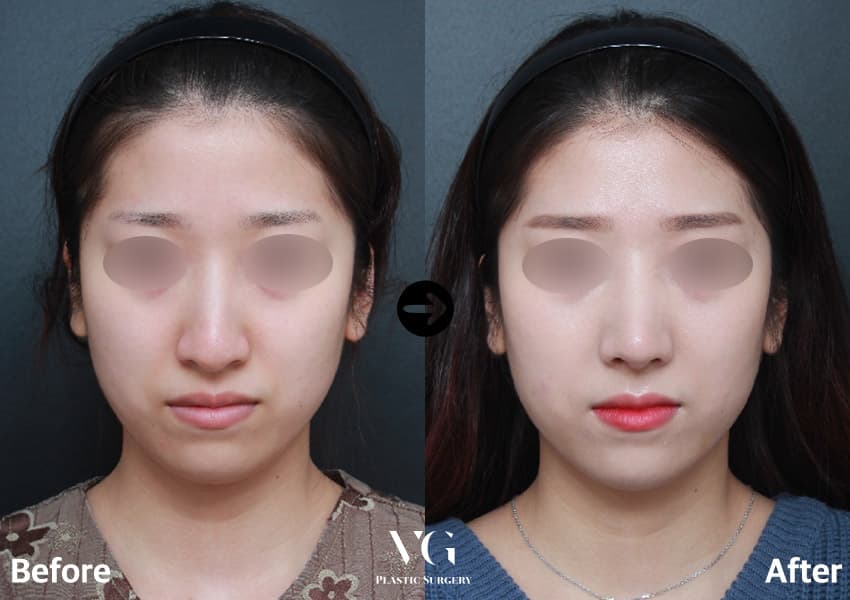
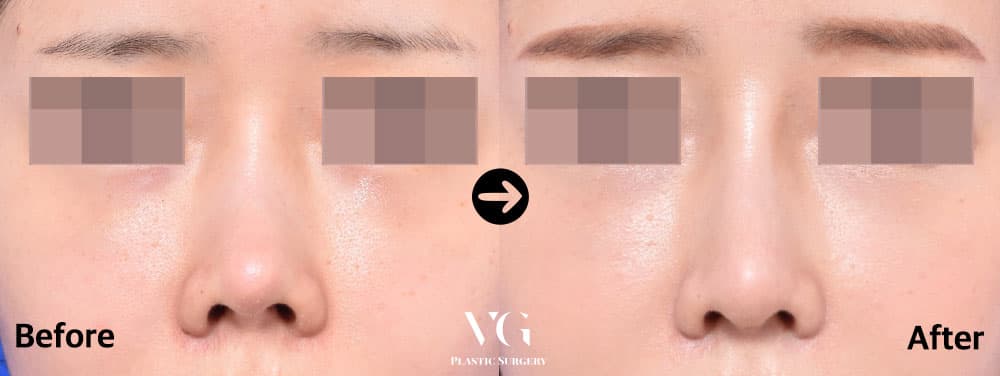
In the first case, draw an imaginary line from the middle of the forehead to the upper lip. Before, the bridge drifts off that line; after, it follows it. That is the work of crooked-nose correction, and you can only judge it from the front. You can see this case at every angle.
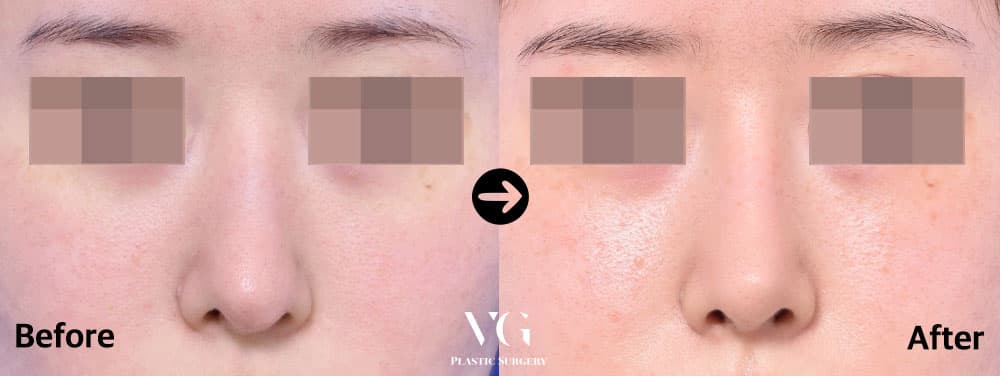
Notice too what you should subtract. The after photo is brighter and the skin looks smoother, which comes from light, not from surgery. In the second case the patient wears lipstick in the after. Neither changes the bridge, so read the outline, not the glow.
The profile: hump, height and length
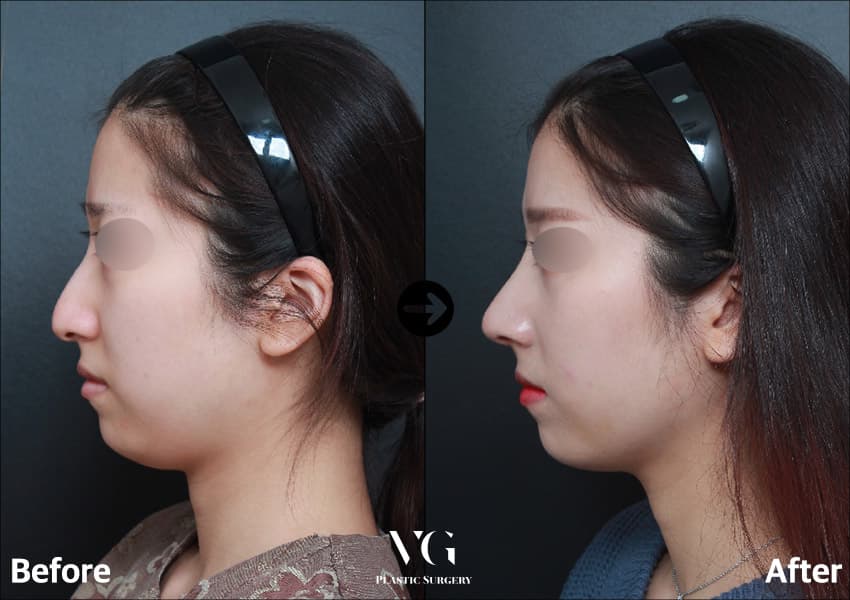
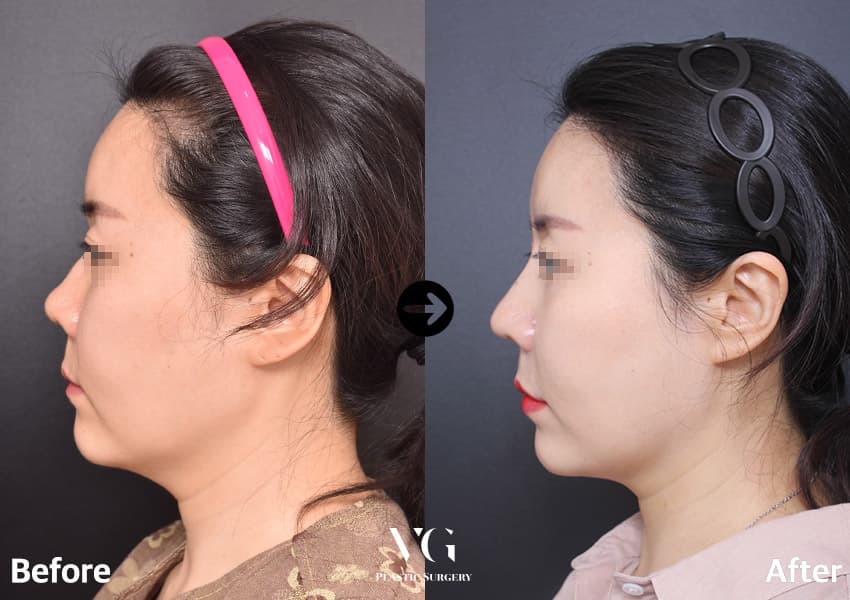
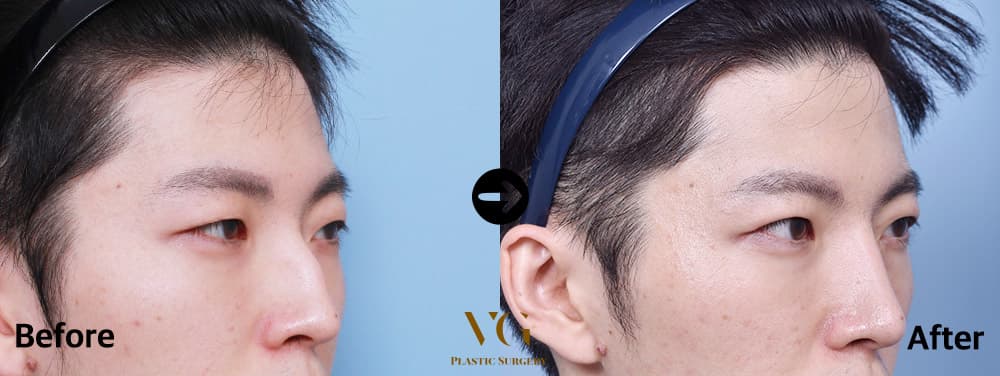
The first profile is the same woman as the second front view above. From the side you see the hump removed; from the front you see the bone narrowed. One case, two different proofs — that is why a single view is never enough. Her full record is in this hump and tip case.
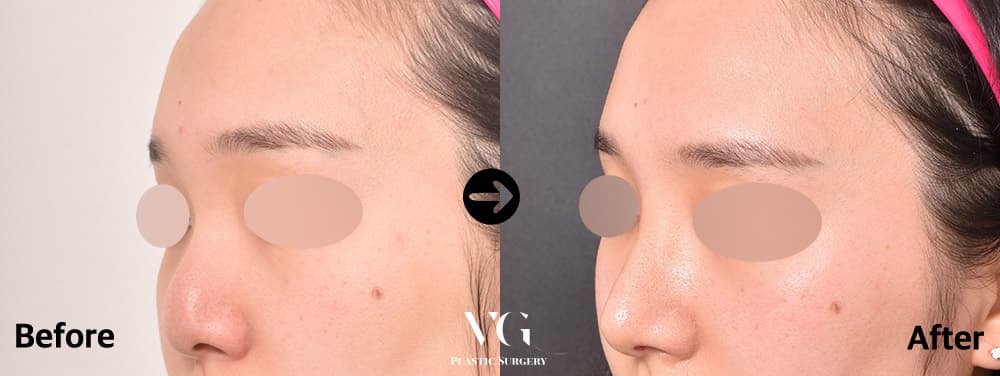
In a profile, check that the ear sits in the same place in both halves. If more of the ear shows in one, the head has turned, and bridge height will look different for that reason alone. The second case is a short nose: watch the tip, which now sits further from the face, and the nostrils, which show less from the side.
When was the after photo taken?
A nose changes for months after surgery, and how many months depends on what was done. Every case in our archive is labelled with the time since surgery, and the nose cases were photographed at 3 months. Use the table to judge how close that is to the end.
| Type of rhinoplasty | Swelling at its peak | Most people no longer notice | Final result assessed |
|---|---|---|---|
| No bone work (bridge, tip) | Days 3–5 | 1–2 months | 6 months |
| With osteotomy | Days 5–7 | About 3 months | 6–12 months |
| Revision | Days 5–7 | 3–6 months | 12 months |
So a 3-month photo of tip and bridge work without bone is close to what you would live with. A 3-month photo after osteotomy is around the point where most people stop noticing swelling, with months still to go before the final assessment. A 3-month revision photo is an early checkpoint: the tissue has been operated on twice and settles last.
Be most careful with photos taken in the first two weeks. Swelling peaks between day 3 and day 7, and a thick, swollen tip in those photos says little about the final shape.
Send a front, a side and a three-quarter photo of your nose on WhatsApp, and I will tell you which of our cases started closest to yours.
What each technique should visibly change
The caption tells you what was done. Then check that the photo shows a change that fits it. If a caption says osteotomy and the front view looks just as wide, ask why.
| Technique | Where to look | What a matching change looks like |
|---|---|---|
| Bridge augmentation | Three-quarter and profile | The bridge starts higher between the eyes and runs in one line to the tip — not a ridge that stops short |
| Tip surgery | Profile and front | The tip projects further and reads narrower, without looking pinched |
| Hump correction | Profile | The bump is gone; the line from forehead to tip is straight. Check the front too, since filing a hump can widen the bridge |
| Osteotomy | Front | A wide bony bridge looks narrower between the eyes |
| Crooked-nose correction | Front | The bridge follows the midline of the face |
| Short-nose correction | Profile | The tip sits further down and forward; less nostril shows from the side |
| Nostril reduction | Front | The nostrils read narrower from the front; we also check how far they spread when you smile |
Some of these come as a pair. A hump is rarely filed on its own, because the bridge can look wider afterwards, so hump cases often include osteotomy or tip work. A short nose has to be lengthened, and lengthened tissue pulls back; holding against that pull is what the cartilage graft is for.
Revision photos: a different starting point
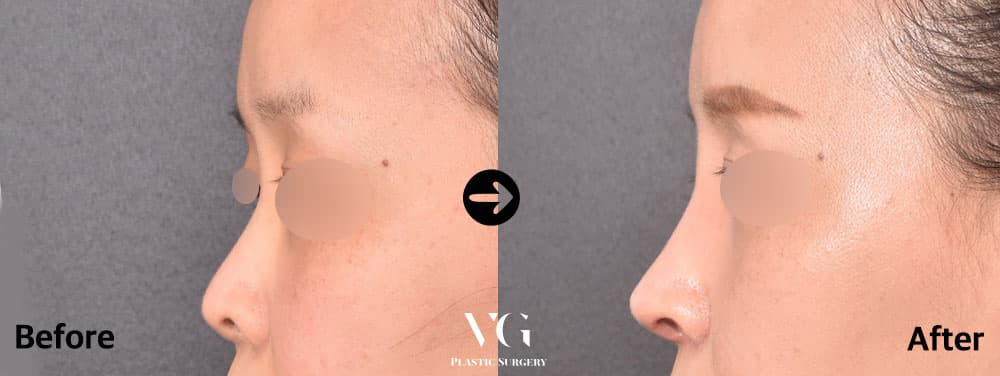
A revision photo starts from what the first operation left behind, so judge it against that starting point, not against a first-time case. Here the bridge is longer and higher, rebuilt with the patient's own rib cartilage. It is a 3-month photo of a nose whose final result is assessed at 12 months. The complete revision case shows the other view.
Reading photos against your own nose
The most useful nose job before and after case is not the most striking one. It is the one whose before photo looks like your nose today. Skin thickness, the amount of cartilage you have and the state of your septum decide how far a nose can change. Thin skin over the tip settles quickly; thick skin takes months.
- Find cases with your concern first — a low bridge, a hump, a round tip, a short or crooked nose. Our before-and-after gallery filters nose cases by concern
- Compare skin: if your skin is thicker than the patient's, expect a softer tip
- Look at the photo you are least drawn to, too — it tells you how the result looks from the angle you see in the mirror
Our rhinoplasty page also shows patient photos and words from Google and Naver, which the patients posted themselves and we cannot edit. Read those as a rhinoplasty Korea review from the outside, next to our own archive. The full rhinoplasty page has both.
What a photo cannot show
A photo cannot show breathing. A deviated septum, enlarged turbinates or a narrow nasal valve can sit behind a nose that looks fine. That is why a board-certified ENT specialist on our staff reads the airway by 3D CT and endoscopy, and septum work goes into the same plan as the shape.
A photo also cannot show how the nose feels or how the result holds over years. Every rhinoplasty carries risk: swelling that lasts longer than expected, asymmetry while tissue settles, changes in breathing, and with implants, shifting or contracture. Recovery and outcome differ from person to person.
And some noses should not be operated on yet: an active sinus infection, a height your own structure cannot safely support, smoking you cannot stop around surgery, or a face still growing in adolescence. A gallery will not tell you that. A consultation will.
If the photos bring you to Seoul
For rhinoplasty, plan to stay at least 7 days, or 14 days when osteotomy is involved or it is a revision. Surgery takes 1–3 hours under sedation or general anesthesia, stitches come out 5–7 days later, and a final check confirms you are fit to fly. The stay planner lays the days out against your dates.
International patients pay the same surgical fee as Korean patients, set out in a written quote after consultation. Our pricing policy explains what the quote covers. Which method suits your nose, and why, is in the Korean nose job guide, and my background is on my profile.
Send your three photos on WhatsApp, and I will point you to the cases in our archive that began where your nose begins.
Nose before & after — more cases
Real patients from our archive, all photographed 3 months after surgery. Tap a case to compare it full size.
Revision Rhinoplasty3 months after surgery
Revision Rhinoplasty3 months after surgery
Hump Reduction3 months after surgery
Hump Reduction3 months after surgery
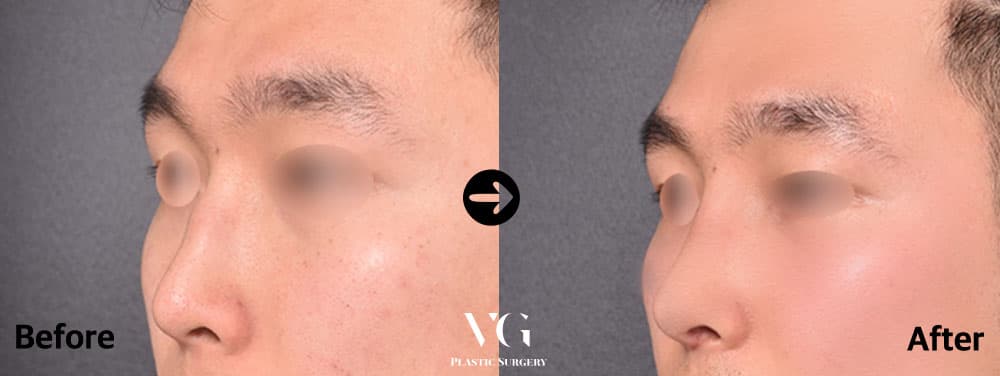
Deviated Nose Correction3 months after surgery
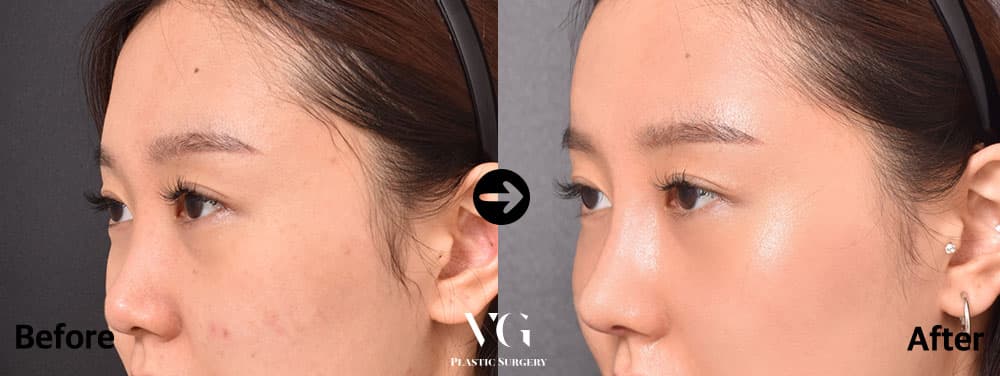
Dorsal Augmentation3 months after surgery
FAQ
Questions patients ask
Are Korean rhinoplasty before and after photos taken at the same angle?
They should be, and you can check it yourself. In a profile, the ear should sit in the same place in both halves; in a front view, the same amount of each ear should show. If the head has turned, bridge height and width will look different for that reason alone.
How long after rhinoplasty are after photos taken?
The nose cases in our archive were photographed 3 months after surgery, and each one is labelled. That is close to the end for bridge and tip work without bone, whose final result is assessed at 6 months. With osteotomy the final result is assessed at 6–12 months, and for revision at 12 months.
Which view shows a crooked nose correction?
The front view. Draw a line from the middle of the forehead to the upper lip and check whether the bridge follows it. From the side, a crooked nose can look straight before and after.
Why does the nose look swollen in some after photos?
Swelling peaks between day 3 and day 7, and later when bone was cut or it is a revision. Photos from the first weeks show swelling, not the final shape. Most people no longer notice the swelling at 1–2 months without bone work, around 3 months with osteotomy, and 3–6 months after revision.
Will my nose look like the after photo?
Only if your starting point is close to that patient's. Skin thickness, the cartilage available and the septum decide how far your nose can change. Send your own photos and I can tell you which of our cases started nearest to yours.
How long do I need to stay in Korea after a nose job?
At least 7 days, or 14 days when osteotomy is involved or it is a revision. That covers the swelling peak, stitch removal 5–7 days after surgery and a final check before you fly.
This article explains general medical information. Whether surgery suits you, and which method, is decided only after a consultation with the surgeon.
Written by
Yang Jong Phil
Director · Plastic Surgery
- Board-certified plastic surgeon, Korea University Hospital
- Korea University College of Medicine
- Plastic surgery fellowship, University of Chicago Medical Center
- International Confederation for Plastic, Reconstructive and Aesthetic Surgery (IPRAS)
- American Society of Plastic and Reconstructive Surgeons (ASPRS)
Next step
Send two photos. Get a surgeon’s answer.
Front and side, natural light, no filter. Dr. Yang Jong Phil reviews them and tells you which method fits and how many days to stay in Seoul.
International patients pay the same surgical fee as Korean patients. Pricing policy
Keep reading
Nose
Rhinoplasty Cost in South Korea in Rupees: What Changes It for a Flat Nose or Crooked Septum? Reviews, Methods and Recovery
There's no honest rupee figure for a nose nobody has examined. The cost follows the method, septum work, revision, anesthesia time and days in Seoul; send photos on WhatsApp to ask about yours.
Im Young Min ·
Nose
What Decides the Cost of Rhinoplasty in South Korea? Reviews, Methods and Recovery
There is no single price for a nose job in Korea: the method, the cartilage source, septum work, revision status and anesthesia set the figure for your nose.
Im Young Min ·
Nose
How Much Does a Nose Job Cost in Korea? Four Cost Drivers, Reviews, Methods and Recovery
A nose job in Korea is priced from four parts: the scope of the change, the building material, any breathing work and the anesthesia. Foreigners pay the same surgical fee as Korean patients, with a written estimate.
Im Young Min ·