Nose
Seven days after Korean silicone rhinoplasty, from splint to boarding gate
Korean silicone rhinoplasty usually pairs a silicone bridge implant with cartilage at the tip. The external splint stays on for about 7 days, so plan to stay in Seoul past that point and allow up to 3 weeks for bruising to fade.
In this article
- 01What is in a Korean silicone nose?
- 02Day by day through the first month
- 03How many nights in Seoul does the first week need?
- 04Three timing mistakes on a short trip
- 05Silicone implant risks that show up after you fly home
- 06Silicone, ear cartilage or rib: which suits someone who lives far away?
- 07Who is in the room on surgery day?
The short answer
Korean silicone rhinoplasty usually pairs a silicone implant along the bridge with your own cartilage at the tip. The step that decides how long you stay comes after surgery, when the external splint comes off. If you land on a Thursday and have surgery on Friday, the earliest sensible flight home is after that point, so for most people the hard part is getting enough days off work rather than the operation. Every rhinoplasty plan here is reviewed with an ENT specialist on staff, so your breathing is planned along with the shape of the bridge.
- The external splint usually stays on for about 7 days, so the return flight belongs after that point.
- Bruising around the eyes can last up to 3 weeks, and work may need up to 2 weeks off.
- Silicone on the bridge with your own cartilage at the tip is the common pairing; L-shaped implants are more often linked to problems at the tip.
- Infection or a shifting implant can show up after you're home, so learn the warning signs and carry your records.
- An ENT specialist reviews nose cases here, and an anesthesiologist is assigned to every operation.
I'm Im Young Min, a board-certified plastic surgeon. I did my internship and residency at Seoul St. Mary's Hospital. Below are the first weeks after korean silicone rhinoplasty, day by day, and what each stage means for the length of your trip.
Profile
Im Young Min
Chief Director · Board-certified in Plastic Surgery
Send your travel dates on WhatsApp
What is in a Korean silicone nose?
In most cases it's two materials: a solid silicone implant on the bridge and cartilage from your own body at the tip. A 2014 review of Asian rhinoplasty in Plastic and Reconstructive Surgery Global Open describes silicone nasal implants in straight and L-shaped forms. It says the L-shape, which runs down into the tip, is more often linked to pressure damage and extrusion there. That's why many surgeons use silicone only on the bridge and shape the tip with septal or ear (conchal) cartilage.
This matters for your trip in one specific way. The implant in a Korean silicone rhinoplasty is a foreign object under fairly thin skin. The problems you want found early, such as infection, the implant shifting or redness over the tip, tend to show up in the days and weeks after surgery. A plan that sends you home before anyone has checked the nose without its splint skips that first check.
How high the bridge should go and where it should start is a separate decision, covered in where the bridge starts and what raises it. Skin thickness limits how much shape the tip can show, which is explained in why your skin sets the limit on the tip.
Day by day through the first month
The NHS describes a splint taped over the nose for about 7 days, bruising and swelling around the eyes that can last 3 weeks, and up to 2 weeks off work. The table puts those milestones next to the decisions a traveler has to make.
| When | What is usually happening | What it means for the trip |
|---|---|---|
| Surgery day | The operation under anesthesia, then waking up in recovery | Book the hotel night and make no plans |
| Days 1 to 3 | Swelling and bruising build up, and the nose feels blocked | Stay near the hotel, sleep with your head raised, keep a soft diet |
| Days 4 to 6 | Bruising turns yellow-green and the splint stays on | Short walks are fine; skip saunas, alcohol and crowded nightlife |
| Around day 7 | External splint off and stitches checked | The earliest point to plan your flight |
| Days 8 to 21 | Bruising fades and swelling is still easy to see | Back at a desk is realistic; meeting people in person may feel early |
| Up to a year | The nose shape slowly settles | Judge the result on this timescale |
The last row surprises people the most. The American Society of Plastic Surgeons notes that initial swelling goes down within a few weeks, but the final shape of the nose can take up to a year to settle. Swelling also tends to come and go, and is often worse in the morning. The nose you see at the airport is not yet the nose you'll have.
How many nights in Seoul does the first week need?
Count at least eight to nine nights: one or two before surgery for the consultation and exam, then the roughly seven days the splint stays on. If you're working with a long weekend, that number hurts. A four-day trip can fit a consultation, but it can't fit a korean silicone rhinoplasty and the week that follows.
If you teach English in Asia or study on a fixed semester, the long school breaks are usually what make this possible. Some people split the plan into two trips: a consultation visit first, then the surgery trip once they know which material and approach suit their nose. That costs an extra flight, but you won't book a full week of leave around a plan that changes at the exam.
Your exact length of stay is set at your consultation, once the surgeon knows whether your plan includes septum work, cartilage taken from the ear or chest, or a revision of earlier surgery. Each of those adds healing that the table above doesn't show.
Three timing mistakes on a short trip
The first mistake is buying the return ticket before the splint is off. A flight on day 4 or 5 means the first check of the nose without the splint happens somewhere else, often with a doctor who has never seen your operation notes.
The second is going straight from the airport to your desk or classroom. Bruising that lasts up to three weeks is normal under the NHS timeline. If your job puts you in front of students, clients or a camera, a few extra days at home before going back usually feels better than standing in front of a room on day 8.
The third is planning the rest of the holiday around heat and water. Seoul in July and August is hot and humid. Sweating under splint tape is unpleasant, and swimming or a beach stop on the way home doesn't fit the first three weeks. The cooler, drier months are easier on a taped nose, although most people book around their leave first, which is reasonable.
Silicone implant risks that show up after you fly home
In short, it links most of these problems to implants that are too large or placed incorrectly.
Rhinoplasty in general has its own risks, separate from the implant. The NHS lists breathing difficulty, damage to the cartilage wall between the nostrils, a changed sense of smell and heavy nosebleeds, along with the small risks of bleeding, blood clots, infection and a reaction to the anesthetic.
After korean silicone rhinoplasty, these signs mean you should see a doctor without waiting: redness or warmth over the bridge that keeps getting worse, fever, discharge from an incision, the bridge moving to one side, or tip skin that looks shiny, thin or shows the edge of the implant. If it's urgent, see a local doctor first, then message the clinic. The CDC's guidance on medical tourism suggests arranging follow-up care at home before you travel and carrying copies of your medical records. A short summary of the operation, including which implant was used and where cartilage came from, makes that visit much easier.
How you heal is personal, and whether silicone suits your nose at all is decided at the in-person exam.
If you've had nose surgery before, or you're not sure whether your skin is thick or thin, send a clear front photo and side photo on WhatsApp along with the dates you could travel.
Send your travel dates on WhatsApp
Silicone, ear cartilage or rib: which suits someone who lives far away?
No option is right for everyone, but distance changes the trade-offs. Silicone needs no second surgical site and can be removed. Your own cartilage carries a lower risk of major complications, according to the same 2014 review, but it has to come from somewhere.
Ear cartilage is usually used to shape the tip, and there's only a small amount of it. Rib cartilage gives enough material to build a bridge, but it means a second incision on the chest and a more involved recovery. That can push the trip past the seven days in the table. Septal cartilage from inside the nose is also an option when the septum is being worked on anyway.
If you're coming in with an implant from an earlier operation that has shifted or shows through the skin, the plan starts from what's already there. That situation is covered in starting from what the first surgery left.
Who is in the room on surgery day?
Three people with separate jobs: the plastic surgeon, an anesthesiologist and, when the inside of the nose needs work, an ENT specialist. VG Plastic Surgery has eight full-time specialists across plastic surgery, otolaryngology and anesthesiology.
Three board-certified anesthesiologists work here full time, and one is assigned to every operation. That person watches your blood pressure, pulse and breathing from the first injection until you're awake again. The anesthesiologists don't perform cosmetic surgery, so the surgeon can focus only on operating.
The ENT specialist on the nose team examines and treats a deviated septum or a narrow nasal valve as part of the same operation. For a traveler, that means fixing the breathing and raising the bridge can share one surgery date and one recovery period instead of two. Whether the incisions go inside the nose or across the columella also affects stitch care in the first week, which is covered in inside-the-nose incisions vs the open approach.
The clinic is at 635 Nonhyeon-ro, Gangnam-gu, Seoul. Before you book flights, send the dates you can be in Seoul on WhatsApp, and add one note if you have work or classes to get back to.
Related pages:
Nose before & after — more cases
Real patients from our archive, all photographed 3 months after surgery. Tap a case to compare it full size.
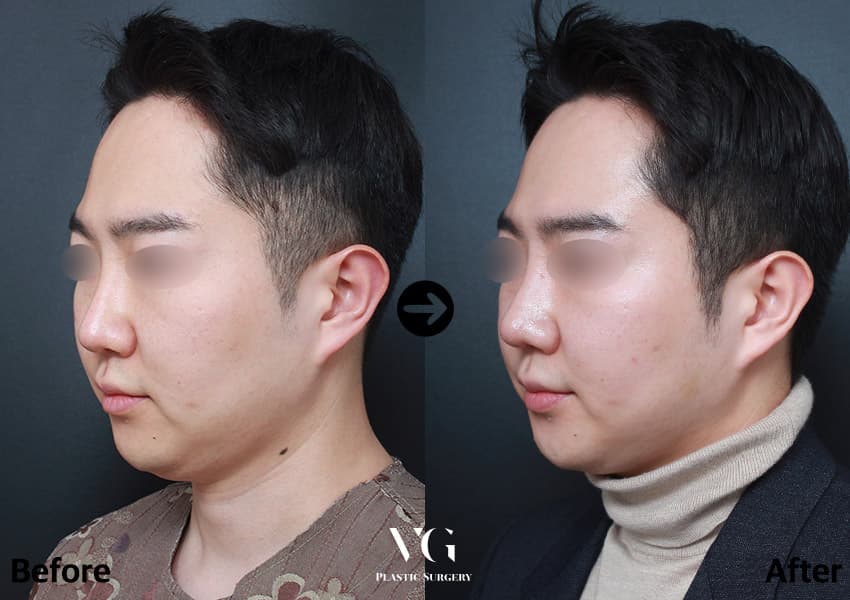
Male Rhinoplasty3 months after surgery
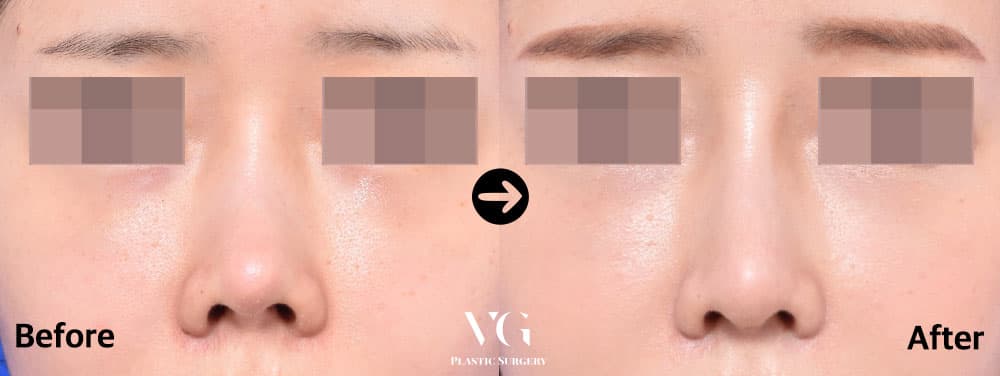
Revision Rhinoplasty3 months after surgery
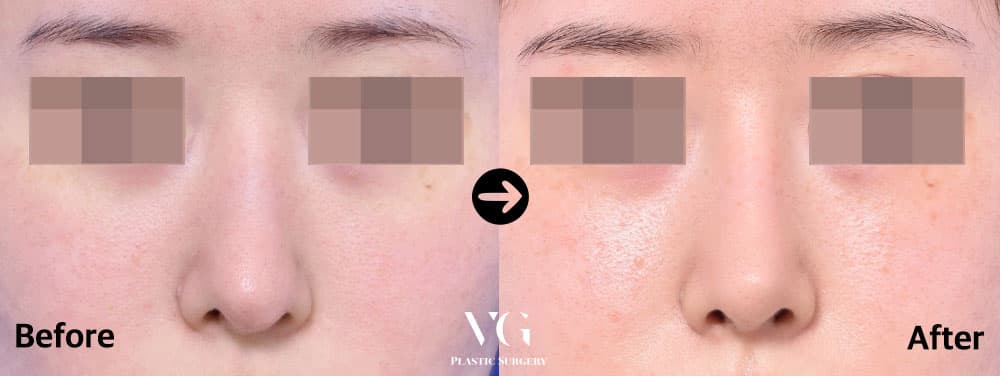
Revision Rhinoplasty3 months after surgery
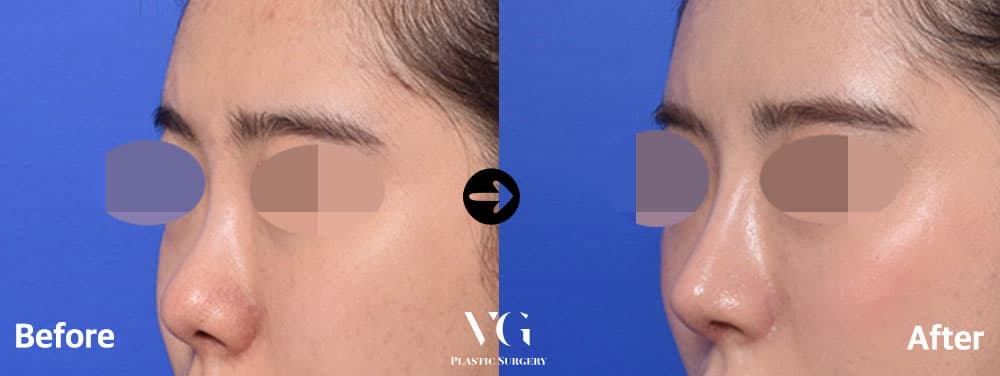
Rhinoplasty3 months after surgery
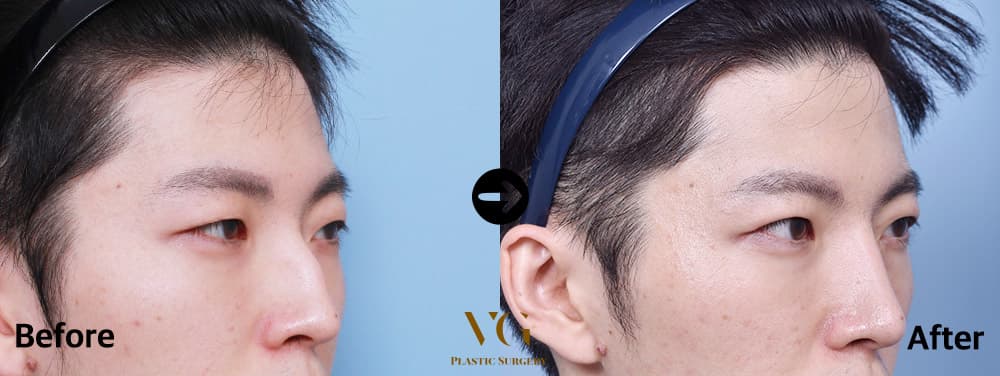
Male Rhinoplasty3 months after surgery
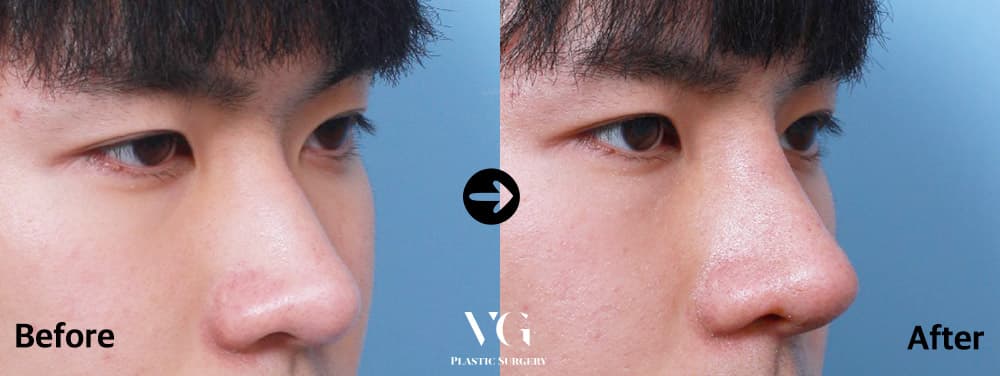
Male Rhinoplasty3 months after surgery
FAQ
Questions patients ask
Can I fly home with the nasal splint still on?
Physically, yes, but you'd lose the first check of the nose without its splint, which usually happens around day 7. That check is when the surgeon looks at the bridge position and the stitches. Most travelers plan the return flight for after it.
Does a silicone nose implant need to be replaced after some years?
There's no set replacement schedule for a nasal implant. It's removed or replaced when a problem appears, such as shifting, infection, the implant showing through the skin, or a shape you no longer want. Thin skin over the bridge and an implant that is too large are the usual risk factors.
Can a deviated septum be fixed in the same operation as a silicone bridge?
Yes. The ENT specialist on the nose team examines and treats a deviated septum or narrow nasal valve as part of the same operation. Septum work can add swelling and stuffiness in the first days, so tell the team about any breathing problems before you set your dates.
When will my nose look like the final result?
Bruising usually fades within about 3 weeks. The American Society of Plastic Surgeons notes that the final shape of the nose can take up to a year to settle. Morning swelling that comes and goes during that time is common.
What does korean soft silicone rhinoplasty mean?
The material is still silicone, so the risks described above still apply. The questions that matter are the implant's shape, its size and whether the tip is built with your own cartilage.
Sources
This article explains general medical information. Whether surgery suits you, and which method, is decided only after a consultation with the surgeon.
Written by
Im Young Min
Chief Director · Plastic Surgery
- Ph.D. in Medicine
- Internship and residency, Seoul St. Mary's Hospital
- Board-certified plastic surgeon, Seoul St. Mary's Hospital
- Adjunct professor of plastic surgery, Seoul St. Mary's Hospital
- Former director, Topface Plastic Surgery
Next step
Send two photos. Get a surgeon’s answer.
Front and side, natural light, no filter. Dr. Im Young Min reviews them and tells you which method fits and how many days to stay in Seoul.
International patients pay the same surgical fee as Korean patients. Pricing policy
Keep reading
Nose
Rhinoplasty Cost in South Korea in Rupees: What Changes It for a Flat Nose or Crooked Septum? Reviews, Methods and Recovery
There's no honest rupee figure for a nose nobody has examined. The cost follows the method, septum work, revision, anesthesia time and days in Seoul; send photos on WhatsApp to ask about yours.
Im Young Min ·
Nose
What Decides the Cost of Rhinoplasty in South Korea? Reviews, Methods and Recovery
There is no single price for a nose job in Korea: the method, the cartilage source, septum work, revision status and anesthesia set the figure for your nose.
Im Young Min ·
Nose
How Much Does a Nose Job Cost in Korea? Four Cost Drivers, Reviews, Methods and Recovery
A nose job in Korea is priced from four parts: the scope of the change, the building material, any breathing work and the anesthesia. Foreigners pay the same surgical fee as Korean patients, with a written estimate.
Im Young Min ·