Nose
Asian Rhinoplasty Korea: Why Thick Skin Limits the Tip More Than the Implant
Asian rhinoplasty in Korea is mostly about adding height to a low bridge and support to a soft tip under thick skin, not about making a nose look Western. Skin thickness, not the implant, usually limits tip definition.
· 9 min read · Last updated
Edited by Im Young Min
In this article
- 01Does Asian rhinoplasty try to make the nose look Western?
- 02Thick skin limits the tip far more than the bridge
- 03Silicone implant or your own cartilage: which one is safer?
- 04The septum is often too small to do everything
- 05Does a higher bridge always look better?
- 06Breathing belongs in the same operation
- 07What decides the cost of Asian rhinoplasty in Korea?
- 08Risks, swelling and who should wait
- 09What to have ready before you message
The short answer
Wondering whether Asian rhinoplasty Korea clinics can really give you a defined tip, or whether your skin will get in the way?
- Asian rhinoplasty is usually an augmentation: more bridge height and more tip support, not a reduction.
- Thick skin limits how defined the tip can look far more than it limits the bridge.
- Silicone and your own cartilage each fail in different ways; placement and size matter as much as the material.
- A small septum often means ear or rib cartilage is needed, and that changes the operation.
- Breathing is assessed with an ENT specialist as part of the same operation.
It is worth reading on before you book anything or settle on a material.
Profile
Im Young Min
Chief Director · Board-certified in Plastic Surgery
After this you will know how skin thickness limits the tip, how silicone and your own cartilage compare, why the septum often can't supply enough, and what to send before you message, so you can decide what to ask about first.
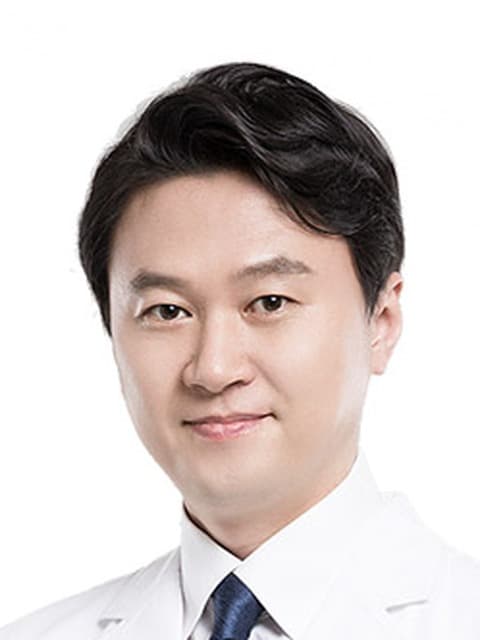
I'm Im Young Min, Chief Director and board-certified plastic surgeon. I trained and did my residency at Seoul St. Mary's Hospital, and I'm a full member of the Korean Society for Aesthetic Plastic Surgery. I wrote this because many people assume the choice of implant or cartilage decides the result, when skin thickness often matters more.
The short answer: the operation mostly adds height to a low bridge and support to a soft tip, within thicker skin and a smaller septum. It is not meant to make a nose look Western.
Send a front and side photo of your nose on WhatsApp
Does Asian rhinoplasty try to make the nose look Western?
No. The usual goal is more height along the bridge and a tip that balances the face you already have.
A 2014 review by Clyde Ishii in Plastic and Reconstructive Surgery Global Open describes most Asian noses as having thicker skin and a lower dorsum, so the work is largely building up, where many Western rhinoplasties take bone and cartilage away.
A reduction removes structure and lets the skin settle onto what's left. An augmentation adds structure and asks the skin to stretch over it. The second one has a ceiling, and the ceiling is set by the skin.
Some people do arrive with a reference photo of a very high, narrow bridge and a sharp tip. Wanting that isn't the problem. The question is whether your skin, your septum and the distance between your eyes can carry it without the nose looking placed on rather than grown.
Where the bridge should start is its own topic, covered in where the bridge starts and what raises it. Men usually want a different line again, with a straighter, stronger bridge, which is the subject of a stronger nose for men.
Thick skin limits the tip far more than the bridge
Over the bridge, thick skin is often an advantage: it drapes over an implant or graft and hides its edges. At the tip, the same thick layer sits over small, soft cartilages, and it cannot shrink-wrap onto a new shape.
So the belief "thick skin means rhinoplasty won't work" is wrong, and the opposite belief, "any tip can be made sharp", is also wrong. With thick skin, tip shape comes from structure pushing outward: cartilage grafts that lengthen, project and firm up the tip. Removing cartilage from under thick skin tends to make a tip look blunter, not finer, because the skin has nothing to drape over.
What a surgeon assesses here is physical: how thick the skin feels when pinched at the tip compared with the bridge, and how oily it is and how large the pores are, since thick sebaceous skin swells more and settles more slowly. Whether the tip gives easily when pressed, which hints at how weak the cartilages underneath are. None of these is a single number with a cut-off; they add up to a judgment about the degree of definition that is realistic.
Thick-skinned tips also keep improving for many months. If you judge the result at week three, you'll judge it too early.
Say you have a low bridge, a soft tip and fairly thick skin, and you've been told to ask for a very sharp tip. I would first look at how much the skin can show. With thick skin, pushing the tip very high and narrow mostly adds tension without making it look defined. So I would likely aim for a tip that is supported and a little more projected, and check whether your septum has enough cartilage for that. If it doesn't, we would talk about where else cartilage could come from. The plan would be built around what your skin allows, not around a photo of someone else's nose.
Silicone implant or your own cartilage: which one is safer?
Each one fails in a different way, so the answer depends on which part of the nose it supports and how high the bridge needs to go.
Silicone is widely used for the bridge in Asian rhinoplasty because it can be shaped and sized to sit under thick skin. Your own cartilage avoids a foreign body but brings warping, partial absorption and a second surgical site.
Ishii's review lists the problems silicone can cause: infection, displacement, capsular contracture, translucency and calcification. It also states that most problems with silicone implants come from excessive implant size and improper placement. That is the useful part of the forum debate. "Implant bad, cartilage good" misses that a modest implant in the right pocket and an oversized one under tension are not the same operation.
The tip is where material matters most. Skin at the tip is under the most stretch, and an implant pressing on it from inside can thin it over time. That is the reason tip support is commonly built from cartilage, even when the bridge uses an implant.
| Material | Where it usually goes | Limits and risks |
|---|---|---|
| Silicone implant | Bridge | Displacement, capsular contracture, visible edges, infection; problems more likely when too large or poorly placed |
| Septal cartilage | Tip support, small bridge refinements | Supply often limited in Asian noses; taking too much can weaken the support that holds the nose up |
| Ear (conchal) cartilage | Tip | Curved and soft, so limited structural strength |
| Rib (costal) cartilage | Larger bridge augmentation, strong tip support | Warping, a chest incision, longer operation |
Which combination fits depends on the height you need, the thickness of your skin and the size of your septum. Those three answers come from an in-person exam, not from a forum poll.
The septum is often too small to do everything
In many Asian noses there isn't enough septal cartilage for the whole job.
This is the belief with the most practical consequence: "they'll just use cartilage from inside my nose." Sometimes that's true. When the tip needs real lengthening and the bridge needs height as well, the septum may cover only part of it.
Ear cartilage from the bowl of the ear is commonly used at the tip; the same review mentions conchal cartilage for minimal bridge augmentation too, though it is more often a tip material. For larger bridge augmentation, the same review discusses rib cartilage. Rib cartilage is strong, but it can warp after carving, and taking it means an incision on the chest and a longer operation.
An internal exam gives an estimate of the septum's size. The exact amount is only certain once the septum is exposed during surgery, which is why the plan should name a back-up cartilage source before the day.
Send a front and side photo of your nose on WhatsApp
Does a higher bridge always look better?
Reference photos shared in Asian rhinoplasty Korea threads tend to favor very tall bridges, but a bridge that starts too high between the eyes can look stiff, and an implant big enough to create extreme height puts the skin over it under constant tension.
Height is the easy part to add; how it meets the forehead and the tip decides whether the nose looks like it belongs to your face.
The starting point of the bridge (the radix) sets how the nose relates to your eyes. Raise it too far and the eyes can look closer together; leave it too low and the new tip looks like it belongs to another face. That balance matters more than the height number in millimetres.
A related belief: "my nose looks wide, so I need my nostrils narrowed." Sometimes width is in the nostril base, and nostril reduction addresses that. Often, though, a nose looks wide because it is low and the tip is under-projected; adding height and projection changes how wide the base reads before anyone touches the nostrils.
If you already had a nose operation that went too high, the starting conditions change: scar tissue, a capsule, sometimes thinned skin. What a second operation has to work with covers that situation, and the choice of incision is explained in inside-the-nose incisions versus the open approach.
Breathing belongs in the same operation
At VG Plastic Surgery, rhinoplasty is reviewed with an ENT specialist, so breathing and the internal structure of your nose are assessed alongside its shape.
Many people assume a nose job is cosmetic and breathing is a separate problem. Anatomically they overlap. The septum that supports the tip is the same septum that divides your airway, and when cartilage is taken from it for grafts, what remains still has to hold the nose up and keep the passages open.
The ENT specialist on the nose team is Kim Han Gyeol, whose otolaryngology residency was at Samsung Medical Center, Sungkyunkwan University. The clinic has eight full-time specialists across plastic surgery, ENT and anesthesiology, and anesthesia is a separate role: three anesthesiologists work here full time and do not perform cosmetic surgery, and one of them is dedicated to each operation, watching blood pressure, pulse and breathing from the first injection until you're awake.
What decides the cost of Asian rhinoplasty in Korea?
The method matters most: a silicone implant alone is a smaller operation than one that also uses your own cartilage for the tip. How much cartilage is needed, and whether it comes from the septum, the ear or the rib, changes the surgical time. If breathing needs to be corrected in the same operation, that adds work too. Anaesthesia, the number of days you stay in Seoul and the follow-up visits also play a part. To get a figure for your own nose, send front and side photos on WhatsApp and ask for it there.
Risks, swelling and who should wait
Swelling, bruising and a blocked feeling are expected after rhinoplasty. The American Society of Plastic Surgeons notes that initial swelling settles within a few weeks, but the final contour can take up to a year to refine, and thick-skinned tips sit at the slow end of that range.
Less common problems include infection, bleeding, asymmetry, a graft that shifts or warps, implant displacement or contracture, and changes in breathing. The NHS also lists lasting breathing difficulty, damage to the cartilage wall between the nostrils and an altered sense of smell as occasional results of nose reshaping. Some of these need a second operation. Individual healing varies, and no material or technique removes these risks entirely.
It is usually better to wait if:
- your face is still growing (teenagers generally wait until nasal growth has finished);
- you smoke and can't stop around surgery, since nicotine slows healing of skin that's already being stretched;
- you had nose surgery recently and the tissue hasn't settled;
- the result you want depends on skin thinner than yours, so no amount of structure will produce it.
If you're flying to Seoul for this, the first week is the part to plan around, when a splint is usually still on and swelling is at its most visible.
As a rough guide, plan to stay in Seoul at least until the splint comes off and the stitches are checked, which usually falls within that first week; operations using rib cartilage may need longer, and the exact length is set at the exam. The longer settling period happens at home, which is worth knowing before you judge photos of yourself taken in Seoul.
What to have ready before you message
Before you plan Asian rhinoplasty Korea dates, have three things on your phone: a clear front photo and a side profile of your nose in plain light, a note on any breathing trouble or past nose injury, and your rough travel window.
Those answer the first questions about skin, height and airway before anyone talks about technique. You can see the clinic's centers and surgeons on the VG Plastic Surgery main site.
If you'd like my view, send front and side photos, a line about how you breathe through your nose and your possible travel dates on WhatsApp.
Related pages:
Nose before & after — more cases
Real patients from our archive, all photographed 3 months after surgery. Tap a case to compare it full size.
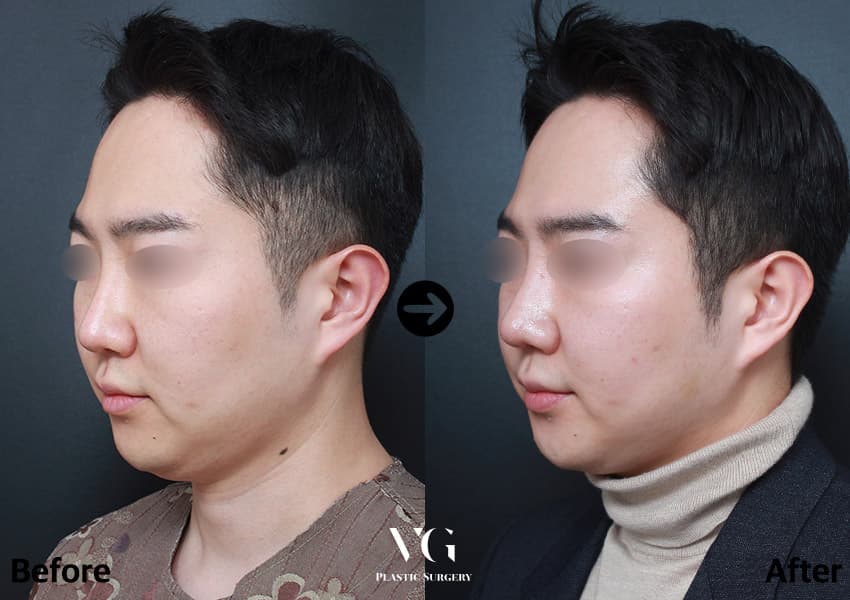
Male Rhinoplasty3 months after surgery
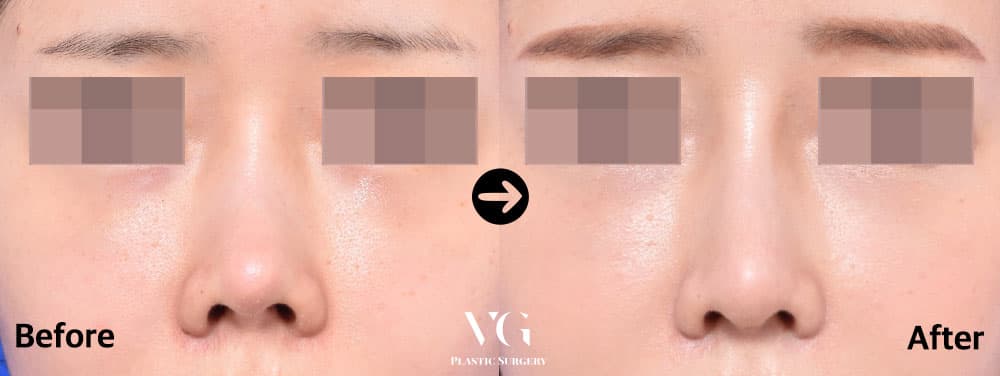
Revision Rhinoplasty3 months after surgery
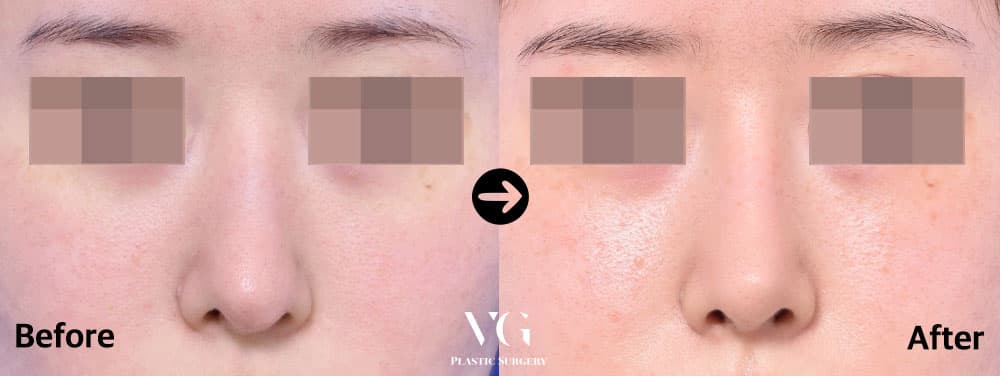
Revision Rhinoplasty3 months after surgery
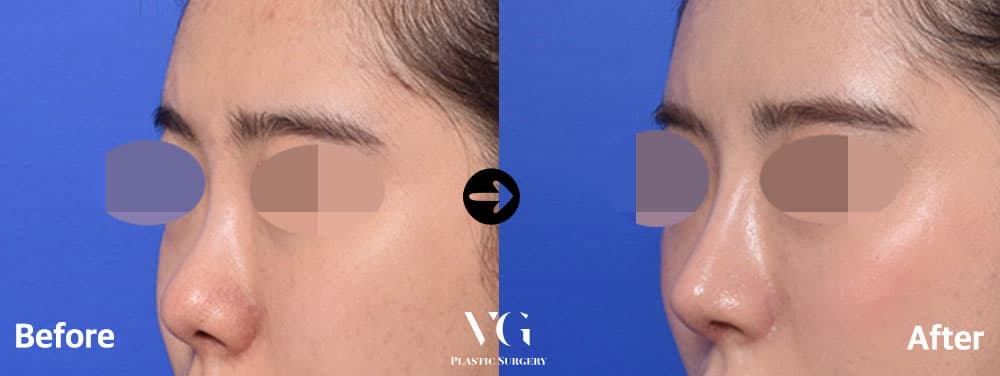
Rhinoplasty3 months after surgery
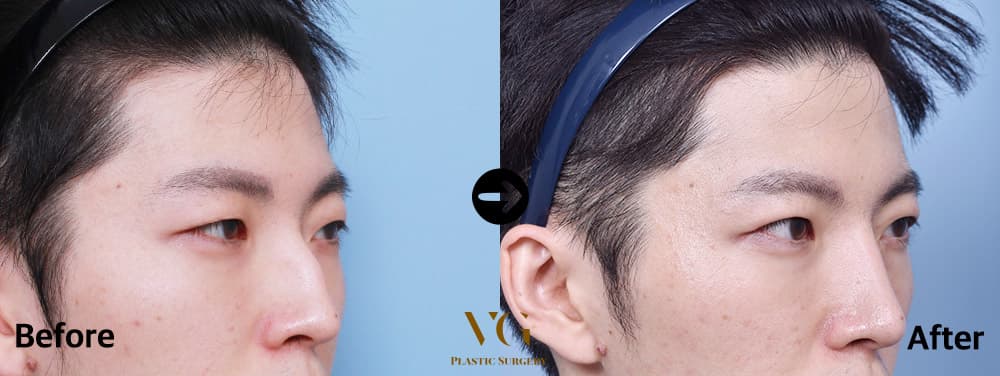
Male Rhinoplasty3 months after surgery
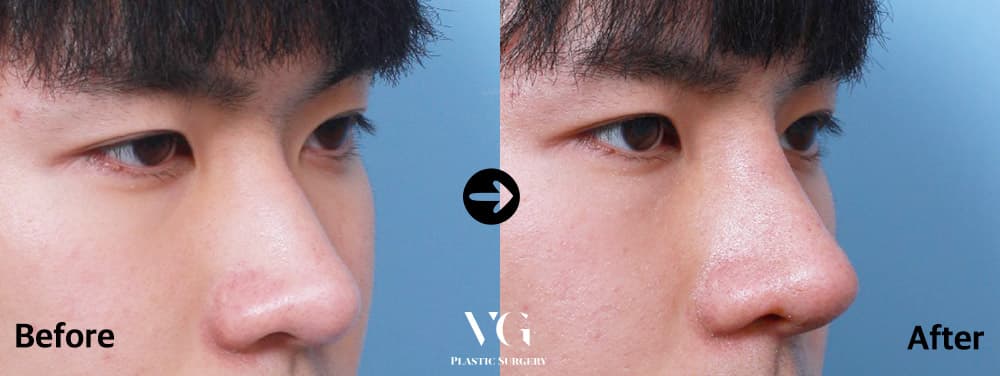
Male Rhinoplasty3 months after surgery
FAQ
Questions patients ask
How can I tell if I have thick nose skin?
Pinch the skin at the tip of your nose and compare it with the skin over the bridge. Thick tip skin feels doughy, is often oily with visible pores, and the tip may feel soft when pressed. A surgeon confirms this by examination, because the feel of the skin decides the tip definition that is realistic.
Will a silicone nose implant look obvious?
Under thick skin, implant edges are less likely to show, but translucency and displacement are listed complications of silicone in the medical literature. Most problems relate to an implant that is too large or placed poorly. A modest implant matched to your skin is less likely to draw attention than a tall one under tension.
Can a nose implant be removed later?
Yes, a silicone implant can be taken out. What the nose looks like afterwards depends on how long it was in, the capsule around it and the skin over it, and sometimes cartilage is added at the same time to keep support. That is a revision operation and is planned from an exam.
Who performs the operation at VG Plastic Surgery?
If you're comparing Asian rhinoplasty Korea clinics, ask who operates. Every surgeon at VG Plastic Surgery is board-certified and operates under their own name. The nose center includes plastic surgeons and an ENT specialist, and a full-time anesthesiologist is dedicated to each operation without performing the surgery.
Is rhinoplasty in Seoul done under general anesthesia?
The anesthetic approach is chosen for each patient by an anesthesiologist, based on the planned operation and your health. Larger operations, such as those using rib cartilage, are generally done under general anesthesia. Mention any medical conditions and medications in advance so they can be assessed.
Sources
This article explains general medical information. Whether surgery suits you, and which method, is decided only after a consultation with the surgeon.
Written by
Im Young Min
Chief Director · Plastic Surgery
- Ph.D. in Medicine
- Internship and residency, Seoul St. Mary's Hospital
- Board-certified plastic surgeon, Seoul St. Mary's Hospital
- Adjunct professor of plastic surgery, Seoul St. Mary's Hospital
- Former director, Topface Plastic Surgery
Next step
Send two photos. Get a surgeon’s answer.
Front and side, natural light, no filter. Dr. Im Young Min reviews them and tells you which method fits and how many days to stay in Seoul.
International patients pay the same surgical fee as Korean patients. Pricing policy
Keep reading
Nose
Rhinoplasty Cost in South Korea in Rupees: What Changes It for a Flat Nose or Crooked Septum? Reviews, Methods and Recovery
There's no honest rupee figure for a nose nobody has examined. The cost follows the method, septum work, revision, anesthesia time and days in Seoul; send photos on WhatsApp to ask about yours.
Im Young Min ·
Nose
What Decides the Cost of Rhinoplasty in South Korea? Reviews, Methods and Recovery
There is no single price for a nose job in Korea: the method, the cartilage source, septum work, revision status and anesthesia set the figure for your nose.
Im Young Min ·
Nose
How Much Does a Nose Job Cost in Korea? Four Cost Drivers, Reviews, Methods and Recovery
A nose job in Korea is priced from four parts: the scope of the change, the building material, any breathing work and the anesthesia. Foreigners pay the same surgical fee as Korean patients, with a written estimate.
Im Young Min ·