Nose
Closed Rhinoplasty Korea: Inside-the-Nose Incisions vs the Open Approach
A rhinoplasty surgeon in Seoul explains what closed and open rhinoplasty actually differ in, what the incision route does not decide, and how recovery and the length of your stay are really set.
· 5 min read · Last updated
In this article
- 01Closed vs open: what the two words actually describe
- 02Who closed rhinoplasty in Seoul suits — and who it doesn't
- 03Recovery after closed rhinoplasty: what our data says
- 04Closed rhinoplasty Korea trip: days to stay, stitches and follow-up
- 05What I check before choosing a route
- 06Risks, limits and revision rhinoplasty
The short answer
Closed rhinoplasty places the incisions inside the nostrils; open rhinoplasty adds one small incision across the columella, the strip of skin between the nostrils. In both, the skin is lifted so the bone and cartilage underneath can be reshaped. In our recovery records, what changes swelling and your stay in Korea is the work done — bone cutting or a revision — not the route, so the route is chosen after the nose is examined.
- Closed and open describe where the incision sits, not how much the nose is changed.
- Our recovery data is split by bone work and revision, not by incision route — those two decide swelling and stay.
- Stay in Korea at least 7 days, or 14 days when osteotomy is involved or it is a revision.
- Surgery takes 1–3 hours under sedation or general anesthesia; stitches come out 5–7 days later.
- International patients pay the same surgical fee as Korean patients, in one written, itemised quote.
I am Yang Jong Phil, a board-certified plastic surgeon at VG Plastic Surgery in Seoul and a full member of the Rhinoplasty Research Group of the Korean Society of Plastic and Reconstructive Surgeons. Many messages I read from abroad are about closed rhinoplasty Korea patients have heard of: incisions inside the nose, nothing on the outside. This is how I answer that question in consultation, including the part people do not expect.
Profile
Yang Jong Phil
Director · Board-certified in Plastic Surgery
Closed vs open: what the two words actually describe
The difference is the route in. In a closed rhinoplasty the incisions are hidden inside the nose. In an open rhinoplasty one extra incision is made across the columella, the narrow strip of skin between your nostrils.
After that first step, the two approaches share the same goal. The skin over the nasal bones and cartilage is gently raised so the structure underneath can be reshaped. Neither route, on its own, raises a bridge or refines a tip — the work done underneath does that.
| Closed approach | Open approach | |
|---|---|---|
| Where the incision sits | Inside the nostrils only | Inside the nostrils, plus a small incision across the columella |
| Visible scar on the outside | None on the outside skin | A short line on the columella, under the tip |
| What is reshaped | Bone and cartilage, after the skin is raised | Bone and cartilage, after the skin is raised |
| What decides swelling and stay (our data) | Bone work and whether it is a revision | Bone work and whether it is a revision |
That last row is the one I spend the most time on. People search for closed rhinoplasty Korea hoping the route alone will shorten recovery. Our own records do not split recovery by incision route, so I will not give you a closed-versus-open swelling figure that I cannot show you.
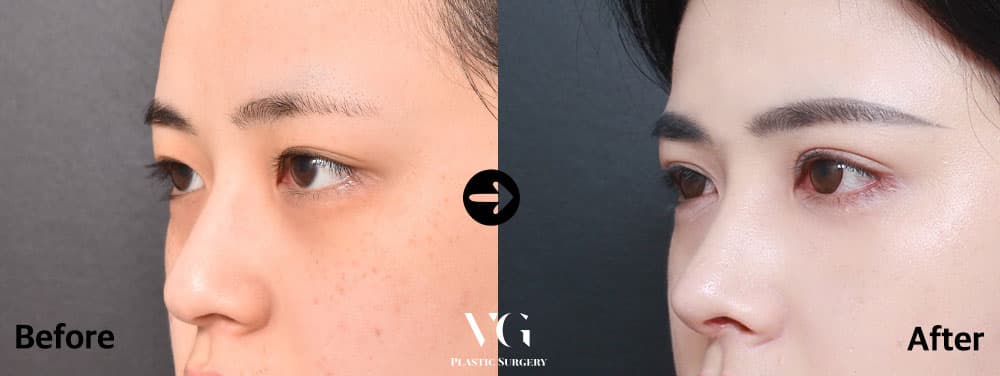
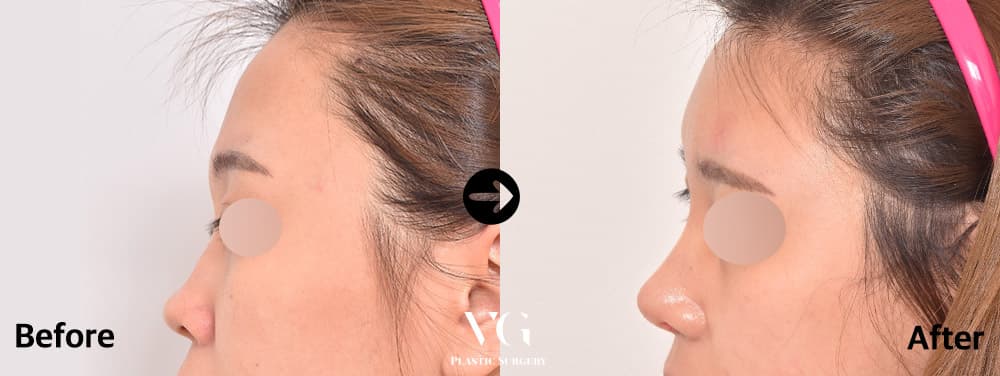
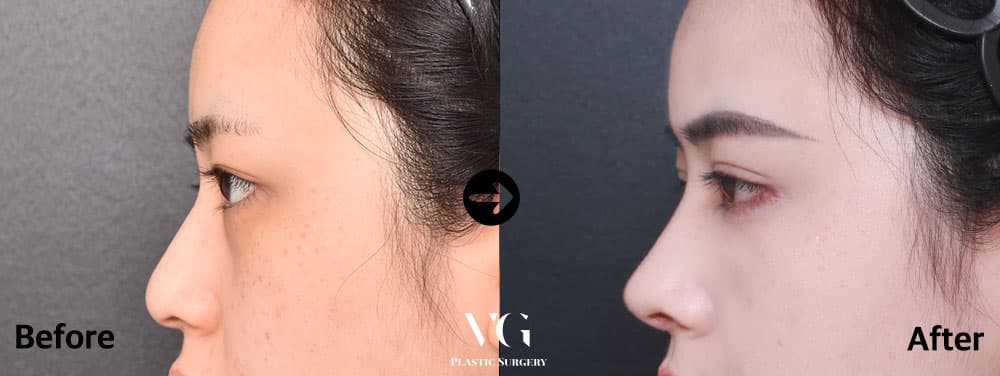
You can open this tip surgery case in full, or browse every nose before-and-after photo by concern.
Who closed rhinoplasty in Seoul suits — and who it doesn't
Before the route, I ask whether rhinoplasty is a reasonable answer at all. These are the noses where it usually is.
- A low or narrow bridge that leaves your face looking flat from the front
- A dorsal hump, a deviated nose or an upturned tip you want changed in profile
- One side blocks often, or you snore, so function needs assessing at the same time
- A previous implant is visible through the skin or has contracted, and you are considering revision
And these are the cases where I ask you to wait, or say no — whichever route you had in mind.
- An active sinus or nasal infection — we treat it first and reconsult afterwards
- A height that your own nasal structure cannot safely support
- You cannot stop smoking around the operation — rib cartilage and revision cases heal notably worse
- Adolescence, before facial growth is complete
There is one more group I want to name. If you are choosing a clinic only because it promises a closed approach, you are choosing by the door rather than by the work behind it. A tip that has to stay stable for years, a short nose that has to be lengthened, a septum that leans — those decide the plan, and the route follows.
What the route does not change
A wide bridge is bone, not implant, and narrowing it means cutting bone, with a longer swelling curve than most people expect. A short nose pulls back after it is lengthened, so a graft has to hold against that pull. Those facts hold whichever incision we use.
Recovery after closed rhinoplasty: what our data says
The operation takes 1–3 hours under sedation or general anesthesia. Most people go back to the hotel the same day; for a revision I advise one night in our inpatient room.
| Milestone | No bone work | With osteotomy | Revision |
|---|---|---|---|
| Swelling at its peak | Days 3–5 | Days 5–7 | Days 5–7 |
| Stitches out | Days 5–7 | Day 7 | Day 7 |
| Back to everyday activity | About 7 days | About 14 days | About 14 days |
| Most people no longer notice | 1–2 months | About 3 months | 3–6 months |
| Final result assessed | 6 months | 6–12 months | 12 months |
Read the table by column, not by incision. A nose that needs no bone work moves through recovery faster than one that does, and a revision takes longest to settle. You can wash your hair from the day after surgery, keeping water off the nose.
Send a front, a side and a from-below photo on WhatsApp — I'll tell you which column of that table your nose is likely to fall in.
Closed rhinoplasty Korea trip: days to stay, stitches and follow-up
Plan to stay at least 7 days, or 14 days when osteotomy is involved or it is a revision. That covers the swelling peak, stitch removal 5–7 days after surgery and a final check where I confirm you are safe to fly.
- Arrival: the in-person consultation, with an interpreter in the room
- Surgery day: the plan is drawn on your face and nothing starts until you agree to it
- The next morning: the first check
- Days 5–7: stitches out
- Before you fly: a final check, then three months of remote follow-up by photograph review and written replies
The day-by-day stay planner sets this against your own dates.
On rhinoplasty cost in Korea: I cannot give one honest number before seeing your nose, because the method, the graft and the time under anesthesia change from plan to plan. What does not change is that international patients pay the same surgical fee as Korean patients — our pricing policy explains what the written quote includes.
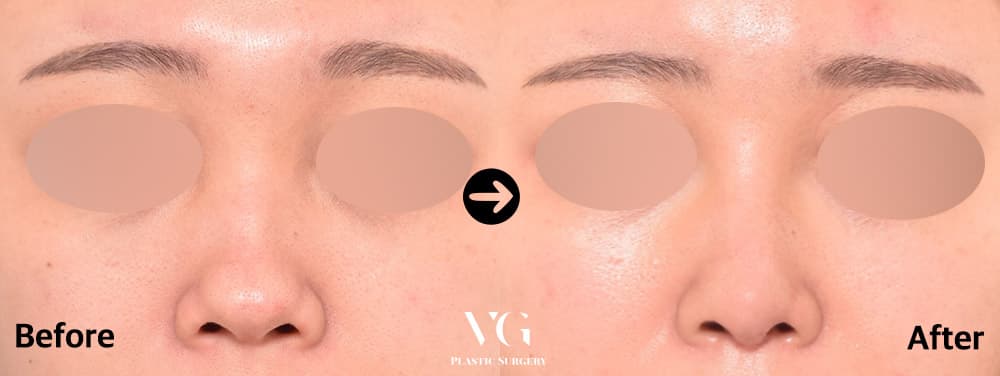
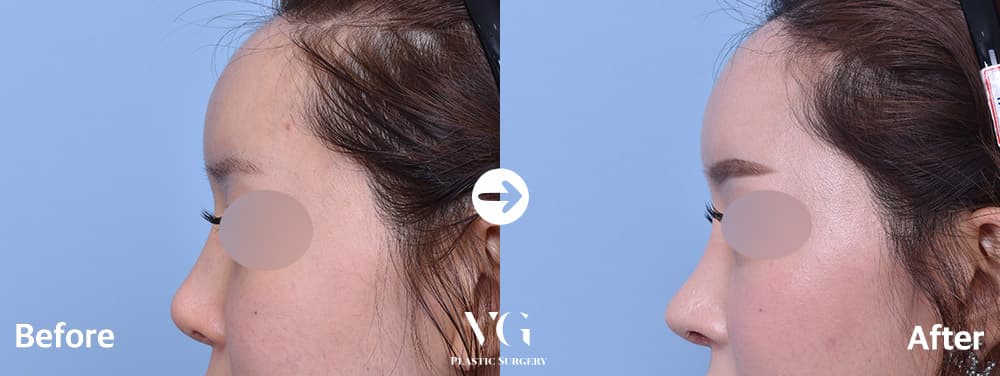
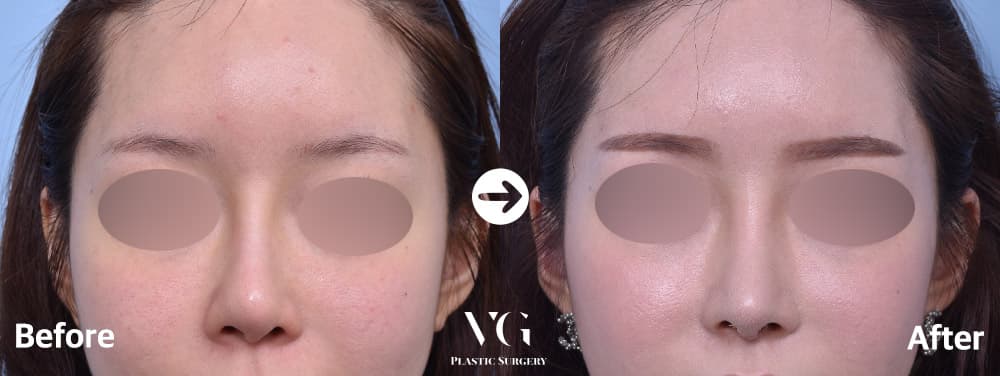
What I check before choosing a route
The method itself is one of four we plan from: your own cartilage with no implant, a custom implant designed from a 3D scan, rib cartilage for revision and contracted noses, or breathing surgery in the same plan. Each is set out on the rhinoplasty page. If your concern is a round tip or a short, upturned nose, the plans for those are in bulbous nose rhinoplasty and upturned nose surgery.
For the broader picture of what a Korean nose job changes and how the four methods compare, start with the Korean nose job guide. My own background is on my profile page.
Risks, limits and revision rhinoplasty
Every rhinoplasty carries risk, whichever route is used: bleeding, infection, swelling that lasts longer than expected, asymmetry while tissue settles, scarring, changes in breathing and anesthesia-related risks. Recovery and outcome differ from person to person.
Revision rhinoplasty is where the limits show most. A second operation starts from what the first one left behind — how much cartilage remains and how the tissue healed decide what is possible now. That is why I plan a revision from an examination, not from a preferred incision.
- Breathing inside the plan: our ENT specialist reads the septum and airway by 3D CT and endoscopy before surgery
- Anesthesia: board-certified anaesthesiology specialists are on site throughout the operation
- Material chosen for your tissue: rib cartilage for contracted or previously operated noses
- Honest limits: how much breathing will change is something we tell you after an examination, not in advance
Send photos from the front, side and below on WhatsApp, and I'll tell you which route and method I would plan and how many days you would need in Seoul.
Nose before & after — more cases
Real patients from our archive, all photographed 3 months after surgery. Tap a case to compare it full size.
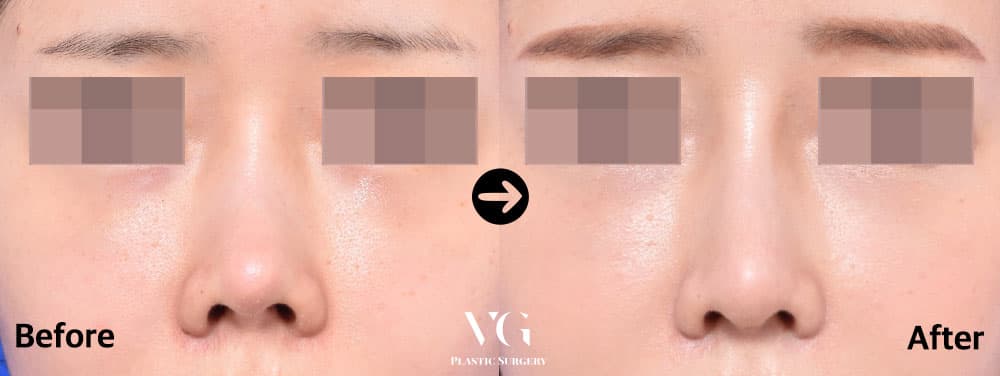
Revision Rhinoplasty3 months after surgery
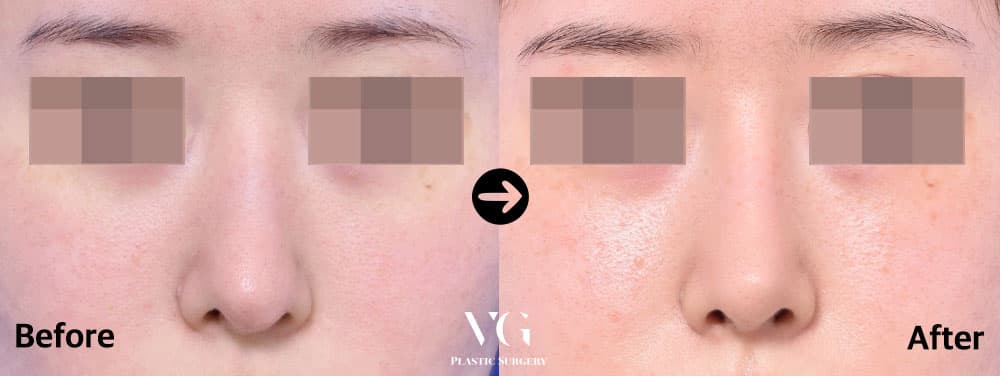
Revision Rhinoplasty3 months after surgery
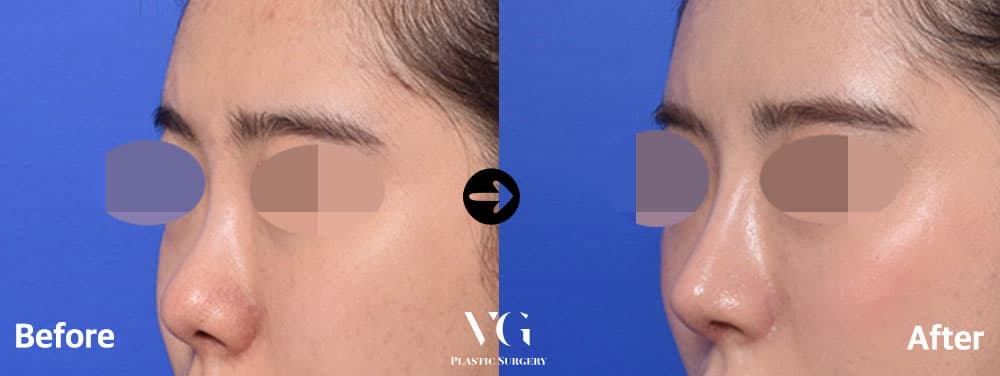
Rhinoplasty3 months after surgery
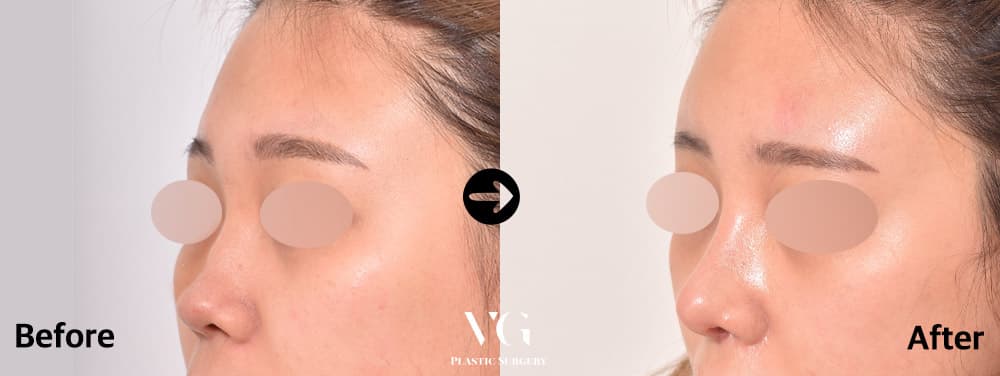
Rhinoplasty3 months after surgery
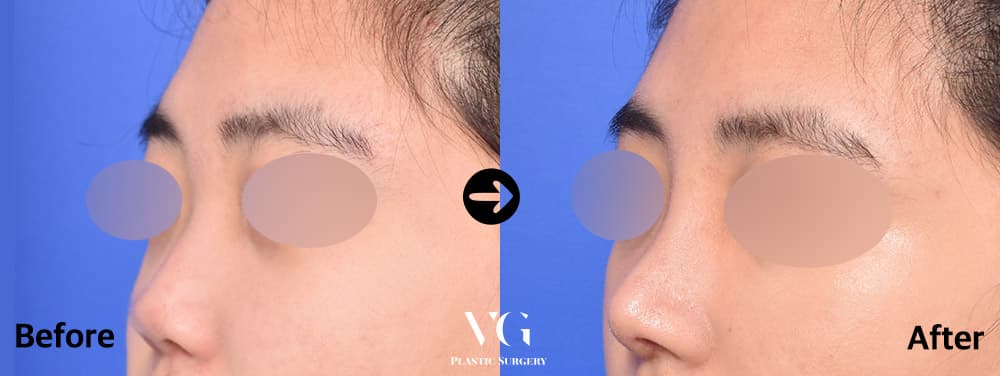
Rhinoplasty3 months after surgery
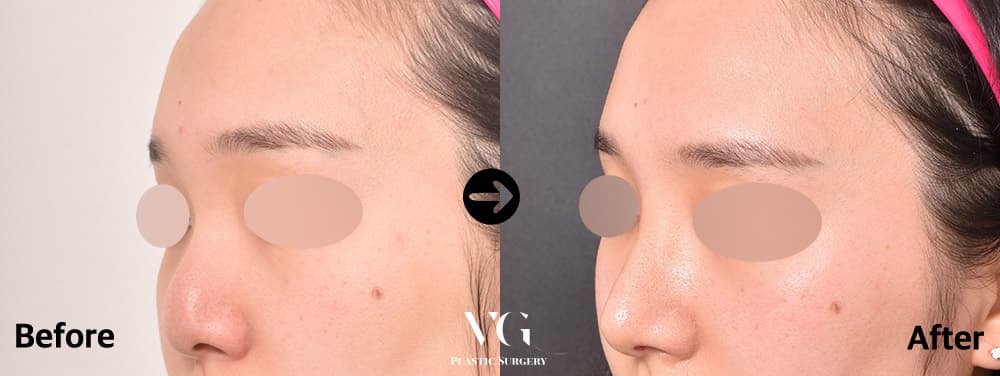
Rhinoplasty3 months after surgery
FAQ
Questions patients ask
What is the difference between closed and open rhinoplasty?
In a closed rhinoplasty the incisions are hidden inside the nose. In an open rhinoplasty one small incision is added across the columella, between the nostrils. In both, the skin is raised so the bone and cartilage underneath can be reshaped.
Does closed rhinoplasty in Korea mean a faster recovery?
Our recovery records are split by bone work and revision, not by incision route. Without bone work, swelling peaks at days 3–5 and everyday activity returns in about 7 days; with osteotomy or a revision it is about 14 days. We do not publish a separate closed-versus-open figure.
Can I ask for a closed approach?
You can tell us it matters to you — many people searching closed rhinoplasty Korea do — and we take that into the plan. The route is confirmed after examining your skin, cartilage, septum and any previous surgery. If your plan needs the columella incision, you hear that and the reason before you decide.
How long should I stay in Korea after rhinoplasty?
At least 7 days, or 14 days when osteotomy is involved or it is a revision. That covers the swelling peak, stitch removal 5–7 days after surgery and a final check before you fly.
What is the rhinoplasty cost in Korea?
We do not publish a price list, because the figure depends on the method, the graft material and whether it is a revision. International patients pay the same surgical fee as Korean patients. You receive an itemised written quote after consultation.
Is revision rhinoplasty done with a closed approach?
It depends on what the first operation left behind — how much cartilage remains and how the tissue healed. A revision is planned from an examination, and for revisions we advise one night in our inpatient room and a 14-day stay.
Sources
This article explains general medical information. Whether surgery suits you, and which method, is decided only after a consultation with the surgeon.
Written by
Yang Jong Phil
Director · Plastic Surgery
- Board-certified plastic surgeon, Korea University Hospital
- Korea University College of Medicine
- Plastic surgery fellowship, University of Chicago Medical Center
- International Confederation for Plastic, Reconstructive and Aesthetic Surgery (IPRAS)
- American Society of Plastic and Reconstructive Surgeons (ASPRS)
Next step
Send two photos. Get a surgeon’s answer.
Front and side, natural light, no filter. Dr. Yang Jong Phil reviews them and tells you which method fits and how many days to stay in Seoul.
International patients pay the same surgical fee as Korean patients. Pricing policy
Keep reading
Nose
Rhinoplasty Cost in South Korea in Rupees: What Changes It for a Flat Nose or Crooked Septum? Reviews, Methods and Recovery
There's no honest rupee figure for a nose nobody has examined. The cost follows the method, septum work, revision, anesthesia time and days in Seoul; send photos on WhatsApp to ask about yours.
Im Young Min ·
Nose
What Decides the Cost of Rhinoplasty in South Korea? Reviews, Methods and Recovery
There is no single price for a nose job in Korea: the method, the cartilage source, septum work, revision status and anesthesia set the figure for your nose.
Im Young Min ·
Nose
How Much Does a Nose Job Cost in Korea? Four Cost Drivers, Reviews, Methods and Recovery
A nose job in Korea is priced from four parts: the scope of the change, the building material, any breathing work and the anesthesia. Foreigners pay the same surgical fee as Korean patients, with a written estimate.
Im Young Min ·