Nose
Revision Rhinoplasty Korea: Starting From What the First Surgery Left
A rhinoplasty surgeon in Seoul explains how a second nose operation is planned: what the first surgery left behind, own versus donor rib cartilage, a new implant designed from a 3D scan, and why the trip is 14 days.
In this article
- 01Why a second nose operation is a different operation
- 02Revision rhinoplasty Korea: the support materials compared
- 03Breathing is checked in the same plan
- 04Revision rhinoplasty Korea timeline: surgery day to 12 months
- 05Planning revision surgery in Korea: stay, follow-up, fee
- 06What I check before I plan a revision
- 07Risks of revision rhinoplasty, and how we reduce them
The short answer
Revision rhinoplasty in Korea starts from the nose you have now: the implant or grafts already inside it, the cartilage that is left, and how the tissue healed. At VG the new plan is usually built on your own or donor rib cartilage, or on a new implant designed from a 3D scan, with an ENT specialist checking breathing inside the same plan. Plan on at least 14 days in Seoul; stitches come out around day 7.
- A second operation is planned from what the first one left behind — remaining cartilage, the old implant and how the tissue healed decide what is possible.
- Rib cartilage is the usual support for contracted and previously operated noses: your own (a small chest incision) or donor (no chest incision, resorption varies).
- Where an implant is still the right answer, the old one is reviewed in 3D, removed, and a new one is designed for the nose as it is now.
- Revision means at least 14 days in Korea; one night in the clinic is advised, stitches come out around day 7, and the final result is judged at about 12 months.
- International patients pay the same surgical fee as Korean patients, set out in a written quote before you decide.
Hello, I'm Hong Dae Won, a board-certified plastic surgeon on the nose surgery team at VG Plastic Surgery in Seoul, trained at Asan Medical Center and a full member of the Rhinoplasty Research Group of the Korean Society of Plastic and Reconstructive Surgeons. Many of the messages I read from abroad are not about a first nose job but a second one: an implant that shows through the skin, a tip pulled upward, a bridge that leans. People search "revision rhinoplasty Korea" because they want to know whether that can still be put right, and how. This article is the answer I give in consultation.
Profile
Hong Dae Won
Director · Board-certified in Plastic Surgery
If you have never had nose surgery, my overview of the Korean nose job is the better starting point. The methods our team uses are compared side by side on our rhinoplasty page, from no-implant noses to rib cartilage.
Why a second nose operation is a different operation
A first rhinoplasty starts from untouched tissue. A second one starts from what the first left behind. How much cartilage remains in the septum and the ears, how thick the scar under the skin has become, and where the old implant sits are what decide what is possible now.
That is why I do not promise a shape from a photo alone. Photos tell me what bothers you. The examination tells me what your nose can carry.
Who a revision suits
- A previous implant is visible through the skin, or has contracted and pulled the tip upward
- The bridge leans, or the line from bridge to tip is uneven after the first surgery
- One side blocks often after the first operation, so breathing needs assessing as well as shape
- You can stay in Korea for at least 14 days
There are also times I advise waiting or not going ahead. An active sinus or nasal infection is treated first. A height your own nasal structure cannot safely support is not one I plan. If you cannot stop smoking around the operation, rib cartilage and revision cases heal notably worse.
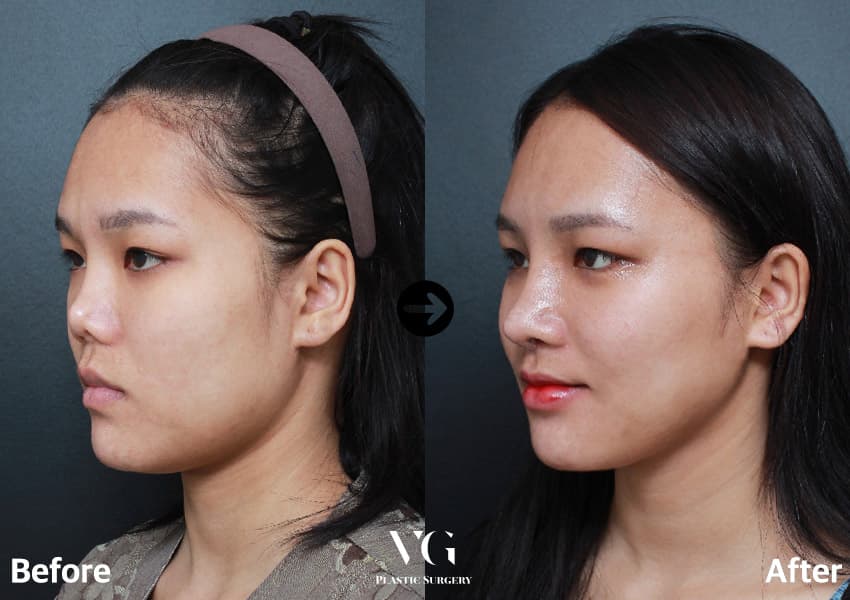
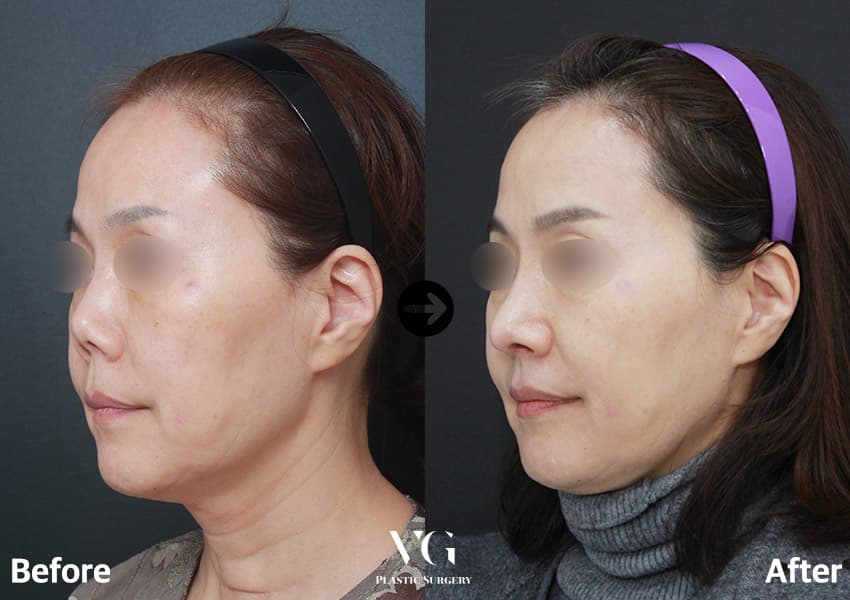
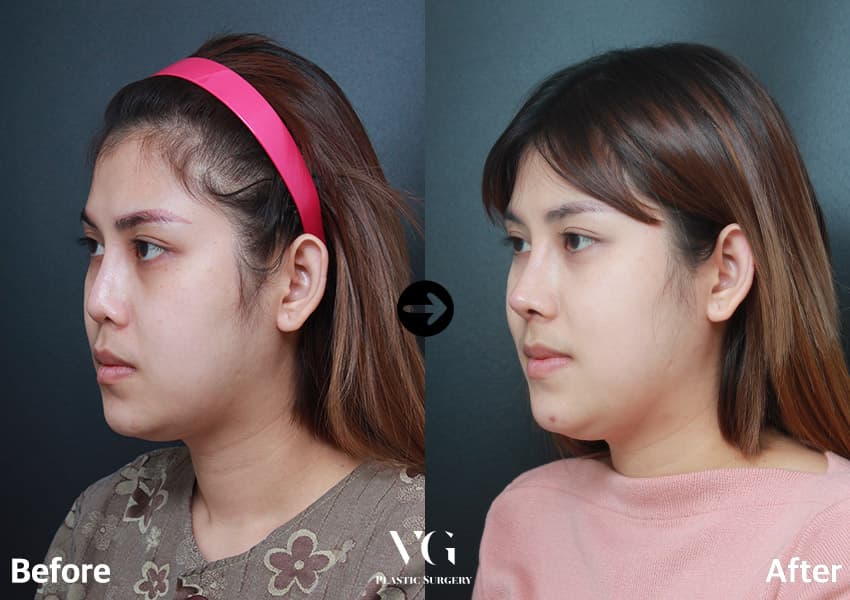
These three are our nose surgery team's revision cases with the patient's own rib cartilage, each photographed 3 months after surgery. The first had a contracted nose that had shortened after an earlier operation; the bridge was rebuilt with rib cartilage and osteotomy, and the nose now reads longer and straighter. You can see every angle of it on the contracted nose revision case page.
Revision rhinoplasty Korea: the support materials compared
Most of the decision comes down to what will hold the new shape. In a previously operated nose, the septum and the ears often have little left to give, so rib cartilage comes up more often than in a first surgery.
| Material | What it is | What to weigh |
|---|---|---|
| Own rib cartilage | Your rib cartilage, carved to fit — used for contracted and previously operated noses | Rejection is not a concern, but it means a small incision on the chest |
| Donor rib cartilage | Rib cartilage from a donor, so nothing is harvested from you | No chest incision; how much of it resorbs over time varies from person to person |
| Custom implant (Fit-Me) | The old implant is reviewed in 3D, removed, and a new one is designed from a scan of your nose | Suits noses where an implant is still appropriate; not every nose needs one |
| Own ear cartilage (Mu-Mu) | Ear cartilage minced under 1 mm and placed without an implant | Depends on how much ear cartilage the first surgery left |
When an implant is replaced
If an implant is still the right support, the one in place is reviewed first: its shape and position are checked in 3D. With it removed, the remaining structure is read again, and the new implant is designed for that nose. Whether a revision is possible, and how it would be approached, is decided after the examination.
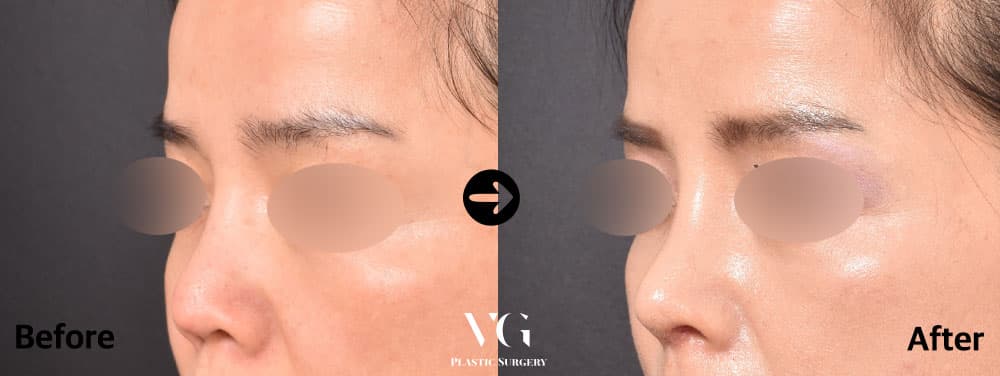
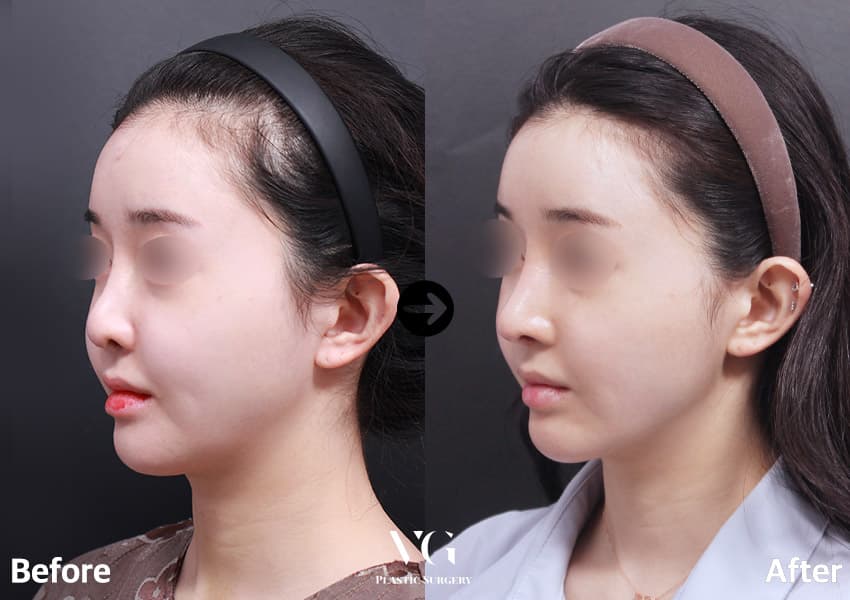
Both are from our nose surgery team, photographed 3 months after surgery, and both used donor rib cartilage, so neither patient has a chest incision. In the first, the donor rib cartilage revision case, the bump and the round tip from the earlier result were smoothed into one line.
Breathing is checked in the same plan
A nose that leans after surgery usually sits on a septum that leans. Straightening only the outside tends not to hold, so the inside is looked at first.
We have a 3D CT unit in the clinic and a board-certified ENT specialist on staff. The ENT specialist examines the inside of the nose with an endoscope, and the septum, the turbinates and the nasal valve go into the same surgical plan as the shape. How much breathing will change is something we can tell you after that examination, not before it.
Send a front photo, a side photo and any records from your first surgery, and I will tell you which support material your nose is likely to need.
Revision rhinoplasty Korea timeline: surgery day to 12 months
Revision rhinoplasty takes 1–3 hours under sedation or general anesthesia. A first nose job usually does not need admission; for a revision I advise one night in our inpatient room so we can watch the first evening. Hair can be washed from the next day, keeping the nose dry.
| When | What to expect |
|---|---|
| Day 0–1 | Surgery, then one night in the clinic is advised |
| Day 5–7 | Swelling is at its peak |
| Day 7 | Stitches come out |
| Day 14 | Most people are back to daily life |
| 3–6 months | The nose starts to look natural |
| 12 months | The final result is assessed |
Recovery care runs in stages — Omega Light, hyperbaric oxygen therapy and deswelling care are the names of what we use. Which of them you receive, and when, is decided in consultation. If someone travels with you, they can be given access to the operating-room CCTV.
Planning revision surgery in Korea: stay, follow-up, fee
For a first rhinoplasty without osteotomy, 7 days in Seoul is enough. For revision surgery in Korea, and for any nose operation that involves osteotomy, plan on at least 14 days. The exact dates are set with you in consultation, because they move with how your recovery goes.
After you fly home, progress is reviewed by photograph with written replies, with remote follow-up for three months. Interpretation is free during consultation and continues through the design confirmation on the morning of surgery and every follow-up visit. Our guide for international patients covers the rest of the trip.
What sets the rhinoplasty revision cost in Korea
We do not publish a price list. International patients pay the same surgical fee as Korean patients, and everything appears on one written quote before you decide. For a revision, two things can add to it: previous scar tissue changes the operating time and sometimes the technique, and some plans need cartilage beyond what the base plan assumes. Our pricing policy page lists what a quote includes.
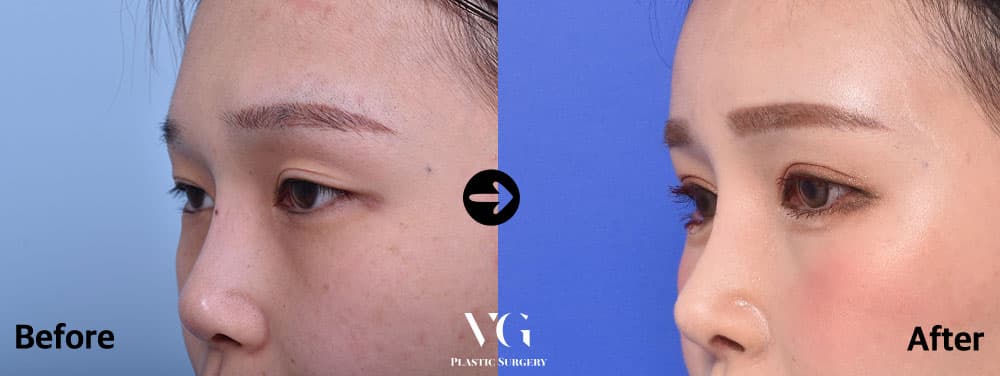
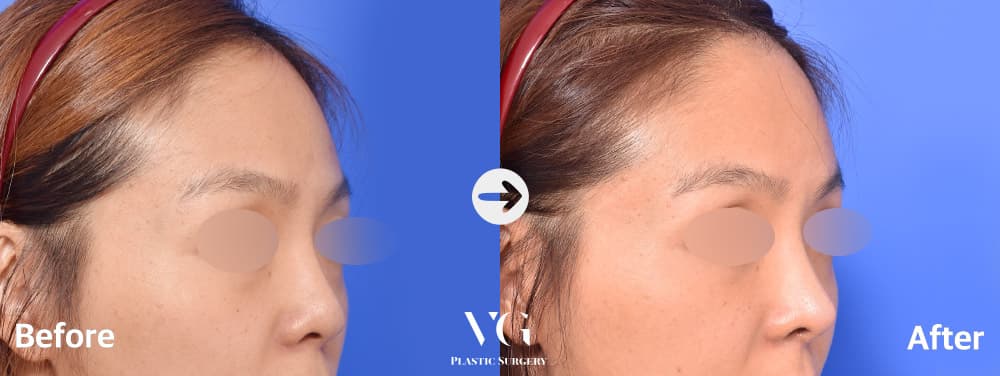
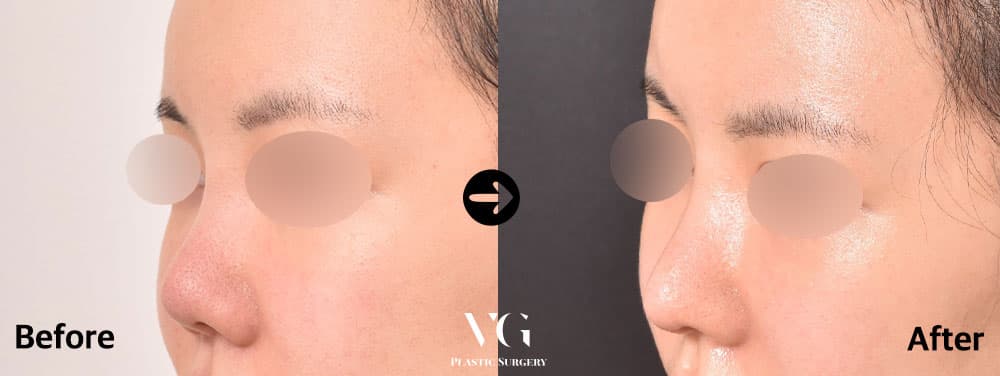
These two show how different a revision can look. In the first, the change is easy to see; in the second, our team kept the change small, because a quieter correction was what that nose needed. Both were photographed 3 months after surgery. More revision results are in our before and after gallery, filtered by concern.
What I check before I plan a revision
- What is inside. The type and position of any implant or graft, read on 3D CT.
- What is left. Whether the septum and ears can still supply cartilage, or whether rib cartilage is needed.
- How it healed. Skin thickness and scar tissue, which limit how much the shape can change.
- How it breathes. The septum and airway, examined by our ENT specialist.
If your concern is a short or upturned tip after the first surgery, lengthening is its own problem, and I explain it in upturned nose surgery in Korea. To read results photo by photo, angle and timing matter; my colleague's guide to reading Korean nose job before and after photos covers that. If the nostrils still look wide after the first surgery, my colleague covers that in alarplasty in Korea.
Risks of revision rhinoplasty, and how we reduce them
Every operation carries possible side effects, including bleeding, infection, swelling, asymmetry, scarring and anesthesia-related risks, and a second operation works in tissue that has already healed once. Scar tissue makes the operation longer and swelling slower to settle, which is why the final result is judged at about 12 months rather than 3.
We reduce those risks by planning from imaging rather than from the outside alone, by choosing support the nose can actually carry, and by keeping you close for 14 days. Smoking is the one factor you control: rib cartilage and revision cases heal notably worse in smokers.
Here, every revision rhinoplasty Korea case is reviewed by our plastic surgeons and our ENT specialist together, and which surgeon operates is settled at consultation. My credentials are on my surgeon profile, and the methods are laid out on our rhinoplasty centre page, where each approach is compared.
Send your photos and first-surgery records on WhatsApp, and you will hear whether a revision is advisable for your nose before you book a flight.
Nose before & after — more cases
Real patients from our archive, all photographed 3 months after surgery. Tap a case to compare it full size.
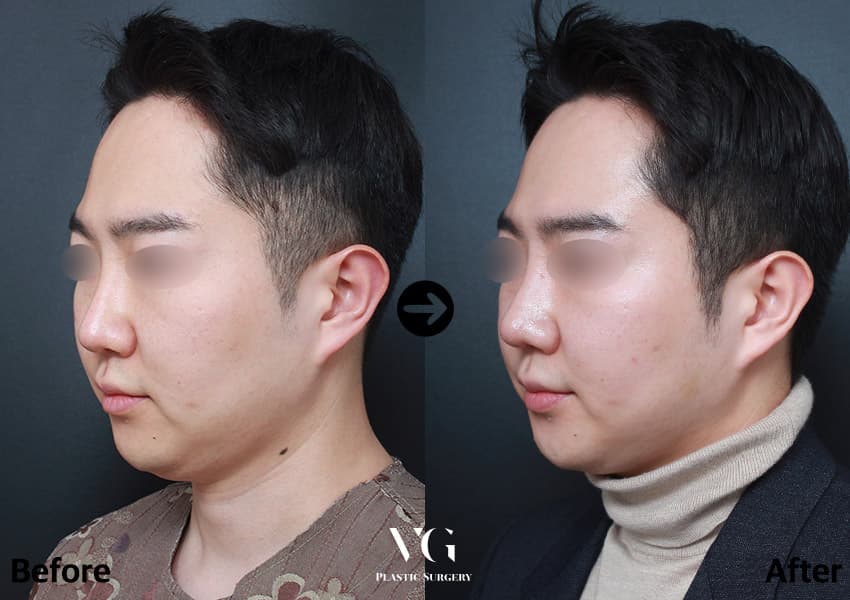
Autologous Rib Cartilage3 months after surgery
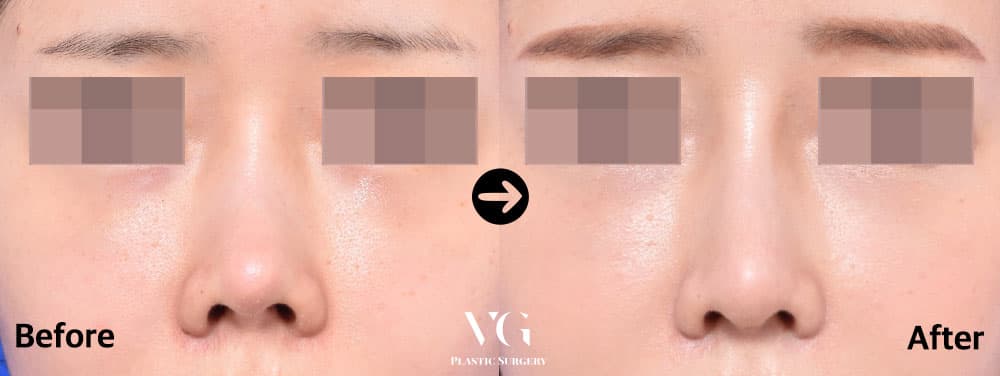
Revision Rhinoplasty3 months after surgery
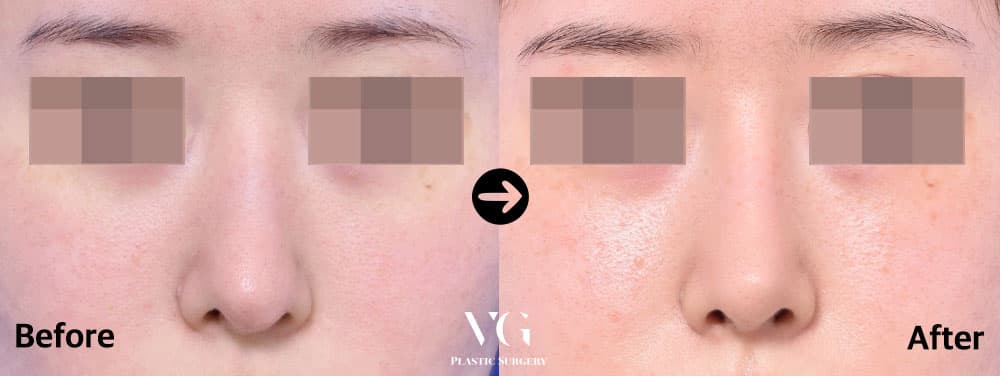
Revision Rhinoplasty3 months after surgery
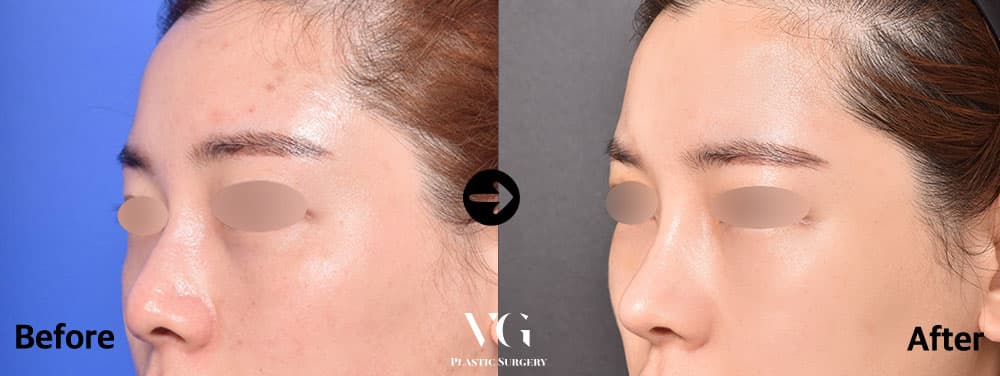
Donor Rib Cartilage3 months after surgery
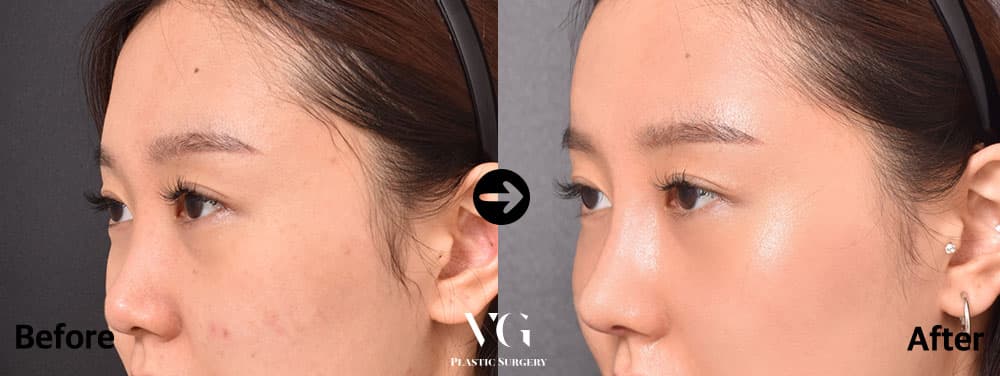
Donor Rib Cartilage3 months after surgery
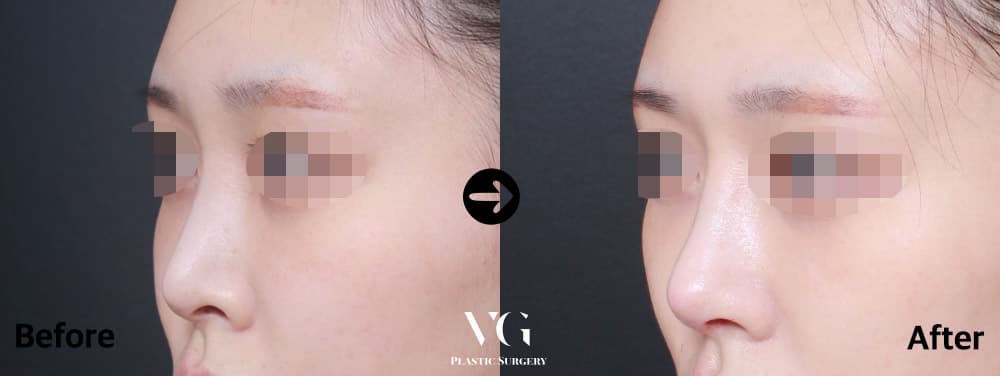
Revision Rhinoplasty3 months after surgery
FAQ
Questions patients ask
Can every nose have a revision rhinoplasty in Korea?
Not every nose, and not at every moment. An active infection is treated first, and a height your own structure cannot support is not one we plan. Whether a revision is possible depends on the previous surgery and your current condition, and is decided after an examination.
Own rib cartilage or donor rib cartilage — which is used?
Own rib cartilage means no rejection concern but a small incision on the chest. Donor rib cartilage avoids the chest incision, but how much of it resorbs over time varies from person to person. We decide after seeing how much cartilage your nose has left.
How long do I need to stay in Korea for a revision?
Plan a revision rhinoplasty Korea trip around at least 14 days. Stitches come out around day 7, swelling peaks at days 5–7, and most people are back to daily life by day 14. The exact dates are set with you in consultation.
Will my old implant be removed?
If it is causing the problem, usually yes. Its shape and position are reviewed in 3D first, and if a new implant is still the right support, it is designed for the nose as it is after removal. In other cases rib cartilage takes its place.
How much does a revision rhinoplasty in Korea cost?
We do not publish a price list. International patients pay the same surgical fee as Korean patients, set out in a written quote. Scar tissue from the first surgery and extra cartilage can add to a revision quote, and both appear on it before you decide.
Can breathing problems be fixed at the same time?
Yes, they are assessed in the same plan. Our board-certified ENT specialist examines the septum and airway with 3D CT and an endoscope. How much breathing changes is something we can tell you after that examination.
This article explains general medical information. Whether surgery suits you, and which method, is decided only after a consultation with the surgeon.
Written by
Hong Dae Won
Director · Plastic Surgery
- Board-certified plastic surgeon, Asan Medical Center, Seoul
- Plastic surgery fellowship, Florence University Hospital, Italy
- International Confederation for Plastic, Reconstructive and Aesthetic Surgery (IPRAS)
- American Society of Plastic and Reconstructive Surgeons (ASPRS)
- American Society for Aesthetic Plastic Surgery (ASAPS)
Next step
Send two photos. Get a surgeon’s answer.
Front and side, natural light, no filter. Dr. Hong Dae Won reviews them and tells you which method fits and how many days to stay in Seoul.
International patients pay the same surgical fee as Korean patients. Pricing policy
Keep reading
Nose
Rhinoplasty Cost in South Korea in Rupees: What Changes It for a Flat Nose or Crooked Septum? Reviews, Methods and Recovery
There's no honest rupee figure for a nose nobody has examined. The cost follows the method, septum work, revision, anesthesia time and days in Seoul; send photos on WhatsApp to ask about yours.
Im Young Min ·
Nose
What Decides the Cost of Rhinoplasty in South Korea? Reviews, Methods and Recovery
There is no single price for a nose job in Korea: the method, the cartilage source, septum work, revision status and anesthesia set the figure for your nose.
Im Young Min ·
Nose
How Much Does a Nose Job Cost in Korea? Four Cost Drivers, Reviews, Methods and Recovery
A nose job in Korea is priced from four parts: the scope of the change, the building material, any breathing work and the anesthesia. Foreigners pay the same surgical fee as Korean patients, with a written estimate.
Im Young Min ·