Nose
Rhinoplasty Side Effects: Most Fade, and When I'd Say No
Most side effects of rhinoplasty, such as bruising, a blocked nose and bridge swelling, ease within a few weeks. Tip swelling can take up to a year, and lasting problems like blocked breathing or implant trouble depend mostly on your skin, cartilage and any earlier surgery.
Send your concern and a front and side photo. Replies in English, no obligation.

· 7 min read · Last updated
Edited by Im Young Min
In this article
The short answer
Worried that something from a nose operation in Seoul will still be wrong after you fly home, far from the surgeon who did it? Most rhinoplasty side effects are short-lived: bruising, a blocked nose and swelling across the bridge ease over the first couple of weeks, while swelling at the tip can take up to a year to settle completely.
- Bruising, a blocked nose and bridge swelling usually ease within the first few weeks after rhinoplasty.
- Tip swelling settles slowly, and thick skin can take up to a year to show the final shape.
- Lasting problems such as harder breathing, numbness or implant trouble are less common and depend mostly on your anatomy and the plan.
- Waiting is the right call if your nose is still growing, you smoke, or your last nose surgery was under a year ago.
- Before flying home, keep your operation record and line up a local ENT or plastic surgeon who will see you.
The ones that can last, such as breathing that stays harder, numbness at the tip or a shape that needs revising, are less common, and your skin, cartilage and any earlier surgery shift their odds more than anything else.
Profile
Im Young Min
Chief Director · Board-certified in Plastic Surgery
Hello, I'm Dr. Im Young Min, Chief Director and board-certified plastic surgeon at VG Plastic Surgery in Seoul. I did my internship and residency at Seoul St. Mary's Hospital, and I operate across eyes, nose, breast, body, anti-aging and facial contouring.
Two things about how our clinic is staffed bear directly on side effects. An ENT specialist works in our rhinoplasty center, so a deviated septum or a narrow airway is assessed in the same surgical plan as the shape. And three board-certified anesthesiologists work here full time; one of them, who does not operate, watches your blood pressure, pulse and breathing from the first injection until you are awake again.
If talking through risks in a second language worries you, a medical interpreter for your language is provided at no extra charge.
If you've been told at home that your nose is a difficult case, or you've had surgery on it before, send a front photo and a side photo taken in daylight on WhatsApp, with one line on what you were told. Ask which of the lasting side effects below matters most for a nose like yours, so the answer fits your face.
Send a front and side photo of your nose on WhatsApp
How long do the usual side effects last?
In short, these are the reactions almost everyone has after rhinoplasty. They look alarming in the mirror, but for most people they are part of healing rather than a complication.
| Side effect | Usual course |
|---|---|
| Bruising under the eyes | Fades over roughly one to two weeks |
| Swelling of the bridge and cheeks | Most visible swelling goes in the first few weeks |
| Blocked nose and crusting | Eases over the first one to two weeks, longer if the septum was straightened |
| Light oozing or small nosebleeds | Common in the first days |
| Numbness at the tip and upper lip | Usually returns gradually over weeks to months |
| Stiff, swollen tip | Softens over months and can take up to a year to refine |
The last row is where most of the worry comes from. Think of the skin over your tip as a thick kitchen sponge laid over a new frame. Surgery disturbs the small channels that drain fluid from it, so it holds water and sits puffed above the cartilage underneath, and it only shrinks down onto the new shape as those channels recover.
The thicker the sponge, the slower that happens: with thick, oily tip skin, the tip can still look fuller than its final shape at six months and keep refining toward the one-year mark.
So a tip that looks round at week three is not yet a result. Judging it too early is one of the commonest reasons people start asking about a second operation long before any surgeon would operate again.
Side effects that can last: breathing, numbness, implant problems
Long-term rhinoplasty side effects are much less common than the short ones, but they are the ones worth asking about before you book. Among the risks of rhinoplasty, the American Society of Plastic Surgeons lists difficulty breathing through the nose, changes in skin sensation, poor healing or scarring, skin discoloration, an unsatisfactory appearance and the possibility of revision surgery, with a hole in the septum listed as rare. Here is what each means over the years.
Breathing that stays harder than before
Taking down a hump or narrowing the middle of the nose can narrow the internal valve, the tightest point of your airway. If a deviated septum or swollen turbinates were already partly blocking one side, a nose that looks smaller can breathe worse. This is the lasting side effect I'd most like you to raise in advance, because it is largely decided in the plan: breathing has to be checked before the shape is drawn, which is why an ENT specialist sits in our rhinoplasty center.
Numbness that doesn't fully return
Most people regain normal feeling in the tip within months. In a minority, a small patch stays duller than before. It rarely affects daily life, but you should know it can happen.
Problems with an implant
When a synthetic implant is used to build the bridge, its long-term risks differ from those of your own cartilage. It can shift to one side, show through thin skin, become infected, sometimes months or years later, or press outward through the skin. Scar tissue can also tighten around it, pulling the tip upward and making the nose look shorter. Fixing that later is harder work, as I explain in why tip revision is harder than the first operation.
Your own cartilage has trade-offs too
This is where the choice of method meets side effects. Septal cartilage comes in a limited amount, ear cartilage is soft and curved, and rib cartilage can warp over time and leaves a small scar on the chest. Every source has its own side effects, and the right one depends on how much support and height your nose actually needs.
Shape changes that need revision
Asymmetry, a pinched or drooping tip, or a bridge that sits too high are what people usually mean by a “nose job gone wrong.” Some show early; others appear only after the swelling clears. A dulled sense of smell is common while the lining is swollen and usually comes back as it settles.
How often each of these happens varies with the nose and the operation, and no single rate applies to every patient. If any of them does appear, it is usually treatable, though a second operation is more involved than the first.
Why do some noses run into more problems than others?
Rhinoplasty side effects follow the tissue, and a few situations raise the odds:
- Thick skin hides fine detail and holds swelling longer, and forcing a tip harder against it raises the chance of a round result.
- Thin skin shows every edge, so an implant or graft can become visible years later as skin thins with age.
- Wanting more height than the skin can cover stretches the skin over the bridge, and that tension sits behind many implant problems. Where your bridge should start and how high it can go is a matter of measurement, which I go through in where the bridge starts and what raises it.
- Previous surgery leaves scar tissue and less cartilage to work with, so each further operation carries more risk than the one before.
- A man's nose, with heavier skin and a straighter profile expected, sets tighter limits, as covered in why a man's nose sets tighter limits.
If one of these describes your nose, a photo from below with the nostrils visible shows tip support and skin thickness better than a front view. Send it on WhatsApp together with any notes or records from earlier nose surgery, and ask whether your skin can carry the height you have in mind.
Send a front and side photo of your nose on WhatsApp
When I'd tell you not to have rhinoplasty, or to wait
I'll tell you whether surgery suits you, and when it doesn't, I'll say so plainly. In general medicine, these are the usual reasons to wait or not to operate:
- Your nose is still growing. Surgeons generally wait until facial growth has finished, usually in the mid to late teens.
- You smoke and can't stop for several weeks around surgery. Smoking cuts blood flow to the skin over the tip and slows healing.
- You take blood thinners or have a bleeding problem that hasn't been planned around with your doctor at home.
- You're pregnant or breastfeeding.
- You have an active sinus infection or a bad allergy flare. Swollen lining makes the airway harder to judge and raises infection risk.
- Your last nose surgery was less than about a year ago. The tissue hasn't settled, so neither the problem nor the scar can be read yet.
- The goal keeps moving. If a small difference has grown large in your mind, or the change is for someone else, surgery tends to add worry rather than remove it.
If you're a man wondering whether a higher bridge will look out of place on your face, who Asian male rhinoplasty suits takes up that question in detail.
If a problem shows up after you fly home
Most questions in the weeks after travel are about swelling that is normal. A few signs need a doctor promptly, wherever you are: fever with redness or pain that grows after the first days had been improving; discharge or a bad smell from inside the nose; bleeding that doesn't stop after steady pressure with your head tilted forward; breathing that suddenly gets worse; or skin over an implant that turns red, thin or shiny.
Before you leave Seoul, keep a copy of your operation record, the materials used and your medication list, and line up an ENT or plastic surgeon at home who agrees to see you if needed. Photos of your nose taken every few weeks, in the same light, make any later conversation much easier. You can see how our rhinoplasty and functional nose options are laid out on our English homepage.
Where I stand on the risks
I see plastic surgery as a form of self-care, and its point is that you live a little happier with your own face. That is why I give the side-effect conversation as much time as the conversation about shape, and why I'd rather tell you to wait than add a problem you didn't have. There is no need to decide on the first message, or on this trip.
What decides your own risk is how thick the skin over your tip is, how much support your septum has left and what any earlier surgery used. To start, send one daylight side photo, your travel dates and, if you've had nose surgery before, the operation record on WhatsApp, and ask how contact and follow-up work once you're back home.
— Dr. Im Young Min, Chief Director
Related pages:
Nose before & after — more cases
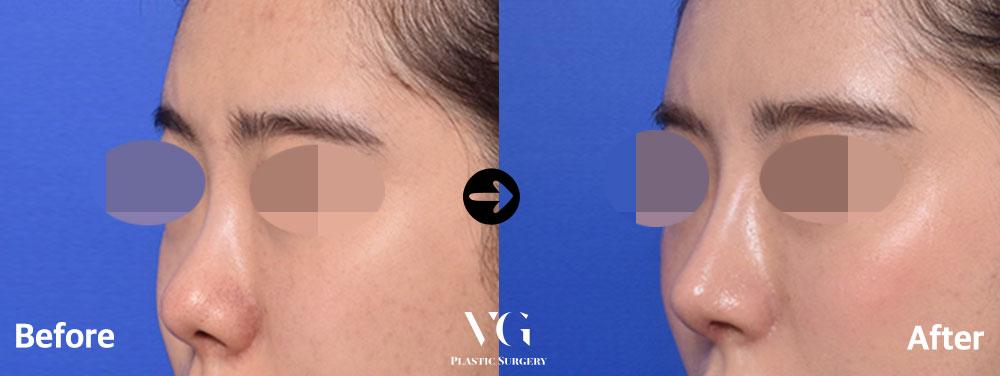
Real patients from our archive, all photographed 3 months after surgery. Tap a case to compare it full size.
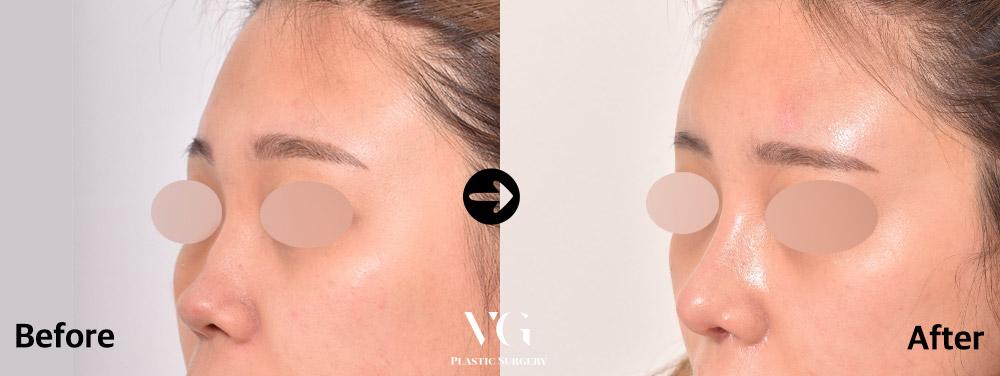
Rhinoplasty3 months after surgery
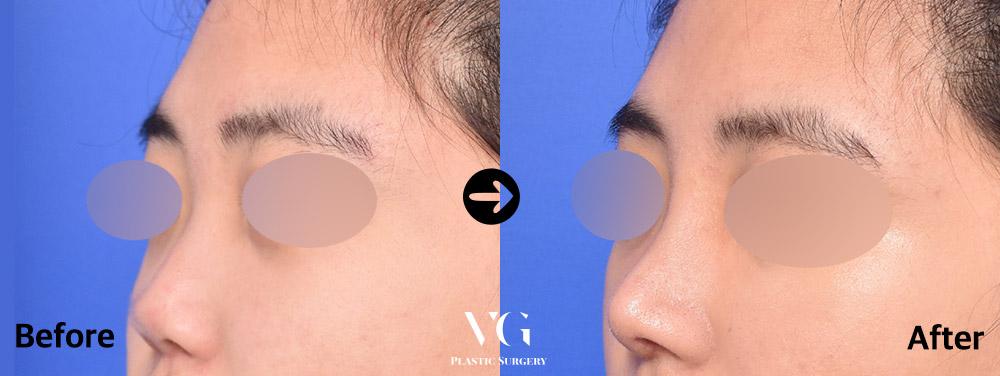
Rhinoplasty3 months after surgery
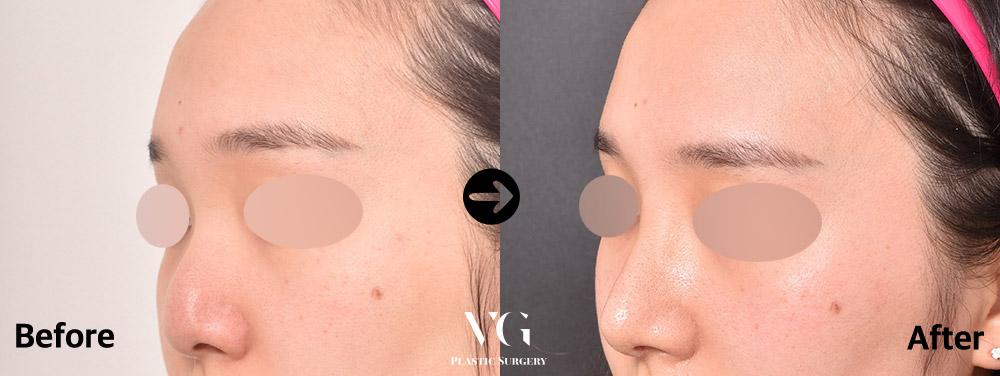
Rhinoplasty3 months after surgery
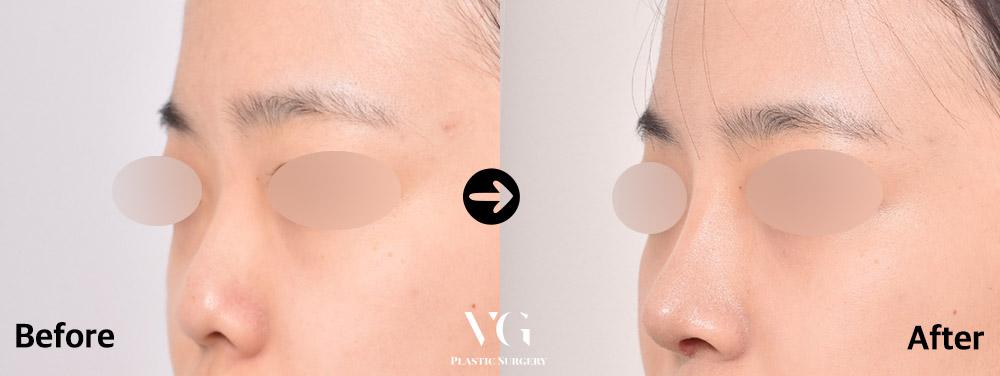
Rhinoplasty3 months after surgery
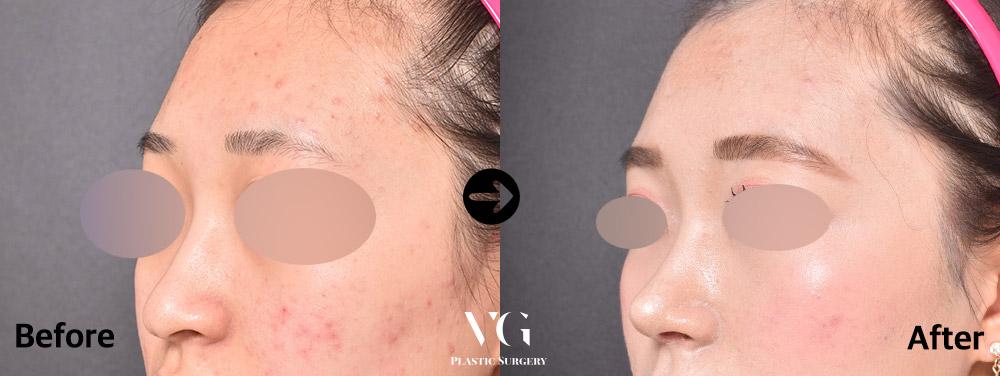
Rhinoplasty3 months after surgery
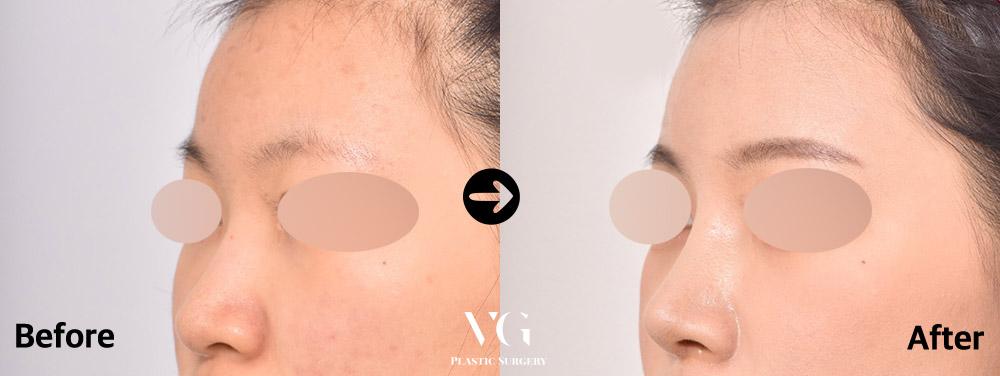
Rhinoplasty3 months after surgery
FAQ
Questions patients ask
Can rhinoplasty side effects show up years later?
A few can. An implant can become infected or shift months or years after surgery, scar tissue around it can slowly shorten the nose, and thin skin over a graft thins further with age so edges become visible. Swelling-related changes don't appear late. A new red, thin or shiny patch over the bridge years later is a reason to see a plastic surgeon soon.
Will I lose my sense of smell after rhinoplasty?
Smell is often dulled for a few weeks because the lining is swollen and less air reaches the top of the nose. It usually returns as the swelling settles; a lasting change is uncommon. If your work depends on smell, mention it before surgery so it is part of the plan.
Is it normal for one side of my nose to look more swollen?
Yes, in the first weeks. Sleeping on one side and where the cartilage was worked both make swelling uneven. It evens out gradually, so symmetry is best judged after several months rather than in the first mirror check.
When can I wear glasses again after rhinoplasty?
Heavy frames press on a healing bridge, especially if bone was moved. Many surgeons ask you not to rest glasses on the nose for about four to six weeks, using contact lenses or lifting the frames off the bridge in the meantime. Ask your surgeon for your own timing before you fly.
Does a second rhinoplasty carry more risk than the first?
Generally yes. Scar tissue, a thinner blood supply to the skin and less cartilage left to work with all raise the risk, and rib cartilage is often needed for support. Most surgeons wait around a year after the first operation before planning another.
Sources
This article explains general medical information. Whether surgery suits you, and which method, is decided only after a consultation with the surgeon.
Written by
Im Young Min
Chief Director · Plastic Surgery
- Ph.D. in Medicine
- Internship and residency, Seoul St. Mary's Hospital
- Board-certified plastic surgeon, Seoul St. Mary's Hospital
- Adjunct professor of plastic surgery, Seoul St. Mary's Hospital
- Former director, Topface Plastic Surgery
Next step
Send two photos. Get a surgeon’s answer.
Front and side, natural light, no filter. Dr. Im Young Min reviews them and tells you which method fits and how many days to stay in Seoul.
International patients pay the same surgical fee as Korean patients. Pricing policy
Keep reading
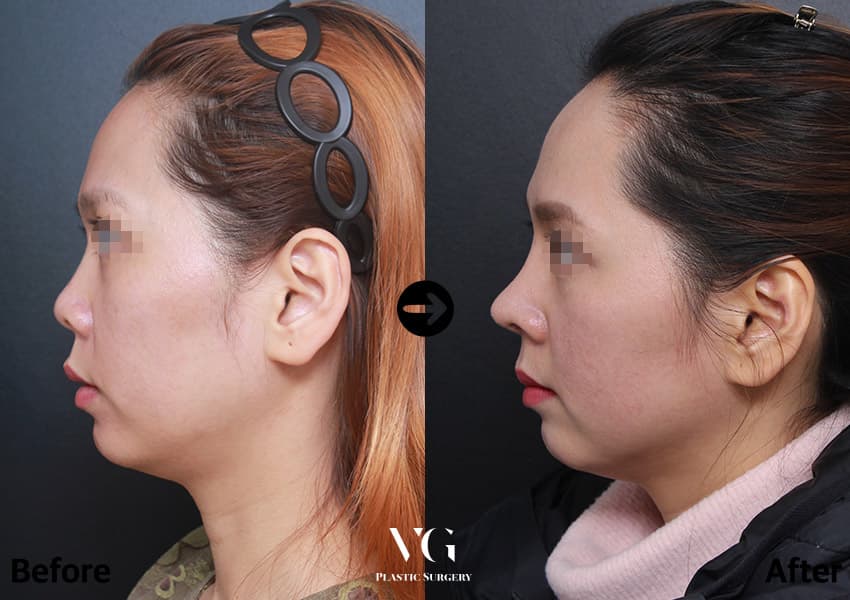
Nose
How Long After Rhinoplasty Can I Workout? Mostly Back Home
Gentle walking is fine within the first days after rhinoplasty, swimming usually waits about three weeks, and strenuous exercise and contact sports wait four to six weeks. Most of that wait happens after you fly home from Seoul.
Im Young Min ·
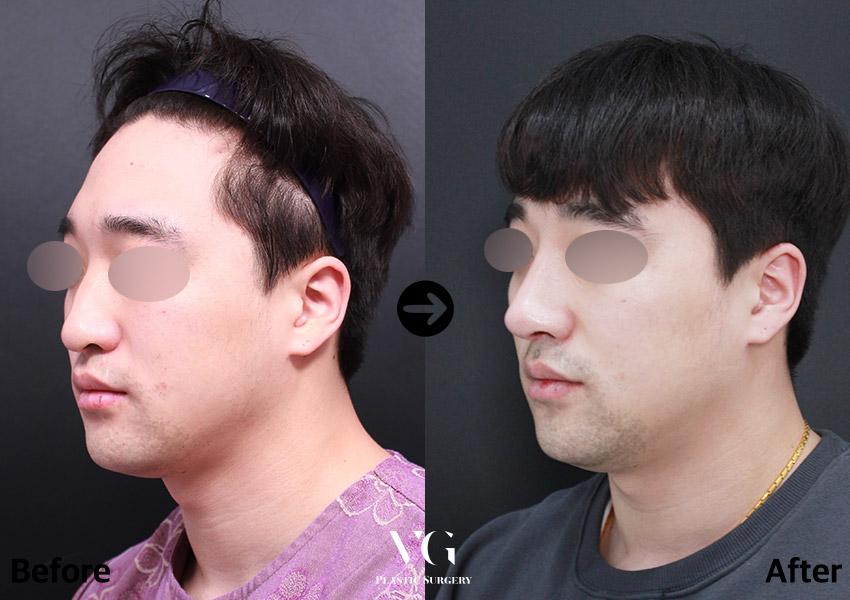
Nose
Rib Cartilage Rhinoplasty Side Effects: What Age Changes
Most side effects of a rib graft show up in the chest first: soreness and a short scar. Warping and stiffness in the nose come later, and age changes how rib cartilage behaves.
Im Young Min ·
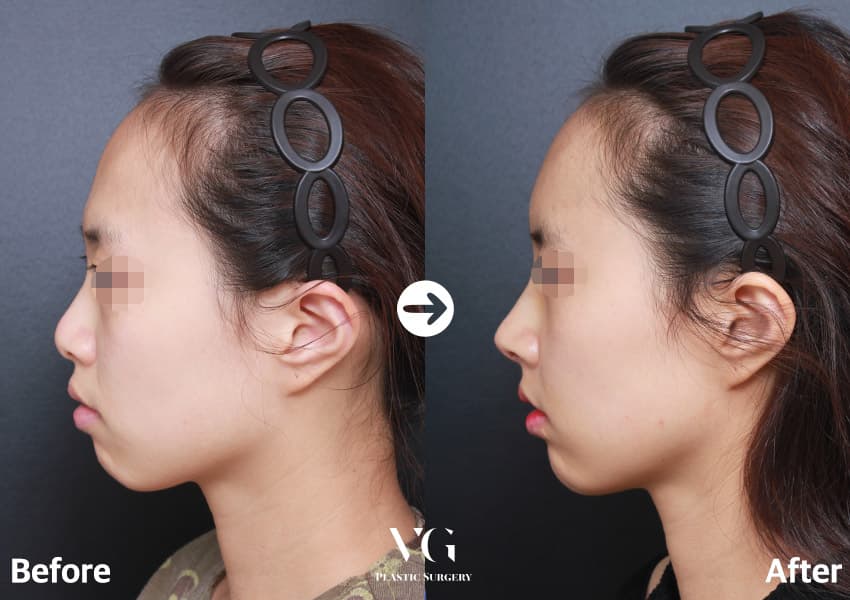
Nose
Does Rhinoplasty Last Forever? The Bone Stays, the Skin Ages
Reshaped bone and cartilage don't grow back, so the core change of a rhinoplasty stays. Skin, tip support and any implant keep aging, and the material chosen decides most of what can shift years later.
Im Young Min ·