Nose
Does Rhinoplasty Last Forever? The Bone Stays, the Skin Ages
Reshaped bone and cartilage don't grow back, so the core change of a rhinoplasty stays. Skin, tip support and any implant keep aging, and the material chosen decides most of what can shift years later.
Send your concern and a front and side photo. Replies in English, no obligation.
In this article
- 01Does rhinoplasty last forever? What stays and what moves
- 02Silicone, ear, rib or septal cartilage: which holds up longest?
- 03What a nose looks like 20 years after rhinoplasty
- 04How many days in Seoul does a lasting result need?
- 05Implant shift, warping, infection: what can change a result later
- 06What decides the cost of a rhinoplasty built to last
- 07What should you ask any clinic about long-term results?
- 08Where I stand on a nose that has to last
The short answer
Does rhinoplasty last forever, or will the nose you fly home with slowly drift back and send you on a second trip to Seoul in ten years? The bone and cartilage that are moved or removed do not grow back, so the basic change stays with you. What keeps changing is everything laid over that frame: your skin, the soft tissue at the tip and any implant or graft age along with the rest of your face.
- Bone and cartilage reshaped in rhinoplasty don't grow back; skin, tip support and implants keep aging.
- A tall implant under thin skin is the setup most likely to show changes years later.
- The new contour can take up to a year to fully refine, so judge the result after that.
- Plan the trip around the splint week plus a spare day, and take your operative record home.
Hello, I'm Dr. Im Young Min, Chief Director and board-certified plastic surgeon at VG Plastic Surgery in Seoul.

Profile
Im Young Min
Chief Director · Board-certified in Plastic Surgery
How well a nose holds up depends on two things settled before surgery: whether it still breathes well, and what material supports the new shape. An ENT specialist practices here alongside the plastic surgeons, so a crooked septum is examined and treated as part of the same operation. Three board-certified anesthesiologists are on staff and do not operate, so one of them watches your breathing and pulse while the surgeon works. If English isn't your first language, you get an interpreter in your own language at no extra charge.
If you're wondering which kind of support your nose could take, send one front and one side photo taken in daylight on WhatsApp, along with the dates you could travel. Skin thickness and bridge height show up in a plain photo, and they are what most decide how a result ages.
Send a front and side photo on WhatsApp
Does rhinoplasty last forever? What stays and what moves
Rhinoplasty reshapes the nose by changing its bone, its cartilage or both, and sometimes adds support with a graft or an implant. When a hump is taken down or the nasal bones are narrowed, that bone does not regrow. Cartilage trimmed from the tip stays trimmed. In that sense the change lasts.
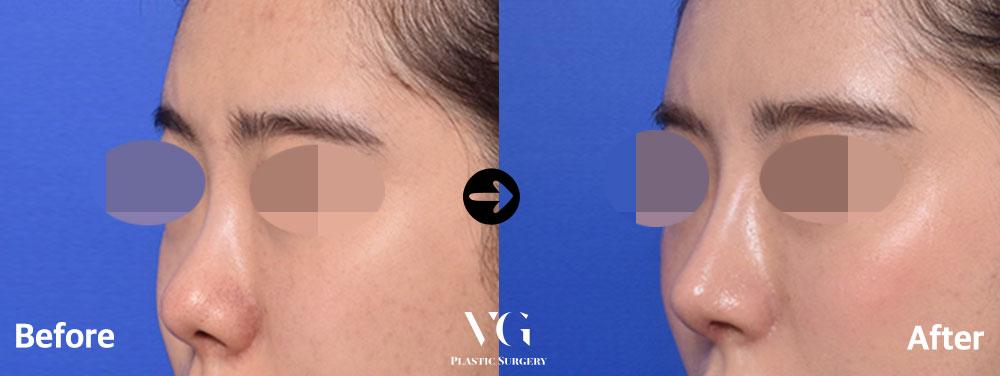
The nose still sits on an aging face. Swelling leaves the tip last, and the American Society of Plastic Surgeons notes it can take up to a year for the new contour to fully refine. After that, change slows to the pace of ordinary aging: skin thins, the ligaments that hold the tip relax, and the tip tends to sit a little lower. The same happens to noses that were never operated on.
Think of a tent after you've moved the poles. The poles stay where you set them, but the canvas still weathers. Bone and cartilage are the poles; skin is the canvas. How thick that canvas is decides how much of the frame shows through twenty years later, and it is the one thing surgery cannot change.
Silicone, ear, rib or septal cartilage: which holds up longest?
For someone traveling for surgery, this matters more than any other choice, because the material decides what can go wrong years later, when you are far from the surgeon who placed it.
| Material | How it tends to behave over time | What to watch for |
|---|---|---|
| Septal cartilage (from inside your nose) | Your own tissue, usually stable once healed | Supply is limited, often too little for a large lift or a nose operated before |
| Ear cartilage | Your own tissue, curved and softer | Can look slightly uneven under thin skin; suits the tip more than a long bridge |
| Rib cartilage | Your own tissue, plenty of it, firm support | Can warp, most often in the first months; adds a small chest scar |
| Silicone implant | Does not absorb or break down | Can shift, show its edge under thin skin, or rarely push through; infection can mean removal |
No material wins on every count. A silicone implant can sit quietly for decades under thick skin and cause trouble after fifteen years under thin skin. Rib cartilage gives the most support but asks for a second surgical site. The real trade is between how much height you want and how well your skin can cover it.
Say you're 31, teaching English in Osaka, with nine days of spring leave. You have a low bridge with thin skin over it, and you want a clearly taller line. A tall implant under thin skin is the setup most likely to show its outline years later, so my advice would lean toward a more modest height, or toward your own cartilage even if the operation runs longer. You would leave with less height than you pictured, and with a bridge that has a better chance of looking the same at forty-five.
What a nose looks like 20 years after rhinoplasty
Twenty years on, what was removed is still gone. A hump that was taken down doesn't come back. What people notice instead is usually at the tip: it can look slightly longer or lower, because the supports that hold it up relax with age, as they do in any nose.
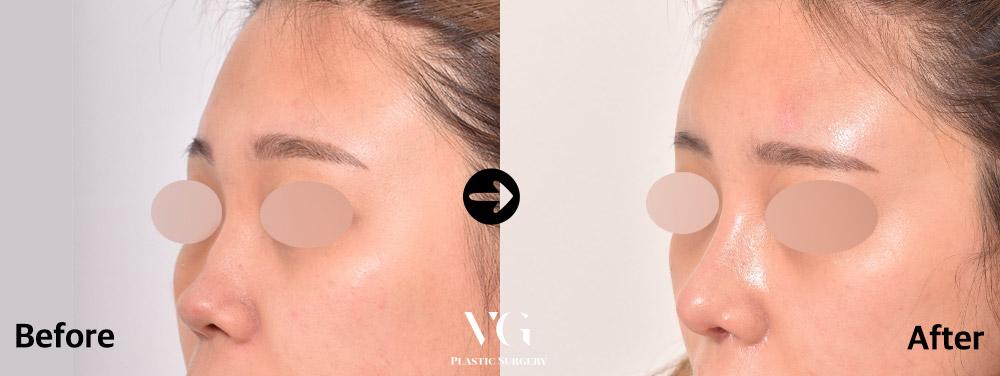
Implants change on a different clock. Silicone doesn't dissolve, but the tissue around it does change. A thin capsule of scar tissue forms around any implant, and in some people it tightens over the years and can pull the tip upward. Skin over an implant also thins further with age, which is why thin skin and a tall implant are a poor pair.
Thick skin ages the other way: it hides the frame well, but fine definition at the tip can soften as the years pass. That is one reason a man's nose sets tighter limits on how sharp a tip can stay. If your nose is large and you worry that making it smaller will cost you airflow, settle whether a big nose still breathes well after reduction before anything else, since a nose that breathes badly tends to be revisited.
One habit makes the long term far easier to judge. Photograph your nose at one, three, six and twelve months, front and side, standing at the same window at the same time of day. Swelling plays tricks on memory, and a matched set of photos lets you, or a doctor at home, see whether something has truly moved or simply settled.
How many days in Seoul does a lasting result need?
The trip has to cover the stretch of healing where things can go wrong early: the operation, the first days of swelling, and removal of the external splint, which in general guidance stays on for about a week. Your surgeon sets the actual day you can fly, based on how you are healing at that check.
Some of what protects a result for decades happens in that first week. Sleep with your head raised, don't blow your nose, and keep glasses off the bridge. A knock to the nose before the bones have set is one of the few events that can undo the work, so crowded subway cars and contact sports can wait.
Plan your dates backward. Count the splint week from the day of surgery, not the day you land, put the consultation before it, and leave a spare day before your flight in case the check moves. If you are fitting this into a holiday, the sightseeing belongs after the splint comes off, not before the operation.
Then pack for home. Take the operative record naming the material and where any graft came from, the names of the medicines you were given, and the contact you will use if something changes. If a surgeon at home ever needs to treat your nose, in two years or in twenty, what is inside it is the first thing they will ask.
Before you book flights, send your leave dates and the city you're flying home to on WhatsApp, and ask whether the splint week and a spare day fit inside them. Settling that first saves you from changing a ticket later.
Send a front and side photo on WhatsApp
Implant shift, warping, infection: what can change a result later
In the first weeks most people have swelling and bruising around the eyes, a blocked feeling inside the nose and a numb tip. Bruising usually fades within about two weeks; tip numbness and fine swelling can take months. How fast any one nose settles varies from person to person, which is why matched photos help more than memory.
The later risks depend on the material. An implant can shift, show its edge, become infected or, rarely, work its way toward the skin, and an infected implant usually has to come out. Rib cartilage can bend out of line, mostly in the first months. Grafts can leave a small irregularity you feel more than see. Breathing can also worsen if the support inside the nose weakens.
Some people are usually advised to wait or not proceed: anyone whose face is still growing, people with a recent nose injury or an active infection on or in the nose, smokers who cannot stop for the weeks around surgery, and anyone pregnant. Bleeding problems or blood-thinning medicine need to be raised well before surgery.
If after flying home you notice redness and warmth over the bridge, fluid, a fever, or an implant edge you can suddenly see or feel, see a doctor near you promptly and bring your operative record. Then send photos to the clinic that operated, so both doctors work from the same facts. If a second operation is ever needed, expect it to be harder than the first; tip revision rhinoplasty explains how scar tissue changes the plan.
What decides the cost of a rhinoplasty built to last
There is no single figure, because rhinoplasty is not one operation. These are the things that move it for you:
- Material: an implant, ear cartilage, or rib cartilage, which adds a second surgical site.
- Scope: the bridge alone, the tip, or both, and whether a crooked septum or blocked airway is corrected with the ENT specialist in the same operation.
- First surgery or revision: a nose operated on before usually needs more time and more graft.
- Anesthesia: general anesthesia with an anesthesiologist dedicated to your operation.
- Your nights in Seoul: these depend on how far your flight sits from the splint check.
Foreign patients pay the same surgery fee as Korean patients, and the figure comes as a written estimate. If the numbers you've seen online disagree with each other, why every online rhinoplasty figure differs shows where the gaps come from. Ask on WhatsApp what your case would cost; the deposit and how you pay are settled after the consultation, so that can go in the same message.
What should you ask any clinic about long-term results?
Whichever clinic you choose, these questions tell you whether the long term was planned:
- What material will support my nose, and will it be written in the records I take home?
- Who checks my breathing, and is an ENT specialist involved if my septum is crooked?
- Is anesthesia run by an anesthesiologist who is not operating?
- Is the surgeon I meet at consultation the one who operates, under their own name?
- Who do I contact after I fly home, and what happens if something shifts in the first year?
- Do foreign patients pay the same fee as local patients, in a written estimate?
Put the same questions to me. VG Plastic Surgery's English home page lists each surgeon with their center and training, so you can check the answers before you buy a ticket.
Where I stand on a nose that has to last
I see plastic surgery in Korea as one way people look after themselves, and self-care that has to be redone every few years isn't much of a gift. Being genuinely useful to one person matters more to me than seeing as many patients as possible. For a nose, that means choosing height and material for the face you will have at fifty as well as the one in the mirror today, and telling you plainly when a step isn't needed.
There is no reason to rush this. A nose meant to last decades is worth a few extra weeks of thinking.
When you're ready, send one front and one side photo in daylight on WhatsApp and ask the question that matters for the long term: with my skin, how much height can my nose carry and still look the same in twenty years? What decides that answer at your visit is how thick the skin over your bridge and tip is, and how much cartilage your septum can spare.
— Im Young Min, Chief Director, board-certified plastic surgeon
Related pages:
Nose before & after — more cases
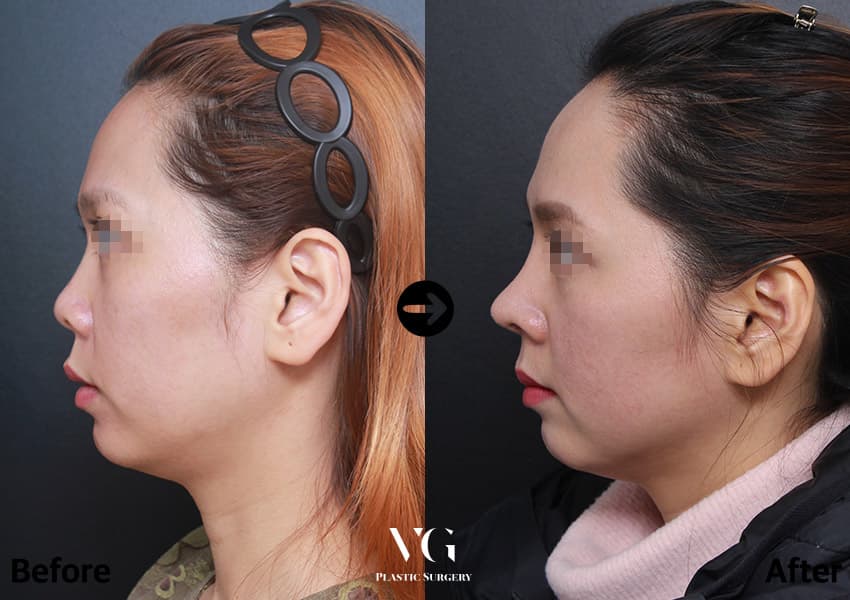
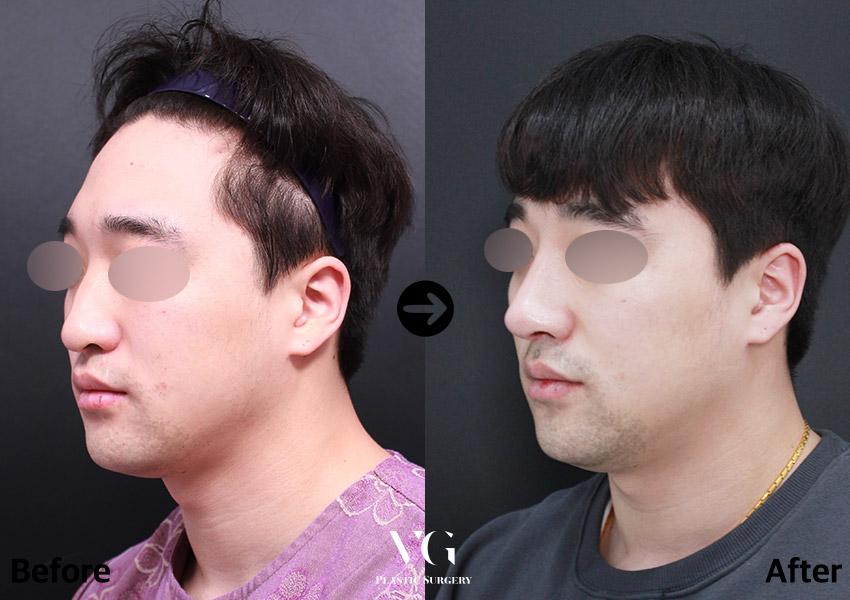
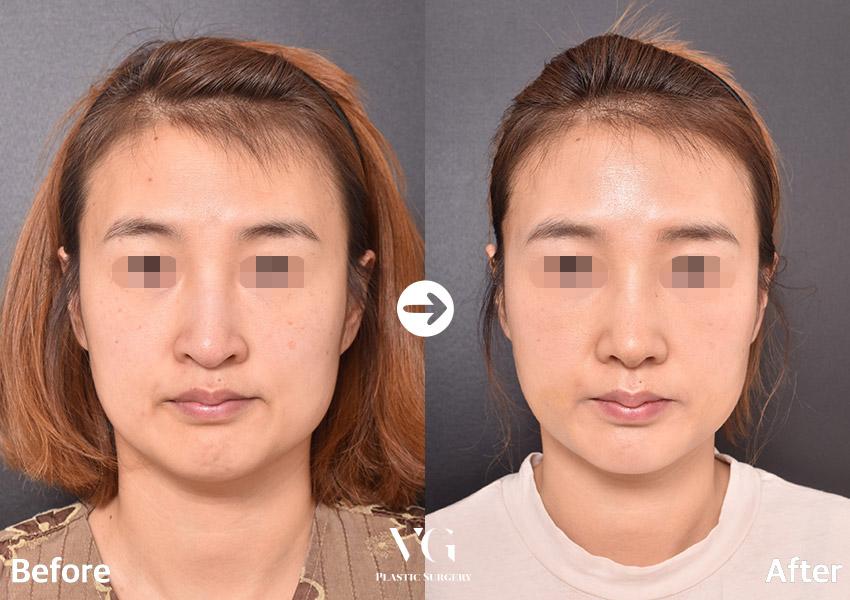
Real patients from our archive, all photographed 3 months after surgery. Tap a case to compare it full size.
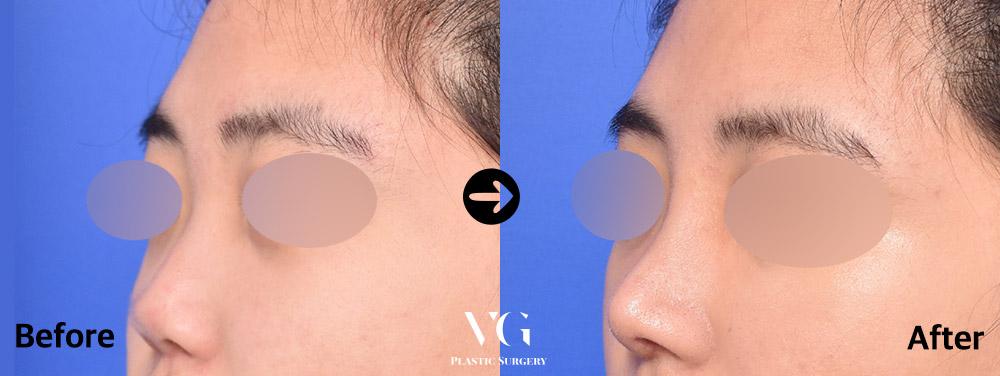
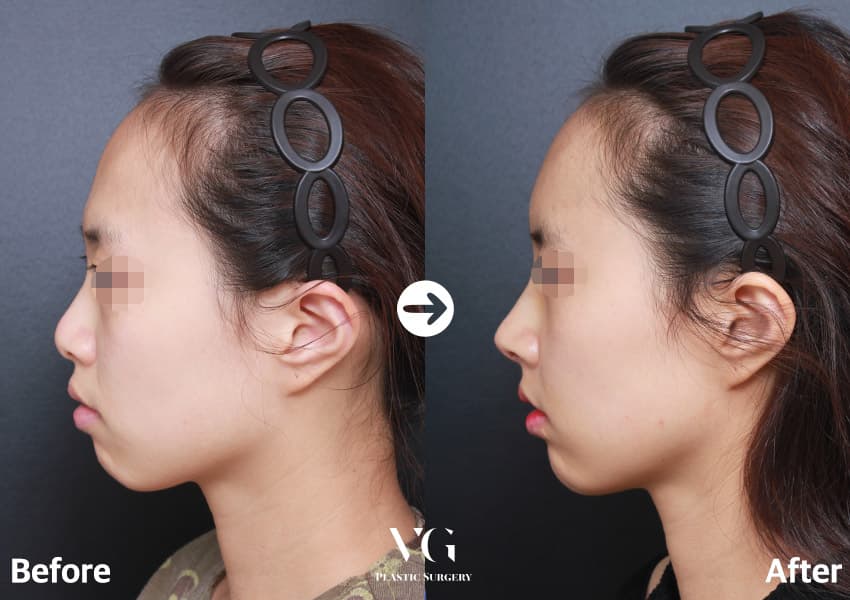
Rhinoplasty3 months after surgery
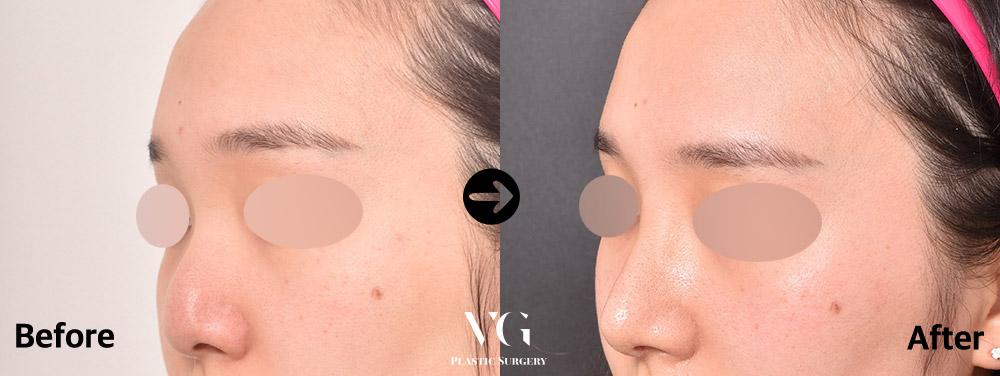
Rhinoplasty3 months after surgery
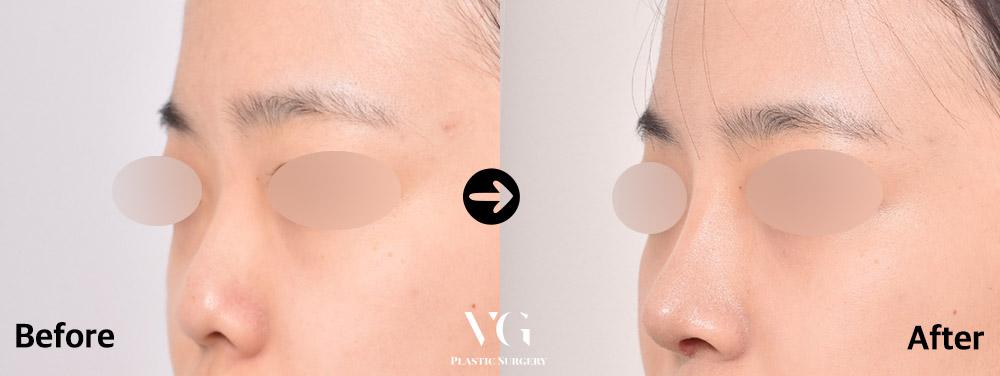
Rhinoplasty3 months after surgery
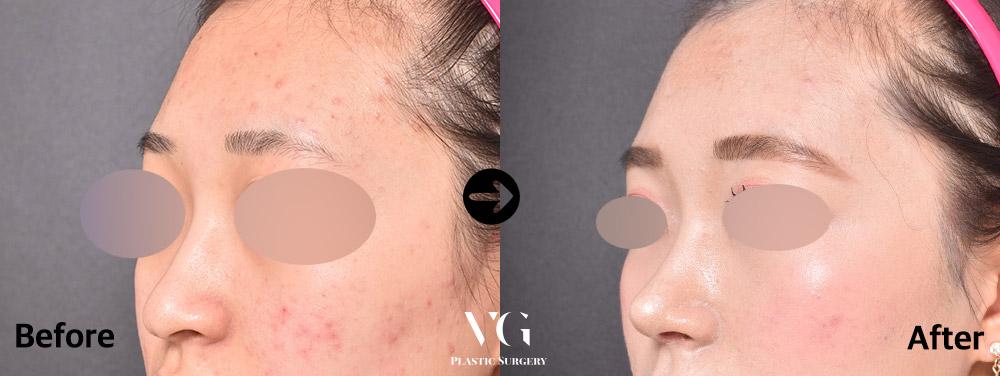
Rhinoplasty3 months after surgery
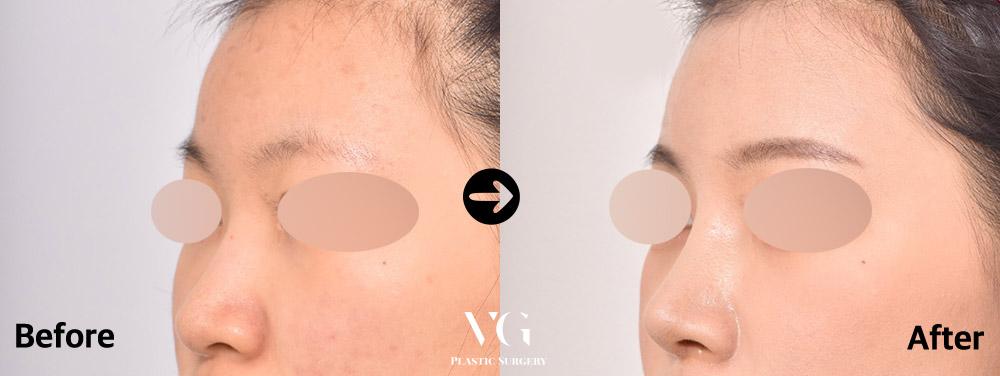
Rhinoplasty3 months after surgery
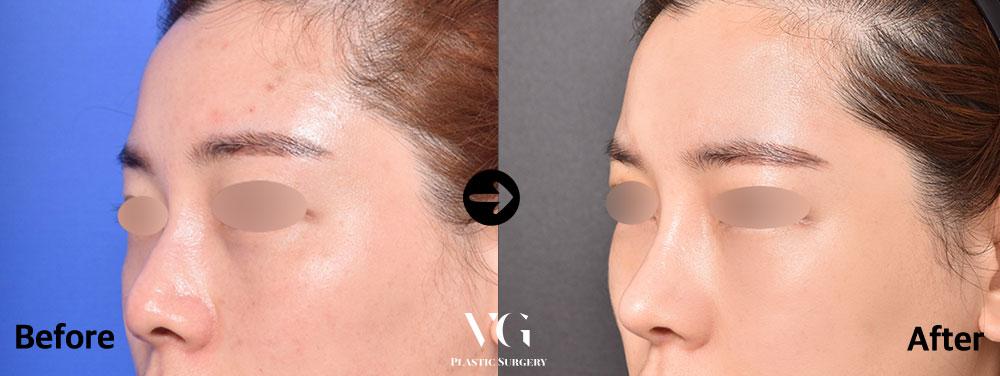
Rhinoplasty3 months after surgery
FAQ
Questions patients ask
Will a silicone nose implant need replacing after a set number of years?
Not on a schedule. An implant stays unless a problem appears, such as shifting, a visible edge, infection or tightening scar tissue that pulls the tip. Many people keep one for decades; the people who have trouble are more often those with thin skin over a tall implant.
Can I have rhinoplasty while my nose is still growing?
Cosmetic rhinoplasty is generally put off until facial growth has finished, usually in the mid-to-late teens. Operating earlier can leave a nose that keeps changing after surgery. Surgery for a breathing problem or an injury is a separate decision your doctor weighs case by case.
Will gaining or losing weight change my nose after surgery?
Very little. The nose itself holds almost no fat, so its shape follows bone, cartilage and skin. Large weight changes alter the cheeks and the face around it, which can make the nose look slightly different in proportion without the nose itself having changed.
If I need a touch-up years later, does it have to be done in Seoul?
No. A qualified rhinoplasty surgeon anywhere can operate on it, but they need to know what is inside: the material, where any graft came from and what was changed. That is why the operative record belongs in your files at home, not in a hotel drawer.
Does a rib cartilage nose feel different to the touch?
Usually the bridge feels firmer than an unoperated nose, because rib cartilage is stiffer than the cartilage it supports. That firmness is expected. What isn't expected is a bridge that starts to bend to one side, which is worth showing a doctor.
When can I wear glasses again?
Heavy frames press on the bridge while the bones are setting, so surgeons generally ask you to keep them off for several weeks. Contact lenses, or taping light frames to the forehead, are the usual workarounds; your surgeon tells you the exact date at your check.
Sources
This article explains general medical information. Whether surgery suits you, and which method, is decided only after a consultation with the surgeon.
Written by
Im Young Min
Chief Director · Plastic Surgery
- Ph.D. in Medicine
- Internship and residency, Seoul St. Mary's Hospital
- Board-certified plastic surgeon, Seoul St. Mary's Hospital
- Adjunct professor of plastic surgery, Seoul St. Mary's Hospital
- Former director, Topface Plastic Surgery
Next step
Send two photos. Get a surgeon’s answer.
Front and side, natural light, no filter. Dr. Im Young Min reviews them and tells you which method fits and how many days to stay in Seoul.
International patients pay the same surgical fee as Korean patients. Pricing policy
Keep reading
Nose
How Long After Rhinoplasty Can I Workout? Mostly Back Home
Gentle walking is fine within the first days after rhinoplasty, swimming usually waits about three weeks, and strenuous exercise and contact sports wait four to six weeks. Most of that wait happens after you fly home from Seoul.
Im Young Min ·
Nose
Rib Cartilage Rhinoplasty Side Effects: What Age Changes
Most side effects of a rib graft show up in the chest first: soreness and a short scar. Warping and stiffness in the nose come later, and age changes how rib cartilage behaves.
Im Young Min ·
Nose
Tip Plasty Recovery: A Week in Seoul, a Year for the Tip
The splint and outside stitches usually come off around a week, which sets your stay in Seoul. Swelling in the nasal tip is the slowest to fade and can take many months, sometimes up to a year, to fully settle.
Im Young Min ·