Nose
Tip Revision Rhinoplasty: Harder Than the First Time
A second tip operation works through scar and cartilage the first surgery already used, so it is often more involved, and most surgeons wait about a year for the tip to settle before revising it.
Send your concern and a front and side photo. Replies in English, no obligation.

· 8 min read · Last updated
Edited by Im Young Min
In this article
- 01Why is a second tip operation harder than the first?
- 02The tip problems that most often lead to a revision
- 03How long should you wait before revising your tip?
- 04Where the new support for your tip comes from
- 05Can thick skin hide a revised tip?
- 06Infection, skin strain and a tip that heals unevenly: the risks of a second operation
- 07What should you ask any surgeon before a second tip operation?
The short answer
Unhappy with how your nasal tip healed after a first nose job, and wondering whether a tip revision rhinoplasty in Korea could be a quick fix on a short trip? Usually it isn't quick: a second tip operation works through scar and cartilage the first surgery already used, so it is often longer and more involved than the original. Most surgeons also prefer to wait until about a year has passed, because the tip is the last part of the nose to settle.
- A second tip operation works through scar and used cartilage, so it is often longer than the first.
- For shape problems, most surgeons wait about a year for the tip to settle before revising.
- An implant showing through red or thinning tip skin is not a wait-and-see problem.
- New tip support comes from septum, ear or rib cartilage, each with its own trade-off.
- Thick skin limits how much a firmer framework shows through.
Hello, I'm Dr. Im Young Min, Chief Director and board-certified plastic surgeon at VERYGOOD Plastic Surgery in Seoul. I operate across every field, the nose included, and that range is the reason I recommend only the operations you actually need and leave out the ones you don't.
Profile
Im Young Min
Chief Director · Board-certified in Plastic Surgery
Two facts about this clinic bear on a second tip operation. Rhinoplasty here is reviewed with an ENT specialist, so breathing and the inside of the nose are assessed together with the shape, which matters when a first surgery left the tip weak or the nostrils pinched. And three anesthesiologists are on staff, one dedicated to every operation, who do not operate themselves; that counts when a revision runs longer than the first surgery did.
If you can't tell whether your tip has finished settling, send three daylight photos on WhatsApp (front, side, and from below so the nostrils show) with the month of your first surgery, and ask whether it's still too early to plan. One set of photos is enough to start, and you can ask before booking anything.
Send your tip photos on WhatsApp
Why is a second tip operation harder than the first?
A first rhinoplasty starts with untouched tissue. The tip cartilages still have their spring, the skin slides over them, and the layers separate cleanly. By the time a revision is on the table, each of those has changed.
Cartilage that was trimmed can't be put back. The tip is shaped by two curved cartilages, one on each side, and if too much was taken from them, the tip can look pinched or start to sag as the months pass. Scar now fills the space between skin and cartilage, which thickens the soft tissue over the tip and slows every step of the dissection. And skin that has healed once, sometimes over an implant, is less forgiving the second time.
Think of a jacket that was taken in too far at the seams. A tailor can't let it out again, because the spare fabric was cut away; the one way back is to sew in a new panel. An over-reduced tip works the same way. Support has to be added, and it has to come from your own cartilage: the septum, the ear or a rib.
That is also why I can't give you a fixed operating time from a photo. A tip that only needs reshaping is a shorter operation than one where cartilage first has to be harvested from the ear or the chest. If more than the tip needs redoing, the piece on planning revision rhinoplasty from what the first surgery left covers the wider picture.
The tip problems that most often lead to a revision
Each complaint about a tip tends to trace back to something under the skin. The table pairs what you notice in the mirror with what a surgeon often finds underneath.
| What you notice | What is often underneath |
|---|---|
| Pinched or narrow tip, nostril rims pulling in | Tip cartilage trimmed too far, weak side support |
| Tip still round or wide a year later | Thick skin, scar over the tip, or cartilage left wide |
| Tip drooping lower over the months | Lost support at the base of the tip |
| Too much nostril showing from the front | Tip rotated too far upward |
| Redness, shine or a visible edge at the tip | An implant pressing on thinning skin |
| One side higher or fuller | Uneven cartilage or a graft that shifted |
The first four rows are shape problems, and they can wait for the tissue to settle. The fifth is different, and I come back to it in the next section.
How long should you wait before revising your tip?
For a shape problem, most surgeons wait until about a year after the first operation. Tip swelling is the slowest to fade, and in thick skin it can hide definition for many months. The American Society of Plastic Surgeons notes that the first swelling goes down within weeks, while the final contour can take up to a year to refine. Planning a revision before then means planning around swelling, not shape.
Some problems shouldn't wait. Skin over an implant that turns red, shiny or thin, an edge you can see or feel at the tip, an infection that keeps coming back, or a nose you can no longer breathe through: these need a doctor's attention now, wherever you are.
Say you're 33, living in Chicago, five months out from your first nose job, and the tip still looks wider than you hoped. At five months, part of that width is likely to be swelling, especially if your skin is on the thicker side. The useful thing to do now is take photos in the same window light every month. If the shape has stopped changing for two or three months by around the one-year mark, that is tissue a revision can be planned on, and it's the point to start booking leave.
When you message, add what photos can't show: what your first surgeon used, if you know (a silicone implant, ear cartilage, septum), and ask whether that changes where new support for your tip would come from.
Send your tip photos on WhatsApp
Where the new support for your tip comes from
In a tip revision rhinoplasty, the septum may already be partly used by the first surgery, so the surgeon has to work out what is left before promising a shape. Each source has a trade-off.
- Septum. Straight and firm, taken from inside the nose with no outside scar. After a first rhinoplasty there may not be enough left for a strong tip.
- Ear. Curved and softer, taken through a small cut behind or inside the ear. It suits shaping and padding more than heavy support.
- Rib. The most material and the strongest, for a tip that has collapsed or needs lengthening. The trade-offs are a short scar on the chest, soreness there for a while, and a small chance the graft bends as it heals.
Most scarred tips are approached through the open route, with a small incision across the strip of skin between the nostrils, because the surgeon needs to see the cartilage to rebuild it. A small adjustment can sometimes be made from inside; the post on inside-the-nose incisions versus the open approach sets out when each fits.
Tip support also affects breathing. The tip cartilages hold the nostril walls open, and a pinched tip can fold inward when you breathe in. That is where the ENT specialist who practices alongside the plastic surgeons comes in, and you can see the full team on VERYGOOD Plastic Surgery's English homepage.
Can thick skin hide a revised tip?
In short, it can, and this is the belief that leads to the most disappointment: that more cartilage underneath always means a sharper tip. Thick skin acts like a heavy blanket over the framework. You can build a firmer structure, but the skin decides how much of it shows, and stretching tight skin over a bigger graft strains its blood supply.
Thin skin has the opposite problem. Every edge of a graft can show through it over time, so grafts under thin skin are usually smoothed or padded. The limits that come with thicker skin are laid out in why skin thickness limits the tip more than the implant, and men, whose skin and nasal frame tend to be heavier, will find related limits in the post on why a man's nose sets tighter limits.
Infection, skin strain and a tip that heals unevenly: the risks of a second operation
The usual temporary reactions are swelling, bruising around the eyes, a stiff tip, and numbness of the tip skin. Tip swelling is the last to fade, and the numbness usually returns to normal sensation over months.
Less common problems include infection, poor wound healing, skin discoloration, breathing trouble, a hole in the septum, and a shape you aren't satisfied with, which can mean yet another operation. Each revision adds scar, so the bar for a third tip operation sits higher than for the second. How a revised tip heals varies more from person to person than a first one does.
As general medicine, these are reasons to wait or rethink:
- Less than about a year since your first surgery, unless the problem is one of the urgent ones above
- Smoking or nicotine products, which cut blood flow to the tip skin
- Blood-thinning medicines or supplements you haven't discussed with a doctor
- An active infection anywhere in the nose
- Pregnancy or breastfeeding
- A goal your skin cannot show, however much support is added
After you fly home, watch for spreading redness, warmth, discharge, fever, or tip skin that turns pale or dark. Any of these needs a doctor where you are, the same day if possible. Carry a copy of your operative record so that doctor knows what was placed, and send photos of the change on WhatsApp as well.
What should you ask any surgeon before a second tip operation?
Wherever you have it done, these questions separate a worked-out plan from a hopeful one:
- Will you read the operative record from my first surgery, and could it change the plan?
- Where will the tip support come from, and what happens if there isn't enough septum left?
- Is breathing checked alongside the shape, and by whom?
- Who runs the anesthesia, and do they do anything else during the operation?
- How do I reach the team after I fly home, and which records do I take with me?
- Does the written estimate include graft harvest and follow-up visits?
It doesn't have to be us. Put these to whoever you're considering, and listen for specific answers.
Where I stand: a tip revision makes sense when the support underneath is the real problem and your skin can show the change. It doesn't make sense to chase a small difference that another round of scar would undo. There's no hurry here; your tip keeps settling while you decide.
When you're ready, send your front, side and from-below photos on WhatsApp with the month of your first surgery, and ask the question that matters most: is there enough support left in my tip to rebuild from, or will it need cartilage from somewhere else? Questions about the deposit and how you'd pay can go in the same message, since both are settled after the consultation. Here at 635 Nonhyeon-ro, Gangnam-gu, Seoul, what shapes your plan is how much cartilage remains under the tip and how the skin over it has healed.
— Dr. Im Young Min, Chief Director
Related pages:
Nose before & after — more cases
Real patients from our archive, all photographed 3 months after surgery. Tap a case to compare it full size.
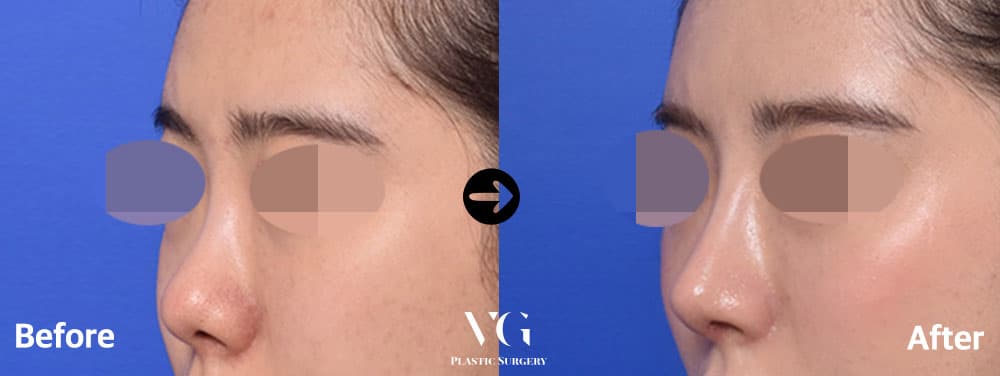
Rhinoplasty3 months after surgery
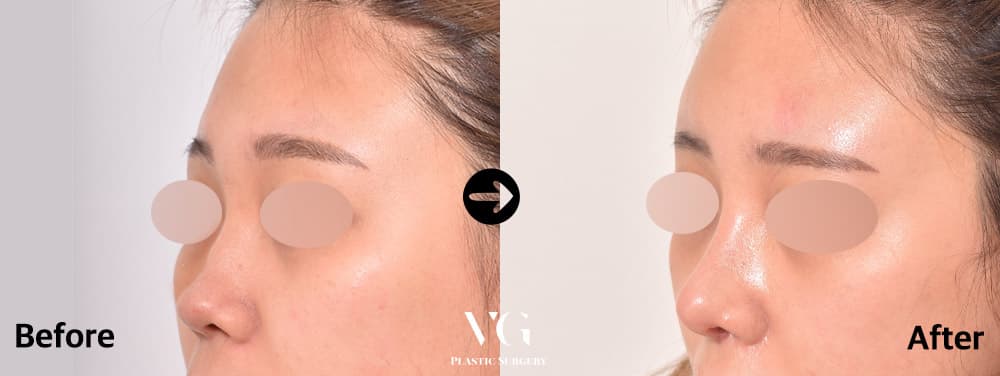
Rhinoplasty3 months after surgery
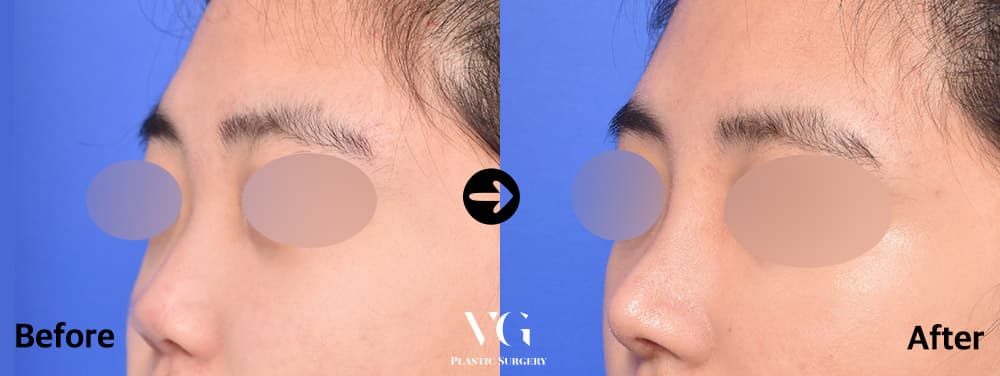
Rhinoplasty3 months after surgery
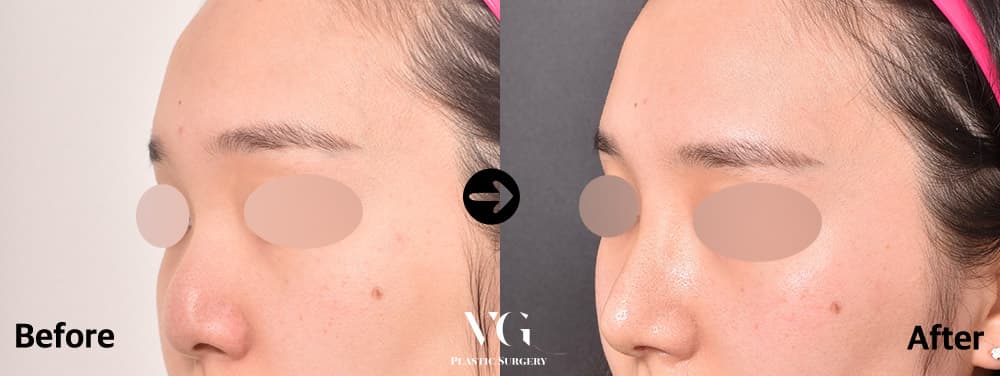
Rhinoplasty3 months after surgery
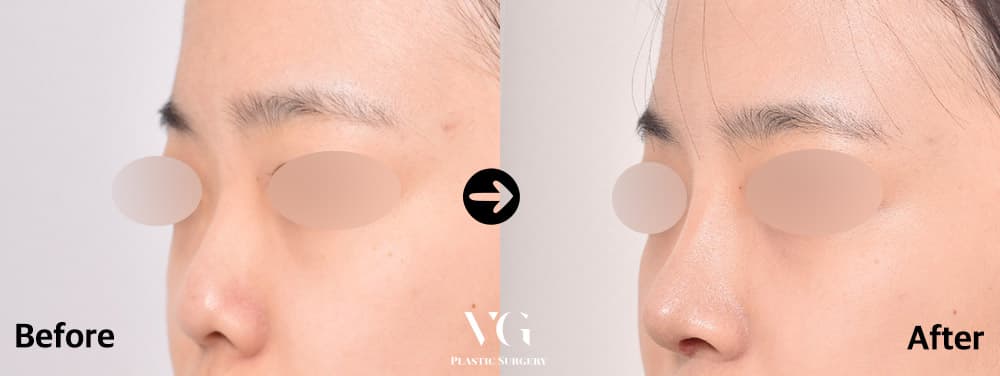
Rhinoplasty3 months after surgery
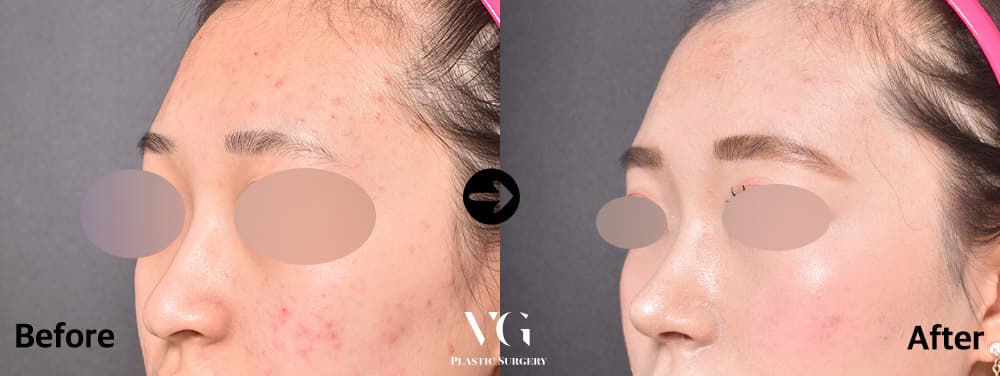
Rhinoplasty3 months after surgery
FAQ
Questions patients ask
Do I need the records from my first nose surgery?
They help a great deal. The operative note says what was removed, what was placed (an implant, ear or septal cartilage) and which approach was used, and that shapes where new support can come from. Ask your first clinic for a copy well before you travel, since a records request can take time.
Can a tip that was made too small be built back up?
Often, yes, by adding cartilage grafts to restore projection and support. The limit is the skin: skin that has shrunk around a small tip only stretches so far, and forcing it strains its blood supply, so the rebuild may be more conservative than you'd hope.
How many times can a nasal tip be revised?
There is no set number, but each operation adds scar and uses up tissue. By a third operation the gain has to be clearly worth that cost, and sometimes the useful answer is to stop where the tip is.
Will a revision tip plasty leave a visible scar?
With the open approach there is a small incision across the columella, the strip between the nostrils, which usually fades to a fine line. Ear or rib grafts add a scar at that site: behind the ear, or a short line on the chest.
Can a tip revision change how I breathe?
It can, in either direction. The tip cartilages help hold the nostril walls open, so rebuilding weak support can ease collapse when you breathe in, while a tighter, narrower tip can make airflow worse. That is why breathing belongs in the plan from the start.
Sources
This article explains general medical information. Whether surgery suits you, and which method, is decided only after a consultation with the surgeon.
Written by
Im Young Min
Chief Director · Plastic Surgery
- Ph.D. in Medicine
- Internship and residency, Seoul St. Mary's Hospital
- Board-certified plastic surgeon, Seoul St. Mary's Hospital
- Adjunct professor of plastic surgery, Seoul St. Mary's Hospital
- Former director, Topface Plastic Surgery
Next step
Send two photos. Get a surgeon’s answer.
Front and side, natural light, no filter. Dr. Im Young Min reviews them and tells you which method fits and how many days to stay in Seoul.
International patients pay the same surgical fee as Korean patients. Pricing policy
Keep reading
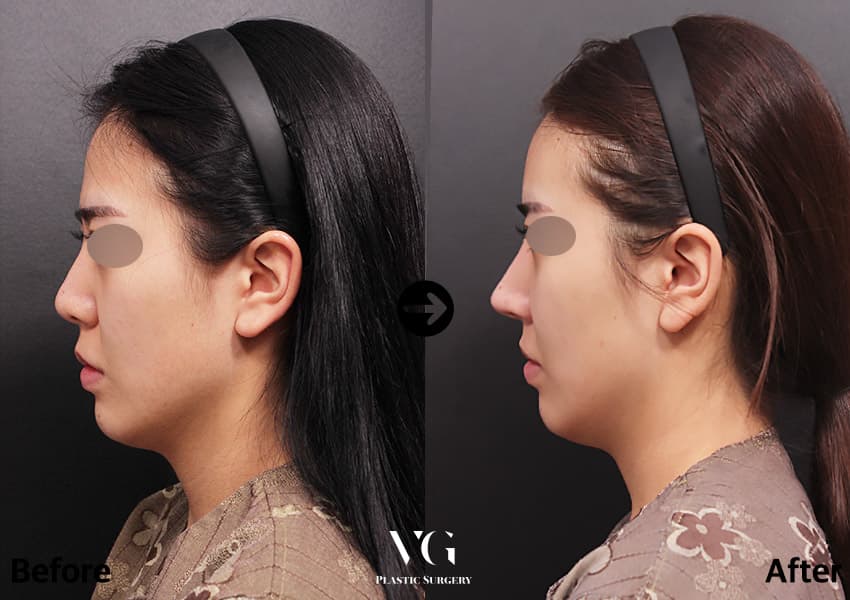
Nose
Inside a Korean Plastic Surgery Tour Package: Fee, Days, Hotel and Interpreter
A plastic surgery trip to Seoul, taken apart piece by piece: the surgical fee, the interpreter, airport pickup, partner hotels, the days your operation needs, and the three months of follow-up after you fly home.
Im Young Min ·
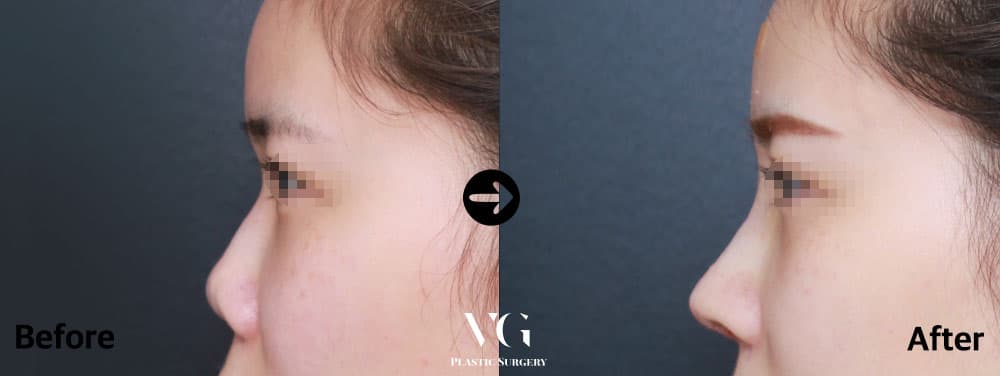
Nose
Rib Cartilage Rhinoplasty Korea Cost: What the Rib Adds, and the Scar and Warping You Trade for It
Rib cartilage adds a chest site, longer anesthesia and a sore chest, and that is what raises the cost. It's worth it mainly when septum or ear can't supply enough strong cartilage.
Im Young Min ·
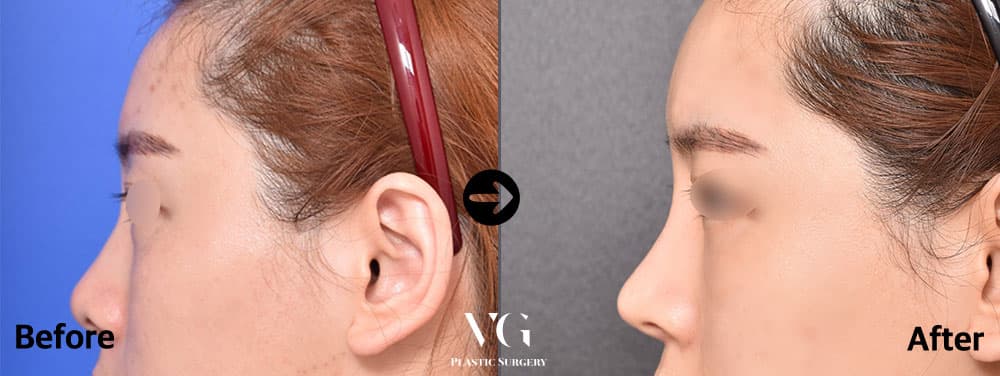
Nose
Rhinoplasty in Korea for Foreigners: Cost, Language and Who Checks Your Nose at Home
Rhinoplasty in Korea for foreigners runs on the same surgery fee as for Korean patients, with an interpreter at no extra charge. The real planning is the splint week and follow-up at home.
Im Young Min ·