Nose
Rib Cartilage Rhinoplasty Side Effects: What Age Changes
Most side effects of a rib graft show up in the chest first: soreness and a short scar. Warping and stiffness in the nose come later, and age changes how rib cartilage behaves.
Send your concern and a front and side photo. Replies in English, no obligation.
In this article
The short answer
Which rib cartilage rhinoplasty side effect is most likely to follow you home from Seoul? Usually the chest rather than the nose: the harvest site stays sore for the first weeks and leaves a short scar, while the nose carries a slower, smaller risk that the carved graft bends or feels stiff. Age changes the picture too, because rib cartilage tends to harden over the years and that limits what can be carved from it.
- The chest donor site, not the nose, causes most of the early discomfort after a rib graft.
- Warping is the most common graft problem in pooled studies, at about 3 in 100 noses.
- Rib cartilage often calcifies from middle age, which limits what can be carved from it.
- Rib is worth its chest scar only when septal or ear cartilage can't carry the job.
- Weekly photos from the same angle make a slow graft shift easy to spot once you're home.
Hello, I'm Dr. Im Young Min, Chief Director and a board-certified plastic surgeon at VERYGOOD Plastic Surgery in Seoul. I did my internship and residency at Seoul St. Mary's Hospital, and I operate on eyes, noses, breasts, bodies and facial bones, so I have no reason to favor one graft source over another.

Profile
Im Young Min
Chief Director · Board-certified in Plastic Surgery
Two facts here matter for a rib graft. An ENT specialist works alongside the plastic surgeons in our nose center, so your septum and airway are planned in the same operation as the shape. Three board-certified anesthesiologists work here full time, and one of them watches your blood pressure, pulse and breathing from the first injection until you wake up, which counts for more when chest work is added to a nose operation. A medical interpreter for your language is provided at no extra charge.
If a surgeon at home has already told you your next nose needs rib, send a front and a side photo taken in daylight on WhatsApp, with your age and a line on any earlier nose surgery. Then ask the question underneath it all: does my nose really need rib? With your own photos and history in that first message, the conversation is about your nose instead of rib grafts in general.
Send a front and side photo on WhatsApp and ask if your nose needs rib
Where do rib graft side effects show up, and when?
Two places, on two clocks. The chest makes itself known in the first days. The nose shows its problems over weeks to months, because a carved graft can keep bending after the swelling settles.
| Side effect | Where | When it usually shows |
|---|---|---|
| Soreness when breathing deeply, coughing or sitting up | Chest | First days to a few weeks |
| A scar a few centimeters long near the breast fold or a lower rib | Chest | From the start; fades over a year or more |
| Thickened (hypertrophic) or keloid scar | Chest | Over the first months |
| Air leaking around the lung (pneumothorax) | Chest | During surgery; rare |
| Warping: the graft bends and the bridge or tip drifts | Nose | Weeks to months |
| A stiff, less mobile tip with a firm feel | Nose | Once swelling settles |
| Graft edges visible under thin skin | Nose | Months, as swelling fades |
| Infection or graft resorption | Nose | Infection early, resorption late; both uncommon |
The clearest numbers come from a 2014 pooled analysis in JAMA Facial Plastic Surgery. Across the studies it combined, warping turned up in about 3 of every 100 noses and a thickened chest scar in about 5 of every 100. Infection, displacement and resorption were each under 1 in 100, and no collapsed lung was recorded, although it remains a known risk of taking rib.
Those averages hide who sits at the higher end. Thin nasal skin shows a slight bend that thick skin would cover. A tendency to form raised scars, which you may already know about from an ear piercing or an old wound, raises the chest-scar risk. And age, which few people think to ask about, changes the cartilage itself.
The chest: what the donor site asks of you
The pain people describe after a rib harvest is mostly not in the nose. It's the chest wall, when you laugh, cough, sneeze or sit up from lying flat. In women the incision is usually placed in or near the breast crease; in men it usually follows a lower rib.
One habit helps more than people expect: press a folded towel or small pillow firmly against the chest before you cough or sneeze. Getting out of bed by rolling onto your side first, then pushing up with your arms, spares the chest muscles in those first days.
The rarer chest risk is a small tear in the thin lining over the lung during the harvest. Surgeons generally test for this before closing, and when it happens it's usually recognized and repaired during the operation. This is also where a dedicated anesthesiologist matters: watching your breathing is their whole job, so I can stay on the graft.
If you tend to form raised scars, say so before surgery. It changes the conversation about where the incision goes and how the scar is cared for, and some people decide on that basis to use a different cartilage source.
Why does age change what a rib graft can do?
Rib cartilage is softest and most even in younger adults. From middle age on, it often develops calcified patches, gritty areas closer to bone, which make carving harder and long straight pieces difficult to cut. Calcified cartilage can crack while it's being shaped, and pieces from it may behave less predictably in the nose.
That's the rib cartilage rhinoplasty side effect people in their forties and fifties ask about least and should ask about first. Rib can still work at that age, but the plan has to allow for a graft built from shorter or diced pieces rather than one long strut. How much usable cartilage there is becomes clear only once the rib is exposed.
Say you're 52 and living in Brisbane, with a silicone implant put in about twenty years ago. Lately the bridge looks shiny under bright light and the implant has started to shift, and your surgeon at home has said a revision would need rib. I'd weigh three things: how much septum is left after the first operation, how thin the skin over the bridge has become after two decades over an implant, and how much height you really want back.
Thin skin plus calcified rib points toward a lower, softer bridge than the one you had, and that version usually ages better. If the main problem sits in the tip rather than the bridge, the reasoning in why tip revision is harder than the first operation is the more useful starting point.
When would I not use rib cartilage?
I tell people plainly when an operation doesn't suit them, and rib is a graft I hold back from more often than people expect.
If the job is small, such as refining a tip or adding a little support, septal or ear cartilage usually does it without opening the chest. Rib earns its place when a lot of strong, straight material is needed: a revision after an implant has been removed, a short or collapsed nose, or a septum already used up by earlier surgery.
I'd also hold off when the chest scar is something you can't accept, when an old implant is still infected (that usually needs removal and healing first), or when the height you have in mind is more than your skin can stretch over. Heavy smoking slows healing at both sites, which is why surgeons ask you to stop well before surgery.
Who rib suits in the first place is a separate question, covered in when your own rib is the right source. For men, thicker skin and a straighter profile set their own limits, which I explain in why a man's nose sets tighter limits.
If you have records from an earlier nose operation, a photo of the operative note or implant card says more than any description. Send it on WhatsApp with your travel dates, and ask whether rib is needed or whether something smaller would do.
Send a front and side photo on WhatsApp and ask if your nose needs rib
Your days in Seoul with a healing chest and a new nose
Picture the trip in order. You land, rest, and come in for the consultation with the interpreter beside you. You can look over the surgeons and the nose center on our main page beforehand, then use that meeting to ask exactly where the chest incision would sit.
Surgery is done under general anesthesia, and the rib harvest adds time to the operation. The first nights are when the chest is loudest: getting up, coughing, reaching for things. Pack tops that open at the front, and plan for someone else to lift your suitcase into the overhead bin on the way home.
As general medicine, an external splint commonly stays on the nose for about a week after rhinoplasty. How many nights to book around that for a rib graft is something to settle at the consultation, before you buy a return ticket.
From the day the splint comes off, take a photo of your nose from the front, the side and from below once a week, by the same window and at the same distance. Warping shows as a slow drift, and a run of photos makes a two-millimeter shift visible in a way memory never does.
What decides the cost of a rib graft rhinoplasty
A few things move the figure. Whether rib is harvested at all or septal and ear cartilage are enough is the biggest one. A revision with implant removal is a longer operation than a first surgery. How much is rebuilt (bridge only, or bridge plus tip support) changes the time and the material needed, and septum or airway work with the ENT specialist adds a further step. Anesthesia time and the nights you spend in Seoul complete the picture.
Foreign patients pay the same surgery fee as Korean patients, and the estimate is given in writing. Deposit and payment method are settled after the consultation, so if you're at the booking stage, ask on WhatsApp what your own case would cost and attach your photos. How the rib itself shifts the bill is covered in what the rib adds to the cost.
Signs that need a doctor once you're back home
Most of what you'll feel at home is ordinary healing: a tight chest scar, a firm tip, and numbness at the tip that returns gradually. How fast each of these settles differs from one person to the next.
Seek care the same day if the nose or chest becomes hot, red and more swollen instead of less, if fluid leaks from either wound, or if you run a fever. Sudden chest pain with shortness of breath is an emergency anywhere, so go to an emergency department rather than waiting to message anyone.
A bend that develops slowly over weeks is not an emergency, but your weekly photos are the record of it. Carry a copy of your operative record and medication list on the flight, and line up a local plastic surgeon or family doctor who can look at a wound if needed. Ask before booking how contact with the clinic works once you're home, and make it part of your first message.
My view on rib is straightforward. It's strong material, paid for in the chest, so I'd use it only when nothing smaller can carry the job. Surgery in Korea is part of how many people here look after themselves, and that only makes sense if the graft serves you for years, not just in the first photos.
The easiest first message is short: one front and one side photo in daylight, your age, and the year of any earlier nose surgery. Send it on WhatsApp and ask whether your nose needs rib or something smaller, and how contact works once you've flown home.
— Dr. Im Young Min, Chief Director, board-certified plastic surgeon
Related pages:
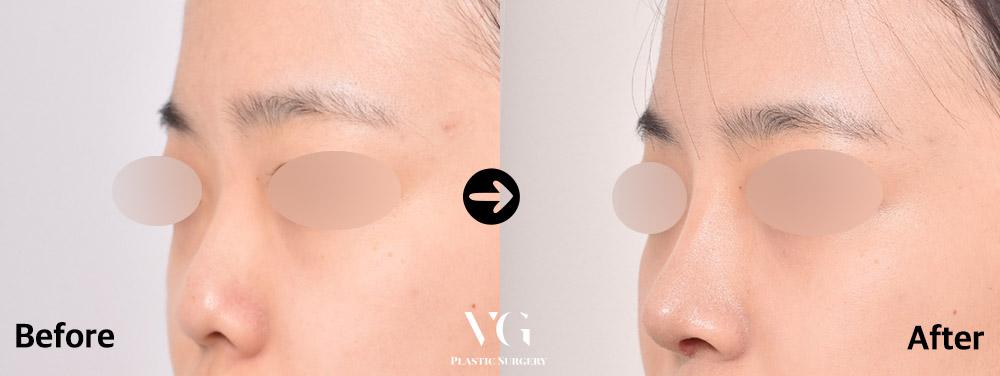
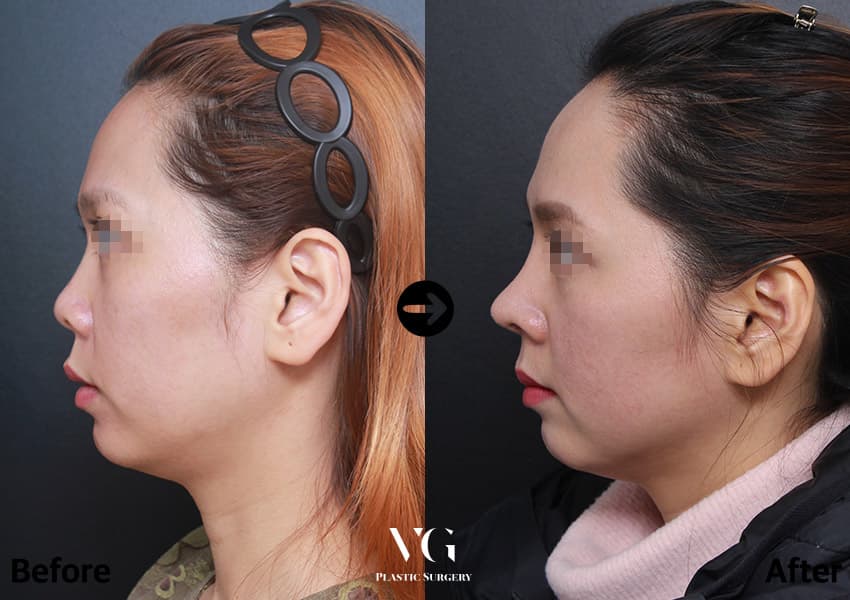
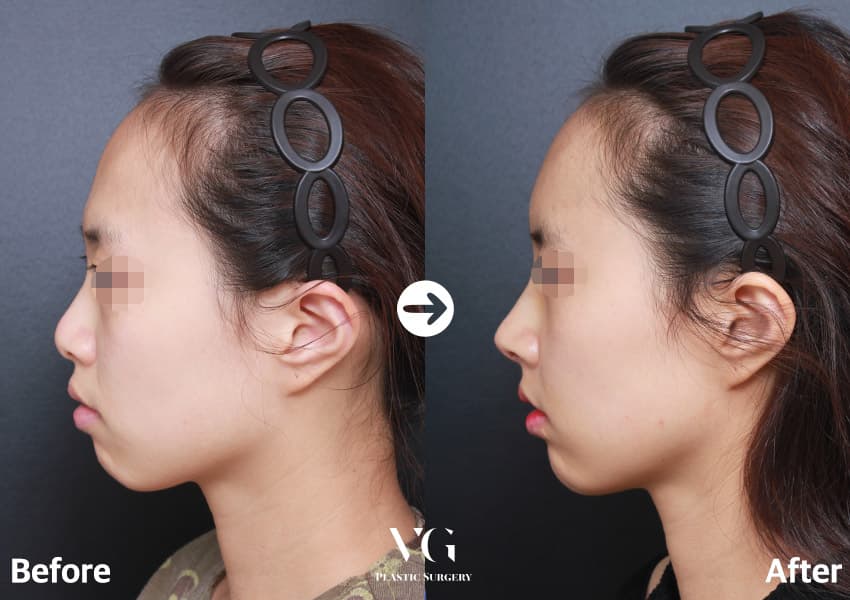
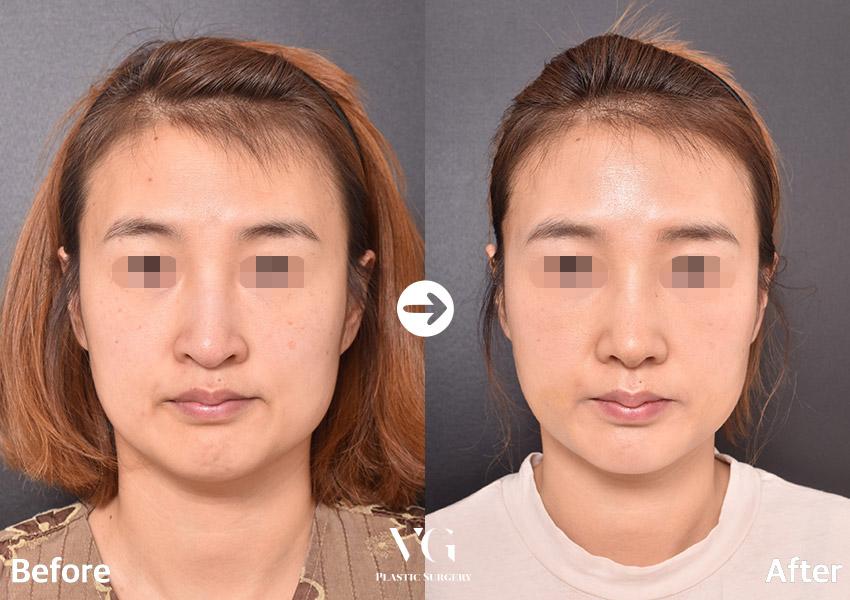
Nose before & after — more cases
Real patients from our archive, all photographed 3 months after surgery. Tap a case to compare it full size.
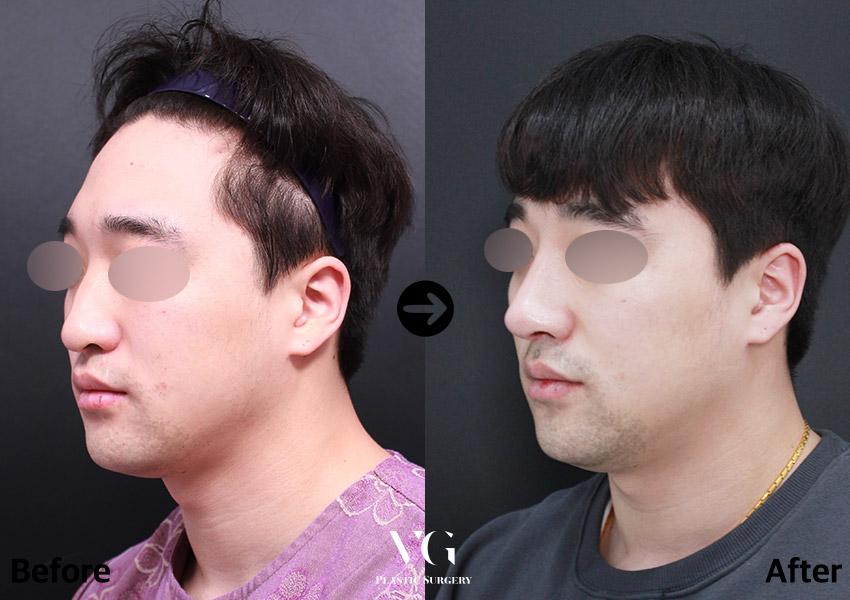
Autologous Rib Cartilage3 months after surgery
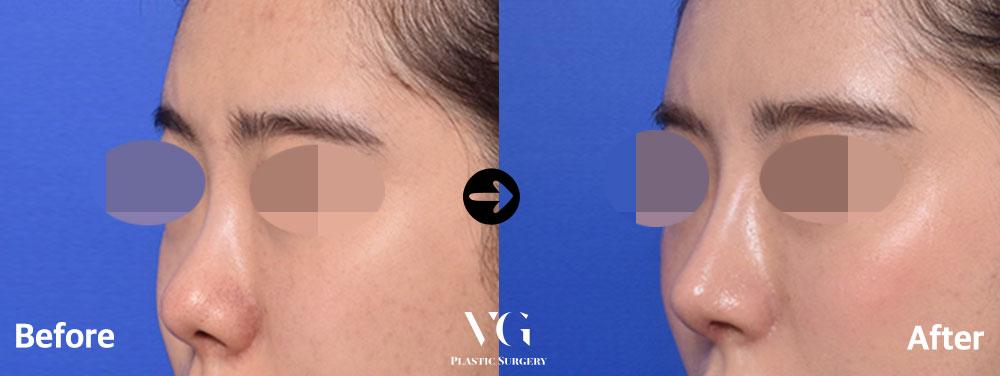
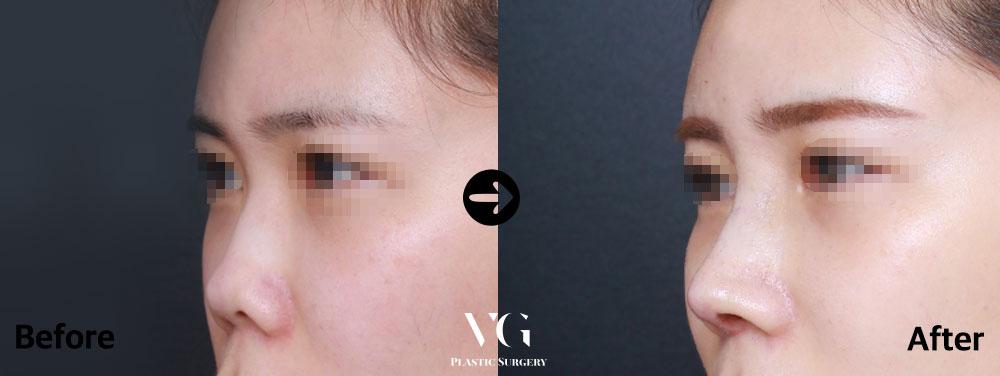
Rhinoplasty3 months after surgery
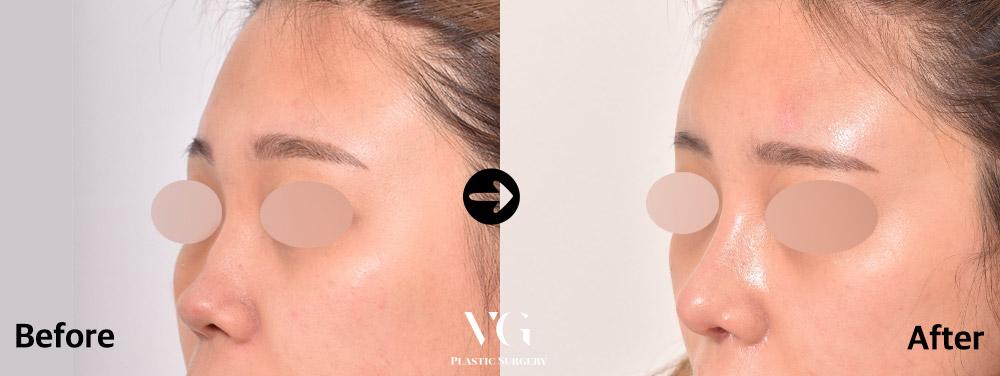
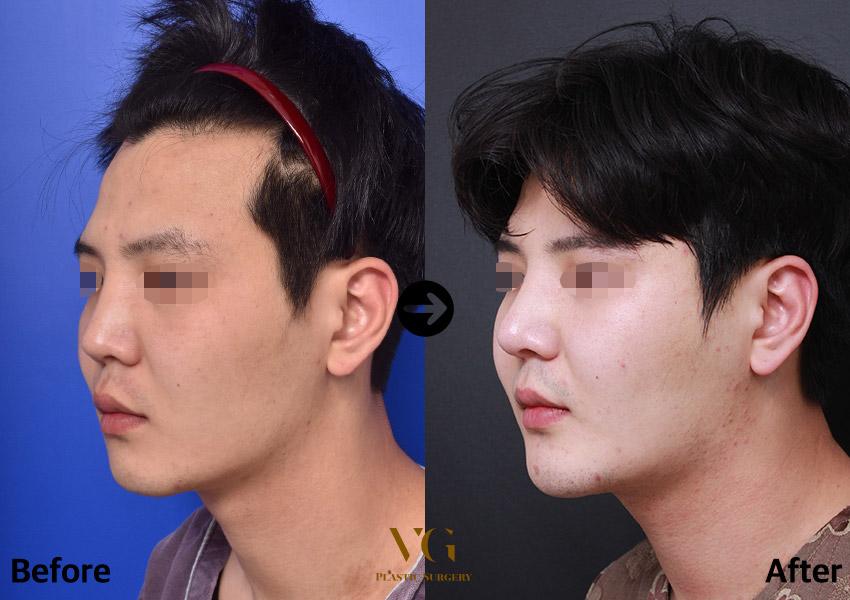
Rhinoplasty3 months after surgery
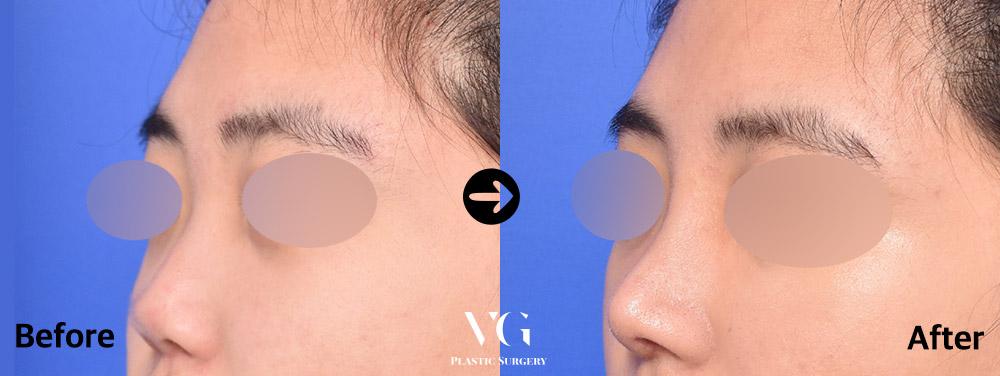
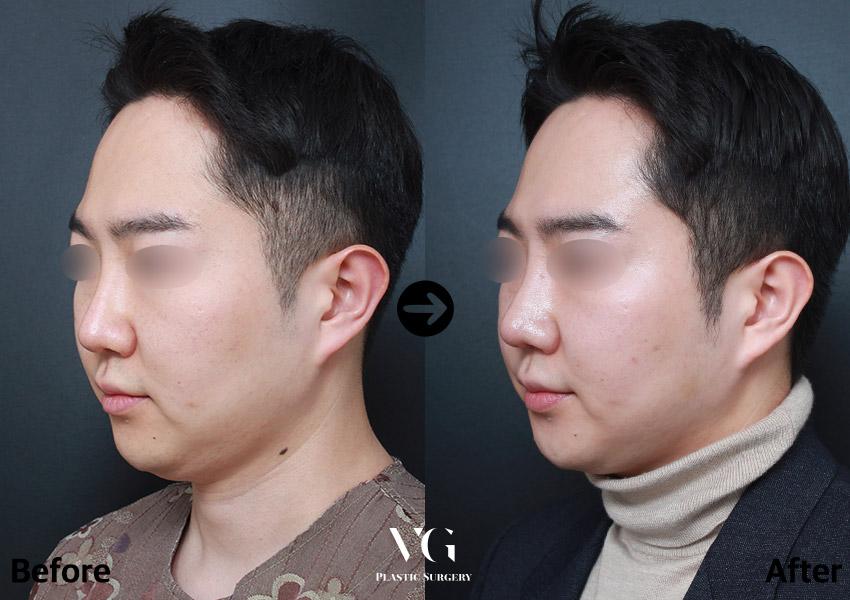
Rhinoplasty3 months after surgery
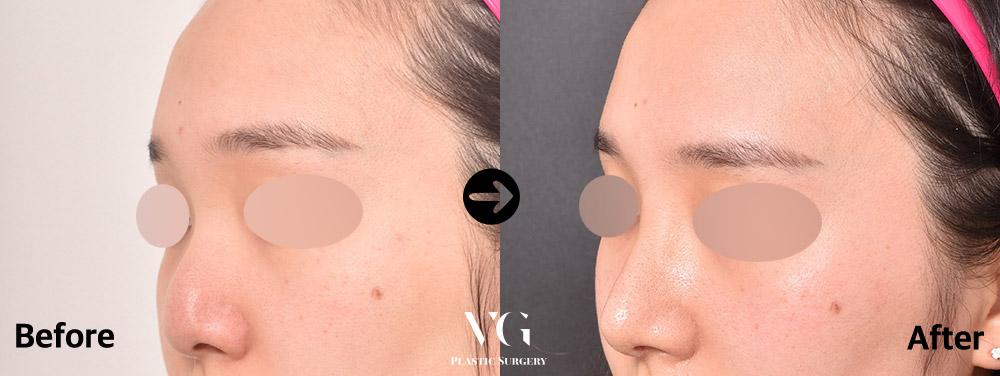
Rhinoplasty3 months after surgery
Rhinoplasty3 months after surgery
FAQ
Questions patients ask
Can ear cartilage be used instead of rib for the bridge?
Ear cartilage is curved and fairly soft, so it suits tip shaping and small bridge corrections, often diced or layered. For a long, strong bridge it usually isn't enough. Taking it leaves a small scar behind the ear instead of one on the chest.
Does the rib grow back after cartilage is taken?
The removed segment doesn't regrow as the same piece. When the thin outer lining of the cartilage is left in place, some new cartilage can form over time. Most people notice no change in chest shape, though in very slim people a slight dip can sometimes be felt.
Can a warped graft be corrected?
Timing and size decide it. A small bend that appears early is sometimes watched rather than operated on. A clear shift months later usually means a revision, done once the tissues have fully settled, which is often many months after the first surgery.
Will a nose rebuilt with rib feel hard?
Firmer than before, yes, especially at the tip, and it moves less when you press it or smile. Most people get used to it. The firmness is part of the support that holds the shape.
Does adding rib make the operation and anesthesia longer?
Yes. Harvesting and carving the cartilage and closing the chest incision all add time, which is one reason general anesthesia is typical for rib grafts, with an anesthesiologist present throughout.
I've had a keloid on my ear. Should I rule out rib?
Not automatically, but tell your surgeon before anything is planned. A history of raised scars changes where the incision goes and how the scar is treated afterwards, and for some people it tips the choice toward another cartilage source.
Sources
- Long-term complication rate low in nose job using patient's own rib cartilage (reporting Wee JH, Park MH, Oh S, Jin HR. Complications Associated With Autologous Rib Cartilage Use in Rhinoplasty. JAMA Facial Plastic Surgery, 2014)
- Rhinoplasty safety: risks
- Rhinoplasty recovery
- Current Update in Asian Rhinoplasty (Ishii CH, Plastic and Reconstructive Surgery Global Open, 2014;2(4):e133)
This article explains general medical information. Whether surgery suits you, and which method, is decided only after a consultation with the surgeon.
Written by
Im Young Min
Chief Director · Plastic Surgery
- Ph.D. in Medicine
- Internship and residency, Seoul St. Mary's Hospital
- Board-certified plastic surgeon, Seoul St. Mary's Hospital
- Adjunct professor of plastic surgery, Seoul St. Mary's Hospital
- Former director, Topface Plastic Surgery
Next step
Send two photos. Get a surgeon’s answer.
Front and side, natural light, no filter. Dr. Im Young Min reviews them and tells you which method fits and how many days to stay in Seoul.
International patients pay the same surgical fee as Korean patients. Pricing policy
Keep reading
Nose
How Long After Rhinoplasty Can I Workout? Mostly Back Home
Gentle walking is fine within the first days after rhinoplasty, swimming usually waits about three weeks, and strenuous exercise and contact sports wait four to six weeks. Most of that wait happens after you fly home from Seoul.
Im Young Min ·
Nose
Does Rhinoplasty Last Forever? The Bone Stays, the Skin Ages
Reshaped bone and cartilage don't grow back, so the core change of a rhinoplasty stays. Skin, tip support and any implant keep aging, and the material chosen decides most of what can shift years later.
Im Young Min ·
Nose
Tip Plasty Recovery: A Week in Seoul, a Year for the Tip
The splint and outside stitches usually come off around a week, which sets your stay in Seoul. Swelling in the nasal tip is the slowest to fade and can take many months, sometimes up to a year, to fully settle.
Im Young Min ·