Facial Contouring
Sliding Genioplasty Korea: Moving Bone Trades One Risk for Another, So Which Suits You? Cost, Methods and Reviews
A sliding genioplasty cuts the lower chin bone, repositions it and fixes it with a plate. Compared with an implant, it tends to bring more temporary numbness and fewer infections and reoperations.
In this article
- 01The belief to drop first: a stronger chin implant
- 02Sliding genioplasty vs chin implant: which method suits you?
- 03Can it shorten a long face?
- 04How numb could your lip get, and for how long?
- 05What reviews get right, and where they mislead
- 06What decides sliding genioplasty cost in Korea
- 07What the risks look like once you're home
The short answer
Weighing sliding genioplasty Korea plans against a chin implant, and scared your lower lip could stay numb after you fly home? Read this before you choose either one. You'll know what decides the cost, how the methods differ, which review claims hold up, and what moving bone asks of you, so you can tell which option fits your chin.
- A sliding genioplasty moves your own chin bone, so it can go forward, back, up or down.
- Temporary numbness is its main trade-off, and implants more often bring infection and reoperation.
- Evidence comparing the two is mostly small and retrospective.
- It reshapes the chin and doesn't correct your bite.
- The direction of the move, added contouring, anesthesia and days in Seoul decide the cost.
Hello, I'm Dr. Im Young Min, Chief Director and a board-certified plastic surgeon at VERYGOOD Plastic Surgery in Seoul, and an adjunct professor of plastic surgery at Seoul St. Mary's Hospital.
Profile
Im Young Min
Chief Director · Board-certified in Plastic Surgery
Facial contouring here falls to Dr. Park Sang Wook and me. Nerves and bone thickness are mapped on CT, and three board-certified anesthesiologists work here full time, one dedicated to every operation.
I wrote this because many people treat bone surgery as a stronger version of an implant, then choose on that belief.
A sliding genioplasty cuts the lower part of the chin bone, repositions it and fixes it with a plate and screws. It suits a chin that needs a larger or more complex change, and the usual trade is more temporary numbness for fewer implant infections.
If a doctor at home said “implant” or “jaw surgery”, send a side photo with your teeth together on WhatsApp and ask which of those words fits your chin.
Send a profile photo on WhatsApp
The belief to drop first: a stronger chin implant
An implant sits on top of the bone and adds shape. A sliding genioplasty adds nothing to the outside of your bone: your own chin segment moves, with its muscle and blood supply still attached, and the plate holds it while it heals. That one difference explains most of what follows.
| Question | Sliding genioplasty | Chin implant |
|---|---|---|
| What changes | Your own bone moves | A shaped implant is added |
| Usually considered for | Larger, vertical or uneven corrections | Mild to moderate forward or width changes |
| Main trade-off | More sensory change, mostly temporary | More infection and reoperation |
That table follows a 2025 systematic review in Aesthetic Surgery Journal Open Forum. It pooled seven studies and 1,126 patients, most of them retrospective with short follow-up, and its authors concluded that the choice should be individualized. Treat it as a guide and not as a verdict on your chin.
Sliding genioplasty vs chin implant: which method suits you?
Look at the direction your chin needs to go. An implant can push forward and widen. It can't shorten a long chin or correct much of a tilt. Moving the bone can do those things, and the same review found the soft tissue followed bone more closely than it followed an implant.
Say your chin sits slightly back, its height is fine and you've never had surgery there. I'd want you to hear about an implant, because a smaller operation may be all you need. Now say your chin is short and off to one side, or an earlier implant has caused trouble. That's where I'd start talking about the bone. Both operations can give a good result on the right chin, so I recommend the one you need and leave out the other.
For a fuller view of how chin, jaw and cheekbone plans fit together, read our checks on facial contouring beyond a clinic list. The facial contouring center on our English homepage sets out how the clinic approaches bone.
Can it shorten a long face?
In short, it can address a long lower face when the excess sits in the chin. The surgeon removes a horizontal slice of bone and fixes the segment higher, or moves it back. People who search for long-face surgery often expect this to change the whole face, but it changes only the part below the front teeth.
There's also a limit worth hearing early. A sliding genioplasty doesn't correct your bite. If your teeth don't meet properly, you need an orthodontic or oral-maxillofacial opinion, because corrective jaw surgery isn't something we offer here. A chin moved over an untreated bite problem may look better and still leave that problem in place.
The chin also changes how your nose reads from the side, so people often ask about both. If that's you, compare our notes on closed rhinoplasty, on alarplasty for a wide nose and on male rhinoplasty and when to wait before you plan one trip around several changes.
How numb could your lip get, and for how long?
Put simply, this is the question I'd want answered if it were my face. The mental nerve leaves the jaw through a small opening on each side and gives feeling to your lower lip and chin. The bone cut runs below it, close enough that the nerve is often irritated even when it isn't cut.
The 2025 review found sensory change was common after bone repositioning and mostly temporary, with about 7% to 12.5% of affected people reporting it as prolonged. Implants had fewer sensory changes overall, but infection reached about 24% in one implant series, against 0% to 5.3% after bone surgery. Reoperation was also more common with implants.
A Korean series of 588 lower-jaw contouring cases, published in 2014, gives one more reference point. Sensory deficit occurred in 6.46% of patients and 1.53% still had it at one year. Those were mixed operations from a single surgeon's practice, and only some included sliding genioplasty, so don't read the numbers as your personal odds. Eight patients in that series also asked to have the plate and screws removed.
Here's what those figures mean for your decision. If a numb patch on your lip would trouble you more than a possible second operation, that belongs in your first conversation with any surgeon.
Send your CT or any earlier operation notes on WhatsApp, if you have them, and ask how close the planned cut would sit to your nerve.
Send a profile photo on WhatsApp
What reviews get right, and where they mislead
Reviews often say numbness is unavoidable and lasts forever. The first half is close to the mark, since sensory change is common early. The second half overstates it, because most cases in the literature resolve.
You'll also read that a bone move looks more stable than an implant. The research is less tidy: relapse was similar in the 2025 review, and some implants held up well over time.
The claim that no hardware is left behind usually isn't accurate either, since plates and screws commonly stay unless they're removed later. Ask directly what will be left in your chin.
What decides sliding genioplasty cost in Korea
People search for a figure in KRW or USD. Neither would help you here, because the plan sets the number. These factors move it:
- Direction and size of the move: forward only, or shortening and correcting asymmetry too.
- Imaging and planning: CT and any further scans.
- Added contouring: jaw corners or other work in the same operation.
- Earlier surgery: an implant to remove or scar tissue to work through.
- Anesthesia and days in Seoul: the operating time, your stay and follow-up visits.
Foreign patients here pay the same surgery fee as Korean patients, and the quote comes in writing. Ask on WhatsApp what it would cost for your case, with a side photo, and ask whether imaging and follow-up visits are included.
What the risks look like once you're home
Risks and side effects to know
Swelling, bruising, tightness and numbness around the chin and lower lip are common at first, and eating and talking may feel stiff for a while. Less often there is infection, a wound opening inside the mouth, a visible step along the jawline, asymmetry, or plate problems that need another procedure. Rarer risks include tooth root injury, significant bleeding and lasting numbness. Recovery differs from person to person.
It's generally wiser to wait or look at other options if any of these apply:
- Your bite is untreated or orthodontic treatment is still under way.
- You have active gum or tooth infection.
- You have a bleeding disorder, or you take blood thinners.
- You're pregnant or breastfeeding.
- You still have growth ahead of you, or you smoke and can't stop around surgery.
If something changes after you fly home, swelling that grows quickly or trouble breathing or swallowing means emergency care right away. See a local doctor or dentist for fever, pus, or a wound that reopens. The U.S. Centers for Disease Control and Prevention advises getting copies of all your records before leaving, translated if needed, so a local doctor can read your CT and operation details. It also warns that complication care at home may not be covered by insurance.
The same CDC guidance says flying after surgery can raise clot risk and advises delaying air travel for 10 to 14 days after major surgeries. Ask your surgeon how that applies to your operation before you book a return date, and buy a ticket you can change.
A first message needs only one profile photo, taken in daylight with your teeth together, and you can ask before booking anything. Send it on WhatsApp along with the one question that's holding you back about sliding genioplasty Korea trips. When you come to Seoul, the surgeon examines you, reviews the CT and recommends what fits your chin.
Related pages:
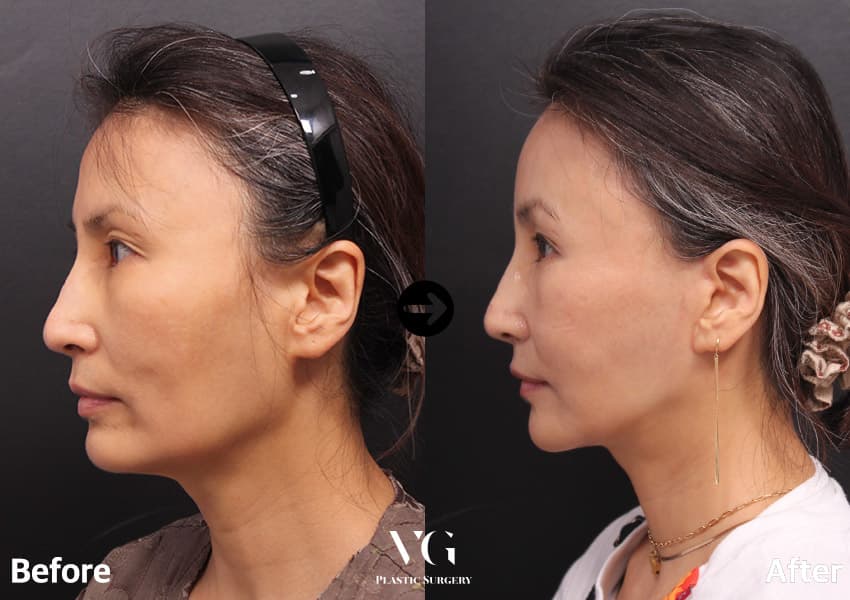
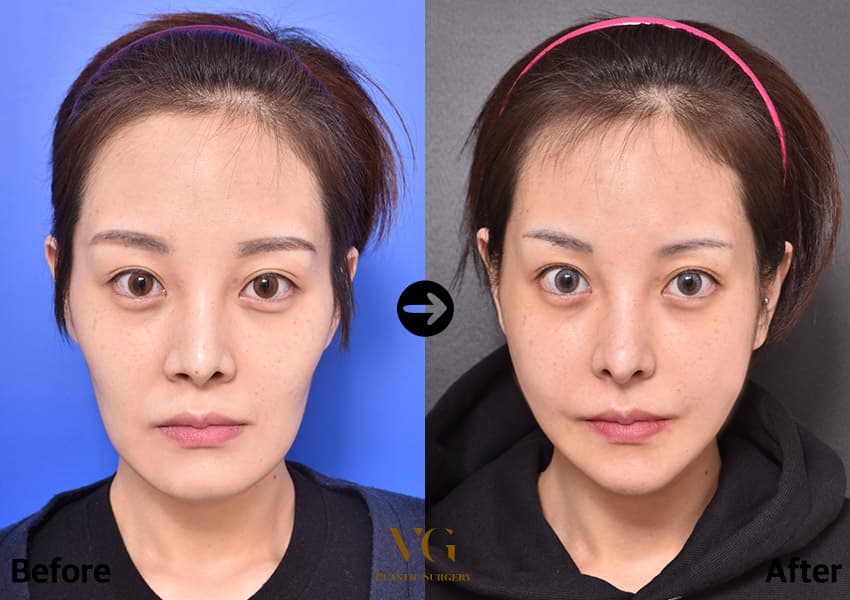
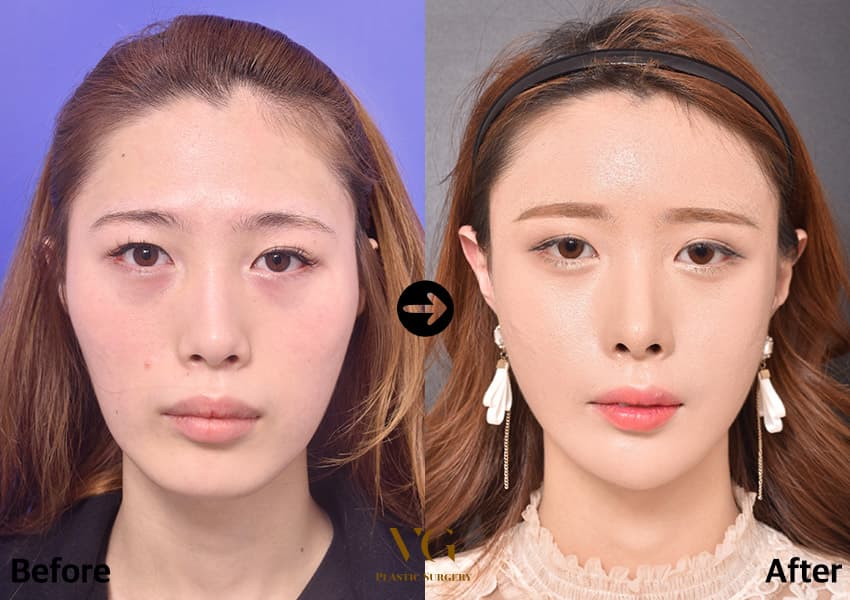
Facial Contouring before & after — more cases
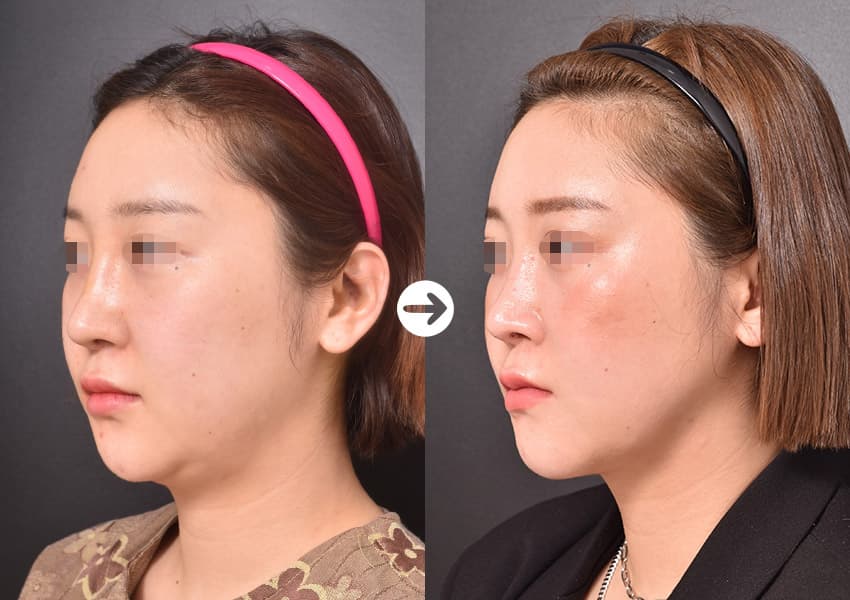
Real patients from our archive, all photographed 3 months after surgery. Tap a case to compare it full size.
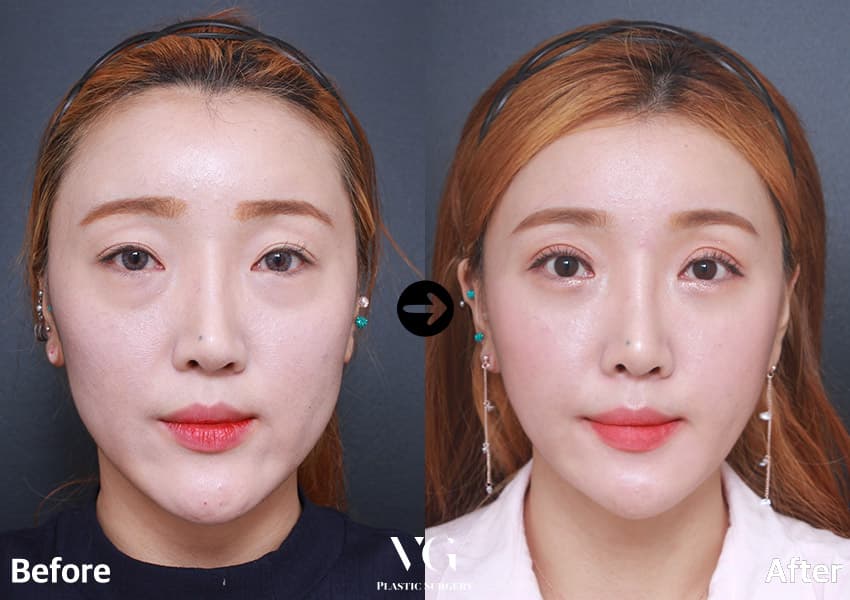
Chin Reduction3 months after surgery
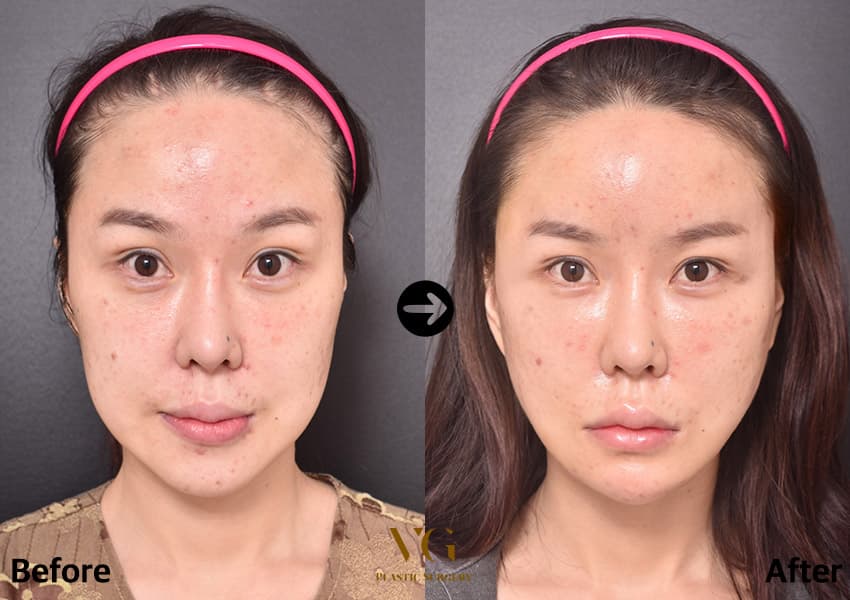
Chin Reduction3 months after surgery
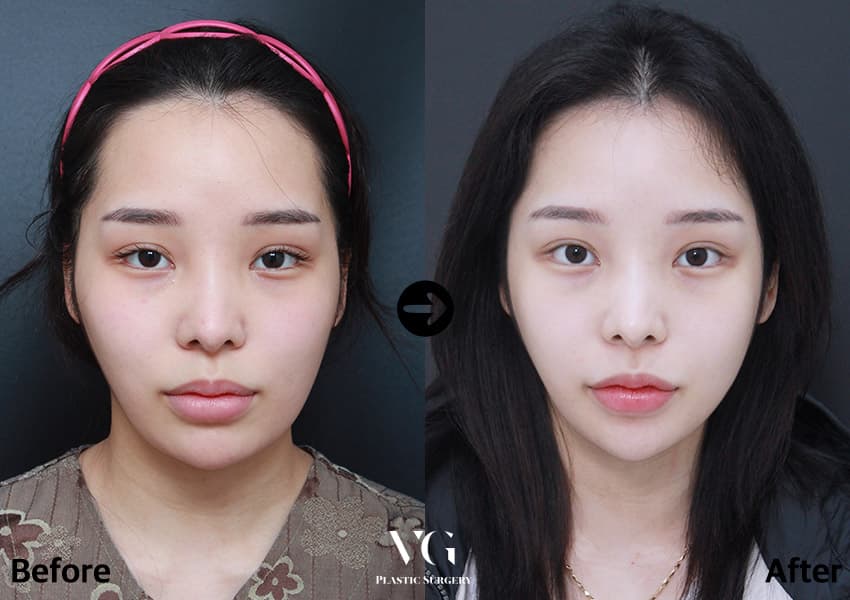
Chin Advancement3 months after surgery
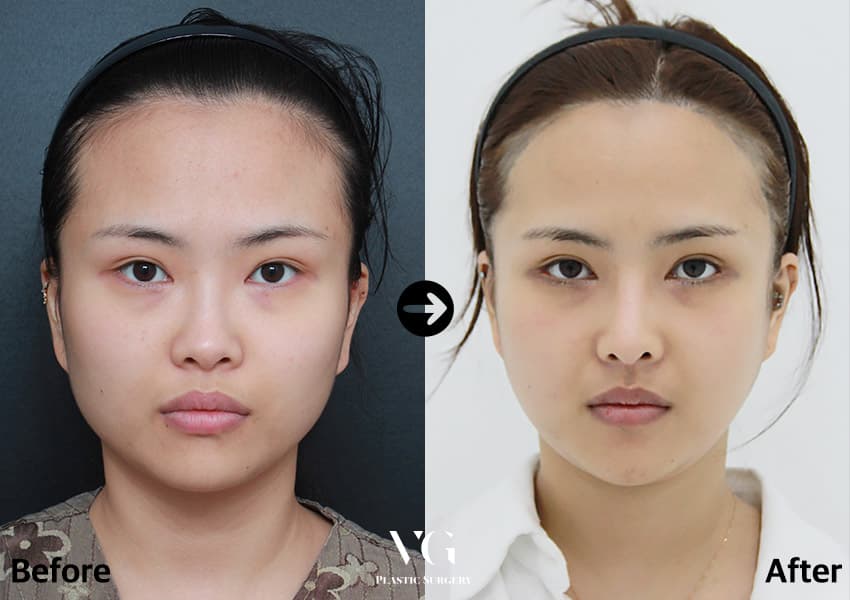
Chin Reduction3 months after surgery
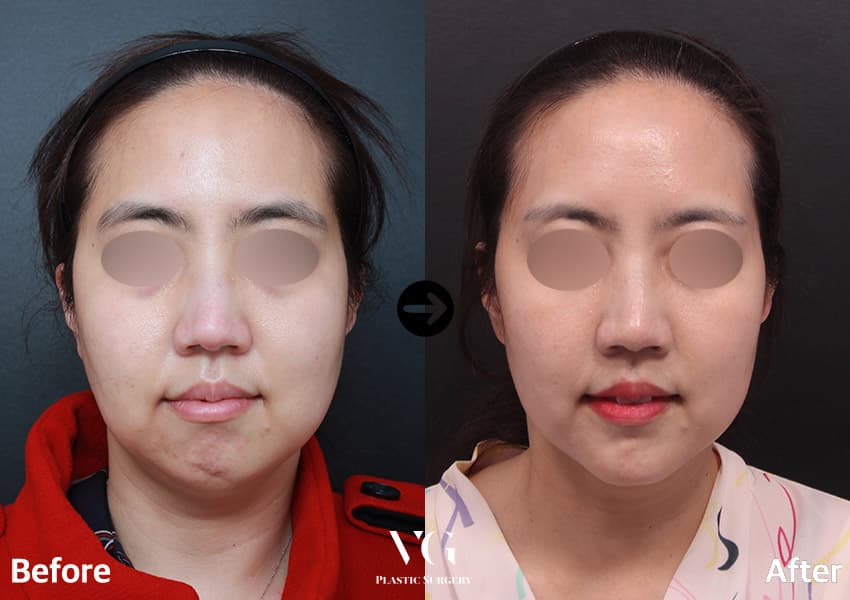
Chin Advancement3 months after surgery
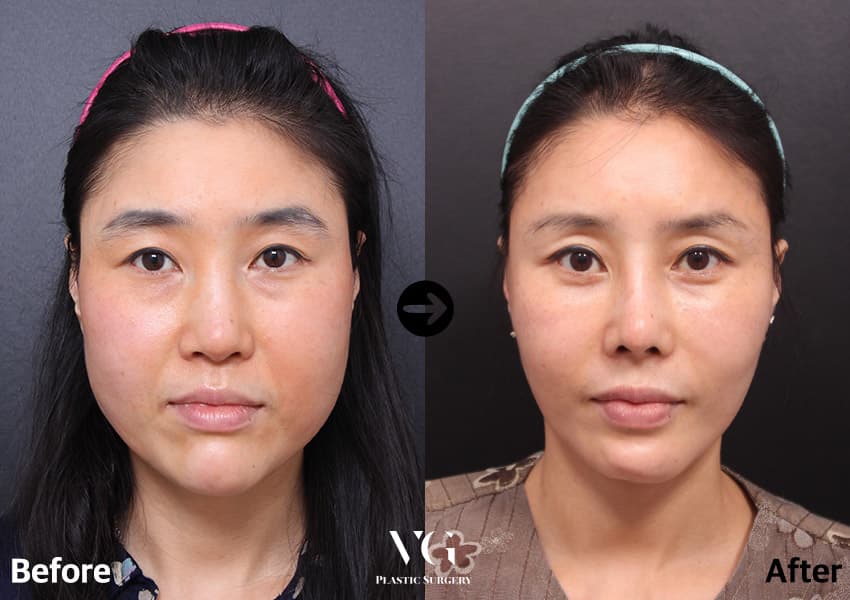
Chin Reduction3 months after surgery
FAQ
Questions patients ask
Is a sliding genioplasty safer than a chin implant?
Neither is simply safer. Research suggests implants bring more infection and reoperation, and bone repositioning brings more sensory change, mostly temporary. Most of that evidence comes from small retrospective studies, so the choice should fit your chin and what you're willing to accept.
How much does sliding genioplasty Korea surgery cost?
No figure here would fit your case, since the size of the move, imaging, added contouring and days in Seoul all change it. Ask on WhatsApp what it would cost for your case, with a side photo. Foreign patients pay the same surgery fee as Korean patients, and the quote comes in writing.
Can a chin implant be replaced with a sliding genioplasty?
It can be considered, particularly if an implant has caused problems or can't make the change you want. The plan has to account for the implant, scar tissue and any change in the bone beneath it, so bring your earlier operation notes if you have them.
Are the plates removed afterward?
They commonly stay in place. Some people ask to have them removed later, for instance if they can feel them or if they cause discomfort, and that means another procedure. Ask what is planned for your case.
Will there be a scar on my face?
The bone is usually reached through an incision inside the mouth, so there is generally no external scar from that route. The wound inside your mouth needs careful cleaning while it heals.
Does a sliding genioplasty change my bite?
No. It moves the lower chin segment, which doesn't carry your teeth. A bite problem needs a separate orthodontic or oral-maxillofacial opinion, and corrective jaw surgery isn't offered at this clinic.
Sources
- Implant-Based Chin Augmentation Vs Osseous Genioplasty: A Systematic Review of Indications and Outcomes (Kauke-Navarro M, et al.), 2025;7:ojaf048
- Incidence of Complications Associated with Mandibuloplasty: A Review of 588 Cases over 5 Years (Plastic and Reconstructive Surgery Global Open, 2014)
- Medical Tourism
This article explains general medical information. Whether surgery suits you, and which method, is decided only after a consultation with the surgeon.
Written by
Im Young Min
Chief Director · Plastic Surgery
- Ph.D. in Medicine
- Internship and residency, Seoul St. Mary's Hospital
- Board-certified plastic surgeon, Seoul St. Mary's Hospital
- Adjunct professor of plastic surgery, Seoul St. Mary's Hospital
- Former director, Topface Plastic Surgery
Next step
Send two photos. Get a surgeon’s answer.
Front and side, natural light, no filter. Dr. Im Young Min reviews them and tells you which method fits and how many days to stay in Seoul.
International patients pay the same surgical fee as Korean patients. Pricing policy
Keep reading
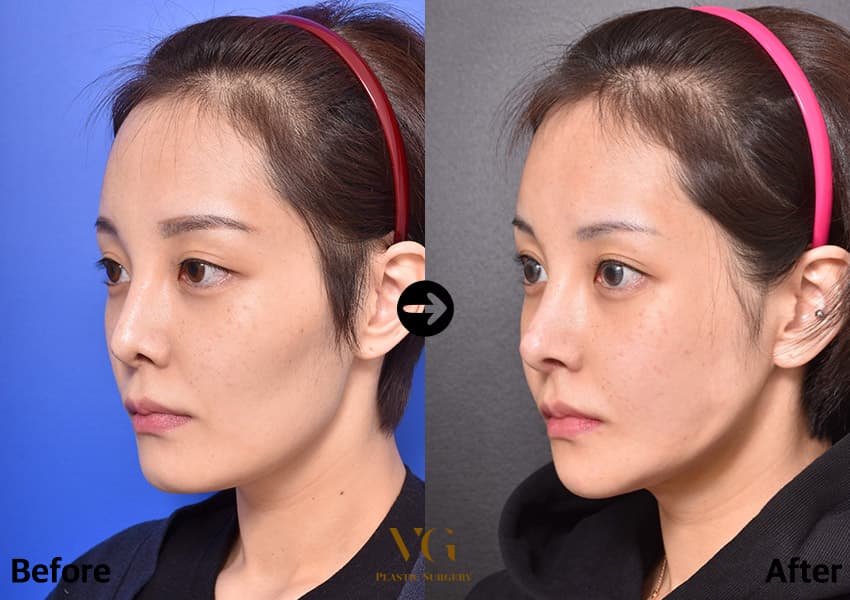
Facial Contouring
Jaw Shaving Surgery Cost Korea: Why Might Your Figure Change? Recovery, Reviews and Methods
The cost of jaw shaving in Korea follows how much bone is involved, the method, anesthesia, your days in Seoul and follow-up. Foreign patients at VG Plastic Surgery pay the same surgery fee as Korean patients, with a written estimate.
Im Young Min ·
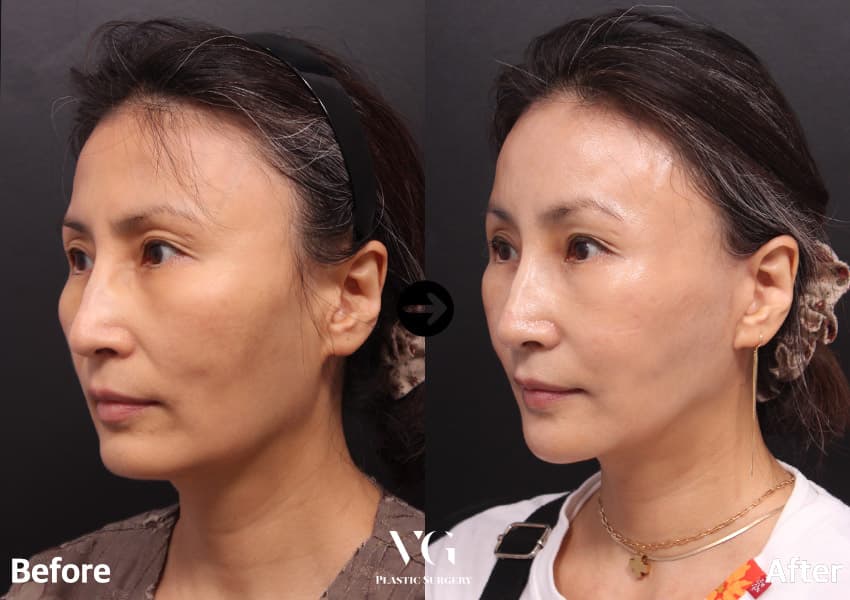
Facial Contouring
Chin Implant Cost Korea: Implant or Moving the Bone? Methods, Reviews and Recovery
A chin implant suits a chin that sits too far back but has normal height and a stable bite. The fee follows the method, material, anesthesia and any added surgery, so those come first.
Im Young Min ·
Facial Contouring
Chin Reduction Surgery Cost Korea: What Sets It for a Long or Square Chin? Methods, Reviews and Recovery
There is no single figure for chin reduction in Korea, because the cost follows the operation your chin needs: shaving bone, moving a bone segment, removing an old implant or adjusting soft tissue, plus anesthesia and days in Seoul.
Im Young Min ·