Nose
When Your Nose Also Breathes Badly, “Best Rhinoplasty in Korea” Means Asking Six Questions
No official ranking names the best rhinoplasty in Korea. Compare plans: who operates, what the exam found inside your nose, what supports the tip, what the surgeon wouldn't change, and the plan after you fly home.
In this article
- 01Why a ranking can't pick your surgeon
- 02Who operates, and who checks the breathing?
- 03What did the exam find inside your nose?
- 04Six questions and what the answers tell you
- 05What will hold up the bridge and the tip?
- 06Which change would the surgeon talk you out of?
- 07Risks, swelling and the flight home
- 08If this is your second nose surgery
- 09What to bring to the first consultation
The short answer
No official ranking names the best rhinoplasty in korea, so the practical test is whether the plan made for your own nose holds up against six questions at the consultation. The worry most people flying in carry is the part after the flight home, when swelling is still settling and the surgeon is a long flight away, so put that question on your list too. At VG Plastic Surgery I review rhinoplasty with an ENT specialist who practises alongside the plastic surgeons, so a deviated septum or an airway that doesn't breathe well is examined and treated as part of the same operation, not left to someone else.
- No official ranking exists, so compare the plan made for your own nose.
- Ask who operates and whether anyone examines the inside of your nose.
- Ask what will support the bridge and tip, and why it suits your skin.
- Ask what the surgeon would not change, and what happens after you fly home.
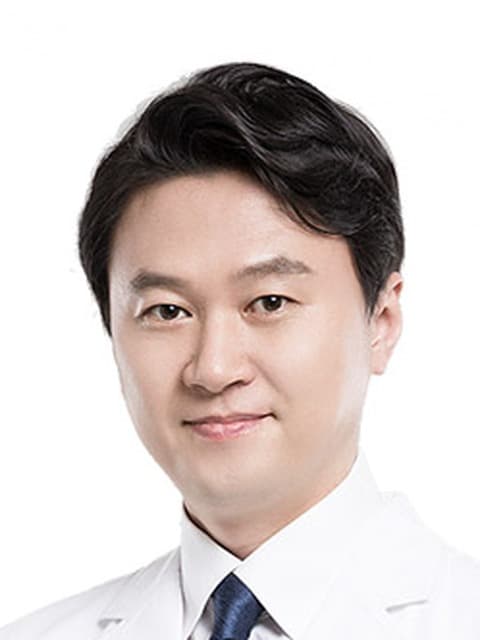
I'm Im Young Min, a board-certified plastic surgeon from Seoul St. Mary's Hospital, where I'm an adjunct professor of plastic surgery. I operate across eyes, nose, breast, body, anti-ageing and facial contouring, and I only recommend the operations a person actually needs. The questions below are the ones I'd want a relative to ask any surgeon, me included.
Profile
Im Young Min
Chief Director · Board-certified in Plastic Surgery
If you have three photos of your nose (front, side and from below) plus any old operation notes or an ENT report from home, send them to the clinic together with the dates you're considering.
Send three nose photos on WhatsApp
Why a ranking can't pick your surgeon
Searches for the best rhinoplasty in korea usually end on lists. And a list can't see your skin.
A review of Asian rhinoplasty by Ishii in Plastic and Reconstructive Surgery Global Open describes what makes these noses technically different: a thicker skin envelope, smaller and softer cartilage, and a low bridge. That is why many operations add support and height instead of removing them. Those traits vary a lot from one person to the next, and the same tip technique can look sharp under thin skin and barely show under thick skin.
So the useful comparison is between plans: what each surgeon found, what they'd change, what they'd leave alone, and how they'd follow you once you're home. The questions below are built to make those differences visible in one consultation.
Who operates, and who checks the breathing?
Ask for the name of the surgeon who will operate on the day, and whether anyone examines the inside of your nose before the plan is fixed. A clear answer names one person. A vague one (“our team will take care of it”) deserves a follow-up question.
Three board-certified anesthesiologists work here full time, one is dedicated to each operation, and they don't perform cosmetic surgery. Each doctor's training is listed on their own profile, so you can check it before you fly.
This matters most if you're in your forties or fifties and have breathed badly through one side for years. People in that situation often come in for the shape and mention the blocked side almost in passing. It belongs at the top of the conversation, because the bridge and the airway are built from the same structures.
What did the exam find inside your nose?
Ask the surgeon to describe your septum and nasal valves in plain words, and to say whether either one changes the plan. If every comment is about the outside, the inside hasn't been part of the decision yet.
Three general mechanics sit behind that question. The septum is the wall down the middle, and it's also a common donor site for the cartilage that props up a tip, so a crooked septum affects both your breathing and the material available. The internal nasal valve is the narrowest point of the airway, and narrowing the bony bridge or reshaping the tip can tighten it further in some noses. The outer shape of the nostrils doesn't always match what is happening behind them.
Surgeons generally watch how the nostril behaves when you breathe in sharply, whether one side collapses, and how the septum sits when seen from inside. If you've had allergies, an old nasal fracture or snoring your partner complains about, say so. Those details can move the plan more than the reference photo on your phone.
Six questions and what the answers tell you
The table is the short version of this article. Keep it on your phone for the consultation.
| Question to ask | An answer that tells you something | An answer worth probing |
|---|---|---|
| Who operates, and who is in the room? | One named surgeon and a named anesthesiologist | “Our team will take care of it” |
| What did you see inside my nose? | Septum, valves, any blockage, and how it changes the plan | Comments on the outside only |
| What will support the bridge and tip? | A named material and why it suits your skin | The same answer for every patient |
| What would you not change? | One or two things, with a reason | “We can do everything you showed us” |
| What are the main risks for my nose? | Risks tied to your anatomy | “It's very safe” |
| What happens after I fly home? | Who you message, which records you take | No plan beyond the stitches |
What will hold up the bridge and the tip?
Ask which material will raise the bridge and support the tip, and why that one suits your skin and cartilage. A useful answer names the material, its trade-off and the reason it fits you.
Broadly, the choices are an implant (silicone or another synthetic), your own cartilage from the septum, ear or rib, or a combination. Implants are simpler to place and shape, while your own tissue avoids a foreign body but needs a donor site and extra operating steps. Ishii's review discusses both routes in Asian noses, including implant problems when the skin over the tip is put under tension.
How high the bridge can go and where it should start are covered in where the bridge starts and what raises it. Skin is the other limit: thick skin hides fine tip work, which is why skin thickness sets the limit on the tip in many Asian noses. If the surgeon proposes a closed approach, ask what can and can't be reached through it; the trade-offs are laid out in inside-the-nose incisions versus the open approach.
Which change would the surgeon talk you out of?
Ask directly: “Is there anything I showed you that you wouldn't do on my face?” A surgeon who answers with something specific, and a reason, has looked at your nose rather than your reference photo.
Two common examples. A nose can look wide because of the bony base or the tip, and trimming the nostrils alone won't change that; when nostril reduction does help a wide nose is a separate question. A short, upturned nose is limited by how far the skin can stretch, which caps how much length one operation can add, as explained in lengthening a short nose with less nostril show.
Risks, swelling and the flight home
Rhinoplasty carries real risks, and travelling adds distance between you and the surgeon. Ask which risks are most likely for your nose, and what the plan is if one appears after you've left Korea.
The American Society of Plastic Surgeons lists them: bleeding, infection, anaesthesia risks, difficulty breathing, numbness, a hole in the septum, skin discoloration and swelling, scarring, and an appearance you're unhappy with that may need revision. Swelling settles over weeks, and ASPS notes the final contour can keep refining for up to a year, so the nose you fly home with isn't the finished one.
The U.S. Centers for Disease Control and Prevention adds the travel side in its medical tourism guidance: arrange follow-up before you go, take copies of your records home, and talk to your doctor about flying soon after surgery, since flying after an operation raises the risk of blood clots. Ask how many days the surgeon wants you in Seoul for your plan, when the splint and stitches come off, and what to do if bleeding, rising pain or fever starts at home. Those days differ from person to person and are set after the in-person exam.
Ask, too, who reads your message if something looks wrong in week three, and what your local doctor at home would need from the operation record.
Send your possible travel dates and the three nose photos on WhatsApp.
Send three nose photos on WhatsApp
If this is your second nose surgery
Ask what the surgeon expects to find under the skin: scar, a previous implant, how much cartilage is left. Revision plans start from what the first operation used up, so the answer should refer to your earlier operation notes.
Bring whatever you have: the operation record, the implant type if you know it, and any imaging. The reasoning behind those plans is in starting from what the first surgery left. After earlier surgery the internal exam matters even more, because scar tissue can narrow the airway while the outside looks fine.
What to bring to the first consultation
A short folder makes the hour useful: front, side and base photos of your nose, a list of medications and supplements, any allergies, earlier surgery records, and a note about what bothers you when you breathe. Write the six questions down, because jet lag makes it easy to forget the last two.
If you're also thinking about your eyelids on the same trip, read how blepharoplasty recovery and the stay are planned and raise it at the nose consultation, since two recoveries overlap and change how long you stay.
A search for the best rhinoplasty in korea can end with one WhatsApp message: three photos of your nose and one line on what bothers you most, the shape or the breathing.
Related pages:
Nose before & after — more cases
Real patients from our archive, all photographed 3 months after surgery. Tap a case to compare it full size.
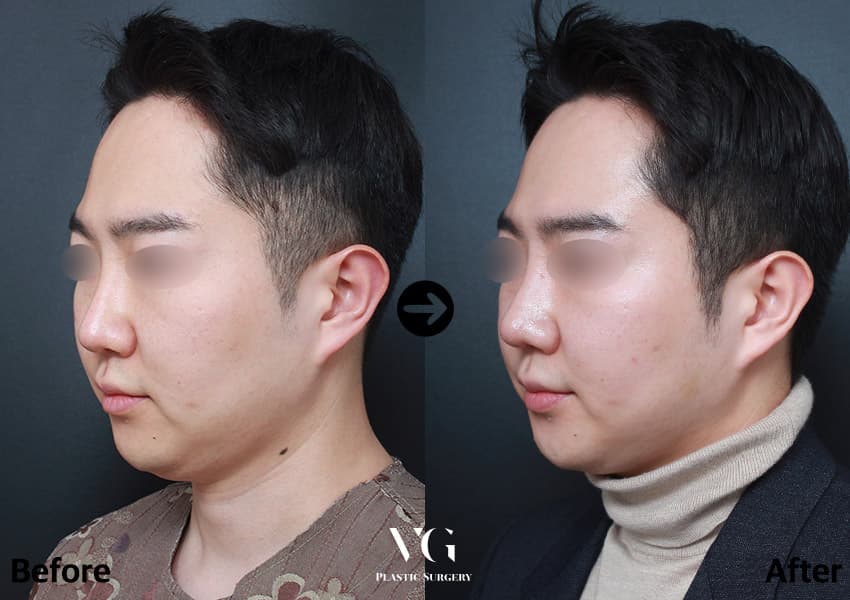
Male Rhinoplasty3 months after surgery
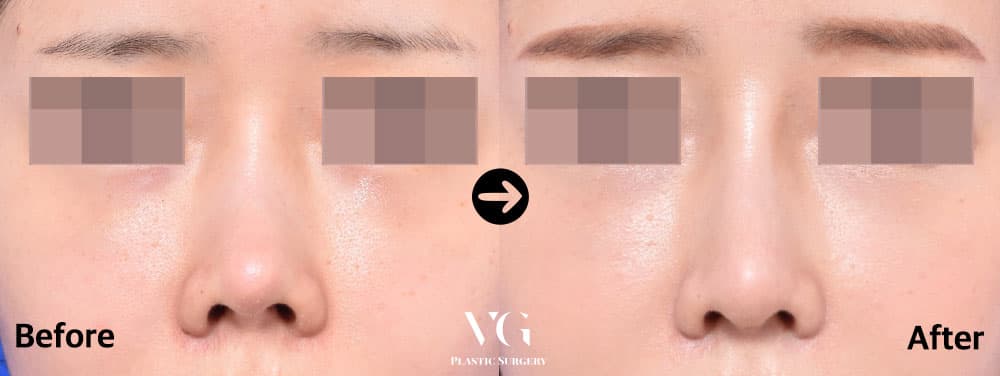
Revision Rhinoplasty3 months after surgery
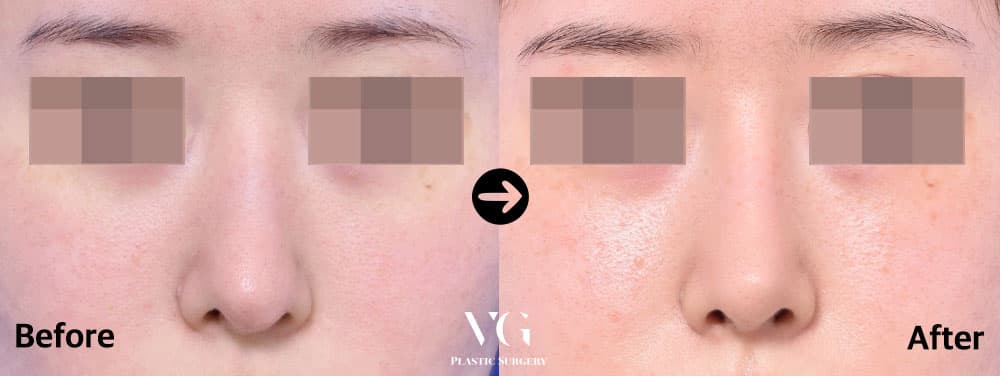
Revision Rhinoplasty3 months after surgery
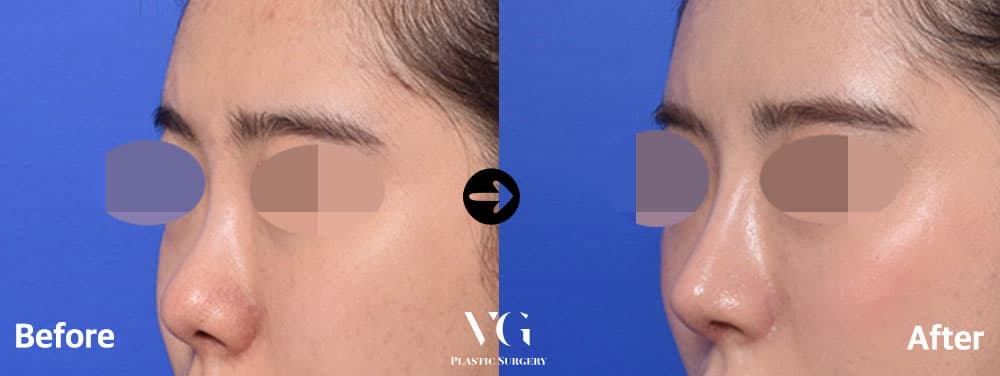
Rhinoplasty3 months after surgery
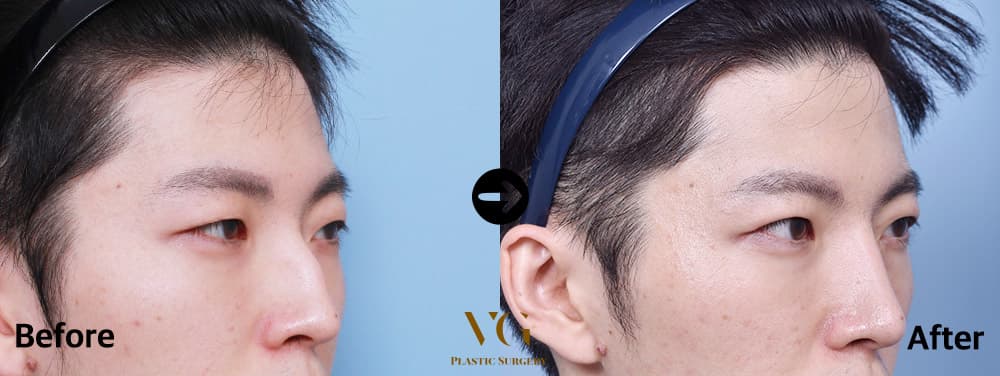
Male Rhinoplasty3 months after surgery
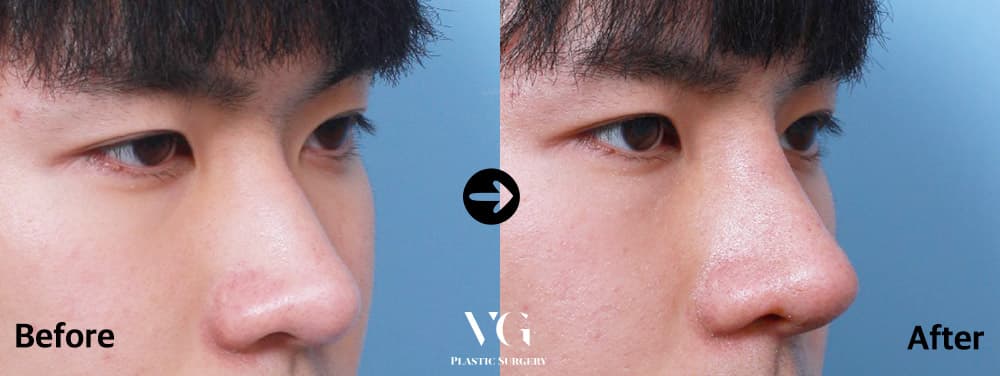
Male Rhinoplasty3 months after surgery
FAQ
Questions patients ask
Does Korea publish a ranking of rhinoplasty surgeons?
What you can check is each surgeon's board certification and training. At VG Plastic Surgery every surgeon operates under their own name and their training is listed on their profile.
Can a deviated septum be fixed in the same operation as a nose job?
Often, when the septum is part of the problem. At VG Plastic Surgery an ENT specialist works with the rhinoplasty team, and a deviated septum or an airway that doesn't breathe well is examined and treated as part of the operation. Whether your septum needs it is decided at the in-person exam.
How long does swelling last after rhinoplasty?
According to the American Society of Plastic Surgeons, initial swelling settles over a few weeks, while the final contour can take up to a year to refine. Plan events and photos with that timeline in mind.
Who gives the anaesthetic during a nose job at VG Plastic Surgery?
Three board-certified anesthesiologists work at the clinic full time, and one is dedicated to each operation. They watch blood pressure, pulse and breathing from the first injection until you are awake, and they don't perform cosmetic surgery.
What should I send before booking flights?
Three photos of your nose (front, side and from below), any earlier operation notes or ENT reports, and the dates you're considering.
Sources
This article explains general medical information. Whether surgery suits you, and which method, is decided only after a consultation with the surgeon.
Written by
Im Young Min
Chief Director · Plastic Surgery
- Ph.D. in Medicine
- Internship and residency, Seoul St. Mary's Hospital
- Board-certified plastic surgeon, Seoul St. Mary's Hospital
- Adjunct professor of plastic surgery, Seoul St. Mary's Hospital
- Former director, Topface Plastic Surgery
Next step
Send two photos. Get a surgeon’s answer.
Front and side, natural light, no filter. Dr. Im Young Min reviews them and tells you which method fits and how many days to stay in Seoul.
International patients pay the same surgical fee as Korean patients. Pricing policy
Keep reading
Nose
Rhinoplasty Cost in South Korea in Rupees: What Changes It for a Flat Nose or Crooked Septum? Reviews, Methods and Recovery
There's no honest rupee figure for a nose nobody has examined. The cost follows the method, septum work, revision, anesthesia time and days in Seoul; send photos on WhatsApp to ask about yours.
Im Young Min ·
Nose
What Decides the Cost of Rhinoplasty in South Korea? Reviews, Methods and Recovery
There is no single price for a nose job in Korea: the method, the cartilage source, septum work, revision status and anesthesia set the figure for your nose.
Im Young Min ·
Nose
How Much Does a Nose Job Cost in Korea? Four Cost Drivers, Reviews, Methods and Recovery
A nose job in Korea is priced from four parts: the scope of the change, the building material, any breathing work and the anesthesia. Foreigners pay the same surgical fee as Korean patients, with a written estimate.
Im Young Min ·