Eyes
Why Is Double Eyelid Surgery Popular in Korea? Plan Around the Stitch Day
About half of East Asian upper lids have no natural crease, and in Korea adding one is seen as self-care. If you plan yours in Seoul, stitch removal, generally 5 to 7 days after surgery, shapes the trip.
Send your concern and a front and side photo. Replies in English, no obligation.
In this article
- 01Why do so many Korean eyelids have no crease?
- 02A small change that keeps your face your own
- 03Is it the crease, or is it your age?
- 04How many days in Seoul should you plan for?
- 05What can go wrong, and what if it shows up at home?
- 06What to check at any clinic before you book
- 07What are the risks of adding a crease, and is it right for you?
The short answer
Why is double eyelid surgery popular in Korea, and is it worth flying to Seoul for yours when home is a long flight away? Medical reviews put the share of East Asian upper lids born without a crease at about half, and the operation adds one without changing the rest of the face, so in Korea it's treated as ordinary self-care. If you're planning your own, the date that shapes the trip is stitch removal, generally five to seven days after surgery.
- About half of East Asian upper lids have no crease; surgery recreates the tether some lids already have.
- In Korea the operation is widely treated as self-care, and the aim is a crease that suits an East Asian face.
- After 40, a lid that looks single may be loose skin or a stretched lifting muscle, which needs a different operation.
- General guidance puts stitch removal at 5 to 7 days and bruising at 2 to 4 weeks, so book the flight home after the stitches are out.
- No contact lenses for at least two weeks, so pack glasses.
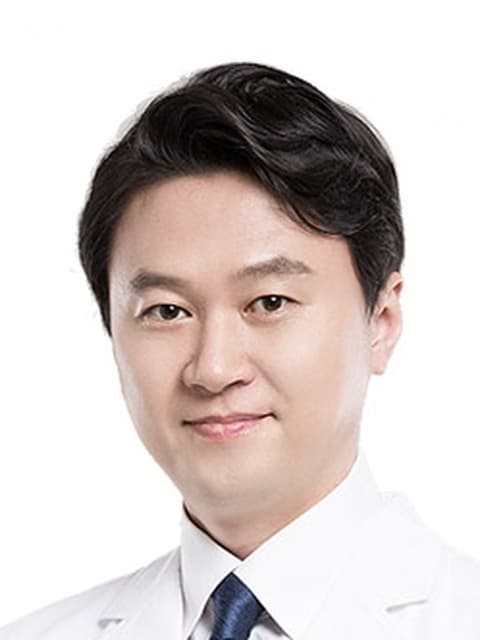
Hello, I'm Dr. Im Young Min, Chief Director at VG Plastic Surgery and a board-certified plastic surgeon.
Profile
Im Young Min
Chief Director · Board-certified in Plastic Surgery
I did my internship and residency at Seoul St. Mary's Hospital, and I operate on eyes as well as noses, breasts and facial contouring. That range matters here, because a lid that looks single after 40 is often heavy skin or a weak lifting muscle rather than a missing crease. A medical interpreter for your language is provided at no extra charge, and three board-certified anesthesiologists work here full time without operating, so one of them is dedicated to your operation while the surgeon works on the lid.
If you'd like to know which of those you're dealing with before you look at flights, take two photos of your eyes in daylight, one looking straight ahead and one gently closed, and send them on WhatsApp with the weeks you could travel. Ask one thing with them: is this a crease question, a skin question or a muscle question?
Send your eye photos and travel dates on WhatsApp
Why do so many Korean eyelids have no crease?
The crease is a line where the skin is tethered to the tendon of the muscle that lifts the lid. Think of a roller blind with a pleat sewn into it: when the blind goes up, it folds at the seam every time. In many East Asian lids there are few or no fibers running from that tendon to the skin, so when the eye opens, the skin rolls up without a fold.
Two more things shape the look. The thin membrane that holds the eyelid fat back joins the tendon lower, closer to the lashes, and there is usually more fat both under the muscle and under the skin. That lower, fuller padding is what makes the lid look smooth and a little heavy. It's also why a crease made on an East Asian lid behaves differently from one made on a thin lid with little fat.
None of this is a defect. A single lid is a normal variation, and plenty of people keep theirs for life. Surgery recreates the tether that some lids already have.
A small change that keeps your face your own
When people ask me why double eyelid surgery is popular in Korea, I give three reasons, and only one of them is anatomy. The second is scale. The operation works on a few millimeters of upper lid, and the aim described in the medical literature, which I share, is a crease that stays within the proportions of an East Asian face. Nobody is trying to look Western.
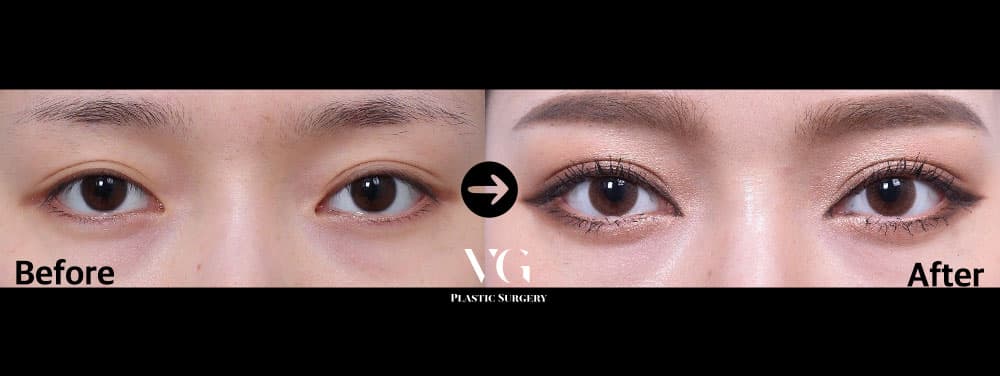
Medical reviews describe it as the cosmetic operation requested more often than any other in Asia, and that scale is part of why it feels ordinary here.
The third reason is culture. As the generations have changed, more people here use plastic surgery as one way of looking after themselves, in the same breath as skincare or the gym. I see Korean plastic surgery as a culture of its own, a kind of self-care that makes daily life feel a bit lighter. What people are really after is a happier life, and a crease is only worth adding if it serves that.
The questions people ask alongside this one, about Korean skin or jaws or facial hair, come from the same curiosity about how much care goes into appearance here. Skin belongs to dermatologists, so I'll stay with eyelids.
Is it the crease, or is it your age?
In short, this is the question I'd most want a reader in their 40s or 50s to settle before booking anything. With age, upper-lid skin loosens and can hang over the lashes, and the tendon of the lifting muscle can stretch away from its attachment. Either one can hide a crease you were born with, or make a lid look heavier than it is.
The three problems have three different fixes. Extra skin is removed with an upper blepharoplasty. A lid that sits low because the lifting muscle has stretched is called ptosis, and it is corrected by tightening that muscle. A missing crease is created with a double eyelid procedure. They can be combined, but each adds its own healing, and that changes your trip.
One clue you can notice at home: if you catch yourself raising your eyebrows to see clearly, or your forehead feels tired by evening, your lids may be sitting lower than they should. Mention it when you write, because it points toward muscle rather than crease.
Say you're 54 and live in Phoenix, your daughter is the one who suggested Seoul, and the heaviness you call a single lid only appeared in the last ten years. That history tells me more than any photo. A lid that once had a crease and lost it is usually about skin or muscle, not tethering, and the operation, the incision and the days you need can all change. I'd want that sorted before you buy tickets.
How the incisional and non-incisional options differ is laid out in double eyelid surgery in Korea, incision or not.
How many days in Seoul should you plan for?
The US National Library of Medicine's general guidance for eyelid surgery gives a useful frame: stitches out five to seven days after surgery if they need removing, bruising that can last two to four weeks, and no contact lenses for at least two weeks. Here is how that frame turns into a trip.
| After surgery | What generally happens | What it means for your trip |
|---|---|---|
| Days 1 to 3 | Vision usually clear enough to get around after two to three days; cold packs wrapped in a towel ease swelling | Stay close to your hotel and rest |
| Days 3 to 5 | Activity kept to a minimum | Short walks and meals out, with sunglasses |
| Days 5 to 7 | Stitches come out, if your procedure uses removable ones | Book the flight home after this, not before |
| Weeks 2 to 4 | Bruising fades; contact lenses still out for at least two weeks | Wear glasses and push photos or events later |
| About 3 weeks | Strenuous exercise that raises blood pressure can resume | Gym, heavy lifting and hot yoga wait until then |
Treat this as a starting frame, not your schedule. Your own timeline depends on whether the crease is made through an incision or held with buried sutures, and whether skin or muscle work is added. A non-incisional crease may not need stitch removal at all, which is why fitting non-incisional double eyelid surgery into one week of leave works for some lids and not others.
If you can, leave a day between landing and surgery. A long-haul flight and jet lag make a poor setting for an in-person consultation where you're deciding crease height. On the way home, cabin air is dry and freshly operated lids tend to feel gritty, so glasses instead of contacts and lubricating drops, if your surgeon recommends them, make the flight easier.
Once you have possible dates, send them on WhatsApp together with whether you wear glasses or contacts and any blood thinners or supplements you take, and ask whether the operation your lids probably need comes with stitches to remove before you fly.
Send your eye photos and travel dates on WhatsApp
What can go wrong, and what if it shows up at home?
The usual reactions are temporary: swelling and bruising, more tears than normal, sensitivity to light and wind, and blurred or double vision during the first few weeks. Early on, a crease often looks too high or uneven simply because one side is more swollen; that is normal in the first weeks and usually settles.
Infection and dry eye: what to watch for
Less often, eyelid surgery leads to infection, bleeding under the skin, dry eye that lasts longer, trouble closing the eye fully, a visible scar, or a crease that fades or heals unevenly and needs revision. How fast swelling settles and how the final crease sits differ from one person to the next, and whether your lids suit the operation at all is something only an in-person exam can confirm.
In general, people should wait or have a fuller medical check first if they have:
Dry eye and infection: what to watch for
- severe dry eye or thyroid eye disease
- a bleeding disorder, or blood thinners that can't safely be paused
- high blood pressure or diabetes that isn't well controlled
- an active stye or eye infection
- a pregnancy or are breastfeeding
Swelling and bruise: what to watch for
If something changes after you fly home, sudden severe pain, swelling that keeps growing on one side, or any loss of vision needs emergency care that day, not a message. For slower worries, such as a bruise that lingers or sides that look different, photograph your eyes in daylight and write to the clinic on WhatsApp with the date of surgery.
Before you leave Seoul, ask for a written summary of what was done and which medicines you were given, and line up an eye doctor or family doctor at home who knows you've had surgery.
What to check at any clinic before you book
Put simply, it doesn't have to be us. Wherever you have your eyelids done, ask these before you pay a deposit:
- Is the doctor who examines your lids the one who operates, and is their name on your record?
- Are your lids checked for loose skin and lifting-muscle strength, not only crease height?
- Who handles anesthesia, and does that person do nothing else during your operation?
- Is an interpreter there for the consultation and on surgery day, and does it cost extra?
- Do foreign patients pay the same surgery fee as local patients, and is the estimate in writing?
- What happens if the crease fades or the sides heal unevenly once you're home?
There's a longer version in seven questions to put to any clinic about double eyelid surgery. What moves the fee itself, mainly the method your lids need, is covered in how much double eyelid surgery costs in Korea. Each surgeon's training and center are listed on VG Plastic Surgery's English site.
What are the risks of adding a crease, and is it right for you?
A crease is worth adding when it makes your face feel more like yours, not because it's common in Seoul. If your lids are fine as they are, or need a different operation, I'll say so. Being genuinely useful to one person matters more to me than seeing as many patients as possible, and a decision about your face can take as many weeks as you need.
What decides your plan is how far the skin overhangs your lashes and how strongly the lid lifts when you open your eyes. When you're ready, send one photo with your eyes open and one with them closed, your possible travel dates and the medicines you take on WhatsApp, and ask whether your lids need a crease, skin removal or a muscle repair. If you're already at the booking stage, ask in the same message how the deposit and payment method are settled, since that's agreed after the consultation.
The clinic is at 635 Nonhyeon-ro, Gangnam-gu, Seoul.
— Dr. Im Young Min, Chief Director
Related pages:
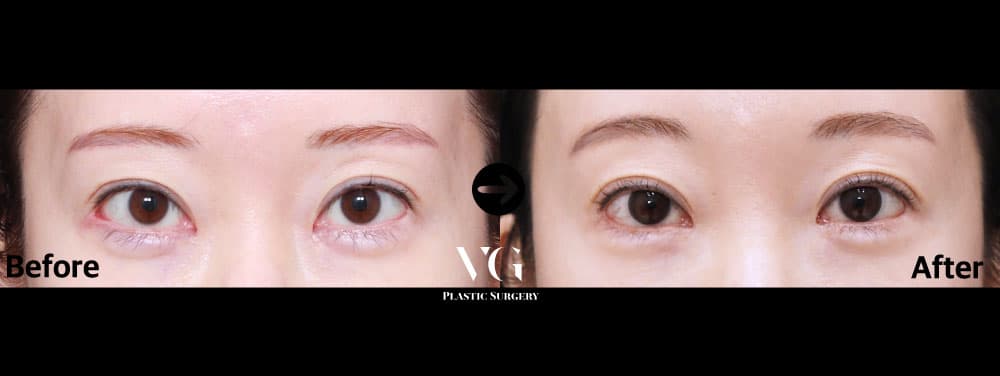
Eyes before & after — more cases
Real patients from our archive, all photographed 3 months after surgery. Tap a case to compare it full size.
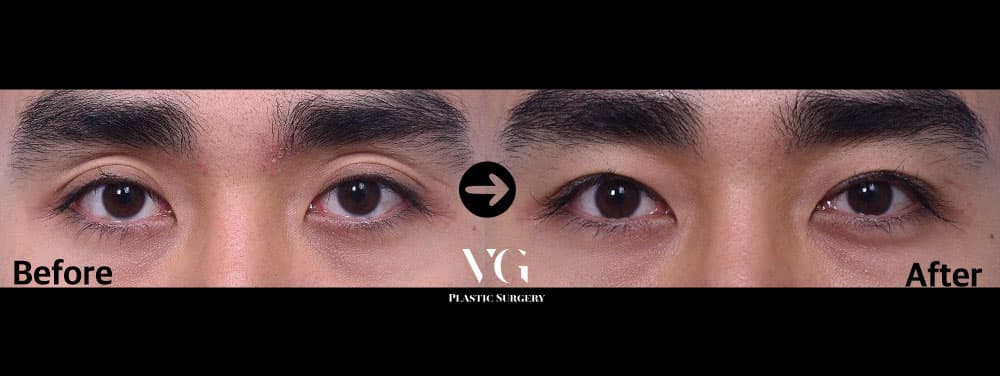
Incisional Double Eyelid3 months after surgery
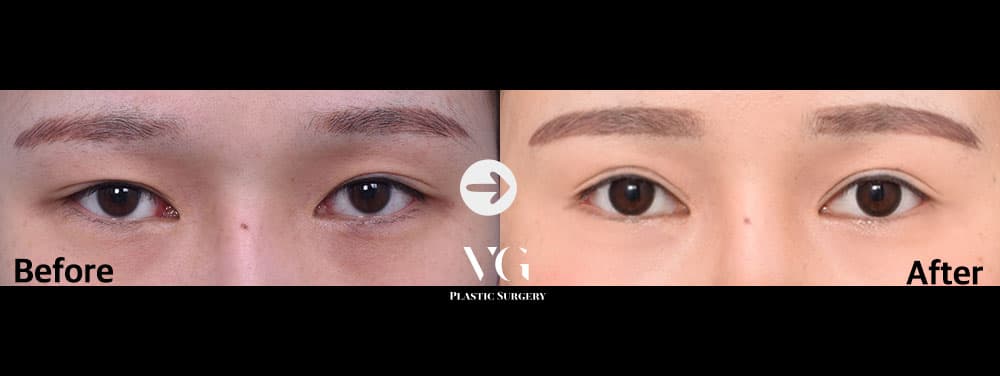
Incisional Double Eyelid3 months after surgery
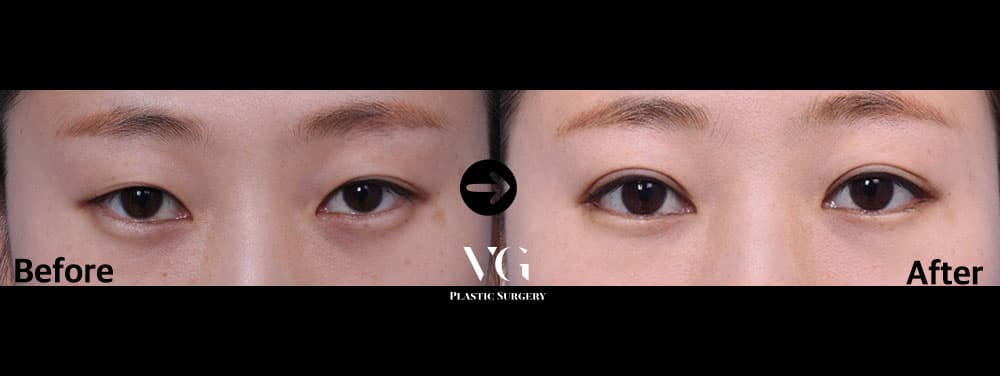
Incisional Double Eyelid3 months after surgery
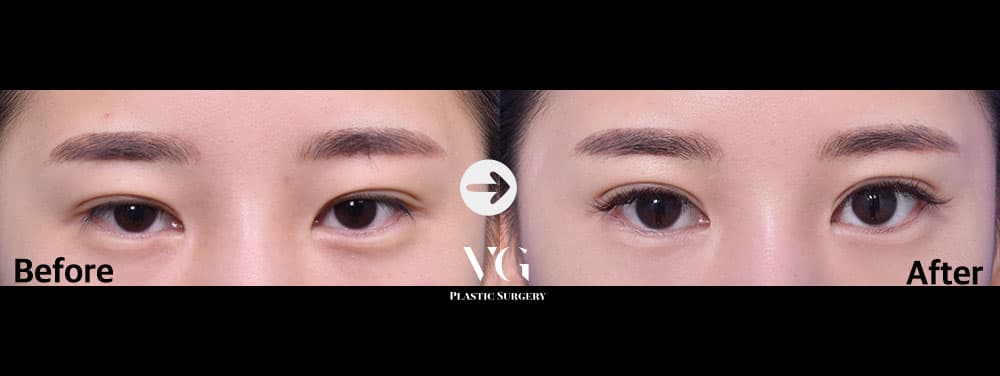
Natural-Adhesion Double Eyelid3 months after surgery
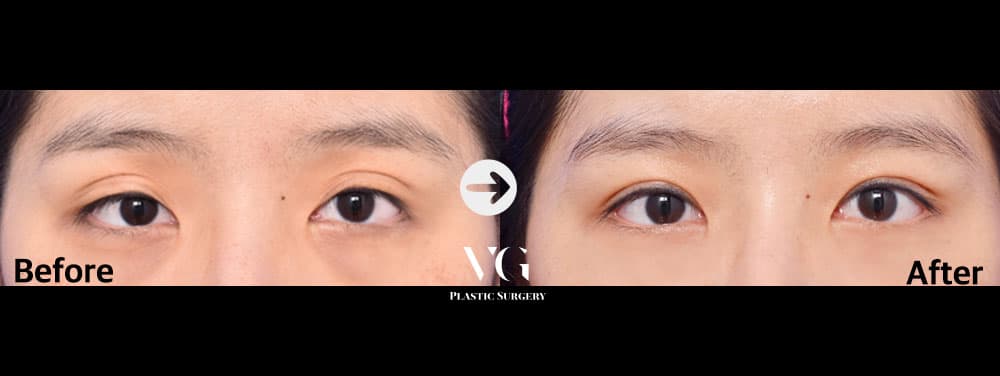
Incisional Double Eyelid3 months after surgery
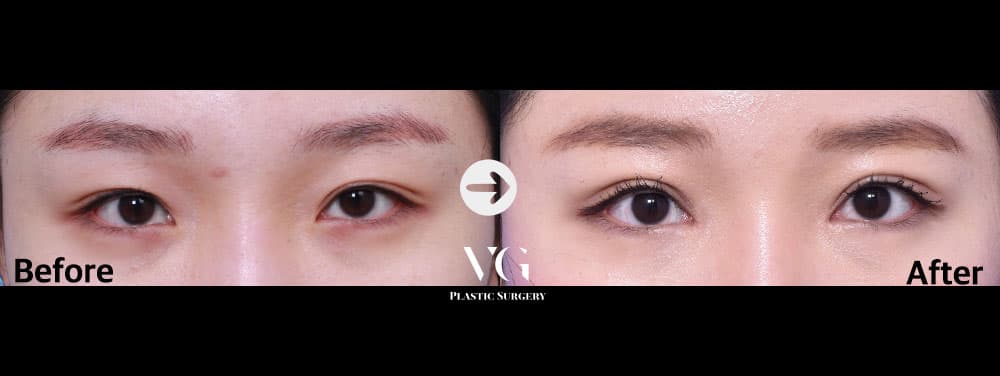
Natural-Adhesion Double Eyelid3 months after surgery
FAQ
Questions patients ask
Can I wear contact lenses during the trip?
Not for at least two weeks after eyelid surgery, according to general post-operative guidance, so pack glasses even if you rarely wear them. Putting lenses in and taking them out pulls on a lid that is still healing.
Will a double eyelid make me look Western?
It shouldn't. The aim surgeons describe is a crease that stays within the proportions of an East Asian face. Crease height is the main lever: a lower crease that tapers toward the inner corner changes less than a high one running parallel to the lashes, so bring a photo of the height you have in mind.
Does a crease made without an incision last as long?
Generally, a crease held only by buried sutures can loosen over the years, more often in thick lids with more fat, while an incisional crease relies on scar tissue and tends to hold longer. You're weighing a shorter recovery against durability, and lid thickness tips that balance.
Should I stop aspirin or fish oil before flying in?
Don't stop anything on your own. Aspirin, some painkillers, fish oil, vitamin E and several herbal supplements can increase bruising and bleeding, and whether to pause them depends on why you take them. List them all with doses when you first write, and check with the doctor who prescribed them at home.
What should I pack for the first week in Seoul?
Glasses, large sunglasses for bruising and wind, a soft towel to wrap cold packs (never ice straight on the lid), a printed list of every medicine and supplement you take, and a loose plan for days three to five, when short walks are fine but full sightseeing days usually aren't.
Sources
This article explains general medical information. Whether surgery suits you, and which method, is decided only after a consultation with the surgeon.
Written by
Im Young Min
Chief Director · Plastic Surgery
- Ph.D. in Medicine
- Internship and residency, Seoul St. Mary's Hospital
- Board-certified plastic surgeon, Seoul St. Mary's Hospital
- Adjunct professor of plastic surgery, Seoul St. Mary's Hospital
- Former director, Topface Plastic Surgery
Next step
Send two photos. Get a surgeon’s answer.
Front and side, natural light, no filter. Dr. Im Young Min reviews them and tells you which method fits and how many days to stay in Seoul.
International patients pay the same surgical fee as Korean patients. Pricing policy
Keep reading
Eyes
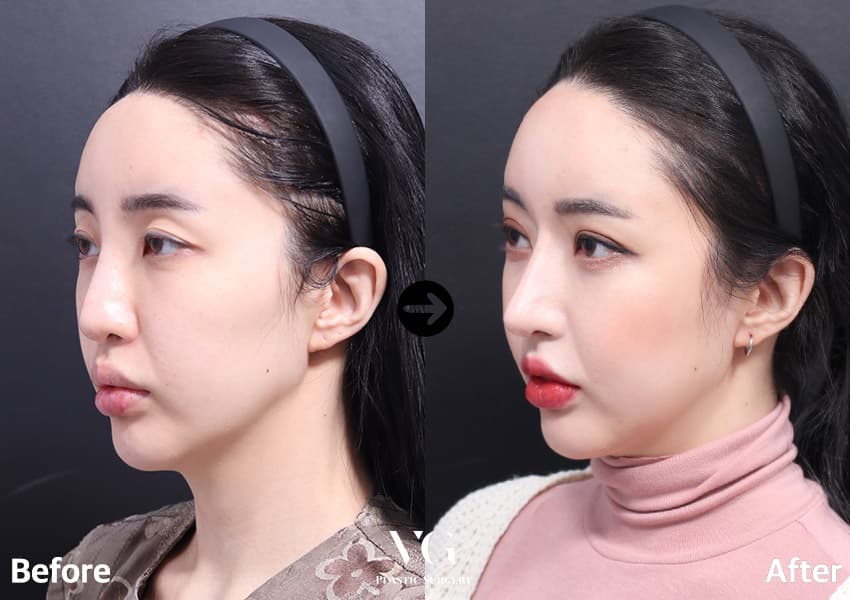
Canthoplasty Recovery Time by Corner: Stitches, Scar, Flight Home and What Sets the Cost
Stitches usually come out around day 5 to 7, most bruising settles over two to four weeks, and the scar keeps softening for six months or more. Plan your flight home around the stitch day.
Im Young Min ·
Eyes
Most Common Plastic Surgery in Korea: What 426 of Our Cases Show
A Seoul plastic surgeon counts the 426 cases in his clinic's before-and-after archive by surgery type, explains what foreign patients ask about most, and says who each operation does not suit.
Im Young Min ·
Eyes
Your Plastic Surgery Interpreter in Seoul: Six Moments Where Words Matter
An eye surgeon in Seoul walks through the six points where interpretation shapes your result — photo quote, consultation, what you agree to, surgery morning, stitch removal and the messages after you fly home — and what to check in any interpreter.
Im Young Min ·