Nose
Is a Rhinoplasty Korea Review Enough? Cost, Methods and Recovery Before You Fly to Seoul
A rhinoplasty Korea review is good evidence on logistics and service, and weak evidence on results or fit. Here's what reviews leave out and what to check about your own nose on consultation day in Seoul.
· 8 min read · Last updated
Edited by Im Young Min
In this article
- 01What can a rhinoplasty review actually tell you?
- 02Three things a review rarely mentions
- 03How does consultation day work when you're flying in?
- 04What happens on the day of the operation?
- 05What decides the cost of rhinoplasty in Korea?
- 06Risks a review won't prepare you for
- 07When I'd tell you to wait
The short answer
Does a rhinoplasty Korea review tell you whether a nose that looked right on someone else will still breathe properly on you?
- Reviews are reliable on logistics and service, not on how your own nose will turn out.
- Most reviews are written while the nose is still swollen; the contour can keep refining for up to a year.
- Ask who will operate, who runs the anaesthesia, and whether your septum and airway will be assessed.
- Consultation hours are Monday to Friday 10:00 to 20:00 and Saturday 10:00 to 16:00, Korea time.
- Arrange a doctor at home and carry your records before you fly back.
It's worth reading on before you book or decide anything.
Profile
Im Young Min
Chief Director · Board-certified in Plastic Surgery
After this you will know what a review can and can't show, what decides the cost, how the methods and recovery differ from nose to nose, and what to send before you fly.
Hello, I'm Dr. Im Young Min, Chief Director and board-certified plastic surgeon at VG Plastic Surgery in Gangnam.
An ear, nose and throat (ENT) specialist works inside our rhinoplasty centre, so your septum and airway are examined alongside the shape. I did my internship and residency at Seoul St. Mary's Hospital.
I write this because many people read a review as a preview of their own result, when it describes someone else's nose.
A review is good for learning how one person's splint week, swelling and flight home went. It can't show what is inside your nose.
Send your nose photos and one question on WhatsApp
What can a rhinoplasty review actually tell you?
Read a rhinoplasty Korea review for the parts that don't depend on anatomy, and it can tell you a lot. How clear the aftercare instructions were. Whether an interpreter was in the room when it mattered. How long the trip from the hotel took with a splint on. Whether anyone answered messages once the writer was back home. Those are real signals, and they're hard to find anywhere else.
Reviews are weak evidence on results. The American Society of Plastic Surgeons notes that initial swelling goes down over a few weeks, but it can take up to a year for the new contour to fully refine. A review posted at week three describes a nose that hasn't finished changing, and there's a separate piece on how swelling and timing shape a natural-looking nose if you want to know which parts settle last.
They're weaker still on fit. Two people can both call a result natural and mean opposite things, because one started with thin skin and a narrow bridge and the other with thick skin and a soft, rounded tip. Thick skin limits how much definition a tip can show, however the cartilage underneath is shaped, which is why your skin sets the limit on the tip deserves a look before you treat any review as a forecast for your own face.
Three things a review rarely mentions
Three details shape a rhinoplasty more than most write-ups let on, and they almost never make it into a rhinoplasty Korea review.
The inside of the nose. A bridge can be raised and a tip refined while a deviated septum or a narrow nasal valve stays exactly as it was. At our clinic the ENT specialist who joins the rhinoplasty centre is responsible for the septum, the airway and whether you can breathe. A deviated septum or an airway that doesn't work well is examined and treated as part of the same operation.
Who ran the anaesthesia. Reviews describe waking up. They rarely say who was watching while the writer was asleep. Three board-certified anesthesiologists work here full time, and one is dedicated to each operation, watching blood pressure, pulse and breathing from the first injection until you are awake again. None of them perform cosmetic surgery, so the surgeon only operates.
Who actually operated. A review may name the clinic and mention a doctor without saying whose hands held the instruments. Every surgeon here operates under their own name, and their training and centre are published on this site so you can check before you fly. Whichever clinic you're weighing, ask for the name of the surgeon who will operate on you, and look that person up.
Say you have read several reviews and liked a nose that looked natural from the side. Yours has a wide tip and a bridge that sits low, and at night you breathe better through one side. I would not start from the review photo. I would start from what your nose is made of: how firm the tip cartilage is, whether the septum leans to one side, and what that means for the method. Then I would look at whether the airway needs attention together with the shape, because the ENT specialist is in the same centre. The review you liked becomes a question about one line, and your own nose answers it.
How does consultation day work when you're flying in?
The clinic is at 635 Nonhyeon-ro, Gangnam-gu. If you land late on a Friday, ask about a Saturday slot before you build the rest of the trip around it.
The consultation is in person, with the surgeon. The site lists interpreter support, so questions about your breathing or an old injury don't have to go through your own Korean or a translation app. Because rhinoplasty here is reviewed with an ENT specialist, the conversation covers how your nose works as well as how it looks.
Before general anaesthesia, an anesthesiologist assesses underlying conditions in advance. You can help that assessment by bringing a written list of every medication and supplement you take, any allergies, and whatever records exist from earlier nose surgery or a broken nose. The CDC's advice to medical travellers points the same way: carry copies of your records, and take copies of what was done back home with you.
These are the questions worth asking out loud that day:
- Which surgeon will operate, and will I see them again before I fly home?
- Does my septum or airway need work, and is that part of the same operation?
- Will the incisions be inside the nostrils only, or across the columella too?
- How many days after surgery do you want me near Gangnam, and when is my first check?
- Once I'm home, who do I contact if something feels wrong?
What happens on the day of the operation?
Most of the day is invisible to you, which is why the anaesthesia arrangement above matters more than anything a review can describe. What you will notice is where the incisions are and what you wake up with.
Whether the incisions stay inside the nostrils or include a small cut across the strip of skin between them depends on what has to be reached; inside-the-nose incisions compared with the open approach is worth reading before you ask. The American Society of Plastic Surgeons describes the first stretch of recovery in plain terms: a splint, sometimes internal tubes or packing, bruising and swelling around the eyes, and keeping your head raised while you rest.
If your plan uses an implant, the first seven days from splint to boarding gate are walked through separately. Whatever the plan, take your return date from the surgeon who operates on you.
What decides the cost of rhinoplasty in Korea?
The cost depends on what your nose needs, not on the word rhinoplasty alone. The method matters: whether the work is on the bridge, the tip, or the septum and airway, and whether your own cartilage is enough or more is needed. The amount of change you want and any earlier nose surgery also play a part. Anaesthesia, the number of days you stay in Korea for the checks and the follow-up after you fly home add to it. Recovery shapes that plan too, since swelling and the splint week decide when it is sensible to travel. To get a figure for your own case, ask on WhatsApp and attach a photo of your nose.
Risks a review won't prepare you for
Every rhinoplasty carries risk, whatever the reviews say. The American Society of Plastic Surgeons lists infection, bleeding, anaesthesia risks, poor wound healing, a hole in the septum, difficulty breathing through the nose, numbness, skin discolouration, an appearance you're unhappy with, and the possibility of revision surgery. A review from someone who had none of these tells you nothing about how one would be handled.
Travel adds two risks of its own. Flying soon after surgery raises the chance of blood clots, which the CDC flags for medical travellers, and the person who operated is no longer down the corridor once you're home. Before you go, find a doctor at home who is willing to see you after surgery abroad, and keep your Seoul records with you on the flight.
If a result does need correcting later, revision rhinoplasty starts from what the first surgery left, and surgeons often prefer to wait until swelling has settled before planning a second operation. Healing differs from one nose to the next, and whether surgery suits you at all is decided only when a surgeon examines you in person.
Write down the medications you take and the dates you're considering, and send both on WhatsApp with one question: how long after surgery should I stay near Gangnam? With your own dates on the page, every answer you get, from us or from any other clinic, is easier to judge.
Send your nose photos and one question on WhatsApp
When I'd tell you to wait
I tell people whether surgery suits them, and I say so plainly when it doesn't. I recommend only the operations someone actually needs, the same way I would for my own family.
A few situations make me slow down, and none of them show up in reviews. A nose still settling from a previous operation is one; I'd rather wait than operate on swelling. A reference photo of someone else's nose is another, because skin and cartilage set limits that no surgeon can talk around, and five common beliefs about how a nose keeps its identity are worth reading with that photo in hand.
When you're ready, send one side-profile photo on WhatsApp, together with a sentence about how your nose breathes at night. If you've had nose surgery or a broken nose before, add the year. Then ask one question: the line from a review you'd like explained for your nose. One photo is enough, and you can ask before booking anything. When you come to Seoul, I examine your nose and recommend what fits it.
Related pages:
Nose before & after — more cases
Real patients from our archive, all photographed 3 months after surgery. Tap a case to compare it full size.
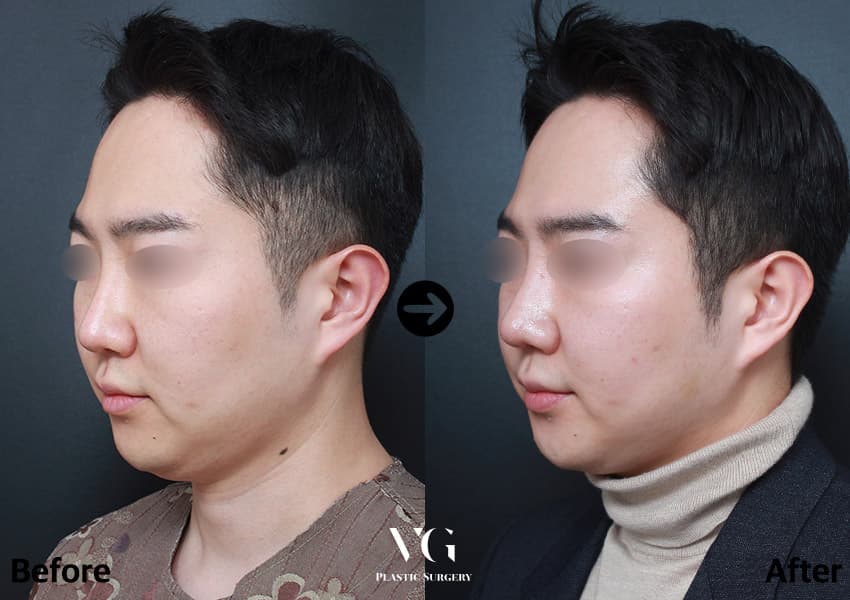
Male Rhinoplasty3 months after surgery
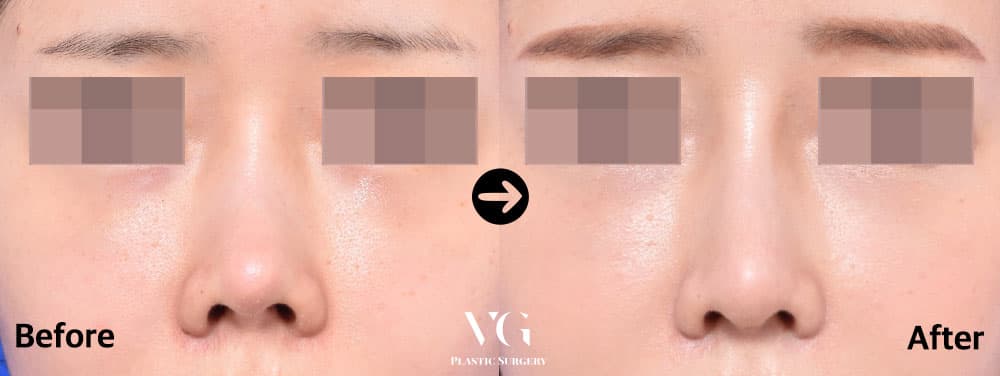
Revision Rhinoplasty3 months after surgery
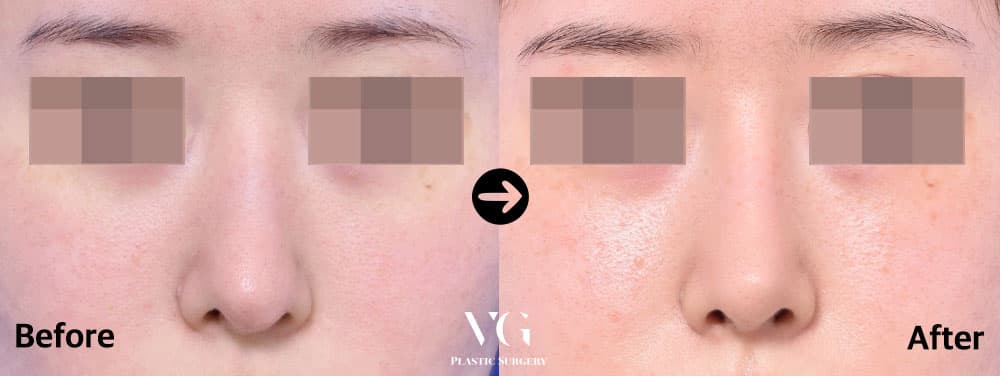
Revision Rhinoplasty3 months after surgery
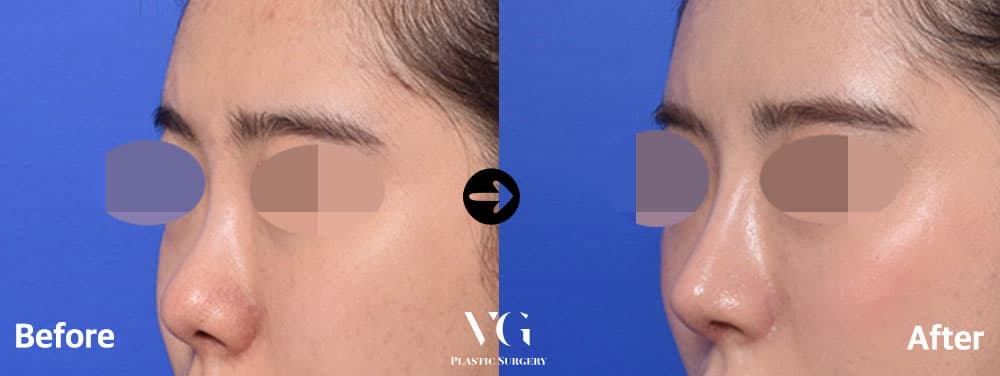
Rhinoplasty3 months after surgery
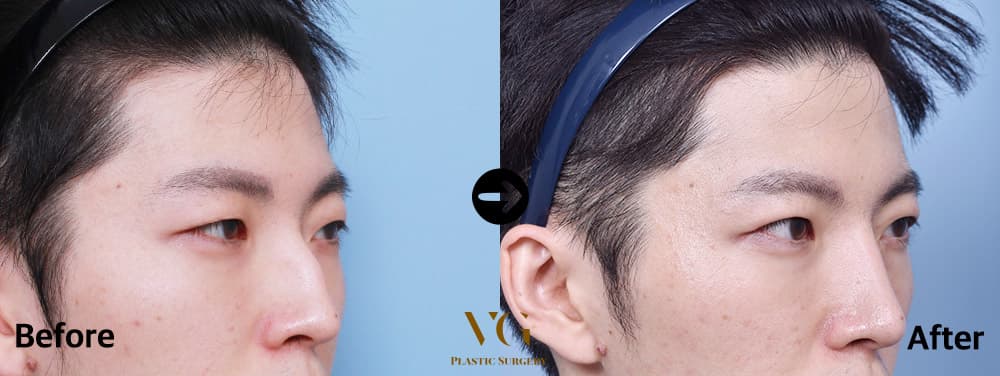
Male Rhinoplasty3 months after surgery
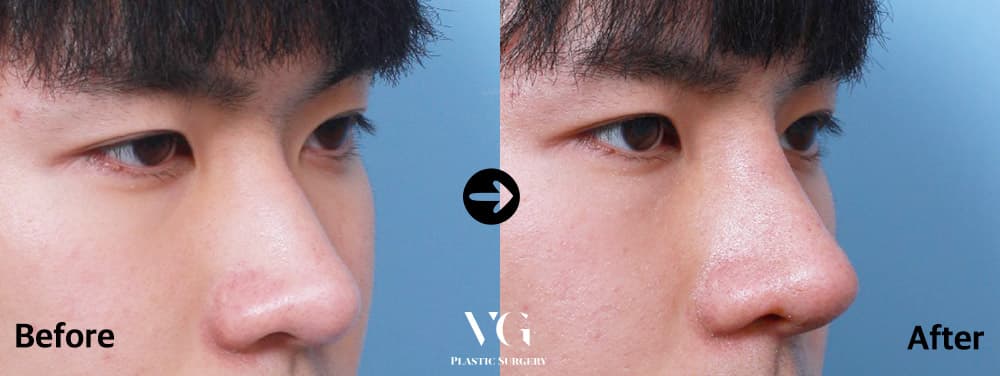
Male Rhinoplasty3 months after surgery
FAQ
Questions patients ask
Can star ratings help me compare rhinoplasty clinics in Korea?
They tell you how people felt about the service: waiting times, clarity, how they were treated. They can't tell you which surgeon operated, who handled the anaesthesia, or whether the nose in question was anything like yours. Use ratings to shortlist, then check the surgeon's name, board certification and training yourself.
Do I need to speak Korean for the consultation?
No. This site is published in English, Japanese, Traditional Chinese and Thai, and it lists interpreter support for consultations. If there's a medical detail you want to get exactly right, such as an allergy or a past operation, write it down in advance and bring it.
My nose breathes fine. Does the ENT specialist still matter?
Often it does. Some people adapt to a mildly deviated septum without noticing, and raising a bridge or narrowing a tip changes the airflow inside. Having the septum and nasal valve assessed alongside the shape makes it more likely that a problem is found before surgery rather than after it.
Can a review help me if I have a bulbous nose?
Only partly. A rounded tip can come from wide cartilage, thick skin or both, and reviews almost never say which. If the writer had thin skin and you have thick, oily skin, their tip result is a poor guide to yours.
Is a rhinoplasty Korea review from someone in another country still relevant to me?
For logistics, yes: getting from the airport, how far the hotel was, interpreter support and how messages were handled after the trip are much the same for everyone. For the result, it's only as relevant as their nose was similar to yours.
Sources
This article explains general medical information. Whether surgery suits you, and which method, is decided only after a consultation with the surgeon.
Written by
Im Young Min
Chief Director · Plastic Surgery
- Ph.D. in Medicine
- Internship and residency, Seoul St. Mary's Hospital
- Board-certified plastic surgeon, Seoul St. Mary's Hospital
- Adjunct professor of plastic surgery, Seoul St. Mary's Hospital
- Former director, Topface Plastic Surgery
Next step
Send two photos. Get a surgeon’s answer.
Front and side, natural light, no filter. Dr. Im Young Min reviews them and tells you which method fits and how many days to stay in Seoul.
International patients pay the same surgical fee as Korean patients. Pricing policy
Keep reading
Nose
Rhinoplasty Cost in South Korea in Rupees: What Changes It for a Flat Nose or Crooked Septum? Reviews, Methods and Recovery
There's no honest rupee figure for a nose nobody has examined. The cost follows the method, septum work, revision, anesthesia time and days in Seoul; send photos on WhatsApp to ask about yours.
Im Young Min ·
Nose
What Decides the Cost of Rhinoplasty in South Korea? Reviews, Methods and Recovery
There is no single price for a nose job in Korea: the method, the cartilage source, septum work, revision status and anesthesia set the figure for your nose.
Im Young Min ·
Nose
How Much Does a Nose Job Cost in Korea? Four Cost Drivers, Reviews, Methods and Recovery
A nose job in Korea is priced from four parts: the scope of the change, the building material, any breathing work and the anesthesia. Foreigners pay the same surgical fee as Korean patients, with a written estimate.
Im Young Min ·